Cartoon – Reality Check

Cartoon, April 9 | Cartoons | themountaineer.com

White House reverses position after blocking health officials from appearing on CNN

https://www.cnn.com/2020/04/09/media/pence-office-tv-bookings-coronavirus/index.html?utm_medium=social&utm_content=2020-04-09T18%3A50%3A06&utm_source=twCNN&utm_term=link&fbclid=IwAR3vThr8ecjeeG6VqkgR6s1blEbkkOK6ocqYTUof8cVVQKMByXoKMhBXfuw

White House reverses position after blocking health officials from ...

Vice President Mike Pence’s office reversed course on Thursday afternoon, after declining for days to allow the nation’s top health officials to appear on CNN and discuss the coronavirus pandemic, in what was an attempt to pressure the network into carrying the White House’s lengthy daily briefings in full.

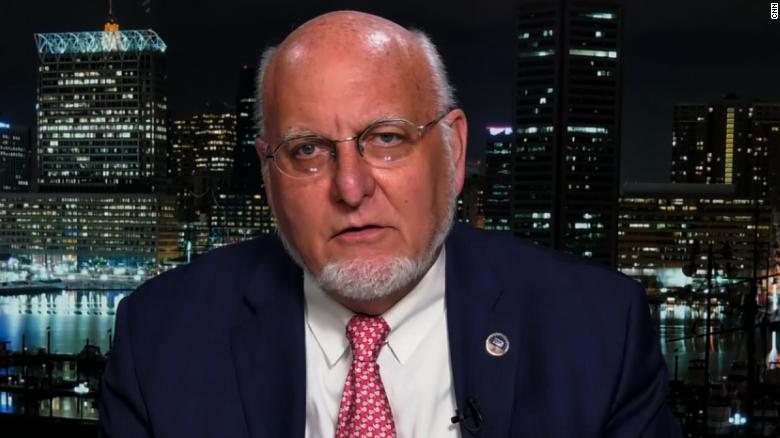
After this story was published, Pence’s office allowed for the booking of Centers for Disease Control and Prevention Director Dr. Robert Redfield for CNN’s Thursday night coronavirus town hall. Dr. Anthony Fauci was also booked for Friday on “New Day.”
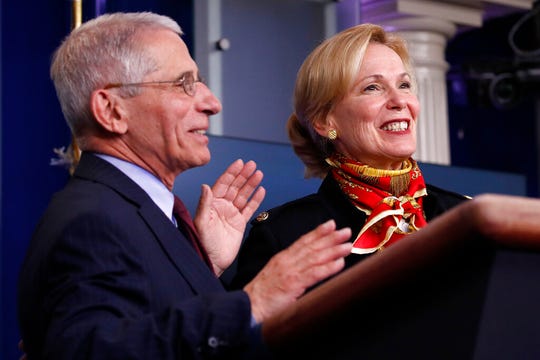
Previously, Pence’s office, which is responsible for booking the officials on networks during the pandemic, said it would only allow experts such as Fauci or Dr. Deborah Birx to appear on CNN if the network televised the portion of the White House briefings that includes the vice president and other coronavirus task force members.
CNN often only broadcasts President Donald Trump’s question and answer session, which sometimes includes the health care officials, live on-air.
After Trump leaves the podium, CNN frequently cuts out of the White House briefing to discuss and fact-check what the President has said. A CNN executive said that the network usually returns to such programming because of the extensive length of the full briefing that includes Pence, which can run in excess of two hours.
CNN did, however, air the vice president’s portion of the briefing Wednesday night.
Regardless, Pence’s office for several days declined to make the nation’s top health care officials available to CNN for the last seven days.
“When you guys cover the briefings with the health officials then you can expect them back on your air,” a Pence spokesperson told CNN Thursday morning.
Fauci, Birx, FDA Commissioner Stephen Hahn and Surgeon General Jerome Adams have all appeared on NBC, CBS, ABC and Fox during the last week, despite the fact that the broadcast networks have generally not covered the briefings that have included the vice president and health officials.
But the Vice President’s office had blocked all CNN appearances since last Thursday night.
Fauci appeared on the last five weekly CNN Town Halls, with Anderson Cooper and Dr. Sanjay Gupta. Until this story was published, Vice President’s office has refused to make him, or anyone, available for Thursday’s town hall.
The White House has made two non health care officials available to CNN in the last week. Secretary of Defense Mark Esper appeared on “State of the Union” on Sunday and Peter Navarro appeared on Anderson Cooper’s show on Friday and “New Day” on Monday.
Trump has declined CNN’s repeated requests for an interview, instead appearing only on Fox News for softball interviews multiple times during the national emergency.
A CNN spokesperson declined to comment for this story.


South Korea is winning the fight against covid-19. The U.S. is failing.

https://www.washingtonpost.com/outlook/2020/04/10/south-korea-is-winning-fight-against-covid-19-us-is-failing/?fbclid=IwAR0Fizr7BiOZgPxJVjHpHcuetAnn_UcamZDfmY16V4_RG3xV52rOXryIepk&utm_campaign=wp_main&utm_medium=social&utm_source=facebook

Confucianism Isn't Helping South Korea Beat the Coronavirus

South Korea’s blueprint for victory.

As the coronavirus spreads rapidly around the world, killing thousands and leaving governments scrambling to deal with the fallout, one country has repeatedly drawn praise for its efficiency in dealing with it: South Korea. After the first cases appeared, the South Korean government ramped up testing at a speed almost unimaginable in the United States. Its swift response slowed the spread of the virus and saved thousands of lives. As of April 8, South Korea had suffered 200 deaths due to the virus (4 per 1 million of population) and the number of new cases has slowed, while the United States had suffered 13,000 deaths (39 per 1 million population) with new cases continuing to grow quickly.

How did this happen? For many it is baffling that a relatively small Asian country could succeed where much of the rest of the world tragically failed. Was it South Korea’s experience dealing with another respiratory epidemic illness, Middle East respiratory syndrome, in 2015? Its excellent and affordable health-care system? Its cultural values? Mask-wearing? Some of these factors doubtless accelerated South Korea’s rapid deployment of testing stations and its subsequent efforts to identify and treat patients.

But the efficient South Korean response also hinged on two historically rooted factors: the close cooperation between the state and the private sector, and the South Korean public’s willing and almost enthusiastic embrace of a large-scale medical intervention. The origins of both of these phenomena lie in the South Korean experience of rapid industrialization and nation-building during the Cold War.

After the first cases of covid-19 were reported in South Korea on Jan. 20, the government recognized the need for prompt and comprehensive action. According to Reuters, South Korean Health Ministry officials called a meeting with representatives from medical companies in January when only four cases of the virus had been confirmed. The health officials told the executives that the country needed to have tests ready in short order, and they promised rapid approval by the Korea Centers for Disease Control and Prevention. In scarcely one week, the government had approved a test kit developed by Kogene Biotech and would soon fast-track the approval of test kits developed by several other companies.

The endeavor was so successful that by March, 47 countries were seeking to import South Korean test kits. Compared with President Trump, who has squabbled with 3M and General Motors over the production of masks and ventilators, the government and private sector worked together seamlessly in South Korea. Companies responded quickly to the state’s demands while receiving strong government support.

The private companies’ swift response to an urgent government fiat followed a pattern of state-private sector partnership in the service of the nation that was pioneered by South Korea’s authoritarian ruler Park Chung Hee during the 1960s. When Park seized power in a military coup in 1961, South Korea was among the poorest countries in the world and, from the perspective of many U.S. officials who often called it a “rat hole,” it was hopeless. But Park was driven by an all-consuming determination to achieve double-digit economic growth rates and raise living standards in his impoverished country.

Although Park received much advice from the United States during his 19 years in power, the model of development he came up with did not emulate the American style of free-market capitalism at all. It bound South Korean conglomerates closely to the state, offering them special incentives if they followed state guidance and performed. During the 1960s, Park recognized that to achieve an economic takeoff, he needed to dramatically increase exports. His government made low-interest loans available to companies that were willing to test their mettle exporting textiles, wigs and other light-manufactured goods abroad. Those that succeeded were rewarded with even greater largesse from the state.

This development model had a dark side, of course. The cozy ties between the state and businesses facilitated corruption, strengthened Park’s grip on power and heightened repression. But from a purely economic standpoint, it worked. Exports increased, Korean firms captured a growing share of international markets, and per capita income rose.

Park never strayed far from his military roots. The managerial techniques and soldierly discipline he had learned in his years as an officer informed his approach to development. American aid officials were impressed by how his presentations seemed to come “straight out of the U.S. military briefing manuals.” South Korea’s rapid response to the coronavirus has contained echoes of this military ethos, although the country shifted to more democratic governance in the 1980s and 1990s. “We acted like an army,” one infectious-disease specialist in Korea told Reuters.

Cold War nation-building in South Korea brought not only state-led economic development, but also new kinds of government-led medical interventionsAs historian John P. DiMoia has explained, during the 1950s, many South Koreans were still unfamiliar with Western medicine and did not initially welcome official health programs. This began to change under Park Chung Hee’s rule. The South Korean leader launched public health campaigns that fundamentally changed both the medical profession and the public’s attitude toward it. New professional standards were demanded of doctors and their support staff, while the public was encouraged — and at times coerced — to participate in family planning and other state-organized health interventions.

The swift rollout of coronavirus testing was not South Korea’s first large-scale effort to combat an infectious organism. During the 1960s, according to DiMoia, one of the biggest medical problems plaguing South Korea was parasite infestation. The Park government made a concerted effort to eradicate parasites through a national testing program that targeted elementary school students. For nearly two decades, collecting of stool samples for analysis was a routine part of life for South Korean children. The children that learned — at times grudgingly — to accept government testing for parasites during the 1970s and 1980s are now the adults who willingly line up to be tested for the coronavirus.

Today, the Moon Jae-in government’s response to the virus has not been without flaws and criticism. The South Korean media has blamed him for not moving quickly enough to ban Chinese tourists when the virus began spreading rapidly. Others have criticized the high degree of state surveillance that accompanied the rollout of testing. The government would have had far more difficulty carrying out contact tracing if it could not have closely followed the movement of its citizens through their smartphones and credit cards.

Here, too, there are faint echoes of South Korea’s authoritarian past, which was too often marked by the close monitoring of students, intellectuals and other dissidents by military regimes.

But Moon, who was imprisoned during the 1970s for protesting Park Chung Hee’s authoritarian rule, has been careful to keep his policies within the confines of democratic accountability. Conservative U.S. commentators who claim South Korea has succeeded because it is not a democracy have it wrong. In fact, South Korea has avoided the draconian lockdowns and travel restrictions imposed by the Communist Party of China. Through the use of technology and data, South Korean has been able to keep businesses open to a greater extent than most parts of the United States.

South Korea’s impressive management of the coronavirus only strengthens its rapidly growing cultural influence around the world, which is abundantly clear in the widespread popularity of K-pop and the unprecedented success of the Korean film “Parasite” at the Academy Awards.

The Moon government’s deft handling of a global pandemic that has taken on nightmarish proportions elsewhere has drawn praise from health experts and policymakers worldwide, with many citing it as a model. “Let’s not follow Italy, let’s follow South Korea,” Sen. Mitt Romney (R-Utah) said recently when talking about how the United States should deal with its own swiftly escalating crisis.

Unfortunately, it is too late for the United States to emulate South Korea and avert thousands of deaths. But we could learn from its example, by encouraging better public-private partnerships in manufacturing needed medical equipment and protective gear and by encouraging Americans to embrace public health initiatives, including widespread testing, to save lives.


Pence Blocks Fauci, Birx from Appearing on CNN after Network Stops Airing Full White House Coronavirus Briefings

https://news.yahoo.com/pence-blocks-fauci-birx-appearing-163022678.html

Anthony Fauci and Deborah Birx are diving into social media to ...

Vice President Mike Pence has blocked Drs. Anthony Fauci and Deborah Birx, as well as other top U.S. health officials, from appearing on CNN following the network’s decision to not air the White House coronavirus press briefings in full.

“When you guys cover the briefings with the health officials then you can expect them back on your air,” a spokesman for the vice president told CNN.

Trump and the White House Coronavirus Task Force, led by Pence, have been giving daily briefings to the press for several weeks after rising numbers of Americans have been infected. A CNN executive said that the network has sometimes cut away from the briefings after Trump speaks, and turns to a panel to fact-check the president. However, the network usually broadcasts only the president’s question-and-answer session.

Fauci and Birx regularly appear at the briefings to give updates on the status of the coronavirus epidemic within the U.S. Fauci has also appeared on CNN virtual townhalls on the coronavirus for the past five weeks, but will not be present this Thursday.

The New York Times, another outlet that has been a target of the Trump administration’s ire, stopped airing the briefings on its website entirely.

“We stopped doing that because they were like campaign rallies,” Elisabeth Bumiller, the paper’s Washington bureau chief, told the Washington Post. “The health experts often have interesting information, so we’re very interested in that, but the president himself often does not.”


The Most Appalling COVID-19 Lie

https://www.medpagetoday.com/infectiousdisease/covid19/85741?xid=nl_mpt_investigative2020-04-08&eun=g885344d0r&utm_source=Sailthru&utm_medium=email&utm_campaign=InvestigativeMD_040820&utm_term=NL_Gen_Int_InvestigateMD_Active

The Most Appalling COVID-19 Lie | MedPage Today

— Doctor breaks down the worst fallacy

Please forgive the basic nature of this video. I’ve enjoyed spending some time with my family finally after my quarantine expired. I wasn’t planning on making a video this weekend, but everybody’s in bed now and I felt that this was important.

I have done a few interviews recently and I’ve been asked the same question every time, which is what is the worst piece of misinformation you’ve heard about coronavirus. The first time I answered I said one of those conspiracy theories that we’ve all heard, but I quickly realized actually that isn’t the most damaging misconception about the current virus at all. The most harmful perception about COVID-19 is that it’s a disease that only affects the very old or the infirm.

The Intensive Care National Audit and Research Centre is a body that collects information from all the intensive care units in the U.K. and they’ve been publishing data about the COVID-19 patients here. I briefly mentioned one of their results in a previous video and I’ve been posting updates on Twitter. The most recent, which is about the first 775 patients admitted with COVID-19 to intensive care units in the U.K., came out a couple of days ago. I put it up on Twitter and it got quite a lot of attention, and so I felt it was useful to talk about that here as well.

The European Society of Intensive Care Medicine (ESICM) has published some preliminary results — I don’t have the full data set yet — for an even bigger group of patients — I think something like 1,800 patients. But from what I have seen, the results are very comparable.

The first headline is that the average age of patients admitted is 60 years old. Now, that doesn’t mean the average age of people getting coronavirus is 60. It’s just that out of the patients admitted to intensive care units with COVID-19 in the U.K., the average age — both mean and median — is around 60. The reason I say it like that is because admissions to ITU [intensive treatment unit] are prioritized for those that have the best chance of survival.

The right-hand column is quite useful here. It shows results for admissions to ITU over the last couple of years in the U.K. for patients with non-COVID viral pneumonia to act as a comparator. We can see immediately that in comparison to the usual viral pneumonia admissions, COVID admissions have a better baseline in that 91% are fully independent compared to 73% normally and fewer have pre-existing comorbidities or medical problems.

You can also see they are much more likely to be mechanically ventilated — i.e., intubated on a breathing machine, a ventilator — which is reflective of the profound hypoxia or low oxygen levels that we’re seeing in COVID-19 and the guidance that these patients deteriorate fast, and so doctors should intubate early.

An interesting pattern that’s emerged from every country’s cohorts is that men are more affected by this than women; 70% of severe infections requiring ITU are male, and perhaps most sobering is that out of all the patients admitted to ITU so far in the U.K., almost half have died — 48%. Comparing that with the usual admissions we see in ICU for viral pneumonia, like say influenza, only 22% of those died. If it needs to be repeated again, this is not “just like the flu.”

If you look at just 16- to 49-year-olds, although numbers are low at the moment, a quarter of them admitted to ITU have died. It remains true that 80% of people that get COVID-19 will have a self-limiting illness, the way I did, that does not require hospital admission. Your risk goes up with increasing age and the pre-existence of medical conditions.

However, overall one in five people that get this will have a severe infection, perhaps requiring hospital admission. Out of that, a quarter will require admission to intensive care. As these figures show, the average age for that subgroup is only 60, and half of those patients die.

Something that’s not captured in these figures is that death is just one marker. If you spend a week on a ventilator and 2 weeks in the hospital overall and then go home alive, that’s hardly what I’d call a mild infection. As I’ve said before, the main risk for most of us is not from the virus itself, but the effect that it’ll have on how healthcare functions in our respective countries.

On the subjects of healthcare, we’ve now seen three doctors here in the U.K., several in America, and 51 in Italy lose their lives directly because of COVID-19 — many or perhaps even most of whom were fit and well beforehand. To my sisters and brothers in healthcare, especially those going into battle like this without the appropriate armor — which is something that I just cannot believe is happening in developed countries, it shouldn’t be happening — I salute you.

That’s it. That’s the video. This isn’t aimed at any particular age group nor political affiliation. I find it remarkable I even have to say that second point because somehow this has become a partisan issue, which again I can’t understand.

Perhaps, if this does have an intended audience, it’s the middle-aged politicians who maybe also think that they’re too young for this disease and promote this appalling fallacy that COVID-19 is only killing patients who would have died sooner or later otherwise. Just stop f**king around.


Trump says IG report finding hospital shortages is ‘just wrong’

https://thehill.com/policy/healthcare/491454-trump-says-ig-report-finding-hospital-shortages-is-just-wrong?utm_source=&utm_medium=email&utm_campaign=28856

Hospital Experiences Responding to the COVID-19 Pandemic: Results ...

President Trump on Monday claimed that an inspector general report finding “severe” shortages of supplies at hospitals to fight the novel coronavirus is “just wrong.”

Trump did not provide evidence for why the conclusions of the 34-page report are wrong.

He implied that he is mistrustful of inspectors general more broadly. He recently fired the inspector general of the intelligence community, which has drawn outrage from Democrats.

“Did I hear the word inspector general?” Trump said in response to the reporter’s question about the findings.

“It’s just wrong,” Trump said of the report.

The inspector general report, released earlier Monday, was based on a survey of 323 randomly selected hospitals across the country.

It found “severe” shortages of tests and wait times as long as seven days for hospitals. It also found “widespread” shortfalls of protective equipment such as masks for health workers, something that doctors and nurses have also noted for weeks.

“The level of anxiety among staff is like nothing I’ve ever seen,” one hospital administrator said in the report.

Brett Giroir, an assistant secretary of Health and Human Services, noted that the report’s survey of hospitals was conducted March 23 to March 27. He said testing had improved since then and that it was “quite a long time ago.”

Trump asked who the inspector general of the Department of Health and Human Services is.

“Where did he come from, the inspector general?” Trump said, adding, “What’s his name?”

The office is currently led by Christi Grimm, the principal deputy inspector general.

According to her online biography, Grimm joined the inspector general’s office in 1999. 
Trump said the U.S. has now done more testing than any other country. “We are doing an incredible job on testing,” he said.
He also berated the reporter asking the question, saying testing has been a success.
“You should say, ‘Congratulations. Great job’ instead of being so horrid,” Trump said.
The American Hospital Association (AHA) on Monday said the inspector general report was accurate.

The report “accurately captures the crisis that hospitals and health systems, physicians and nurses on the front lines face of not having enough personal protective equipment (PPE), medical supplies and equipment in their fight against COVID-19,” the AHA said.

https://oig.hhs.gov/oei/reports/oei-06-20-00300.pdf?utm_source=&utm_medium=email&utm_campaign=28856


Inside the epic White House fight over hydroxychloroquine

https://www.axios.com/coronavirus-hydroxychloroquine-white-house-01306286-0bbc-4042-9bfe-890413c6220d.html

Huge fight breaks out among White House coronavirus task force ...

The White House coronavirus task force had its biggest fight yet on Saturday, pitting economic adviser Peter Navarro against infectious disease expert Anthony Fauci. At issue: How enthusiastically should the White House tout the prospects of an antimalarial drug to fight COVID-19?

Behind the scenes: This drama erupted into an epic Situation Room showdown. Trump’s coronavirus task force gathered in the White House Situation Room on Saturday at about 1:30pm, according to four sources familiar with the conversation. Vice President Mike Pence sat at the head of the table.

  • Numerous government officials were at the table, including Fauci, coronavirus response coordinator Deborah Birx, Jared Kushner, acting Homeland Security Secretary Chad Wolf, and Commissioner of Food and Drugs Stephen Hahn.
  • Behind them sat staff, including Peter Navarro, tapped by Trump to compel private companies to meet the government’s coronavirus needs under the Defense Production Act.

Toward the end of the meeting, Hahn began a discussion of the malaria drug hydroxychloroquine, which Trump believes could be a “game-changer” against the coronavirus.

  • Hahn gave an update about the drug and what he was seeing in different trials and real-world results.
  • Then Navarro got up. He brought over a stack of folders and dropped them on the table. People started passing them around.
  • “And the first words out of his mouth are that the studies that he’s seen, I believe they’re mostly overseas, show ‘clear therapeutic efficacy,'” said a source familiar with the conversation. “Those are the exact words out of his mouth.”

Navarro’s comments set off a heated exchange about how the Trump administration and the president ought to talk about the malaria drug, which Fauci and other public health officials stress is unproven to combat COVID-19.

  • Fauci pushed back against Navarro, saying that there was only anecdotal evidence that hydroxychloroquine works against the coronavirus.
  • Researchers have said studies out of France and China are inadequate because they did not include control groups.
  • Fauci and others have said much more data is needed to prove that hydroxychloroquine is effective against the coronavirus.
  • As part of his role, Navarro has been trying to source hydroxychloroquine from around the world. He’s also been trying to ensure that there are enough domestic production capabilities inside the U.S.

Fauci’s mention of anecdotal evidence “just set Peter off,” said one of the sources. Navarro pointed to the pile of folders on the desk, which included printouts of studies on hydroxychloroquine from around the world.

  • Navarro said to Fauci, “That’s science, not anecdote,” said another of the sources.

Navarro started raising his voice, and at one point accused Fauci of objecting to Trump’s travel restrictions, saying, “You were the one who early on objected to the travel restrictions with China,” saying that travel restrictions don’t work. (Navarro was one of the earliest to push the China travel ban.)

  • Fauci looked confused, according to a source in the room. After Trump imposed the travel restrictions, Fauci has publicly praised the president’s restriction on travel from China.
  • Pence was trying to moderate the heated discussion. “It was pretty clear that everyone was just trying to get Peter to sit down and stop being so confrontational,” said one of the sources.
  • Eventually, Kushner turned to Navarro and said, “Peter, take yes for an answer,” because most everyone agreed, by that time, it was important to surge the supply of the drug to hot zones.
  • The principals agreed that the administration’s public stance should be that the decision to use the drug is between doctors and patients.
  • Trump ended up announcing at his press conference that he had 29 million doses of hydroxychloroquine in the Strategic National Stockpile.

Between the lines: “There has never been a confrontation in the task force meetings like the one yesterday,” said a source familiar with the argument. “People speak up and there’s robust debate, but there’s never been a confrontation. Yesterday was the first confrontation.”

  • In response to a request for comment on Axios’ reporting, Katie Miller, a spokesperson for the vice president, said: “We don’t comment on meetings in the Situation Room.”

The bottom line: The way to discuss the drug’s potential has become a fraught issue within the Trump administration.

  • Most members of the task force support a cautious approach to discussing the drug until it’s proven.
  • Navarro, on the other hand, is convinced based on his reading that the drug works against the coronavirus and speaks about it enthusiastically.
  • Some of Trump’s favorite TV hosts, including Fox’s Sean Hannity, and friends including Rudy Giuliani, have also been touting the malaria drug for the coronavirus. Trump has made no secret who he sides with.
  • “What do you have to lose? Take it,” the president said in a White House briefing on Saturday. “I really think they should take it. But it’s their choice. And it’s their doctor’s choice or the doctors in the hospital. But hydroxychloroquine. Try it, if you’d like.”


The Navy Fired the Captain of the Theodore Roosevelt. See How the Crew Responded.

The Navy Fired Captain Crozier After His Letter on the Coronavirus ...

The rousing show of support provided another gripping scene to emerge from the coronavirus pandemic: the rank and file cheering a boss they viewed as putting their safety ahead of his career.

It was a send-off for the ages, with hundreds of sailors aboard the aircraft carrier Theodore Roosevelt cheering Capt. Brett E. Crozier, the commander who sacrificed his naval career by writing a letter to his superiors demanding more help as the novel coronavirus spread through the ship.

The rousing show of support provided the latest gripping scene to emerge from the coronavirus pandemic: the rank and file shouting their admiration for a boss they viewed as putting their safety ahead of his career.

The memes were quick to sprout on social media. On Reddit, one depicted Captain Crozier forced to choose between rescuing his career or his sailors from a burning building; he chooses his sailors. On Twitter, a slew of videos showed Captain Crozier’s walk down the gangway in Guam, most of them depicting him as a hero struck down by his superiors for trying to save the lives of his crew. “Wrongfully relieved of command but did right by sailors,” wrote Twitter user Dylan Castillo, alongside a video of Captain Crozier leaving his ship.

But in removing Captain Crozier from command, senior Navy officials said they were protecting the historic practice that complaints and requests have to go up a formal chain of command. They argued that by sending his concerns to 20 or 30 people in a message that eventually leaked to news organizations, Captain Crozier showed he was no longer fit to lead the fast-moving effort to treat the crew and clean the ship.

His removal from prestigious command of an aircraft carrier with almost 5,000 crew members has taken on an added significance, as his punishment is viewed by some in the military as indicative of the government’s handling of the entire pandemic, with public officials presenting upbeat pictures of the government’s response, while contrary voices are silenced.

The cheering by the sailors is the most public repudiation of military practices to battle the virus since the pandemic began. At the Pentagon, officials expressed concern about the public image of a Defense Department not doing enough to stay ahead of the curve on the virus.

Notably, the defense of the firing offered by senior Pentagon officials has centered around Captain Crozier not following the chain of command in writing his letter, which found its way to newspapers. In a circuitous explanation, Thomas B. Modly, the acting Navy secretary, said that Captain Crozier’s immediate superior did not know that the captain was going to write the letter, offering that act as an error in leadership and one of the reasons the Navy had lost confidence in the Roosevelt captain.

But a Navy official familiar with the situation but not authorized to speak publicly about it said that the captain had repeatedly asked his superiors for speedy action to evacuate the ship. His letter, the official said, came because the Navy was still minimizing the risk.

Mr. Modly insisted that his firing the captain for writing a letter asking for more help does not mean that subordinate officers are not allowed to raise criticisms and ask for assistance. “To our commanding officers,” Mr. Modly told reporters on Thursday, “it would be a mistake to view this decision as somehow not supportive of your duty to report problems, request help, protect your crews, challenge assumptions as you see fit.”

But the removal of Captain Crozier will likely have a chilling effect on the willingness of commanders to bring bad news to their superiors.

“There’s no question they had the authority to remove him,” Kathleen H. Hicks, a former top Pentagon official in the Obama administration, said in an email. “The issue is one of poor judgment in choosing to do so. They are fueling mistrust in leader transparency, among service members, families, and surrounding/hosting communities.”


How Epidemics of the Past Changed the Way Americans Lived

https://www.smithsonianmag.com/history/how-epidemics-past-forced-americans-promote-health-ended-up-improving-life-this-country-180974555/?fbclid=IwAR1_2pHlIidRC01Bjxr7IFOpUBq1ShM8xXXGBkPFT8J6ZK1PtGgtNh9NJ0s

How Epidemics of the Past Changed the Way Americans Lived ...

Past public health crises inspired innovations in infrastructure, education, fundraising and civic debate.

At the end of the 19th century, one in seven people around the world had died of tuberculosis, and the disease ranked as the third leading cause of death in the United States. While physicians had begun to accept German physician Robert Koch’s scientific confirmation that TB was caused by bacteria, this understanding was slow to catch on among the general public, and most people gave little attention to the behaviors that contributed to disease transmission. They didn’t understand that things they did could make them sick. In his book, Pulmonary Tuberculosis: Its Modern Prophylaxis and the Treatment in Special Institutions and at Home, S. Adolphus Knopf, an early TB specialist who practiced medicine in New York, wrote that he had once observed several of his patients sipping from the same glass as other passengers on a train, even as “they coughed and expectorated a good deal.” It was common for family members, or even strangers, to share a drinking cup.

With Knopf’s guidance, in the 1890s the New York City Health Department launched a massive campaign to educate the public and reduce transmission. The “War on Tuberculosis” public health campaign discouraged cup-sharing and prompted states to ban spitting inside public buildings and transit and on sidewalks and other outdoor spaces—instead encouraging the use of special spittoons, to be carefully cleaned on a regular basis. Before long, spitting in public spaces came to be considered uncouth, and swigging from shared bottles was frowned upon as well. These changes in public behavior helped successfully reduce the prevalence of tuberculosis.

As we are seeing with the coronavirus today, disease can profoundly impact a community—upending routines and rattling nerves as it spreads from person to person. But the effects of epidemics extend beyond the moments in which they occur. Disease can permanently alter society, and often for the best by creating better practices and habits. Crisis sparks action and response. Many infrastructure improvements and healthy behaviors we consider normal today are the result of past health campaigns that responded to devastating outbreaks.

In the 19th century, city streets in the U.S. overflowed with filth. People tossed their discarded newspapers, food scraps, and other trash out their windows onto the streets below. The plentiful horses pulling streetcars and delivery carts contributed to the squalor, as each one dropped over a quart of urine and pounds of manure every day. When a horse died, it became a different kind of hazard. In Portrait of an Unhealthy City,” Columbia University professor David Rosner writes that since horses are so heavy, when one died in New York City, “its carcass would be left to rot until it had disintegrated enough for someone to pick up the pieces. Children would play with dead horses lying on the streets.” More than 15,000 horse carcasses were collected and removed from New York streets in 1880. Human waste was a problem, too. Many people emptied chamber pots out their windows. Those in tenement housing did not have their own facilities, but had 25 to 30 people sharing a single outhouse. These privies frequently overflowed until workers known as “night soil men” arrived to haul away the dripping barrels of feces, only to dump them into the nearby harbor.

As civic and health leaders began to understand that the frequent outbreaks of tuberculosis, typhoid and cholera that ravaged their cities were connected to the garbage, cities began setting up organized systems for disposing of human urine and feces. Improvements in technology helped the process along. Officials began introducing sand filtration and chlorination systems to clean up municipal water supplies. Indoor toilets were slow to catch on, due to cost, issues with controlling the stench, and the need for a plumbing system. Following Thomas Crapper’s improved model in 1891, water closets became popular, first among the wealthy, and then among the middle-class. Plumbing and sewage systems, paired with tenement house reform, helped remove excrement from the public streets.

Disease radically improved aspects of American culture, too. As physicians came to believe that good ventilation and fresh air could combat illness, builders started adding porches and windows to houses. Real estate investors used the trend to market migration to the West, prompting Eastern physicians to convince consumptives and their families to move thousands of miles from crowded, muggy Eastern cities to the dry air and sunshine in places like Los Angeles and Colorado Springs. The ploy was so influential that in 1872, approximately one-third of Colorado’s population had tuberculosis, having moved to the territory seeking better health.

Some of this sentiment continues today. While we know that sunshine doesn’t kill bacteria, good ventilation and time spent outside does benefit children and adults by promoting physical activity and improving spirits—and access to outdoor spaces and parks still entices homebuyers. This fresh-air “cure” also eventually incited the study of climate as a formal science, as people began to chart temperature, barometric pressure and other weather patterns in hopes of identifying the “ideal” conditions for treating disease.

Epidemics of the past established an ethos of altruism in the U.S. During the 1793 yellow fever epidemic, Philadelphians selflessly stepped up to save their city. With no formal crisis plan, Mayor Matthew Clarkson turned to volunteers collect clothing, food and monetary donations; to pitch a makeshift hospital; and to build a home for 191 children temporarily or permanently orphaned by the epidemic. Members of the Free African Society, an institution run by and for the city’s black population, were particularly altruistic, providing two-thirds of the hospital staff, transporting and burying the dead and performing numerous other medical tasks.

A 20th-century diphtheria outbreak in a small region in the Alaska Territory inspired a national rally of support—and created the Iditarod, the famous dog sled race. When cases of “the children’s disease” began to mount in Nome, Alaska, in January 1925, the town was in trouble. Diphtheria bacteria produces a toxin, making it especially deadly, unless the antitoxin serum is administered. This serum had been readily available for decades, but Nome’s supply had run short, and the town was inaccessible by road or sea in the winter. Leaping into action, 20 of the area’s finest dogsled teams and mushers carried a supply of the serum all the way from Fairbanks—674 miles—in record time, facing temperatures of more than 60 degrees below zero. Their delivery on February 2nd, plus a second shipment a week later, successfully halted the epidemic, saving Nome’s children from suffocation. Newspapers across the country covered the rescue. It was also memorialized in movies (including the animated Balto), with a Central Park statue—and, most notably, with the annual Iditarod race. The significant challenges of delivery by dogsled also sparked investigation into the possibilities of medical transport by airplane, which takes place all the time in remote areas today but was still in its infancy at the time.

Diseases fueled the growth of fundraising strategies. The polio epidemic of 1952 sickened more than 57,000 people across the United States, causing 21,269 cases of paralysis. The situation became so dire that at one point, the Sister Kenny Institute in Minneapolis, a premier polio treatment facility, temporarily ran out of cribs for babies with the disease. In response, the National Foundation of Infantile Paralysis (NFIP), which had been founded in 1938 by President Franklin D. Roosevelt and later came to be known as the March of Dimes, distributed around $25 million through its local chapters. It provided iron lungs, rocking chairs, beds and other equipment to medical facilities, and assigned physicians, nurses, physical therapists, and medical social workers where they were needed. The March of Dimes success has served as the gold standard in public health education and fundraising since its heyday in the 1940s and 1950s.

Public health emergencies have inspired innovations in education. Starting in 1910, Thomas Edison’s lab, which had invented one of the first motion picture devices in the 1890s, partnered with anti-TB activists to produce short films on tuberculosis prevention and transmission—some of the first educational movies. Screened in public places in rural areas, the TB movies were also the first films—of any type—that viewers had ever seen. The anti-tuberculosis crusade was also a model for later NFIP efforts to combat polio that relentlessly put that disease at the front of public agenda until an effective vaccination was developed and implemented, and set a standard for future public health campaigns.

Past epidemics fueled the growth of civic debate and journalism in the U.S., too. As far back as colonial times, newspapers built their audiences by providing an outlet for debate on controversial issues, including disease. Founders of the New England Courant—the first paper in Colonial America to print the voices and perspectives of the colonists—launched their paper as a vehicle to oppose smallpox inoculation during the 1721 Boston epidemic. As smallpox ravaged the city, a Boston doctor named Zabdiel Boylston began using inoculation, a practice in which people are intentionally infected with a disease, to produce milder cases and reduce mortality risk. Backed by those opposed to the practice, James Franklin started the Courant to serve as a tool to fight it. Inoculation’s success was demonstrated in 1721 and later smallpox epidemics, eventually convincing even staunch opponents of its value—but by inspiring an outlet to air their concerns, the anti-inoculation camp had made an important contribution to public discourse.

Since colonial times, newspapers, pamphlets, and a host of other outlets have continued to thrive and evolve during outbreaks—updating the public on believed transmission and remedies, announcing store closing and quarantine restrictions, advertising outbreak-related job openings (florists, nurses, grave diggers, coffin makers, to name a few), and serving as spaces for public debate. The cycle continues today, as media powers and regular citizens flock to social media to discuss COVID-19—disseminating information, speculating on its origins, expressing fear of its unknowns.