Massachusetts health system lays off 118 furloughed workers, extends exec pay cuts

https://www.beckershospitalreview.com/finance/massachusetts-health-system-lays-off-118-furloughed-workers-extends-exec-pay-cuts.html?utm_medium=email

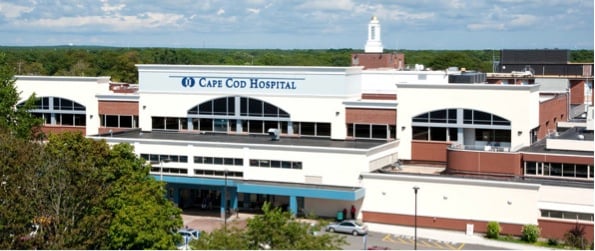
Cape Cod Hospital - Office of Student Affairs at UMass Medical School

Citing financial hardships due to the COVID-19 pandemic, Barnstable, Mass.-based Cape Cod Healthcare will lay off 118 employees and extend salary reductions for executives, according to The Cape Cod Times.

In May, Cape Cod Healthcare furloughed 595 employees due to low patient volume and revenue declines amid the pandemic. Of the workers furloughed, 477 have returned to work, and 118 will be laid off. 

Employees affected by the layoffs include eight vice presidents, a nurse, lab workers, environmental service workers and dietary employees.

In addition to the personnel reduction, Cape Cod Healthcare is extending a 10 percent salary cut for its senior executives, according to the report. 

Cape Cod Healthcare CEO Michael Lauf told the Times that the layoffs were “an extremely difficult decision to make, as Cape Cod Healthcare values each and every one of our employees.”

Read the full report here. 


Northwell records $329M loss in first half of 2020

https://www.beckershospitalreview.com/finance/northwell-records-329m-loss-in-first-half-of-2020.html?utm_medium=email

Northwell Health pairs with Israel Innovation Authority to develop new  medical innovations | MobiHealthNews

Northwell Health, a 19-hospital system based in New Hyde Park, N.Y., ended the first half of 2020 with an operating loss despite a revenue increase year-over-year, according to recently released financial documents. 

In the six months ended June 30, the health system recorded revenue of $6.3 billion, up from $6.1 billion reported in the same period in 2019.

The health system saw its patient revenue drop 9.7 percent in the first half of the year to $5.1 billion, compared to the same period in 2019. The patient revenue drop was attributed to the COVID-19 pandemic.

Northwell’s expenses climbed in the first six months of this year to $6.6 billion, an increase of about 9.5 percent from the same period in 2019.

The health system recorded an operating loss of $249.6 million.

After accounting for nonoperating gains and losses, the system ended the first half of 2020 with a $329 million net loss. This compares to a net income of $393 million in the first half of 2019.

Northwell Health estimated that the negative financial hit from the COVID-19 pandemic in the six months ended June 30 was about $1.2 billion and attributed most of the financial impact to lower patient volume.

Through Aug. 28, Northwell has received $1.2 billion in grants from the Coronavirus Aid Relief and Economic Security Act. In the six months ended June 30, the health system recorded $754 million of this relief aid as “other operating revenue.”

“While the financial impact estimates noted above have been made using the best available information at the time, the ultimate net impact of the pandemic to Northwell and its financial condition is uncertain,” Northwell Health stated.


Cleveland Clinic posts $201.8M operating loss in Q2

https://www.beckershospitalreview.com/finance/cleveland-clinic-posts-201-8m-operating-loss-in-q2.html?utm_medium=email

Find a Doctor | Cleveland Clinic

Cleveland Clinic ended the second quarter of this year with an operating loss, which the system attributed to financial damage tied to the COVID-19 pandemic. 

The 18-hospital system’s revenue declined to $2.3 billion in the second quarter of this year, down from $2.7 billion in the same period a year earlier, according to unaudited financial documents. In the first six months of this year, the health system experienced net patient service revenue shortfalls of more than $830 million, compared to plan, and incurred more than $165 million in COVID-19 preparedness costs. 

Cleveland Clinic reported operating expenses of $2.36 billion in the second quarter of this year, up from $2.34 billion in the same period last year.

The hospital system ended the most recent quarter with an operating loss of $201.8 million, compared to operating income of $116.2 million in the second quarter of 2019. Looking at the first six months of this year, Cleveland Clinic reported an operating loss of $241.7 million, compared to operating income of $152.4 million a year earlier. 

To help offset financial damage tied to the pandemic in the first six months of this year, Cleveland Clinic recognized $324 million in federal grants made available under the Coronavirus Aid, Relief and Economic Security Act. The health system also applied for and received $849 million in Medicare advance payments, which must be repaid. 

After factoring in investment gains of $477.5 million and other nonoperating items, Cleveland Clinic closed out the second quarter of this year with net income of $276.1 million. In the same period a year earlier, the health system posted net income of $256.4 million.


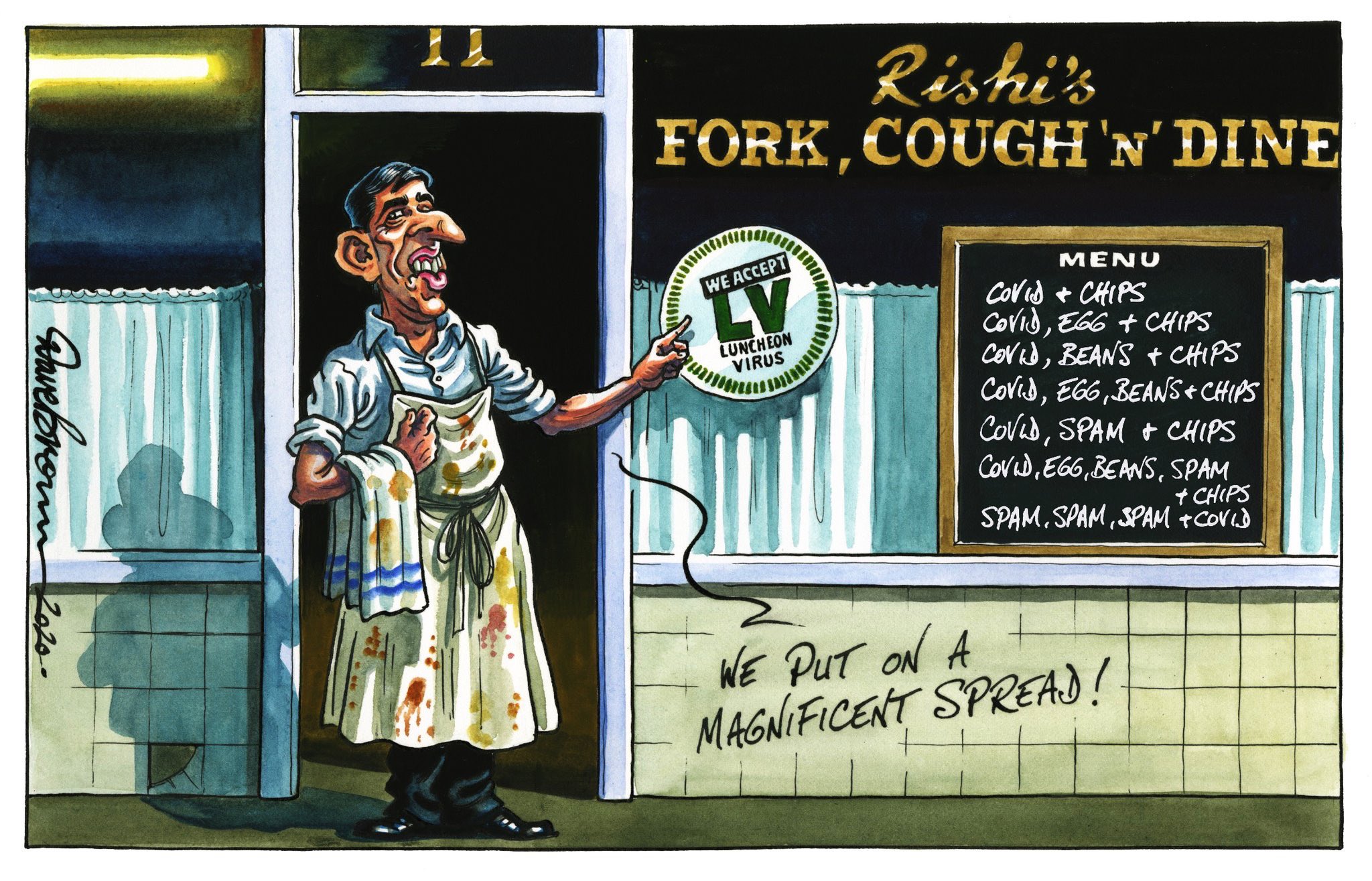
Cartoon – Covid Dining

Political Cartoon on Twitter: "Dave Brown's @Independent cartoon...  #RishiSunak #SummerStatement #EatOutToHelpOut #COVID19 #Coronavirus # SuperSpreader - political cartoon gallery in London  https://t.co/dePcTdnXF6… https://t.co/XDxWE1jDGh"

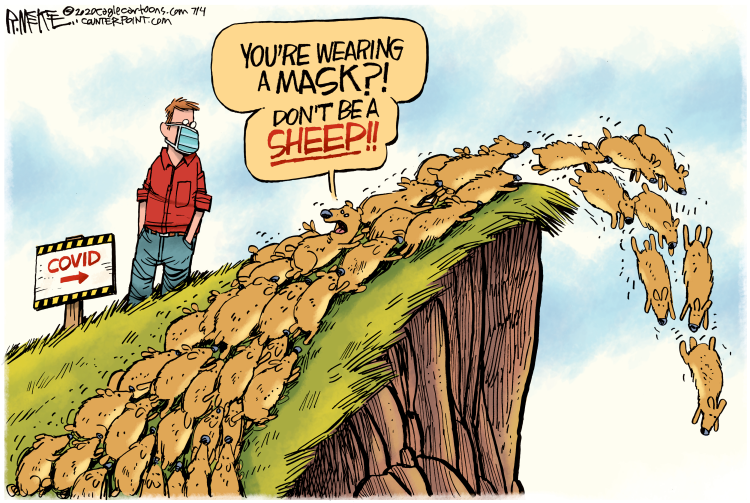
Cartoon – Sheep will be Sheep

Covid Lemmings

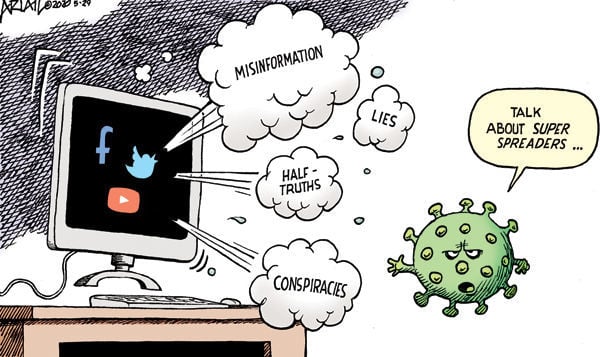
Cartoon – Talk About Super Spreaders

6-02 cartoon | Cartoons | heraldandnews.com

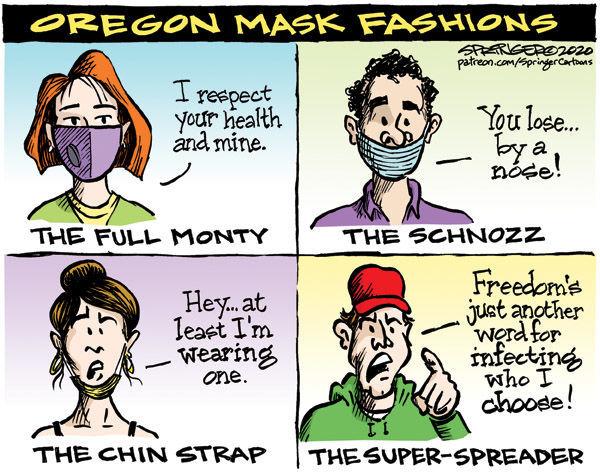
Cartoon – Coronavirus Mask Fashions

5-27 cartoon | Cartoons | heraldandnews.com

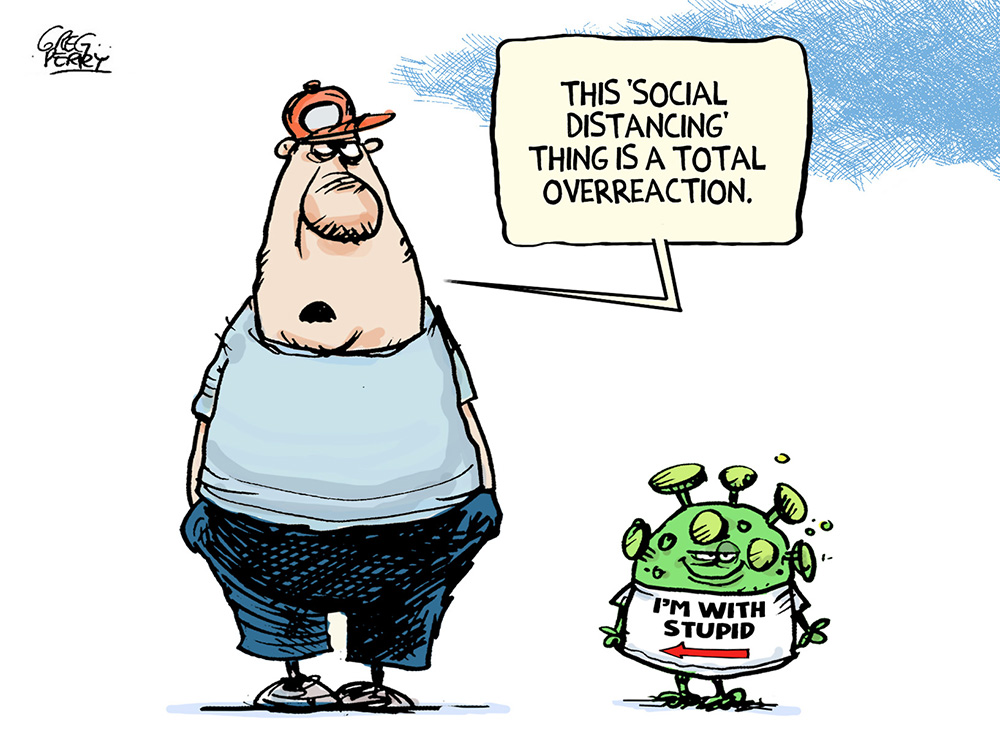
Cartoon – Social Distancing

What Should We Do with These Super Spreader Bozos? | The Tyee

A single conference may have seeded 20,000 COVID cases

https://mailchi.mp/95e826d2e3bc/the-weekly-gist-august-28-2020?e=d1e747d2d8
COVID-19 'superspreaders' behind most new cases, researchers say | wcnc.com

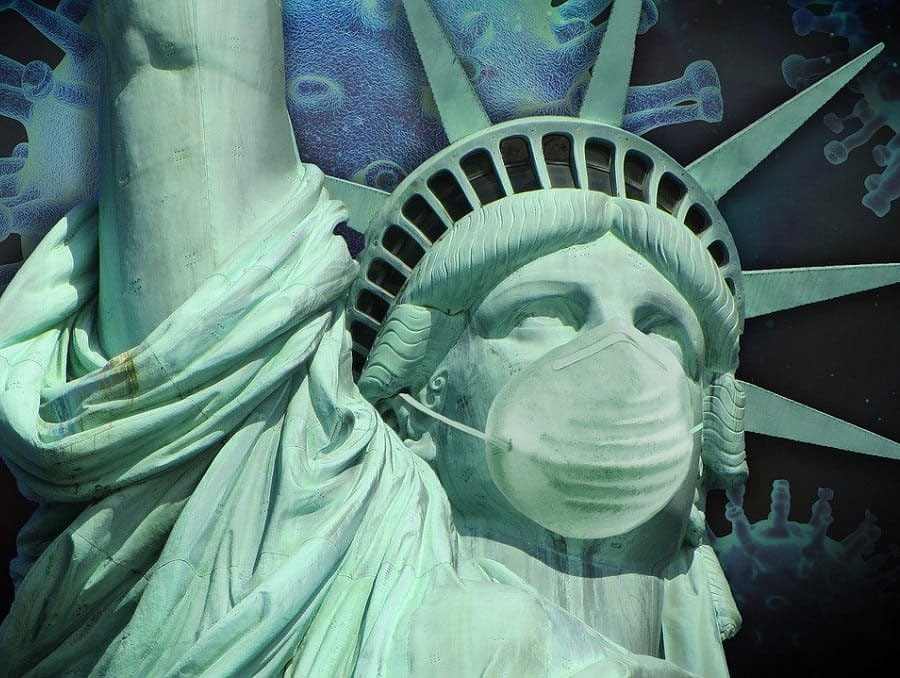
A conference bringing together 175 Biogen leaders in Boston during the last week of February demonstrated the anatomy of a superspreader event: attendees from all over the world working, eating and drinking together, at a time when little was known about COVID-19 and few precautions were taken.

A new study reveals the magnitude of spread of this single event: 20,000 COVID infections may have been linked to the conference by early May, orders of magnitude greater than the previously reported 99 cases. A group of researchers evaluated the viral genomes from 772 patients across the greater Boston area, finding over 80 separate introductions of the virus, primarily from Western Europe or elsewhere in the US.

But the Biogen event was far and away the largest source of infections, accounting for 37 percent of investigated cases, which extrapolates to an estimated 20,000 cases across the area (the event also seeded clusters in several states and overseas).

Many patients with the Biogen virus had no direct connection with the event, including a large number of homeless individuals.

As college campuses reopen and states flirt with allowing larger gatherings, the study provides an important lesson of the potential for exponential spread of the virus when left unchecked by preventive measures, and the need for testing and contact tracing to quickly stop the chain of transmission. 


COVID-related controversy and hope amid a week of politics

https://mailchi.mp/95e826d2e3bc/the-weekly-gist-august-28-2020?e=d1e747d2d8

Democracy vs. disease: the role of freedom in facing pandemics | University  of Nevada, Reno

Week two of the 2020 Pre-Recorded Virtual Presidential Convention-thon wrapped up Thursday night, albeit with a decidedly less Zoom-Webex-FaceTimey feel for this week’s Republicans compared to last week’s Democrats. As delegates and VIPs sat cheek-by-jowl at several in-person events, with scarce masking and plenty of loud cheering, the viewer was left hoping that a rigorous attendee COVID testing protocol was being used.

That hope may have been dashed by a significant change to testing guidelines from the Centers for Disease Control and Prevention (CDC), which reversed course on Monday by recommending asymptomatic people who have been exposed to the coronavirus should no longer be tested.

The altered guidance drew sharp rebukes from doctors and infectious disease experts, who worried that it would undermine the ability to track the spread of the virus, which has now claimed more than 181,000 American lives. The flap over testing guidelines came at the same time as Food and Drug Administration (FDA) commissioner Stephen Hahn was forced to apologize for misleading claims he made over the weekend about the efficacy of convalescent plasma in treating COVID patients. In announcing an Emergency Use Authorization (EUA) for the treatment, Hahn dramatically overstated evidence supporting the lifesaving ability of the therapy. The missteps by CDC and FDA officials were undoubtedly an unwelcome distraction for the Trump administration, overshadowing the president’s bold promise in his acceptance speech that a COVID vaccine would be available before the end of the year.

There was hopeful news on the COVID front this week as well. In what was quickly hailed as a “game changer” in solving the nation’s faltering ability to deliver timely test results, Abbott Laboratories was granted its own EUA for a 15-minute, $5 rapid antigen test, which does not require laboratory analysis. The company plans to produce tens of millions of the new BinaxNOW test kits in the next month, and the US government has agreed to acquire nearly all of the 150M tests the company will produce by the end of the year, at a $760M purchase price. Although some antigen tests have been cited for accuracy problems, the FDA said that the new Abbott test delivers correct positive tests 97.1 percent of the time, and correct negative tests 98.5 percent of the time.

Rapid, reliable point-of-care testing could allow for safer return to schools, workplaces, and public gatherings, and if successfully deployed will be an essential tool in managing the impact of the virus until effective vaccines are fully developed, launched, and administered. A genuine ray of hope as the nation looks ahead to the fall and winter.

US coronavirus update: 5.9M cases; 181K deaths; 81.8M tests conducted.