10 health systems with strong finances

Here are 10 health systems with strong operational metrics and solid financial positions, according to reports from credit rating agencies Fitch Ratings and Moody’s Investors Service.

1. Allina Health System has an “AA-” rating and a stable outlook with Fitch. The Minneapolis-based system is the inpatient market share leader in a highly competitive market and has a strong relation with payers in the market, Fitch said.

2. Bryan Health has an “AA-” rating and stable outlook with Fitch. The Lincoln, Neb.-based health system has a leading and growing market position, very strong cash flow and a strong financial position, Fitch said. The credit rating agency said Bryan Health has been resilient through the COVID-19 pandemic and is well-positioned to accommodate additional strategic investments. 

3. CaroMont Health has an “AA-” rating and stable outlook with Fitch. The Gastonia, N.C.-based system has a leading market position in a growing services area and a track record of good cash flow, Fitch said.  

4. Christiana Care Health System has an “Aa2” rating and stable outlook with Moody’s.  The Newark, Del.-based system has a unique position as the state’s largest teaching hospital and extensive clinical depth that affords strong regional and statewide market capture, and is expected to return to near pre-pandemic level margins over the medium-term, Moody’s said. 

5. Intermountain Healthcare has an “Aa1” rating and stable outlook with Moody’s. The Salt Lake City-based health system has exceptional credit quality, which will continue to benefit from its leading market position in Utah, Moody’s said. The credit rating agency said the health system’s merger with Broomfield, Colo.-based SCL Health will also give Intermountain greater geographic reach.

6. OhioHealth has a “AA+” rating and stable outlook with Fitch. The Columbus, Ohio-based system has an exceptionally strong credit profile, broad regional operating platform and leading market position in both its competitive two-county primary service area and broader 47-county total service area, Fitch said. 

7. Parkview Health has an “Aa3” rating and stable outlook with Moody’s. The Fort Wayne, Ind.-based system has a leading market position with expansive tertiary and quaternary clinical services in northeastern Indiana and northwestern Ohio, Moody’s said. 

8. Rady Children’s Hospital has an “AA” rating and stable outlook with Fitch. The San Diego based hospital has a very strong balance sheet position and operating performance, and is also a leading provider of pediatric services in the growing city and tri-county service area, Fitch said. 

9. ThedaCare has an “AA-” rating and stable outlook with Fitch. The Neenah, Wis.-based system has a focused strategy, strong financial profile and robust market share, Fitch said. 

10. Trinity Health has an “AA-” rating and stable outlook with Fitch. The Livonia, Mich.-based system’s large size and market presence in multiple states disperses and the long-term ratings incorporate the expectation that Trinity will return to sustained stronger operating EBITDA margins.  
Operating Margins Among the Largest For-Profit Health Systems Have Exceeded 2019 Levels for the Majority of the COVID-19 Pandemic

Recent reports have raised concerns about the financial stability of hospitals amidst disruptions caused by the COVID-19 pandemic and the looming prospect of an economic recession.

Large amounts of government relief helped prop up hospital margins in 2020 and 2021. However, industry reports suggest that the outlook for hospitals and health systems has deteriorated in 2022 due to the ongoing effects of the pandemic (such as labor shortages), decreases in government relief, and broader economic trends that have led to rising prices and investment losses. According to at least one account, 2022 may be the worst financial year for hospitals in decades. These challenges could force hospitals to take steps to increase efficiency but may also result in price increases or cost-cutting measures that impair patient access or care quality. Against this backdrop, industry stakeholders have asked Congress to provide additional fiscal relief to hospitals and to stop scheduled Medicare payment reductions.

To provide context for these policy discussions, we evaluated the financial performance of the three largest for-profit health systems in the country—HCA Healthcare (“HCA”), Tenet Healthcare Corporation (“Tenet”), and Community Health Systems (CHS)—which collectively accounted for about 8 percent of community hospital beds in the US in 2020.1 These three systems are publicly traded, meaning that we were able to acquire timely financial data about these systems through their reports to the Securities and Exchange Commission (SEC), as well as data on their stock prices (see Methods for additional details).

Operating margins among all three large health systems were positive and exceeded pre-pandemic levels for the majority of the pandemic, including most recently in the third quarter of 2022. 

Operating margins reflect the profit margins earned on patient care and other operations of a given health system—such as from gift shops, parking, and cafeterias—and incorporate government COVID-19 relief funds.2 Our definition of operating margins excludes income taxes and nonrecurring revenues and expenses, such as from the sale of facilities. HCA and Tenet had positive operating margins throughout the pandemic, and CHS had positive operating margins in all but two quarters of the pandemic (with one of those quarters being at the very beginning of the pandemic).  HCA has had operating margins of at least 10 percent during the majority of the pandemic (9 out of 11 quarters). In other words, HCA’s revenue from patient care and other operations exceeded operating expenses by at least 10 percent for most of the pandemic. Tenet has had operating margins of at least 5 percent for the majority of the pandemic (9 out of 11 quarters), while CHS’s operating margins have been lower (less than 5% for 9 out of 11 quarters). CHS had lower margins than the other systems before the pandemic as well.

For all three systems, operating margins have exceeded pre-pandemic (2019) levels for most of the pandemic (9 out of 11 quarters), including the last quarter of our analysis (the third quarter of 2022), despite recent decreases in operating margins. HCA and Tenet dipped below their 2019 operating margins during two quarters of 2020, and CHS fell below their 2019 operating margins during the first quarter of 2020 and the second quarter of 2022 before increasing again. As of the third quarter of 2022, operating margins were 11.4 percent for HCA, 8.4 percent for Tenet, and 1.2 percent for CHS.

Stock prices increased and then decreased during the pandemic; HCA and Tenet stock prices have increased overall since January 2020 while CHS stock prices have decreased. 

Stock prices generally reflect investors’ evaluation of the future earnings potential of a given company. Stock prices increased dramatically during the first 1.5 to 2 years of the pandemic. At their heights, HCA stock prices had increased by 87.9 percent, Tenet stock prices had increased by 153.8 percent, and CHS stock prices had increased by 383.1 percent relative to January 2020.

Stock prices have also decreased substantially in 2022—in line with broader economic trends—and especially so among Tenet and CHS. As of November 8, 2022, HCA and Tenet stock prices have increased overall relative to January 2020 (by 44.6% and 12.6%, respectively).3 CHS stock prices have decreased by 11.5% since January 2020, though CHS has also experienced longstanding financial challenges that predate the pandemic. For purposes of comparison, HCA stock prices increased by a much greater amount than the S&P 500 during this period (44.6% versus 16.8%), while the S&P 500 slightly outperformed Tenet stock (16.8% versus 12.6%) and significantly outperformed CHS stock (16.8% versus -11.5%).

As of December 2, 2022, the majority of market analysts followed by MarketWatch were bullish on HCA and Tenet stock (with 18 buy, 3 overweight, and 5 hold recommendations for HCA stock and 14 buy, 2 overweight, and 4 hold recommendations for Tenet stock) and neutral about CHS stock (with 8 hold and 4 buy recommendations); none of the analysts rated these stocks as “sell” or “underweight.”

Discussion

Industry reports have suggested that hospitals had high margins in 2020 and 2021 but have faced significant financial challenges in 2022. Our analysis adds nuance to this discussion. So far this year, operating margins among the three largest for-profit health systems in the country have met or exceeded pre-pandemic levels. HCA and Tenet in particular have had high operating margins. CHS had negative operating margins in the second quarter of 2022, and its stock prices decreased overall from January 2020 to November 2022, but its financial challenges precede the pandemic. While some hospitals are struggling in the current environment—with high inflation and the ongoing burdens posed by COVID-19, flu, and respiratory syncytial virus (RSV)—our results indicate that the largest for-profit systems have had operating margins that exceed pre-pandemic levels.

Duke Health credit rating downgraded amid integration and macro concerns

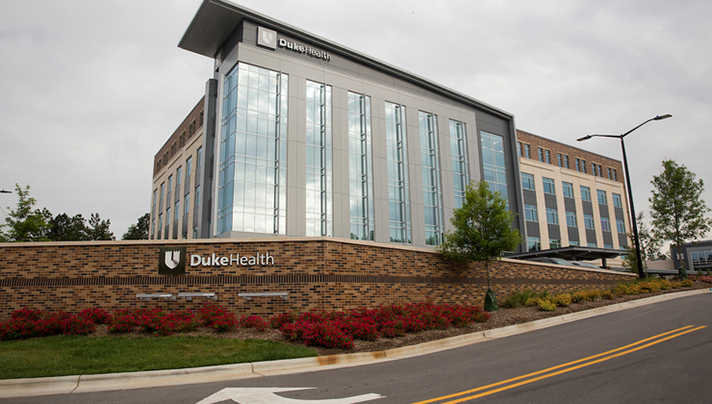
Durham, N.C.-based Duke University Health System was downgraded to an “AA-” credit rating amid concern over its planned integration of the Private Diagnostic Clinic, a for-profit medical group with over 1,800 physicians, Fitch Ratings said Dec. 8.

The rating, declining from “AA,” applies both to specific bonds the group holds and to its overall Issuer Default Rating. In addition to the integration of the PDC, Fitch also cited concern over macro issues such as labor and inflationary pressures, which have helped to drag down operating results for the health group.

“While the transition of the PDC into the Duke Health Integrated Practice will only be effective in July 2023, the uncertainty of the proposed change had already caused some disruption to PDC’s ability to recruit physicians and may have had a negative impact on volumes,” Fitch said.

But while such integration will likely lead to an “extended period of lower operating results,” Duke Health is expected to gradually return to much stronger performance given its robust fundamentals, the ratings group added. Historically, the hospital system had pre-pandemic operating EBITDA margins of over 10 percent, compared with a fiscal year 2022 figure of just 2.1 percent.

The health system, which reported $4.5 billion of total operating revenues in 2022, said its CEO, A. Eugene Washington, MD, will step down in June 2023.

High labor costs, inflation make healthcare outlook negative, Moody’s says

Sustained high labor expenses and inflationary pressures will continue to affect the healthcare industry in 2023, keeping the outlook for nonprofit hospital systems negative, Moody’s said in a Dec. 7 report.

In addition to such pressures, persistent COVID-19 surges, supply chain disruptions and the need for continued cybersecurity investments will also increase expenses, the report said. And while operating revenue is expected to modestly improve next year, the ending of federal Coronavirus Aid, Relief and Economic Security Act funding, net Medicare cuts and the end of the public health emergency will negatively affect hospital revenues, Moody’s said.

“This level of operating cash flow production will likely prove insufficient over the long term to enable adequate reinvestment in facilities, maintain investment in programs, or support organizational growth — key considerations that drive our negative outlook,” said Brad Spielman, vice president, senior credit officer for Moody’s.

Some of the less well-funded healthcare systems could even face breaches of covenant amid such a challenging backdrop, Moody’s warned. Such covenants typically refer to issues like days of cash on hand or minimum coverage of debt.

Management in such challenged systems have taken measures to mitigate the danger of such breaches, the report said. These include liquidating investments and drawing on lines of credit as well as refinancing debt, an unfavorable option in the current economic situation.

The present interest-rate environment, however, currently makes such a move relatively costly,” the report noted.

The Moody’s report follows quickly on the heels of a similar one from Fitch Ratings Dec. 1 that highlighted the “formidable challenge” of high labor expenses and inflationary pressures facing the industry.

Cooper University Health Care credit rating up to A-, its highest ever

S&P Global Ratings raised Cooper University Health Care’s credit rating from “BBB+” to “A-“, the highest rating in the Camden, N.J.-based system’s 135-year history, roj-nj.com reported Nov. 28.

The rating is for bonds issued by Camden County Improvement Authority. S&P praised Cooper for its focus on cost containment, revenue improvement, expanding market share and developing key services to gain more tertiary referrals and limit outpatient migration to Philadelphia academic medical centers, according to the report.

“Today’s credit rating upgrade is validation of Cooper’s financial strength, our prudent growth strategies and the tremendous work by our dedicated team members who tirelessly serve our patients, their families and each other to produce our current and future success,” co-CEO Kevin O’Dowd said.

Cooper is expected to begin construction on a $2 billion expansion of its Camden, N.J., campus in 2023.

Prime Healthcare hit with credit downgrade

Moody’s Investors Service has downgraded the ratings on Prime Healthcare’s probability of default rating to “B2-PD” from “B1-PD” as well as its ratings of the system’s senior secured notes to “B3” from “B2.”

Moody’s also revised the outlook to negative from stable because it projects operating expenses will continue to pressure the 45-hospital system’s profitability in the near term, presenting challenges for “the company’s pace of deleveraging,” according to a Nov. 18 news release. 

The downgrade of the Ontario, Calif.-based system’s ratings reflects Moody’s expectation of continued pressure on the Prime’s profitability in the coming quarters and elevated financial leverage, Moody’s said.

Prime’s debt/EBITDA jumped to about 6.1 times at the end of September from high-3.0 times one year ago, according to Moody’s. While a large part of the leverage increase was due to weak earnings in the first quarter, Moody’s expects the system’s financial leverage will remain high in the 6-6.5 times range in the next 12 months. 

This year, the health system saw a surge in operating expenses, not fully offset by an increase in reimbursements, according to Moody’s. A significant portion of the increased expenses can be attributed to rising contract labor costs. Contract labor cost per hour dipped in the third quarter but still remains far higher than in prior years.

Moody’s said social and governance risk considerations are material to the rating downgrade, arguing that Prime’s reliance on clinical labor makes it vulnerable to worsening supply-demand imbalance of such labor and the resultant spike in labor costs. The risk has become more prominent after the pandemic, which triggered increased retirement and a shift from permanent to temporary staffing, especially for nurses, Moody’s said.

Health system cash reserves plummet

Cash reserves, an important indicator of financial stability, are dropping for hospitals and health systems across the U.S.

Both large and small health systems are affected by rising labor and supply costs while reimbursement remains low. St. Louis-based Ascension reported days cash on hand dropped from 336 at the end of the 2021 fiscal year to 259 as of June 30, 2022, the end of the fiscal year. The system also reported accounts receivable increased three days from 47.3 in 2021 to 50.3 in 2022 because commercial payers were slow, especially in large dollar claims.

Trinity Health, based in Livonia, Mich., also reported days cash on hand dropped to 211 in fiscal year 2022, ending June 30, compared to 254 days at the end of 2021. Trinity attributed the 43-day decrease in cash on hand to “investment losses and the recoupment of the majority of the Medicare cash advances.”

Chicago-based CommonSpirit Health reported days cash on hand decreased by 69 days in the last year. The 140-hospital health system reported 245 days cash on hand at the 2021 fiscal year’s end June 30, and 176 days for 2022.

Lehigh Valley Health Network in Allentown, Pa., said unfavorable trends in the capital market led to investment losses and a drop in days cash on hand from 216 to 150 days in the 2022 fiscal year ending June 30. The health system also had a scheduled repayment of $191.1 million in advance Medicare dollars as well as $25 million in deferred payroll tax payments.

Philadelphia-based Thomas Jefferson University reported cash on hand for clinical operations dropped by 10.9 days in just the last quarter due to nonoperating investment losses and repaying government advances, which equaled about five days cash on hand. The health system reported 158.5 days cash on hand as of Sept. 30.

While the large health systems’ days cash on hand are dropping, they still have deep reserves. Smaller hospitals and health systems are in a more dire situation. Doylestown (Pa.) Hospital reported as of Sept. 30 the system had 81 days cash on hand, and Moody’s downgraded the hospital in June after the days cash on hand dropped below 100.

Kaweah Health in Visalia, Calif., saw reserves plummet since the pandemic began from 130 to 84 days cash on hand. Gary Herbst, CEO of Kaweah Health, blamed lost elective procedures, high labor costs, inflation and more for the system’s financial issues.

“The COVID-19 pandemic, and its aftermath, have brought District hospitals to the brink of financial collapse,” Mr. Herbst wrote in an open letter to Gov. Gavin Newsom published in the Visalia Times Delta. He asked Mr. Newsom to provide additional funding for public district hospitals. “Without your help, it will soon be virtually impossible for Medi-Cal patients to receive anything but emergency medical care in the State of California.”

5 health systems hit with rating downgrades

A number of health systems experienced downgrades to their financial ratings in recent weeks amid ongoing operating losses and challenging work environments.

Here is a summary of recent ratings since Becker’s last roundup Sept. 21:

The following systems experienced downgrades:

Main Line Health (Radnor Township, Pa.) — downgraded debt rating from “AA” to “AA-” in November (Fitch Ratings)

The downgrade reflects “significant operating losses” in fiscal year 2022, ending June 30, and is in relation to $594 million of bonds the health system holds. While downgrading that specific rating, however, Fitch described the healthcare group’s outlook as stable and said that it will benefit from a good market position in a favorable service area with strong market share.

Fitch described “continued expense challenges” facing the hospital group over the next two years as part of its decision to downgrade the debt rating.

Hannibal (Mo.) Regional Healthcare System — lowered financial outlook in November from stable to negative amid uncertainty around the hospital group’s capital spending plans (Fitch Ratings)

“The Negative Outlook reflects uncertainty around capital spending and the potential issuance of new debt to address infrastructure issues at the system’s main campus and expand inpatient/outpatient capacity,” Fitch said. “A master facilities planning process has begun, but cost estimates and timing are not yet available and the board has not approved any potential projects.” 

Fitch also affirmed default ratings for HRHS at “A-.”

ChristianaCare (Newark, Del.) was issued a negative outlook in October (S&P Global Ratings)

Pressures from the pandemic and industry challenges have led to a “volatile operating performance” in the last three years, and ChristianaCare has a small revenue base compared to similarly rated health systems, S&P said,

“The negative outlook reflects [ChristianaCare’s] operating volatility and balance sheet deterioration that, while largely stemming from COVID-19 pandemic and industry pressures, are not characteristic of the ‘AA+’ rating level and could lead to a downgrade during the outlook period,” Chloe Pickett, an S&P credit analyst, said in the firm’s report.

The S&P also affirmed ChristianaCare’s “AA+” long-term rating based on the health system’s leading business position within its service area and healthy balance sheet, according to an Oct. 27 report.

MultiCare Health System (Tacoma, Wash.) had various debt obligations downgraded in October from”AA-” to “A+” (Fitch Ratings)

The downgrades included the healthcare system’s existing bond ratings and $430 million of fixed rate taxable notes as well as the group’s Issuer Default Rating.

“The downgrade of MultiCare’s IDR to ‘A+’ from ‘AA-‘ reflects the considerable operating stress the system is facing in the current fiscal year, in combination with balance sheet metrics that have moderated as a result of equity market volatility and a recent debt issuance,” Fitch said.

Wise Health System (Decatur, Texas) was downgraded to “BB+” from “BBB-” in regard to various debt obligations as it struggles with continued operating challenges (Fitch Ratings)

Wise Health System’s Issuer Default Rating and the ratings on series 2014A, 2021A, 2021B and 2021C hospital revenue bonds issued by Decatur Hospital Authority on behalf of Wise were all downgraded.

“The downgrade reflects the change in Fitch’s assessment of Wise’s operating risk and financial profiles to ‘bb’ from ‘bbb’ due to deterioration in the hospital’s operating performance through six-months (ended June 30) and the expectation of sizable operating and net losses in 2022,” Fitch said.

Big payers ranked by Q3 profits

The nation’s largest payers have filed their third-quarter earnings reports, revealing which grew their profits the most year over year.

1. UnitedHealth Group: $5.3 billion
The company’s third quarter earnings increased over 28 percent year over year. Total net earnings in 2022 are $15.7 billion, an increase of 16.2 percent from $13.5 billion in 2021.

2. Cigna: $2.8 billion
The company’s third quarter earnings increased over 70 percent year over year. Total net earnings in 2022 are $5.5 billion, an increase of over 29 percent from $4.2 billion in 2021.

3. Elevance Health: $1.6 billion
The company’s third quarter earnings increased over 7 percent year over year. Total net earnings in 2022 are $5.06 billion, an increase of nearly 2 percent from $5 billion in 2021.

4. Humana: $1.2 billion
The company’s third quarter earnings decreased over 21 percent year over year. Total net earnings in 2022 are $2.8 billion, a decrease of over 4 percent from $2.9 billion in 2021.

5. Centene: $738 million
The company’s third quarter earnings increased over 26 percent year over year. Total net earnings in 2022 are $1.4 billion, an increase of over 89 percent from $748 million in 2021.

6. CVS Health: $3.4 billion losses
The company’s third quarter losses are attributable to an opioid legal settlement. Total net earnings in 2022 are $1.9 billion, a decrease of over 71 percent from $6.6 billion in 2021.

10 health systems with strong finances

Here are 10 health systems with strong operational metrics and solid financial positions, according to reports from Fitch Ratings and Moody’s Investors Service.

1. Advocate Aurora Health has an “AA” rating and a stable outlook with Fitch. The health system, dually headquartered in Milwaukee and Downers Grove, Ill., has a strong financial profile and a leading market position over a broad service area in Illinois and Wisconsin, Fitch said. The health system’s fundamental operating platform is strong, the credit rating agency said. 

2. Allina Health System has an “AA-” rating and a stable outlook with Fitch. The Minneapolis-based system is the inpatient market share leader in a highly competitive market and has a strong relation with payers in the market, Fitch said. Alliana’s financial profile is strong, the ratings agency said. 

3. Banner Health has an “AA-” rating and stable outlook with Fitch. The Phoenix-based health system’s core hospital delivery system and growth of its insurance division combine to make it a successful, highly integrated delivery system, Fitch said. The credit rating agency said it expects Banner to maintain operating EBITDA margins of about 8 percent on an annual basis, reflecting the growing revenues from the system’s insurance division and large employed physician base.

4. Bon Secours Mercy Health has an “AA-” rating and stable outlook with Fitch. The Cincinnati-based health system has a broad geographic footprint as one of the five largest Catholic health systems in the U.S., a good payer mix and a leading or near-leading market share in eight of its eleven markets in the U.S., Fitch said.

5. Bryan Health has an “AA-” rating and stable outlook with Fitch. The Lincoln, Neb.-based health system has a leading and growing market position, very strong cash flow and a strong financial position, Fitch said. The credit rating agency said Bryan Health has been resilient through the COVID-19 pandemic and is well-positioned to accommodate additional strategic investments. 

6. Deaconess Health System has an “AA” rating and stable outlook with Fitch. The Evansville, Ind.-based system has a leading market position in its primary service area and a favorable payer mix, Fitch said. The ratings agency said it expects Deaconess’ operating EBITDA margins to improve and stabilize around 10 percent by 2023, reflecting strong volumes and focus on operating efficiencies.

7. Gundersen Health System has an “AA-” rating and stable outlook with Fitch. The La Crosse, Wis.-based health system has strong balance sheet metrics, a leading market position and an expanding operating platform in its service area, Fitch said. The credit rating agency expects the health system to return to strong operating performance as it emerges from disruption related to the COVID-19 pandemic. 

8. Hackensack Meridian Health has an “AA-” rating and stable outlook with Fitch. The Edison, N.J.-based health system has shown consistent year-over-year increases in market share and has a solid liquidity position, Fitch said. 

9. Intermountain Healthcare has an “Aa1” rating and stable outlook with Moody’s. The Salt Lake City-based health system has exceptional credit quality, which will continue to benefit from its leading market position in Utah, Moody’s said. The credit rating agency said the health system’s merger with Broomfield, Colo.-based SCL Health will also give Intermountain greater geographic reach.

10. Yale New Haven (Conn.) Health has an “AA-” rating and stable outlook with Fitch. The health system’s turnaround efforts, brand recognition and market presence will help it return to strong operating results, Fitch said.