


With his poll numbers fading after a rally-around-the-leader bump, the president is stoking protests against stay-at-home orders.
First he was the self-described “wartime president.” Then he trumpeted the “total” authority of the federal government. But in the past few days, President Trump has nurtured protests against state-issued stay-at-home orders aimed at curtailing the spread of the coronavirus.
Hurtling from one position to another is consistent with Mr. Trump’s approach to the presidency over the past three years. Even when external pressures and stresses appear to change the dynamics that the country is facing, Mr. Trump remains unbowed, altering his approach for a day or two, only to return to nursing grievances.
Not even the president’s re-election campaign can harness him: His team is often reactive to his moods and whims, trying but not always succeeding in steering him in a particular direction. Now, with Mr. Trump’s poll numbers falling after a rally-around-the-leader bump, he is road-testing a new turn on a familiar theme — veering into messages aimed at appealing to Americans whose lives have been disrupted by the legally enforceable stay-at-home orders.
Whether his latest theme will be effective for him is an open question: In an NBC/Wall Street Journal poll released on Sunday, just 36 percent of voters said they generally trusted what Mr. Trump says about the coronavirus.
But the president, who ran as an insurgent in 2016, is most comfortable raging against the machine of government, even when he is the one running the country. And while the coronavirus is in every state in the union, it is heavily affecting minority and low-income communities.
So when Mr. Trump on Friday tweeted “LIBERATE,” his all-capitalized exhortations against strict orders in specific states — including Michigan — were in keeping with how he ran in 2016: saying things that seem contradictory, like pledging to work with governors and then urging people to “liberate” their states, and leaving it to his audiences to hear what they want to hear in his words.
For instance, Mr. Trump did not take the opportunity to more forcefully encourage the protesters when he spoke with reporters on Friday.
“These are people expressing their views,” Mr. Trump said. “They seem to be very responsible people to me.” But he said he thought the protesters had been treated “rough.”
In a webcast with Students for Trump on Friday, a conservative activist and Trump ally, Charlie Kirk, echoed the message, encouraging a “peaceful rebellion against governors” in states like Michigan, according to ABC News.
On Fox News, where many of the opinion hosts are aligned with Mr. Trump and which he watches closely, there have also been discussions of such protests. And Mr. Trump has heard from conservative allies who have said they think he is straying from his base of supporters in recent weeks.
So far, the protests have been relatively small and scattershot, organized by conservative-leaning groups with some organic attendance. It remains to be seen if they will be durable.
But Mr. Trump’s show of affinity for such actions is in keeping with his fomenting of voter anger at the establishment in 2016, a key to his success then — and his fallback position during uncertain moments ever since.
In the case of the state-issued orders, Mr. Trump’s advisers say his criticism of certain places is appropriate.
Stephen Moore, a former adviser to Mr. Trump and an economist with FreedomWorks, an organization that promotes limited government, said he thought protesters ought to be wearing masks and protecting themselves. But, he added, “the people who are doing the protest, for the most part, these are the ‘deplorables,’ they’re largely Trump supporters, but not only Trump supporters.”
On Sunday, Mr. Trump again praised the protesters. “I have never seen so many American flags,” he said.
But Mr. Trump’s advisers are divided about the wisdom of encouraging the protests. At some of them, Gov. Gretchen Whitmer of Michigan, a Democrat, has been compared to Adolf Hitler. At least one protester had a sign featuring a swastika.
One adviser said privately that if someone were to be injured at the protests — or if anyone contracted the coronavirus at large events where people were not wearing masks — there would be potential political risk for the president.
But two other people close to the president, who asked for anonymity in order to speak candidly, said they thought the protests could be politically helpful to Mr. Trump, while acknowledging there might be public health risks.
One of those people said that in much of the country, where the numbers of coronavirus cases and deaths are not as high as in places like New York, New Jersey, California and Washington State, anger is growing over the economic losses that have come with the stringent social-distancing restrictions.
And some states are already preparing to restart their economies. Ohio, where Gov. Mike DeWine, a Republican, took early actions against the spread of the virus, is planning a staged reopening beginning on May 1.
Still, as Mr. Trump did throughout 2016, as when he said “torture works” and then walked back that statement a short time later, or when he advocated bombing the Middle East while denouncing lengthy foreign engagements, he has long taken various sides of the same issue.
Mobilizing anger and mistrust toward the government was a crucial factor for Mr. Trump in the last presidential election. And for many months he has been looking for ways to contrast himself with former Vice President Joseph R. Biden Jr., the presumptive Democratic presidential nominee and a Washington lifer.
The problem? Mr. Trump is now president, and disowning responsibility for his administration’s slow and problem-plagued response to the coronavirus could prove difficult. And protests can be an unpredictable factor, particularly at a moment of economic unrest.
Vice President Mike Pence, asked on NBC’s “Meet the Press” about the president’s tweets urging people to “liberate” states, demurred.
“The American people know that no one in America wants to reopen this country more than President Donald Trump,” Mr. Pence said, “and on Thursday the president directed us to lay out guidelines for when and how states could responsibly do that.”
“And in the president’s tweets and public statements, I can assure you, he’s going to continue to encourage governors to find ways to safely and responsibly let America go back to work,” he said.
With the political campaign halted, Mr. Trump’s advisers have seen an advantage in the frozen-in-time state of the race. Mr. Biden has struggled to fund-raise or even to get daily attention in the news cycle.
But Mr. Trump himself has seemed at sea, according to people close to him, uncertain of how to proceed. His approval numbers in his campaign polling have settled back to a level consistent with before the coronavirus, according to multiple people familiar with the data.
His campaign polling has shown that focusing on criticizing China, in contrast with Mr. Biden, moves voters toward Mr. Trump, according to a Republican who has seen it.
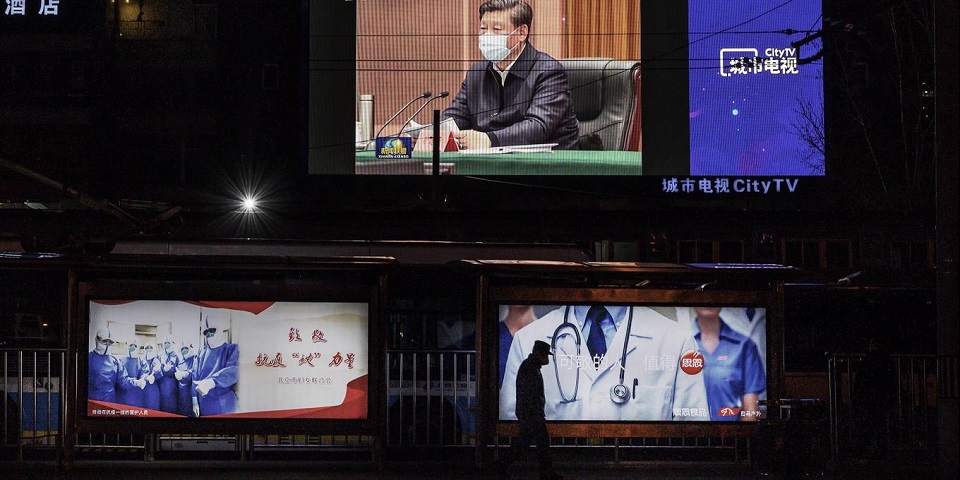
“Trump finally fired the first shot” with his more aggressive stance toward the Chinese government and its leader, Xi Jinping, said Stephen K. Bannon, Mr. Trump’s former chief strategist. “Xi is put on notice that the death, economic carnage and agony is his and his alone,” Mr. Bannon said. “Only question now: What is America’s president prepared to do about it?”
Mr. Trump’s campaign manager, Brad Parscale, has advocated messages that contrast Mr. Trump with Mr. Biden on a number of fronts, including China.
But inside and outside the White House, other advisers to Mr. Trump see an advantage in focusing attention on the presidency.
Kellyanne Conway, the White House counselor, has argued in West Wing discussions that there is a time to focus on China, but that for now, the president should embrace commander-in-chief moments amid the crisis.
Chris Christie, the former governor of New Jersey and a friend of Mr. Trump’s, said on ABC’s “This Week” that he did not think ads criticizing Mr. Biden on China were the right approach for now.
Ultimately, Mr. Trump’s advisers said, most of his team is aware that it can try to drive down Mr. Biden’s poll numbers, but that no matter what tactics it deploys now, the president’s future will most likely depend on whether the economy is improving in the fall and whether the virus’s spread has been mitigated. Those things will remain unknown for months.
“This is going to be a referendum,” Mr. Christie said, “on whether people think, when we get to October, whether or not he handled this crisis in a way that helped the American people, protected lives and moved us forward.”



/cdn.vox-cdn.com/uploads/chorus_image/image/66580807/2660331.jpg.0.jpg)
 HENRY KOTULA
LONDON – As the COVID-19 crisis roars on, so have debates about China’s role in it. Based on what is known, it is clear that some Chinese officials made a major error in late December and early January, when they tried to prevent disclosures of the coronavirus outbreak in Wuhan, even silencing health-care workers who tried to sound the alarm. China’s leaders will have to live with these mistakes, even if they succeed in resolving the crisis and adopting adequate measures to prevent a future outbreak.
What is less clear is why other countries think it is in their interest to keep referring to China’s initial errors, rather than working toward solutions. For many governments, naming and shaming China appears to be a ploy to divert attention from their own lack of preparedness. Equally concerning is the growing criticism of the World Health Organization, not least by US President Donald Trump, who has attacked the organization for supposedly failing to hold the Chinese government to account. At a time when the top global priority should be to organize a comprehensive coordinated response to the dual health and economic crises unleashed by the coronavirus, this blame game is not just unhelpful but dangerous.
Globally and at the country level, we desperately need to do everything possible to accelerate the development of a safe and effective vaccine, while in the meantime stepping up collective efforts to deploy the diagnostic and therapeutic tools necessary to keep the health crisis under control. Given that there is no other global health organization with the capacity to confront the pandemic, the WHO will remain at the center of the response, whether certain political leaders like it or not.
Having dealt with the WHO to a modest degree during my time as chairman of the UK’s independent Review on Antimicrobial Resistance (AMR), I can say that it is similar to most large, bureaucratic international organizations. Like the International Monetary Fund, the World Bank, and the United Nations, it is not especially dynamic or inclined to think outside the box. But rather than sniping at these organizations from the sidelines, we should be working to improve them. In the current crisis, we should be doing everything we can to help both the WHO and the IMF to play an effective, leading role in the global response.
As I have argued before, the IMF should expand the scope of its annual Article IV assessments to include national public-health systems, given that these are critical determinants in a country’s ability to prevent or at least manage a crisis like the one we are now experiencing. I have even raised this idea with IMF officials themselves, only to be told that such reporting falls outside their remit because they lack the relevant expertise.
That answer was not good enough then, and it definitely isn’t good enough now. If the IMF lacks the expertise to assess public-health systems, it should acquire it. As the COVID-19 crisis makes abundantly clear, there is no useful distinction to be made between health and finance. The two policy domains are deeply interconnected, and should be treated as such.
In thinking about an international response to today’s health and economic emergency, the obvious analogy is to the 2008 global financial crisis. Everyone knows that crisis started with an unsustainable US housing bubble, which had been fed by foreign savings, owing to the lack of domestic savings in the United States. When the bubble finally burst, many other countries sustained more harm than the US did, just as the COVID-19 pandemic has hit some countries much harder than it hit China.
And yet, not many countries around the world sought to single out the US for presiding over a massively destructive housing bubble, even though the scars from that previous crisis are still visible. On the contrary, many welcomed the US economy’s return to sustained growth in recent years, because a strong US economy benefits the rest of the world.2
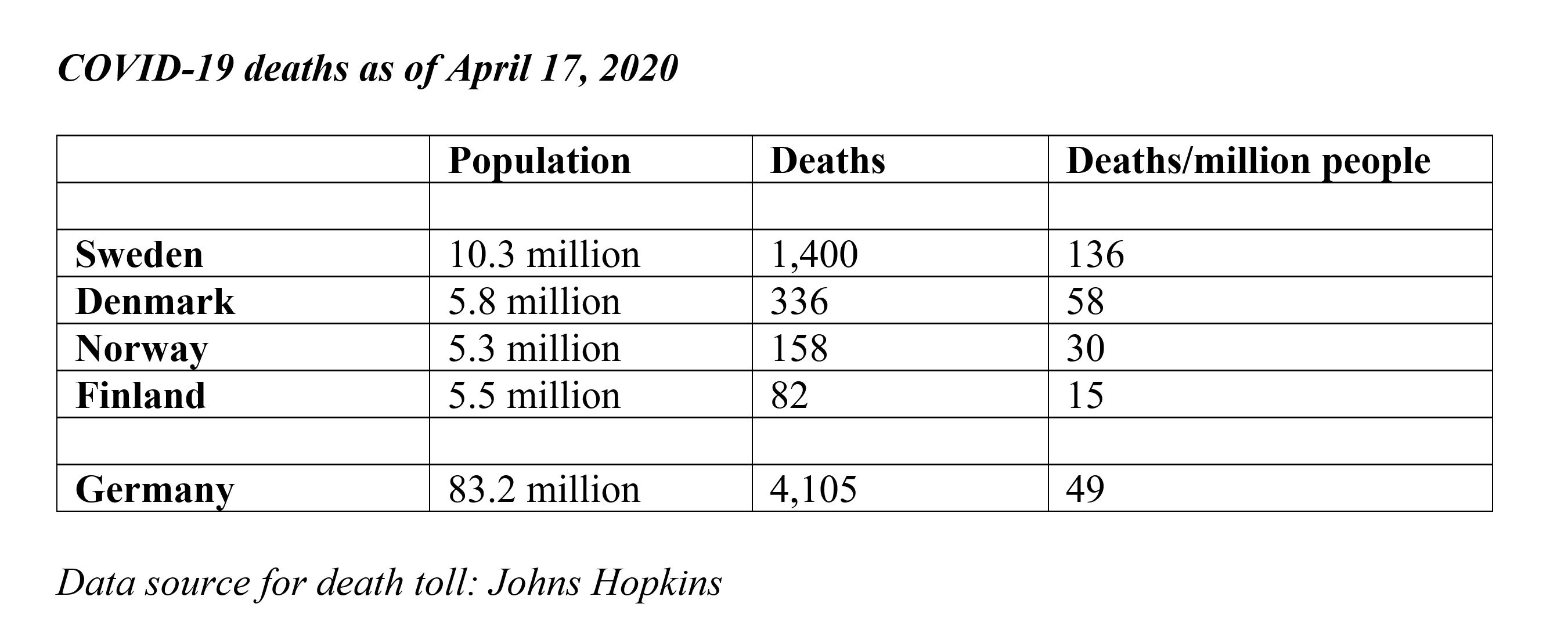
So, rather than applying a double standard and fixating on China’s undoubtedly large errors, we would do better to consider what China can teach us. Specifically, we should be focused on better understanding the technologies and diagnostic techniques that China used to keep its (apparent) death toll so low compared to other countries, and to restart parts of its economy within weeks of the height of the outbreak.
And, for our own sakes, we also should be considering what policies China could adopt to put itself back on a path toward 6% annual growth, because the Chinese economy inevitably will play a significant role in the global recovery. If China’s post-pandemic growth model makes good on its leaders’ efforts in recent years to boost domestic consumption and imports from the rest of the world, we will all be better off.