Ascension reports $2.7B net loss in Q3

https://www.beckershospitalreview.com/finance/ascension-reports-2-7b-net-loss-in-q3.html?utm_medium=email

Ascension, Google working on 'secret' patient data project, says ...

St. Louis.-based Ascension saw revenue decline in the three months ended March 31, and it ended the period with a net loss, according to unaudited financial documents

The 150-hospital system reported operating revenue of $6.1 billion in the third quarter of fiscal year 2020, down 2.5 percent from the same period a year earlier. Net patient service revenue dramatically declined in March due to a drop in patient volume attributed to the COVID-19 pandemic.

“COVID-19 has been encountered across all Ascension markets, to varying degrees, and has had an adverse effect on the system’s revenues and operating margin,” management wrote in comments on the financial results.

Looking at the nine months ended March 31, net patient service revenue was up 1.9 percent year over year due to several factors, including an increase in physician office visits and expansion of service lines and sites of care. 

The health system’s expenses climbed more than 3 percent year over year to $6.4 billion in the third quarter, and expenses were up nearly 4 percent in the nine months ended March 31. Higher expenses related to expanded service lines and the transition toward standardized revenue cycle services pushed the system’s expenses higher before the COVID-19 pandemic, Ascension said. 

Ascension ended the most recent quarter with an operating loss of $429.4 million, compared to operating income of $80.1 million a year earlier. During the nine months ended March 31, the health system’s operating loss totaled $344.9 million.

After factoring in nonoperating items, including losses from investments of nearly $2.5 billion, Ascension reported a net loss of $2.7 billion in the third quarter of fiscal year 2020. In the same period a year earlier, the system recorded investment income of $1.1 billion and net income of $1.2 billion.

To help offset financial damage caused by the COVID-19 pandemic, Ascension received funds from the $175 billion in relief aid Congress has allocated to hospitals and other healthcare providers to cover expenses and lost revenue tied to the pandemic. The health system received $211 million in federal grants, according to The New York Times.

Ascension also applied for and received about $2 billion of Medicare advance payments in April, which must be repaid. 


Baylor Scott & White to lay off 1,200 workers, furlough others

https://www.beckershospitalreview.com/finance/baylor-scott-white-to-lay-off-1-200-workers-furlough-others.html?utm_medium=email

How Baylor Scott & White's quality alliance led Texas in Medicare ...

Baylor Scott & White Health, a nonprofit health system based in Dallas, is laying off about 1,200 employees, nearly 3 percent of its workforce, according to The Dallas Morning News

Like other health systems across the nation, Baylor Scott & White is facing financial damage caused by the COVID-19 pandemic. The health system spent $85 million to prepare and respond to the pandemic, and it also saw a significant drop in patient volumes.

“We experienced a dramatic drop in patient volumes — between 50 and 90 percent, depending upon where they sought care,” CEO Jim Hinton told employees in a video message, according to The Dallas Morning News

Those affected by the layoffs will be told this week and paid through June 7, a spokesperson told The Dallas Morning News.

In addition to the layoffs, Baylor Scott & White is furloughing an unspecified number of employees, leaving some open positions unfilled and cutting the pay of about 300 senior leaders, according to the report. 

Baylor Scott & White has received about $172 million in federal grants from the $175 billion in relief aid Congress has allocated to hospitals and other healthcare providers to cover expenses or lost revenues tied to the COVID-19 pandemic. The health system also received about $660 million in Medicare advance payments, which must be repaid, according to the report.

Baylor Scott & White is one of more than 260 hospitals and health systems across the nation to furlough or lay off employees in recent months. 


Providence, 1st to treat COVID-19 patient, posts $1.1B loss

https://www.healthcaredive.com/news/providence-1st-to-treat-covid-19-patient-posts-11b-loss/578585/

Dr. Ryan Keay: Medicaid Plays a Crucial Role in Alleviating the ...

Dive Brief:

  • Providence posted a net loss of $1.1 billion and operating loss of $276 million for the first quarter of 2020, drastically down from a net gain of $543 million and operating loss of $4 million in the first quarter of 2019 as the COVID-19 pandemic has slashed financial operations for providers across the country.
  • The Catholic nonprofit system saw investment losses of $763 million as stock market volatility followed stay-at-home orders in March and April for much of the United States. That compared to a $582 million investment gain in the prior-year period.
  • Patient volumes dropped as Providence suspended non-emergency procedures amid the pandemic. Surgeries declined 8%, total outpatient visits dropped 3% and acute patient days were down 5%, according to a financial report filed late last week.

Dive Insight:

Providence Regional Medical Center in Everett, Washington, was the first to knowingly treat a COVID-19 patient in the United States — on Jan. 20. Since then, cases have plateaued, with the rate becoming “more manageable” throughout the communities Providence serves.

The system suspended elective procedures the week of March 16 and saw telehealth appointments skyrocket from an average of 50 visits per day to more than 12,000. “Now, the critical path forward is reopening services safely so that we can get back to patients who have delayed their care,” Providence CFO Venkat Bhamidipati said in a statement.

Providence reported receiving $509 million from the Coronavirus Aid, Relief, and Economic Security Act and $1.6 billion in accelerated Medicare payments. The system tapped $800 million in private credit lines as well. As of the end of the first quarter, Providence had 182 days cash on hand, down slightly from the prior-year period.

The hospital operator is far from alone in reporting steep first-quarter losses, and ratings agencies predict the second quarter will not be kind to nonprofits either.

So far, the system has not imposed layoffs but has cut overtime and seen voluntary furloughs and executive pay cuts. “If patient census and revenue does not return to anticipated levels, we would also consider involuntary options,” according to the filing.

Providence’s operating EBIDTA margin was down to 0.9% in the first quarter of this year from 5.5% in the first quarter of 2019.

Operating expenses increased 10% to $6.6 billion, driven by increases in labor costs and supplies. The system noted paying “significantly higher” premiums to obtain personal protective equipment and increased costs for ICU medications amid the pandemic.

The filing discloses a complaint under the California Corporations Code from earlier this month. It was filed by two of the three corporate members of Hoag Hospital, seeking to dissolve the third member and remove Hoag as an obligated group member. Providence states it “believes that the complaint is without merit, and believes the legal process will vindicate this position.”

The 51-hospital system created by the 2016 merger of Washington-based Providence and California-based St. Joseph is coming off a 2019 surplus of $1.36 billion, swinging to the black from 2018’s deficit of $445 million.


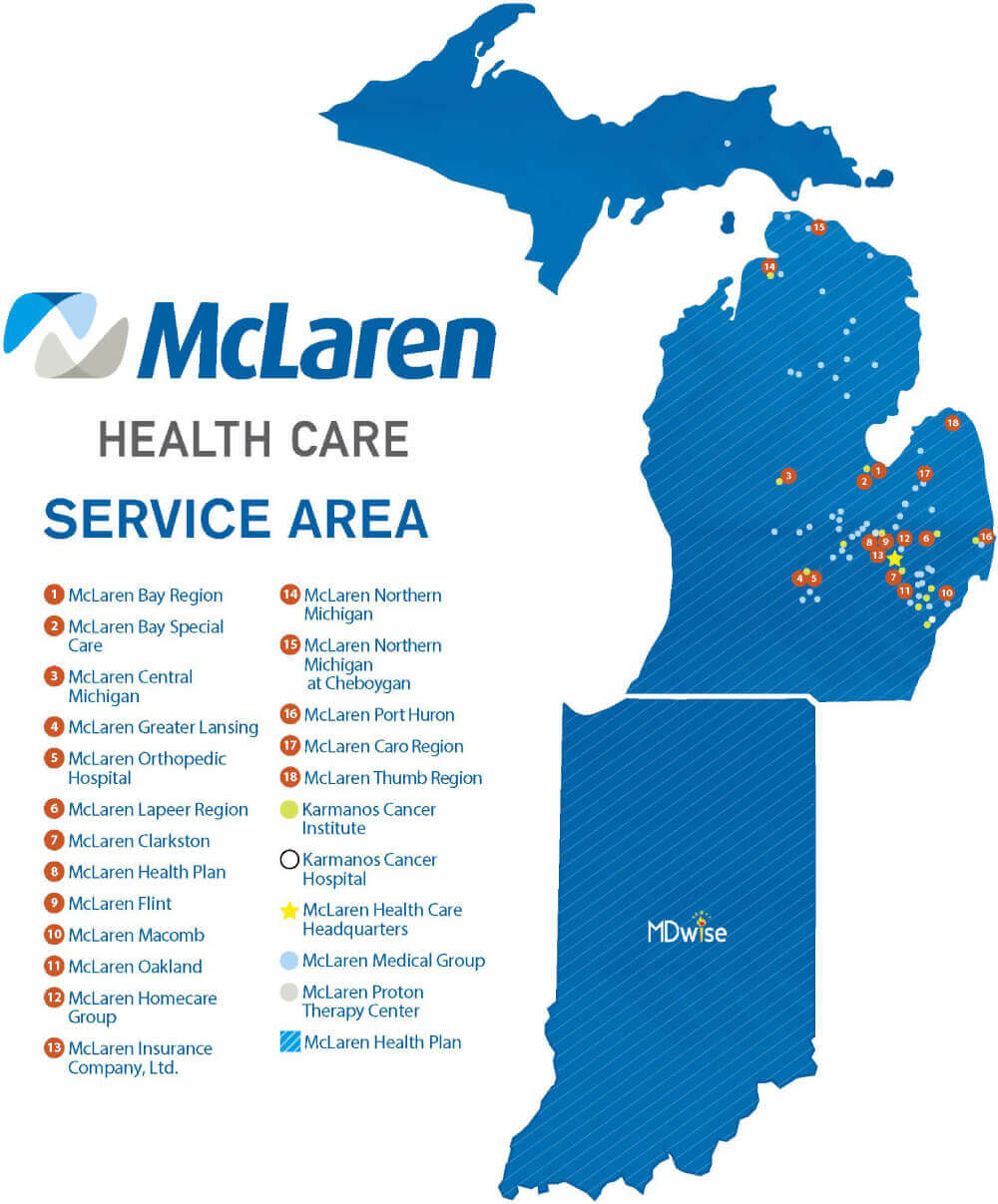
McLaren Health Care’s too secretive about finances, PPE, Michigan nurse union says

https://www.beckershospitalreview.com/workforce/mclaren-health-care-s-too-secretive-about-finances-ppe-michigan-nurse-union-says.html?utm_medium=email

About McLaren Health Care

Ten nurse unions in Michigan are accusing McLaren Health Care of not being transparent about its finances and personal protective equipment supply during the COVID-19 pandemic, but the health system said it has shared some of that information.

Many of the nurse unions have filed unfair labor practice charges with the National Labor Relations Board, alleging that by not sharing information with front-line healthcare workers the Grand Blanc, Mich.-based health system is violating federal labor law, a media release from the Michigan Nurses Association states.

According to the association, each of its 10 unions received a letter from the health system May 15, in which the system refused to divulge how much funding it received in federal COVID-19 grants. The health system also has refused to provide details about its protective gear inventory, the unions allege.

“The fact that they won’t share basic financial information with those of us working on the front lines makes you wonder if they have something to hide,” said Christie Serniak, a nurse at McLaren Central Michigan hospital in Mount Pleasant and president of the Michigan Nurses Association affiliate.

But the health system maintains it has been transparent and has worked with labor unions and bargaining units across the system since the beginning of the coronavirus pandemic.

“We’ve openly shared information about our operations, the challenges of restrictions on elective procedures, our plans for managing influxes of patients and our supplies of personal protective equipment,” Shela Khan Monroe, vice president of labor and employment relations at McLaren Health Care told Becker’s Hospital Review.

Ms. Khan Monroe said that the information has been shared through weekly meetings, departmental meetings and several union negotiation sessions over the last two months.

The unions also say that the health system has not offered its workers hazard pay or COVID-19 paid leave that is on par with other systems. They say that only workers who test positive for COVID-19 can take additional paid time off.

In a written statement, McLaren disputed the union’s claims about employee leave, saying that employees “dealing with child care and other COVID-related family matters” can take time off to care for loved ones.

McLaren did not specify if this time off is paid. Becker’s has reached out for clarification and will update the article once more information is available.

“We have negotiations pending with several of the unions involved in the coalition, and while we are deeply disappointed in these recent tactics, we will continue to work towards productive outcomes for all concerned,” said Ms. Khan Monroe.

Recently, a coalition of unions urged McLaren Health Care executives to reduce their own salaries before laying off employees.


Advocate Aurora reports Q1 operating loss, gets $328M bailout

https://www.beckershospitalreview.com/finance/advocate-aurora-reports-q1-operating-loss-gets-328m-bailout.html?utm_medium=email

MyAdvocateAurora | Health Record | Advocate Aurora Health

Advocate Aurora Health saw revenue increase year over year in the first quarter of this year, but it ended the period with an operating loss, according to recently released unaudited financial documents

Advocate Aurora Health, which was formed in 2018 and has dual headquarters in Downers Grove, Ill., and Milwaukee, reported revenue of $3.1 billion in the first quarter of 2020, up from $3 billion in the same period a year earlier. Patient service revenue climbed 3.5 percent year over year, while capitation revenue dropped 13.2 percent.

The health system said it began postponing or canceling elective procedures on March 17 due to the COVID-19 pandemic, and the public curtailed visits to physicians, clinics and emergency rooms for fear of contracting the virus.

“These actions have served to decrease revenues from non-COVID-19 patients while driving up costs to prepare for and care for COVID-19 patients with minimal additional revenues from these patients,” Advocate Aurora said.

To help offset financial damage caused by the COVID-19 pandemic, the health system implemented cost-reduction measures. Since April 1, it has also received $328 million in grants made available through the Coronavirus Aid, Relief and Economic Security Act and about $730 million in advance Medicare payments, which must be paid back.

Advocate Aurora’s expenses were up 9 percent in the first quarter of this year compared to the same period of 2019. The increase was due in part to it acquiring the remaining 51 percent interest in Bay Area Medical Center in Marinette, Wis., in April 2019.

Advocate Aurora posted an operating loss of $85.6 million in the first quarter of this year. That’s compared to operating income of $112.8 million in the same period a year earlier. Excluding nonrecurring expenses, the health system posted an operating loss of $49.3 million in the first quarter of this year and operating income of $131.2 million a year earlier.

The 26-hospital system reported a nonoperating loss of $1.23 billion in the first quarter of this year, which was largely attributable to investment losses. Advocate Aurora ended the first quarter with a net loss of $1.3 billion, compared to net income of $596.8 million a year earlier. 

As of March 31, the health system had 229 days cash on hand, down from 274 days in December 2019. 


HCA asks union to abandon wage increases this year

https://www.beckershospitalreview.com/hr/hca-asks-union-to-abandon-wage-increases-this-year.html?utm_medium=email

HCA revenue beats the hospital chain's expectations in 2019

A union representing more than 150,000 registered nurses in hundreds of U.S. hospitals is disputing with Nashville, Tenn.-based HCA Healthcare regarding pay and benefits.

National Nurses United said HCA is demanding that the union choose between an undetermined number of layoffs and no 401(k) match for this year or no layoffs and no nurse pay increases for the rest of the year, according to ABC affiliate Kiii TV.

HCA Healthcare, which to date has avoided layoffs due to the pandemic, told Becker’s Hospital Review it is asking the union to give up their demand for wage increases this year, just as nonunion employees have. HCA executive leadership, corporate and division colleagues and hospital executives have also taken pay cuts.  

The union said it takes issue with having to make this choice given HCA’s profits in the last decade, the additional funding the for-profit hospital operator received from the federal government’s Coronavirus Aid, Relief and Economic Security Act, and additional Medicare loans.

“It is outrageous for HCA to use the cover of the pandemic to swell its massive profits at the expense of its dedicated caregivers and the patients who will also be harmed by cuts in nursing staff,” Malinda Markowitz, RN, California Nurses Association/National Nurses United president, said in a news release.

HCA pointed to the pandemic pay program it implemented and recently extended through at least the end of June that allows employees who are called off or affected by a facility closure and cannot be redeployed to receive 70 percent of their base pay.

“It is surprising and frankly disappointing that unions would demand pay raises for their members and may reject the continuation of a generous pay program that is providing continued paychecks for more the 100,000 colleagues,” HCA said in a statement. “The goal of HCA Healthcare’s pandemic pay program is to keep our caregivers employed and receiving paychecks at a time when hospitals throughout the country are experiencing significant declines in patient volume and there is not enough work for them.”

HCA said more than 16,000 union members have participated in the pandemic pay program, even though it is not part of their contract. 


Congress Should Redirect The Medicare Shared Savings Program To Address The COVID-19 Emergency

https://www.healthaffairs.org/do/10.1377/hblog20200518.386084/full/?utm_source=Newsletter&utm_medium=email&utm_content=COVID-19%3A+Redirecting+The+Medicare+Shared+Savings+Program%2C+The+Hidden+Homeless%2C+Senior+Housing+Communities+Need+Support%3B+Reimagining+Involuntary+Commitment%3B+Book+Reviews&utm_campaign=HAT+5-22-20

Congress Should Redirect The Medicare Shared Savings Program To ...

The COVID-19 virus has unleashed a rolling series of crises among fee-for-service providers. First, and most directly affected, providers in areas with major outbreaks have suffered extreme personal hardship and risked infection themselves with inadequate equipment and protective gear when treating patients. Second, everywhere in the country, physician practices and hospitals have seen revenue drops from 20 percent to 60 percent due to the need to follow social distancing practices to minimize infection. This revenue collapse has perversely resulted in staffing reductions that are likely to accelerate unless Congress provides further assistance to the industry. Third, and only partially observed so far, there is a pending “second wave” of health crises discernible in the “missing heart attacks” and reports from nephrologists and oncologists of patients making difficult decisions about whether to continue necessary care. In some cases, emergency care has shifted out of the hospital, and some triage is conducted on the street to avoid risk of COVID-19 infection.

The COVID-19 public health emergency has generated a massive set of emergency changes in Medicare payment policy, loosening regulation of acute hospital care, dramatically expanding use cases for telehealth and other types of virtual care, and, through the Coronavirus Aid, Relief, and Economic Security (CARES) Act and subsequent relief legislation, releasing a $175 billion pool of money that attempts to prop up Medicare providers dependent on in-person, fee-for-service revenue. Now, with that first batch of changes handled, a debate has started among proponents of value-based purchasing as to the appropriate direction for the Medicare Shared Savings Program (MSSP) and other value-based initiatives during the emergency.

In this context, a number of stakeholders have begun to call on the Centers for Medicare and Medicaid Services (CMS) to modify existing MSSP parameters to maintain the program through the emergency. CMS has responded by eliminating downside risk for accountable care organizations (ACOs) for the duration of the public health emergency and taking COVID-19 costs out of ACO financial calculations. These are welcome changes but don’t completely address the serious problems ACO participants face. We urge a different focus—the federal government should charge these existing networks with addressing the “second wave” of health care needs going largely unaddressed, as patients with serious, non-COVID-19-related chronic conditions see procedures and visits postponed indefinitely. Commensurately, Congress should suspend all financial impacts from the MSSP for the duration of the public health emergency—and consider excluding any data from 2020 for performance years 2021 and beyond. We describe key elements of these changes in this post.

A Growing Call For MSSP Modifications

The Medicare Payment Advisory Commission (MedPAC) issued a comment letter urging CMS to allow ACO providers to focus on COVID-19, rather than shared savings. MedPAC, acknowledging the dramatic shifts in care delivery necessitated by the COVID-19 crisis, made several recommendations about treatment of savings and losses in the MSSP for 2020. MedPAC asked CMS not to use 2020 data for purposes of ACO quality, bonuses, and penalties. MedPAC would also have CMS disregard 2020 claims when assigning beneficiaries to ACOs, since a shift to telehealth, with physicians and patients potentially located far apart, could distort the ACO assignment with unintended effects. Finally, MedPAC recommended extending all ACO agreement periods, keeping everyone in the current risk arrangement for one year, a recommendation CMS adopted.

William Bleser and colleagues recently suggested immediate and short-term actions that could help preserve ACOs through this crisis. Their blog post identifies the decision point, coming on June 30, 2020, for ACOs to stay in the program and be accountable for losses in 2020. The impact of the emergency on ACOs will still be unclear at that time, and the authors recommend that CMS allow ACOs to completely opt out of downside risk for 2020 while accepting a capped amount of potential shared savings. Eliminating the downside and offering a limited upside might just convince ACOs not to leave the program entirely. CMS has taken these concerns seriously and removed all COVID-19–related costs from ACO financial calculations and eliminated shared losses during the public health emergency.  

Another recent blog post by Travis Broome and Farzad Mostashari makes the case that the population health focus and financial incentives for ACOs position them uniquely, not just to survive, but to lead the way for primary care during the COVID-19 crisis. ACO participation may protect these practices because of the program’s unique financial metrics. Unlike Medicare managed care, MSSP ACOs are measured against a benchmark that trends forward at actual regional and national spending growth rates. During an unusual spending year, as 2020 is sure to be, those factors are included in the trend, and the ACO is not heavily penalized for the spending pattern. Broome and Mostashari recommend that CMS focus on shielding primary care practices from certain quality reporting and information collection requirements to pave the way for high-quality care and solid financial performance.

A More Focused Re-Envisioning Of The MSSP

Foundational to the MSSP is an agreement between groups of providers and the federal government to align their financial relationship with patient and taxpayer goals: to improve the quality of care for their patients and reduce the growth of health care spending. Both of those elements must take a back seat during a massive public health emergency.

Reducing overall health care costs is not an appropriate consideration for providers today. Even though national and regional growth factors will track actual changes in expenditures and may allow for identification of more efficient providers, this objective is second order to directly responding to the threat of the emergency. Given the overwhelming need to respond to the COVID-19 crisis in their communities, the ability of any health system or ACO to influence costs this year is likely to be dwarfed by factors outside its control. This type of highly infectious, novel pandemic is a risk that can only be properly assumed by the federal government. Neither physician practices, nor hospitals, nor any other ACO participants can realistically budget and prepare for such an event on their own. Congress and CMS should adopt MedPAC’s suggestion to suspend charging penalties or paying bonuses for all of 2020, no matter how long the public health emergency is in effect.

Similarly, while the prevention and care management metrics embedded in the MSSP remain appropriate indicators directionally, difficulties in seeing patients for well visits and new standards for documentation during telehealth visits will make any precise differentiation of quality in primary care practices near impossible. MedPAC is correct that using 2020 data for performance evaluation would undercut the legitimacy of the program, and the commissioners are right to support the call to suspend the use of such data in establishing bonuses, penalties, and benchmarks in 2020 and beyond.

However, many practices have made significant investments in population health technology, staff, and training that remain as valuable as ever during this emergency. And the public has an interest in maintaining those staff and those skills, as the basis for a better health system in the future. All told, like much of the rest of the economy, putting the MSSP and other ACO arrangements “on ice” to allow providers to focus on near-term priorities would best serve the public interest. That includes delaying or freezing requirements to step up to higher-risk tracks in the Pathways to Success program, as well as delaying or canceling quality submission requirements. These delays, however, should be paired with public funding to reflect the work that ACOs have already undertaken, as well as work that they can do to help manage through the crisis, discussed further below.

Taking steps to preserve ACOs through 2020 is a good start, but we believe Congress and CMS should think bigger and empower ACOs to focus directly on the current crisis for the next two years.

Adapting ACOs To Serve The Current Emergency

ACOs are a valuable asset for the Medicare program, reflecting nearly 10 years of work across hundreds of thousands of providers serving tens of millions of beneficiaries. Disbanding them by indifference would be a mistake. The current collapse in fee-for-service volume is a problem of fee-for-service medicine primarily, and ACOs represent an infrastructure for a further step away from volume-focused medicine once the danger from this emergency passes.

Suspending financial considerations and consequences for the duration of the emergency is insufficient. Without the responsibility for managing risk and sharing in any savings, the ACO contract with CMS loses its organizing force, and the program becomes “a solution in search of a problem.”

We see two opportunities for ACOs to redirect their energies productively this year and next. First, ACOs should be directed to follow best practices in testing and public health data collection, in collaboration with local and state officials. Managing the spread of the virus in their communities is already a daily task for these providers; additional surveillance and data collection could be adopted and updated continuously as recommendations evolve. By providing resources to ACOs to support this work directly, CMS would help ensure providers can keep up.

Second, and perhaps more important in most of the country to date, ACOs should be charged with meeting explicit virtual care management requirements to identify, contact, and serve patients in their panel with multiple high-risk chronic diseases. These patients are underserved today, and efforts to address their needs are piecemeal. In place of the current financial incentives, we propose that CMS require ACOs to perform a variety of care management and COVID-19 surveillance functions in exchange for a care management fee. Congress could enable and CMS could specify that ACOs place 10 percent to 15 percent of their patients under virtual care management programs, for example, and require that ACOs maintain regular contact with these patients as well as others at higher risk. The 10 percent to 10 percent figure is a fairly low bar, considering that more than 60 percent of Medicare patients have multiple chronic conditions, according to CMS. Additionally, COVID-19 patients could be offered principal care management, a new service for Medicare beneficiaries with one serious health condition, for a month or more after their diagnosis. New flexibilities for remote patient monitoring and virtual care make this far easier to implement than it had been before the pandemic.

CMS could quickly adapt existing financial models to support this work, drawing from analysis and design of the Primary Care FirstComprehensive Primary Care Plus, and other care management programs. ACOs are by design collaborative and can rapidly learn and share best practices for establishing virtual care management services. Behavioral health services and outreach, as well as other valuable preventive care, could also be directly funded through this structure. As an alternative to the fee for care management and surveillance, Congress could allow ACOs to receive their 2019 shared savings amounts again for 2020, for ACOs continuously operating in each year.

Looking Ahead

The steps we have outlined here will accomplish several worthwhile ends in this crisis:

  • directly funding primary care capacity at a time when volumes are nosediving;
  • keeping the nearly 500,000 physician and other clinicians already in ACOs working together, maintaining the infrastructure that has already been built; and
  • providing upfront resources to manage patients whose conditions could deteriorate in the coming months, potentially catching them before they do.

These modifications should be executed first by Congress, not CMS, to ensure that such changes to the program do not become commonplace. This would invigorate the ACO programs by focusing them on the unique set of problems of this crisis, unencumbered by requirements better suited to peacetime than wartime. And when the war is over, these organizations can resume their longer-term mission to manage total costs and quality with all of the new tools and capabilities they have acquired during the crisis.


Cartoon – I survived the Coronavirus

Politicalcartoons.com - Editorial Cartoon 237636

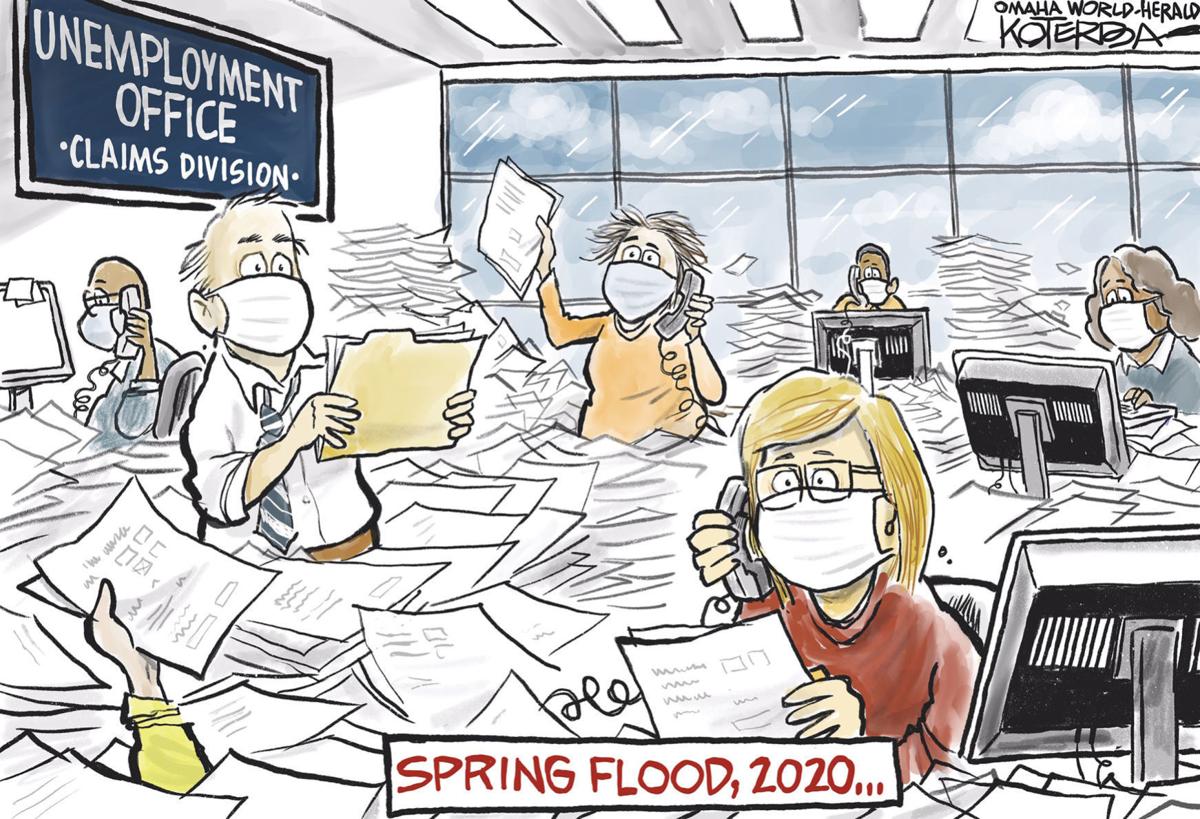
Cartoon – 2020 Spring Flood

Syndicated cartoons gallery: Unemployment cartoons from around the ...

Cartoon – Working Paycheck to Paycheck

The Benefits And Compensation Comics And Cartoons | The Cartoonist ...