

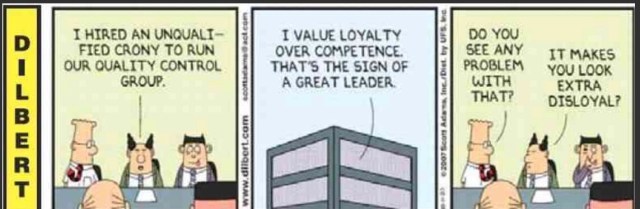
Cartoon – Modern Governance
Trump sparks GOP backlash with claim of ‘total’ power to reopen the country
President Trump‘s claim that he has “total” authority to decide when and how to reopen parts of the country shuttered by the coronavirus is sparking congressional backlash, including from members of his own party.
Trump, speaking during a White House press briefing Monday, said he has the “authority” to force governors, who have been issuing the stay-at-home orders, to reopen schools, businesses and other institutions in their state.
But GOP lawmakers, as well as Democrats, fired back Tuesday, sending a warning shot to Trump that under the Constitution he does not have unlimited powers. They also warned against overreaching.
“The constitution doesn’t allow the federal gov’t to become the ultimate regulator of our lives because they wave a doctor’s note,” Sen. Rand Paul (R-Ky.) tweeted Tuesday.
“Powers not delegated are RESERVED to states & the PEOPLE. If we dispense with constitutional restraints, we will have more to worry about than a virus,” added Paul, who has also been critical of governors he views as going too far during the pandemic.
Sen. Marco Rubio (R-Fla.) said that while the Centers for Disease Control and Prevention (CDC) and the White House would be providing guidelines, the Constitution and “common sense” dictate that decisions about when to reopen shuttered parts of the country are made at the state level.
“It’s going to be the governors that are going to make decisions about when certain activities are allowed. …That is the appropriate place where I think some of these orders will begin to be modified,” Rubio said, adding that the federal guidance would be “influential.”
Rep. Liz Cheney (R-Wyo.) didn’t directly mention Trump but tweeted on Monday night that “the federal government does not have absolute power.”
Republicans were joined by Democrats, and some governors, as well as Rep. Justin Amash (I-Mich.), who left the Republican Party last year.
Amash and Democratic Reps. Tom Malinowski (N.J.) and Dean Phillips (Minn.) unveiled a one-page resolution on Tuesday that states “when someone is the president of the United States, their authority is not total.”
“State governments are not local branches of the federal government; they have different powers and functions. Putting one government in charge of everything does not strengthen our system; it weakens our system and makes everyone more vulnerable to serious errors,” Amash added in a tweet.
When, and how, to reopen shuttered parts of the country has emerged as a key point of debate within the government.
Trump has appeared eager to reopen the country sooner rather than later as the coronavirus has wrecked havoc on the U.S. economy months before the 2020 election.
He’s expected to announce a panel on Tuesday that will be tasked with determining the criteria for lifting coronavirus restrictions.
Governors of six northeast states announced on Monday they were forming a group to create joint recommendations on how to reopen their economies.
Democratic senators are planning to introduce legislation to create a 10-15 member panel that would be responsible for coming up and implementing a plan to reopen closed parts of the country.

The state’s Supreme Court ruled against the governor’s last-minute effort to delay the election.
The Summer Olympics are delayed. March Madness was canceled. Even the pope celebrated Palm Sunday Mass before a nearly empty St. Peter’s Basilica.
But in Wisconsin, there could still be an election tomorrow.
Yes, you read that correctly: A state that has been under a stay-at-home order for nearly two weeks is about to hold an in-person election amid the coronavirus pandemic.
Just over an hour ago — and with just hours to go before the polls are scheduled to open — the Wisconsin Supreme Court ruled against a last-minute effort by Gov. Tony Evers to postpone the election until June 9, siding with a Republican-controlled State Legislature that has resisted making nearly any changes to voting during the worldwide crisis.
The last-minute fighting over whether it is safe for people to vote tomorrow injects even more chaos into an election already rife with legal challenges and public safety concerns.
It’s a situation that could foreshadow the kind of politically toxic battles over voting that the country may face this fall, if the virus lingers into the November election. (Wisconsin has more than 2,000 reported coronavirus cases and at least 80 deaths.)
Mr. Evers, a Democrat, had previously said that he lacked the legal authority to move the election, but today he argued that a postponement was necessary to protect voters and slow the spread of the virus.
Within minutes of his order, Republican legislative leaders called his move unconstitutional, instructing clerks to move forward with the election and challenging the order in the State Supreme Court, which has a conservative majority.
Already, 15 other states and one territory had either pushed back their presidential primaries or switched to voting by mail with extended deadlines.
Dysfunctional politics kept Wisconsin from doing the same. On Saturday, state lawmakers rejected Mr. Evers’s proposals for holding an all-mail election and extending voting to May, gaveling out a special legislative session within seconds. That prompted Mr. Evers and his team to reassess what authority he might have to postpone the election with an executive order.
Even with voters’ very lives at stake, Wisconsin’s politicians were unable to come to an agreement — a fight that mirrors the dynamics of battles over voting access already underway at the national level.
As Democrats push for billions of dollars in federal funds to bolster voting by mail and other absentee options, Republicans say those kinds of options would increase the risk of electoral fraud. Some, including President Trump, also argue it would harm the electoral prospects of Republican candidates.
“The things they had in there were crazy,” Mr. Trump said of the Democratic proposal. “They had things — levels of voting that, if you ever agreed to it, you’d never have a Republican elected in this country again.”
While Wisconsin Republicans have not made that argument explicitly, they do have a competitive State Supreme Court election on the ballot on Tuesday (along with the presidential primary and thousands of local offices).
Wisconsin, one of the most gerrymandered states in the country, has a long history of electoral shenanigans. Two years ago, the Republicans in charge tried to move Tuesday’s State Supreme Court election to a different date to help their candidate.
Even if in-person voting does happen tomorrow, the legitimacy of the election will most likely be thrown into question. Turnout is expected to be dismal, given the warnings about contracting the virus and confusion over the actual elections.
Already, more than 100 municipalities have said they lack enough staff members to run even one polling place. Milwaukee typically has about 180 sites; this election the city will have five open. The head of the state elections commission has raised the possibility that some voters may have to head to a different town because no one will be staffing the polls in their hometowns.
The poll workers who remain are overwhelmingly older. Some have serious health conditions. Many have been waiting to receive protective equipment.
In Wisconsin, it seems, maintaining democracy means risking your health — to both toxic politics and a deadly virus.


The U.S. presidential campaign is ultimately a connection between candidates and the people of the country, but the development of the candidates’ policies and positions is largely asymmetric. Candidates develop and announce “plans” and policy positions that reflect their (the candidates’) philosophical underpinnings and (presumably) deep thinking. The people then get to react and make their views known through polling and, ultimately, through voting.
Candidates by definition assume they have unique wisdom and are unusually qualified to determine what the government should do if they are elected (otherwise, they wouldn’t be running). That may be so, but the people of the country also have collective wisdom and on-the-ground qualifications to figure out what government should be doing. That makes it useful to focus on what the people are telling us, rather than focusing exclusively on the candidates’ pronouncements. I’m biased, because I spend most of my time studying the public’s opinions rather than what the candidates are saying. But hopefully most of us would agree that it is worthwhile to get the public’s views of what they want from their government squarely into the mix of our election-year discourse.
So here are four areas where my review of public opinion indicates the American public has clear direction for its elected officials.
I’ve written about this more than any other topic this year. The data are clear that the American people are in general disgusted (even more than usual) with the way their government is working and perceive that government and elected leaders constitute the most important problem facing the nation today.
The people themselves may be faulted here because they are the ones who give cable news channels high ratings for hyperpartisan programming, keep ideological radio talk shows alive, click on emotionally charged partisan blogs, and vote in primaries for hyperpartisan candidates. But regardless of the people’s own complicity in the problem, there isn’t much doubt that the government’s legitimacy in the eyes of the people is now at a critically negative stage.
“Fixing government” is a big, complex proposition, of course, but we do have some direction from the people. While Americans may agree that debate and differences are part of our political system, there has historically been widespread agreement on the need for elected representatives to do more compromising. Additionally, Americans favor term limits, restricting the amount of money candidates can spend in campaigns and shifting to a 100% federally funded campaign system. (Pew Research polling shows that most Americans say big donors have inordinate influence based on their contributions, and a January Gallup poll found that only 20% of Americans were satisfied with the nation’s campaign finance laws.) Americans say a third major party is needed to help remedy the inadequate job that the two major parties are doing of representing the people of the country. Available polling shows that Americans favor the Supreme Court’s putting limits on partisan gerrymandering.
Additionally, a majority of Americans favor abolishing the Electoral College by amending the Constitution to dictate that the candidate who gets the most popular votes be declared the winner of the presidential election (even though Americans who identify as Republicans have become less interested in this proposition in recent years because the Republican candidate has lost the popular vote but has won in the Electoral College in two of the past five elections).
I have written about this at some length. The public wants its government to initiate massive programs to fix the nation’s infrastructure. Leaders of both parties agree, but nothing gets done. The failure of the Congress and the president to agree on infrastructure legislation is a major indictment of the efficacy of our current system of representative government.
Jobs are the key to economic wellbeing for most pre-retirement-age Americans. Unemployment is now at or near record lows, to be sure, but there are changes afoot. Most Americans say artificial intelligence will eliminate more jobs than it creates. The sustainability of jobs with reasonably high pay in an era when unionized jobs are declining and contract “gig” jobs are increasing is problematic. Our Gallup data over the years show clear majority approval for a number of ideas focused on jobs: providing tax incentives for companies to teach workers to acquire new skills; initiating new federal programs to increase U.S. manufacturing jobs; creating new tax incentives for small businesses and entrepreneurs who start new businesses; providing $5.5 billion in federal monies for job training programs that would create 1 million jobs for disadvantaged young Americans; and providing tax credits and incentives for companies that hire the long-term unemployed.
My read of the data is that the public generally will support almost any government effort to increase the availability of high-paying, permanent jobs.
Americans rate immigration as one of the top problems facing the nation today. The majority of Americans favor their elected representatives taking action that deals with all aspects of the situation — the regulation of who gets to come into the country in the first place and the issue of dealing with individuals who are already in the country illegally. As I summarized in a review of the data earlier this year: “Americans overwhelmingly favor protecting the border, although with skepticism about the need for new border walls. Americans also overwhelmingly favor approaches for allowing undocumented immigrants already living in the U.S. to stay here.”
Recent surveys by Pew Research also reinforce the view that Americans have multiple goals for their elected representatives when it comes to immigration: border security, dealing with immigrants already in the country, and taking in refugees affected by war and violence.
What else do the people want their elected representatives to do? The answer can be extremely involved (and complex), but there are several additional areas I can highlight where the data show clear majority support for government policy actions.
There are two areas of life to which the public attaches high importance, but about which there is no clear agreement on what the government should be doing. One is healthcare, an issue that consistently appears near the top of the list of most important problems facing the nation, and obviously an issue of great concern to presidential candidates. But, as I recently summarized, “Healthcare is clearly a complex and often mysterious part of most Americans’ lives, and public opinion on the issue reflects this underlying messiness and complexity. Americans have mixed views about almost all aspects of the healthcare system and clearly have not yet come to a firm collective judgment on suggested reforms.”
Education is another high priority for Americans, but one where the federal government’s role in the eyes of the public isn’t totally clear. Both the American people and school superintendents agree on the critical importance of teachers, so I presume the public would welcome efforts by the federal government to make the teaching profession more attractive and more rewarding. Americans also most likely recognize that education is a key to the future of the job market in a time of growing transition from manual labor to knowledge work. But the failure of the federal government’s massive effort to get involved in education with the No Child Left Behind legislation underscores the complexities of exactly what the federal government should or should not be doing in education, historically a locally controlled part of our American society.

There may be an opportunity to highlight increased revenues for the benefit of local government, since investor-owned hospitals pay taxes.
Remember: Every hospital, regardless of its tax status, must bring in more dollars than it spends in order to be financially healthy and reinvest.
In most communities, the conversion of a hospital from a not-for-profit to an investor-owned enterprise no longer stirs the heated debate that it did decades ago. Instead, you’re much more likely today to see not-for-profit and investor-owned hospital organizations working in partnership.
Renowned not-for-profit health systems such as Duke Health and the Cleveland Clinic have formed strong affiliations with investor-owned hospital companies. In these and other partnerships, not-for-profits and investor-owned organizations are working together to strengthen hospitals, invest in communities, and serve patients.
In fact, the issues facing investor-owned hospital systems during a partnership are the same as those faced by not-for-profit health systems during a partnership discussion: Local control and governance, cultural compatibility, charity care support, and commitment to local investment are leading hot buttons for both.
Still, the “conversion” of a not-for-profit to an investor-owned organization can represent a change that can raise questions and ignite unhelpful rumors.
To help you be prepared, start by answering these basic questions: What’s the difference? How are not-for-profit and for-profit (investor-owned) hospitals different from one another?
Here’s an overview: Independent, not-for-profit hospitals are, in a sense, owned by the communities they serve. The boards are usually comprised of local leaders and physicians. Excess revenues—profits—are fully reinvested into the community’s care after debt payments, payroll, and other expenses. Hospitals that join a regional or national not-for-profit health system, however, may or may not have a local board with a say in the direction of the facility and may or may not share their profits with the system. (In fact, if your local hospital is in financial trouble, the money flows into your hospital, not out of it!)
Investor-owned hospitals are, as you might guess by the name, owned by investors, who can be private individuals or stockholders. Investors traditionally benefit as the value of the company’s hospitals increases over time, through effective operations and local investments, and as the company overall grows by adding more hospitals.
Adding to this complexity is the trend for hospitals to pursue joint venture partnerships where ownership is shared by two or more organizations, including the “seller.” These partnerships call for strong and trusting relationships by every party. Communications is key to success.
Familiarize yourselves with these terms and issues as you move through a partnership. Be prepared for some myth busting.
That’s where the fundamental structural differences end. The driving forces of both organizations, however, are precisely the same:
Now, consider some specific questions you may hear related to the structure of a not-for-profit to investor-owned conversion.
When there are funds left over from a sale, they are often referred to as the proceeds. These proceeds exist once the hospital’s debt and any other obligations (e.g., a pension fund) have been paid.
The answer as to what happens to those dollars depends on the ownership structure of the selling organization and the terms of the transaction. Here are a few scenarios:
This is really a question of community commitment and may be an indicator of how much the community-based culture is or is not going to change under the new ownership. In most cases, a commitment to either a specific level of charity care or a guarantee to continue the hospital’s existing charitable mission and policy is written into the deal documents. Expect the question and know the answer.
An investor-owned hospital pays taxes that benefit local government. This question is an opportunity to highlight the added contribution as a distinct benefit of investor-owned partnerships.
In many cases, the fire department, police force, schools, parks, and other community assets will benefit on an annual basis from an investor-owned partner paying state and local property and sales taxes.
One cautionary note: In some cases, new hospital owners may seek appropriate tax incentives when entering a new community and investing in a hospital. Be sure you understand the local government strategic thinking before you answer the tax question.


Click to access aha-2019-governance-survey-report_v8-final.pdf
https://www.healthleadersmedia.com/strategy/hospital-boards-seeing-low-turnover-rates-aha-finds

The boards of trustees governing U.S. hospitals and health systems have relatively low turnover rates in an industry that’s shifting rapidly, according to a survey report released Wednesday by the American Hospital Association.
The survey asked more than 1,300 CEOs of nonfederal community hospitals and health systems in the U.S. about their organizations’ governance structures and practices, then the AHA compared their responses to data collected in a similar survey five years ago.
The researchers found that the policies and norms in place for most healthcare organizations result in low levels of board turnover.
The report cited several related opportunities for improvement:
Luanne R. Stout, president of Stout Associates based in the Dallas/Fort Worth area and a retired Chief Governance Officer of Texas Health Resources, wrote in commentary included with the report that healthcare organizations have a number of options when trying to foster a healthy degree of board turnover.
“Term limits (usually three or four consecutive, three-year terms) are helpful in accomplishing board turnover; however, some boards are reluctant to adopt term limits for fear of losing highly valued board members,” Stout wrote. “Boards that annually review board member attendance, performance and contribution can achieve desired levels of rotation and competency enhancement without utilizing term limits.”
The AHA report also notes some positive trends around healthcare board governance, including the following:
“This year’s survey demonstrates how hospitals and health system boards are rising to meet tomorrow’s challenges through redefining roles, responsibilities and board structures,” said AHA President and CEO Rick Pollack in a statement. “These changes are not surprising given the continued transformation in where, how, when and from whom patients receive care.”
 HENRY KOTULA