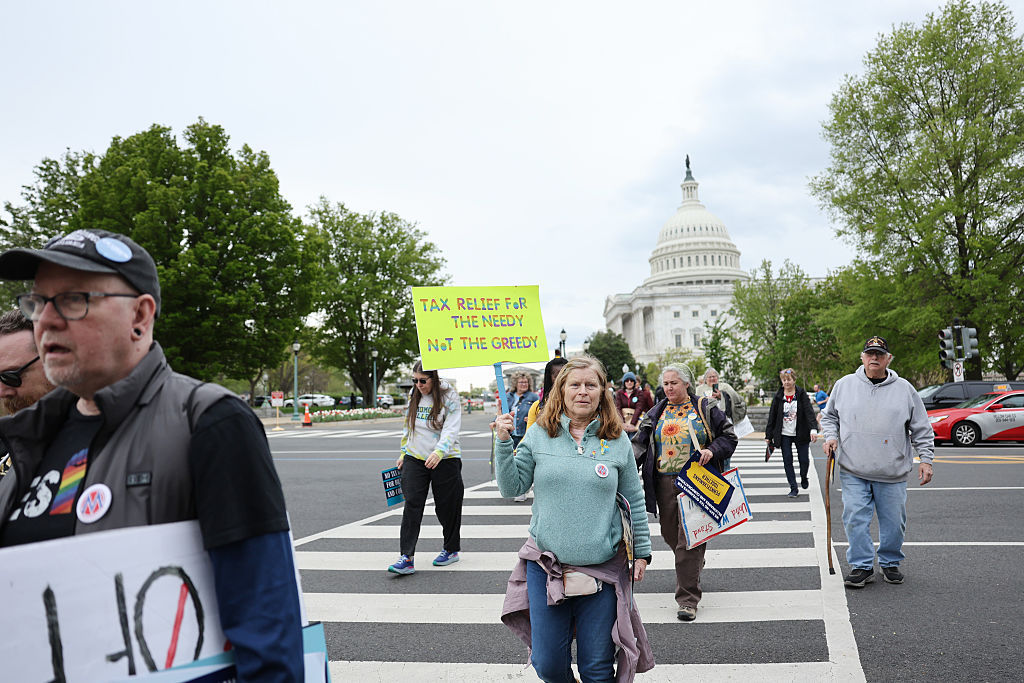
From Budget Battles to Consumer Backlash: Paul Keckley on the Future of U.S. Health Care

https://strategichcmarketing.com/from-budget-battles-to-consumer-backlash-paul-keckley-on-the-future-of-u-s-health-care/?access_code=667226

The U.S. health care industry is approaching a critical inflection point, according to veteran health care strategist Paul Keckley. In a candid and thought-provoking keynote at the 2025 Healthcare Marketing & Physician Strategies Summit (HMPS) in Orlando, Keckley outlined the challenges and potential opportunities health care leaders must navigate in an era of unprecedented economic uncertainty, regulatory disruption, and consumer discontent.

Drawing on decades of policy experience and his signature candid style, Keckley delivered a sobering yet actionable assessment of where the industry stands and what lies ahead.

Paul Keckley, PhD, health care research and policy expert and managing editor of The Keckley Report

Health care now accounts for a staggering 28 percent of the federal budget, with Medicaid expenditures alone ranging from the low 20s to 34 percent of individual state budgets. Despite its fiscal significance, Keckley points out that health care remains “not really a system, but a collection of independent sectors that cohabit the economy.”

In the article that follows, Keckley warns of a reckoning for those who remain entrenched in legacy assumptions. On the flip side, he notes, “The future is going to be built by those who understand the consumer, embrace transparency, and adapt to the realities of a post-institutional world.”

A Fractured System in a Fractured Economy

Fragmentation complicates any effort to meaningfully address rising costs or care quality. It also heightens the stakes in a political climate marked by what Keckley termed “MAGA, DOGE, and MAHA” factions, shorthand for various ideological forces shaping health care policy under the Trump 2.0 administration.

Meanwhile, macroeconomic conditions are only adding to the strain. At the time of Keckley’s address, the S&P 500 was down 8 percent, the Dow down 10 percent, and inflationary pressures were squeezing both provider margins and household budgets.

Economic uncertainty is not just about Wall Street,” Keckley warns. “It’s about kitchen-table economics — how households decide between paying for care or paying the cable bill.”

Traditional Forecasting Is Failing

One of Keckley’s key messages was that conventional methods of strategic planning in health care, based on lagging indicators like utilization rates and demographics, are no longer sufficient. Instead, leaders must increasingly look to external forces such as capital markets, regulatory volatility, and consumer behavior.

“Think outside-in,” he urges. “Forces outside health care are shaping its future more than forces within.”

He encourages health systems to go beyond isolated market studies and adopt holistic scenario planning that considers clinical innovation, workforce shifts, AI and tech disruption, and capital availability as interconnected variables.

Affordability and Accountability: The Hospital Reckoning

Keckley pulls no punches in addressing the mounting criticism of hospitals on Capitol Hill, particularly not-for-profit health systems. Public perception is faltering, with hospital pricing increasing faster than other categories in health care and only a third of providers in full compliance with price transparency rules.

“Economic uncertainty is not just about Wall Street. It’s about kitchen-table economics — how households decide between paying for care or paying the cable bill.”

“We have to get honest about trust, transparency, and affordability,” he says. “I’ve been in 11 system strategy sessions this year. Only one even mentioned affordability on their website, and none defined it.”

Keckley also predicts that popular regulatory targets like site-neutral payments, the 340B program, and nonprofit tax exemptions will face intensified scrutiny.

“Hospitals are no longer viewed as sacred institutions,” he says. “They’re being seen as part of the problem, especially by younger, more educated, and more skeptical Americans.”

The Consumer Awakens

Perhaps the most urgent shift Keckley outlines is the redefinition of the health care consumer. “We call them patients,” he says, “but they are consumers. And they are not happy.”

Keckley cites polling data showing that two out of three Americans believe the health care system needs to be rebuilt from the ground up. Roughly 40 percent of U.S. households have at least one unpaid medical bill, with many choosing intentionally not to pay. Among Gen Y and younger households, dissatisfaction is particularly acute.

“[Consumers] expect digital, personalized, seamless experiences — and they don’t understand why health care can’t deliver.”

These consumers aren’t just passive recipients of care; they’re voters, payers, and critics. With 14 percent of health care spending now coming directly from households, Keckley argues, health systems must engage consumers with the same sophistication that retail and tech companies use.

“They expect digital, personalized, seamless experiences — and they don’t understand why health care can’t deliver.”

Tech Disruption Is Real

Keckley underscores the transformative potential of AI and emerging clinical technologies, noting that in the next five years, more than 60 GLP-1-like therapeutic innovations could come to market. But the deeper disruption, he warns, is likely to come from outside the traditional industry.

Citing his own son’s work at Microsoft, Keckley envisions a future where a consumer’s smartphone, not a provider or insurer, is the true hub of health information. “Health care data will be consumer-controlled. That’s where this is headed.”

The takeaway for providers: Embrace data interoperability and consumer-centric technology now, or risk irrelevance. “The Amazons and Apples of the world are not waiting for CMS to set the rules,” Keckley says.

Capital, Consolidation, and Private Equity

Capital constraints and the shifting role of private equity also featured prominently in Keckley’s remarks. With declining non-operating revenue and shrinking federal dollars, some health systems increasingly rely on investor-backed funding.

But this comes with reputational and operational risks. While PE investments have been beneficial to shareholders, Keckley says, they’ve also produced “some pretty dire results for consumers” — particularly in post-acute care and physician practice consolidation.

“Policymakers are watching,” he says. “Expect legislation that will limit or redefine what private equity can do in health care.”

Politics and Optics: Navigating the Policy Minefield

In the regulatory arena, Keckley emphasizes that perception often matters more than substance. “Optics matter often more than the policy itself,” he says.

He cautions health leaders not to expect sweeping policy reform but to brace for “de jure chaos” as the current administration focuses on symbolic populist moves — cutting executive compensation, promoting price transparency, and attacking nonprofit tax exemptions.

With the 2026 midterm elections looming large, Keckley predicts a wave of executive orders and rhetorical grandstanding. But substantive policy change will be incremental and unpredictable.

“Don’t wait for a rescue from Washington. The future is going to be built by those who understand the consumer, embrace transparency, and adapt to the realities of a post-institutional world.”

The Workforce Crisis That Wasn’t Solved

Keckley also addresses the persistent shortage of health care workers and the failure of Title V of the ACA, which had promised to modernize the workforce through new team-based models. “Our guilds didn’t want it,” Keckley notes, bluntly. “So nothing happened.”

He argues that states, not the federal government, will drive the next chapter of workforce reform, expanding the scope of practice for pharmacists, nurse practitioners, and even lay caregivers, particularly in behavioral health and primary care.

What Should Leaders Do Now?

Keckley closed his keynote with a challenge for marketers and strategists: Get serious about defining affordability, understand capital markets, and stop defaulting to legacy assumptions.

“Don’t wait for a rescue from Washington,” he says. “The future is going to be built by those who understand the consumer, embrace transparency, and adapt to the realities of a post-institutional world.”

He encouraged leaders to monitor shifting federal org charts, track state-level policy moves, and scenario-plan for a future where trust, access, and consumer empowerment define success.

Conclusion: A Health Care Reckoning in the Making

Keckley’s keynote was more than a policy forecast; it was a wake-up call. In a landscape shaped by economic headwinds, political volatility, and consumer rebellion, health care leaders can no longer afford to stay in their lane. They must engage, adapt, and transform, or risk becoming casualties of a system under siege.

“Health care is not just one of 11 big industries,” Keckley says. “It’s the one that touches everyone. And right now, no one is giving us a standing ovation.”
Republicans Are Turning on Medicare Advantage

UnitedHealth Group and the other insurance giants running the Medicare Advantage (MA) program might want to start paying attention to something they haven’t worried much about before: growing skepticism from Republicans.

Until recently, efforts to reform MA — a privatized version of Medicare now covering more than half of all beneficiaries — came mostly from Democrats and independent policy experts.

No longer. The latest skepticism is not coming from a liberal think tank or a progressive PAC. It’s coming from two Republican doctors who have spent decades treating patients and sit on powerful House committees overseeing health care. It’s coming from a former Republican congressman who was an author of the law that established Medicare Advantage two decades ago. And it’s coming from right-leaning organizations and policy experts who are now demanding major changes to MA. Their position marks a dramatic and important shift that could lead to meaningful reforms being enacted in a Congress controlled by Republicans.

An Architect of MA Speaks Out

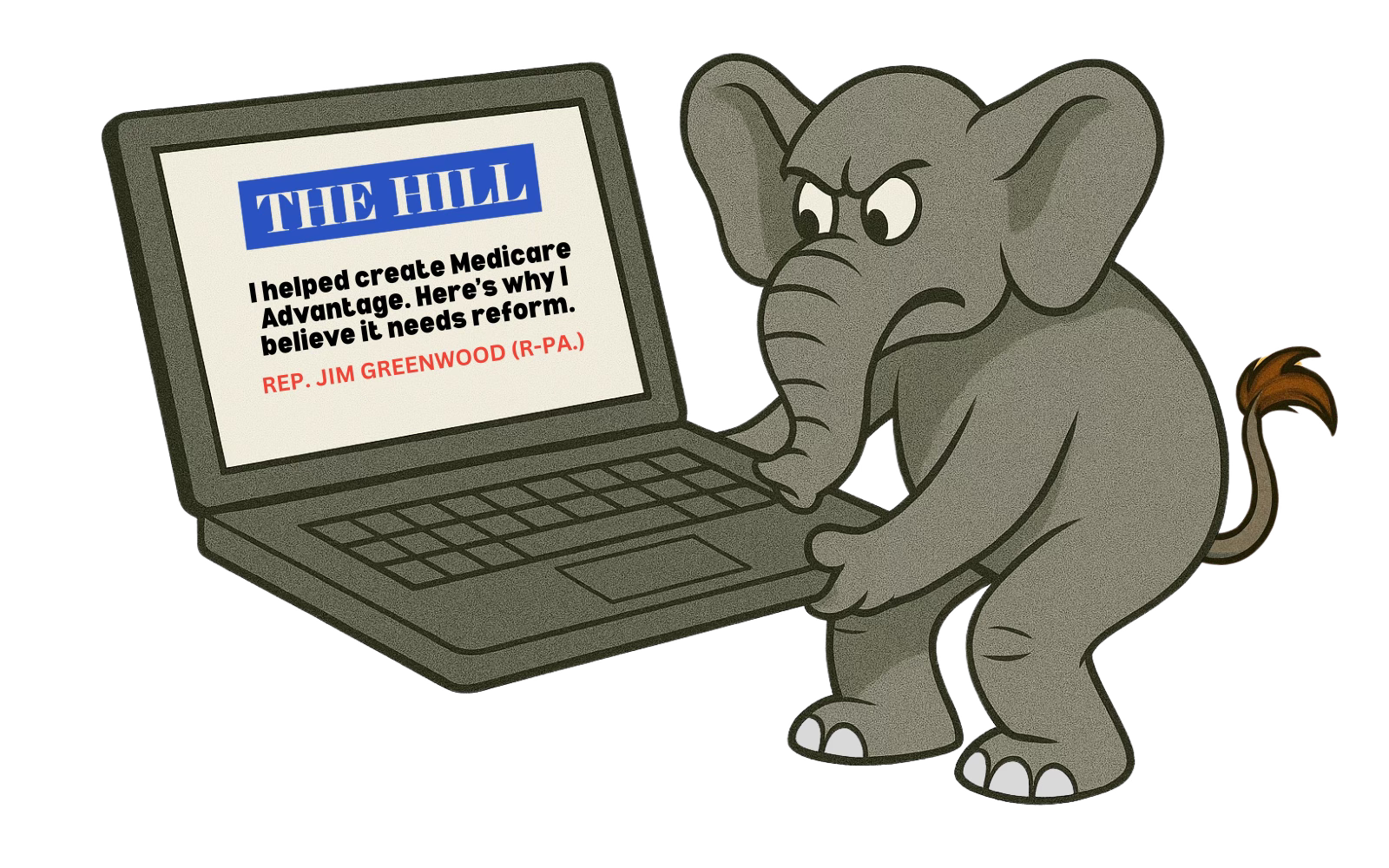
In an op-ed published by The Hill Sunday, former Republican Rep. Jim Greenwood of Pennsylvania — who helped write the Medicare Modernization Act that created Medicare Advantage — said plainly: “The program no longer lives up to [its] promise.

Greenwood wrote that he had once believed private competition would drive innovation and efficiency. But today, he says, MA has been overtaken by “a handful of massive insurers who are gaming the rules for profit.” Overpayments, cherry-picking, and risk-score manipulation, he said, are now “endemic.”

“It pains me to say this, but the system we helped create is being abused. And it’s not just hurting taxpayers. It’s hurting patients.”

“Seniors… are too often finding out — at the worst possible time — that their plan won’t cover what they need.”

While Greenwood still believes there is a place for private-sector involvement in Medicare, he now calls for rigorous oversight, transparency, and enforcement. He also warns against insurers’ predictable scare tactics whenever reform is on the table.

“I never imagined that Medicare Advantage would become a vehicle for such waste and abuse,” Greenwood concluded. “It’s time to fix it.”

Republican Congressional Docs Say Medicare Advantage Is Broken

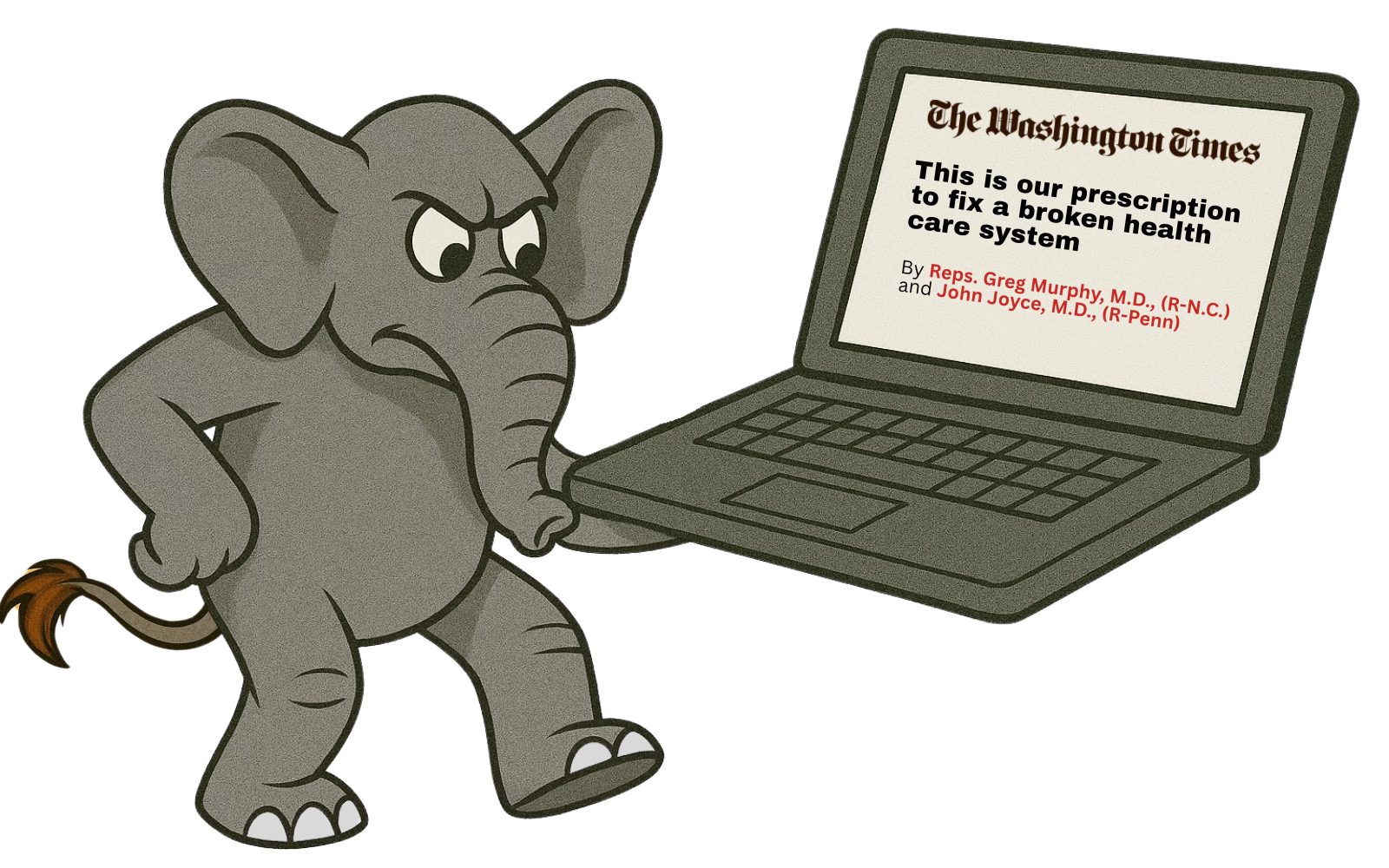
Another recent op-ed, written for The Washington Times by two conservative Republicans, Rep. Greg Murphy of North Carolina and Rep. John Joyce of Pennsylvania – both physicians and co-chairs of the GOP Doctors’ Caucus — draws the same conclusion: Medicare Advantage veered too far off course, and it’s time to rein it in. They wrote: 

“Profit-driven insurance companies have destroyed [Medicare Advantage’s] model.”

“These plans must stop seeing rewards for delaying or altogether denying care to beneficiaries that need it.”

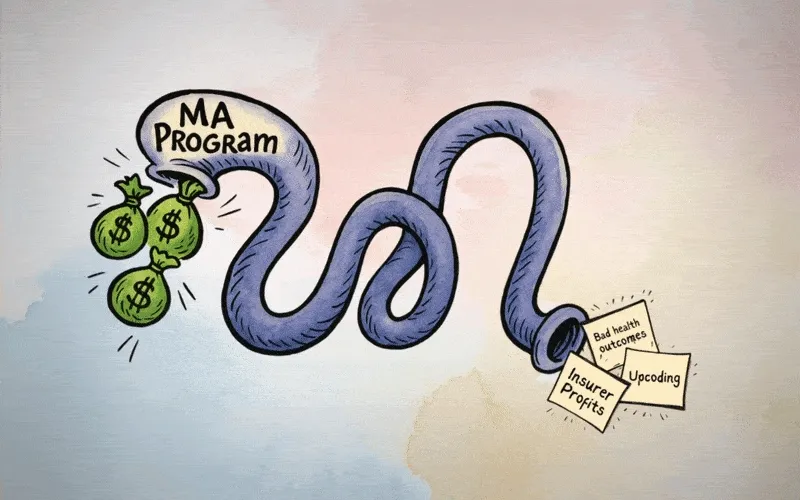
They called out insurers for “upcoding” — the practice of exaggerating how sick patients are to collect more taxpayer dollars — and for using prior authorization as a weapon to delay or deny necessary care to America’s seniors.

These aren’t unsubstantiated complaints. Recent media investigations found that MA plans regularly reject claims that would be approved under traditional Medicare. The Department of Health and Human Services Inspector General has raised alarms, and the U.S. Justice Department has set its sights on UnitedHealth Group’s Medicare business in particular.

And according to the Medicare Payment Advisory Commission (MedPAC), MA is now costing taxpayers 22% more per beneficiary than traditional Medicare — a difference that translates to $83 billion in overpayments to private health insurers last year alone.

Now, Republicans like Murphy and Joyce are saying the quiet part out loud: MA is making insurance company executives and investors rich at the expense of seniors, people with disabilities and taxpayers.

Conservative Advocacy Voices Are Speaking Up, Too

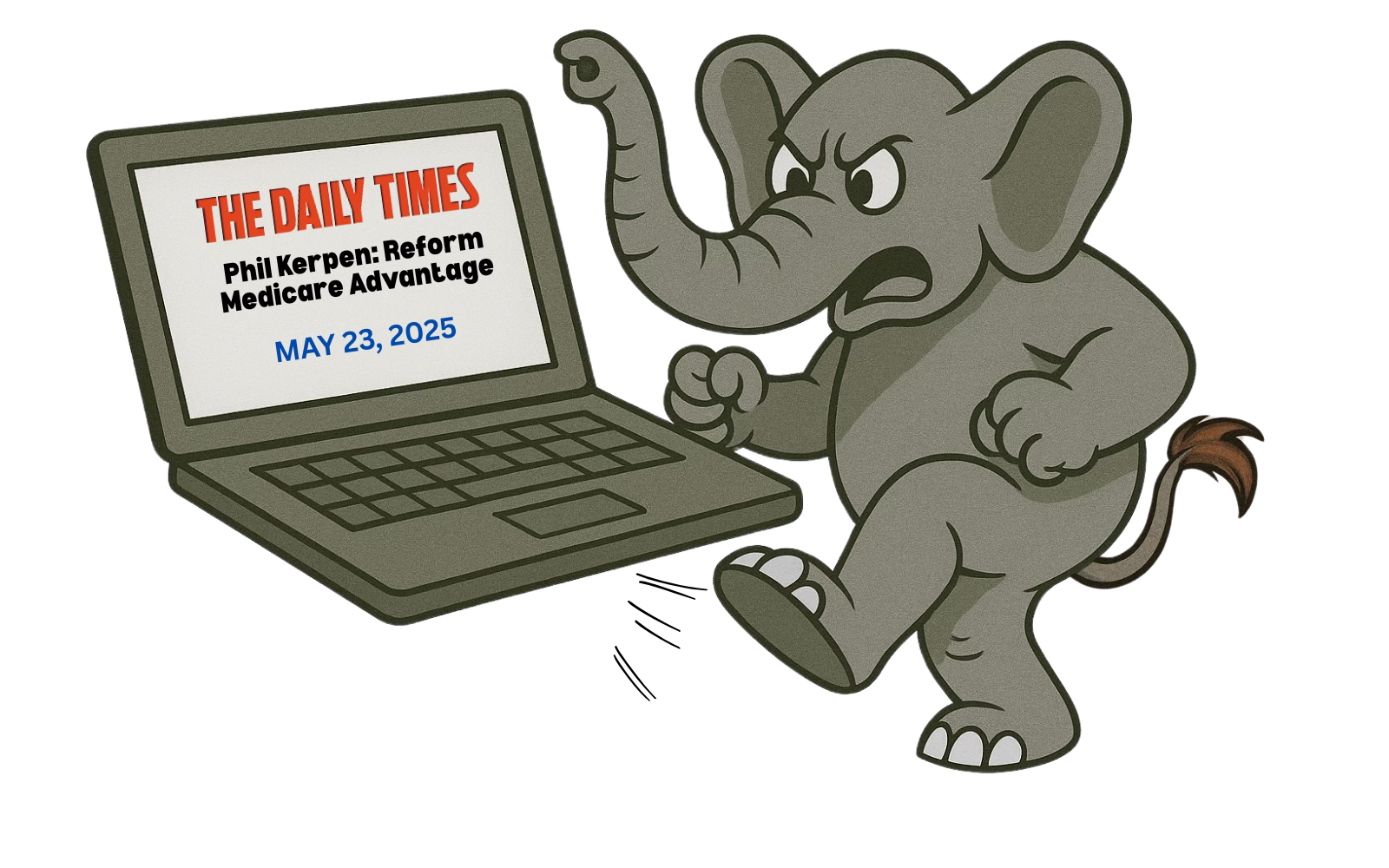
Phil Kerpen, president of the conservative group American Commitment, warned in an op-ed for the Daily Times that Medicare Advantage — which he said was once a “highly innovative and successful” option — is now “becoming increasingly costly and unstable.”

Kerpen pointed to the Department of Justice’s criminal investigation into UnitedHealth as a wake-up call and criticized the monopolistic consolidation of insurers buying up doctors, hospitals, and pharmacies. He called out opaque billing practices, delays in care, and an “unfair burden on taxpayers.”

“If ever there were a government program in need of DOGE-like accountability, competition, and transparency, Medicare Advantage is it.”

He called for reforms many — including myself — have long demanded: stronger disclosure rules, better tools for plan comparison, and serious action on prior authorization abuse. To save the program, he said, President Trump and Congress must be willing to “take on the big insurers and reform it. And quickly.”

Cracks in the Wall of Insurance Influence

There was even a last-minute push, led by Senate HELP Committee Chair Bill Cassidy (R-Louisiana), a doctor, to include MA reforms in Trump’s “One Big Beautiful Bill.” While that effort reportedly failed, Republican critics of the program are vowing to work on a bipartisan basis to enact changes the insurance lobby has fought for years. Upgrade to paid

I spent years in the executive suites of Cigna and Humana — historically big players in Medicare Advantage — and I can tell you this: Republican lawmakers and conservative thought leaders demanding reforms to  MA is no small thing. Private insurance corporations have long counted on bipartisan cover to operate with minimal oversight. If they start losing support from Republicans and conservative media, that protective wall begins to crack.

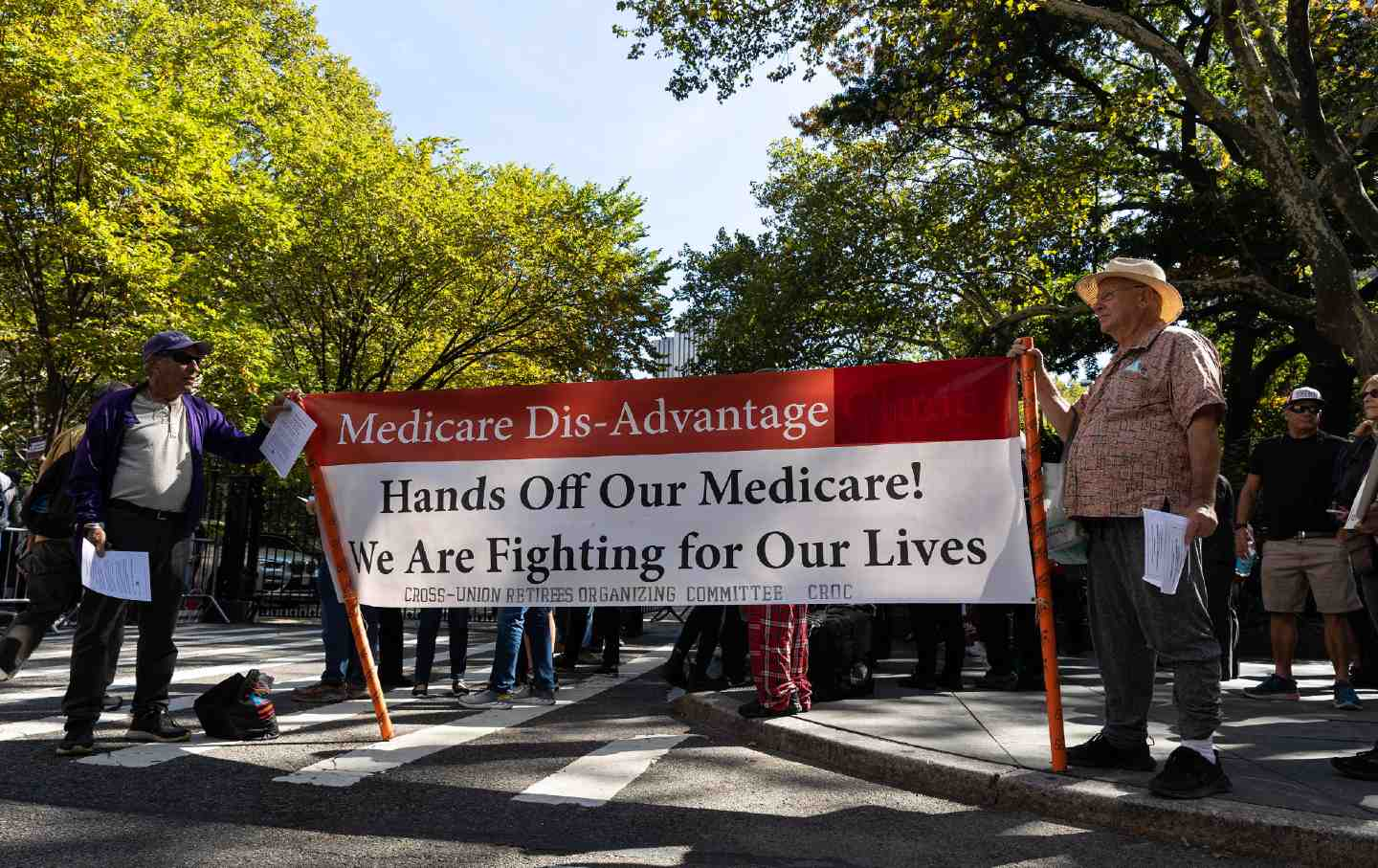
For years, industry lobbyists succeeded in casting Medicare Advantage as politically untouchable — “too complicated,” “too entrenched,” or “too popular to fix.” But as more members of Congress hear from their constituents about denied care, inadequate provider networks, rising out-of-pocket costs, and profiteering by insurance corporations, that illusion is dissipating.

With GOP leaders like MurphyJoyceKerpen — and now Greenwood — stepping forward, it’s clear the tide is turning. Medicare Advantage reform is no longer a partisan issue — it’s an American issue. And for the sake of patients, taxpayers, and the solvency of the Medicare Trust Fund, it’s time Washington acts like it.

The GOP Still Lacks a Clear Plan for Health Care

he House GOP’s emerging megabill includes significant changes to health care, some of which are long overdue, such as tighter restrictions on the provider taxes which states use to shift Medicaid costs onto the federal budget. But the legislation’s effect on the number of uninsured individuals is likely to get the most attention. Projections showing there will be a sizeable increase are causing internal divisions and creating political risks.

The basic problem for the party remains as it was in 2017 during the failed attempt to repeal and replace the Affordable Care Act (ACA), which is that there is no agreement among its leaders on an overall direction to guide the changes they advance. It is probably too late to develop such a plan for this year’s legislative debate, but it remains necessary if GOP officeholders ever want to have more lasting influence on the workings of the overall system.

The Democratic party has long rallied around an organizing principle for the changes it seeks. The ultimate goal is a universal public utility model with everyone covered. There are differences among leading party members over the specific routes to this destination but not on the direction of travel. The party wants to strongly regulate the entire sector, including insurance and the providers of services, and most especially with respect to the prices they charge. The suppliers would be entirely dependent on government-set rates for their revenue. In return, they would get paid just enough to stay open and face less pressure to compete based on efficiency. A single-payer plan is consistent with the party’s goals, but so too would be an extension of Medicare’s fees to the commercial market.

Republicans have nothing similar to rally around. In the megabill, the goal is to slow the growth of public subsidization of insurance enrollment and promote work, with the savings devoted to a lower level of taxation. It is a fiscal exercise and not a plan to reform American health care.

It also leaves the party exposed to criticism. If the federal government pulls back support without bringing down total costs, then someone else has to pay for the care provided to patients, or else some care might have to be curtailed. Predictably, as analyses emerge showing the GOP bill will produce these effects, the political blowback has been building.

The alternative to a public utility model is a system that is disciplined by market incentives instead of regulations but which still embraces population-wide insurance enrollment. The megabill includes important improvements to Health Savings Accounts (HSAs) that point in this direction, but they are too marginal to substantially alter incentives in the entire sector.

Republicans should consider what can be done to bring down costs across-the-board so that all purchasers get financial relief. There are several targets available.

  • Stronger Price Competition.
  • The first Trump administration pushed for transparent pricing in health care, which was an important step. However, for the market to work, consumers need to be far more engaged and incentivized to opt for lower-priced options. To promote stronger competition, the federal government should require providers of high-volume services to disclose their prices based on standardized bundles, and then also require insurers to let consumers migrate to lower-priced suppliers and keep the savings.
  • Competitive Bidding.
  • In Medicare and Medicaid, there is too much reliance on regulated rates and not enough on competitive bidding. Both programs should use bidding to establish the rates that the government will pay for services whenever that is a possibility. For instance, Medicare could require competitive bidding for high-volume services such as laboratory testing and imaging, and then use the submitted prices to build a preferred network of providers. Further, competitive bidding should be used to set rates for Medicare Advantage plans and, in time, to establish a level playing field of competition with the traditional program. Some of the savings from these reforms could be used to provide catastrophic insurance protection as a feature of the entire program, and not just in MA.
  • More Enrollment in Job-Based Insurance.
  • Republicans should drop their ambivalence toward insurance enrollment. The balance of the empirical evidence backs the importance of staying in coverage to a person’s health status. Moreover, the public does not want large numbers of uninsured again. To lessen the burden on Medicaid and to promote work, Republicans should look to help low-wage workers secure employer-sponsored insurance (ESI). Redirecting a portion of the tax subsidy for this insurance from high-wage to low-wage workers could induce some individuals out of Medicaid and Affordable Care Act plans and into ESI.

The GOP is right that surging costs for Medicare and Medicaid are a fiscal threat, but if their solutions push more financial risk onto individual consumers and patients, the backlash might hasten changes that Democrats have long sought.

Medicare Advantage Is Ripe for an Overhaul 

As the Senate eyes alternative or additional cost-saving provisions to those included in the House-passed reconciliation bill, some Republicans are considering reforms to Medicare. That is a promising development because overhauling Medicare Advantage could lower federal costs in ways that even many Democrats have advocated (although it is certain the overall bill will receive no Democratic support due to myriad other provisions).

Medicare Advantage, or MA, is Medicare’s private insurance option.

Beneficiaries can get their coverage through these plans in lieu of the traditional, government-managed program. Medicare pays MA sponsors a per-person monthly fee, which they use in turn to pay providers for the services their enrollees need. Enrollment in MA surged after Congress amended the payment formula in 2003. According to the 2024 Medicare trustees report, in the last decade alone, MA enrollment increased from 16 million people in 2014, or 30 percent of total enrollment, to 34 million people in 2024, or one out of every two program beneficiaries.

MA is growing because the plans usually offer more generous coverage than the traditional program without charging substantially higher premiums. In fact, many MA enrollees get free prescription drug coverage and much lower cost-sharing for hospital and physician services. They also sometimes get limited dental and vision care protection. MA enrollees usually do not pay for Medigap insurance, which can be expensive.

Critics argue MA plans can offer added benefits only because they are overpaid – a contention credible research confirms, including as conducted by the Medicare Payment Advisory Commission (MedPAC). At the same time, other data shows MA plans are often more efficient at delivering services than the traditional program because the plans scrutinize claims more carefully. High MA enrollment is also associated with positive spillover effects in the traditional program.

MA reforms should incentivize efficiency and high-quality care without needlessly overpaying the plans. The Senate should pull together a reform plan that gradually restructures the MA market so that it operates more efficiently and with lower costs for taxpayers. The following general principles should guide what is developed.

  • Competitive Bidding.
  • MA plans submit bids under the current formula, but Medicare’s payment is a combination of those bids and benchmarks that are set administratively. The Senate should amend the formula to rely strictly on bidding, with a transition to prevent abrupt changes in what is offered to enrollees. The payment could be based on the average bid weighted by enrollment. The new system could be phased in over five years by gradually increasing its influence on the formula (20 percent in year one, going up to 100 percent in year five, for instance).
  • Standardized Benefits.
  • Competitive bidding should be combined with standardization of the coverage MA plans are offering. Without such rules, it is difficult for individual beneficiaries to compare their options on an apples-to-apples basis. The Senate should require CMS to develop a standard MA offering that is comparable in value to the traditional benefit (it may be necessary to add catastrophic protection to the traditional program to ensure the competition is fair). MA plans would then submit their bids based on this standardized offering, and all Medicare beneficiaries would have the option of opting for such coverage. Further, the Senate should direct CMS to develop a small number of standardized supplemental benefits that could be purchased by beneficiaries with additional premium payments. These offerings could focus on the most popular add-ons in the MA market.
  • Risk Adjustment.
  • There are many criticisms of the current system of providing payment adjustments to MA plans based on the varied health risks of their enrollees. The current system has several flaws that might be addressed, but the basic problem is too much reliance on the data submitted by the plans which can lead directly to higher revenue. That design of course invites abuse. The Senate should put into law a requirement that CMA is to determine a final annual risk score for the plans based on submitted information, and any needed refinements by the government to ensure the fairest possible comparisons across plans.
  • ACOs as MA Plans. 
  • The Medicare program would benefit from robust provider-driven MA plans that can effectively compete with the insurer-led MA offerings now dominating the market. CMS should work with interested Accountable Care Organizations (ACOs) on building out functions they would need to become viable alternatives in the MA insurance market.

The Congressional Budget Office (CBO) estimates the House bill will increase deficits by $3.0 trillion over ten years when net interest is in the calculation. Medicare reforms could help the Senate produce a more fiscally responsible bill. If an MA bidding system led to a reduction in payments comparable to a 10 percent cut (which is realistic based on MedPAC’s research), the savings over a decade would be close to $500 billion.

Medicare Advantage Is Failing Its Mission. Here’s How Washington Could Finally Fix It

Bipartisan voices are calling for reforms to end waste and gaming in MA. Solutions are on the table — if policymakers choose to act.

In the first half of 2025, we have heard many leaders share their concerns with the current results of the Medicare Advantage (MA) program and the need for changes. Dr. Mehmet Oz, administrator of the Centers for Medicare and Medicaid Services, spoke multiple times about issues with upcoding in MA during his confirmation hearing. Lawmakers on both sides of the aisle have also been vocal about the need for reform in MA, including the co-chairs of the GOP Doctors Caucus, Reps. Greg Murphy and John Joyce, and Democratic Rep. Alexandria Ocasio-Cortez. Most recently, CMS Deputy Administrator Stephanie Carlton spoke about these issues at the recent annual conference of the Association of Health Care Journalists in Los Angeles.

Carlton noted that the original intent of MA was “better outcomes for patients” and “better value for taxpayers,” but that the current program is not achieving those goals.

She specifically mentioned research from the Medicare Payment Advisory Commission and other groups showing that “MA is more expensive than fee-for-service”. Fee-for-service, in which health care providers are paid for each service provided to patients, is used in traditional Medicare. Carlton went on to describe the need to “course correct” the program. We wholeheartedly agree. 

Luckily, there are solutions to these issues within MA that both the executive branch and Congress can address. CMS has the authority to address upcoding, where insurers add more codes to a patient’s record to increase their reimbursement from the government, in multiple ways.

First, CMS should continue the changes to the risk-scoring system initiated under the Biden Administration, which removes codes that CMS determines are abused within the Hierarchical Condition Category system. Researchers have found that this method could largely eliminate current overpayments going to insurers, which total tens of billions of dollars a year. CMS also has the authority to increase the coding intensity adjustment, which is the factor by which risk scores are adjusted by the agency to account for greater coding intensity by MA insurers.

The coding intensity adjustment used by CMS is currently 5.9%, which is the statutory minimum. Research shows that the true coding intensity adjustment should be more than 20%; increasing it to this level would reduce Medicare spending by more than $1 trillion over 10 yearsThere are ways to achieve these savings while also promoting competition, which is why Republicans created Medicare Advantage in the first place, and not compromising quality. Finally, CMS should exclude codes added to a patient’s record from home health risk assessments (HRAs) performed by insurers. That’s because insurers have used HRAs to add codes for diagnoses that patients were never treated for, enabling them to pocket billions of taxpayer dollars. 

Carlton also shared her commitment to plans recently announced by CMS to substantially increase both the pace and the scale of Risk Adjustment Data Validation (“RADV”) audits of MA plans. CMS implemented changes in 2023 to increase the scope of audits and recoupment of overpayments from insurers beginning with 2018 audits, but progress has been painstakingly slow, with CMS originally slated to begin issuing 2018 audit findings in 2026. The intensified efforts will require needed investments in technology and people. 

Another issue diluting the value of MA to taxpayers is the excessive use of supplemental benefits of questionable utility, including things like gym memberships, which serve mainly as marketing tools for insurers. The money spent on such benefits has more than doubled over the past five years. 

Congress can also take action to reform MA in meaningful ways. First, Congress should work with the HHS Secretary and CMS Administrator and provide oversight and accountability to ensure necessary changes to the risk-adjustment methods and processes, including audits and recovery of overpayments.  It is also important to ensure that insurers and their downstream vendors are compliant with applicable CMS rules and regulations, both in terms of clinical and documentation requirements and the payments they receive for these activities. 

Congress could also pass legislation to develop a new risk adjustment system that prevents gaming by insurance companies.

This system could base risk scoring on data from patient encounters with their medical providers rather than just diagnostic codes. This would ensure that patients are treated for any diagnosis used in their risk scores, to ensure that extra diagnoses are not added that patients are not being treated for. Additional scrutiny of how MA rebates are being used and a re-evaluation of permissible benefits are also needed. Further, Congress could implement a cap on out-of-pocket (OOP) expenses for traditional Medicare beneficiaries. Currently, only MA plans offer a cap on OOP expenses, which reduces competition between MA plans and traditional Medicare. Adding an OOP cap to TM would level the playing field between MA and TM, likely resulting in MA plans improving their coverage and benefits, and focusing less on upcoding and withholding care. This would improve the quality of care and competition within the Medicare and MA programs. 

Insurance companies running MA plans have created a system in which taxpayers and patients are not getting the value they pay for.

It is promising that leaders in the current administration and on both sides of the political aisle in Congress are expressing a desire to change this system for the better. There are many solutions to the issues within MA that can be enacted quickly and effectively to improve care and value for seniors and people with disabilities who are enrolled in those plans.

The GOP Budget: Tax Cuts for the Wealthy and More Medical Debt for Everyone Else

The GOP’s reconciliation bill, the “One Big Beautiful Bill Act” (yes, it’s actually called that), is a cruel exercise in slashing benefits for the poor, the elderly, and the sick to free up fiscal space for yet more tax cuts for the rich. Compounding the harm, these benefit cuts are nowhere near enough to pay for the bill’s tax cuts for the wealthy.

Central to this effort are massive cuts to Medicaid and the Affordable Care Act (ACA) marketplaces that, as I argued in my recent paper, will exacerbate our ongoing medical debt crisis.

The GOP reconciliation package that the Senate and House recently agreed to instructed the House Energy and Commerce Committee, which oversees spending on health-care programs including Medicaid and the Children’s Health Insurance Program (CHIP), to identify up to $880 billion in savings over the next 10 years.

Under the rules of the budget reconciliation process, Republicans need to offset any tax cuts they wish to make permanent with an equal dollar value in cuts to spending so as to remain deficit neutral. Trillions of dollars in tax cuts for the wealthier therefore necessitate trillions of dollars in cuts to spending that fall mostly on the social safety net.

Although they did not quite reach that target, the committee still returned a proposed package of deep cuts and changes to Medicaid and to the ACA marketplaces that would reduce federal medical spending by at least $715 billion over 10 years, with about $625 billion in reduced Medicaid spending.1

After public backlash, Republicans seem to have backed off some of their most radical plans for Medicaid (at least for now—one of the challenges of taking health care from people is that it’s terrible politics, so the precise details of the cuts are likely to remain a moving target until the bill passes).

But all options they are close to settling on would still do horrific damage to the well-being of working-class families.

This includes requiring all Medicaid recipients above the federal poverty line to “cost share” by paying (larger) premiums and copayments,2 cutting federal matching to states that provide public health insurance coverage to undocumented and perhaps documented immigrants (on their own dime), and imposing harsh work requirements on “able-bodied adults without dependent children.” This latter provision will cut federal Medicaid spending by roughly $300 billion over 10 years even though the vast majority (92 percent) of nondisabled, non-elderly adult Medicaid recipients are already working, studying full time, or serving as caregivers. This is because work requirements create burdensome reporting requirements to demonstrate compliance that will cause Medicaid recipients who are already employed to lose their insurance as well—blaming the victim for losing their health care, in essence.

The Congressional Budget Office estimates that the reconciliation bill would decrease Medicaid enrollment by 10.3 million in 2034 (the end of the reconciliation bill budget window).

According to this same analysis, most of these individuals would not obtain other insurance (e.g., through an employer) and would thus become uninsured.

When combined with the bill’s changes to the ACA marketplace and the expiration of the enhanced premium tax credits—a wildly successful policy that was introduced as part of the American Rescue Plan Act (ARPA) and one that Republicans have shown no inclination to extend—this would result in an additional 13.7 million uninsured individuals in 2034, a 30 percent increase, according to KFF estimates.

Republicans seem hell-bent on undoing the remarkable progress made in the 15 years since the passage of the ACA in reducing the non-elderly uninsured rate from 17.8 percent in 2010 to roughly 9.5 percent today (plus ça change).

But we’ve seen less focus on how this will affect the problem of underinsurance.

Republicans’ Medicaid cost-sharing requirements, the changes they have proposed to the ACA marketplaces, and their determination to let the ARPA premium tax credit enhancements expire will also worsen the problem of underinsurance, an area where we have made considerably less progress.

Taken together, this will worsen the ongoing medical crisis because medical debt is driven by uninsurance and underinsurance.

Medical debt is, unlike in most other countries, and despite the successes of the ACA, a major problem in the United States. KFF found that 20 million adults (almost 1 in 12) owed “significant” medical debt to a health-care provider.3 This number rises when we consider a more expansive definition of medical debt including credit card balances and bank loans used to pay medical providers. Under that definition, an estimated 41 percent of American adults (~107 million people) carried some form of medical debt and 24 percent of American adults (~62 million people) had medical debt that was past due or that they were unable to pay. Among those with medical debt using this more expansive definition, nearly half (44 percent) reported owing at least $2,500, and about one in eight (12 percent) said they owe $10,000 or more. The poor, the sick, the middle-aged, and Black and Hispanic individuals disproportionately bear the brunt of this problem.

The crisis of medical debt and underinsurance is so widely recognized by Americans that a state attorney general candidate can go viral just by talking about the reality of a GoFundMe health-care system millions of Americans face.

The consequences of all this debt are dire—and reflect a health-care system that heals people physically but leaves many permanently scared financially. In 2022, medical debt (using the narrow definition) made up an estimated 58 percent of all debts that had gone to collections, and 62 percent of bankruptcies were attributed in part to medical debt. Medical debt also damages credit scores, leading to a wide variety of negative impacts on financial well-being that can follow families for years.

A poor credit score means that families may be unable to obtain a mortgage or a car loan or may end up paying much higher interest rates.

Credit scores are commonly used by landlords to screen tenants and by employers as part of a background check during the hiring process. Even for those who manage to maintain their credit after taking on medical debt, there are real costs. For those with limited income and assets, debt service may displace spending on food, clothing, and other essentials, leading to material hardship. It can make savings impossible and limit economic mobility.

Medical debt is a problem largely generated by poor policy decisions including, as I argue in my paper, prioritizing and incentivizing health insurance coverage through the private market rather than through Medicaid and Medicare, which offer comprehensive coverage more cheaply. The problem would rapidly disappear if we could extend comprehensive health insurance coverage to the millions of uninsured and underinsured people who live with the constant risk that a sudden medical event could ruin their finances and constrain their futures.

But rather than fix the problem, the GOP plans to throw millions off Medicaid and saddle those who remain with higher costs and more limited coverage. The results of these poor policy decisions will be more sickness, more debt, and higher costs for everyone in exchange for on-paper “savings.” And all this in service of tax cuts for the wealthy they haven’t even bothered to justify.

If you ask Eleanor

“If the old people cannot afford their medical care under their own Social Security allowances, then the burden is going to fall on their children who are in their earning years. This will mean that just at the time when these children who may be having young children of their own and needing medical care, a young couple will also have to consider shouldering the burden for parents as well. This is not fair, and leads to both the children and the older people not getting full coverage, since both will try to shave a little off their needs in order not to make the burden impossible to carry.”

– Eleanor Roosevelt, My Day (May 23, 1962)

Obama And Trump’s First 100 Days Of Healthcare Policy: A Comparison

https://www.forbes.com/sites/robertpearl/2025/04/27/obama-and-trumps-first-100-days-of-healthcare-policy-a-comparison/

In chaos theory, there’s a concept known as the butterfly effect—the idea that a seemingly small action, occurring at just the right moment, can trigger ripple effects that grow across time and space. A butterfly flaps its wings in Brazil, the saying goes, and a tornado forms weeks later in Texas.

Presidential decisions can carry the same weight, especially those made in the first 100 days of a new administration. Time and again, these early choices unleash far-reaching consequences that reshape a nation.

As Donald Trump wraps up the opening stretch of his second term, his healthcare-focused executive actions underscore the consequentiality of this early window. And when compared with Barack Obama’s approach in 2009 (the last time a president pursued major healthcare reforms right out of the gate), the contrast becomes even more striking.

Two presidents. Two defining moments. And one fundamental question that both men had to answer in the first 100 days: Where should healthcare reform begin — by expanding coverage, improving quality or cutting costs?

Crisis, Control And A Key Healthcare Choice

The idea that a president’s first 100 days matter dates back to Franklin D. Roosevelt. In 1933, during the depths of the Great Depression, FDR passed a wave of New Deal reforms that redefined the role of government in American life.

Ever since, the opening months of a new presidency have served as both proving ground and preview. They reveal how a president intends to govern and what he values most.

For both presidents Obama and Trump, their answer to the healthcare question — where to begin? — would shape what followed. Obama chose to expand coverage. Trump has chosen to cut costs. Those decisions set them on opposing paths. And with every subsequent policy decision, the gap between their contrasting approaches only grows.

’09 Obama: Health Coverage And Congressional Action

In the quiet calculus of early governance, President Obama concluded that without health insurance coverage, access to high-quality medical care would remain out of reach for tens of millions of Americans.

Confronting a system that left 60 million uninsured, he believed that expanding access to coverage was a vital first step — not only to improve individual health outcomes, but to create a healthier nation that ultimately would require less medical care (and spending) overall.

That belief was grounded in lived experience: his mother’s battle with cancer and the insurance disputes that followed, as well as his years as a community organizer working with families who couldn’t afford medical care.

He also understood that only Congressional legislation — rather than executive action — would make those gains durable. So, in his first 100 days, he pursued a strategy grounded in consensus-building. He convened healthcare stakeholders, hosted public healthcare summits, expanded the Children’s Health Insurance Program (CHIP) and proposed a federal budget that included a $634 billion “down payment” on healthcare reform.

’25 Trump: Cost Cutting And Executive Control

Donald Trump didn’t ease into his second term. He charged in, pen in hand. His priorities for the country were clear: cut taxes, impose tariffs and reduce federal spending.

For Trump, speed was of the essence. So, he bypassed Congress in favor of executive orders, downsizing healthcare agencies and dismantling regulatory oversight wherever possible.

At the center of Trump’s domestic agenda is an ambitious income tax overhaul, dubbed the “big beautiful bill.” But passing it will require support from fiscal conservatives in his own party. To offset the steep drop in tax revenue, Trump has signaled a willingness to slash federal spending, starting with healthcare programs.

What Comes Next: Mapping Health Policy Consequences

Presidents make thousands of decisions over the course of a four-year term, but those made in the first few months typically matter most. Both Obama and Trump had to decide whether to prioritize expanding coverage or cutting costs, and that choice would shape the steps that follow.

For Obama, the consequences of his choice were sweeping. His early focus on increasing health insurance coverage laid the foundation for the Affordable Care Act, the most ambitious healthcare reform since Medicare and Medicaid in the 1960s. The ACA provided affordable insurance to more than 30 million Americans, offered subsidies to low- and middle-income families, cut the uninsured rate in half and guaranteed protections for those with preexisting conditions. The law survived political opposition, legal challenges and subsequent presidencies.

However, those gains came at a price. Annual U.S. healthcare spending more than doubled — from $2.6 trillion in 2010 to over $5.2 trillion today — without significant improvements in life expectancy or care quality.

Trump’s early decisions are reshaping healthcare, too, but in ways that reflect a very different set of priorities and a sharply contrasting vision for the federal government’s role.

1. Cost-Driven Actions: Reducing Government Healthcare Spending

Guided by a business-oriented focus on cost containment, Trump has sought to reduce the federal government’s role in healthcare through sweeping budget and staffing changes. Among the most significant:

  • Agency layoffs: The Department of Health and Human Services has initiated mass layoffs across the CDC, NIH and FDA, reducing staff capacity by 20,000 and cutting critical programs, including HIV research grants and initiatives targeting autism, chronic disease, teen pregnancy and substance abuse.
  • ACA support rollbacks: The administration slashed funding for ACA navigators and rescinded extended enrollment periods, making it more difficult for individuals (especially low-income Americans) to obtain coverage.
  • Planned Parenthood and family planning cuts: Freezing Title X funds has reduced access to reproductive healthcare in multiple states.
  • Medicaid at risk: A proposed $880 billion reduction over 10 years could eliminate expanded Medicaid coverage in many states. Additional moves (like work requirements or application hurdles) would likely reduce enrollment further.

2. Cultural And Executive Power Moves: Redefining Government’s Role In Health

While cutting costs has been the central goal, many of Trump’s actions reflect a broader ideological stance. He’s using executive authority to reshape the values, norms and institutions that have defined American healthcare. These include:

  • Withdrawal from the World Health Organization (WHO): The administration formally ended U.S. participation, citing concerns about funding and governance.
  • Restructuring USAID’s health portfolio: Multiple contracts and programs related to maternal health, infectious disease prevention and international public health have been ended or scaled back.
  • Policy changes on federal language and research topics: Executive directives have modified how agencies are allowed to address topics related to gender and sexuality, leading to the removal of LGBTQ+ content from health resources and websites.
  • Reorganization of DEI programs: Diversity, equity and inclusion initiatives have been rolled back or eliminated across several federal departments.

The Likely Consequences Of Trump’s First 100 Days

President Trump’s early actions reveal two defining trends: cutting government healthcare spending and reshaping federal priorities through executive authority. Both are already changing how care is accessed, funded and delivered. And both are likely to produce lasting consequences.

The most immediate impact will come from efforts to reduce healthcare spending. Cuts to Medicaid, ACA enrollment support and family planning programs are expected to lower insurance enrollment, particularly among low-income families, young adults and people with chronic illness.

As coverage declines, care becomes harder to access and more expensive when it’s needed. The results: delayed diagnoses, avoidable complications and rising levels of uncompensated care.

His second set of actions — including reduced investment in federal science agencies — will slow drug development and weaken the infrastructure needed to respond to future public health threats.

Meanwhile, a more constrained and domestically focused healthcare agenda is likely to diminish trust in federal health agencies, limit access to culturally competent care and produce a loss of global leadership in health innovation.

The U.S. Constitution gives presidents broad power to chart the nation’s course. And the decisions made in their first 100 days shape the trajectory of an entire presidency.

One president decided to prioritize coverage, while a second chose cost-cutting. And like the flap of a butterfly’s wings, these early actions generate ripples — expanding in size over time and radically altering American healthcare, for better or worse.

91% Of Healthcare Is Government Subsidized. Is Your Coverage Safe?

https://www.forbes.com/sites/robertpearl/2025/03/24/91-of-healthcare-is-government-subsidized-is-your-coverage-safe/

Most Americans believe their healthcare is private, and the majority prefers it that way. Gallup polling shows more Americans favor a system based on private insurance rather than government-run healthcare.

But here’s a surprising reality: 91% of Americans receive government-subsidized healthcare.

Unless you’re among the uninsured or the few who receive no subsidies, government dollars are helping pay your medical bills — whether your insurance comes from an employer, a privately managed care organization or the online marketplace.

Now, as lawmakers face mounting budget pressures, those subsidies (and your coverage) could be at risk. If the government scales back its healthcare spending, your medical costs could skyrocket.

Here’s a closer look at the five ways the U.S. government funds healthcare. If you have health insurance, you’re almost certainly benefiting from one of them:

  1. Medicare, the government-run healthcare program for those 65 and older, covers 67 million Americans at a cost of more than $1 trillion annually. Approximately half of enrollees are covered through the traditional fee-for-service plan and the other half in privately managed Medicare Advantage plans.
  2. Medicaid and CHIP provide health coverage for around 80 million low-income and disabled Americans, including tens of millions of children. Even though 41 states have turned over their Medicaid programs over to privately managed care organizations, the cost remains public. Total Medicaid spending is $900 billion annually — the federal government pays 70% with states footing the rest.
  3. The online healthcare marketplace is for Americans whose employer doesn’t provide medical coverage or who are self-employed. This Affordable Care Act program offers federal subsidies to 92% of its 23 million enrollees, which help lower the cost of premiums and, for many, subsidize their out-of-pocket expenses. The Congressional Budget Office projects that a permanent extension of these subsidies, which are scheduled to end this year, would cost $383 billion over the next 10 years.
  4. Veterans and military families also benefit from government healthcare through TRICARE and VA Care, programs covering roughly 16 million individuals at a combined cost of $148 billion for the federal government annually.
  5. Employer-sponsored health insurance comes with a significant, yet often overlooked, government subsidy. For nearly 165 million American workers and their families, U.S. companies pay the majority of their health insurance premiums. However, those dollars are excluded from employees’ taxable income. This tax break, which originated during World War II and was formally codified in the 1950s, subsidizes workers at an annual government cost of approximately $300 billion. For a typical family of four, this translates into approximately $8,000 per year of added take-home pay.

With 91% of Americans receiving some form of government healthcare assistance, the idea that U.S. healthcare is predominantly “private” is an illusion.

Now, as the new administration searches for ways to rein in the growing federal deficit, all five of these programs (collectively funding healthcare for 9 in 10 Americans) will be in the crosshairs.

Twelve percent of the federal budget already goes toward debt interest payments, and this share is expected to rise sharply. Many of the bonds used to finance existing debt were issued back when interest rates were much lower. As those bonds mature and are refinanced at today’s higher rates, federal interest payments are projected to double within the next decade, according to the Congressional Budget Office.

With deficits mounting and borrowing costs soaring, most economists agree this trajectory is unsustainable. Lawmakers will eventually need to rein in spending, and healthcare subsidies will almost certainly be among the first targets. Policy experts predict Medicaid, which the House has already proposed cutting by $880 billion over the next decade, and ACA subsidies for out-of-pocket costs will likely be the first on the chopping block. But given the CBO’s projections, these cuts won’t be the last.

A Better Way: Three Solutions To Lower Healthcare Costs Without Cuts

Cutting some or all of these healthcare subsidies may seem like the simplest way to reduce the deficit. In reality, it merely shifts costs elsewhere, making medical care more expensive for everyone and increasing future government spending. Here’s why:

  • Eliminating subsidies doesn’t eliminate the need for care. Under the Emergency Medical Treatment and Labor Act (EMTALA), hospitals must treat emergency patients regardless of their ability to pay. When millions lose insurance, more turn to ERs for medical care they can’t afford. The cost of that uncompensated care doesn’t vanish. It gets passed on to state governments, hospitals and privately insured patients through higher taxes, inflated hospital bills and rising insurance premiums.
  • Delaying care drives up long-term costs. People who can’t afford doctor visits skip preventive care, screenings and early treatments. Manageable conditions like high blood pressure and diabetes then spiral into costly, life-threatening complications including heart attacks, strokes and kidney failures, which ultimately increase government spending.

The solution isn’t cutting coverage. It’s fixing the root causes of high healthcare costs. Here are three ways to achieve this:

1. Address The Obesity Epidemic

Obesity is a leading driver of diabetes, heart disease, stroke and breast cancer, which kill millions of Americans and cost the U.S. healthcare system hundreds of billions annually. Congress can take two immediate steps to reverse this crisis:

2. Enhance Chronic Disease Management With Technology

In every other industry, broad adoption of generative AI technology is already increasing quality while reducing costs. Healthcare could do the same by applying generative AI to more effectively manage chronic disease. According to the Centers for Disease Control and Prevention, improved control of these lifelong conditions could cut the frequency of heart attacks, strokes, kidney failures and cancers by up to 50%.

With swift and reasonable Food and Drug Administration approval, generative AI and wearable monitors would revolutionize how these conditions are managed, providing real-time updates on patient health and identifying when medications need adjustment. Instead of waiting months for their next in-office visit, patients with chronic diseases would receive continuous monitoring, preventing costly and life-threatening complications. Rather than restricting AI’s role in healthcare, Congress can streamline the FDA’s approval process and allocate National Institutes of Health funding to accelerate these advancements.

3. Reform Healthcare Payment Models

Under today’s fee-for-service system, doctors and hospitals are paid based on the how often they see patients for the same problem and the number of procedures performed. This approach rewards the volume of care, not the best and most effective treatments. A better alternative is a pay-for-value model like capitation, in which providers do best financially when they help keep patients healthy. To encourage participation, Congress should fund pilot programs and create financial incentives for insurers, doctors and hospitals willing to transition to this system. By aligning financial incentives with long-term health, this model would encourage doctors to prioritize prevention and effective chronic disease control, ultimately lowering medical costs by improving overall health.

The Time For Change Is Now

If Congress slashes healthcare subsidies this year, restoring them will be nearly impossible. Once the cuts take effect, the financial and political pressures driving them will only intensify, making reversal unlikely.

The voices shaping this debate can’t come solely from industry lobbyists. Elected officials need to hear from the 91% of Americans who rely on government healthcare assistance for some or all of their medical coverage. Now is the time to speak up.

How the GOP could dial back Obamacare

The massive Republican budget bill working its way through Congress has mostly drawn attention for its tax cuts and Medicaid changes.

  • But it would also take steps to significantly roll back coverage under the Affordable Care Act, with echoes of the 2017 repeal-replace debate.

Why it matters: 

The bill that passed the House before Memorial Day includes an overhaul of ACA marketplaces that would result in coverage losses for millions of Americans and savings to help cover the cost of extending President Trump’s tax cuts, Peter Sullivan wrote first on Pro.

  • It comes after a growth spurt that saw ACA marketplace enrollment reach new highs, with more than 24 million people enrolling for 2025, according to KFF. The House’s changes would likely reverse that trend, unless the Senate goes in a different direction when it picks up the bill next week.

Driving the news: 

The changes are not as sweeping as the 2017 effort at repealing the law, but many of them erect barriers to enrollment that supporters say are aimed at fighting fraud.

  • Brian Blase, president of Paragon Health Institute and a health official in Trump’s first administration, said Republicans are focusing on rolling back Biden-era expansions “that have led to massive fraud and inefficiency.”
  • The Congressional Budget Office estimates the ACA marketplace-related provisions would lead to about 3 million more people becoming uninsured.
  • Cynthia Cox, a vice president at KFF, said while the changes “sound very technical” in nature, taken together “the implications are that it will be much harder for people to sign up for ACA marketplace plans.”

What’s inside: 

The bill would end automatic reenrollment in ACA plans for people getting subsidies, instead requiring them to proactively reenroll and resubmit information about their incomes for verification.

  • It would also prevent enrollees from provisionally receiving ACA subsidies in instances where extra eligibility checks are needed, which can take months.
  • If people wound up making more income than they had estimated for a given year, the bill removes the cap on the amount of ACA subsidies they would have to repay to the government.
  • Some legal immigrants would also be cut off from ACA subsidies, including people granted asylum and those in their five-year waiting period to be eligible for Medicaid.

What they’re saying: 

In a letter to Congress, patient groups pointed to the various barriers as “unprecedented and onerous requirements to access health coverage” that would have “a devastating impact on people’s ability to access and afford private insurance coverage.”

  • The letter was signed by groups including the American Cancer Society Cancer Action Network, American Diabetes Association and American Lung Association.

Between the lines: 

A last-minute addition to the bill would also make a technical but important change that increases government payments to insurers in ACA marketplaces.

  • That would have the effect of reducing the subsidies that help people afford premiums and save the government money, by reducing the benchmark silver premiums that are used to set the subsidy amounts.
  • Democrats are concerned that if Congress also allows enhanced ACA subsidies to expire at the end of this year, the combined effect would be even higher premium increases for enrollees next year.

Insurers that already are planning their premium rates for next year say the Republican funding changes are throwing uncertainty into the mix.

  • “Disruption in the individual market could also result in much higher premiums,” the trade group AHIP warned in a statement on the bill.

The big picture: 

Blase said changes like ending automatic reenrollment are needed to increase checks that ensure people are not claiming higher subsidies than they’re entitled to.

  • Cox said another way to address fraud would be to target shady insurance brokers, rather than enrollees themselves. She estimated that marketplace enrollment could fall by roughly one-third from all the changes together.
  • “The justification for many of these provisions is to address fraud,” she said. “The question is, how many people who are legitimately signed up are going to get lost in that process?”

They Cut Medicaid, Not the Waste: Congress Protects Big Insurance While Slashing Care

The House of Representatives’ reconciliation bill, passed by the powerful Energy and Commerce Committee today, cuts just about everything when it comes to health care – except the actual waste, fraud and abuse. Now the bill heads to the floor for a vote of the full House of Representatives before it must also be passed by the Senate to become law. 

I know what you’re thinking: not another story about Medicaid. With the flood of articles detailing the devastating Medicaid cuts proposed by House Republicans —cuts that could strip 8.7 million people of their health coverage — there’s an important fact being overlooked: Members of Congress chose to sidestep policies aimed at reining in Big Insurance abuses and, instead, opted to cut Medicaid.

And the real irony of it all is they could have saved a ton of money if they would just address the elephant in the room. 

Abuses by Big Insurance companies have been going on for decades but have only recently come under scrutiny. Insurance companies figured out how to take advantage of the structure of the Medicare Advantage program to receive higher payments from the government.

They do this in two ways:

  1. They make their enrollees seem sicker than they are through a strategy called “upcoding” and;
  2. They use care obstacles such as prior authorization and inadequate provider networks that eventually drive sicker people to drop their plans and leave them with healthier enrollees, referred to as “favorable selection.” 

According to the Medicare Payment Advisory Commission (MedPAC) these tactics lead the government to overpay insurance corporations running MA plans by $84 billion a year. This number is expected to grow, and estimates show that overpayments will cost the government more than a $1 trillion from 2025-2034. That is $1 trillion dollars in potential savings Republicans could have included in their bill instead of cutting Medicaid spending that provides care for vulnerable communities. 

These overpayments do not lead to better care in MA plans; in fact, research has shown that care quality and outcomes are often worse in MA compared to traditional Medicare. Even worse, these overpayments are tax dollars meant for health care that end up in the pockets of shareholders of big insurance corporations, which spend billions of taxpayer dollars on things like stock buybacks and executive bonuses. 

One of the most frustrating parts of the lawmaker’s choice to target Medicaid rather than Big Insurance abuses is that there are multiple policies supported by both Republicans and Democrats to stop these abuses. Sen. Bill Cassidy (R-Louisiana), along with Sen. Jeff Merkley (D-Oregon), have introduced the NO UPCODE Act, which would cut down on the practice of upcoding explained above. President Trump’s Administrator of the Centers for Medicare and Medicaid Services, Dr. Mehmet Oz, said during his confirmation hearing that he supports efforts to crack down on practices used by insurers to upcode. And Rep. Mark Green (R-Tennessee) introduced a bipartisan bill to decrease improper prior authorization denials in MA. 

In a somewhat cruel twist, the only mention of Medicare fraud in the Republican reconciliation bill proposals is a section claiming to crack down on improper payments in Medicare Parts A and B (which make up traditional Medicare) by using artificial intelligence.

The total improper payments in TM represent just over one-third of the overpayments going to MA plans each year, and many of the payments flagged as improper in TM are flagged due to missing documentation rather than questionable tactics that MA insurers use. 

In reflecting on why Republicans in Congress ignored potential savings from Big Insurance reforms and instead pursued cuts to care for people depending on Medicaid, which do not save as much, my biggest question was, why?

Why would lawmakers swerve around a populist policy right in front of them to stop Big Insurance from profiting off of the federal government to instead propose a regressive policy that targets millions of working Americans and leaves health insurance corporations that make billions in profits each year untouched?

Unfortunately, the answer likely lies in money. Although people enrolled in Medicaid and the Children’s Health Insurance Program (CHIP) make up roughly one-third of the U.S. population, they account for just 0.5% of all political campaign contributions — about $60 million annually. This disparity is likely driven by financial constraints: Many of these individuals are rightly focused on covering basic needs such as housing, food, and childcare, especially as wages have not kept pace with the rising cost of living.

In contrast, the health care sector — which includes major players like big insurance, pharmaceutical and hospital companiescontributed $357 million during the 2020 election cycle, including $97 million to outside groups such as Super PACs. These outside spending groups are largely funded by corporations and wealthy individuals, who represent less than 1% of the population but wield significant political influence.

Super PACs spent more than $2 billion during the 2020 election cycle, amplifying the voices of industry-aligned donors. This stark imbalance in political spending may help explain why congressional proposals targeted Medicaid recipients while leaving the powerful health insurance industry largely untouched.

It is not only Republicans who have failed to stop Big Insurance from taking advantage of federal health programs, Democrats declined to take action when negotiating their health care legislation during President Biden’s term. Rather, it seems to be a failure of policymakers of both parties to pass legislation that makes it clear to Big Insurance that our health care is not an investment opportunity for Wall Street, and the dollars we pay in taxes to support Medicare are not pocket change for executives to use for stock buybacks.

The failure to include MA reform represents a missed opportunity to prioritize patient care over corporate profits. However, the growing strength and voices of patients across the nation will ultimately make it impossible for lawmakers to ignore this issue much longer. With continued momentum, the fight to put patients over Big Insurance profits will succeed.