Job creep reroutes path to CFO seat

As the CFO remit gets broader and broader, the seat is beginning to attract individuals from different backgrounds, experience levels and skill sets outside of traditional accounting. 

While this opens up a wider range of potential candidates, this also means the traditional pipelines to the CFO seat are becoming less and less reliable. For companies, that means succession planning is becoming more critical — companies should be less focused on hunting for already experienced CFOs and more focused on developing those leaders, said Jim Lawson, co-leader of Russell Reynolds Associates’ CFO practice.

“You really need to make bold moves and give finance people a chance to sit in roles that might take a little bit of time to ramp up to,” Lawson said in an interview.

The new CFO path

A recent study published in May by RRA, a leadership advisory firm, pointed to the rapidly expanding number of responsibilities today’s CFOs are juggling, prompting changes in who is interested in the role and the skill sets and experience needed for the position.

There are fewer CFOs today who began their careers at the Big Four accounting firms such as Ernst & Young, KPMG, Deloitte and PricewaterhouseCoopers, for example, while the number of less-tenured or experienced CFOs who hold CPA certifications has shrunk as well.

In 2012, 55% of S&P 2000 CFOs had CPA designations, the study found. By 2022, that figure was down to 43%.

Part of the reason behind the shifts in financial leaders’ backgrounds is that the skills needed by such leaders have morphed away from those related to traditional fiduciary responsibilities into operational and capital allocation talents or expertise.

“What we’ve seen in the last few years is while having operational experience continues to be very important, this theme around capital allocation strategy, (being the) external communication interface, has been the leading trend more recently,” Lawson said.

The change in the experience that CFOs are bringing to their jobs means that accessing and developing future financial leaders should be a top priority for businesses today, as the career journeys of many CFOs veer off from their historic paths. The number of financial leaders who hold MBAs could potentially fall in the coming years, for example, according to the RRA study, which found professionals in younger generations — such as millennials — are less likely to hold such degrees.

While the number of CFOs in the S&P 2000 who held MBAs increased to 48% last year from 42% in 2012, the percentage of millennial CFOs with such degrees fell to 38% compared to 50% for Generation X and baby boomer CFOs, the study found.

Certifications like CPAs and MBAs have become less common following a trend in the early 2000s when many companies stopped paying for the completion of such programs, Lawson said — and as a natural consequence, those certifications are less prioritized than they might have been previously when filling the CFO chair.

“Do you have to get an MBA to be the CFO of a big company? The answer is not necessarily,” Lawson said.

The new CFO career pipeline

Another trend that could be impacting where future financial leaders are likely to come from is the increasing specialization of finance talent, the RRA study said: in the past, certain larger corporations served as “hotbeds” for upcoming leaders in the space, thanks to rotational programs that covered a wide remit of roles, business sectors and use cases, the study found.

As specialization increased, that means the “direct reports to CFOs’ responsibilities within the finance function had become a bit more siloed,” Lawson said.

While experience at hotbeds of financial talent like the Big Four is still highly prized, RRA is expecting the number of CFOs that have that training to slump in future years — a factor that will also change who is tackling what financial responsibilities as well as the future career paths of finance leaders.

For example, regional or division CFOs now have the ability to be more strategic, because they are no longer the ones doing all the transactional accounting, statutory reporting and local taxes, Lawson said — which could also be one of the factors for why CPA certification popularity is declining.  

The tech factor

New technologies like automation and AI are also changing the CFOs’ day-to-day responsibilities, which — while coming with some potential flaws or cons — could also be a positive for financial leaders.

“As tasks become more automated, it’s helping the CFO spend less time mining the data and more time analyzing the data, a difference which is really positive for the CFO,” Lawson said.

As CFOs’ makeup shifts to prioritize these operational skills, an emphasis on training is key for companies who want to tap future financial leaders for the seat. The emphasis on such experience — which means CFOs are also becoming more essential in driving business strategy, in addition to business execution — could also be changing the future career path for those who wind up in the chair.

The trend of CFOs taking on CEO roles at companies has increased, for example, and is likely to continue in the future, Lawson said, although he pointed to such moves being more likely in certain sectors such as manufacturing and perhaps less likely in sectors such as technology.

“I think we’ll continue to see more CFOs become CEOs as a result of CFOs getting a better opportunity to be part of the business strategy and capital allocation decisions,” he said.

The dawn of the interim CFO

With companies fighting for financial know-how, a spotlight is beginning to shine on leaders who can bring the skill sets and expertise firms need in the moment.

Demand for interim leaders shot up significantly during the past 12 months, a report by Business Talent Group, a Heidrick & Struggles company, found, rising 116% year-over-year. Requests for on-demand finance chiefs in particular saw a considerable spike, increasing by 103% YoY, boosted by both continued economic uncertainty and the growing complexities of the CFO role. 

The rising demand for interim CFOs is also partly due to growing awareness of the availability of such short-term expertise, said Sandra Pinnavaia, Chief Innovation Officer for BTG.

“Companies, as they get more comfortable and aware of the fact that there is this on-demand talent world, it allows them to contemplate different kinds of changes and uses than before,” Pinnavaia said. “So I do think there’s an underlying driver here, that is in a sense, supply creates demand.”

The interim CFO’s appeal

For companies, interims can help firms navigate through tricky periods or transitions. Requests for interim CFOs made up half of all interim C-suite requests, according to the BTG report. Companies are specifically searching for financial leadership skilled in financial controls, accounting and audit. Demand for such expertise rose 76% YoY.

For finance leaders, the higher demand coincides with gains in the compensation and benefits that accompany the role, said Jack McCullough, President of the CFO Leadership Council.

There’s better money available for CFOs who do this type of contract or interim work, leading to more executives interested in these types of jobs, McCullough said in an interview. For example, some part-time CFOs have begun to receive stock options, he said, referring to a CFO who received the benefit at three startups.

Taking an interim role can also be a refreshing change for finance leaders who want to apply their skills in new areas, according to Diane Buckley, managing partner of Forte Financial Consulting LLC. Buckley, a veteran of Big Four accounting firm Ernst & Young, was drawn to interim and fractional CFO work because it afforded her the option to share her skills with growing companies and “really be impactful day one,” she said.

“It was like, ‘I can bring value to smaller companies that may not at this point in their growth warrant a full-time CFO, but I can bring that skill set to them,’” she said in an interview.

On the supply side, shifting workforce trends may be prompting more companies to take a second look at what they need from their leadership.

Talent shortages across the accounting and finance space mean companies may be facing a year-long period to find a qualified CFO, making it more necessary to put in an interim “even if it’s not the ideal person,” McCullough said.  

Meanwhile, the pandemic has also left a lasting mark: BTG clients have tapped more interims because “they have been forced over the last few years, to redefine their whole way of working,” Pinnavaia said.

“Now obviously we have a huge spectrum — there are companies that are back full-time, in-person every day, and there are companies that have really changed their business model and they’re not in-person at all,” she said. “But I think that has loosened up the aperture for what would be an acceptable solution” when it comes to leadership, she said.

The right talent at the right time

Hiring on-demand talent also allows companies to find a leader who can meet their needs in the moment — and since many interims come into a company to solve a particular problem or meet a specific goal, one’s skills are “kind of by definition matched to what the issues are,” said Reed Malleck, CFO of Ratio Therapeutics.

CFOs often need to operate in “four dimensions,” he said in an interview, including accounting, operational skills, investor relations and the ability to participate in the execution of strategy for the business.

“If you’re a permanent CFO, you have to cover all of those, even though you might be really good at only one of them,” according to Malleck, an experienced interim executive who took on several such roles as an engagement partner with executive talent firm Tatum, a Randstad company.  “But as an interim person, it’s more targeted, like, ‘we need a guy who’s really good at operations. We need this thing to be fixed.’”

Being able to slot one’s skills perfectly into the situation can be a huge benefit for CFOs, many of whom are dealing with expanding job creep. While becoming an interim is not necessarily less stressful than a permanent CFO position, “in a way, you get relief when you get to the point where you fix everything, and when you’re in a permanent role that never happens,” Malleck said. “When you’re in a permanent role, there’s always something new that’s a new problem.”

With CFOs taking on more responsibility for areas like digital transformation, keeping up with the books and juggling other operational needs across the organization, “the CFO is blamed for this and blamed for that … increasingly, people get burnt out or there’s a loss of trust,” he said.

“Hundreds of analysts are looking at your stock and your performance, the market and the competitors and the technology and you have to explain things not once a quarter, but like five times a day,” Malleck said.

Succession planning is vital

Another often unexplored benefit of on-demand talent is as a source of expertise for future company leaders. A shortage of talent in the finance and accounting fields is worsening, with potential accountants lured away by shinier fields such as technology.

As a result, building a pipeline for executives with CFO skills is crucial.

Moreover, CFOs who were at the top financial seat the last time the U.S. saw serious inflation in the 1980s have long since retired, McCullough said. Finance leaders today face a “steep learning curve.” 

“CFOs, through no fault of their own, they haven’t had to develop the skills” necessary to navigate current economic turmoil, he said.

Many CFOs with decades of experience are also either looking to retire, or seeking promotion rather than lateral opportunities, said Shawn Cole, president of boutique executive search firm Cowen Partners.

The jump from the CFO to the CEO seat is “way more commonplace” today than it was just a few decades ago, Cole said in an interview, opening up more opportunities for finance heads. Promoting internal candidates to an interim chair can be an easier and more affordable way for certain companies — faced with both a dearth of qualified external candidates and shaky succession planning — to fill the seat while they hunt for a long-term replacement, he said.  

“For the last decade or so, businesses have been in like a boom or bust kind of scenario,” Cole said. “And so I think there’s just this lack of investment in a future generation.”

Whether an internal or external interim hire, the executive should also be a welcome and engaged part of the search for a long-term candidate, Cole said. It is part of their fiduciary obligations to a company and its shareholders to “do the necessary due diligence to make an informed hire.”

While internal interims can be an affordable choice, there can also be drawbacks: the “most damning issue” being when an internal interim pick is acting both as interim CFO as well as retaining the responsibilities of their original role at the company, Cole said.  

“So what they wind up being is CFO in name only and they still are fulfilling the role of financial reporting or something like that,” he said. 

Interims and on-demand talent will probably play a greater role in a company as time goes on, Pinnavaia said. She pointed to clients who might think they need an interim CFO, for example, but who are really searching for an expert or CFO who is able to do a specific project with the existing leadership team. In such a scenario, hiring an interim controller or another executive on-demand with the right finance skills would be the best way forward, she said.

“I’m very excited about this as an innovation in how business gets done,” she said. “It is a way of applying … real time alignment of skill and capacity against particular challenges or opportunities in the business.”

Most board members at the nation’s top hospitals have no healthcare background: Study

Less than 15 percent of board members overseeing the nation’s top hospitals have a professional background in healthcare, while more than half have a background in finance or business services, according to a study published Feb. 8 in the Journal of General Internal Medicine.

The study’s authors represent Harvard Medical School and Brigham and Women’s Hospital in Boston and the University of Alabama at Birmingham. They wrote that they sought to understand which professions are represented most among hospital boards because they may influence the organization’s goals and overall strategy — there also had been little research done around the topic previously.

The study began in July by examining the 20 top-rated hospitals by US News & World Report in 2022, which are all nonprofit academic medical centers in urban areas. 

Only 15 of the 20 facilities publish board information online, and IRS filings for the remaining were incomplete or outdated.

For the 15 hospitals that provide information on their board members, the authors sorted their professional backgrounds across 11 industry sectors using the North American Industry Classification System, which is the federal standard. For board members with healthcare backgrounds, they were further categorized as trained physicians, nurses, or other workers. 

Four key takeaways:

1. At the 15 examined hospitals, there were 567 board members. The study was able to sort 529 into professional categories.

2. Among the 529 board members, 44 percent had a background in finance. Among them, more than 80 percent led private equity funds, wealth management firms, or multinational banks. The remainder were in real estate (14.7 percent) or insurance (5.2 percent).

3. The second and third most common sectors were health services (16.4 percent) and professional and business services (12.6 percent).

4. Across the 15 hospitals, 14.6 percent of board members were healthcare professionals — primarily physicians (13.3 percent) and followed by nurses (0.9 percent).

The study noted that its findings may not represent all hospitals because it only studied the highest-ranked, and some of those hospitals do not publicly report information on their board members. The study also did not examine “the community ties of board members to gauge local accountability of board decisions.”

The authors also noted that they did not examine the racial and gender makeup of boards, which they said merits further review — in 2018, 42 percent of U.S. hospital boards had all-white members and 70 percent of members were male.

The gig economy is back — even for execs

Contract or “temp” employment used to be viewed as a means of supplemental income: a side hustle to an average day job, or a way to pay the bills while searching for full-time work. Now, gig work is back in style, and more workers want in on the flexibility — including C-suite executives, Korn Ferry recently reported.

The gig economy surged when older millennials, born in the 1980s, began rejecting the one-firm careers their parents had, according to Korn Ferry. Although they are currently midcareer, older millennials have switched jobs 7.8 times on average. Baby boomers are also using temporary work to keep busy during retirement, and Generation Z appreciates the flexibility that comes with contract labor. 

As temporary work grows in popularity, its influence is spreading to the C-suite. Interim executives are becoming more likely to be tapped when a leader departs, Korn Ferry reported. This gives organizations like health systems, which urgently need leadership in a rapidly changing industry, more time to conduct their searches for full-time replacements. 

Sixty percent of executives predict that the number of interim workers at their companies will “substantially increase” within the next three years, Korn Ferry reported. In a period of economic instability, temporary labor can mean less commitment and cost than a permanent worker. But there are downsides to contract labor, too. Since they lack benefits, many contract workers demand higher pay — which can trickle down and lead their permanent counterparts to ask for matched salaries. In the healthcare industry, this is visible in travel nurses’ paychecks, and their controversial effects on health systems’ finances. 

For better or for worse, contract labor does not appear to be dying out anytime soon. Fifty-eight million U.S. workers now consider themselves “independent,” Korn Ferry reported — an estimated 36 percent of the total workforce. 

Companies mull benefits of interim CFOs

Interim CFOs can cut through politics to help navigate companies through murky waters, experts say.

As they face financial difficulties, leadership crises or other inter-company developments, many firms have ceded their financial reins to interim executives over recent months.

Retailer Bed, Bath & Beyond quickly named their chief accounting officer as interim CFO following the death of their previous financial head earlier in September, for example, while real estate investment trust (REIT) Tanger’s chief accounting officer also recently served a stint as their interim financial head after the REIT ousted their previous CFO, a 28-year company veteran.

One of the reasons to tap an interim CFO is simply to provide peace of mind for the company and its shareholders while the search to find a more permanent candidate is ongoing, said Shawn Cole, president of boutique executive search firm Cowen Partners in a recent interview.

While some searches are as short as 38 days, the majority of executive searches can take between four to six months, a period where remaining without financial leadership is untenable. Firms seeking interims must still consider several key factors when choosing such an executive, however, Cole said.

Companies seeking external candidates, for example — which can be due to inter-company turmoil or, as is often the case, because the company may lack the bench strength to pull forward an internal candidate, Cole noted — should take care to consider “professional interims” for the position as opposed to an unattached CFO, he advised.

“I would just be very cautious that you are not just hiring an unemployed CFO,” Cole said. “There’s plenty of wonderful professional interim CFOs out there that are excellent at consulting. You don’t necessarily want to get yourself into a position where you are engaging just an unemployed CFO, that needs a job.”

Getting a fresh perspective

Bringing in an external interim can also grant companies benefits they may not see with internal candidates, for that matter, explained Mike Harris, CEO of Patina Solutions. Patina, which focuses primarily on placing interim executvies, was acquired by fellow executive search company Korn Ferry this past April.

It can help other executives, notably the CEO, to get “fresh perspectives and viewpoints,” he said.

“If someone is coming in for six months they can tell it like it is, they can come in and make a quick assessment,” he said. “Candidly, it does take out the politics if you’re in there on a limited basis.”

Similar to Cole, Harris pointed to a growing population of what Harris terms as “career interims,” who are working in that capacity because they enjoy the flexibility of movement — they get to go in and get critical projects done for the company, he said.

Turning to an external interim can also help companies execute on particular goals such as a restructuring, said Harris, nothing that what companies need from someone taking on the position for six months could be “very different” than what firms may be looking for out of a permanent CFO. Their short tenure means interims can be “very objective” and have a “big impact” at a company in a short period of time, he said.

“The reason [interims are] usually coming in there is because they have something in their background that’s going to be very helpful for the situation that company is facing,” he said.

Companies may also take advantage of an interim CFOs’ skills as a sort of mentorship for their existing CFO — the executive in the permanent seat may lack M&A or other key experience, for example, that an interim may be able to provide during their short-term tenure.

Tapping insider knowledge

Pulling forward internal candidates to fill the CFO gap can also have benefits for firms if possible, as such candidates have intimate knowledge of the companies’ status and needs that outside executives may lack.  

This may be the case for struggling payment processor PayPal, another example of a firm who recently appointed an interim CFO — moving Gabrielle Rabinovitch, their SVP of capital markets into the seat for a second time after the newly-minted CFO departed for medical leave.

In PayPal’s case, the company needs “stability” in its financial chair, which has been lacking since the departure of its previous CFO John Rainey to retailer Walmart, said Josh Crist, managing director for Crist|Kolder Associates.

“It may be time to think about a young internal player as an interim,” Crist wrote in an email regarding PayPal’s CFO woes. “Institutional knowledge should be key given strategic issues the company faces.”

Such a candidate may prove to be a permanent fit at the company, for that matter, he said.

“I believe the current interim might actually be correct for the full time gig! I believe they need an internal player who has seen the nuts and bolts/knows the operating and strategic plan and can help execute,” Crist wrote in an email. “I don’t believe they need a high-level strategist.”

The future of the CFO seat

While companies must carefully consider what it is they are seeking out of an interim — or even a permanent — CFO candidate, qualified executives also have their pick of potential options as the market for executive talent grows more competitive.

CFOs who would have potentially retired or left their current roles years earlier, but were stymied by the pandemic, have now begun to do so, contributing to a narrowing of the potential talent pool. For that matter, the list of responsibilities handed to modern CFOs has grown over recent years, but companies may not have fully adjusted their leadership structure accordingly, Cole said.   

“The CFO is no longer the chief accounting officer,” Cole said. “They really effectively should be the right hand to the CEO. While many companies have increased demands of the CFO, they haven’t necessarily brought the CFO into that light. And so I think companies that can show a CFO candidate that they will have a position of significance of their organization, be that strategic business partner to the CEO, I think that goes a long way.”

The wave of CEO retirements is upon us

https://mailchi.mp/11f2d4aad100/the-weekly-gist-august-12-2022?e=d1e747d2d8

 In just the first half of this year, more than 60 hospital CEOs have retired or left their roles, according to search firm Challenger, Gray and Christmas. Retirements are up 48 percent from the same time last year. Part of this is generational, as many Baby Boomer leaders are at retirement age, but the latest wave comes after many delayed planned exits during the pandemic to guide their organizations through the crisis. 2

Now, after two-plus grueling years of leading through COVID, executives are ready to pass the baton. The latest high-profile announcement came this week, with Salt Lake City-based Intermountain Healthcare’s CEO Marc Harrison announcing his plans to leave the system for a role at venture firm General Catalyst. 

The Gist: As a recent piece from Modern Healthcare points out, many systems have known their CEOs were exiting well in advance, but the significant cultural and financial consequences associated with choosing a new leader, especially during a period of industry-wide change, are presenting boards with hiring decisions as difficult as they are important.

Astute organizations have been planning ahead for these transitions, developing a bench of next-generation leaders, and providing them exposure to the board. COVID also served as a helpful stress test to identify talent who rose to the occasion to lead confidently and calmly through the crisis, while simultaneously weeding others out who floundered under uncertainty. 

The next generation of leaders will need different skills to navigate current and future challenges, including rethinking the role of the health system in response to a new class of disruptors, and managing through a workforce crisis that will require evolving the labor model while meeting new demands for workforce diversity and engagement.   

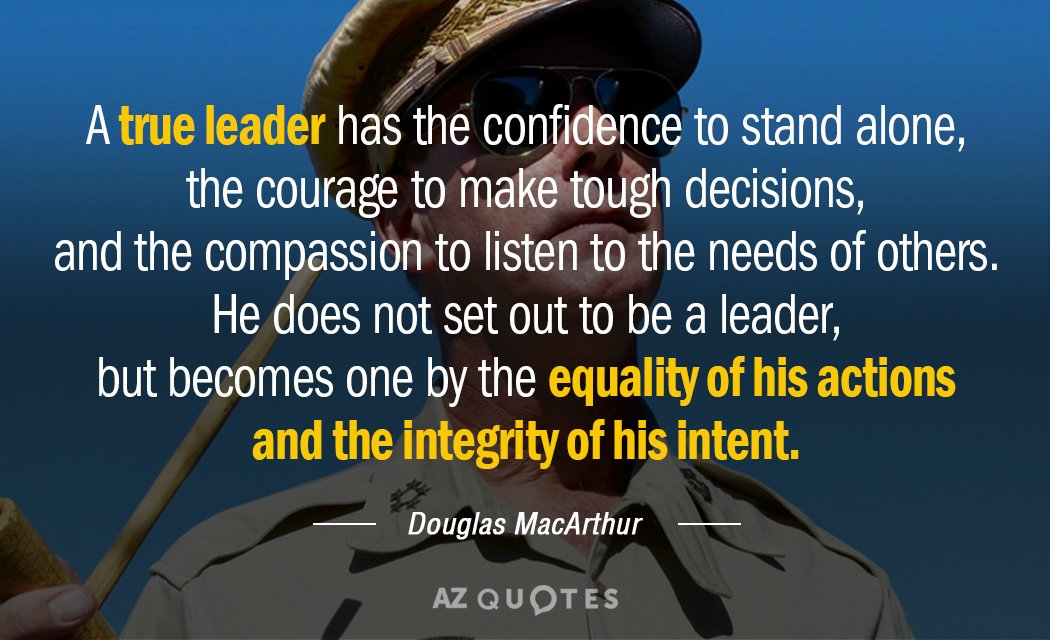
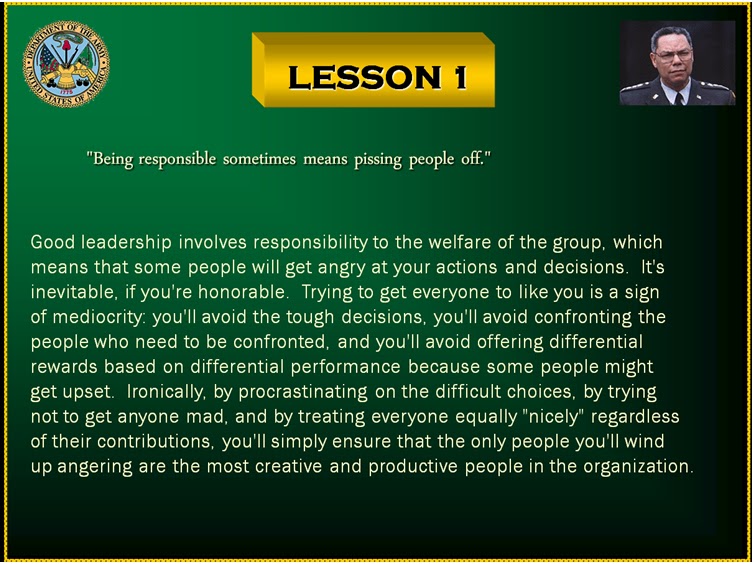
Thought of the Day: A True Leader

Cartoon – Status Quo Strategy

What the “org chart” can reveal about physician culture 

https://mailchi.mp/ce4d4e40f714/the-weekly-gist-june-10-2022?e=d1e747d2d8

A consultant colleague recently recounted a call from a health system looking for support in physician alignment. He mused, “It’s never a good sign when I hear that the medical group reports to the system CFO [chief financial officer].” We agree. It’s not that CFOs are necessarily bad managers of physician networks, or aren’t collaborative with doctors—as you’d expect from any group of leaders, there are CFOs who excel at these capabilities, and ones that don’t. 

The reporting relationship reveals less about the individual executive, and more about how the system views its medical group: less as a strategic partner, and more as “an asset to feed the [hospital] mothership.” Or worse, as a high-cost asset that is underperforming, with the CFO brought in as a “fixer”, taking over management of the physician group to “stop the bleed.”

Ideally the medical group would be led by a senior physician leader, often with the title of chief clinical officer or chief physician executive, who has oversight of all of the system’s physician network relationships, and can coordinate work across all these entities, sitting at the highest level of the executive team, reporting to the CEO. Of course, these kinds of physician leaders—with executive presence, management acumen, respected by physician and executive peers—can be difficult to find. 

Having a respected physician leader at the helm is even more important in a time of crisis, whether they lead alone or are paired with the CFO or another executive. Systems should have a plan to build the leadership talent needed to guide doctors through the coming clinical, generational, and strategic shifts in practice.