

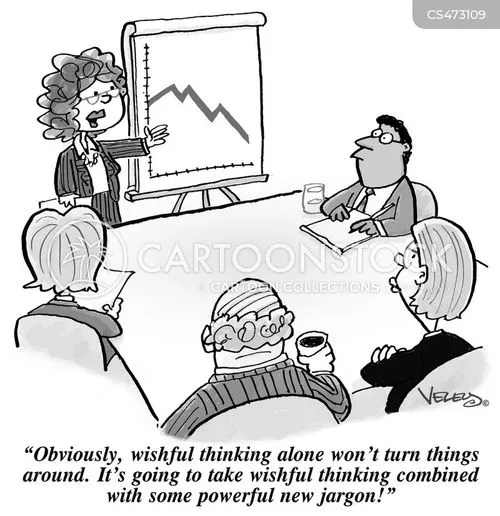
Cartoon – Elements of a Turnaround

https://www.kaufmanhall.com/insights/thoughts-ken-kaufman/traditional-hospital-strategy-aging-out

On October 1, 1908, Ford produced the first Model T automobile. More than 60 years later, this affordable, mass produced, gasoline-powered car was still the top-selling automobile of all time. The Model T was geared to the broadest possible market, produced with the most efficient methods, and used the most modern technology—core elements of Ford’s business strategy and corporate DNA.
On April 25, 2018, almost 100 years later, Ford announced that it would stop making all U.S. internal-combustion sedans except the Mustang.
The world had changed. The Taurus, Fusion, and Fiesta were hardly exciting the imaginations of car-buyers. Ford no longer produced its U.S. cars efficiently enough to return a suitable profit. And the internal combustion technology was far from modern, with electronic vehicles widely seen as the future of automobiles.
Ford’s core strategy, and many of its accompanying products, had aged out. But not all was doom and gloom; Ford was doing big and profitable business in its line of pickups, SUVs, and -utility vehicles, led by the popular F-150.
It’s hard to imagine the level of strategic soul-searching and cultural angst that went into making the decision to stop producing the cars that had been the basis of Ford’s history. Yet, change was necessary for survival. At the time, Ford’s then-CEO Jim Hackett said, “We’re going to feed the healthy parts of our business and deal decisively with the areas that destroy value.”
So Ford took several bold steps designed to update—and in many ways upend—its strategy. The company got rid of large chunks of the portfolio that would not be relevant going forward, particularly internal combustion sedans. Ford also reorganized the company into separate divisions for electric and internal combustion vehicles. And Ford pivoted to the future by electrifying its fleet.
Ford did not fully abandon its existing strategies. Rather, it took what was relevant and successful, and added that to the future-focused pivot, placing the F-150 as the lead vehicle in its new electric fleet.
This need for strategic change happens to all large organizations. All organizations, including America’s hospitals and health systems, need to confront the fact that no strategic plan lasts forever.
Over the past 25-30 years, America’s hospitals and health systems based their strategies on the provision of a high-quality clinical care, largely in inpatient settings. Over time, physicians and clinics were brought into the fold to strengthen referral channels, but the strategic focus remained on driving volume to higher-acuity services.
More recently, the longstanding traditional patient-physician-referral relationship began to change. A smarter, internet-savvy, and self-interested patient population was looking for different aspects of service in different situations. In some cases, patients’ priority was convenience. In other cases, their priority was affordability. In other cases, patients began going to great lengths to find the best doctors for high-end care regardless of geographic location. In other cases, patients wanted care as close as their phone.
Around the country, hospitals and health systems have seen these environmental changes and adjusted their strategies, but for the most part only incrementally. The strategic focus remains centered on clinical quality delivered on campus, while convenience, access, value, affordability, efficiency, and many virtual innovations remain on the strategic periphery.
Health system leaders need to ask themselves whether their long-time, traditional strategy is beginning to age out. And if so, what is the “Ford strategy” for America’s health systems?
The questions asked and answered by Ford in the past five years are highly relevant to health system strategic planning at a time of changing demand, economic and clinical uncertainty, and rapid innovation. For example, as you view your organization in its entirety, what must be preserved from the existing structure and operations, and what operations, costs, and strategies must leave? And which competencies and capabilities must be woven into a going-forward structure?
America’s hospitals and health systems have an extremely long history—in some cases, longer than Ford’s. With that history comes a natural tendency to stick with deeply entrenched strategies. Now is the time for health systems to ask themselves, what is our Ford F150? And how do we “electrify” our strategic plan going forward?

A couple of months ago, I got a call from a CEO of a regional health system—a long-time client and one of the smartest and most committed executives I know. This health system lost tens of millions of dollars in fiscal year 2022 and the CEO told me that he had come to the conclusion that he could not solve a problem of this magnitude with the usual and traditional solutions. Pushing the pre-Covid managerial buttons was just not getting the job done.
This organization is fiercely independent. It has been very successful in almost every respect for many years. It has had an effective and stable board and management team over the past 30 to 40 years.
But when the CEO looked at the current situation—economic, social, financial, operational, clinical—he saw that everything has changed and he knew that his healthcare organization needed to change as well. The system would not be able to return to profitability just by doing the same things it would have done five years or 10 years ago. Instead of looking at a small number of factors and making incremental improvements, he wanted to look across the total enterprise all at once. And to look at all aspects of the enterprise with an eye toward organizational renovation.
I said, “So, you want a makeover.”
The CEO is right. In an environment unlike anything any of us have experienced, and in an industry of complex interdependencies, the only way to get back to financial equilibrium is to take a comprehensive, holistic view of our organizations and environments, and to be open to an outcome in which we do things very differently.
In other words, a makeover.
Consider just a few areas that the hospital makeover could and should address:
There’s the REVENUE SIDE: Getting paid for what you are doing and the severity of the patient you are treating—which requires a focus on clinical documentation improvement and core revenue cycle delivery—and looking for any material revenue diversification opportunities.
There is the relationship with payers: Involving a mix of growth, disruption, and optimization strategies to increase payments, grow share of wallet, or develop new revenue streams.
There’s the EXPENSE SIDE: Optimizing workforce performance, focusing on care management and patient throughput, rethinking the shared services infrastructure, and realizing opportunities for savings in administrative services, purchased services, and the supply chain. While these have been historic areas of focus, organizations must move from an episodic to a constant, ongoing approach.
There’s the BALANCE SHEET: Establishing a parallel balance sheet strategy that will create the bridge across the operational makeover by reconfiguring invested assets and capital structure, repositioning the real estate portfolio, and optimizing liquidity management and treasury operations.
There is NETWORK REDESIGN: Ensuring that the services offered across the network are delivered efficiently and that each market and asset is optimized; reducing redundancy, increasing quality, and improving financial performance.
There is a whole concept around PORTFOLIO OPTIMIZATION: Developing a deep understanding of how the various components of your business perform, and how to optimize, scale back, or partner to drive further value and operational performance.
Incrementalism is a long-held business approach in healthcare, and for good reason. Any prominent change has the potential to affect the health of communities and those changes must be considered carefully to ensure that any outcome of those changes is a positive one. Any ill-considered action could have unintended consequences for any of a hospital’s many constituencies.
But today, incrementalism is both unrealistic and insufficient.
Just for starters, healthcare executive teams must recognize that back-office expenses are having a significant and negative impact on the ability of hospitals to make a sufficient operating margin. And also, healthcare executive teams must further realize that the old concept of “all things to all people” is literally bringing parts of the hospital industry toward bankruptcy.
As I described in a previous blog post, healthcare comprises some of the most wicked problems in our society—problems that are complex, that have no clear solution, and for which a solution intended to fix one aspect of a problem may well make other aspects worse.
The very nature of wicked problems argues for the kind of comprehensive approach that the CEO of this organization is taking—not tackling one issue at a time in linear fashion but making a sophisticated assessment of multiple solutions and studying their potential interdependencies, interactions, and intertwined effects.
My colleague Eric Jordahl has noted that “reverting to a 2019 world is not going to happen, which means that restructuring is the only option. . . . Where we are is not sustainable and waiting for a reversion is a rapidly decaying option.”
The very nature of the socioeconomic environment makes doing nothing or taking an incremental approach untenable. It is clearly beyond time for the hospital industry makeover.

As the CFO remit gets broader and broader, the seat is beginning to attract individuals from different backgrounds, experience levels and skill sets outside of traditional accounting.
While this opens up a wider range of potential candidates, this also means the traditional pipelines to the CFO seat are becoming less and less reliable. For companies, that means succession planning is becoming more critical — companies should be less focused on hunting for already experienced CFOs and more focused on developing those leaders, said Jim Lawson, co-leader of Russell Reynolds Associates’ CFO practice.
“You really need to make bold moves and give finance people a chance to sit in roles that might take a little bit of time to ramp up to,” Lawson said in an interview.
A recent study published in May by RRA, a leadership advisory firm, pointed to the rapidly expanding number of responsibilities today’s CFOs are juggling, prompting changes in who is interested in the role and the skill sets and experience needed for the position.
There are fewer CFOs today who began their careers at the Big Four accounting firms such as Ernst & Young, KPMG, Deloitte and PricewaterhouseCoopers, for example, while the number of less-tenured or experienced CFOs who hold CPA certifications has shrunk as well.
In 2012, 55% of S&P 2000 CFOs had CPA designations, the study found. By 2022, that figure was down to 43%.
Part of the reason behind the shifts in financial leaders’ backgrounds is that the skills needed by such leaders have morphed away from those related to traditional fiduciary responsibilities into operational and capital allocation talents or expertise.
“What we’ve seen in the last few years is while having operational experience continues to be very important, this theme around capital allocation strategy, (being the) external communication interface, has been the leading trend more recently,” Lawson said.
The change in the experience that CFOs are bringing to their jobs means that accessing and developing future financial leaders should be a top priority for businesses today, as the career journeys of many CFOs veer off from their historic paths. The number of financial leaders who hold MBAs could potentially fall in the coming years, for example, according to the RRA study, which found professionals in younger generations — such as millennials — are less likely to hold such degrees.
While the number of CFOs in the S&P 2000 who held MBAs increased to 48% last year from 42% in 2012, the percentage of millennial CFOs with such degrees fell to 38% compared to 50% for Generation X and baby boomer CFOs, the study found.
Certifications like CPAs and MBAs have become less common following a trend in the early 2000s when many companies stopped paying for the completion of such programs, Lawson said — and as a natural consequence, those certifications are less prioritized than they might have been previously when filling the CFO chair.
“Do you have to get an MBA to be the CFO of a big company? The answer is not necessarily,” Lawson said.
Another trend that could be impacting where future financial leaders are likely to come from is the increasing specialization of finance talent, the RRA study said: in the past, certain larger corporations served as “hotbeds” for upcoming leaders in the space, thanks to rotational programs that covered a wide remit of roles, business sectors and use cases, the study found.
As specialization increased, that means the “direct reports to CFOs’ responsibilities within the finance function had become a bit more siloed,” Lawson said.
While experience at hotbeds of financial talent like the Big Four is still highly prized, RRA is expecting the number of CFOs that have that training to slump in future years — a factor that will also change who is tackling what financial responsibilities as well as the future career paths of finance leaders.
For example, regional or division CFOs now have the ability to be more strategic, because they are no longer the ones doing all the transactional accounting, statutory reporting and local taxes, Lawson said — which could also be one of the factors for why CPA certification popularity is declining.
New technologies like automation and AI are also changing the CFOs’ day-to-day responsibilities, which — while coming with some potential flaws or cons — could also be a positive for financial leaders.
“As tasks become more automated, it’s helping the CFO spend less time mining the data and more time analyzing the data, a difference which is really positive for the CFO,” Lawson said.
As CFOs’ makeup shifts to prioritize these operational skills, an emphasis on training is key for companies who want to tap future financial leaders for the seat. The emphasis on such experience — which means CFOs are also becoming more essential in driving business strategy, in addition to business execution — could also be changing the future career path for those who wind up in the chair.
The trend of CFOs taking on CEO roles at companies has increased, for example, and is likely to continue in the future, Lawson said, although he pointed to such moves being more likely in certain sectors such as manufacturing and perhaps less likely in sectors such as technology.
“I think we’ll continue to see more CFOs become CEOs as a result of CFOs getting a better opportunity to be part of the business strategy and capital allocation decisions,” he said.

Correction: An earlier version incorrectly referenced a Texas deal between Houston Methodist and Baylor Scott and White. News about deals is sensitive and unnecessarily disruptive to reputable organizations like these. I sourced this news from a reputable deal advisor: it was inaccurate. My apology!
Congressional Republicans and the White House spared Main Street USA the pain of defaulting on the national debt last week. No surprise.
Also not surprising: another not-for-profit-mega deal was announced:
This follows recent announcements by four other NFP systems seeking the benefits of larger scale:
And all these moves are happening in an increasingly dicey environment for large, not-for-profit hospital system operators:
In response, Boards and management in these organizations assert…
These reactions are understandable. But self-reflection is also necessary. To those outside the hospital world, lack of hospital price transparency is an excuse. Every hospital bill is a surprise medical bill. Supporting the community safety net is an insignificant but manageable obligation for those with tax exemption status. Advocacy efforts to protect against 340B cuts and site-neutral payment policies are about grabbing/keeping extra revenue for the hospital. What is means to be a “not-for-profit” anything in healthcare is misleading since moneyball is what all seem to play. And short of government-run hospitals, many think price controls might be the answer.
My take:
The headwinds facing large not-for-profit hospitals systems are strong. They cannot be countered by contrarian messaging alone.
What’s next for most is a new wave of operating cost reductions even as pre-pandemic volumes are restored because the future is not a repeat of the past. Being bigger without operating smarter and differently is a recipe for failure.
What’s necessary is a reset for the entire US health system in which not-for-profit systems play a vital role. That discussion should be led by leaders of the largest NFP systems with the full endorsements of their boards and support of large employers, physicians and public health leaders in their communities.
Everything must be on the table: funding, community benefits, tax exemption, executive compensation, governance, administrative costs, affordability, social services, coverage et al. And mechanisms for inaction and delays disallowed.
It’s a unique opportunity for not-for-profit hospitals. It can’t wait.
 HENRY KOTULA