Two lawsuits against hospital mergers announced the same day may look like the FTC under Chair Lina Khan (pictured) is flexing its muscle to restrain deals that raise prices. But those complaints are “more smoke than fire,” Ken Field, a former FTC lawyer and current co-chair of Jones Day’s global health care practice, told STAT’s Tara Bannow.
The real target shouldn’t be the mergers in Utah and New Jersey between hospitals, antitrust experts said, but something called vertical mergers, in which hospitals buy up physician groups. After such deals, doctors spent $73 million more on 10 common imaging and lab tests over four years, a 2021 Health Affairs study found.
An FTC spokesperson didn’t comment on the agency’s strategy with respect to hospital consolidation.
Kansas City, MO-based electronic health record (EHR) company Cerner is now a business unit within Oracle, the Austin, TX-based software behemoth. Oracle, which already sells some software to insurers, hospitals, and public health departments, called Cerner the company’s “anchor asset”, and hopes to use it to expand its healthcare presence. Oracle co-founder and board chair Larry Ellison unveiled lofty plans to create a national health records database, but he didn’t detail how the company would get access to health records from non-Cerner systems, as interoperability standards haven’t been fully implemented.
The Gist: In addition to the challenge of entering the complex EHR and healthcare data market, Oracle now faces the challenge of rebuilding Cerner’s growth, and its clients’ confidence. Cerner lags Epic in terms of hospital market share: Epic holds about a third of the US hospital market, compared to Cerner’s 24 percent. Epic gained an additional 74 hospitals last year, compared to Cerner’s five.
Anecdotally, we know of several long-term Cerner health system clients who are either in the middle of, or planning for, a transition to Epic, which is seen by health system leaders as the superior EMR option. (In the words of one executive, “No CEO ever got fired for choosing Epic.”) If a stronger Cerner product emerges as a result of the acquisition, it could help to stem this tide.
Oracle’s chairman Larry Ellison outlined a bold vision Thursday for the database giant to use the combined tech power of Oracle and Cerner to make access to medical records more seamless.
Days after closing its $28.3 billion acquisition of electronic health record company Cerner, Ellison said Oracle plans to build a national health record database that would pull data from thousands of hospital-centric EHRs.
In a virtual briefing Thursday, Ellison highlighted many long-standing problems with interoperability in healthcare. “Your electronic health data is scattered across a dozen or separate databases. One for every provider you’ve ever visited. This patient data fragmentation and EHR fragmentation causes tremendous problems,” he said.
“We’re going to solve this problem by putting a unified national health records database on top of all of these thousands of separate hospital databases. So we’re building a system where the health records all American citizens’ health records not only exist at the hospital level but also are in a unified national health records database.”
The concept of the national health records database, which would hold anonymized data, Ellison said, is to help doctors and clinicians have faster access to patient records when providing care. Anonymized health data in that national database could also be used to build artificial intelligence models to help diagnose diseases such as cancer.
“Better information is the key to transforming healthcare,” he said. “Better information will allow doctors to deliver better patient outcomes. Better information will allow public health officials to develop much better public health policy and it will fundamentally lower healthcare costs overall.”
Oracle also plans to modernize Cerner’s Millennium EHR platform with updated features such as voice interface, more telehealth capabilities and disease-specific AI models, Ellison said.
He highlighted a partnership between health tech company Ronin, a clinical decision support solution, and MD Anderson to create a disease-specific AI model that monitors cancer patients as they work through their treatments.
“The people at Oracle are not going to be developing these AI models. But our platform, Cerner Millennium, is an open system and allows medical professionals at MD Anderson, who are experts in treating cancer, to add these AI modules to help other doctors treat cancer patients,” Ellison said.
The purchase of Cerner, which marks Oracle’s biggest acquisition, gives the database giant a stronger foothold in healthcare. Ellison said the company’s enterprise resource planning (ERP) and HR software already is widely used in healthcare.
But the company will face the same long-standing barriers to sharing health data that have stymied other interoperability efforts. There also could be pushback from the industry to any effort by a tech giant to build a nationalized health database.
In March 2020, the federal government released rules laying the groundwork to give patients easier access to their digital health records through their smartphones. The regulation, which went into effect in April 2021, requires health IT vendors, providers and health information exchanges to enable patients to access and download their health records with third-party apps. Under the rule, providers can’t inhibit the access, exchange or use of health information unless the data fall within eight exceptions.
Interoperability experts point out there are already efforts underway to create a more unified database of health records, such Cerner competitor Epic’s Cosmos, which is a de-identified patient database combining the company’s EHR data of over 122 million patients.
Former U.K. Prime Minister Tony Blair is backing Ellison’s vision for building a unified health database. Blair, who leads the nonprofit Tony Blair Institute for Global Change, partners with Oracle to use its cloud technology to tackle health issues.
Speaking at the virtual event, Blair said a unified health records system will “empower citizens and provide clinicians and other care providers with immediate access to their health history and treatment without chasing it down from disparate sources.”
David Feinberg, M.D., who took the reins as Cerner CEO just four months before the acquisition was announced in December, said he was excited about the potential for Oracle and Cerner to advance data sharing.
“We’re bringing world-class technology coupled with a deep and long history of understanding how healthcare works. I don’t think anyone’s ever done that,” said Feinberg, now president and CEO of Oracle Cerner.
Prioritizing outcomes in healthcare is long overdue and now within reach following Oracle’s acquisition of Cerner. To achieve more seamless, coordinated care, technology must play a greater role in reframing solutions for health and well-being around the world.
Combining Cerner’s clinical capabilities with Oracle’s enterprise platform, analytics, and automation expertise will change health and wellness in a way that simply hasn’t been possible before. We’ll provide secure and reliable solutions that deliver health insights and experiences to dramatically change how health is managed by patients, providers, and payors. The industry has never been riper for change.
Designing for people
Healthcare is innately personal; however, the industry often loses sight of the human side of health as delivering and understanding care has become increasingly disconnected and complex. Research reveals that doctors spend nearly twice as much time on administrative work as they do engaging with patients. If we replaced clinicians’ time spent performing administrative tasks with patient interactions, imagine how dramatically we could improve quality of care. Technology-induced administrative burden contributes to burnout, which has, in part, resulted in a workforce shortage and overshadowed the true benefits of healthcare technology. Clinicians didn’t enter medicine to spend half of their time conducting routine tasks and completing required documentation; they chose their profession to practice at the top of their license. We’re working to make this a reality, providing a toolset that supports clinical decision making and prioritizes the user experience.
For care delivery organizations, we’ll develop new cloud-enabled capabilities allowing providers to access the information they need, where and when they need it, on an interface that is easy to use. This will significantly reduce the time and effort required to find a patient’s information, even if the information is scattered across different providers or care settings. We’ll help people access and manage their own health information from wherever they are, so that they have a stronger voice in their care and can conduct more meaningful conversations with their providers. When successful, these improvements ultimately increase the value of healthcare and have the additional benefit of contributing data to population health insights.
Collaborative, interoperable care
In a complex and inefficient healthcare industry, interoperability is critical; but, it hasn’t been widely adopted between organizations. From the patient perspective, data silos limit patients’ empowerment and involvement in their health and well-being. It is vitally important that medical records are portable. Regardless of where someone receives care, their records should be accessible and unified. From a clinical perspective, interoperability ensures clinicians can properly review a patient’s entire medical history within their workflow and provide appropriate, contextual treatment.
A recent survey shows a staggering 97% of healthcare executives have called for increased healthcare data interoperability, the lack of which inhibits digital transformation and innovation within organizations and throughout the broader industry. Oracle is committed to open APIs to ensure any authorized user can consume health data and insights. We know a closed system will not create connectivity and unification across the many existing players and systems. Creating more solutions without an open ecosystem commitment would only contribute to the problems we see today with fractured and siloed systems.
Oracle will harness the power of data to create a collaborative ecosystem where people, patients, providers, and payors can securely access clinical, operational, and financial data on the cloud. These efforts will break down data silos and provide open systems that talk to—and connect with—one another to generate actionable, scalable, and global insights previously unavailable. Industry fragmentation impacts both patients and providers, but Oracle has the power to aggregate data into a single source of truth to achieve better outcomes.
Improved efficiency across the system
While enhanced clinical systems will improve experiences bedside and lead to better public health outcomes, back-office operations must also be improved to drive true efficiency, reduce costs, and make the business of healthcare more predictable. Oracle’s Fusion application suite can create this bridge between the bedside and the back-office, enhancing employee experience (better retention, less administration), streamlining the supply chain (reduced shrinkage, better inventory management), and giving the executive a better understanding of the issues impacting their business (greater predictability and cost control).
Secure healthcare data
Unfortunately, we know that retail, finance, and health data are the most targeted in security breaches. Patient privacy and the security of health data, when left unaddressed, threaten what the information of health exchange is solely meant to protect: patient safety. It’s time to raise health data security to an unprecedented level of investment and focus.
Oracle is an industry leader in securely storing, processing, and analyzing large volumes of cloud-based data. We’ll continue to apply the same security-obsessed focus to healthcare as we do to all industries, allowing people, patients, providers, and payors to safely access insights that improve care and advance decision-making. Oracle has been trusted with some of the world’s most sensitive and regulated data for more than 44 years. For the financial services industry specifically, Oracle already serves customers in more than 140 countries and manages risk for 24 of the world’s 28 systemically important financial institutions (SIFIs).
Meeting the moment
While we already knew this industry was ready for change, the pandemic amplified and accelerated the world’s readiness to see that change. We aim to meet this moment leveraging the technology and expertise that have revolutionized other industries, as well as applying new innovations to transform these systems of record into systems of intelligence.
Combining our existing healthcare industry solutions—from clinical trials to health insurance payor solutions to public health analysis systems—with our acquisition of Cerner, we believe Oracle has a uniquely positioned opportunity to offer new solutions to a broken healthcare system. We plan to support the entire lifecycle of healthcare, going beyond traditional health IT to integrate our infrastructure, platform, and applications capabilities for a more fully connected operational, administrative, and clinical system.
We are fully committed to the partnerships that will be instrumental to this journey. The technology and the world are ready for transformation. This is just the beginning.
The for-profit, 39-hospital Steward system manages 171K lives across the Medicare Advantage, Medicare shared savings, and Medicare direct contracting programs. This deal will allow Miami-based CareMax, a publicly-traded, value-based care company with 42 senior centers (mostly in Florida) and 34K lives under management, to expand across Steward’s footprint, which includes Texas and Arizona, states with rapidly growing Medicare populations.
The Gist:This deal is an example of the rise of venture-funded MSO (medical services organization) services that aim to subsume and scale value-based care functions from hospitals and medical groups. Steward wagers it can find greater success in managing risk in partnership with CareMax, moving a greater share of its Medicare population into risk, and outsourcing care management and patient engagement functions.
Many health systems have spent substantial resources building out accountable care organizations and risk-based Medicare businesses over the last decade. While selling these assets to a company like CareMax may be one way to generate a return, particularly for those frustrated by lower-than-anticipated gains from moving to value-based care, it also requires relinquishing control of functions likely central to the future health system business model.
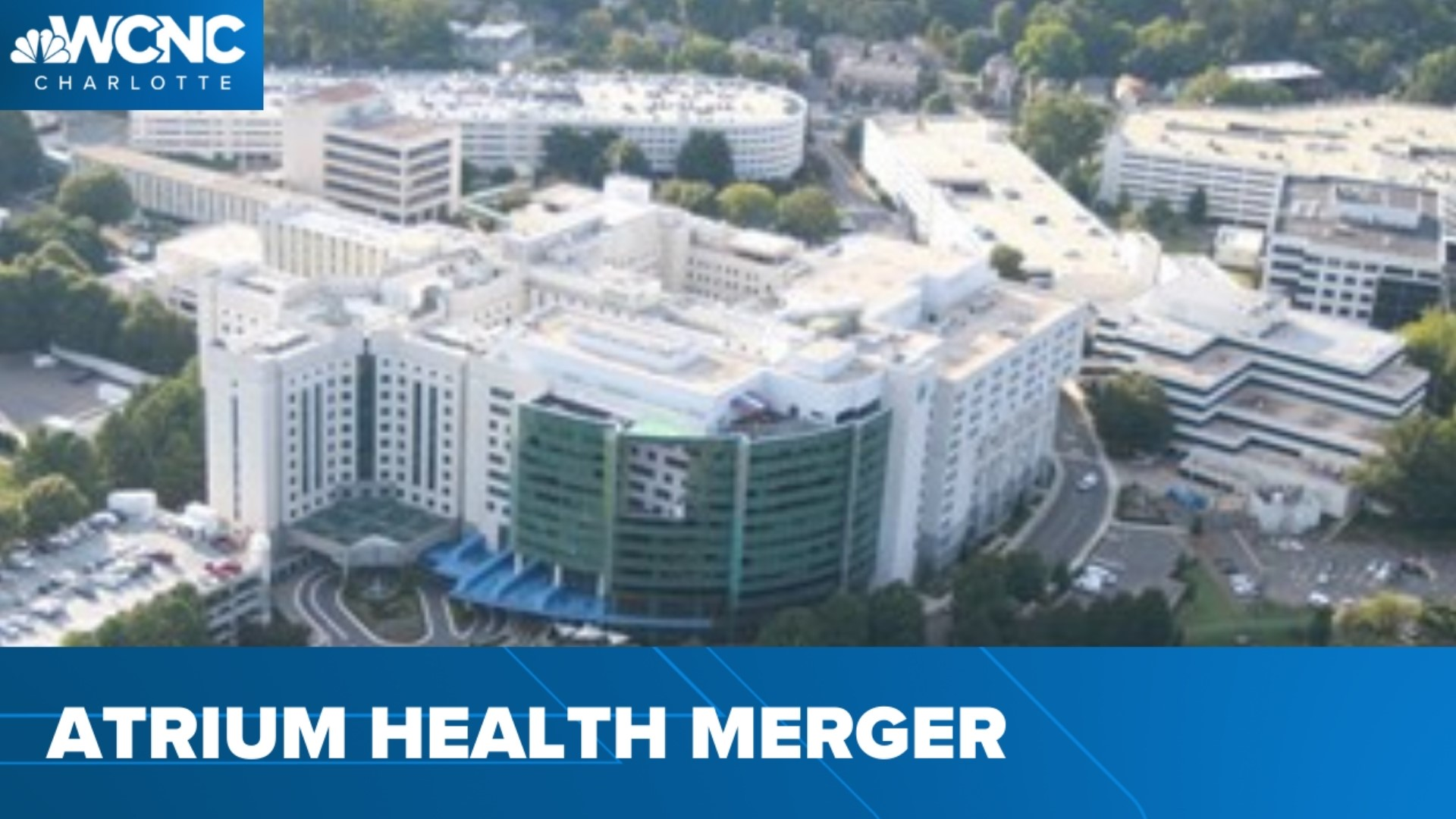
While healthcare is delivered locally, the business of healthcare is regional, and the regions are only getting bigger. Hospital and health system mergers alike have continued to shift from local to regional, and the recently announced merger between Advocate Aurora Health and Atrium Health clearly highlights that the regions are only getting bigger.
Advocate Aurora, with a presence in Illinois and Wisconsin, and Atrium Health, with a presence in North Carolina, South Carolina, Georgia, and Alabama, will combine to create a $27 billion health system that will span six states and make it one of the leading healthcare delivery systems in the country. The combined organization, which will transition to a new brand, Advocate Health, will operate 67 hospitals and over 1,000 sites of care, employ nearly 150,000 teammates, and serve 5.5 million patients. Together, Advocate Health will become the 6th largest system in the country behind Kaiser Permanente, HCA Healthcare, CommonSpirit Health, Ascension, and Providence.
We have seen a number of large health systems come together recently, including Intermountain Healthcare + SCL Health to create a $15 billion revenue system, Spectrum Health + Beaumont ($14 billion), NorthShore University Health System + Edward-Elmhurst Healthcare ($5 billion), LifePoint Health + Kindred Healthcare ($14 billion), and Jefferson Health + Einstein Healthcare Network ($8 billion).
The exact reasoning for each merger differs slightly, but one of the common threads across all is scale. But not scale in the traditional M&A sense. Rather, scale in covered lives; scale in physician infrastructure and alignment; scale in clinical and operational capabilities; scale in technology, innovation, and partnerships with non-traditional players; scale for capital access; and scale for insurance risk to compete in a value-based world. It is no longer the strong acquiring the weak. Rather, strong players are coming together to gain scale to face the headwinds in a unified manner.
For Advocate Aurora and Atrium, coming together is about leveraging their combined clinical excellence, advancing data analytics capabilities and digital consumer infrastructure, improving affordability, driving health equity, creating a next-generation workforce, research, and environmental sustainability. Together, they have pledged $2 billion to disrupt the root causes of health inequities across underserved communities and create more than 20,000 new jobs.
Both Advocate Aurora and Atrium are no strangers to mergers. Advocate and Aurora came together in 2018, and prior to that Advocate was intending to merge with NorthShore before being blocked due to anti-trust. Atrium has grown over the years, merging with systems such as Navicent Health in Georgia in 2018, Wake Forest Baptist Health in North Carolina 2020, and Floyd Health System in Georgia in 2021. In the newly proposed merger, Advocate Aurora and Atrium are coming together via a joint operating arrangement where each entity will be responsible for their own liabilities and maintain ownership of their respective assets but operate together under the new parent entity and board. This may allow the combined entity more flexibility in local decision-making. The current CEOs, Jim Skogsbergh and Eugene Woods will serve as co-CEOs for the first 18 months, at which point Skogsbergh will retire, and Woods will take over as the sole CEO.
Mergers can come in various shapes and structures, but the driving forces behind consolidation are not unique. With the need to compete in value-based care, adequately manage risk, gain scale across covered lives, physicians, and points of access, successfully deliver affordable high-quality care, and the need to deal with the vertical and horizontal consolidation of the large-scale payers, the markets that health systems operate in must be large enough to be effective and relevant. We fully expect to see more of these larger scale health system mergers in the near term.
The physical delivery of healthcare is local, but, again, the business of healthcare is not; it is regional, and the regions are only getting bigger.
Six health system and hospital deals have been canceled so far this year, whether it be a scrapped merger or acquisition or the unwinding of a partnership.
1. Proposed Dartmouth Health, GraniteOne Health merger canceled Lebanon, N.H.-based Dartmouth Health and Manchester, N.H.-based GraniteOne Health are canceling their proposed merger after the state Attorney General’s Office said the move would violate the New Hampshire constitution, according to VTDigger.
2. Hackensack Meridian, Englewood withdraw merger plans Edison, N.J.-based Hackensack Meridian Health and Englewood (N.J.) Health have dropped their merger plans, a spokesperson for Hackensack Meridian told Becker’s.
4. Lifespan, Care New England withdraw merger application The boards of Lifespan and Care New England — both based in Providence, R.I. — have decided to withdraw their merger application after the Federal Trade Commission made an announcement Feb. 17 it would file suit to block the deal.
5. Hoag, Providence to split: 5 things to know Hoag Memorial Hospital Presbyterian in Newport Beach, Calif., and Providence, a Catholic health system based in Renton, Wash., said they would end their affiliation in January.
6. Trinity Health won’t buy Tower Health hospital Trinity Health Mid-Atlantic has abandoned its plan to buy Tower Health’s Chestnut Hill Hospital in Philadelphia, according to the Philadelphia Inquirer.
RWJBarnabas Health (RWJBH) and Saint Peter’s Healthcare System’s proposed integration has received the blessing of New Jersey regulators, a key step forward as the systems look to form what they describe as the state’s “first premier academic medical center,” according to a Monday announcement.
The organizations are now awaiting a final approval from the Federal Trade Commission (FTC) before moving ahead with the deal.
“State approval now puts us on the cusp of being able to create New Jersey’s first multi-campus premier academic medical center that will draw top talent, increased research funding and more opportunities for groundbreaking clinical trials, while also enhancing specialized services and improving overall patient care,” Saint Peter’s President and CEO Leslie Hirsch said in a statement.
“New Jersey deserves to have a premier academic medical center of national distinction like many other states that will serve as a destination for patients from all walks of life to get lifesaving treatment for complex illnesses and as an anchor for medical innovation, educational opportunity and economic development,” Hirsch said.
The organizations said that in addition to increasing services and strengthening patient access, the premier academic medical center’s location in New Brunswick, New Jersey, would play a role in attracting more academic talent and research to nearby Rutgers University.
The systems’ announcement also cited affirmation from Superior Court Judge Lisa Vignuolo, who said when authorizing the transaction that the deal “will serve in the public interest and the public good.”
RWJBH is the larger of the pair, providing care to more than 3 million patients annually across 11 hospitals, four children’s hospitals and dozens of other centers. It’s already the largest academic health system in New Jersey thanks to a collaboration with Rutgers Robert Wood Johnson Medical Schools to train over 1,000 medical residents and interns across RWJBH hospitals yearly.
Formed in 2007, Saint Peter’s Healthcare System is a Catholic organization headlined by the 478-bed Saint Peter’s University Hospital in New Brunswick. It also operates a children’s hospital, primary and specialty care networks and a surgical center.
Under the previously announced terms of the agreement, Saint Peter’s would remain a full-service acute healthcare provider in New Jersey and continue to adhere to its Catholic healthcare mission. RWJBH would make significant strategic capital investments in St. Peter’s facilities, technology and innovation.
“This is a tremendous milestone in a years-long journey towards fulfilling our shared vision to bring transformative care to New Jersey,” RWJBH CEO Barry Ostrowsky said in a statement.
Regulators’ green light for RWJBH’s moves contrasts with the recent opposition to Hackensack Meridian Health and Englewood Health’s now-nixed merger plans. The FTC and half of the country’s state attorneys general fought the proposal due to concerns that it would remove competition and harm residents in New Jersey’s Bergen County.
The combined health system will become the sixth largest nationwide, with $27B in revenue and 67 hospitals across six Midwest and Southeast states. The system will be based in Charlotte, and known as Advocate Health, though Atrium will continue to use its name in its markets.
Atrium CEO Gene Woods is slated to ultimately lead the combined entity, after an 18-month co-CEO arrangement with Advocate Aurora CEO Jim Skogsbergh. While the cross-market merger is unlikely to create antitrust concerns about increased pricing leverage, the Biden administration has been making noises about applying stricter scrutiny to the impact of health system consolidation on labor market competition.
The Gist: Earlier this year, Utah-based Intermountain Healthcare and Colorado-based SCL Health combined to create a 33-hospital, $14B health system, which became the 11th largest nationwide. While these mega-mergers of regional systems can realize cost savings from back-office synergies, there is a significant opportunity to create larger “platforms” of care to win consumer loyalty, deploy digital capabilities, attract talent, and become more desirable partners for nontraditional players like Amazon, Walmart, and One Medical.
It will be critical to watch whether the governance and cultural challenges that often hinder health system mergers come into play here. Advocate Aurora has had two prospective mergers fall apart in recent years, the first with Chicago-based NorthShore University HealthSystem, and the second with Michigan-based Beaumont Health (who subsequently finalized a merger with Spectrum Health earlier this year).
But the combination with Atrium is structured as a joint operating agreement, essentially creating a new superstructure atop the two legacy systems. This may allow the combined entity more flexibility in local decision-making, but the ultimate question will be how the combined entity will create value for consumers. Time will tell.
Livonia, Mich.-based Trinity Health and Chicago-based CommonSpirit Health have signed an agreement for Trinity to acquire all MercyOne Health System assets and facilities.
Clive, Iowa-based MercyOne has 16 medical centers, 27 affiliate organizations and more than 420 care sites, according to a joint news release. It employs more than 20,000 people.
Trinity and CommonSpirit decided it would be best for MercyOne and the communities it serves for it to have a sole parent company, according to the news release. MercyOne facilities will transition to Trinity’s strategies and operations.
The transaction is expected to be finalized this summer.
“True to our shared Catholic mission, our goal is to provide high-quality, compassionate care with the best patient/member experience possible. We will accomplish that goal through a holistic approach, with a range of health services and technologies that are fully connected and coordinated,” Mike Slubowski, president and CEO of Trinity Health, said in the news release. “This agreement creates a fully integrated MercyOne to care for more people in a unified way.”






 HENRY KOTULA