Gainesville health system paying patients’ out-of-network costs

https://www.albanyherald.com/news/gainesville-health-system-paying-patients-out-of-network-costs/article_5a82d58a-f4f1-11e9-b7b5-8bebc4253708.html

gainesville hospital.jpg

With a contract impasse in its third week, a Gainesville-based health system is spending millions of dollars so that thousands of patients are not having to pay more when visiting the system’s doctors and hospitals.

Northeast Georgia Health System’s contract with Anthem ended Sept. 30, which means that since then, Georgians with Anthem insurance have been out of network for NGHS facilities and physicians.

But in an unusual move, the Northeast Georgia system is making up the financial difference between in-network and out-of-network prices through Dec. 31. That way, Anthem patients won’t pay higher fees when visiting NGHS medical providers, the system said.

“While it will cost millions of dollars per month to protect our patients from out-of-network costs, we’d rather do that than agree to a proposal that would jeopardize the health of our community for years to come,’’ Steve McNeilly, vice president of managed care for NGHS, said.

Most contract disputes between health systems and insurers get resolved before the end of the previous deal, although some agreements come just hours before the end of the expiring pact. The terminated contract between NGHS and Anthem is an exception, and this particular stalemate doesn’t show any sign of progress. Neither side has mentioned any negotiations or even indicated that talks are being scheduled.

The standoff comes at a time when many Georgians are entering their open enrollment period for the 2020 health plan year.

Anthem is by far the state’s biggest health insurer. Northeast Georgia’s hospitals in Gainesville, Braselton, Winder and Dahlonega, as well as its urgent care facilities and many physician group locations, are now out of network for Anthem patients.

“Anthem has only contacted NGHS once since the end of September – and that was only to inform us that they would be processing all claims as out-of-network,’’ McNeilly said. He said Northeast Georgia has proposed a contract with concessions, but that Anthem “refuses to take any meaningful action.’’

“Unfortunately, it appears that Anthem intends for us to be out of network for an extended period of time, so we’re urging patients to switch to a different health insurance plan during open enrollment,’’ McNeilly added.

Northeast Georgia said patients can call its Patient Access Service Center at (770) 219-7678 to get a personalized estimate of hospital charges for upcoming surgeries or procedures. If patients have questions about charges for physician office visits, they can call their physician’s office for more information, NGHS said.

Anthem said Monday that it is “standing firm for our consumers who need greater affordability.’’

The latest proposals from NGHS would increase costs “well above other health systems in the state,’’ Christina Gaines, an Anthem spokeswoman, said. “These increases place a significant burden on consumers because any substantial price increase in the services at these facilities would be directly reflected in increases in medical expenses covered by employer-sponsored group health plans, as well as to member premiums and cost share amounts.’’

What NGHS proposed “was simply not sustainable’’ for Anthem members, she said.

“We provided a revised proposal to them two days before the contract expired and did not receive a response,’’ Gaines said. “We are willing to resume talks so we can come to a new agreement that is fair, provides flexibility and protects affordability.”

Anthem said it can’t guarantee that Northeast Georgia will continue to charge patients the same rates as under the previous contract.

“To protect against unexpected balance billing, and other expenses associated with out-of-network providers, we are urging members to use in-network physicians and facilities,’’ Gaines said. “Anthem continues to have a broad, statewide provider network that delivers access to other quality health care options that remain in-network for our consumers.” Anthem directed consumers to visit www.anthem.com/nghs for information.

Craig Savage, a consultant with CMBC Advisors in North Carolina, said he had not heard previously of a hospital-based system covering the cost gap for patients who are forced out of network by a contract dispute.

“I think it’s a demonstration of good faith to patients,’’ Savage said. “It puts a little marketing pressure on Anthem.’’

But he added that even losing the business of 40,000 patients is “not going to have a huge [financial] impact on Anthem in Georgia.’’

And Savage said the contract standoff may put pressure on local physicians who could lose many patients to another insurer during open enrollment season.


New Legislation to Control Drug Prices: How Do House and Senate Bills Compare?

https://www.commonwealthfund.org/blog/2019/new-legislation-control-drug-prices-how-do-house-and-senate-bills-compare

drug pricing and legislation

House Speaker Nancy Pelosi’s (D–Calif.) long-anticipated drug pricing plan — the Lower Drug Costs Now Act of 2019 (H.R. 3) — has shaken up the drug pricing debate. It gives Medicare the ability to negotiate drug prices, further fueling the partisan divide between Democrats and Republicans, but also includes policies similar to those championed by Senate Finance Committee Chair Chuck Grassley (R–Iowa), such as caps on price increases in Medicare Parts B and D, as well as changes to the Part D benefit design. The way the bill approaches drug price negotiation is similar to the Trump administration’s supposedly soon-to-be-released international price index (IPI) proposal, which has been under review at the Office of Management and Budget since June.

The following tables compare H.R. 3 based on the legislative text advanced by key committees of jurisdiction and key provisions of related proposals: the Prescription Drug Pricing Reduction Act of 2019 (S. 2543), advanced by the Senate Finance Committee in July; and the Advanced Notice of Proposed Rulemaking (ANPRM): Medicare Program, IPI Model for Medicare Part B Drugs, issued by the Centers for Medicare and Medicaid Services last October.

Despite the poor prospects of H.R. 3 as currently drafted gaining traction in the Republican-controlled Senate, House Democratic leaders are moving full-steam ahead. The House Energy and CommerceEducation and Labor, and Ways and Means committees recently advanced similarly amended versions of H.R. 3 that will need to be reconciled before a floor vote that will likely occur after the recess in early November. The advanced bills raise the minimum number of drugs subject to negotiation from 25 to 35; retain drugs on the negotiation list until two generic or biosimilar products are available; and require price negotiation of drugs with launch prices in excess of the median household income, among other policy changes.

Even with these new revisions, House progressives are pushing for policies that would go further. The Ways and Means committee rejected a series of amendments offered by Health Subcommittee Chair Rep. Lloyd Doggett (D–Texas) that included extending government-negotiated prices to uninsured individuals and increasing the minimum number of drugs subject to negotiation to 50 after five years and to 100 after 10 years. In contrast, moderate Democrats are calling for a vote on stand-alone drug pricing legislation that can pass muster in the Senate — a talking point reiterated by Republicans throughout the markups. Despite cracks in Democratic support, House leadership is expected to continue backing Medicare negotiation, especially with the initial analysis from the Congressional Budget Office (CBO) — projecting $345 billion in savings over 2023–29 — further bolstering their position.

In the face of the ongoing impeachment inquiry, President Trump remains open to drug pricing talks with the Speaker, emphasizing his desire to pass drug pricing legislation. Notably, he endorsed government negotiations on drug pricing prior to taking office. Viewing the president’s interest in H.R. 3 as a viable threat, Chairman Grassley pushed his Republican colleagues to support what Grassley calls the “less aggressive, but strongly pharma-opposed drug pricing bill passed by the Senate Finance Committee.” Taxpayer savings of $100 billion, preliminarily projected by CBO, makes S. 2543 an attractive offset for other health care policy priorities. However, the chairman has already signaled the possibility of delaying floor action on drug pricing until early next year, giving him more time to win Republican support but perhaps also lowering the odds of ultimately passing significant legislation in an election year.

Both parties are intent on getting something done on drug pricing ahead of the 2020 elections. Amid escalating partisan tensions, the competing yet overlapping proposals from House Democrats and the Senate Finance Committee may create a scenario in which bipartisan, bicameral compromise may still be possible.


A group of Republicans has unveiled its healthcare plan. Here is what’s new and what isn’t

https://www.fiercehealthcare.com/payer/a-group-republicans-have-a-new-healthcare-plan-here-what-new-and-what-isn-t?mkt_tok=eyJpIjoiT0RZNE4yTm1PV1psTmpNeSIsInQiOiJ5R3gxMEwrdUhPWUdZVlBTZ3NWWkdMV08xOCtObDdFaGdHaE1hN0o4Z2p5WnBaN3hjd2lDVm5ybnBhWUtUNFdlTW1LcndtaTN1WUtNVzg1NmUrQjJmWEhqTWpJR3BkUmVuZmVNS2FzdmRWdENuMEtNT0tJMXozUW93N0lVQmZ5WSJ9&mrkid=959610

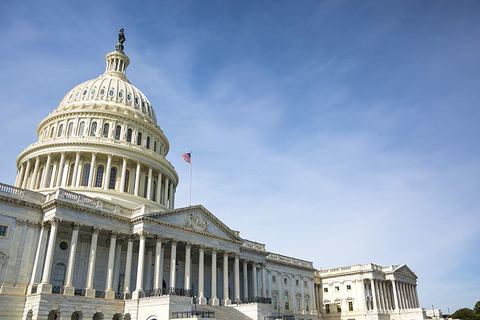
Capitol building in Washington

The Republican Study Committee (RSC), a group of 145 House GOP lawmakers, rolled out a new healthcare plan to counter Democrats’ call for “Medicare for All.”

However, the plan itself closely resembles the Affordable Care Act (ACA) repeal bill called the American Health Care Act (AHCA) that the House passed in 2017 and contributed greatly to the loss of the GOP House majority in 2018.

For the plan to become law, Republicans would have to retake the House in 2020, and President Donald Trump would need to be reelected. However, if those victories happen, the plan could be a blueprint for how a GOP-controlled Congress would move forward on healthcare, as the committee counts among its members both GOP leadership and rank and file.

Here are three takeaways from the plan:

Shifting to high-risk pools

The plan would retain the ACA’s requirement that individual market plans cover pre-existing conditions. However, it takes out provisions that ensure patients with pre-existing conditions get affordable coverage such as requirements that prevent plans from charging sicker people higher premiums than healthy customers.

The plan does introduce high-risk pools that would be used by people with high healthcare costs, a commonly deployed tactic by states for the individual market before the ACA. The high-risk pools would be funded by repackaging the funding used for the ACA’s subsidies and the Medicaid expansion.

However, the plan doesn’t identify the full amount that should be devoted to high-risk pools, which segregate high-cost customers on the individual market.

The plan cites a 2017 report from consulting firm Milliman that estimated a federally supported high-risk pool could require $3.3 billion to $16.7 billion a year. The AHCA also called for high-risk pools but only gave $2.5 billion a year to help states fund them.

While the “$17 billion annual price tag may not seem ideal, it sets up a sustainable path for the individual market,” the RSC report said.

The desire for more funding for high-risk pools is likely a nod to Democratic attacks during the 2018 midterms that the AHCA threatened pre-existing condition protections. The nonpartisan Congressional Budget Office said the AHCA, which let states waive pre-existing condition protections, would lead to people in those states not getting affordable coverage for their pre-existing conditions.

While the AHCA had funding for high-risk pools, experts across the healthcare spectrum said that it wasn’t enough. It would remain to be seen how much more funding would be needed.

Doubling down again on health savings accounts

Bolstering health savings accounts has been a very popular reform idea among Republicans, and that enthusiasm is clear in the RSC plan.

The plan proposes to increase how much an employee can contribute to a health savings account. Currently, an individual can contribute $3,500 and a family can contribute $7,000.

A 2018 bill that passed out of the House but didn’t make it through Congress increased the contribution cap to $6,650 for an individual and $13,300 for a family.

Now, the RSC plan wants to increase the figures again, this time to $9,000 per individual and $18,000 for families, in line with a proposal from libertarian think tank Cato Institute.

“The RSC plan would also expand health savings accounts so that they could be used for a number of health services and products that currently must be paid for with after-tax dollars,” the plan said.

Replace Medicaid expansion with a block grant

This is another common reform in ACA repeal plans. The bill would phase out the enhanced federal matching rate for the Medicaid expansion to pre-expansion levels.

In addition, the bill would replace the existing open-ended federal match with a fixed amount in a block grant.

But the plan has a new twist in a new “flex-grant” that would give more funding to states that adopt a work requirement. However, half of the funding for any flex-grant must go toward supporting the purchase of private plans for low-income individuals.

So far, 12 states have gotten approval from the Trump administration to install work requirements for their Medicaid expansion population. But of those 12 states, three have had their work requirement programs struck down by legal challenges.

Some states are also considering installing their own block grants. Tennessee has released a draft proposal for a block grant but has yet to get federal approval.


Employers aren’t changing their health benefits

https://www.axios.com/employers-health-care-coverage-insurance-2020-election-e0ce92cf-c106-44fe-bb35-1c3c6e452712.html

Image result for Employers aren't changing their health benefits

Companies rarely switch the health plans they offer to their workers, and seem to be especially cautious in the 2020 election year.

The big picture: Medical and drug costs are crushing employers and workers alike. But altering benefits — which could require employees to change their doctors — could provoke even more anger.

By the numbers: Roughly half of employers offering health benefits did not shop around for new plans or insurance companies for 2019, according to the Kaiser Family Foundation’s latest employer benefit survey.

  • Of the half that did shop, just 18% changed to a new insurance carrier.
  • That means fewer than 10% of all employers switched carriers.
  • Large corporations, like GM, are much less likely to tinker with coverage than smaller firms.

“Disruption is the enemy,” Mike Turpin, an employer health care consultant at the brokerage USI Insurance Services, said on a call with Wall Street investors last week.

  • Turpin said he has seen even less switching for 2020 because employers don’t want to make waves over health care in an election year — “which buys another year” for the large, incumbent health insurance companies.

Between the lines: More companies have moved workers into less comprehensive plans since the Affordable Care Act was passed, but those changes often have been met with either immediate condemnation (like Harvard in 2015) or delayed outrage as workers shoulder more costs.

  • “It is telling that brokers perform an analysis for employers that’s called ‘disruption analysis’ — the goal of which is not to be disruptive, but to minimize disruption,” said Katherine Hempstead, a health policy adviser at the Robert Wood Johnson Foundation.

Yes, but: Millions of people still switch health plans every year when they buy it on their own, change jobs, get laid off or retire.


Heads Up: A Ruling On The Latest Challenge To The Affordable Care Act Is Coming

https://www.npr.org/sections/health-shots/2019/10/12/769038397/heads-up-a-ruling-on-the-latest-challenge-to-the-affordable-care-act-is-coming?fbclid=IwAR3g7_yZtBbywVWukbTC0PmcInHcioxPcF9Y5LsWYLpEH5Gs-3ZgBGgINVM

A decision in the latest court case to threaten the future of the Affordable Care Act could come as soon as this month. The ruling will come from the panel of judges in the 5th Circuit Court of Appeals, which heard oral arguments in the Texas v. Azar lawsuit.

An estimated 24 million people get their health coverage through programs created under the law, which has faced countless court challenges since it passed.

In court in July, only two of the three judges — both appointed by Republican presidents — asked questions. “Oral argument in front of the circuit went about as badly for the defenders of the Affordable Care Act as it could have gone,” says Nicholas Bagley, a professor of law at the University of Michigan. “To the extent that oral argument offers an insight into how judges are thinking about the case, I think we should be prepared for the worst — the invalidation of all or a significant part of the Affordable Care Act.”

Important caveat: Regardless of this ruling, the Affordable Care Act is still the law of the land. Whatever the 5th Circuit rules, it will be a long time before anything actually changes. Still, the timing of the ruling matters, says Sabrina Corlette, director of the Center on Health Insurance Reforms at Georgetown University.

“If that decision comes out before or during open enrollment, it could lead to a lot of consumer confusion about the security of their coverage and may actually discourage people from enrolling, which I think would be a bad thing,” she says.

Don’t be confused. Open enrollment begins Nov. 1 and runs at least through Dec. 15, and the insurance marketplaces set up by the law aren’t going anywhere anytime soon.

That’s not to underplay the stakes here. Down the line, sometime next year, if the Supreme Court ends up taking the case and ruling the ACA unconstitutional, “the chaos that would ensue is almost possible impossible to wrap your brain around,” Corlette says. “The marketplaces would just simply disappear and millions of people would become uninsured overnight, probably leaving hospitals and doctors with millions and millions of dollars in unpaid medical bills. Medicaid expansion would disappear overnight.

I don’t see any sector of our health care economy being untouched or unaffected,” she adds.

So what is this case that — yet again — threatens the Affordable Care Act’s very existence?

A quick refresher: When the Republican-led Congress passed the Tax Cuts and Jobs Act in 2017, it zeroed out the Affordable Care Act’s penalty for people who did not have health insurance. That penalty was a key part of the Supreme Court’s decision to uphold the law in 2012, so after the change to the penalty, the ACA’s opponents decided to challenge it anew.

Significantly, the Trump administration decided in June not to defend the ACA in this case. “It’s extremely rare for an administration not to defend the constitutionality of an existing law,” says Abbe Gluck, a law professor and the director of the Solomon Center for Health Law and Policy at Yale University. “The administration is not defending any of it — that’s a really big deal.”

The basic argument made by the state of Texas and the other plaintiffs? The zero dollar fine now outlined in the ACA is a “naked, penalty-free command to buy insurance,” says Bagley.

Here’s how the argument goes, as Bagley explains it: “We know from the Supreme Court’s first decision on the individual mandate case that Congress doesn’t have the power to adopt a freestanding mandate, it just has the power to impose a tax.” So therefore, the argument is that “the naked mandate that remains in the Affordable Care Act must be unconstitutional.”

The case made by the plaintiffs goes further, asserting that because the individual mandate was described by the Congress that enacted it as essential to the functioning of the law, this unconstitutional command cannot be cut off from the rest of the law. If the zero dollar penalty is unconstitutional, the whole law must fall.

Last December, a federal judge in Texas agreed with that entire argument. His judgement was appealed to the panel of judges in the 5th Circuit. Even if those judges agree that the whole law is unconstitutional, that would not be the end of the story — the case will almost certainly end up before the Supreme Court. It would be the third case to challenge the Affordable Care Act in the nation’s highest court.

So if the ruling will be appealed anyway, does it matter? “It matters for at least two reasons,” Bagley says. “First of all, if the 5th Circuit rejects the lower court holding and decides that the whole law is, in fact, perfectly constitutional, I think there’s a good chance the Supreme Court would sit this one out.”

On the other hand, if the 5th Circuit invalidates the law, it almost certainly will go the Supreme Court, “which will take a fresh look at the legal question,” he says. Even if the Supreme Court ultimately decides whether the ACA stands, “you never want to discount the role that lower court decisions can play over the lifespan of a case,” Bagley says.

The law has been dogged by legal challenges and repeal attempts from the very beginning, and experts have warned many times about the dire consequences of the law suddenly going away. Nine years in, “the Affordable Care Act is now part of the plumbing of our nation’s health care system,” Bagley says. “Ripping it out would cause untold damage and would create a whole lot of uncertainty.”


Trump’s Plan To Privatize Medicare

https://www.americanprogress.org/issues/healthcare/news/2019/10/11/475646/trumps-plan-privatize-medicare/?utm_source=The+Fiscal+Times&utm_campaign=bc4ead3dce-EMAIL_CAMPAIGN_2019_10_11_09_27&utm_medium=email&utm_term=0_714147a9cf-bc4ead3dce-390702969

Image result for medicare privatizing

Last week, President Donald Trump signed an executive order titled “Protecting and Improving Medicare for Our Nation’s Seniors.” The order is the latest example of how Trump says one thing while doing another. Rather than strengthening Medicare, Trump envisions turning large swaths of the 54-year-old program for the elderly over to the private sector while directing the federal government to dismantle safeguards on seniors’ health care access, shift costs onto beneficiaries, and limit seniors’ choice of providers.

Among other things, the executive order lays out a path to:

  • Shift the Medicare program toward private plans
  • Expand private contracting between beneficiaries and providers, putting seniors at risk for higher costs and surprise medical bills
  • Further restrict seniors’ choice of providers in Medicare Advantage
  • Expand Medicare Medical Savings Accounts as a tax shelter for the wealthy

President Trump rolled out the executive order in a speech at a retirement community in Florida, during which he echoed his administration’s previous attacks on progressive health reform proposals by referring to them as “Medicare for None.” In fact, several recent congressional proposals would offer new choices for coverage, expand the benefits of insurance, and strengthen Medicare benefits for the elderly. Unlike these Medicare for All-type proposals, Trump’s plan fails to address some more common problems in Medicare, such as high out-of-pocket costs or difficulties navigating Medicare Advantage networks.

A shift toward Medicare privatization

Today, about one-third of seniors are enrolled in private plans through Medicare Advantage; the other two-thirds are in traditional, fee-for-service Medicare. The share of beneficiaries enrolled in Medicare Advantage has grown over the past two decades. Medicare Advantage attracts a relatively healthier, less expensive pool of enrollees than that of traditional Medicare, and its per-beneficiary spending is lower. Some of that difference is attributable to lower health care utilization, although local market conditions and beneficiary health status also contribute. A number of studies have shown how Medicare Advantage plans profit from selection by attracting relatively healthier enrollees while also gaming the Centers for Medicare and Medicaid Services’ (CMS) risk adjustment program to make their enrollees appear sicker. Medicare Advantage plans also enjoy distinct advantages over the traditional Medicare program, including integrated plan designs and the ability to avoid providers involved in graduate medical education.

Last week’s executive order emphasizes so-called market-based approaches, signaling that President Trump envisions an even bigger role for the private sector in Medicare. In fact, Trump has already taken steps to accelerate enrollment in private plans. Last year, the administration bombarded beneficiaries with email messages promoting Medicare Advantage to such an extent that one former CMS official described the effort as “more like Medicare Advantage plan advertising than objective information from a public agency.”

The executive order directs the secretary of the U.S. Department of Health and Human Services (HHS) to ensure that traditional Medicare “is not advantaged or promoted over [Medicare Advantage] with respect to its administration.” For example, one way the administration could nudge more enrollees into Medicare Advantage would be to further relax CMS guidelines governing how plans market to beneficiaries. A more aggressive tactic to shift enrollees into private plans would be to make Medicare Advantage, rather than the traditional Medicare program, the default for more seniors. While auto-enrollment could result in lower costs for some beneficiaries, others could find themselves stuck in plans with limited networks or insufficient coverage for services they need. In addition, studies of the private drug plans offered through Medicare Part D have shown that seniors find it cumbersome to switch plans, even when the one they have is not the best value.

CMS’ existing Medicare Advantage auto-enrollment mechanism, though limited to a small subset of beneficiaries, caused enough problems that the agency suspended expansion of the process in 2016. In some instances, beneficiaries subject to “seamless conversion,” which allows insurance companies to auto-enroll their marketplace or Medicaid customers into Medicare Advantage, were unaware what type of Medicare coverage they had until they were assigned a new primary care doctor or they already had received out-of-network care. Even if a future Trump administration plan allowed people automatically enrolled in Medicare Advantage to opt back into traditional Medicare, the switch could cause seniors to miss enrollment deadlines for private Medigap plans. Unable to obtain supplemental benefits for traditional Medicare coverage, those people would effectively be stuck in Medicare Advantage.

Another part of the order asks the HHS secretary to align Medicare’s reimbursement rates with the prices paid by Medicare Advantage plans and commercial insurers. Broad application of market-based pricing in Medicare could raise expenses for beneficiaries and taxpayers and drain the Medicare trust fund: Bloated provider rates for commercial insurance show that the market does not work in patients’ interests and cannot be trusted to ensure fair prices. Dominant provider systems leverage their market power to demand prices well above the cost of care. A recent RAND Corporation study found that private insurance typically pays hospitals about 241 percent of Medicare rates, with wide variation across geographic regions. While Medicare Advantage plans’ negotiated rates for individual items or services can be lower or greater than those in the traditional Medicare fee schedule, reimbursement rates in the two programs are generally close, on average. The administratively set rates in Medicare keep the prices for hospital and physician services reasonable not only for traditional Medicare beneficiaries but also for those in Medicare Advantage plans. Allowing traditional Medicare prices to float up toward commercial rates while also delinking Medicare Advantage rates from Medicare rates could cause traditional Medicare premiums and the overall cost of the program to skyrocket and deplete the Medicare trust fund.

The executive order could also give new life to a deeply unpopular, longstanding conservative scheme to privatize Medicare. Under so-called premium support plans, seniors would receive vouchers that they would use to purchase either a private Medicare plan or traditional Medicare. Past premium support proposals differ in how they set the amount of the voucher: Some plans set the voucher amount arbitrarily, while others put a thumb on the scale to encourage beneficiaries to choose a private plan.

The executive order calls for using Medicare Advantage negotiated rates to set traditional Medicare rates and instructs the HHS secretary to develop a transition plan to adopting “true market-based pricing” for the traditional Medicare program, including through competitive bidding, which in the past has been a method for setting the voucher amount. Traditional Medicare—saddled with now-higher costs—would have to bid against private Medicare plans in order to compete for beneficiaries. Past premium support plans would then cap the yearly growth of the voucher, and as costs exceeded those caps, Medicare beneficiaries would pay a greater share of the costs of the program over time.

Expansion of private contracting would weaken Medicare’s financial safeguards

The executive order also directs the HHS secretary to “identify and remove unnecessary barriers to private contracts.” Today, Medicare protects beneficiaries from surprise medical bills by limiting the amount that doctors who see Medicare beneficiaries can charge these patients. Physicians may opt out of the Medicare program and enter into private contracts that set higher prices than Medicare will pay; in these cases, the patient is responsible for the entire billed amount. However, less than 1 percent of doctors have chosen to opt out of the program, in large part because Medicare’s rules protect consumers from these arrangements.

For example, doctors must give Medicare beneficiaries written notice that they have opted out of Medicare, and the patient must sign the document acknowledging that they understand they are responsible for paying the entire charge. Doctors may not enter into private contracts with patients who qualify for both Medicare and Medicaid or with patients experiencing a medical emergency. In addition, if a physician opts out of the Medicare program, they must do so entirely instead of cherry-picking beneficiaries or services. The opt-out period is a minimum of two years. Together, these limits protect beneficiaries by providing greater certainty about their doctors’ status and avoiding confusion about which visits and services Medicare will reimburse.

Loosening these rules could allow doctors to more easily circumvent Medicare consumer protections; opt out of Medicare; and charge higher prices to Medicare patients, who have lower incomes and greater health needs than privately insured individuals, on average. While wealthy beneficiaries might benefit from expanded access to nonparticipating providers, higher private prices could make it difficult for most Medicare patients to keep their doctors or afford to see other providers. Nevertheless, Trump’s first HHS secretary, Tom Price, sponsored legislation to permit private contracting and supported allowing doctors to balance bill Medicare beneficiaries.

Restriction of seniors’ choice of doctors in Medicare Advantage

During his Florida speech, Trump asked the crowd, “You want to keep your doctors, right?” Yet his order calls for changes that could restrict Medicare beneficiaries’ choice of doctors by favoring Medicare Advantage plans and by tinkering with the CMS network adequacy standards for those plans.

From a beneficiary perspective, a distinguishing feature of Medicare Advantage is that plans typically have restrictive provider networks. Under the Trump proposal, the network adequacy standards would take into account state laws affecting provider competition and the availability of telehealth services. If these changes lower the bar for Medicare Advantage plans and allow plans to include even fewer doctors in a particular area, a position the Trump administration has previously supported, they could make it harder for seniors to schedule in-person visits or see the provider of their choice. They could also increase costs for beneficiaries who need to see out-of-network specialists.

Lower-cost, narrower network plans could profit by cream-skimming healthier seniors because healthy individuals benefit most from the trade-off between lower premiums and fewer providers. Enrollees in traditional Medicare, including seniors who need the broad provider access that only traditional Medicare offers, could see their premiums rise as a result of a sicker risk pool and imperfect risk adjustment.

If networks become narrower, it may be increasingly hard for Medicare Advantage beneficiaries to identify and schedule visits with providers included in their plans. Moreover, online provider directories for Medicare Advantage are already filled with inaccuracies. A 2018 CMS report found that 45 percent of directories had inaccurate location information for providers. The CMS audit also found that 221 providers who were listed as in-network were not accepting new Medicare Advantage patients. This lack of accurate information, combined with Medicare Advantage’s relatively weak network adequacy standards, means that the Trump plan’s changes to the program could decrease, rather than increase, choice for seniors.

Savings accounts to benefit the wealthy and healthy

The executive order proposes wider access to Medicare Medical Savings Accounts (MSAs), which are available to those enrolled in high-deductible Medicare Advantage plans. Like health savings accounts (HSAs), the money in MSAs is tax-free and can be used toward health care costs, including dental, hearing, and vision. While high-deductible health plans and MSAs can be a good value for relatively healthy seniors who have high enough incomes to afford to fund these accounts, they may not provide adequate financial protection for those who need first-dollar coverage or have greater health needs.

President Trump has previously proposed turning MSAs into a tax shelter, which would chiefly benefit the wealthy. Trump’s FY 2020 budget proposed allowing seniors to deposit additional funds into MSAs beyond the plan’s contribution, as they can with HSAs. Data on HSA contributions show that higher-income individuals are more likely to contribute toward accounts and to benefit more from the tax exemption.

Trump sidesteps seniors’ most pressing concerns

A glaring omission in the president’s plan is any provision to directly take on one of seniors’ widespread concerns: the high cost of health care. Although Americans have overwhelmingly favorable experiences with the existing Medicare program, it is far from perfect. According to a report from the Commonwealth Fund, about 1 in 4 Medicare beneficiaries is underinsured, meaning their out-of-pocket health care costs are 10 percent or more of their income. A 2011 analysis by the Medicare Payment Advisory Commission (MedPAC) found that Medicare beneficiaries without supplemental plans, also known as “medigap” coverage, paid 12 percent of their medical costs out of pocket, on average.

For example, traditional Medicare has no limit on out-of-pocket costs. By contrast, the CMS limits out-of-pocket costs in Medicare Advantage to $6,700 for in-network services, and many individual plans offer lower out-of-pocket limits. In 2012, the MedPAC commissioners voted unanimously to recommend that Congress rework Medicare’s benefit design to include an out-of-pocket maximum. Doing so would give Medicare beneficiaries better financial protection against high health care costs.

President Trump claims that his executive order protects Medicare from “destruction.” In fact, not only would recent prominent Medicare for All and public option reforms proposed in Congress maintain the benefits of the existing Medicare program for seniors, but many also lay out improvements to the program in recognition of its shortcomings. For example, Sen. Bernie Sanders’ (D-VT) Medicare for All bill would almost immediately add an out-of-pocket limit for seniors in Medicare parts A and B. The Medicare for America Act, sponsored by Reps. Rosa DeLauro (D-CT) and Jan Schakowsky (D-IL), would also add out-of-pocket limits and strengthen Medicare Advantage network adequacy standards. And multiple proposals have provisions to lower beneficiaries’ prescription drug costs; eliminate the two-year waiting period for nonelderly disabled people; and add hearing, dental, and vision coverage to standard Medicare benefits.

Conclusion

President Trump has laid out a plan to privatize Medicare and undermine the program, breaking his promise that “no one will lay a hand on your Medicare benefits.” Furthermore, he is trying to scare seniors away from supporting congressional proposals that would genuinely improve Medicare beneficiaries’ access to health care and financial security. Although seniors need better protection against out-of-pocket medical costs and better access to care providers, the changes Trump has proposed will only make things worse.