Insurers and Private Equity Look to Join Forces to Further Consolidate Control of Americans’ Access to Health Care

With both Republicans and Democrats taking on these Goliaths individually, this could be a watershed moment for bi-partisan action.

The push and pull between providers and insurance companies is as old as our health payment system. Doctors have long argued insurers pay too little and that they too often interfere in patient care.

Dramatic increases in prior authorization, aggressive payment negotiations and less-generous reimbursement to doctors by Medicare Advantage plans show there’s little question the balance of power in this equation has swung toward payers.

These practices have led some doctors to look for outside investment, namely private equity, to keep their cash flow healthy and their operations functional. The trend of private equity acquisitions of physician practices is worthy of the federal scrutiny it has attracted. Insurers have noticed this trend, too, and appear ready to propose a profitable partnership.

Bloomberg recently reported that CVS/Aetna is looking for a private equity partner to invest in Oak Street Health, the primary care business CVS acquired for $9.5 billion last year. Oak Street is a significant player in primary care delivery, particularly for Americans on Medicare, with more than 100 clinics nationwide. CVS is said to be exploring a joint venture with a private equity firm to significantly expand Oak Street’s footprint and therefore also expand the parent corporation’s direct control over care for millions of seniors and disabled Americans across hundreds of communities.

Republicans have led scrutiny of pharmacy benefit managers on Capitol Hill. And Democratic attacks on private equity in health care have recently intensified. I hope, then, that both parties would find common ground in being watchful of a joint venture between private equity and one of the country’s largest PBMs, Caremark, also owned by CVS/Aetna.

The combination of health insurers and PBMs over the last decade – United Healthcare and Optum; CVS/Aetna and Caremark, and Cigna and Express Scripts – has increasingly handed a few large corporations the ability to approve or deny claims, set payment rates for care, choose what prescriptions to dispense, what prescriptions should cost, and how much patients must pay out-of-pocket for their medications before their coverage kicks in.

As enrollment in Medicare Advantage plans has grown to include a majority of the nation’s elderly and disabled people, we have seen insurers source record profits off the backs of the taxpayer-funded program. But in recent months, insurers have told investors they have had higher than expected Medicare Advantage claims – in particular CVS/Aetna, which took a hammering on Wall Street recently because its Medicare Advantage enrollees were using more health care services than company executives had expected.

It is natural, then, that one of the largest insurer-owned PBMs is looking to expand its hold on primary care for older Americans. Primary care is often the gateway to our health care system, driving referrals to specialists and procedures that lead to the largest claims insurers and their employer customers have to pay. By employing a growing number of primary care providers, CVS/Aetna can increasingly influence referrals to specialists and therefore the care or pharmacy benefit costs those patients may incur.

Control of primary care doctors holds another benefit for insurers: determination of what primary care doctor a patient sees.

People enrolled in an Aetna Medicare Advantage or employer-sponsored plan may find that care is easier to access at Oak Street clinics. Unfortunately, while that feels monopolistic and ethically alarming, this vertical integration has received relatively little scrutiny by lawmakers and regulators.

No law prevents an insurance company or PBM from kicking doctors it does not own out of network while creating preferential treatment for doctors directly employed by or closely affiliated with the corporate mothership.

In fact, the system largely incentivizes this. And shareholders expect insurers to keep up with their peers. As UnitedHealth Group has become increasingly aggressive in its acquisitions of physician practices – now employing or affiliated with about one in ten of the nation’s doctors – it has also become increasingly aggressive in its contract negotiations with physicians it does not control, particularly the specialists who depend on the referrals that come from primary care physicians.

That’s another area where looking to expand Oak Street Health makes smart business sense for CVS/Aetna. Specialist physicians are historically accustomed to higher compensation than primary care doctors and are used to striking hard-fought deals with insurers to stay in-network.

By controlling the flow of primary care referrals to specialists, CVS/Aetna can control what insurers have long-desired greater influence over: patient utilization. As a key driver of referrals to specialists in a specific market, CVS/Aetna will have even more power in contract negotiations with specialists.

As Oak Street’s clinics grow market share in the communities they serve, specialists in that market will feel even more pressured to stay in-network with Aetna and to refer prescriptions to CVS pharmacies. That has the dual benefit for CVS/Aetna of helping to predict what patients will be treated for once they go to a specialist and control over what the insurer will have to pay that specialist.

With different corporate owners, this sort of model could easily run afoul of the federal Anti-Kickback Statute and Stark Law.

No doctor or physician practice is allowed to receive anything of value for the referral of a patient. But that law only applies when there is separate ownership between the referring doctor and the specialist.

CVS/Aetna would clearly be securing value – in the form of lower patient utilization and effective reimbursement rates – under this model. But with Oak Street owned by CVS/Aetna and specialists forced to agree to lower reimbursement rates through negotiations with an insurer that appears separate from Oak Street, there’s no basis for a claim under the Stark Law. There may be antitrust implications, but those are more difficult and take longer to prove – and the fact the federal government cleared CVS/Aetna to acquire Oak Street Health last year wouldn’t help that argument.

This model is already of concern, which is why I continue to urge examination of increasing insurer control of physicians across the country. Their embrace of private equity to accelerate this model is truly alarming. And given Democrats’ recent focus on private equity in health care, they should work with their Republican colleagues who are rightly alarmed about the increasingly anti-competitive, monopolistic health insurance industry.
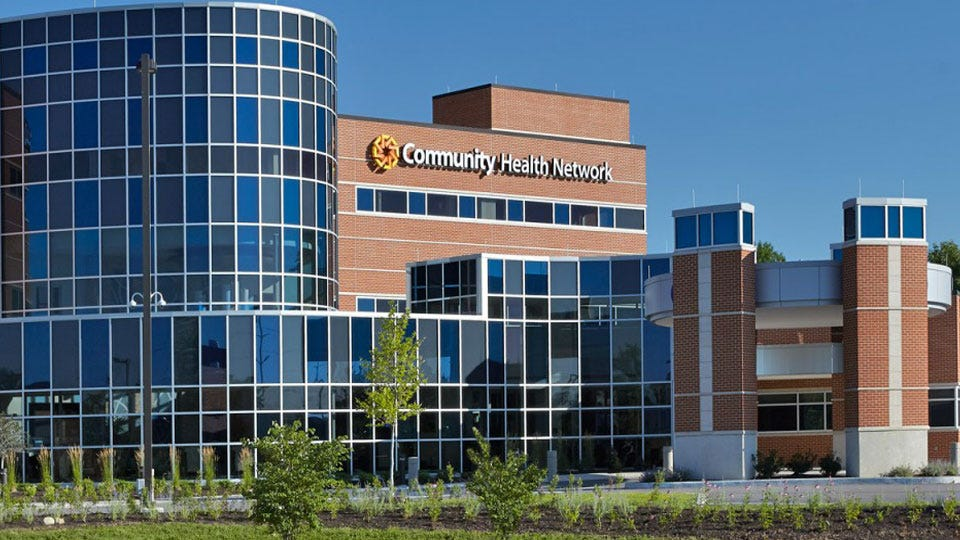
Indiana system to pay $345M in case tied to physician pay

Indianapolis-based Community Health Network has agreed to a $345 million settlement to resolve allegations that, dating back to 2008, it violated the False Claims Act and Stark law.

The settlement, announced Dec. 19, stems from a whistleblower complaint filed in 2014 by the nonprofit health system’s former CFO and COO under the qui tam provisions of the False Claims Act. 

The United States filed suit against CHN in 2020, alleging that the system violated the False Claims Act by knowingly submitting claims to Medicare for services that were referred in violation of the Stark law, which requires that the compensation of employed physicians be fair market value and cannot account for the volume of referrals. 

The U.S. complaint alleged that, starting in 2008, CHN’s senior management engaged in a scheme to recruit physicians for employment with outsized pay in an effort to secure profitable referrals. The salaries offered to cardiologists, cardiothoracic surgeons, vascular surgeons, neurosurgeons and breast surgeons for CHN employment were sometimes up to double what physicians earned in private practices, the complaint alleged. 

The government alleged that CHN provided false compensation information to a valuation firm, ignored the consultants’ warnings about legal risks of overcompensation and awarded bonuses to physicians based on their referrals to providers within the CHN network. 

CHN said the $345 million settlement will be paid from its reserves, which reported operating revenue of $3.1 billion in 2022. The nonprofit system has more than 200 sites of care and affiliates throughout Central Indiana, including 10 hospitals. 

“This is completely unrelated to the quality and appropriateness of the care Community provided to patients,” CHN Spokesperson Kris Kirschner said in a statement shared with Becker’s. “This settlement, like those involving other health systems and hospitals, relates to the complex, highly regulated area of physician compensation. Community has consistently prioritized the highest regulatory and ethical standards in all our business processes.” 

The system said it “has always sought to compensate employed physicians based on evolving industry best practices with the advice of independent third parties” and “has always sought to provide complete and accurate information to our third-party consultants.” 

“When doctors refer patients for CT scans, mammograms or any other medical service, those patients should know the doctor is putting their medical interests first and not their profit margins,” Zachary Myers, U.S. attorney for the Southern District of Indiana, said in the Justice Department news release. 

“Community Health Network overpaid its doctors. It also paid doctors bonuses based on the amount of extra money the hospital was able to bill Medicare through doctor referrals,” Mr. Myers said. “Such compensation arrangements erode patient trust and incentivize unnecessary medical services that waste taxpayer dollars.”  

Under the settlement, CHN will enter into a five-year corporate integrity agreement with HHS in addition to its $345 million payment to the U.S.

Failing to earn the consumer’s referral

https://mailchi.mp/9fd97f114e7a/the-weekly-gist-october-6-2023?e=d1e747d2d8

There is a local urgent care chain that we frequented regularly when my kids were young and cycling through rounds of ear infections and strep throat. The experience was always solid, driven by online scheduling, efficient operations, and good customer service.

A few years ago, the clinics were bought by a local health system. We recently visited one for the first time post-acquisition, when my now teenage son needed to rule out a broken bone from a sports injury. This experience at the same urgent care left a very different impression.

In contrast to the “easy in, easy out” experience I expected, we sat in an exam room for hours, even though the place was not crowded. While this could be due to the staffing challenges pervasive across the industry, other elements of the acquisition left a different impression.

Gone was the advertised cash pricing (and I’m anticipating a higher bill once we get one). The new patient self-registration system was overly complex, built for a hospital, not an immediate care setting. 

The only signs of “systemness”? Multiple prompts to sign up for the health system’s MyChart patient portal (not interested, they have few facilities close by), and a printed referral to an employed orthopedic surgeon a forty-minute drive from home (with no guidance as to whether or when we should seek it, given that no bones were broken). 
 
A few days ago, a scheduler from the system called to book the appointment. With no inquiry as to whether my son’s pain had improved, the interaction felt like a business transaction, not clinical follow-up. I declined.

Just because a care site is acquired by a health system, that doesn’t mean that patients will feel any value from its being part of a system.

Right or wrong, my impression was that health system ownership has made for a worse experience: inefficient, more complicated, and possibly more expensive. 

Nothing about the visit gave me confidence that there was a benefit to following up with an affiliated provider. The health system had failed to earn our referral.

Systems buy assets like urgent care to create entry points that will generate downstream demand and hopefully build loyalty to the brand. But capturing that must start with delivering an excellent experience in every encounter, not merely changing the name on the building. 

10 physicians, healthcare CEO to pay $1.68M to settle kickback claims

Ten Texas physicians and a healthcare executive who operates a group of medical practices in Florida agreed to pay a total of $1.68 million to settle kickback allegations, according to a March 22 Justice Department news release.

According to prosecutors, the Texas physicians received thousands of dollars in pay from eight different management service organizations in exchange for ordering laboratory tests from Little River Healthcare, True Health Diagnostics and/or Boston Heart Diagnostics Corp. 

Here are the physicians who reached monetary settlements: 

  • Tamar Brionez, MD, agreed to pay $85,006
  • Gary Goff, MD, and his affiliated practices agreed to pay $454,088
  • John Hierholzer, MD, agreed to pay $24,850
  • Bruce Maniet, DO, agreed to pay $175,43
  • Huy Chi Nguyen, MD, agreed to pay $211,821
  • Dung Chi Nguyen, MD, agreed to pay $211,721
  • Rakesh Patel, DO, agreed to pay $174,539
  • Cuong Trinh, MD, agreed to pay $45,056
  • Randall Walker, MD, agreed to pay $60,898
  • Michael Whiteley, DO, agreed to pay $52,015 

As part of the settlements, the 10 physicians agreed to cooperate in the investigations against other parties involved in the alleged scheme.  

In addition to the physicians, Brett Markowitz, the founder and CEO of Florida Rejuvenation Holdings, which operates medical practices in Tampa, paid $185,000 to resolve allegations of accepting kickbacks from True Health. Prosecutors said True Health paid for each patient that physicians at the medical practices referred for clinical laboratory services. 

Cleveland Clinic-owned hospital system pays $21M to settle False Claims allegations

Dive Brief:

  • A Cleveland Clinic-owned hospital system in Akron, Ohio, is paying the federal government $21.3 million to settle claims it illegally billed the Medicare program.
  • Akron General Health System allegedly overpaid physicians well above market value for referring physicians to the system, violating the Anti-Kickback Statute and Physician Self-Referral Law, and then billed Medicare for the improperly referred business, violating the False Claims Act, between August 2010 and March 2016.
  • Along with an AGHS whistleblower, the Cleveland Clinic Foundation, which acquired the system at the end of 2015, voluntarily disclosed to the federal government its concerns with the compensation arrangements, which were enacted by AGHS’ prior leadership, the Department of Justice said Friday.

Dive Insight:

The Anti-Kickback Statute forbids providers from paying for or otherwise soliciting other parties to get them to refer patients covered by federal programs like Medicare, while the Physician Self-Referral Law, otherwise known as the Stark Law, prohibits a hospital from billing for those services. Despite the laws and a bevy of other regulations resulting in a barrage of DOJ lawsuits and been a thorn in the side of providers for decades, fraud is still rampant in healthcare.

Of the more than $3 billion recovered by the government in 2019 from fraud and false claims, almost 90% involved the healthcare industry, according to DOJ data.

“Physicians must make referrals and other medical decisions based on what is best for patients, not to serve profit-boosting business arrangements,” HHS Office of Inspector General Special Agent in Charge Lamont Pugh said in a statement on the AGHS settlement.

Cleveland Clinic struck a deal with AGHS in 2014, agreeing to pay $100 million for minority ownership in the system. The agreement gave the clinic the option to fully acquire AGHS after a year, which it exercised as soon as that period expired in August 2015.

The settlement stems from a whistleblower suit brought by AGHS’s former Director of Internal Audit Beverly Brouse, who will receive a portion of the settlement, the DOJ said. The False Claims Act allows whistleblowers to share in the proceeds of a suit.

As fraud has increased in healthcare over the past decade — the DOJ reported 247 new matters for potential investigation in 2000, 427 in 2010 and 505 in 2019 — the federal government has renewed its efforts to crack down on illegal schemes. That’s resulted in the formation of groups like the Medicare Fraud Strike Force in 2007 and the Opioid Fraud and Abuse Detection Unit in 2017, which has in turn resulted in the DOJ recovering huge sums in stings, settlements and guilty verdicts.

Some of the biggest settlements reach into the hundreds of millions, and involve billions in false claims.

In 2018, DOJ charged more than 600 people for falsely billing federal programs more than $2 billion; last year federal agencies charged almost 350 people for submitting more than $6 billion in false claims. That last case led to creation of a rapid response strike force to investigate fraud involving major providers in multiple geographies.

Other large settlements include Walgreens’ $270 million fine in 2019 to settle lawsuits accusing the pharmacy giant of improperly billing Medicare and Medicaid for drug reimbursements; hospital operator UHS’ $122 million settlement last summer finalizing a fraudulent billing case with the DOJ after being accused of fraudulently billing Medicare and Medicaid for services at its behavioral healthcare facilities; and West Virginia’s oldest hospital, nonprofit Wheeling Hospital, agreeing in September to pay $50 million to settle allegations it systematically violated the laws against physician kickbacks, improper referrals and false billing.

EHR vendor eClinicalWorks paid $155 million to settle False Claims Act allegations around misrepresentation of software capabilities in 2017, while Florida-based EHR vendor Greenway Health was hit with a $57.3 million fine in 2019 to to settle allegations the vendor caused users to submit false claims to the EHR Incentives Program.

Executives, physicians at Texas hospital sentenced in $200M scheme

Kickback Definition

Fourteen defendants have been sentenced to more than 74 years in prison combined and ordered to pay $82.9 million in restitution for their roles in a $200 million healthcare scheme designed to get physicians to steer patients to Forest Park Medical Center, a now-defunct hospital in Dallas, the U.S. Justice Department announced March 19. 

More than 21 defendants were charged in a federal indictment in 2016 for their alleged involvement in a bribe and kickback scheme that involved paying surgeons, lawyers and others for referring patients to FPMC’s facilities. Those involved in the scheme paid and/or received $40 million in bribes and kickbacks for referring patients, and the fraud resulted in FPMC collecting $200 million. 

Several of the defendants, including a founder and former administrator of FPMC, were convicted at trial in April 2019 and sentenced last week. Other defendants pleaded guilty before trial.  

Hospital manager and founder Andrew Beauchamp pleaded guilty in 2018 to conspiracy to pay healthcare bribes and commercial bribery, then testified for the government during his co-conspirators’ trial. He admitted that the hospital “bought surgeries” and then “papered it up to make it look good.” He was sentenced March 19 to 63 months in prison. 

Wilton “Mac” Burt, a founder and managing partner of the hospital, was found guilty of conspiracy, paying kickbacks, commercial bribery in violation of the Travel Act and money laundering. He was sentenced March 17 to 150 months in prison. 

Four surgeons, a physician and a nurse were among the other defendants sentenced last week for their roles in the scheme. Access a list of the defendants and their sentences here

California surgeon gets prison time for role in $580M billing fraud scheme

https://www.beckershospitalreview.com/legal-regulatory-issues/california-surgeon-gets-prison-time-for-role-in-580m-billing-fraud-scheme.html?origin=cfoe&utm_source=cfoe

Image result for workers comp fraud and kickbacks

An orthopedic surgeon was sentenced to 30 months in federal prison Nov. 22 for his role in a healthcare fraud scheme that resulted in the submission of more than $580 million in fraudulent claims, mostly to California’s worker compensation system, according to the Department of Justice.

Daniel Capen, MD, was sentenced more than a year after pleading guilty to conspiracy to commit honest services fraud and soliciting and receiving kickbacks for healthcare referrals. He was one of 17 defendants charged in relation to the government’s investigation into kickbacks physicians received for patient referrals for spinal surgeries performed at Pacific Hospital in Long Beach, Calif.

Dr. Capen received at least $5 million in kickbacks for referring surgeries to Pacific Hospital and for referring services to organizations affiliated with the hospital. He allegedly accounted for $142 million of Pacific Hospital’s claims to insurers between 1998 and 2013, according to the Justice Department.

In addition to the prison term, Dr. Capen was ordered to forfeit $5 million to the federal government and pay a $500,000 fine.


Health care’s fraud and abuse laws are getting overhauled

https://www.axios.com/health-care-fraud-abuse-stark-law-antikickback-changes-fd354212-9583-44c7-85e4-86e4690cc56e.html

Doctors dressed in blue operate on a patient in a surgical suite.

The Trump administration is proposing to loosen regulations that prohibit doctors from steering patients insured by federal programs to facilities where they have a financial interest and that outlaw health care companies from offering bribes and kickbacks in exchange for patient referrals.

Why it matters: The industry has long clamored for an overhaul to these laws, which companies say obstruct their goals of providing “value-based care.” But critics worry the broad and vague changes could engender more fraud and abuse than there already is.

Driving the news: The Department of Health and Human Services would create new exemptions for the physician self-referral law and the federal anti-kickback statute — decades-old, complex laws that forbid payments that encourage unnecessary care and increase taxpayer costs.

  • Hospitals, doctors, nursing homes and other entities would be able to create “value-based arrangements,” and those deals could include exchanging bonuses or other types of “remuneration” without running afoul of referral laws.
  • For example, under these exemptions, a hospital could provide a nursing home with a behavioral health nurse for certain discharged patients, or a hospital could donate cybersecurity technology to a physician’s office.
  • Many exemptions already exist, including for organizations called “accountable care organizations” that try to keep a patient’s care within a narrow set of hospitals and doctors, but these changes would go much further.

Between the lines: The overarching concern is everyone’s definition of “value” is different. How will regulators know whether providers are acting in good faith to coordinate care, or if they are using “value-based care” as a cover to control patient referrals and enrich themselves?

A major exclusion: Pharmaceutical companies, medical device firms, labs and medical equipment makers are cut out from the changes because the federal government is afraid those companies would “misuse the proposed safe harbors.”

  • Pharma lobbyists, in particular, have pushed hard to change the law so drug companies could directly subsidize drug copays for Medicare and Medicaid patients, even though federal officials have said that practice “masks the high prices those companies charge for their drugs.”
  • HHS Secretary Alex Azar told reporters the government may consider separate regulations for value-based drug contracts, even though the evidence of those deals’ effectiveness is limited at best.

The bottom line: These changes come at the same time that hospitals, physicians, pharmaceutical companies and others are paying out billions of dollars every year in fraud settlements.

  • Public comments are due Dec. 31, and if this comment process is anything like the initial requests that asked for guidance, the industry will be heavily involved.