What ‘Racism Is a Public Health Issue’ Means

https://www.smithsonianmag.com/science-nature/what-racism-public-health-issue-means-180975326/?utm_source=smithsoniandaily&utm_medium=email&utm_campaign=20200720-daily-responsive&spMailingID=43001584&spUserID=MTA5MDI1MDg0MjgxOQS2&spJobID=1801530184&spReportId=MTgwMTUzMDE4NAS2&fbclid=IwAR027OjpNcyZKM6Jd5aTYhgVaTzaO5lBqI4hCl1xsrKgQRL1bFYH538YIMA

What 'Racism Is a Public Health Issue' Means | Science ...

Epidemiologist Sharrelle Barber discusses the racial inequalities that exist for COVID-19 and many other health conditions.

Throughout the COVID-19 pandemic, whether cases are flaring up, slowing to a simmer, or back on the rise in areas across the United States, the data makes one fact apparent: The viral disease has disproportionally sickened and killed marginalized communities. A New York Times analysis of data from almost 1,000 counties that reported racial breakdowns of COVID-19 cases and fatalities revealed that, compared to white Americans, African Americans and Hispanics were three times more likely to experience and two times more likely to die from the illness. The Navajo Nation has, per capita, more confirmed cases and deaths than any of the 50 states.

Many factors, like access to healthcare and testing, household size, or essential worker status, likely contribute to the pandemic’s outsized toll on communities of color, but experts see a common root: the far-reaching effects of systemic racism.

That racism would have such an insidious effect on health isn’t a revelation to social epidemiologists. For decades, public health experts have discussed “weathering,” or the toll that repeated stressors experienced by people of color take on their health. Studies have demonstrated the link between such chronic stress and high blood pressure, the increased maternal mortality rate among black and indigenous women, and the elevated prevalence of diabetes in black, Latino and especially Native American populations. The pandemic has laid bare these inequities. At the same time, outcry over systemic racism and police brutality against African Americans has roiled the nation, and the phrase, “Racism is a public health issue” has become an internet refrain.

What exactly is the nebulous concept of “public health”? According to Sharrelle Barber, a Drexel University assistant professor of epidemiology, the concept goes beyond the healthcare setting to take a more holistic look at health in different populations. “The charge of public health,” Barber told Smithsonian, “is really to prevent disease, prevent death, and you prevent those things by having a proper diagnosis of why certain groups might have higher rates of mortality, higher rates of morbidity, et cetera.”

Below is a lightly edited transcript of Smithsonian’s conversation with Barber, who studies how anti-black racism impacts health, about the many ways in which racism is a public health crisis:

When people say, “Racism is a public health problem,” what, in broad strokes, do they mean?

We’ve been observing racial inequities in health for decades in this country. W.E.B. DuBois, who was a sociologist, in The Philadelphia Negro showed mortality rates by race and where people lived in the city of Philadelphia at the turn of the 20th century and found striking inequalities based on race. Fast forward to 1985, 35 years ago, and we have the [Department of Health and Human Services-sponsored] Heckler Report, one of the most comprehensive studies the country had undertaken, which again found striking inequalities across a wide range of health outcomes: infant mortality, cancer, stroke, et cetera.

There are various explanations for why these racial inequalities exist, and a lot of those have erroneously focused on either biology or genetics or behavioral aspects, but it’s important to examine the root causes of those inequities, which is structural racism…Racism is a public health problem, meaning racism is at the root of the inequities in health that we see, particularly for blacks in this country. So whether it’s housing, criminal justice, education, wealth, economic opportunities, healthcare, all of these interlocking systems of racism really are the main fundamental drivers of the racial inequities that we see among black Americans.

What are some specific factors or policies that have set the foundations for these health inequities?

Any conversation about racial inequities has to start with a conversation about slavery. We have to go back 400-plus years and really recognize the ways in which the enslavement of African people and people of African descent is the initial insult that set up the system of racism within this country. One of the major drivers that I actually study is the link between racial residential segregation, particularly in our large urban areas, and health inequities. Racial residential segregation is rooted in racist policies that date back at least to the 1930s. Practices such as redlining, which devalued black communities and led to the disinvestment in black communities, were then propped up by practices and policies at the local, the state and federal level, for example, things like restrictive covenants, where blacks were not allowed to move into certain communities; racial terror, where blacks were literally intimidated and run out of white communities when they tried to or attempted to move into better communities; and so many other policies. Even when you get the 1968 Fair Housing Act, the system finds a way to reinvent itself to still perpetuate and maintain racism.

Within segregated communities, you have so many adverse exposures, like poor quality housing or lack of access to affordable, healthy foods, lack of access to quality healthcare, and the list goes on. The chronic stressors within these communities are compounded in segregated communities, which then can lead to a wide array of health outcomes that are detrimental. So for example, in the city of Philadelphia, there’s been work that has shown upwards of a 15-year life expectancy difference between racially and economically segregated communities, black communities and wealthier white communities.

I imagine that sometimes you might get pushback from people who ask about whether you can separate the effects of socioeconomic status and race in these differences in health outcomes.

Yeah, that’s a false dichotomy in some ways. Racism does lead to, in many aspects, lower income, education, wealth. So they’re inextricably linked. However, racism as a system goes beyond socioeconomic status. If we look at what we see in terms of racial inequities in maternal mortality for black women, they are three times times more likely to die compared to white women. This disparity or this inequity is actually seen for black women who have a college degree or more. The disparity is wide, even when you control for socioeconomic status.

Let’s talk about the COVID-19 pandemic. How does racism shape the current health crisis?

The COVID-19 pandemic has literally just exposed what me and so many of my colleagues have known for decades, but it just puts it in such sharp focus. When you see the disproportionate impact COVID-19 is having, particularly for blacks, but also we’re seeing emerging data on Indigenous folks, it is just laying bare the ways racism is operating in this moment to produce those inequities.

Essential workers who had to continue to work during periods of stay at home orders across the country were disproportionately black and Latino. These are also often low wage workers. They weren’t given personal protective equipment, paid sick leave, hazard pay, and really had to choose between being exposed and protecting themselves and having an income during this period. So that’s one way racism operates.

Then we know that those individuals aren’t isolated, that they return to homes that often are crowded because of the lack of affordable housing. Again, another system of racism that compounds the effect. Then you think about places like Flint, Michigan, or places that don’t have access to clean water. When we were telling people, “Wash your hands, social distance,” all of those things, there were people who literally could not adhere to those basic public health prevention measures and still can’t.

So many things were working in tandem together to then increase the risk, and what was frustrating for myself and colleagues was this kind of “blame the victim” narrative that emerged at the very onset, when we saw the racial disparities emerge and folks were saying, “Blacks aren’t washing their hands,” or, “Blacks need to eat better so they have better outcomes in terms of comorbidities and underlying chronic conditions,” when again, all of that’s structured by racism. To go back to your original question, that’s why racism is a public health issue and fundamental, because in the middle of a pandemic, the worst public health crisis in a century, we’re seeing racism operate and racism produce the inequities in this pandemic, and those inequities are striking…

If we had a structural racism lens going into this pandemic, perhaps we would have done things differently. For example, get testing to communities that we know are going to be more susceptible to the virus. We would have done that early on as opposed to waiting, or we would have said, “Well, folks need to have personal protective equipment and paid sick leave and hazard pay.” We would have made that a priority…

The framing [of systemic racism as a public health concern] also dictates the solutions you come up with in order to actually prevent death and suffering. But if your orientation is, “Oh, it’s a personal responsibility” or “It’s behavioral,” then you create messages to black communities to say, “Wash your hands; wear a mask,” and all of these other things that, again, do not address the fundamental structural drivers of the inequities. That’s why it’s a public health issue, because if public health is designed to prevent disease, prevent suffering, then you have to address racism to have the biggest impact.

Can you talk about how police brutality fits into the public health picture?

We have to deal with the literal deaths that happen at the hands of the police, because of a system that is rooted in slavery, but I also think we have to pay attention to the collective trauma that it causes to black communities. In the midst of a pandemic that’s already traumatic to watch the deaths due to COVID-19, [communities] then have to bear witness to literal lynchings and murders and that trauma. There’s really good scholarship on the kind of spillover effects of police brutality that impact the lives of whole communities because of the trauma of having to witness this kind of violence that then does not get met with any kind of justice.

It reinforces this idea that one, our lives are disposable, that black lives really don’t matter, because the whole system upholds this kind of violence and this kind of oppression, particularly for black folks. I’ve done studies on allostatic load [the wear and tear on the body as a result of chronic stress] and what it does, the dysregulation that happens. So just think about living in a society that’s a constant source of stress, chronic stress, and how that wreaks havoc on blacks and other marginalized racial groups as well.


Healthcare groups call racism a ‘public health’ concern in wake of tensions over police brutality

https://www.fiercehealthcare.com/practices/healthcare-groups-denounce-systemic-racism-wake-tensions-over-police-brutality?mkt_tok=eyJpIjoiWmpobE5XVmlaRGd6T0dFdyIsInQiOiJsQmxnbVNxNVlISVNkczJIZkJXb3ZFZG9tVlpMblZ1XC9oVVB6SlRINzNhOXE4MWQzNk1cL3JTaDlcL2l0MGdhSnk0NUtqY1RzdThCN1wvZ1ZoVUxqOHJwZFJcL1wvK3FtS0o5NFwvSHA0WHhTUnhVNnY3bk5RNmhRQTdxYzYwclhYN3JTRW8ifQ%3D%3D&mrkid=959610

After days of protests across the world against police brutality toward minorities sparked by the killing of George Floyd in Minneapolis, healthcare groups are speaking out against the impact of “systemic racism” on public health.

“These ongoing protests give voice to deep-seated frustration and hurt and the very real need for systemic change. The killings of George Floyd last week, and Ahmaud Arbery and Breonna Taylor earlier this year, among others, are tragic reminders to all Americans of the inequities in our nation,” Rick Pollack, president and CEO of the American Hospital Association (AHA), said in a statement.

As places of healing, hospitals have an important role to play in the wellbeing of their communities. As we’ve seen in the pandemic, communities of color have been disproportionately affected, both in infection rates and economic impact,” Pollack said. “The AHA’s vision is of a society of healthy communities, where all individuals reach their highest potential for health … to achieve that vision, we must address racial, ethnic and cultural inequities, including those in health care, that are everyday realities for far too many individuals. While progress has been made, we have so much more work to do.”

The Society for Healthcare Epidemiology of America (SHEA) also decried the public health inequality highlighted by the dual crises.

“The violent interactions between law enforcement officers and the public, particularly people of color, combined with the disproportionate impact of COVID-19 on these same communities, puts in perspective the overall public health consequences of these actions and overall health inequity in the U.S.,” SHEA said in a statement. Association of American Medical Colleges (AAMC) executives called for health organizations to do more to address inequities. 

“Over the past three months, the coronavirus pandemic has laid bare the racial health inequities harming our black communities, exposing the structures, systems, and policies that create social and economic conditions that lead to health disparities, poor health outcomes, and lower life expectancy,” said David Skorton, M.D., AAMC president and CEO, and David Acosta, M.D., AAMC chief diversity and inclusion officer, in a statement.

“Now, the brutal and shocking deaths of George Floyd, Breonna Taylor, and Ahmaud Arbery have shaken our nation to its core and once again tragically demonstrated the everyday danger of being black in America,” they said. “Police brutality is a striking demonstration of the legacy racism has had in our society over decades.”

They called on health system leaders, faculty researchers and other healthcare staff to take a stronger role in speaking out against forms of racism, discrimination and bias. They also called for health leaders to educate themselves, partner with local agencies to dismantle structural racism and employ anti-racist training.


Protests essential despite risk of coronavirus spread, healthcare workers say

https://www.beckershospitalreview.com/public-health/protests-essential-despite-risk-of-coronavirus-spread-healthcare-workers-say.html?utm_medium=email

After months of pleading for social distancing, health officials ...

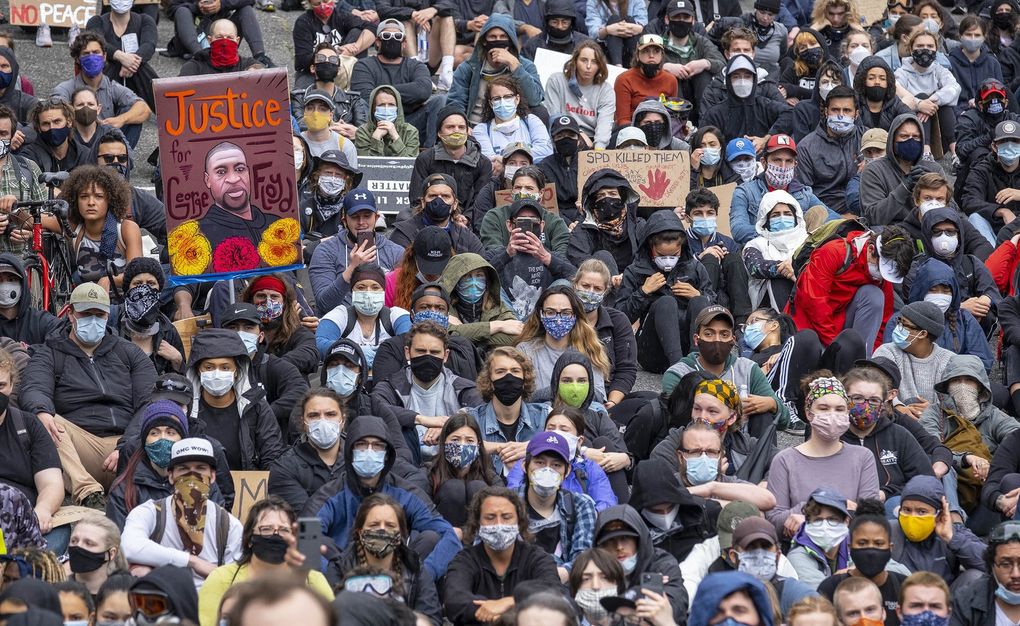
Though the protests that erupted after a black man died in police custody might result in spikes of COVID-19, some healthcare workers say that they are important, as racial disparities in healthcare is also a public health issue, according to The Wall Street Journal.

Public health experts and healthcare workers across the country are joining in the protests that began after George Floyd died at the hand of police in Minneapolis in late May. He is the most recent example of police brutality against black people and joins a long list of deaths of African Americans in police custody.

Healthcare experts and workers are saying though the protests may result in a new wave of coronavirus cases, the issue at hand is more important and the potential benefits outweigh the risks, especially since the risk of transmission is lower outside than inside when precautions are taken.

Darrell Gray, MD, a black gastroenterologist at the Ohio State University Wexner Medical Center in Columbus, has been attending protests, telling the Journal, “I prioritize being at protests and peaceful demonstrations because I strongly believe that they can be leveraged to produce change.” He said that he is taking precautions, wearing a face mask and distancing himself as much as possible.

Dr. Gray also said that the pandemic has disproportionately affected black communities, as the underlying conditions that are linked to more severe COVID-19 illness, such as diabetes and high blood pressure, are more rampant in those communities.

Jennifer Nuzzo, DrPH, an epidemiologist and senior scholar at the Johns Hopkins Center for Health Security in Baltimore, also supports the protests, though she has not been able to attend one in person as yet due to time constraints.

She told the Journal although she is worried about virus transmission, “there are some categories of risk that are, for me, completely worth it.” These protests are in those categories, she said.

Dr. Nuzzo and other health experts have also said protesters can reduce the risk of transmission by wearing masks, trying to maintain 6 feet of social distance when possible and making sure they are washing their hands often or using hand sanitizer.

More than 1,000 public health and infectious disease experts and community stakeholders signed an open letter last week saying that demonstrations were important for combating race-based health inequities, largely a result of racism, the Journal reports.


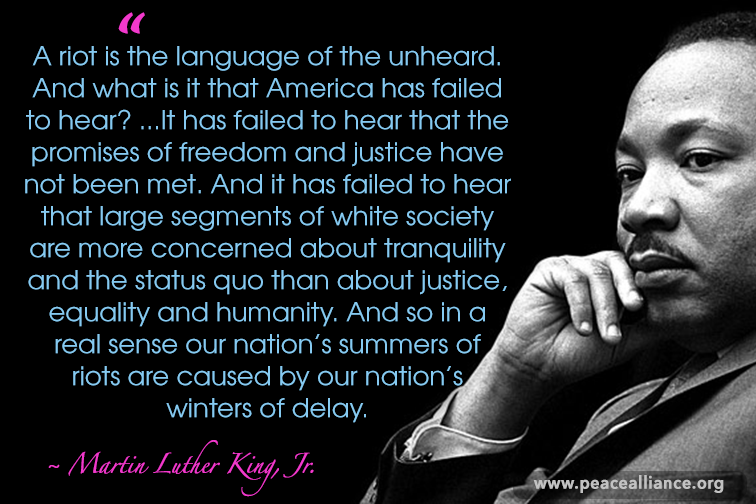
“What is it that America has failed to hear?”

https://mailchi.mp/9f24c0f1da9a/the-weekly-gist-june-5-2020?e=d1e747d2d8

The Peace Alliance's tweet - ""A riot is the language of the ...

“What is it that America has failed to hear?” asked Dr. Martin Luther King, Jr. in March of 1968, calling riots the “language of the unheard”. “It has failed to hear that the promises of freedom and justice have not been met.” Stubbornly, shamefully, we continue to turn a deaf ear: to structural racism; to institutionalized inequality; to a pandemic of police brutality and bigotry that chokes off the breath of black Americans as surely as a virus in the lungs or a boot on the neck. But the sound in the streets is thunderous.

We in healthcare must listen. We must hear that what killed George Floyd, and Breonna Taylor, and Eric Garner, and Tamir Rice, and Philando Castile, and Trayvon Martin, and Ahmaud Arbery, and countless others, as surely as the terrible actions of any single person, was the pervasive, insidious virus of racism, long since grown endemic in our country.

This week’s protests are a kind of ventilator, providing emergency breath for a national body in crisis. We must work—urgently—on the therapeutics of structural change and the vaccines of education and understanding.

At Gist Healthcare we are listening, and learning. As a team, we’ve committed to each other to be attentive, invested, empathetic allies, and to dedicate our individual and collective time, talents and treasure to antiracist work, in healthcare and beyond. Our contribution may not be large, and it will never be enough, but at least we hope it will be positive. We’d like to hear your thoughts and suggestions as well. For the moment, and for our colleagues, friends, and families, we stand with the protestors.

Black Lives Matter.