


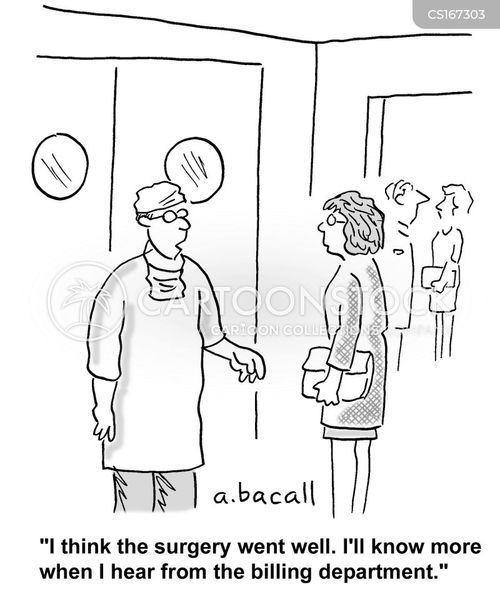
Cartoon – Office Visit Good News


https://www.healthcarefinancenews.com/news/no-surprises-act-implementation-includes-telehealth

Independent physician groups, which include telehealth docs, must now accept a rate that someone else has negotiated, expert says.
The No Surprises Act has providers scrambling to understand the implications of a law that went into effect earlier this month.
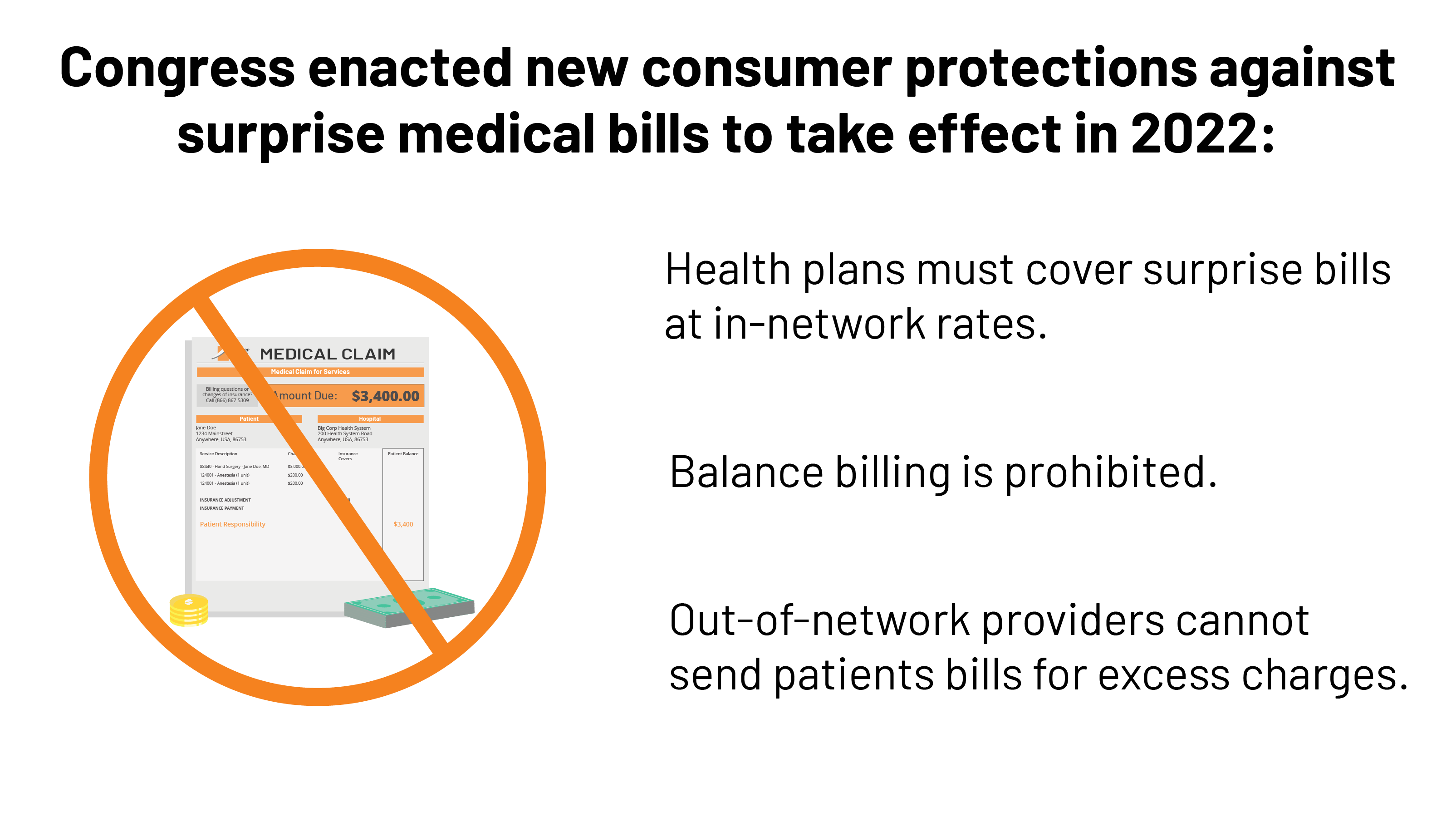
Under the law, patients treated by an out-of-network physician can only be billed at the in-network rate. It protects patients from receiving surprise medical bills from the ER or air ambulance providers or for non-emergency services from out-of-network physicians at in-network facilities.
Patients can no longer receive balance bills – the difference between what the provider charges and what the insurer pays – or be charged a larger cost-sharing amount.
The congressional intent was to save patients sometimes thousands of dollars in unexpected, or surprise, medical bills. But applying the No Surprises Act to clinical care is being left to providers to sort out.
A big question is the definition of an emergency and the benchmark used to determine when it ends, according to Kyle Faget, a partner at Foley who is co-chair of the firm’s Health Care and Life Sciences Practice Groups. She asked: Does the emergency end when the patient is stabilized, or should another standard apply? This includes emergency services for mental health and substance-use disorders.
Another question is around pre-planned services. Patients have to be notified who is providing the care and whether the physician is in-network. If the physician is out-of-network, patients must provide consent. But that can be tricky, for instance, if a patient scheduled for a planned C-section gets an out-of-network doctor who was not scheduled at the time the appointment was made.
At some hospitals, a new layer of administration is needed to comply with the law, Faget said.
Another area not well understood is how the law affects telehealth consults in the ER.
TELEHEALTH AND THE NO SURPRISES ACT
The law states that if treated by a telehealth clinician, the patient can only be billed the in-network rate, said Faget, who specializes in telehealth law.
Telehealth is often used in the ER, according to Faget. Most ER visits require a physician consultation, with hands-on medical care provided by a clinician other than the physician.
Pre-COVID-19, providers were in the embryonic stage of providing virtual emergency care, she said. The pandemic, and a shortage of physicians, spurred virtual care in the ER.
These telehealth providers often work on a contracted basis. They are likely credentialed at the hospital but are not hospital employees, Faget said.
This means they are not credentialed with the insurer. Under the No Surprises Act, they are now subject to the in-network rates negotiated by the hospital.
Telehealth ER physicians could negotiate their own contracts with insurers, but as a small group, they are not likely to get the higher rates they had prior to the implementation of the No Surprises Act.
“It’s an arduous contracting process, and small-group bargaining power is low,” Faget said. “The big hospital system has bargaining power. Those groups providing telehealth services won’t necessarily have agreements in place and, by definition, are out-of-network.”
Independent physician groups, which include telehealth docs, must now accept a rate that someone else has negotiated, Faget said. This fact can be more of an issue than the lower rate they’re now being paid, she said.
“I think telehealth will adapt,” Faget said. “I think it will become the way of doing business.”
WHY THIS MATTERS
The bottom line is that the No Surprises Act is doing what it promised to do – saving patients from getting a large bill not covered by insurance.
Surprise bills are a moral and ethical issue, Faget said. Patients, at their most vulnerable in the ER, are sent home only to get a $5,000 bill they never saw coming.
“It’s like kicking a person when they’re down,” Faget said.
However, in the larger healthcare ecosystem, ending surprise medical bills will ultimately result in cost-shifting, she said.
“Think about the system globally: somebody is paying for something somewhere,” Faget said. “At the end of the day, somebody’s going to have to pay.”
THE LARGER TREND
Providers have told her that the No Surprises Act incentivizes insurance companies to lower their payments, Faget said.
The American Society of Anesthesiologists has accused BlueCross BlueShield of North Carolina of doing this. A letter sent by BCBS of North Carolina to anesthesiology and other physician practices this past November threatens to terminate physicians’ in-network status unless they agree to payment reductions ranging from 10% to over 30%, according to ASA.
The ASA saw this as proof of its prognostication to Congress upon passage of the No Surprises Act: that insurers would use loopholes in the law to leverage their market power.
The AHA and AMA have sued the Department of Health and Human Services over implementation of a dispute-resolution process in the law they say favors the insurer. The arbitrator must select the offer closest to the qualifying payment amount. Under the rule, this amount is set by the insurer, giving the payer an unfair advantage, according to the lawsuit.

A Colorado mom got quite the shock when she received a hefty “facility fee” bill for her toddler’s telehealth appointment.
Brittany Tesso said she had already paid a bill from Children’s Hospital Colorado for $676.86 for the 2-hour virtual visit for her 3-year-old son to determine if he required speech therapy, according to a report by KDVR, a Colorado TV station.
But 2 weeks later, she received a separate bill for an additional $847.35, leading Tesso to tell the station: “I would’ve gone elsewhere if they had told me there was an $850 fee, essentially for a Zoom call.”
Tesso said she was told the additional amount was for a “facility fee.”
“I was like, ‘Facility fee? I didn’t go to your facility,'” Tesso told the station. “I was at home and, as far as I could tell, some of the doctors were at home too.” Tesso said she was told by a hospital representative that it charges the same fee whether patients come to the facility or receive care via telehealth.
KDVR had reported an earlier story of a father who said he was charged a $503 facility fee after his son was seen at a medical practice in a building owned by Children’s Hospital Colorado, and roughly 20 viewers reached out to the news outlet about their similar experiences.
Tesso told KDVR that she believed the second bill was a surprise bill, and suggested that state lawmakers could do more to prevent such instances. An HHS rule banning surprise billing went into effect on January 1 of this year.
Adam Fox, deputy director at the Colorado Consumer Health Initiative, told KDVR that patients have little recourse because there are no regulations in the state regarding facility fees charged by hospitals.
In a statement provided to KDVR, Children’s Hospital Colorado said that the issue was not exclusive to the hospital, and that it continually looks at its own practices “to see where it can adjust and improve.”
The hospital added in the statement that it continues “to advocate for state and federal policies that address healthcare consumer cost concerns through more affordable and accessible insurance coverage and hospital and provider price transparency, while also defending children’s access to care and the unique needs of a pediatric hospital.”
In response to a MedPage Today request for comment, the hospital said it had no further information to share.
Telehealth is likely to remain a mainstay in healthcare delivery, according to a December Kaiser Health News (KHN) article, but experts also told KHN that it’s not yet clear how such appointments, and any accompanying facility fees, will be handled moving forward.
A top Medicare advisory board did not recommend any new payment hikes for acute care hospitals or doctors for 2023, stating that targeted relief funding has helped blunt the impact of the COVID-19 pandemic.
The Medicare Payment Advisory Commission (MedPAC), which makes recommendations to Congress and the federal government on Medicare issues, voted on the payment changes to Congress during its Thursday meeting. The panel decided against recommending any pay hikes.
The commission unanimously voted to update 2023 rates for acute care hospitals by the amounts determined under current law. The Centers for Medicare & Medicaid Services will publish its update to the current law payment rates this summer.
MedPAC estimated that the rates will increase 2% and that there would be 3.1% growth in hospital wages and benefits, but these “may be higher or lower by the time this is finalized,” said MedPAC staff member Alison Binkowski.
She added there will be another estimated 0.5% increase in inpatient rates.
MedPAC decided not to recommend any pay rates beyond current law after looking at the financial picture for hospitals and found the indicators of payment adequacy are generally positive.
“Hospitals maintained strong access to capital thanks to substantial federal support, including targeted federal relief funds to rural hospitals which raised their all-payer total margin to a near-record total high,” Binkowski said.
She added fewer hospitals closed, and facilities continued to have positive marginal Medicare profits.
It was also difficult to interpret changes in quality that traditionally would determine whether a payment boost would be needed.
“For example, mortality rates increased in 2020, but this reflects the tragic effects of the pandemic on the elderly rather than a change in the quality of care provided to Medicare beneficiaries or the adequacy of Medicare payments,” Binkowski said.
Even though commission members agreed with the recommendation for hospitals, they were concerned whether it was enough to help facilities meet drastic increases in labor expenses.
“With labor, it is more than just a salary increase these hospitals are seeing,” said commission member Brian DeBusk.
He noted that hospitals haven’t just seen an increase in rates for contract or temporary nurses, but in nursing education as well.
MedPAC also recommended no changes to the statutory payment update for dialysis facilities and shouldn’t give a payment update to ambulatory surgery centers (ASCs) due to confidence in payment adequacy for the facilities.
“Despite the public health emergency, the number of ASCs increased by 2% in 2020,” said MedPAC staff member Daniel Zabinski. “The growth that we saw in the number of ASCs also suggests access to capital remains adequate.”
The commission decided to take a similar estimate with the physician fee schedule, calling for any update to be tied to current law, which is estimated to have no change in spending.
Medicare payments to clinicians declined by $9 billion in 2020 but were offset thanks to congressional relief funds. Physicians also got a 4% bump to payments through 2022 compared to prior law.
The temporary rate hike is expected to go away at the start of 2023, but physician groups are likely to lobby Congress to keep the pay bump intact.
Physician groups already blasted the recommendation from MedPAC.
Anders Gilberg, senior vice president of government affairs for the Medical Group Management Association, tweeted that the recommendation was out of touch, especially after new reports of inflation.
“Hard to conceive of a more misguided recommendation to Congress at a time when practices face massive staffing shortages and skyrocketing expenses,” he tweeted.
https://www.healthcarefinancenews.com/news/roi-realized-pre-bill-review-documentation-and-coding

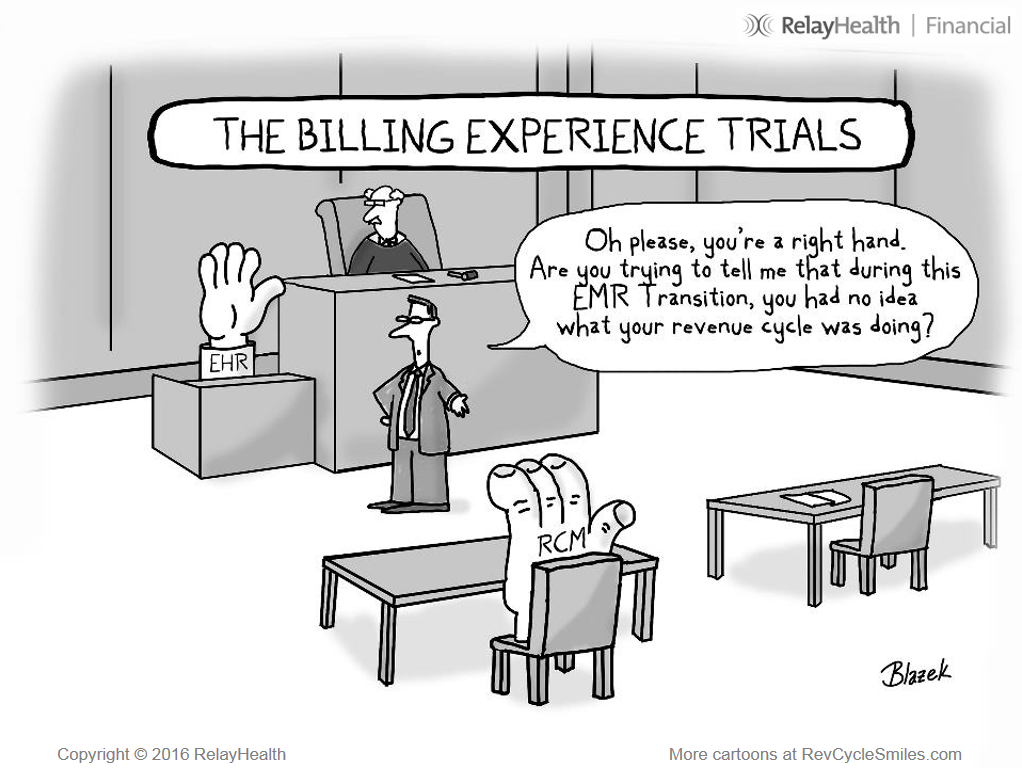
Hospitals can decrease denials by having physicians involved in the mid-revenue cycle review process.
Involving physicians in the mid-revenue cycle process can increase hospital ROI by 700%, according to Enjoin CEO Dr. James Fee.
Hospitals and health systems can improve revenue through a pre-bill review prior to claims submission, according to Fee. Enjoin does this work as a revenue cycle consulting business focused on documentation and coding.
One of the first things Enjoin physicians check is that the care of the patient has been properly recorded.
“We’re never taught how to communicate with those who record our work, so it can be captured in the coding system,” said Fee, who continues to practice as a physician in Baton Rouge, Louisiana.
Secondly, hospitals need to check the accuracy of the representation of that patient.
“You want to make sure the severity of the patient is justified to get appropriately reimbursed,” Fee said.
WHY THIS MATTERS
Documentation and coding falls in the middle of the revenue cycle. Through a pre-bill review of the estimated 30-50% of cases that are chosen for review at this stage because of their complexity, organizations can ensure the documentation supports coding compliance, MS-DRG accuracy, quality performance data and other measures.
Results have shown an impressive 700% percent ROI on average and in some cases, 1,000%, according to Fee. On average, the process shows a 17% decline in denial rates.
Hospitals already have clinical staff in the rev cycle. Physicians add a layer of review.
“We have practicing physicians who understand the disease process,” Fee said. “We look at a case to make sure the diagnosis is correct. What was the focus of care for that hospital stay? That takes a level of clinical interpretation.”
Enjoin, which has been around for about 30 years, does not offer a software product, but uses an analytics platform. It partners with clients as consultants in a technically agnostic way.
Fee will speak on the topic “Mid-Revenue Cycle Drives Financial Stability During COVID19: How One Academic Medical Center Prospered,” in-person during the Healthcare Financial Management Association annual conference, Monday, November 8, in Minneapolis.
AUTOMATION
As revenue cycle directors look to automate, this is more easily done on the front and back ends of the revenue cycle rather than the mid-cycle process, according to Fee. This is one area that will have to wait until AI makes it possible to interpret the data seen by physicians and other clinicians, he said.
“Automation is easy to say as one-stop shopping for an easy solution, but you need to understand what you’re automating,” he said.
There can be an automation component to the prioritization of reviews, something Enjoin plans to bring to market soon.
“Automation will continue to rapidly grow,” Fee said, “but there will always be that people component.”
THE LARGER TREND
As in other areas of healthcare, COVID-19 brought a level of uncertainty about the proper testing and diagnosis recorded in the revenue cycle.
During the most recent wave of COVID-19, many hospital ICU beds were again full, and health systems once again were canceling elective surgeries, with a resulting loss of revenue.
Higher expenses for labor, drugs and supplies, as well as a continuation of delayed care, are projected to cost hospitals an estimated $54 billion in net income over the course of this year, according to Kaufman Hall analysis released last month by the American Hospital Association.
“The biggest impact for reimbursement was the loss of patient care,” Fee said. “We were in a fee-for-service model and margins were driven by elective surgeries.”
COVID-19 also shifted the commercial dominance of margins to lower-paying government reimbursement as employees lost their jobs, according to Fee.
During the first COVID-19 wave in 2020, CFOs were asking he said, “How do I adapt to that?” Many looked to prevent financial leakage in employing resources they already had.
“That’s where CDI (Clinical Documentation Improvement) is helpful,” Fee said.
https://mailchi.mp/a2cd96a48c9b/the-weekly-gist-october-1-2021?e=d1e747d2d8
On Thursday the Department of Health and Human Services (HHS), along with other federal agencies, released the long-awaited second half of its proposed regulations implementing the No Surprises Act, passed by Congress at the end of last year, which bans “surprise billing” of patients who unsuspectingly receive care from out-of-network providers.
The interim final rule, which will take effect on January 1st after a comment and review period, lays out a process for addressing disputed patient bills, first through a 30-day “open negotiation” between the patient’s insurer and the out-of-network provider, and then through a federally-managed arbitration process.
Of most interest to insurers and providers who have lobbied fiercely for months to ensure a favorable interpretation of the law, the new regulation specifies that the outsider arbitrator, to be agreed upon by both parties, must begin with the presumption that the median in-network rate for services in the local market is the correct one. The arbitrator can then modify that price based on the specific circumstances of the case.
That method was broadly favored by insurers, and AHIP strongly endorsed the proposed approach, saying in a press release that “this is the right approach to encourage hospitals, healthcare providers, and health insurance providers to work together and negotiate in good faith.” Predictably, the hospital lobby felt otherwise; the American Hospital Association reacted by calling the rule “a windfall for insurers”, saying that it “unfairly favors insurers to the detriment of hospitals and physicians who actually care for patients.”
The ultimate winners here are patients, who will gain important new protections against the potentially crippling financial implications of surprise billing. We’d agree with HHS Secretary Xavier Becerra, who told the New York Times that the new rule would “[take] patients out of the middle of the food fight,” and provide “a clear road map on how you can resolve that food fight between the provider and the insurer.” It’s about time.
Still unresolved: the high cost of out-of-network ambulance services, left out of the No Surprises Act altogether. Let’s hope Congress circles back to address that issue soon.
 HENRY KOTULA