America Is Trapped in a Pandemic Spiral

https://www.theatlantic.com/health/archive/2020/09/pandemic-intuition-nightmare-spiral-winter/616204/

America Is Trapped in a Pandemic Spiral - The Atlantic

As the U.S. heads toward the winter, the country is going round in circles, making the same conceptual errors that have plagued it since spring.

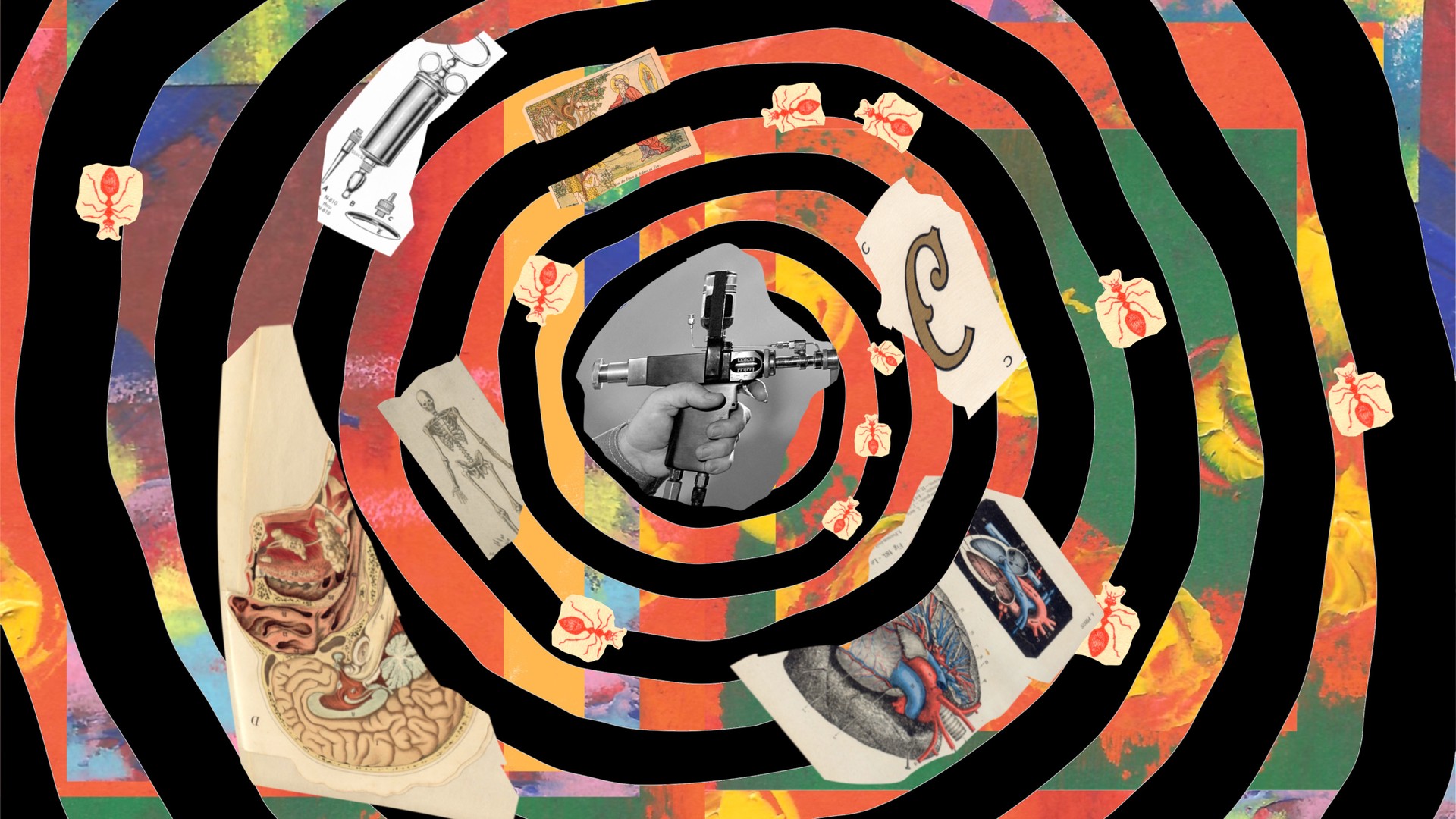
Army ants will sometimes walk in circles until they die. The workers navigate by smelling the pheromone trails of workers in front of them, while laying down pheromones for others to follow. If these trails accidentally loop back on themselves, the ants are trapped. They become a thick, swirling vortex of bodies that resembles a hurricane as viewed from space. They march endlessly until they’re felled by exhaustion or dehydration. The ants can sense no picture bigger than what’s immediately ahead. They have no coordinating force to guide them to safety. They are imprisoned by a wall of their own instincts. This phenomenon is called the death spiral. I can think of no better metaphor for the United States of America’s response to the COVID-19 pandemic.

The U.S. enters the ninth month of the pandemic with more than 6.3 million confirmed cases and more than 189,000 confirmed deaths. The toll has been enormous because the country presented the SARS-CoV-2 coronavirus with a smorgasbord of vulnerabilities to exploit. But the toll continues to be enormous—every day, the case count rises by around 40,000 and the death toll by around 800—because the country has consistently thought about the pandemic in the same unproductive ways.

Many Americans trusted intuition to help guide them through this disaster. They grabbed onto whatever solution was most prominent in the moment, and bounced from one (often false) hope to the next. They saw the actions that individual people were taking, and blamed and shamed their neighbors. They lapsed into magical thinking, and believed that the world would return to normal within months. Following these impulses was simpler than navigating a web of solutions, staring down broken systems, and accepting that the pandemic would rage for at least a year.

These conceptual errors were not egregious lies or conspiracy theories, but they were still dangerous. They manifested again and again, distorting the debate around whether to stay at home, wear masks, or open colleges. They prevented citizens from grasping the scope of the crisis and pushed leaders toward bad policies. And instead of overriding misleading intuitions with calm and considered communication, those leaders intensified them. The country is now trapped in an intuition nightmare: Like the spiraling ants, Americans are walled in by their own unhelpful instincts, which lead them round and round in self-destructive circles.

“The grand challenge now is, how can we adjust our thinking to match the problem before us?” says Lori Peek, a sociologist at the University of Colorado at Boulder who studies disasters. Here, then, are nine errors of intuition that still hamstring the U.S. pandemic response, and a glimpse at the future if they continue unchecked. The time to break free is now. Our pandemic summer is nearly over. Now come fall, the season of preparation, and winter, the season of survival. The U.S. must reset its mindset to accomplish both. Ant death spirals break only when enough workers accidentally blunder away, creating trails that lead the spiraling workers to safety. But humans don’t have to rely on luck; unlike ants, we have a capacity for introspection.

The spiral begins when people forget that controlling the pandemic means doing many things at once. The virus can spread before symptoms appear, and does so most easily through five P’s: people in prolonged, poorly ventilated, protection-free proximity. To stop that spread, this country could use measures that other nations did, to great effect: close nonessential businesses and spaces that allow crowds to congregate indoors; improve ventilation; encourage mask use; test widely to identify contagious people; trace their contacts; help them isolate themselves; and provide a social safety net so that people can protect others without sacrificing their livelihood. None of these other nations did everything, but all did enough things right—and did them simultaneously. By contrast, the U.S. engaged in …

1. A Serial Monogamy of Solutions

Stay-at-home orders dominated March. Masks were fiercely debated in April. Contact tracing took its turn in May. Ventilation is having its moment now. “It’s like we only have attention for only one thing at a time,” says Natalie Dean, a biostatistician at the University of Florida.

As often happens, people sought easy technological fixes for complex societal problems. For months, President Donald Trump touted hydroxychloroquine as a COVID-19 cure, even as rigorous studies showed that it isn’t one. In August, he switched his attention to convalescent plasma—the liquid fraction of a COVID-19 survivor’s blood that might contain virus-blocking antibodies. There’s still no clear evidence that this century-old approach can treat COVID-19 either, despite grossly misstated claims from FDA Commissioner Stephen Hahn (for which he later apologized). More generally, drugs might save some of the very sickest patients, as dexamethasone does, or shorten a hospital stay, as remdesivir does, but they are unlikely to offer outright cures. “It’s so reassuring to think that a magic-bullet treatment is out there and if we just wait, it’ll come and things will be normal,” Dean says.

Other strategies have merit, but are wrongly dismissed for being imperfect. In July, Carl Bergstrom, an epidemiologist and a sociologist of science at the University of Washington, argued that colleges cannot reopen safely without testing all students upon entry. “The gotcha question I’ve handled most from reporters since is: This school did entry testing, so why did they get an outbreak?” he says. It’s because such testing is necessary for a safe reopening, but not sufficient. “If you do it and screw everything else up, you’ll still have a big outbreak,” Bergstrom adds.

This brief attention span is understandable. Adherents of the scientific method are trained to isolate and change one variable at a time. Academics are walled off into different disciplines that rarely connect. Journalists constantly look for new stories, shifting attention to the next great idea. These factors prime the public to view solutions in isolation, which means imperfections become conflated with uselessness. For example, many critics of masks argued that they provide only partial protection against the virus, that they often don’t fit well, or that people wear them incorrectly. But some protection is clearly better than no protectionAs Dylan Morris of Princeton writes, “X won’t stop COVID on its own is not an argument against doing X.” Instead, it’s an argument for doing X along with other measures. Seat belts won’t prevent all fatal car crashes, but cars also come with airbags and crumple zones. “When we layer things, we give ourselves more wiggle room,” Dean says.

Several experts I’ve talked with have been asked: What now? The question assumes that the pandemic lingers because the U.S. simply hasn’t found the right solution yet. In fact, it lingers because the familiar solutions were never fully implemented. Despite claims from the White House, the U.S. is still not testing enough people. It still doesn’t have enough contact tracers. “We have the playbook, but I think there’s a confusion about what we’ve actually tried and what we’ve just talked about doing,” Dean says. A successful response “is never going to be one thing done perfectly. It’ll be a lot of different things done well enough.” That resilience disappears if we create…

2. False Dichotomies

A world of black and white is easier to handle than one awash with grays. But false dichotomies are dangerous. From the start, COVID-19 has been portrayed as a disease that mostly causes mild symptoms in people who quickly recover, and occasionally causes severe illness that leads to hospitalization and death. This two-sided caricature—severe or mild, sick or recovered—has erased the thousands of “long-haulers” who have endured months of debilitating symptoms at home with neither recognition nor care.

Meanwhile, as businesses closed and stay-at-home orders rolled out, “we presumed a trade-off between saving lives and saving the economy,” says Danielle Allen, a political scientist at Harvard. “That was foolishness of the most profound degree.” The two goals were actually aligned: Epidemiologists and economists largely agree that the economy cannot rebound while the pandemic is still raging. By treating the two as opposites, state leaders rushed to reopen, leading a barely contained virus to surge anew.  

Now, as winter looms and the pandemic continues, another dichotomy has emerged: enter another awful lockdown, or let the virus run free. This choice, too, is false. Public-health measures offer a middle road, and even “lockdowns” need not be as overbearing as they were in spring. A city could close higher-risk venues like bars and nightclubs while opening lower-risk ones like retail stores. There’s a “whole control panel of dials” on offer, but “it’s hard to have that conversation when people think of a light switch,” says Lindsay Wiley, a professor of public-health law at American University. “The term lockdown has done a lot of damage.” It exacerbated the false binary between shutting down and opening up, while offering …

3. The Comfort of Theatricality

Stay-at-home orders saved lives by curtailing COVID-19’s spread, and by giving hospitals some breathing room. But the orders were also meant to buy time for the nation to ramp up its public-health defenses. Instead, the White House treated months of physical distancing as a pandemic-ending strategy in itself. “We squandered that time in terms of scaling up testing and contact tracing, enacting policies to protect workers who get infected on the job, getting protective equipment to people in food-processing plants, finding places for people to isolate, offering paid sick leave … We still don’t have those things,” says Julia Marcus, an infectious-disease epidemiologist at Harvard Medical School and regular Atlantic contributor. The country is now facing the fall with many of the same problems that plagued it through the summer.

Showiness is often mistaken for effectiveness. The coronavirus mostly spreads through air rather than contaminated surfaces, but many businesses are nonetheless trying to scrub and bleach their way toward reopening. My colleague Derek Thompson calls this hygiene theater—dramatic moves that appear to offer safety without actually doing so. The same charge applies to temperature checks, which can’t detect the many COVID-19 patients who don’t have a fever. It also applies to the porous and inefficient travel bans that Trump and his allies still tout as policy successes. These tactics might do some good—let’s not conflate imperfect with useless—but they cause harm when they substitute for stronger measures. Theatricality breeds complacency. And by emphasizing solutions that can be easily seen, it exacerbated the American preference for …

4. Personal Blame Over Systemic Fixes

SARS-CoV-2 spread rapidly among America’s overstuffed prisons and understaffed nursing homes, in communities served by overstretched hospitals and underfunded public-health departments, and among Black, Latino, and Indigenous Americans who had been geographically and financially disconnected from health care by decades of racist policies. Without paid sick leave or a living wage, “essential workers” who earn a low, hourly income could not afford to quarantine themselves when they fell ill—and especially not if that would jeopardize the jobs to which their health care is tied. “The things I do to stay safe, they don’t have that as an option,” says Whitney Robinson, a social epidemiologist at the University of North Carolina at Chapel Hill.

But tattered social safety nets are less visible than crowded bars. Pushing for universal health care is harder than shaming an unmasked stranger. Fixing systemic problems is more difficult than spewing moralism, and Americans gravitated toward the latter. News outlets illustrated pandemic articles with (often distorted) photos of beaches, even though open-air spaces offer low-risk ways for people to enjoy themselves. Marcus attributes this tendency to America’s puritanical roots, which conflate pleasure with irresponsibility, and which prize shame over support. “The shaming gets codified into bad policy,” she says. Chicago fenced off a beach, and Honolulu closed beaches, parks, and hiking trails, while leaving riskier indoor businesses open.

Moralistic thinking jeopardizes health in two ways. First, people often oppose measures that reduce an individual’s risk—seat belts, condoms, HPV vaccines—because such protections might promote risky behavior. During the pandemic, some experts used such reasoning to question the value of masks, while the University of Michigan’s president argued that testing students widely would offer a “false sense of security.” These paternalistic false-assurance arguments are almost always false themselves. “There’s very little evidence for overcompensation to the point where safety measures do harm,” Bergstrom says.

Second, misplaced moralism can provide cover for bad policies. Many colleges started their semester with in-person teaching and inadequate testing, and are predictably dealing with large outbreaks. UNC Chapel Hill lasted just six days before reverting to remote classes. Administrators have chastised students for behaving irresponsibly, while taking no responsibility for setting them up to faila pattern that will likely continue through the fall as college clusters inevitably grow. “If you put 10,000 [students] in a small space, eating, sleeping, and socializing together, there’ll be an explosion of cases,” Robinson says. “I don’t know what [colleges] were expecting.” Perhaps they fell prey to …

5. The Normality Trap

In times of uncertainty and upheaval, “people crave a return to familiar, predictable rhythms,” says Monica Schoch-Spana, a medical anthropologist at the Johns Hopkins Center for Health Security. That pull is especially strong now because the pandemic’s toll is largely invisible. There’s nothing as dramatic as ruined buildings or lapping floodwater to hint that the world has changed. In some circles, returning to normal has been valorized as an act of defiance. That’s a reasonable stance when resisting terrorists, who seek to stoke fear, but a dangerous one when fighting a virus, which doesn’t care.

The powerful desire to re-create an old world can obscure the trade-offs necessary for surviving the new one. Keeping high-risk indoor businesses open, for example, helps the virus spread within a community, which makes reopening schools harder. “If schools are a priority, you have to put them ahead of something. What is that something?” says Bill Hanage, an epidemiologist at Harvard. “In an ideal world, they would be the last to close and the first to open, but in many communities, casinos, bars, and tattoo parlors opened before them.” A world with COVID-19 is fundamentally different from one without it, and the former simply cannot include all the trappings of the latter. Cherished summer rituals like camps and baseball games have already been lost; back-to-school traditions and Thanksgiving now hang in the balance. Change is hard to accept, which predisposes people to …

6. Magical Thinking

Back in April, Trump imagined the pandemic’s quick end: “Maybe this goes away with heat and light,” he said. From the start, he and others wondered if hot, humid weather might curb the spread of COVID-19, as it does other coronavirus diseases. Many experts countered that seasonal effects wouldn’t stop the new virus, which was already spreading in the tropics. But, fueled by shaky science and speculative stories, people widely latched on to seasonality as a possible savior, before the virus proved that it could thrive in the Arizona, Texas, and Florida summer.

This brand of magical thinking, in which some factor naturally defuses the pandemic, has become a convenient excuse for inaction. Recently, some commentators have argued that the pandemic will imminently fizzle out for two reasons. First, 20 to 50 percent of people have defensive T-cells that recognize the new coronavirus, because they were previously exposed to its milder, common-cold-causing cousins. Second, some modeling studies claim that herd immunity—whereby the virus struggles to find new hosts, because enough people are immune—could kick in when just 20 percent of the population has been infected.

Neither claim is implausible, but neither should be grounds for complacency. No one yet knows if the “cross-reactive” T-cells actually protect against COVID-19, and even if they do, they’re unlikely to stop people from getting infected. Herd immunity, meanwhile, is not a perfect barrier. Even if the low thresholds are correct, a fast-growing and uncontrolled outbreak will still shoot past themPursuing this strategy will mean that, in the winter, many parts of the U.S. may suffer what New York City endured in the spring: thousands of deaths and an untold number of lingering disabilities. That alone should be an argument against …

7. The Complacency of Inexperience

When illness is averted and lives are spared, “nothing happens and all you have is the miracle of a normal, healthy day,” says Howard Koh, a public-health professor at Harvard. “People take that for granted.” Public-health departments are chronically underfunded because the suffering they prevent is invisible. Pandemic preparations are deprioritized in the peaceful years between outbreaks. Even now, many people who have been spared the ravages of COVID-19 argue that the disease wasn’t a big deal, or associate their woes with preventive measures. But the problem is still the disease those measures prevented: The economy is still hurtingmental-health problems are growing, and educational futures have been curtailed, not because of some fearmongering overreaction, but because an uncontrolled pandemic is still afoot.

If anything, the U.S. did not react swiftly or strongly enough. Nations that had previously dealt with emerging viral epidemics, including several in East Asia and sub-Saharan Africa, were quick to take the new coronavirus seriously. By contrast, America’s lack of similar firsthand experience, combined with its sense of exceptionalism, might have contributed to its initial sloppiness. “One of my colleagues went to Rwanda in February, and as soon as he hit the airport, they asked about symptoms, checked his temperature, and took his phone number,” says Abraar Karan, an internist at Brigham and Women’s Hospital and Harvard Medical School. “In the U.S., I flew in July, and walked out of the airport, no questions asked.”

Even when the virus began spreading within the U.S., places that weren’t initially pummeled seemed to forget that viruses spread. “In April, I was seeing COVID patients in the ER every day,” Karan says. “In Texas, I had friends saying, ‘No one believes it here because we have no cases.’ In L.A., fellow physicians said, ‘Are you sure this is worse than the flu? We’re not seeing anything.’” Three months later, Texas and California saw COVID-19 all too closely. The tendency to ignore threats until they directly affect us has consigned the U.S. to …

8. A Reactive Rut

In March, Mike Ryan at the World Health Organization advised, “Be fast, have no regrets … The virus will always get you if you don’t move quickly.” The U.S. failed to heed that warning, and has repeatedly found itself several steps behind the coronavirus. That’s partly because exponential growth is counterintuitive, so “we don’t understand that things look fine until right before they’re very not fine,” says Beth Redbird, a sociologist at Northwestern. It’s also because the coronavirus spreads quickly but is slow to reveal itself: It can take a month for infections to lead to symptoms, for symptoms to warrant tests and hospitalizations, and for enough sick people to produce a noticeable spike. Pandemic data are like the light of distant stars, recording past events instead of present ones. This lag separates actions from their consequences by enough time to break our intuition for cause and effect. Policy makers end up acting only when it’s too late. Predictable surges get falsely cast as unexpected surprises.

This reactive rut also precludes long-term planning. In April, Michael Osterholm, an epidemiologist at the University of Minnesota, told me that “people haven’t understood that [the pandemic] isn’t about the next couple of weeks [but] about the next two years.” Leaders should have taken the long view then. “We should have been thinking about what it would take to ensure schools open in the fall, and prevent the long-term harms of lost children’s development,” Redbird says. Instead, we started working our way through a serial monogamy of solutions, and, like spiraling army ants, marched forward with no sense of the future beyond the next few footsteps.

These errors crop up in all disasters. But the COVID-19 pandemic has special qualities that have exacerbated them. The virus moved quickly enough to upend the status quo in a few months, deepening the allure of the hastily abandoned past. It also moved slowly enough to sweep the U.S. in a patchwork fashion, allowing as-yet-untouched communities to drop their guard. The pandemic grew huge in scope, entangling every aspect of society, and maxing out our capacity to deal with complexity. “People struggle to make rational decisions when they cannot see all the cogs,” says Njoki Mwarumba, an emergency-management professor at the University of Nebraska at Omaha. Full of fear and anxiety, people furiously searched for more information, but because the virus is so new, they instead spiraled into more confusion and uncertainty. And tragically, all of this happened during the presidency of Donald Trump.

Trump embodied and amplified America’s intuition death spiral. Instead of rolling out a detailed, coordinated plan to control the pandemic, he ricocheted from one overhyped cure-all to another, while relying on theatrics such as travel bans. He ignored inequities and systemic failures in favor of blaming China, the WHO, governors, Anthony Fauci, and Barack Obama. He widened the false dichotomy between lockdowns and reopening by regularly tweeting in favor of the latter. He and his allies appealed to magical thinking and steered the U.S. straight into the normality trap by frequently lying that the virus would go away, that the pandemic was ending, that new waves weren’t happening, and that rising case numbers were solely due to increased testing. They have started talking about COVID-19 in the past tense as cases surge in the Midwest.

“It’s like mass gaslighting,” says Martha Lincoln, a medical anthropologist at San Francisco State University. “We were put in a situation where better solutions were closed off but a lot of people had that fact sneak up on them. In the absence of a robust federal response, we’re all left washing our hands and hoping for the best, which makes us more susceptible to magical thinking and individual-level fixes.” And if those fixes never come, “I think people are going to harden into a fatalistic sense that we have to accept whatever the risks are to continue with our everyday lives.”

That might, indeed, be Trump’s next solution. The Washington Post reports that Trump’s new adviser—the neuroradiologist Scott Atlas—is pushing a strategy that lets the virus rip through the non-elderly population in a bid to reach herd immunity. This policy was folly for Sweden, which is nowhere near herd immunity, had one of the world’s highest COVID-19 death rates, and has a regretful state epidemiologist. Although the White House has denied that a formal herd-immunity policy exists, the Centers for Disease Control and Prevention recently changed its guidance to say that asymptomatic people “do not necessarily need a test” even after close contact with an infected personThis change makes no sense: People can still spread the virus before showing symptoms. By effectively recommending less testing, as Trump has specifically called for, the nation’s top public-health agency is depriving the U.S. of the data it needs to resist intuitive errors. “When there’s a refusal to take in the big picture, we are stuck,” Mwarumba says.

The pandemic is now in its ninth month. Uncertainties abound as fall and winter loom. In much of the country, colder weather will gradually pack people into indoor spaces, where the coronavirus more readily spreads. Winter also typically heralds the arrival of the flu and other respiratory viruses, and although the Southern Hemisphere enjoyed an unusually mild flu season, that’s “because of the severe precautions they were taking against COVID-19,” says Eleanor Murray, an epidemiologist at Boston University. “It’s not clear to me that our precautions will be successful enough to also prevent the flu.”

Schools are reopening, which will shape the path of the pandemic in still-uncertain ways. Universities are more predictable: Thanks to magical thinking and misplaced moralism, the U.S. already has at least 51,000 confirmed infections in more than 1,000 colleges across every state. These (underestimated) numbers will grow, because only 20 percent of colleges are doing regular testing, while almost half are not testing at all. As more are forced to stop in-person teaching, students will be sent back to their communities with COVID-19 in tow. “I expect this will blow up outbreaks in places that never had outbreaks, or in places that had outbreaks under control,” Murray says. Further spikes will likely occur after Thanksgiving and Christmas, as people who yearn to return to normal (or who think that the country overreacted) travel to see their family. Despite that risk, the CDC recently dropped its recommendation that out-of-state travelers should quarantine themselves for 14 days.

But many of the experts I spoke with thought it unlikely that “we’ll have cities going full New York,” as Bergstrom puts it. Doctors are getting better at treating the disease. States like Massachusetts, New York, and New Jersey have managed to avoid new surges over the summer, showing that local leadership can at least partly compensate for federal laxity. A new generation of cheap, rapid, paper-based tests will hit the market and make it easier to work out who is contagious. And despite the spiral of bad intuitions, many Americans are holding the line: Mask use and support for physical distancing are still high, according to Redbird, who has been tracking pandemic-related attitudes since March. “My feeling is that while things are going to get worse, I’m not sure they’ll be catastrophic, because of situational awareness,” Bill Hanage says.

Meanwhile, Trump seems to be teeing up a vaccine announcement in late October, shortly before the November 3 election. Moncef Slaoui, the scientific head of Operation Warp Speed, told NPR that it’s “extremely unlikely” a vaccine will be ready by then, and many scientists are concerned that the FDA will be pressured into approving a product that hasn’t been adequately tested, as Russia and China already have. Many Americans share this concern. A safe and effective vaccine could finally bring the pandemic under control, but its arrival will also test America’s ability to resist the intuitive errors that have trapped it so far. Vaccination has long been portrayed as the ultimate biomedical silver bullet, separating an era when masks and social distancing mattered from a world where normality has returned. This is yet another false dichotomy. “Everyone’s imagining this moment when all of a sudden, it’s all over, and they can go on vacation,” Natalie Dean says. “But the reality is going to be messier.”

This problem is not unique to COVID-19. It’s more compelling to hope that drug-resistant bacteria can be beaten with viruses than to stem the overuse of antibiotics, to hack the climate than to curb greenhouse-gas emissions, or to invest in a doomed oceanic plastic-catcher than to reduce the production of waste. Throughout its entire history, and more than any other nation, the U.S. has espoused “an almost blind faith in the power of technology as panacea,” writes the historian Howard Segal.* Instead of solving social problems, the U.S. uses techno-fixes to bypass them, plastering the wounds instead of removing the source of injury—and that’s if people even accept the solution on offer.

A third of Americans already say they would refuse a vaccine, whether because of existing anti-vaccine attitudes or more reasonable concerns about a rushed development process. Those who get the shot are unlikely to be fully protected; the FDA is prepared to approve a vaccine that’s at least 50 percent effective—a level comparable to current flu shots. An imperfect vaccine will still be useful. The risk is that the government goes all-in on this one theatrical countermeasure, without addressing the systemic problems that made the U.S. so vulnerable, or investing in the testing and tracing strategies that will still be necessary. “We’re still going to need those other things,” Dean says.

Between these reasons and the time needed for manufacturing and distribution, the pandemic is likely to drag on for months after a vaccine is approved. Already, the event is exacting a psychological toll that’s unlike the trauma of a hurricane or fire. “It’s not the type of disaster that Americans specifically are used to dealing with,” says Samantha Montano of Massachusetts Maritime Academy, who studies disasters. “Famines and complex humanitarian crises are closer approximations.” Health experts are burning outLong-haulers are struggling to find treatments or support. But many Americans are turning away from the pandemic. “People have stopped watching news about it as much, or talking to friends about it,” Redbird says. “I think we’re all exhausted.” Optimistically, this might mean that people are becoming less anxious and more resilient. More worryingly, it could also mean they are becoming inured to tragedy.

The most accurate model to date predicts that the U.S. will head into November with 220,000 confirmed deaths. More than 1,000 health-care workers have died. One in every 1,125 Black Americans has died, along with similarly disproportionate numbers of Indigenous people, Pacific Islanders, and Latinos. And yet, a recent poll found that 57 percent of Republican voters and 33 percent of independents think the number of deaths is acceptable. “In order for us to mobilize around a social problem, we all have to agree that it’s a problem,” Lori Peek says. “It’s shocking that we haven’t, because you really would have thought that with a pandemic it would be easy.” This is the final and perhaps most costly intuitive error …

9. The Habituation of Horror

The U.S. might stop treating the pandemic as the emergency that it is. Daily tragedy might become ambient noise. The desire for normality might render the unthinkable normal. Like poverty and racismschool shootings and police brutalitymass incarceration and sexual harassmentwidespread extinctions and changing climate, COVID-19 might become yet another unacceptable thing that America comes to accept.


CDC’s Confession That America’s Covid-19 Tracking Failed

https://www.forbes.com/sites/thomasbrewster/2020/09/15/exclusive-cdcs-confession-that-americas-covid-19-tracking-failed/?utm_source=newsletter&utm_medium=email&utm_campaign=coronavirus&cdlcid=5d2c97df953109375e4d8b68#5a6a4d6a6992

EXCLUSIVE: CDC's Confession That America's Covid-19 Tracking Failed

In mid-June, the post-coronavirus reopening of America was in full swing, even as the number of new cases was rising fast. The Centers for Disease Control and Prevention (CDC) was key to President Trump’s grand reopening, providing local officials with guidance on how to open up safely. But in private officials admitted the country had failed to track the spread of the deadly virus and that the agency thus lacked the vital information it needed to offer such guidance, Forbes can now reveal.

Disease tracing systems across U.S. states had proven ineffective in furnishing the agency with adequate data on how to curtail the deadly virus, the agency had conceded. The number of people who needed tracking had become simply unmanageable, the CDC said, writing: “Most jurisdictions have been forced to abandon monitoring because the number of monitorees exceeds the capacity. . . . As a result, critical data for CDC to inform and guide public health response to Covid-19 is unavailable.”

The CDC’s admittance of the national failure came in a contract description obtained via FOIA request, from a deal signed off in a bid to fix the problem. The health agency gave Mitre Corp., a much-trusted nonprofit contractor that Forbes recently revealed to be heavily involved in secretive FBI and DHS snooping projects, $16.5 million to build out a different kind of surveillance system, dubbed Sara Alert. The hope was that rather than only work for singular states, it could be a national tool to effectively track Americans exposed to the virus, one that had by then infected 2.5 million in the United States. The Mitre-led project was titled: “Building an Enduring National Capability to Contain Covid-19.”

The confession came a day before President Trump claimed the disease was “dying out,” and a month after he’d unveiled his Opening Up America Again plan. In May, the CDC was offering guidance to states on how to follow that plan, even though it knew it didn’t have the requisite data. Since then, the nationwide reopening has continued apace, despite warnings from the likes of Dr Anthony Fauci, director of the National Institute of Allergy and Infectious Diseases, about the risks of opening too soon.

Meanwhile, though they hadn’t openly stated just how ineffective Covid-19 tracing systems had been, CDC officials were stressing why good data on transmission was vital to the country’s response to the pandemic. “I think it’s important that we really have good data at a granular level,” said CDC director Robert Redfield, during a briefing on June 25.

In the same briefing, he noted the agency had handed out $10.2 billion to states “to augment their testing, contact tracing and isolation capability,” whilst bemoaning that “for decades, this nation has underinvested in the core capabilities of public health,” including in data analytics for tracking diseases. CDC has been splashing money on such data analytics tools in its fight against the coronavirus, as Forbes revealed in multiple multimillion-dollar contracts with Palantir, a Silicon Valley giant that has the backing of Trump ally Peter Thiel. But months after signing off on those deals, vital data was still lacking.

President Trump and the CDC are now coming under fire for their push to reopen when they didn’t have adequate information on Covid-19’s spread. Senator Ron Wyden told Forbes it was now clear the health agency was ill-equipped to trace Covid-19 outbreaks, “raising the question of whether the Trump Administration willfully ignored this information while recommending schools and other sectors reopen.”

“As nearly 200,000 Americans have lost their lives, Donald Trump still has no semblance of a national plan to test and trace,” Senator Wyden added.

The CDC hasn’t responded to requests for comment.

Sara to the rescue?

The CDC is now banking on Mitre’s Sara Alert to save the country’s Covid-19 surveillance efforts. Built for free by the nonprofit contractor (one that receives between $1.5 billion and $2 billion every year from Congress), Sara Alert allows public health officials to enroll and monitor individuals and households who are either sick or at risk of being infected. Those who are enrolled are then asked to enter their symptoms daily via text, email, phone or a website. This should help healthcare bodies determine who needs care and who needs to be isolated.

As of July, Sara Alert had only been deployed in a handful of states—including Arkansas, Maine, Pennsylvania and Vermont—and it’s unclear how widely it’s in use today. Nor has any date been set for the national rollout. Mitre had provided neither comment nor updated data at the time of publication.

Those who have put Sara Alert into action have been impressed. They include the Arkansas Department of Health. “This system allows us to more readily identify secondary cases, really establishing a better handle on social clusters, which has been a challenge,” Dr. Mike Cima, chief epidemiologist, told Forbes earlier this year.

Like Dr. Cima, the CDC wants to use Sara Alert in perpetuity for tracking future epidemics. Once refined and scaled out, it will be the de facto national track-and-trace system for diseases, according to the contract description. But before that, a pilot project has to be completed, with an additional five jurisdictions to be added before any national rollout can take place.

Mitre’s been key to various Covid-19 efforts. In March, the DHS Countering Weapons of Mass Destruction office tasked it with developing systems to better support local lawmakers with information on the impact of “non-pharmaceutical” measures like social distancing and mask-wearing. And at the start of this month, HHS Office of the Assistant Secretary for Preparedness and Response handed Mitre a $24.5 million contract for a project entitled: “Strategic Engagement, Education, Outreach and Analytics Support for Covid-19 Convalescent Plasma.” When drawn from those who’ve fought off Covid-19, that plasma contains antibodies that could be transfused to patients who need a boost in fighting the virus. In late August, Trump announced emergency authorization for the use of this plasma to treat infected individuals, in lieu of any vaccine.

The number of infected per day has fallen since peaks of above 70,000 in July, but the figure remains higher in September than in the months leading up to and including June. The Sara Alert should provide better data on just how big a catastrophe Covid-19 has become for the country and how the administration’s response has ameliorated (or exacerbated) the eventual impact.


ANALYSIS: ADMINISTRATION’S CORONAVIRUS ADVICE IS SECRET, FRAGMENTED AND CONTRADICTORY

Analysis: Trump administration’s coronavirus advice is secret, fragmented and contradictory

Analysis: Trump administration's coronavirus advice is secret, fragmented  and contradictory – Center for Public Integrity

ANALYSIS: TRUMP ADMINISTRATION’S CORONAVIRUS ADVICE IS SECRET, FRAGMENTED AND CONTRADICTORY

Dr. Deborah Birx speaks to reporters in the rotunda of the State Capitol in Lincoln, Neb., Aug. 14, 2020, after meeting with Gov. Pete Ricketts and community and state health officials. (AP Photo/Nati Harnik)

Private calls and unpublished reports leave many Americans and local officials in the dark.


INTRODUCTION

This is a news analysis from the Center for Public Integrity.

From behind a podium and a black mask, Tulsa mayor G.T. Bynum faced the press. It was late July, and one percent of his city had tested positive for COVID-19 since the beginning of the pandemic.


A reporter had a question: What did Bynum have to say about the newly leaked White House Coronavirus Task Force document that recommended Tulsa close bars and limit gatherings to 10 people?

The “alleged White House document” was “never officially presented to us … by either the federal government or the state government,” the mayor said. But he was familiar with the document’s recommendations, having read them online. “All of that remains very much on the table.” 

Fast-forward a month, at a press conference that looked exactly like the last, and Bynum still hadn’t received any of the weekly reports from the White House. “It was news to me that there had been eight different reports. I only knew about the one that was leaked to the media,” he said. “That’s all data that, of course, we would like to know.”

Indeed, the White House reports — chock full of local data and recommendations — would be useful for many city leaders, many of whom still don’t know what percentage of coronavirus tests in their metro areas are positive. But Bynum and others didn’t have that information. The White House was sending each state’s report directly to its governor and a select group of other officials instead of distributing the documents widely or posting them publicly.

The nation’s coronavirus response must be “locally executed, state managed, federally supported,” White House officials have said repeatedly. In fact, much of their public health advice has been secret, segmented and inconsistent. Federal guidance isn’t always reaching the local officials it’s meant to support. And scattershot messages mean that average citizens weighing visits to grandparents or countless other daily risks have limited  — and sometimes conflicting — information from the officials they are expected to trust.


THE SUMMER OF SECRET WARNINGS

In late June, the White House Coronavirus Task Force began sending reports to governors showing how their states were faring in the pandemic. Dr. Deborah Birx, a leader of the task force, held the documents aloft at a press conference July 8, but they weren’t distributed to reporters. Birx said several states were in the coronavirus “red zone — with high numbers of cases — and should take special precautions, but Vice President Mike Pence delivered the primary message of the press conference: Reopen schools.

Later that month, the Center for Public Integrity obtained a copy of the compiled report for all 50 states and published it, revealing that 18 states were in the red zone. The next morning, presidential adviser Kellyanne Conway suggested Public Integrity, a  30-year-old nonprofit, nonpartisan newsroom, had nefarious motives for disclosing public information: “I don’t know about that particular document, and respectfully the Center for Public Integrity is an outside organization that I’m sure doesn’t support the president’s election,” she told reporters.

A spokesman for Pence, Devin O’Malley, later acknowledged the document’s authenticity. But the White House still didn’t release the reports and stayed mum on why it was keeping them secret. Weeks later, White House spokesman Judd Deere sent an email to Public Integrity that didn’t quite answer the question: “The White House Coronavirus Task Force is providing tailored recommendations weekly to every governor and health commissioner for their states and counties,” he wrote. “Local leaders are best positioned to make on-the-ground decisions for their communities … The United States will not be shut down again.”

Meanwhile, Birx hit the road, zigzagging across the country to meet with governors in person and privately urge some of them to ratchet up virus precautions. On closed-to-the-press conference calls with state and local officials, Birx warned individual cities that they should take “aggressive action” to curb the coronavirus, according to recordings obtained by Public Integrity.

But officials from those cities weren’t always on the calls: Baltimore and Cleveland leaders missed a call in which Birx pinpointed them. And some of them weren’t getting the reports she was referencing. In late August, the most recent White House report the Arkansas Department of Health had was three weeks old. 

Public health experts say the reports should be public. “This is a pandemic,” Harvard epidemiologist Bill Hanage told Public Integrity in July. “You cannot hide it under the carpet.”

Dr. David Rubin, who has provided epidemiological modeling to the task force as director of PolicyLab at the Children’s Hospital of Philadelphia Research Institute, is also befuddled as to why the reports are secret. “I think we’d be in a lot different place today if we had national standards around certain things,” he said. But he doesn’t blame Birx or other scientists working with the White House. “They’re playing the hand that they were dealt.”


CUSTOM-MADE OR CONFUSING?

In mid-March, a 4×6” blue-and-white postcard appeared in mailboxes across the nation, emblazoned with “President Trump’s Coronavirus Guidelines for America” and both the White House and Centers for Disease Control and Prevention logos. On the back were a dozen lines of advice, including: “Even if you are young, or otherwise healthy, you are at risk and your activities can increase the risk for others.”

The postcard appeared in the days when the president, vice president, Birx and National Institute of Allergy and Infectious Diseases Director Anthony Fauci together updated the nation daily on television about the state of the coronavirus. The administration had already pressed the mute button on the CDC (though the agency posted guidance online, it wasn’t giving the regular briefings it had in past epidemics), but the White House was still attempting to send out a cohesive public health message.  

Then, as the economy cratered, Trump shifted gears to reopening and pushed responsibility for the pandemic response to the states. After decades of relying on national entities for public health advice and regulation — the CDC, the Food and Drug Administration, the surgeon general and others — America handed responsibility for infectious-disease containment to the states. 

Doing so allows governors to respond to their unique virus conditions, defenders of the administration said. The U.S. needs “a decentralized approach” said Heritage Foundation visiting fellow Doug Badger, because states have police powers to enforce lockdowns and because they are “better suited to responding to this pandemic, where there is great variation between and within states. […] There’s no one-size-fits-all policy.” Indeed, epidemics unfold at different rates in different geographies, and it makes sense to adjust advice based on whether people live close together or far apart, and how widely the virus is spreading in their communities.

But experts say that even though some public health warnings should be specific to local areas, many messages, such as the need to wear masks, should be nationally consistent. Contradictory guidance undermines trust, and the virus exploits the communities with weakest defenses. “Diseases don’t care about national or state borders,” said Jessica Malaty Rivera, Science Communication Lead at the Covid Tracking Project, a volunteer organization collecting pandemic data. “You can’t look at this in a fragmented way otherwise we’re going to continue this fragmented progress.”


“Diseases don’t care about national or state borders.”

JESSICA MALATY RIVERA, SCIENCE COMMUNICATION LEAD AT THE COVID TRACKING PROJECT


And some think the Trump administration’s advice isn’t as tailored or helpful as it should be. “For weeks, the Trump Administration has been issuing these cookie-cutter reports based on little or no review of existing regulations or conditions on the ground, while failing to pull together a national strategy for COVID-19 testing, contact tracing, and response,” Charles Boyle, a spokesman for Oregon Gov. Kate Brown, wrote in an email. “None of the recommendations in these weekly reports have been paired with the resources or the federal support to implement them.”

In addition, Trump’s desire for state leadership has been selective. After weeks of insisting on a governor-led response, in July Trump Tweeted, “SCHOOLS MUST OPEN IN THE FALL!!!” and threatened to withhold federal funding from school districts that did not open their doors. 


WHO DO YOU LISTEN TO?

Splitting public health advice into pieces means that some of those fragments don’t line up. On a private call with state and local leaders earlier this month, Birx said colleges should be testing students as they return to campus, and even be prepared to do 5,000 or 10,000 tests in one day. But the CDC hasn’t endorsed such testing because its effectiveness hasn’t been “systematically studied.”

Nowhere has the fractured advice been more evident than on the topic of how to reopen K-12 schools. The CDC in May issued guidelines, but later replaced them with a more lenient version after the president objected. After insisting schools open their doors, Trump acknowledged that some hot spots may need to delay opening. CDC director Robert Redfield said that schools should go virtual if their areas have more than 5 percent test positivity — a threshold that only 17 states and the District of Columbia met as of Aug. 26 according to a New York Times tracker. Birx has stayed noticeably quiet on the topic. The secret reports from her task force recently endorsed West Virginia’s school reopening guidelines, which say schools must switch to virtual learning if daily new cases in a county exceed 25 per 100,000 residents.

All this leaves local officials with a dizzying set of choices and advice, stuck making the decisions others don’t want blame for.

“This really stinks for local health departments,” said Lori Tremmel Freeman, CEO of the National Association of County and City Health Officials. “Everybody wants to relinquish authority to the local health department. The authority ends up coming and going depending on how hard it is to address the issue. And it just is not fair to them.”

In addition, perhaps due in part to the mixed messaging, whatever advice the White House does have isn’t always followed. In Arkansas, where the task force has recommended that bars close, they remain open. In Georgia, where the task force recommended a state mask mandate, Gov. Brian Kemp sued to block Atlanta from requiring face coverings, though he later relented. In Tennessee in July, Gov. Bill Lee ignored Birx’s suggestion that he close bars, limit indoor dining and mandate masks.

All this has meant that in the first major pandemic in a century, despite the feeble and disjointed efforts of the White House to corral them, the United States were not united, not even in the messages sent to citizens. That has some experts worried about what’s to come in the fall, when the reluctance of some to be vaccinated could mean the nation fails to reach the threshold for herd immunity that would protect everyone. Rivera, of the Covid Tracking Project, is “absolutely terrified” about that possibility; united messaging is key when trying to help people understand the scientific rigor behind a vaccine, she said. “All it takes is one rumor to completely shift public health behavior.”


HELP FROM THE FOURTH ESTATE

In Tulsa, Bynum can now see all the White House reports. That’s because Public Integrity published a recent Oklahoma report, and local journalists pressed the governor on why he hadn’t handed it out. Last week he agreed to post all of the state’s White House reports.

In other parts of the country, people still don’t know what White House experts are saying about their states or counties. The federal map of red, yellow and green zones — an easy-to-understand stoplight that could help people quickly decide whether to cross state lines, for example — remains off limits to the public. President Trump resumed daily coronavirus briefings this month, but Birx remains relegated to private calls and local press briefings on her treks across states. The CDC continues its silence; Fauci is recovering from a vocal cord surgery and can’t speak.

For more than a century, Congress has given the federal government a prominent role in helping stop the spread of disease from state to state. Americans can debate whether governors or the president should make the big decisions in this particular pandemic. But neither statute nor scientific wisdom puts limits on the federal government’s ability to dole out health advice. And there is no national security reason to make such advice secret.


Administration’s new pandemic adviser pushes controversial ‘herd immunity’ strategy, worrying public health officials

https://www.washingtonpost.com/politics/trump-coronavirus-scott-atlas-herd-immunity/2020/08/30/925e68fe-e93b-11ea-970a-64c73a1c2392_story.html?utm_campaign=wp_post_most&utm_medium=email&utm_source=newsletter&wpisrc=nl_most


One of President Trump’s top medical advisers is urging the White House to embrace a controversial “herd immunity” strategy to combat the pandemic, which would entail allowing the coronavirus to spread through most of the population to quickly build resistance to the virus, while taking steps to protect those in nursing homes and other vulnerable populations, according to five people familiar with the discussions.

The administration has already begun to implement some policies along these lines, according to current and former officials as well as experts, particularly with regard to testing.

The approach’s chief proponent is Scott Atlas, a neuroradiologist from Stanford’s conservative Hoover Institution, who joined the White House earlier this month as a pandemic adviser. He has advocated that the United States adopt the model Sweden has used to respond to the virus outbreak, according to these officials, which relies on lifting restrictions so the healthy can build up immunity to the disease rather than limiting social and business interactions to prevent the virus from spreading.

Sweden’s handling of the pandemic has been heavily criticized by public health officials and infectious-disease experts as reckless — the country has among the highest infection and death rates in the world. It also hasn’t escaped the deep economic problems resulting from the pandemic.

But Sweden’s approach has gained support among some conservatives who argue that social distancing restrictions are crushing the economy and infringing on people’s liberties.

That this approach is even being discussed inside the White House is drawing concern from experts inside and outside the government who note that a herd immunity strategy could lead to the country suffering hundreds of thousands, if not millions, of lost lives.

“The administration faces some pretty serious hurdles in making this argument. One is a lot of people will die, even if you can protect people in nursing homes,” said Paul Romer, a professor at New York University who won the Nobel Prize in economics in 2018. “Once it’s out in the community, we’ve seen over and over again, it ends up spreading everywhere.”

Atlas, who does not have a background in infectious diseases or epidemiology, has expanded his influence inside the White House by advocating policies that appeal to Trump’s desire to move past the pandemic and get the economy going, distressing health officials on the White House coronavirus task force and throughout the administration who worry that their advice is being followed less and less.

Atlas declined several interview requests in recent days. After the publication of this story, he released a statement through the White House: “There is no policy of the President or this administration of achieving herd immunity. There never has been any such policy recommended to the President or to anyone else from me.”

White House communications director Alyssa Farah said there is no change in the White House’s approach toward combatting the pandemic.

“President Trump is fully focused on defeating the virus through therapeutics and ultimately a vaccine. There is no discussion about changing our strategy,” she said in a statement. “We have initiated an unprecedented effort under Operation Warp Speed to safely bring a vaccine to market in record time — ending this virus through medicine is our top focus.”

White House officials said Trump has asked questions about herd immunity but has not formally embraced the strategy. The president, however, has made public comments that advocate a similar approach.

“We are aggressively sheltering those at highest risk, especially the elderly, while allowing lower-risk Americans to safely return to work and to school, and we want to see so many of those great states be open,” he said during his address to the Republican National Convention Thursday night. “We want them to be open. They have to be open. They have to get back to work.”

Atlas has fashioned himself as the “anti-Dr. Fauci,” one senior administration official said, referring to Anthony S. Fauci, the nation’s top infectious-disease official, who has repeatedly been at odds with the president over his public comments about the threat posed by the virus. He has clashed with Fauci as well as Deborah Birx, the White House coronavirus response coordinator, over the administration’s pandemic response.

Atlas has argued both internally and in public that an increased case count will move the nation more quickly to herd immunity and won’t lead to more deaths if the vulnerable are protected. But infectious-disease experts strongly dispute that, noting that more than 25,000 people younger than 65 have died of the virus in the United States. In addition, the United States has a higher number of vulnerable people of all ages because of high rates of heart and lung disease and obesity, and millions of vulnerable people live outside nursing homes — many in the same households with children, whom Atlas believes should return to school.

“When younger, healthier people get the disease, they don’t have a problem with the disease. I’m not sure why that’s so difficult for everyone to acknowledge,” Atlas said in an interview with Fox News’s Brian Kilmeade in July. “These people getting the infection is not really a problem and in fact, as we said months ago, when you isolate everyone, including all the healthy people, you’re prolonging the problem because you’re preventing population immunity. Low-risk groups getting the infection is not a problem.”

Atlas has said that lockdowns and social distancing restrictions during the pandemic have had a health cost as well, noting the problems associated with unemployment and people forgoing health care because they are afraid to visit a doctor.

“From personal communications with neurosurgery colleagues, about half of their patients have not appeared for treatment of disease which, left untreated, risks brain hemorrhage, paralysis or death,” he wrote in The Hill newspaper in May

The White House has left many of the day-to-day decisions regarding the pandemic to governors and local officials, many of whom have disregarded Trump’s advice, making it unclear how many states would embrace the Swedish model, or elements of it, if Trump begins to aggressively push for it to be adopted.

But two senior administration officials and one former official, as well as medical experts, noted that the administration is already taking steps to move the country in this direction.

The Department of Health and Human Services, for instance, invoked the Defense Production Act earlier this month to expedite the shipment of tests to nursing homes — but the administration has not significantly ramped up spending on testing elsewhere, despite persistent shortages. Trump and top White House aides, including Atlas, have also repeatedly pushed to reopen schools and lift lockdown orders, despite outbreaks in several schools that attempted to resume in-person classes.

The Centers for Disease Control and Prevention also updated its testing guidance last week to say that those who are asymptomatic do not necessarily have to be tested. That prompted an outcry from medical groups, infectious-disease experts and local health officials, who said the change meant that asymptomatic people who had contact with an infected person would not be tested. The CDC estimates that about 40 percent of people infected with covid-19, the disease caused by the coronavirus, are asymptomatic, and experts said much of the summer surge in infections was due to asymptomatic spread among young, healthy people.

Trump has previously floated “going herd” before being convinced by Fauci and others that it was not a good idea, according to one official.

The discussions come as at least 5.9 million infections have been reported and at least 179,000 have died from the virus this year and as public opinion polls show that Trump’s biggest liability with voters in his contest against Democratic nominee Joe Biden is his handling of the pandemic. The United States leads the world in coronavirus cases and deaths, with far more casualties and infections than any other developed nation.

The nations that have most successfully managed the coronavirus outbreak imposed stringent lockdown measures that a vast majority of the country abided by, quickly ramped up testing and contact tracing, and imposed mask mandates.

Atlas meets with Trump almost every day, far more than any other health official, and inside the White House is viewed as aligned with the president and White House Chief of Staff Mark Meadows on how to handle the outbreak, according to three senior administration officials.

In meetings, Atlas has argued that metropolitan areas such as New York, Chicago and New Orleans have already reached herd immunity, according to two senior administration officials. But Birx and Fauci have disputed that, arguing that even cities that peaked to potential herd immunity levels experience similar levels of infection if they reopen too quickly, the officials said.

Trump asked Birx in a meeting last month whether New York and New Jersey had reached herd immunity, according to a senior administration official. Birx told the president there was not enough data to support that conclusion.

Atlas has supporters who argue that his presence in the White House is a good thing and that he brings a new perspective.

“Epidemiology is not the only discipline that matters for public policy here. That is a fundamentally wrong way to think about this whole situation,” said Avik Roy, president of the Foundation for Research on Equal Opportunity, a think tank that researches market-based solutions to help low-income Americans. “You have to think about what are the costs of lockdowns, what are the trade-offs, and those are fundamentally subjective judgments policymakers have to make.”

It remains unclear how large a percentage of the population must become infected to achieve “herd immunity,” which is when enough people become immune to a disease that it slows its spread, even among those who have not been infected. That can occur either through mass vaccination efforts, or when enough people in the population become infected with coronavirus and develop antibodies that protect them against future infection.

Estimates have ranged from 20 percent to 70 percent for how much of a population would need to be infected. Soumya Swaminathan, the World Health Organization’s chief scientist, said given the transmissibility of the novel coronavirus, it is likely that about 65 to 70 percent of the population would need to become infected for there to be herd immunity.

With a population of 328 million in the United States, it may require 2.13 million deaths to reach a 65 percent threshold of herd immunity, assuming the virus has a 1 percent fatality rate, according to an analysis by The Washington Post.

It also remains unclear whether people who recover from covid-19 have long-term immunity to the virus or can become reinfected, and scientists are still learning who is vulnerable to the disease. From a practical standpoint, it is also nearly impossible to sufficiently isolate people at most risk of dying due to the virus from the younger, healthier population, according to public health experts.

Atlas has argued that the country should only be testing people with symptoms, despite the fact that asymptomatic carriers spread the virus. He has also repeatedly pushed to reopen schools and advocated for college sports to resume. Atlas has said, without evidence, that children do not spread the virus and do not have any real risk from covid-19, arguing that more children die of influenza — an argument he has made in television and radio interviews.

Atlas’s appointment comes after Trump earlier this summer encouraged his White House advisers to find a new doctor who would argue an alternative point of view from Birx and Fauci, whom the president has grown increasingly annoyed with for public comments that he believes contradict his own assertions that the threat of the virus is receding. Advisers sought a doctor with Ivy League or top university credentials who could make the case on television that the virus is a receding threat.

Atlas caught Trump’s attention with a spate of Fox News appearances in recent months, and the president has found a more simpatico figure in the Stanford doctor for his push to reopen the country so he can focus on his reelection. Atlas now often sits in the briefing room with Trump during his coronavirus news conferences, even as other doctors do not. He has given the president somewhat of a medical imprimatur for his statements and regularly helps draft the administration’s coronavirus talking points from his West Wing office as well as the slides that Trump often relies on for his argument of a diminishing threat.

Atlas has also said he is unsure “scientifically” whether masks make sense, despite broad consensus among scientists that they are effective. He has selectively presented research and findings that support his argument for herd immunity and his other ideas, two senior administration officials said.

Fauci and Birx have both said the virus is a threat in every part of the country. They have also put forward policy recommendations that the president views as too draconian, including mask mandates and partial lockdowns in areas experiencing surges of the virus.

Birx has been at odds with Atlas on several occasions, with one disagreement growing so heated at a coronavirus meeting earlier this month that other administration officials grew uncomfortable, according to a senior administration official.

One of the main points of tension between the two is over school reopenings. Atlas has pushed to reopen schools and Birx is more cautious.

“This is really unfortunate to have this fellow Scott Atlas, who was basically recruited to crowd out Tony Fauci and the voice of reason,” said Eric Topol, a cardiologist and head of the Scripps Research Translational Institute in San Diego. “Not only do we not embrace the science, but we repudiate the science by our president, and that has extended by bringing in another unreliable misinformation vector.”


US surpasses 6 million coronavirus cases nationwide

https://thehill.com/policy/healthcare/public-global-health/514364-us-passes-6-million-coronavirus-cases-nationwide

US surpasses 6 million coronavirus cases nationwide | TheHill

The United States has passed six million confirmed cases of the coronavirus since the beginning of the pandemic, according to Johns Hopkins University.

The country has also passed 183,000 deaths nationwide.

President Trump and his 2020 Democratic opponent, former Vice President Joe Biden, have battled for months over the U.S.’s coronavirus response, with allies of the Democratic nominee hammering the administration over the U.S.’s status as the country with the most confirmed COVID-19 cases in the world.

In July, Biden accused Trump of giving up on the U.S.’s efforts to control the disease’s spread, claiming that the president “raised the white flag.”

“He has no idea what to do. It’s zero. It’s only one thing he has in mind — how does he win reelection? And it doesn’t matter how many people get COVID and or die from COVID because he fears that if the economy is strapped as badly as it is today that, in fact, he is going to be in trouble,” the former vice president told MSNBC.

Trump, meanwhile, has struck an optimistic tone on the virus when addressing it in recent months and claimed that he believes a vaccine could be available before the election. He also claimed in a recent Axios interview that the virus is “under control as much as you can control it” in the U.S.

“They are dying, that’s true. And you have — it is what it is,” Trump said earlier in August. “But that doesn’t mean we aren’t doing everything we can. It’s under control as much as you can control it. This is a horrible plague.”


COVID-related controversy and hope amid a week of politics

https://mailchi.mp/95e826d2e3bc/the-weekly-gist-august-28-2020?e=d1e747d2d8

Democracy vs. disease: the role of freedom in facing pandemics | University  of Nevada, Reno

Week two of the 2020 Pre-Recorded Virtual Presidential Convention-thon wrapped up Thursday night, albeit with a decidedly less Zoom-Webex-FaceTimey feel for this week’s Republicans compared to last week’s Democrats. As delegates and VIPs sat cheek-by-jowl at several in-person events, with scarce masking and plenty of loud cheering, the viewer was left hoping that a rigorous attendee COVID testing protocol was being used.

That hope may have been dashed by a significant change to testing guidelines from the Centers for Disease Control and Prevention (CDC), which reversed course on Monday by recommending asymptomatic people who have been exposed to the coronavirus should no longer be tested.

The altered guidance drew sharp rebukes from doctors and infectious disease experts, who worried that it would undermine the ability to track the spread of the virus, which has now claimed more than 181,000 American lives. The flap over testing guidelines came at the same time as Food and Drug Administration (FDA) commissioner Stephen Hahn was forced to apologize for misleading claims he made over the weekend about the efficacy of convalescent plasma in treating COVID patients. In announcing an Emergency Use Authorization (EUA) for the treatment, Hahn dramatically overstated evidence supporting the lifesaving ability of the therapy. The missteps by CDC and FDA officials were undoubtedly an unwelcome distraction for the Trump administration, overshadowing the president’s bold promise in his acceptance speech that a COVID vaccine would be available before the end of the year.

There was hopeful news on the COVID front this week as well. In what was quickly hailed as a “game changer” in solving the nation’s faltering ability to deliver timely test results, Abbott Laboratories was granted its own EUA for a 15-minute, $5 rapid antigen test, which does not require laboratory analysis. The company plans to produce tens of millions of the new BinaxNOW test kits in the next month, and the US government has agreed to acquire nearly all of the 150M tests the company will produce by the end of the year, at a $760M purchase price. Although some antigen tests have been cited for accuracy problems, the FDA said that the new Abbott test delivers correct positive tests 97.1 percent of the time, and correct negative tests 98.5 percent of the time.

Rapid, reliable point-of-care testing could allow for safer return to schools, workplaces, and public gatherings, and if successfully deployed will be an essential tool in managing the impact of the virus until effective vaccines are fully developed, launched, and administered. A genuine ray of hope as the nation looks ahead to the fall and winter.

US coronavirus update: 5.9M cases; 181K deaths; 81.8M tests conducted.


Patchwork approach to contact tracing hampers national recovery

Patchwork approach to contact tracing hampers national recovery

Patchwork approach to contact tracing hampers national recovery | TheHill

A patchwork approach to contact tracing across state health departments is making it increasingly difficult to know where people are getting exposed to COVID-19.

While some states like Louisiana and Washington state publicly track detailed data related to COVID-19 cases in bars, camps, daycares, churches, worksites and restaurants, most states do not, creating obstacles to preventing future cases.

The extensive spread of the virus, combined with the country’s 50-state approach to pandemic response, has led to a dearth of information about where transmissions are occurring. Those shortcomings are in turn complicating efforts to safely open the economy and to understand the risks associated with certain activities and settings.

Experts know COVID-19 spreads in crowded indoor spaces, but more specifics could help state and local lawmakers strike a better balance between public health needs and those of the economy.

“If you want to take a more targeted approach to public health measures, the more information you have the better,” said Joshua Michaud, an associate director for global health policy at the Kaiser Family Foundation and an infectious disease epidemiologist.

“Rather than have a blunt, close-everything-down approach, you could be a bit more targeted and surgical about how you implement certain measures,” he added.

The Hill asked every state for information about the data they collect and share as part of their contact tracing programs, one of the main tools public health officials have to slow the spread of COVID-19.

Most states release information about outbreaks and cases at congregate settings like nursing homes, meatpacking plants, and prisons, which comprise the majority of cases. But there is less information publicly available about the numbers of cases or outbreaks tied to other settings commonly visited by people.

A handful of states including ArkansasColoradoKansasLouisianaMaryland, Michigan, Ohio, Rhode Island and Washington track and publicly release data on the settings where COVID-19 outbreaks are occurring, according to responses from state health departments.

For example, Louisiana has tied 468 cases to bars in the state, but most of the new cases in the past week have been tied to food processing plants.

In The Hill’s review of publicly available state data, other settings for COVID-19 transmission include restaurants, childcare centers, gyms, colleges and schools, churches, retailers, weddings and other private social events. It is not clear how widely those settings contributed to infections because widespread transmission of the virus means many people who get sick do not get interviewed by contact tracers — over the past week, there has been an average of 42,000 confirmed cases, though many more are likely going undetected.

State health departments in Idaho, Illinois, Massachusetts, Mississippi, Missouri, New Hampshire, North Carolina, South Carolina, Tennessee, Texas, Vermont, Virginia and West Virginia told The Hill they don’t track location data.

Utah tracks outbreaks and cases tied to workplaces and schools, but not restaurants or bars.

Arizona, California, Delaware, Indiana, Oregon and Pennsylvania track infection locations, but don’t release it to the public.

“The number of people getting COVID-19 from isolated, identifiable outbreaks, such as those in long term care facilities, is decreasing, and more people are contracting COVID-19 from being out and about in their community, such as when visiting restaurants and bars,” said Maggi Mumma, a spokeswoman for the Pennsylvania Department of Health.

Bars, indoor dining and gyms are still closed in most of New York and New Jersey, so there is no current data to track for those settings.

But the state health departments also don’t release data on outbreaks or cases tied to other settings like childcare or retail stores.

MinnesotaMontanaNorth Dakota and Wisconsin release the number of cases tied to outbreaks in the community but do not go into specifics about possible transmission sites.

For example, Minnesota lists nearly 7,000 cases as being tied to “community” exposure, but that includes settings like restaurants, bars and workspaces.

In Iowa, a state health department spokesperson said the agency is working on extracting and sharing this type of data on its website, while Maine would not say if they track by specific location.

The remaining state health departments did not respond to multiple requests for comment from The Hill and don’t have information about outbreaks or exposure settings on their websites.

Several states said local health departments may be tracking infection locations even if the state is not.

Experts said such a decentralized approach can miss outbreaks if local departments aren’t communicating with each other, meaning any data should be public.

“I do think it would be very valuable for states to make that information public,” said Crystal Watson, assistant professor at Johns Hopkins Bloomberg School of Public Health.

“It helps us collectively get a better understanding as policymakers, as people trying to help in the response. It can also help with personal decision making for people to understand … where it’s most dangerous to go related to getting infected,” Watson said.

The disparities between state health departments are partially due to a lack of federal guidance.

There are no federal requirements on the information contact tracers collect; guidelines vary from state to state, and sometimes from county to county.

Tracking data about where people are getting sick would allow states to take a “cluster busting” approach, experts said, by working backwards from confirmed cases to find where patients might have first contracted the disease, potentially stopping future outbreaks.

That approach requires a change in mindset for contact tracers, who typically focus on reaching close contacts of confirmed cases who might have been exposed to the virus. But research shows between 10 and 20 percent of people are responsible for about 80 percent of new infections, mostly through so-called super-spreader events.

“We know that the way this virus has transmitted is highly clustered groups and anytime you have settings where a lot of people are together in one place,” said Kaiser’s Michaud.

“Collecting good information on this — the cluster busting approach — is a good way to find out where your prevention efforts can have the best bang for your buck,” he said.

At the same time, some state programs are still not operating at full force and are struggling to keep up with widespread infections.

“I think that many parts of the country, especially outside of the Northeast … simply have too many cases to use contact tracing as the primary public health measure to control cases,”  said Stephen Kissler, a research fellow at the Harvard T.H. School of Public Health.

“It’s just not enough,” he said. “We just don’t have enough resources, and in a lot of these places enough contact tracers, to follow up on all of the cases.”


Battle over COVID-19 school openings goes to the courts

Battle over COVID-19 school openings goes to the courts

Nearly 800 COVID-19 lawsuits have been filed, according to law firm's  tracker

Teachers unions are waging court fights across the country aimed at unwinding what they say are unsafe and politically motivated timetables for reopening schools that risk exposing personnel to the coronavirus pandemic.

State officials eager to ramp up brick-and-mortar operations are facing lawsuits from Florida to Texas to Iowa over reopening plans as well as access to the COVID-19 infection data needed to monitor the rate of spread within school communities. 

At the same time, lawsuits are flying from the opposition direction: Parents in several states, including New York, Massachusetts and Oregon, dissatisfied with web-based teaching alternatives, are suing to force state officials to reopen physical schools sooner as courts are increasingly called upon to referee the fight over education in the age of coronavirus.

“A legal storm is brewing as safety and social distancing requirements for a physical return to school begin to take shape around the country,” Maria Ferguson, executive director of the Center on Education Policy at George Washington University, wrote on the education website The 74.

As millions of students prepare for the first day of school — whether in-person, remote or a hybrid of the two — the fight over the reopening physical school buildings is likely to intensify.

The debate over in-person K-12 instruction planning is inseparably tied to the issues of child care needs and parents’ ability to return to the workforce to help revive the struggling economy, all of which is playing out against the backdrop of a fast-approaching November election in a country that has seen nearly 6 million cases and more than 181,000 deaths from COVID-19.

Perhaps the highest-profile legal battle is taking place in the courts of Florida, where Republican Gov. Ron DeSantis signed off last month on an emergency order over school reopenings.

Under the order, most Florida school districts would be required to hold in-person classes five days a week by the end of August or risk losing funding. President Trump, who counts DeSantis as a close ally, has also threatened to cut off federal funding for schools if they do not resume in-person learning this fall.

The Florida policy prompted a lawsuit from the Florida Education Association (FEA), a statewide teachers union, and several other plaintiffs in favor of a more cautious return to in-person teaching.

“Public schools are not designed for COVID safety, and indeed, the government has recognized that they are high-contact environments,” said Kendall Coffey, the lead plaintiff’s attorney in the Florida case, who likened prematurely opened schools to “disease factories” and called the Florida policy “financial bullying.”

There are any number of issues, in terms of hallway sizes, the flow of students in and out of classrooms, ventilation, even how many students go into the bathroom,” he told The Hill. “There are many elements that are virtually impossible to guarantee when you’re dealing with children in large amounts.”

On Aug. 24, a Florida judge ruled in favor of the union and temporarily halted the statewide order. In his decision, Judge Charles Dodson struck down the order’s unconstitutional provisions and blasted DeSantis for having “essentially ignored” the state’s constitutional requirement that schools be operated safely.

“The districts have no meaningful alternative,” wrote Dodson, of Leon County. “If an individual school district chooses safety, that is, delaying the start of schools until it individually determines it is safe to do so for its county, it risks losing state funding, even though every student is being taught.”

A Florida appeals court agreed to temporarily halt Judge Dodson’s order from taking effect while DeSantis appeals.

The state contends that the benefit of in-person instruction outweighs the health risks associated with reopening brick-and-mortar schools. Some Florida school officials have also declined to disclose incidents of positive COVID-19 cases to school communities, citing the need for patient privacy. 

Attorneys for Florida have also argued in hearings that courts should not substitute their judgment for that of policymakers who have balanced all the equities and decided a prompt in-person reopening is the best policy.

Randi Weingarten, president of the American Federation of Teachers (AFT), one of the largest teachers unions in the country, said Florida has its priorities backward.

“What their arguments show is that they don’t care about human life,” Weingarten told The Hill.

According to Weingarten, internal AFT polling in June showed that about 3 in 4 teachers said they would be comfortable returning to the classroom if guidelines from the Centers for Disease Control and Prevention (CDC) were implemented in schools.

But she predicts that attitudes among teachers have shifted dramatically in past months as the Trump administration has failed to adequately manage the virus to ensure schools can be reopened safely.

“We’re polling right now,” she said. “And my hunch is that just like the public polls, it’s totally flipped.”

The AFT is backing lawsuits in Florida, New Mexico and Texas. Before schools can reopen safely — for what Weingarten calls “the biggest move indoors that the nation has done since March” — the group says local positivity rates should be below 3 percent and schools should have visibility into daily transmission rates. 

The union is also pushing for protocols that involve testing, contact tracing and isolation and implement best practices from the CDC for things such as ventilation, cleaning, physical distancing, mask-wearing and other safeguards.

As teachers unions make their case in court, parents in at least five states have filed lawsuits of their own to accelerate school reopenings.

A nonprofit litigation group called the Center for American Liberty, co-founded by lawyer and GOP official Harmeet Dhillon, is backing one such suit in California. Democratic Gov. Gavin Newsom’s restrictions on in-person school openings in the Golden State will affect an estimated 80 percent of K-12 students.

“The effects of this ham-handed policy are as predictable as they are tragic,” the lawsuit filed in a federal court in California states. “Hundreds of thousands of students will essentially drop out of school, whether because they lack the technological resources to engage with ‘online learning’ or because their parents cannot assist them.”

The litigation raises concerns about everything from school closures exacerbating the achievement gap and disproportionately harming special needs students and those without convenient internet access to challenges over the constitutional validity of government health orders.

Weingarten, of AFT, said it’s important to remember that despite seemingly irreconcilable differences over the policy details, all parties want to see schools reopen as soon as it’s safe to do so.

“None of us believes that remote is a substitute,” she said. “It’s a supplement.”


Top U.S. Officials Told C.D.C. to Soften Coronavirus Testing Guidelines

The Centers for Disease Control and Prevention abruptly changed its recommendations, saying people without Covid-19 symptoms should not get tested.

 Trump administration officials on Wednesday defended a new recommendation that people without Covid-19 symptoms abstain from testing, even as scientists warned that the policy could hobble an already weak federal response as schools reopen and a potential autumn wave looms.

The day after the Centers for Disease Control and Prevention issued the revised guidance, there were conflicting reports on who was responsible. Two federal health officials said the shift came as a directive to the Atlanta-based C.D.C. from higher-ups in Washington at the White House and the Department of Health and Human Services.

Adm. Brett P. Giroir, the administration’s coronavirus testing czar, called it a “C.D.C. action,” written with input from the agency’s director, Dr. Robert R. Redfield. But he acknowledged that the revision came after a vigorous debate among members of the White House coronavirus task force — including its newest member, Dr. Scott W. Atlas, a frequent Fox News guest and a special adviser to President Trump.

“We all signed off on it, the docs, before it ever got to a place where the political leadership would have, you know, even seen it, and this document was approved by the task force by consensus,” Dr. Giroir said. “There was no weight on the scales by the president or the vice president or Secretary Azar,” he added, referring to Alex M. Azar II, the secretary of health and human services.

Regardless of who is responsible, the shift is highly significant, running counter to scientific evidence that people without symptoms could be the most prolific spreaders of the coronavirus. And it comes at a very precarious moment. Hundreds of thousands of college and K-12 students are heading back to campus, and broad testing regimens are central to many of their schools’ plans. Businesses are reopening, and scientists inside and outside the administration are growing concerned about political interference in scientific decisions.

Democratic governors who were weighing how to keep the virus contained as their economies and schools come to life said limiting testing for asymptomatic citizens would make the task impossible.

“The only plausible rationale,” Gov. Andrew M. Cuomo of New York told reporters in a conference call from Albany, N.Y., “is that they want fewer people taking tests, because as the president has said, if we don’t take tests, you won’t know the number of people who are Covid-positive.”

Over the weekend, the Food and Drug Administration, under pressure from Mr. Trump, gave emergency approval to expand the use of antibody-rich blood plasma to treat Covid-19 patients. The move came just days after scientists, including Dr. Anthony S. Fauci, the nation’s top infectious disease expert, and Dr. Francis S. Collins, the director of the National Institutes of Health, intervened to stop the practice because of lack of evidence that it worked.

The move echoed a decision by the Food and Drug Administration to grant an emergency use waiver for hydroxychloroquine, a malaria drug repeatedly sold by Mr. Trump as a treatment for Covid-19. The agency revoked the waiver in June, when clinical trials suggested the drug’s risks outweighed any possible benefits.

The testing shift, experts say, was a far more puzzling reversal. Dr. Giroir said the move was “discussed extensively by” members of the White House coronavirus task force, and he named Dr. Redfield, Dr. Atlas, Dr. Fauci and Dr. Stephen M. Hahn, the commissioner of food and drugs. Notably, he did not name Dr. Deborah L. Birx, the White House coronavirus response coordinator. But he said Dr. Fauci was among those who had “signed off.”

In a brief interview, Dr. Fauci said he had seen an early iteration of the guidelines and did not object. But the final debate over the revisions took place at a task force meeting on Thursday, when Dr. Fauci was having surgery under general anesthesia to remove a polyp on his vocal cord. In retrospect, he said, he now had “some concerns” about advising people against getting tested, because the virus could be spread through asymptomatic contact.

“My concern is that it will be misinterpreted,” Dr. Fauci said.

The newest version of the C.D.C. guidelines, posted on Monday, amended the agency’s guidance to say that people who had been in close contact with an infected individual — typically defined as being within six feet of a person with the coronavirus and for at least 15 minutes — “do not necessarily need a test” if they do not have symptoms.

Exceptions might be made for “vulnerable” individuals, the agency noted, or if health care providers or state or local public health officials recommended testing.

Dr. Giroir said the new recommendation matched existing guidance for hospital workers and others in frontline jobs who have “close exposures” to people infected with the coronavirus. Such workers are advised to take proper precautions, like wearing masks, socially distancing, washing their hands frequently and monitoring themselves for symptoms.

He argued that testing those exposed to the virus was of little utility, because tests capture only a single point in time, and that the results could give people a false sense of security.

“A negative test on Day 2 doesn’t mean you’re negative. So what is the value of that?” Dr. Giroir asked, adding, “It doesn’t mean on Day 4 you can go out and visit Grandma or on Day 6 go out without a mask on in school.”

The guidelines come amid growing concern that the C.D.C., the agency charged with tracking and fighting outbreaks of infectious disease, is being sidelined by its parent agency, the Department of Health and Human Services, and the White House. Under ordinary circumstances, administering public health advice to the nation would fall squarely within the C.D.C.’s portfolio.

Experts have called the revisions alarming and dangerous, noting that the United States needs more testing, not less. And they have expressed deep concern that the C.D.C. is posting guidelines that its own officials did not author. A former C.D.C. director, Dr. Thomas R. Frieden, railed against the move on Twitter on Wednesday:

Dr. Tom Frieden
@DrTomFrieden
Two unexplained, inexplicable, probably indefensible changes, likely imposed on CDC’s website. * Dammit, if you come from a place with lots of Covid, quarantine for 14 days * If you’re a contact, get tested. If +, we can trace your contacts and stop chains of spread. A sad day.

Later, in an interview, Dr. Frieden elaborated. He noted that the C.D.C. had recently dropped its recommendation that people quarantine for 14 days after traveling from an area with a high number of cases to one where the virus was less prevalent. And he reiterated that testing the contacts of those infected was an important means of curbing the spread of the virus.

“We don’t know the best protocol for testing of contacts: Should you test all contacts? That’s the kind of study that frankly needs to get done,” Dr. Frieden said. But absent the answer to that question, he added, “I certainly wouldn’t say, ‘Don’t test contacts.’”

Democrats, including Speaker Nancy Pelosi and two governors — Mr. Cuomo and Gavin Newsom of California — were outraged by the changes. Mr. Newsom said California would not follow the new guidelines, and Mr. Cuomo blamed Mr. Trump.

Representative Frank Pallone Jr. of New Jersey, a Democrat and the chairman of the House Energy and Commerce Committee, also chimed in on Twitter: “The Trump Admin has a lot of explaining to do. #COVID19 testing is essential to stopping the spread of the pandemic. I’m concerned that CDC is once again caving to political pressure. This simply cannot stand.”

Mr. Trump has suggested that the nation should do less testing, arguing that administering more tests was driving up case numbers and making the United States look bad. But experts say the true measure of the pandemic is not case numbers but test positivity rates — the percentage of tests coming back positive.

As Dr. Giroir denied that politics was involved, he encouraged the continued testing of asymptomatic people for surveillance purposes — to determine the prevalence of the virus in a given community — and said such “baseline surveillance testing” would still be appropriate in schools and on college campuses.

“We’re trying to do appropriate testing, not less testing,” he said.

Still, the revisions left many public health officials scratching their heads. They might have made sense when the United States was experiencing a shortage of tests, some experts said, but that no longer appears to be the case. Dr. Frieden, however, said it was possible the administration was trying to conserve testing in case of another surge.

“The problem is we have too many cases, so there is basically no way to keep up the testing if you have a huge outbreak,” he said.

Jennifer Nuzzo, an epidemiologist at Johns Hopkins Bloomberg School of Public Health, said she was “not as up in arms about the content of the guidelines” as she was about the idea that the C.D.C.’s own experts did not write them — and that C.D.C. officials were referring all questions about them to the health department in Washington.

“These guidelines are clearly controversial, and many are calling on C.D.C. to explain its rationale for them, but C.D.C. is unable to comment,” she said in an email. “This is really dangerous precedent, and I fear it will erode public trust in C.D.C.”


Children might play a bigger role in COVID transmission than first thought. Schools must prepare

https://theconversation.com/children-might-play-a-bigger-role-in-covid-transmission-than-first-thought-schools-must-prepare-144947?utm_medium=email&utm_campaign=Latest%20from%20The%20Conversation%20for%20August%2028%202020%20-%201715916573&utm_content=Latest%20from%20The%20Conversation%20for%20August%2028%202020%20-%201715916573+Version+A+CID_8719e3ecf842bc9762e48ce42f2ba6ad&utm_source=campaign_monitor_us&utm_term=Children%20might%20play%20a%20bigger%20role%20in%20COVID%20transmission%20than%20first%20thought%20Schools%20must%20prepare

Children might play a bigger role in COVID transmission than first thought—schools  must prepare

Over the weekend, the World Health Organisation made an announcement you might have missed.

It recommended children aged 12 years and older should wear masks, and that masks should be considered for those aged 6-11 years. The German Society for Virology went further, recommending masks be worn by all children attending school.

This seems at odds with what we assumed about kids and COVID-19 at the start of the pandemic. Indeed, one positive in this pandemic so far has been that children who contract the virus typically experience mild illness. Most children don’t require hospitalisation and very few die from the disease. However, some children can develop a severe inflammatory syndrome similar to Kawasaki disease, although this is thankfully rare.

This generally mild picture has contributed to cases in children being overlooked. But emerging evidence suggests children might play a bigger role in transmission than originally thought. They may be equally as infectious as adults based on the amount of viral genetic material found in swabs, and we have seen large school clusters emerge in Australia and around the world.

How likely are children to be infected?

Working out how susceptible children are has been difficult. Pre-emptive school closures occurred in many countries, removing opportunities for the virus to circulate in younger age groups. Children have also missed out on testing because they typically have mild symptoms. In Australia, testing criteria were initially very restrictive. People had to have a fever or a cough to be tested, which children don’t always have. This hindered our ability to detect cases in children, and created a perception children weren’t commonly infected.

One way to address this issue is through antibody testing, which can detect evidence of past infection. A study of over 60,000 people in Spain found 3.4% of children and teenagers had antibodies to the virus, compared with 4.4% to 6.0% of adults. But Spain’s schools were also closed, which likely reduced children’s exposure.

Another method is to look at what happens to people living in the same household as a known case. The results of these studies are mixed. Some have suggested a lower risk for children, while others have suggested children and adults are at equal risk.

Children might have some protection compared to adults, because they have less of the enzyme which the virus uses to enter the body. So, given the same short exposure, a child might be less likely to be infected than an adult. But prolonged contact probably makes any such advantage moot.

The way in which children and adults interact in the household might explain the differences seen in some studies. This is supported by a new study conducted by the Centers for Disease Control and Prevention. Children and partners of a known case were more likely to be infected than other people living in the same house. This suggests the amount of close, prolonged contact may ultimately be the deciding factor.

How often do children transmit the virus?

Several studies show children and adults have similar amounts of viral RNA in their nose and throat. This suggests children and adults are equally infectious, although it’s possible children transmit the virus slightly less often than adults in practice. Because children are physically smaller and generally have more mild symptoms, they might release less of the virus.

In Italy, researchers looked at what happened to people who’d been in contact with infected children, and found the contacts of children were more likely to be infected than the contacts of adults with the virus.

Teenagers are of course closer to adults, and it’s possible younger children might be less likely to transmit the virus than older children. However, reports of outbreaks in childcare centres and primary schools suggest there’s still some risk.

What have we seen in schools?

Large clusters have been reported in schools around the world, most notably in Israel. There, an outbreak in a high school affected at least 153 students, 25 staff members, and 87 others. Interestingly, that particular outbreak coincided with an extreme heatwave where students were granted an exemption from having to wear face masks, and air conditioning was used continuously.

At first glance, the Australian experience seems to suggest a small role for children in transmission. A study of COVID-19 in educational settings in New South Wales in the first half of the year found limited evidence of transmission, although a large outbreak was noted to have occurred in a childcare centre.

This might seem reassuring, but it’s important to remember the majority of cases in Australia were acquired overseas at the time of the study, and there was limited community transmission. Also, schools switched to distance learning during the study, after which school attendance dropped to 5%. This suggests school safety is dependent on the level of community transmission.

Additionally, we shouldn’t be reassured by examples where children have not transmitted the virus to others. Approximately 80% of secondary COVID-19 cases are generated by only 10% of people. There are also many examples where adults haven’t transmitted the virus.

As community transmission has grown in Victoria, so has the significance of school clusters. The Al-Taqwa College outbreak remains one of Australia’s largest clusters. Importantly, the outbreak there has been linked to other clusters in Melbourne, including a major outbreak in the city’s public housing towers.

Close schools when community transmission is high

This evidence means we need to take a precautionary approach. When community transmission is low, face-to-face teaching is probably low-risk. But schools should switch to distance learning during periods of sustained community transmission. If we fail to address the risk of school outbreaks, they can spread into the wider community.

While most children won’t become severely ill if they contract the virus, the same cannot be said for their adult family members or their teachers. In the US, 40% of teachers have risk factors for severe COVID-19, as do 28.6 million adults living with school-aged children.

Recent recommendations on mask-wearing by older and younger children mirror risk-reduction guidelines for schools developed by the Harvard T. H. Chan School of Public Health. These guidelines stress the importance of face masks, improving ventilation, and the regular disinfection of shared surfaces.

The changing landscape

As the virus has spread more widely, the demographic profile of cases has changed. The virus is no longer confined to adult travellers and their contacts, and children are now commonly infected. In Germany, the proportion of children in the number of new infections is now consistent with their share of the total population.

While children are thankfully much less likely to experience severe illness than adults, we must consider who children have contact with and how they can contribute to community transmission. Unless we do, we won’t succeed in controlling the pandemic.