A single conference may have seeded 20,000 COVID cases

https://mailchi.mp/95e826d2e3bc/the-weekly-gist-august-28-2020?e=d1e747d2d8

COVID-19 'superspreaders' behind most new cases, researchers say | wcnc.com

A conference bringing together 175 Biogen leaders in Boston during the last week of February demonstrated the anatomy of a superspreader event: attendees from all over the world working, eating and drinking together, at a time when little was known about COVID-19 and few precautions were taken.

A new study reveals the magnitude of spread of this single event: 20,000 COVID infections may have been linked to the conference by early May, orders of magnitude greater than the previously reported 99 cases. A group of researchers evaluated the viral genomes from 772 patients across the greater Boston area, finding over 80 separate introductions of the virus, primarily from Western Europe or elsewhere in the US.

But the Biogen event was far and away the largest source of infections, accounting for 37 percent of investigated cases, which extrapolates to an estimated 20,000 cases across the area (the event also seeded clusters in several states and overseas).

Many patients with the Biogen virus had no direct connection with the event, including a large number of homeless individuals.

As college campuses reopen and states flirt with allowing larger gatherings, the study provides an important lesson of the potential for exponential spread of the virus when left unchecked by preventive measures, and the need for testing and contact tracing to quickly stop the chain of transmission. 


COVID-related controversy and hope amid a week of politics

https://mailchi.mp/95e826d2e3bc/the-weekly-gist-august-28-2020?e=d1e747d2d8

Democracy vs. disease: the role of freedom in facing pandemics | University  of Nevada, Reno

Week two of the 2020 Pre-Recorded Virtual Presidential Convention-thon wrapped up Thursday night, albeit with a decidedly less Zoom-Webex-FaceTimey feel for this week’s Republicans compared to last week’s Democrats. As delegates and VIPs sat cheek-by-jowl at several in-person events, with scarce masking and plenty of loud cheering, the viewer was left hoping that a rigorous attendee COVID testing protocol was being used.

That hope may have been dashed by a significant change to testing guidelines from the Centers for Disease Control and Prevention (CDC), which reversed course on Monday by recommending asymptomatic people who have been exposed to the coronavirus should no longer be tested.

The altered guidance drew sharp rebukes from doctors and infectious disease experts, who worried that it would undermine the ability to track the spread of the virus, which has now claimed more than 181,000 American lives. The flap over testing guidelines came at the same time as Food and Drug Administration (FDA) commissioner Stephen Hahn was forced to apologize for misleading claims he made over the weekend about the efficacy of convalescent plasma in treating COVID patients. In announcing an Emergency Use Authorization (EUA) for the treatment, Hahn dramatically overstated evidence supporting the lifesaving ability of the therapy. The missteps by CDC and FDA officials were undoubtedly an unwelcome distraction for the Trump administration, overshadowing the president’s bold promise in his acceptance speech that a COVID vaccine would be available before the end of the year.

There was hopeful news on the COVID front this week as well. In what was quickly hailed as a “game changer” in solving the nation’s faltering ability to deliver timely test results, Abbott Laboratories was granted its own EUA for a 15-minute, $5 rapid antigen test, which does not require laboratory analysis. The company plans to produce tens of millions of the new BinaxNOW test kits in the next month, and the US government has agreed to acquire nearly all of the 150M tests the company will produce by the end of the year, at a $760M purchase price. Although some antigen tests have been cited for accuracy problems, the FDA said that the new Abbott test delivers correct positive tests 97.1 percent of the time, and correct negative tests 98.5 percent of the time.

Rapid, reliable point-of-care testing could allow for safer return to schools, workplaces, and public gatherings, and if successfully deployed will be an essential tool in managing the impact of the virus until effective vaccines are fully developed, launched, and administered. A genuine ray of hope as the nation looks ahead to the fall and winter.

US coronavirus update: 5.9M cases; 181K deaths; 81.8M tests conducted.


Patchwork approach to contact tracing hampers national recovery

Patchwork approach to contact tracing hampers national recovery

Patchwork approach to contact tracing hampers national recovery | TheHill

A patchwork approach to contact tracing across state health departments is making it increasingly difficult to know where people are getting exposed to COVID-19.

While some states like Louisiana and Washington state publicly track detailed data related to COVID-19 cases in bars, camps, daycares, churches, worksites and restaurants, most states do not, creating obstacles to preventing future cases.

The extensive spread of the virus, combined with the country’s 50-state approach to pandemic response, has led to a dearth of information about where transmissions are occurring. Those shortcomings are in turn complicating efforts to safely open the economy and to understand the risks associated with certain activities and settings.

Experts know COVID-19 spreads in crowded indoor spaces, but more specifics could help state and local lawmakers strike a better balance between public health needs and those of the economy.

“If you want to take a more targeted approach to public health measures, the more information you have the better,” said Joshua Michaud, an associate director for global health policy at the Kaiser Family Foundation and an infectious disease epidemiologist.

“Rather than have a blunt, close-everything-down approach, you could be a bit more targeted and surgical about how you implement certain measures,” he added.

The Hill asked every state for information about the data they collect and share as part of their contact tracing programs, one of the main tools public health officials have to slow the spread of COVID-19.

Most states release information about outbreaks and cases at congregate settings like nursing homes, meatpacking plants, and prisons, which comprise the majority of cases. But there is less information publicly available about the numbers of cases or outbreaks tied to other settings commonly visited by people.

A handful of states including ArkansasColoradoKansasLouisianaMaryland, Michigan, Ohio, Rhode Island and Washington track and publicly release data on the settings where COVID-19 outbreaks are occurring, according to responses from state health departments.

For example, Louisiana has tied 468 cases to bars in the state, but most of the new cases in the past week have been tied to food processing plants.

In The Hill’s review of publicly available state data, other settings for COVID-19 transmission include restaurants, childcare centers, gyms, colleges and schools, churches, retailers, weddings and other private social events. It is not clear how widely those settings contributed to infections because widespread transmission of the virus means many people who get sick do not get interviewed by contact tracers — over the past week, there has been an average of 42,000 confirmed cases, though many more are likely going undetected.

State health departments in Idaho, Illinois, Massachusetts, Mississippi, Missouri, New Hampshire, North Carolina, South Carolina, Tennessee, Texas, Vermont, Virginia and West Virginia told The Hill they don’t track location data.

Utah tracks outbreaks and cases tied to workplaces and schools, but not restaurants or bars.

Arizona, California, Delaware, Indiana, Oregon and Pennsylvania track infection locations, but don’t release it to the public.

“The number of people getting COVID-19 from isolated, identifiable outbreaks, such as those in long term care facilities, is decreasing, and more people are contracting COVID-19 from being out and about in their community, such as when visiting restaurants and bars,” said Maggi Mumma, a spokeswoman for the Pennsylvania Department of Health.

Bars, indoor dining and gyms are still closed in most of New York and New Jersey, so there is no current data to track for those settings.

But the state health departments also don’t release data on outbreaks or cases tied to other settings like childcare or retail stores.

MinnesotaMontanaNorth Dakota and Wisconsin release the number of cases tied to outbreaks in the community but do not go into specifics about possible transmission sites.

For example, Minnesota lists nearly 7,000 cases as being tied to “community” exposure, but that includes settings like restaurants, bars and workspaces.

In Iowa, a state health department spokesperson said the agency is working on extracting and sharing this type of data on its website, while Maine would not say if they track by specific location.

The remaining state health departments did not respond to multiple requests for comment from The Hill and don’t have information about outbreaks or exposure settings on their websites.

Several states said local health departments may be tracking infection locations even if the state is not.

Experts said such a decentralized approach can miss outbreaks if local departments aren’t communicating with each other, meaning any data should be public.

“I do think it would be very valuable for states to make that information public,” said Crystal Watson, assistant professor at Johns Hopkins Bloomberg School of Public Health.

“It helps us collectively get a better understanding as policymakers, as people trying to help in the response. It can also help with personal decision making for people to understand … where it’s most dangerous to go related to getting infected,” Watson said.

The disparities between state health departments are partially due to a lack of federal guidance.

There are no federal requirements on the information contact tracers collect; guidelines vary from state to state, and sometimes from county to county.

Tracking data about where people are getting sick would allow states to take a “cluster busting” approach, experts said, by working backwards from confirmed cases to find where patients might have first contracted the disease, potentially stopping future outbreaks.

That approach requires a change in mindset for contact tracers, who typically focus on reaching close contacts of confirmed cases who might have been exposed to the virus. But research shows between 10 and 20 percent of people are responsible for about 80 percent of new infections, mostly through so-called super-spreader events.

“We know that the way this virus has transmitted is highly clustered groups and anytime you have settings where a lot of people are together in one place,” said Kaiser’s Michaud.

“Collecting good information on this — the cluster busting approach — is a good way to find out where your prevention efforts can have the best bang for your buck,” he said.

At the same time, some state programs are still not operating at full force and are struggling to keep up with widespread infections.

“I think that many parts of the country, especially outside of the Northeast … simply have too many cases to use contact tracing as the primary public health measure to control cases,”  said Stephen Kissler, a research fellow at the Harvard T.H. School of Public Health.

“It’s just not enough,” he said. “We just don’t have enough resources, and in a lot of these places enough contact tracers, to follow up on all of the cases.”


Contact tracing stopped at the country club gates

https://mailchi.mp/0e13b5a09ec5/the-weekly-gist-august-21-2020?e=d1e747d2d8

Neo Classical Country Club Estate - $8,300,000 | Entrance gates ...

From downtown New Orleans to the tony suburbs of New York, post-graduation parties and summer gatherings drawing dozens of teens have become loci of COVID infections around the country.

Taking a look inside one prep-school-party COVID cluster, an article in the New Yorker recounts the reverberations from graduation parties turned superspreader events at an exclusive Atlanta private school.

Spurred by a false sense of security (“We don’t live in New York,” one dad said) and Georgia’s early reopening orders, several families at the Lovett School held graduation parties, some with as many as 50 attendees.

The school received its first report of a student testing positive four days after attending the graduation festivities. A growing cluster of infections became evident as more cases came to light, including among students who posted TikTok videos to announce their positive test results. Lovett’s school nurse began ad-hoc contact tracing, finding 23 positive cases on her first day of searching.

But Fulton County contact tracers were met with fierce resistance from parents, with the vast majority of those contacted declining to talk. The school provided students’ contact information, but said it couldn’t cooperate with tracers further due to privacy regulations.

There are many reasons that individuals might be reticent to participate in contact tracing, such as fear of losing a job, or worries about immigration status. But the resistance of wealthy, highly educated “prep school parents” to contact tracing is shocking. Public health efforts will continue to be stymied as long as the instinct to protect individual and school reputations from the perceived stigma of infection outweighs the greater good—the health of the community.


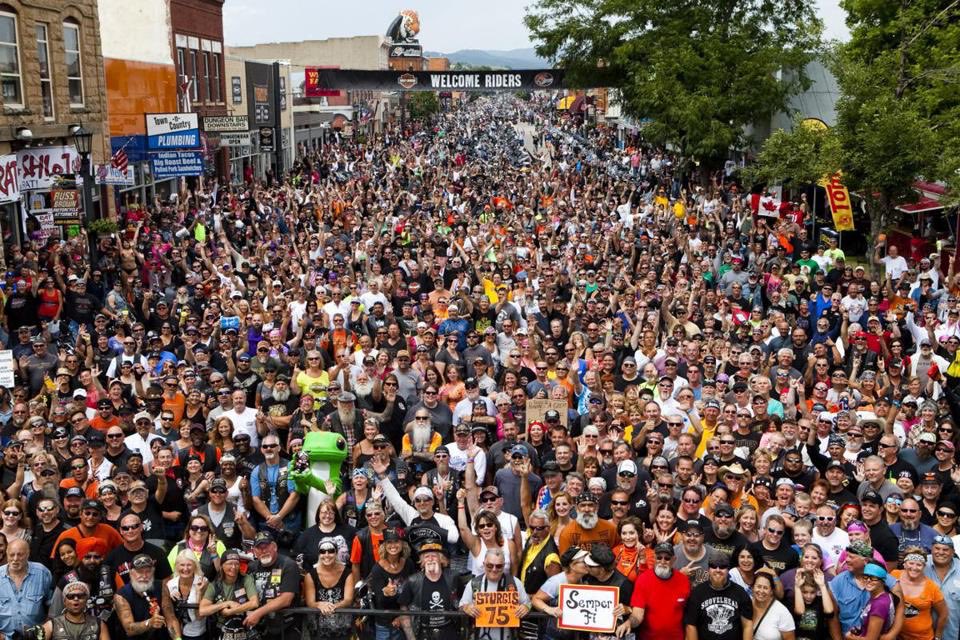
60% of Sturgis residents were against a motorcycle rally that brings in thousands but the city approved it. Here’s why

https://www.cnn.com/2020/08/10/us/sturgis-motorcycle-rally-residents-decision

Steven J. Frisch on Twitter: "I'm fearful of what is to come, as ...

Before deciding on whether to hold the 80th annual motorcycle rally in Sturgis, South Dakota, the local city council turned to its residents to get their take.

“There was a significant amount of discussion that the council had with residents, businesses and state health officials as well as local health officials,” Daniel Ainslie, the city manager, told CNN Sunday.
The city, home to fewer than 7,000, sent a survey to all households asking if they wanted the rally to proceed on its scheduled date. The massive event usually brings in crowds of about 500,000 over 10 days of drag races, contests and concerts. On its 75th anniversary, nearly three quarters of a million people showed.
A little more than 60% of people in the city voted against holding the event this week. But the city council approved it anyway.

https://www.washingtonpost.com/arts-entertainment/2020/08/10/smash-mouth-coronavirus-concert/?utm_campaign=wp_main&utm_medium=social&utm_source=facebook&fbclid=IwAR0EIjLLrhpAEXabcLb11uuVlYYSuluULzd13BPitPSQCW7m-KHfsL7ZNgE


A few superspreaders transmit the majority of coronavirus cases

https://theconversation.com/a-few-superspreaders-transmit-the-majority-of-coronavirus-cases-139950?utm_medium=email&utm_campaign=Latest%20from%20The%20Conversation%20for%20June%2012%202020%20-%201650015873&utm_content=Latest%20from%20The%20Conversation%20for%20June%2012%202020%20-%201650015873+Version+A+CID_db6d6c973ccfe2fa9f80ca414a282efe&utm_source=campaign_monitor_us&utm_term=A%20few%20superspreaders%20transmit%20the%20majority%20of%20coronavirus%20cases

Corona A few superspreaders transmit the majority of coronavirus ...

The coronavirus has traveled the globe, infecting one person at a time. Some sick people might not spread the virus much further, but some people infected with the SARS-CoV-2 are what epidemiologists call “superspreaders.”

Elizabeth McGraw, the director of the Center for Infectious Disease Dynamics at Pennsylvania State University, explains the evidence and why superspreaders can be crucial to a disease’s transmission.

What is a superspreader?

Early in the outbreak, researchers estimated that a person carrying SARS-CoV-2 would, on average, infect another two to three people. More recent studies have argued, however, that this number may actually be higher.

As early as January, though, there were reports out of Wuhan, China, of a single patient who infected 14 health care workers. That qualifies him as a super spreader: someone who is responsible for infecting an especially large number of other people.

Since then, epidemiologists have tracked a number of other instances of SARS-CoV-2 superspreading. In South Korea, around 40 people who attended a single church service were infected at the same time. At a choir practice of 61 people in Washington state, 32 attendees contracted confirmed COVID-19 and 20 more came down with probable cases. In Chicago, before social distancing was in place, one person that attended a dinner, a funeral and then a birthday party was responsible for 15 new infections.

During any disease outbreak, epidemiologists want to quickly figure out whether superspreaders are part of the picture. Their existence can accelerate the rate of new infections or substantially expand the geographic distribution of the disease.


What are the characteristics of a superspreader?

Whether someone is a superspreader or not will depend on some combination of the pathogen, the patient’s biology and their environment or behavior.

Some infected individuals might shed more virus into the environment than others if their immune system has trouble subduing the invader. Additionally, asymptomatic individuals – up to 50% of all those who get COVID-19 – will continue their normal activities, inadvertently infecting more people. Even people who ultimately do show symptoms are capable of transmitting the virus during a pre-symptomatic phase.

A person’s behaviors, travel patterns and degree of contact with others can also contribute to superspreading. An infected shopkeeper might come in contact with a large number of people and goods each day. An international business traveler may crisscross the globe in a short period of time. A sick health care worker might come in contact with large numbers of people who are especially susceptible, given the presence of other underlying illnesses.

Public protests – where it’s challenging to keep social distance and people might be raising their voices or coughing from tear gas – are conducive to superspreading.


How big a part of COVID-19 are superspreaders?

Several recent preprint studies, which haven’t yet been peer-reviewed, have shed light on the role of superspreading in COVID-19’s dispersion around the globe.

Researchers in Hong Kong examined a number of disease clusters by using contact tracing to track down everyone with whom individual COVID-19 patients had interacted. In the process, they identified multiple situations where a single person was responsible for as many as six or eight new infections.

The researchers estimated that only 20% of all those infected with SARS-CoV-2 were responsible for 80% of all local transmission. Importantly, they also showed that these transmission events were associated with people who had more social contacts – beyond just family members – highlighting the need to rapidly isolate people as soon as they test positive or show symptoms.

Another study by researchers in Israel took a different approach. They compared the genetic sequences of coronavirus samples from patients inside the country to those from other places. Based on how different the genomes were, they could identify each time SARS-CoV-2 entered Israel and then follow how it spread domestically.

These scientists estimated that 80% of community transmission events – one person spreading the coronavirus to another – could be tracked back to just 1-10% of sick individuals.

And when another research group modeled the variation in how many other SARS-CoV-2 infections a single infected person tends to cause, they also found there were occasionally individuals who were very infectious. These people accounted for over 80% of transmissions in a population.


When have superspreaders played a key role in an outbreak?

There are a number of historical examples of superspreaders. The most famous is Typhoid Mary, who in the early 20th century purportedly infected 51 people with typhoid through the food she prepared as a cook.

During the last two decades, superspreaders have started a number of measles outbreaks in the United States. Sick, unvaccinated individuals visited densely crowded places like schools, hospitals, airplanes and theme parks where they infected many others.

Superspreaders have also played a key role in the outbreaks of other coronaviruses, including SARS in 2003 and MERS in 2015. For both SARS and MERS, superspreading mainly occurred in hospitals, with scores of people being infected at a time.


Can superspreading occur in all infectious diseases?

Yes. Researchers have identified superspreaders in outbreaks of diseases caused by bacteria, such as tuberculosis, as well as those caused by viruses, including measles and Ebola. Just as appears to be the case with the coronavirus, some scientists estimate that in an outbreak of any given pathogen, 20% of the population is usually responsible for causing over 80% of all cases of the disease.

The good news is that the right control practices specific to how pathogens are transmitted – hand-washing, masks, quarantine, vaccination, reducing social contacts and so on – can slow the transmission rate and halt a pandemic.