

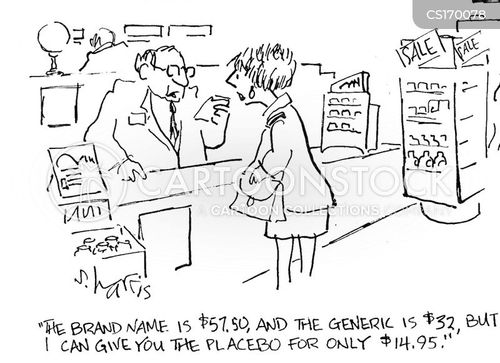
Cartoon – Brand Name, Generic or Placebo

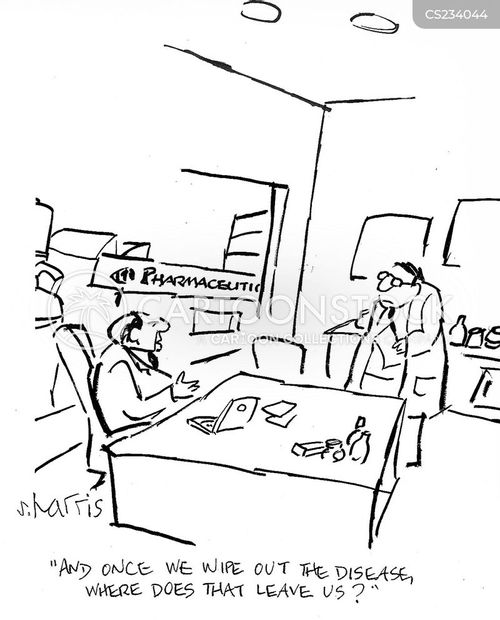

Four health systems from across the country plan to form a nonprofit generic drug company to address the high costs and shortages of generic medications.
Salt Lake City-based Intermountain Healthcare is leading the collaboration with St. Louis-based Ascension; Livonia, Mich.-based Trinity Health; and St. Louis-based SSM Health. The U.S. Department of Veterans Affairs is also involved in the hospital venture but has provided no financial support for the project.
The organizations aim to expand the availability and affordability of essential generic medications and believe their new company will serve as a competitive threat to generic drugmakers.
“It’s an ambitious plan, but healthcare systems are in the best position to fix the problems in the generic drug market,” said Marc Harrison, MD, president and CEO of Intermountain Healthcare said in a statement. “We witness, on a daily basis, how shortages of essential generic medications or egregious cost increases for those same drugs affect our patients. We are confident we can improve the situation for our patients by bringing much needed competition to the generic drug market.”
Managed care is the hot trend in Medicare, with the number of seniors enrolled in Medicare Advantage plans projected to soar over the coming decade.
These plans offer simplicity by combining all the different parts of Medicare into a single buying decision – and they can save you money.
But before you sign up, ask this question: What happens if I get really sick?
Most Medicare Advantage plans are HMOs or PPOs. When you join, Medicare provides a fixed payment to the plan to cover Part A (hospitalization) and Part B (outpatient services). Advantage is growing quickly, fueled by its value proposition of savings and simplicity – the plans bundle together prescription drug coverage and the out-of-pocket protection of Medigap plans.
But like any type of managed care coverage, there is a trade-off: you must use in-network healthcare providers. For example, one recent study found shortcomings in the quality of providers in some Medicare Advantage provider networks – one out of every five plans did not include a regional academic medical center – institutions that usually offer the highest-quality care and specialists (reut.rs/2DGIvhy).
Now, a new study raises questions about the quality of skilled nursing facilities (SNFs) that are included in Medicare Advantage provider networks.
Researchers at Brown University’s School of Public Health examined Medicare beneficiaries entering skilled nursing facilities (SNFs) from 2012 to 2014. The yardsticks for quality were Nursing Home Compare – Medicare’s own database of nursing home quality ratings – and rates of hospital readmission for those admitted to SNFs. Their key finding: Medicare Advantage enrollees appear more likely to enter lower-quality skilled nursing facilities than people enrolled in traditional fee-for-service Medicare.
Medicare Advantage plans also are subject to a quality rating system, but the researchers found that enrollees in both lower- and higher-quality plans were admitted to SNFs with significantly lower quality ratings.
The SNF quality gaps could impact a large group of people, considering the large – and growing – Medicare population. David Meyers, one of the Brown University study authors, calculates that about 315,000 patients from lower-rated Advantage plans need to use an SNF annually. “If those people had used fee-for-service Medicare, up to 13,000 more of them might have gone to a higher-quality nursing home,” he said.
The study does not conclude that healthcare outcomes are necessarily worse for Medicare Advantage enrollees – that was outside the scope of the research. Some researchers have correlated NHC star ratings with patient outcomes, but the jury really is out on this question – partly because of the shortcomings of NHC itself. Much of the data that determines ratings is self-reported by nursing homes, and reviews of this system have found numerous cases of facilities attempting to “game” the system to inflate their ratings.
A large trade group representing the private companies that sponsor Advantage plans – America’s Health Insurance Plans (AHIP) – argues that actual outcomes are better. The group points to another study that found MA enrollees had shorter lengths of stay and were less likely to be readmitted to a hospital and more likely to return home within 90 days of admission than FFS beneficiaries.
But the Brown researchers found that patients from lower-rated Advantage plans tended to go to SNFs with higher readmission rates than fee-for-service patients.
And a review by the Kaiser Family Foundation in 2014 of a large body of research comparing the quality of care provided by Advantage plans and traditional Medicare concluded that the available research is unsatisfying, and that better evidence is needed.
Even if current research is inconclusive, this much is clear: we need much greater transparency to help consumers understand at the point when they are shopping for Medicare Advantage plans using the online Medicare plan finder (bit.ly/2DKlL0o). “It’s not very clear what SNFs are part of any given Advantage plan,” said Meyers.
Going beyond information in the plan finder also presents challenges, said Tricia Neuman, senior vice president and director of the program on Medicare policy at Kaiser. “You would need to get the provider directory from every Advantage plan she is considering – and those are not available in a uniform format,” she said.
”Then, you’d have to go compare the different nursing home providers online for their quality ratings.” No one – including AHIP – is even tracking data on how many SNFs are offered by the typical Advantage plan.
Meyers doubts that even a good research tool would help. “Most people don’t think about a nursing facility until they need one – and it’s really difficult to make decisions about this at a time of crisis,” he said.
Gaining a better understanding of quality in Medicare Advantage plans is going to be urgent as the aging of the nation accelerates. Overall Medicare enrollment will jump nearly 30 percent by 2027 according to projections by the Congressional Budget Office. And Advantage plan enrollment will increase from 19 million to 31 million, which would represent 44 percent of eligible Medicare beneficiaries.
And the need for greater consumer vigilance in choosing SNFs will increase as the Trump administration moves aggressively to deregulate the industry.
Gloves Off, Fists Up: Nurses Storm Capitol To Renew Single-Payer Fight

The nurses are back with their gloves off — and not the disposable medical kind.
Despite a legislative setback last year — dealt by one of the state’s top Democrats, of all people — the powerful California Nurses Association stormed the state Capitol Wednesday to resume their campaign for single payer health care.
A few hundred of the union’s members and supporters, dressed in cherry-red sweatshirts and hats, crowded the north steps of the Capitol on Wednesday morning, pumping their fists and chanting “Everybody in! Nobody out!”
Hours before a marathon hearing on the issue began, they toted around mass-produced signs and bopped to an Afro-Latin-hip-hop band, all in support of a single-payer bill that Assembly Speaker Anthony Rendon described last year as “woefully incomplete.”
“The only thing that’s incomplete is the leadership,” declared Bonnie Castillo, a former critical-care nurse who is the union’s associate executive director.
Castillo, the first speaker, set a defiant tone for the raucous event, which took place just before an informational hearing on the bill that would replace private insurance with one government-administered or “single-payer” health care system in California.
A couple of hundred people chant in support of the single-payer bill, SB 562, sporting red and signs during a rally outside the state Capitol on Wednesday. (Ana B. Ibarra/California Healthline).
Bonnie Castillo, a registered nurse and associate executive director for the California Nurses Association, tells the crowd “the only thing that’s incomplete is the leadership,” while addressing concerns about single-payer bill SB 562 during a rally outside the Capitol. (Ana B. Ibarra/California Healthline)
The union has been the most ardent supporter of single-payer in the state. The nurses say the health care system they work for now leaves some people who can’t afford to pay sick, struggling and in debt.
They stand in stark contrast to others in the medical field, who have banded together to form a coalition opposing the single-payer bill, SB 562. The bill “would dismantle the health care marketplace and destabilize the state’s economy,” the group of physicians, dentists, nurse practitioners, community clinics and others said in a press release.
Rendon yanked the bill from further consideration last June, saying it did not address serious issues such as financing and cost controls.
In that instant, Rendon became the union’s No. 1 enemy. At the time, the union’s executive director, RoseAnn DeMoro, tweeted a picture of the iconic California grizzly bear being stabbed in the back with a knife emblazoned with Rendon’s name. Rendon said he was besieged by death threats.
During the hour-long rally under overcast skies and a foggy drizzle, the mere mention of his name elicited boos.
“We have the tenacity, the determination and the will to continue. We’re not stopping until we get this passed,” Catherine Kennedy, an intensive-care nurse in Sacramento and secretary for the organization, told a California Healthline reporter.
Catherine Kennedy, a registered nurse and secretary for the California Nurses Association, says the group has the tenacity and will to put up a fight for single-payer legislation. (Ana B. Ibarra/California Healthline)
The union says it has 100,000 members. The fact that most are women makes it much stronger, Kennedy said, especially at a time when women are feeling more empowered.
“Time’s up on that!” some yelled in front of the Capitol, echoing the #TimesUp movement that has gained momentum as women nationwide speak out about sexual harassment and other gender-related discrimination.
“Nurses are a female dominated profession. We will not be dismissed. We will not be ridiculed. We will not be put in our place,” Castillo tweeted shortly after she spoke.
Earlier this month, Rendon told reporters that the bill’s sponsors had not responded to his concerns — including how to pay for a single-payer system. “Absolutely nothing has happened with the bill,” he said. “The sponsors of the bill have sat on their hands and done nothing for the past six months.”
That comment is “insulting and disrespectful to all these people who have been knocking on doors … and participating in every committee hearing,” Castillo said after the rally.
Castillo added that the union commissioned an economic analysis of the proposal that was never robustly discussed in the legislature.
Inside the committee room, the hearing, which started at 1 p.m., stretched into the evening as nurses dominated the public comment period. Throughout the testimony, they scoffed and mock-coughed at comments they disagreed with.
They promised to be back with more noise, more rallies and more pressure until single-payer makes it through the legislature.
“The intent is to get us to shut up,” Castillo said, “but that’s not going to happen here.”
http://money.cnn.com/2018/01/18/news/economy/medicaid-state-waiver-requirements/index.html

Mandating Medicaid recipients work in order to receive benefits is in the spotlight right now, but states are seeking to make a host of other changes to their programs. These include requiring enrollees to pay premiums, limiting the time they can receive benefits, testing them for drugs and locking them out if they fail to keep up with the paperwork.
Many provisions would apply to working age, non-disabled adults who gained coverage under the Affordable Care Act’s Medicaid expansion. But several states also would require some who qualify under traditional Medicaid — very low-income parents, mainly — to meet these new rules.
Trump administration and state officials say these measures will help people gain independence and prepare them to purchase health insurance on their own. Critics, however, argue states are putting additional hurdles in place to winnow down their rolls.
“The practical impact of all these proposals is that it will knock people off of coverage,” said Patricia Boozang, a managing director at Manatt Health Solutions, a consulting firm.
Republicans have long wanted to overhaul the 53-year-old Medicaid program, which covers nearly 75 million mainly low-income children, parents, elderly and disabled Americans. The broadening of Medicaid to low-income adults under Obamacare — roughly 11 million have gained coverage under the health reform law’s Medicaid expansion provision — has further spurred GOP efforts.
Congress attempted last year to revamp the safety net program, hoping to sharply curtail federal support and turn more control over to the states. Studies showed that millions would lose coverage, helping to sink the measure in the Senate.
States, however, are undeterred. They are ramping up efforts to customize their Medicaid programs through the federal waiver process.
States have long had this power, but the Obama administration rejected any waivers with work requirements and only sparingly granted requests to tighten eligibility. Many of the states that used waivers tied provider payments to performance goals or expanded mental health and substance abuse services and eligibility, for instance. A few turned to waivers to implement alternative Medicaid expansion models that include charging premiums or enrolling recipients in private insurance and covering the premiums, for example.
Indiana, for example, broke new ground in 2015 by getting permission to levy premiums on some traditional Medicaid enrollees, such as very low-income parents, and to lock out expansion recipients above the poverty line for six months if they don’t keep up with their payments.
But the Trump administration has taken a different approach. Seema Verma, who leads the Centers for Medicare & Medicaid Services, sent a letter to governors hours after she was confirmed in March asking them to file waivers that promote a path to self-sufficiency. At least 10 states have responded with waivers that include work requirements and a host of other provisions. Last week, CMS granted Kentucky’s waiver to implement work requirements, marking the first time ever a state can mandate recipients work for their benefits.
Kentucky also can start charging its Medicaid enrollees monthly premiums ranging from $1 to $15, depending on income, and suspend some of those who fall behind on payments. The state will also provide recipients with a high-deductible health savings account, which it will fund, and offer incentives to purchase additional benefits, such as dental and vision coverage.
And the state can lock recipients out of the program for up to six months if they don’t renew their paperwork on time or promptly report changes in income that could affect their eligibility — the first time the federal government has granted such a request.
All told, Kentucky is expecting about 95,000 fewer people to be in its Medicaid program by the end of its five-year waiver period.
Kentucky joins Indiana, Michigan, Arizona, Montana and Iowa in gaining permission to charge premiums. However, states such as Maine and Wisconsin — that didn’t expand Medicaid — are also looking to levy premiums on certain enrollees, primarily low-income parents or childless adults.
Wisconsin also wants to implement additional changes, including drug testing and a 48-month time limit, after which the recipient loses coverage for six months. Months during which the enrollee works or participates in training programs wouldn’t count toward the limit. Utah, meanwhile, wants to impose a lifetime limit on coverage of 60 months. Arizona, Kansas and Maine also want to set caps on the length of time residents can be on Medicaid.
Other states want to reduce the income threshold for Medicaid expansion eligibility. Arkansas and Massachusetts have asked to cover adults only up to 100% of the poverty level, or roughly $24,600 for a family of four, rather than 138%, but the states would still get the enhanced federal match. Those who would fall off would be able to sign up for subsidized policies on the Obamacare exchanges, though consumer advocates say that coverage would be too pricey for most low-income Americans.
Each of these provisions is complicated and having to comply with multiple requirements could prove too much for some recipients, said MaryBeth Musumeci, an associate director at the Program on Medicaid and the Uninsured at the Kaiser Family Foundation.
“There’s a very real risk that eligible people can lose coverage,” she said.
http://www.latimes.com/science/sciencenow/la-sci-sn-blood-test-cancer-20180118-story.html
Scientists have developed a noninvasive blood test that can detect signs of eight types of cancer long before any symptoms of the disease arise.
The test, which can also help doctors determine where in a person’s body the cancer is located, is called CancerSEEK. Its genesis is described in a paper published Thursday in the journal Science.
The authors said the new work represents the first noninvasive blood test that can screen for a range of cancers all at once: cancer of the ovary, liver, stomach, pancreas, esophagus, colon, lung and breast.
Together, these eight forms of cancer are responsible for more than 60% of cancer deaths in the United States, the authors said.
In addition, five of them — ovarian, liver, stomach, pancreatic and esophageal cancers — currently have no screening tests.
“The goal is to look for as many cancer types as possible in one test, and to identify cancer as early as possible,” said Nickolas Papadopoulos, a professor of oncology and pathology at Johns Hopkins who led the work. “We know from the data that when you find cancer early, it is easier to kill it by surgery or chemotherapy.”
CancerSEEK, which builds on 30 years of research, relies on two signals that a person might be harboring cancer.
First, it looks for 16 telltale genetic mutations in bits of free-floating DNA that have been deposited in the bloodstream by cancerous cells. Because these are present in such trace amounts, they can be very hard to find, Papadopoulos said. For example, one blood sample might have thousands of pieces of DNA that come from normal cells, and just two or five pieces from cancerous cells.
“We are dealing with a needle in a haystack,” he said.
To overcome this challenge, the team relied on recently developed digital technologies that allowed them to efficiently and cost-effectively sequence each individual piece of DNA one by one.
“If you take the hay in the haystack and go through it one by one, eventually you will find the needle,” Papadopoulos said.
In addition, CancerSEEK also screens for eight proteins that are frequently found in higher quantities in the blood samples of people who have cancer.
By measuring these two signals in tandem, CancerSEEK was able to detect cancer in 70% of blood samples pulled from 1,005 patients who had already been diagnosed with one of eight forms of the disease.
The test appeared to be more effective at finding some types of cancer than others, the authors noted. For example, it was able to spot ovarian cancer 98% of the time, but was successful at detecting breast cancer only 33% of the time.
The authors also report that CancerSEEK was better at detecting later stage cancer compared to cancer in earlier stages. It was able to spot the disease 78% of the time in people who had been diagnosed with stage III cancer, 73% of the time in people with stage II cancer and 43% of the time in people diagnosed with stage I cancer.
“I know a lot of people will say this sensitivity is not good enough, but for the five tumor types that currently have no test, going from zero chances of detection to what we did is a very good beginning,” Papadopoulos said.
It is also worth noting that when the researchers ran the test on 812 healthy control blood samples, they only saw seven false-positive results.
“Very high specificity was essential because false-positive results can subject patients to unnecessary invasive follow-up tests and procedures to confirm the presence of cancer,” said Kenneth Kinzler, a professor of oncology at Johns Hopkins who also worked on the study.
Finally, the researchers used machine learning to determine how different combination of proteins and mutations could provide clues to where in the body the cancer might be. The authors found they could narrow down the location of a tumor to just a few anatomic sites in 83% of patients.
CancerSEEK is not yet available to the public, and it probably won’t be for a year or longer, Papadopoulos said.
“We are still evaluating the test, and it hasn’t been commercialized yet,” he said. “I don’t want to guess when it will be available, but I hope it is soon.”
He said that eventually the test could cost less than $500 to run and could easily be administered by a primary care physician’s office.
In theory, a blood sample would be taken in a doctor’s office, and then sent to a lab that would look for the combination of mutations and proteins that would indicate that a patient has cancer. The data would then go into an algorithm that would determine whether or not the patient had the disease and where it might be.
“The idea is: You give blood, and you get results,” Papadopoulos said.


