5 Things Every Wannabe CEO Needs to Know

http://www.healthleadersmedia.com/leadership/5-things-every-wannabe-ceo-needs-know?spMailingID=12034960&spUserID=MTY3ODg4NTg1MzQ4S0&spJobID=1242515111&spReportId=MTI0MjUxNTExMQS2#

Image result for CEO Skill Sets


Hospitals and health system boards are still looking for strong leaders, but what’s changing is the kind of experience you need to elevate to the top job.

So you want to be the CEO of a hospital or a health system.

Here’s the first thing to know: Like it or not, the role of acute care is slowly being relegated.

It’s still important, and it’s still a high-reimbursement area, but specifically because of that, scores of people and companies are trying to figure out how to use it less.

As a result, even in organizations where acute care represents the lion’s share of revenue, the competencies of today’s successful CEO range far from the acute-centric skills many hospital and health system executives and boards once prized.

All of today’s CEO candidates have to understand the critical interactions between the inpatient and outpatient realms, and the fact that delivering value rests on managing those interactions, not from maximizing patient census and inpatient days.

“Running a health system is about trying to provide coordinated care in an environment that’s patient- and family-centric,” says Jim King, senior partner and chief quality officer with Witt/Kieffer, a healthcare executive search firm.

Given the need to reduce reliance on acute care services, leaders who want to be CEOs have to learn skills applicable to the rest of the patient’s healthcare journey.

What’s Past Is Prologue: CBO’s Score for the House-Passed AHCA Reminds Us Why Insurance Markets Need Regulation

http://www.commonwealthfund.org/publications/blog/2017/jun/why-insurance-markets-need-regulation

Related image


The Trump administration has been arguing for months that the insurance market reforms of the Affordable Care Act (ACA) are not working and are even harming consumers. But four years of accumulated data on Americans’ experiences in a reformed individual market provides considerable evidence to the contrary. Americans’ ability to buy comprehensive health plans on their own has improved significantly since the reforms went into effect in 2014. Most people with marketplace plans are satisfied with them and have used their plans to get health care they couldn’t have obtained in the past. A majority of those eligible for subsidies have premiums and deductibles similar to those in employer plans. And while policy fixes are needed to improve affordability, as well competition in some areas of the country, the marketplaces were looking increasingly stable for both consumers and insurers at the beginning of this year.

It is actually the lack of certainty about the administration’s actions regarding the enforcement of the market reforms, rather than the reforms themselves, that are the primary source of the marketplace’s current problems. The importance of the ACA’s insurance market reforms were underscored last week in the Congressional Budget Office’s (CBO) analysis of the House-passed American Health Care Act (AHCA), the Republican’s ACA repeal-and-replace bill. The report included an assessment of an amendment that would allow states to undo some of the reforms. That assessment is a powerful illustration of why these reforms were needed in the first place.

The MacArthur Amendment Relaxes ACA Individual Market Reforms

In the week before the House vote in May, Representative Tom MacArthur sponsored an amendment to the AHCA that provided waivers for states that wanted to relax two major sets of ACA reforms:

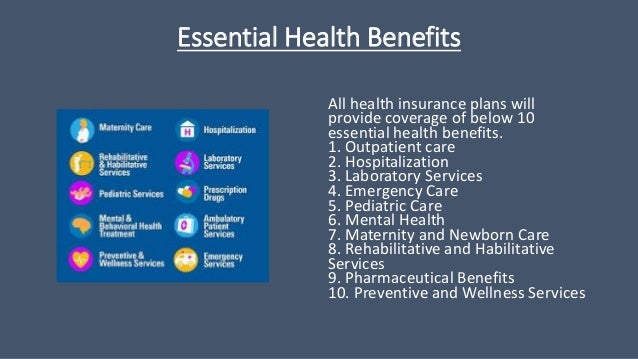
  • The requirement that insurance companies sell policies that cover a standard set of health benefits similar to those in employer-based coverage
  • The ban that prevents insurance companies from charging people more based on their health.

Under the first waiver, states could let insurers eliminate coverage for many services, significantly driving up out-of-pocket costs for people who need these services. Under the second waiver, states could allow insurers to price, or underwrite, people’s insurance based on their health if they applied for a plan and had a gap in their insurance of 63 days or more. States with the waivers would be required to establish high-risk pools or reinsurance programs to make coverage affordable for people who had higher premiums as a result. They could draw funds from the AHCA’s Patient and State Stability Fund, a pool of $10–$15 billion a year over 2018–2026 that was supplemented for various purposes through amendments.1

CBO Estimated About Half the U.S. Population Lives in States That Would Request Waivers

If there were doubts about whether any states would apply for the waivers, the CBO had some news: half the U.S. population could live in states that would use these waivers to begin deregulating their individual insurance markets. The basis for their estimate? In part, they considered state approaches to their individual markets prior to the ACA. States that had previously allowed insurers the freest rein in consumer coverage denials, rating on health, and flexibility in what services they would cover were expected to loosen the reins again.

CBO also expected that states that sought the waivers would implement them in different ways. Some states might modestly deregulate their markets while others might make more dramatic changes. For example, some states might require insurers to cover a core set of benefits but allow them to exclude maternity or mental health services. Using 2014 data, RAND researchers have estimated that this could increase the costs to families of having a baby by $6,900 to $9,300 and the annual costs of mental health care by $1,300 to over $12,000. Other states might go a step further and let insurers determine the entire content of their benefit packages as they did in many states prior to the ACA, leaving many people with preexisting conditions stuck with the full cost of their care.

Likewise, CBO assumed that some states would take different approaches to reintroducing individual underwriting in their markets. Because healthy people would face lower premiums if they were rated on the basis of their health, they would have little incentive to maintain continuous coverage, since they would prefer the lower rate they would receive if carriers rated them on health. In order to keep healthy people in the community-rated risk pool (the one with both healthy and unhealthy enrollees), a state might only allow underwriting of people with health problems.

Other states might go whole hog and allow underwriting on health for everyone who had a coverage gap, regardless of their health status. These markets over time would begin to look like those of the pre-ACA past: markets segmented into pools where people in good health could find affordable plans and those with health problems were priced out of the market. The CBO concluded that the funds set aside for state high-risk pools for people with health problems were inadequate to make coverage affordable for people with preexisting conditions in these states.

What’s Past Is Prologue

Decades of experience with the individual market in the United States has shown that without considerable regulation the market simply cannot function for all those who rely on it. Allowing insurers in the past to price each individual’s policy according to their health penalized those who were the sickest and rewarded those who were the healthiest. The 35 states that tried to patch high-risk pools onto their individually rated markets and the ACA’s own transitional Preexisting Conditions Insurance Plan program left robust evidence that high-risk pools were expensive for states and the people who enrolled in them, left millions uninsured, and were ultimately unsustainable. States that had attempted to ban pricing based on health status (like New York and New Jersey) also experienced instabilitybecause the lack of premium subsidies and an individual mandate left their markets lopsided: too many people in poorer health without the balance provided by those in better health.  As a result, premiums soared.

In contrast, four years of experience with the ACA’s insurance market reforms demonstrates that it is possible for this market to offer affordable, comprehensive insurance to people with diverse health needs. In 2010, 60 percent of adults who tried to buy a plan in the individual market said that they found it very difficult or impossible to find one they could afford. By 2016, that number had fallen by nearly half, to 34 percent. While this rate leaves plenty of room for improvement, the substantial decline suggests that the U.S. has been headed in the right direction if private markets are the nation’s preferred path to universal coverage. But any future movement along this path will require the full commitment of the Trump administration and Congress to enforcing and improving the ACA’s reforms of our complex private health insurance markets.

ACA “Bare Counties”: Policy Options to Ensure Access Must Address Longer-Term Stability and Competition

http://www.commonwealthfund.org/publications/blog/2017/sep/aca-bare-counties

Image result for Bare Counties


Continued uncertainty about federal funding for health plans is contributing to higher individual market premiums and insurer withdrawals in 2018. The danger that consumers in some regions wouldn’t have any coverage option next year seemed to subside when insurers in the affected states eventually agreed to broaden their participation. But with the September 27 deadline for deciding to participate in the Affordable Care Act (ACA) marketplaces fast approaching, Virginia officials announced an insurer withdrawal that may leave as many as 63 counties without coverage. At the same time, many more counties appear likely to have just one insurer offering marketplace coverage. The risk that any consumer might be without options for health coverage deserves the right response from policymakers.

Relief for Bare Counties?

The threat of counties without individual market insurers, known as “bare counties,” should be a real concern of policymakers. Even if consumers in all counties have a marketplace plan that gives them access to ACA subsidies, a single plan choice locks consumers into the plan that is available to them, not necessarily the one that best meets their needs. It also fails to foster competition on price and quality, and leaves state officials tasked with approving plans in a difficult position. Two proposals in the Senate would address bare counties, and although both might provide access to federal subsidies, each has significant side effects that are likely to negatively impact market stability and future plan choices.

The Health Care Options Act (S. 761), introduced earlier this year by Senator Lamar Alexander (R–Tenn.), would allow individuals who live in an area without a marketplace plan to qualify for premium tax credits — paid at year-end — to purchase coverage off of the marketplace, including coverage that doesn’t comply with ACA consumer protections. A second bill introduced by Senator Claire McCaskill (D–Mo.), the Health Care Options for All Act (S. 1201), would allow individuals living in a bare county to purchase coverage through the District of Columbia marketplace, where members of Congress and their staff obtain coverage.

By allowing tax credits to be used for coverage that does not meet ACA requirements, the Alexander bill will likely encourage insurers to sell skimpy policies and healthy individuals to enroll in them. Noncompliant policies would have far lower premiums than compliant ones, which, because of the ACA, cannot discriminate based on an individual’s health status. Consequently, insurers that choose to sell in the off-marketplace market likely will hike their premiums for comprehensive coverage to account for the likelihood of enrolling fewer and less healthy individuals. Indeed, they may find that offering such coverage is unsustainable, particularly given that they would still be able to capture healthy, subsidized enrollees through the sale of noncompliant plans.

In contrast, the McCaskill bill would allow consumers to continue to have access to the ACA’s upfront premium and out-of-pocket help and would limit federal financial help to marketplace plans that meet critical consumer protections. However, by requiring insurers selling in the District of Columbia’s small business marketplace to offer individual market coverage to out-of-state consumers, many of whom live in rural areas and are likely to be higher-cost individuals, the proposal may undermine premiums and plan choice for D.C.’s residents and small businesses.

Other potential solutions would offer help to residents of bare counties without the potential harm of the Senate proposals. For example, Congress could allow individuals living in bare counties to use ACA subsidies to buy into other comprehensive coverage — for example, the Federal Employees Health Benefits Program or Medicaid — to ensure access to ACA financial help without undermining market stability.

Policymakers also might consider requiring a fallback plan modeled on the approach taken in the Medicare prescription drug benefit. When that program was enacted, policymakers ensured adequate plan participation in the new market by designating a fallback plan that would provide coverage in any county with two or fewer plans. Such an approach would solve not only the bare counties problem but also would foster competition and ensure adequate plan participation.

Looking Forward

Policymakers looking to stabilize the market and avoid bare counties are right to start by ensuring that payments for cost-sharing reductions continue. Insurers have made clear that guaranteeing federal funding for cost-sharing reductions is a defining factor in their decision to participate in marketplaces next year. In the event there are counties without insurers, it is important that policymakers consider not just the immediate effects of potential policy fixes, but also their longer-term consequences for access to affordable, comprehensive coverage. Solutions for bare counties that allow individuals to use upfront assistance to buy a fallback plan that offers comprehensive coverage would help those individuals who are affected buy and maintain comprehensive coverage while insuring healthy and competitive markets for all.

Down to the Wire: Indecision on ACA Cost-Sharing Reduction Payments Creates Confusion for States

http://www.commonwealthfund.org/publications/blog/2017/sep/cost-sharing-reduction-payment-indecision

Among the Trump administration’s first promises was to give states more flexibility and control over their health insurance markets than they had had during the Obama years. To date, however, the administration has offered states only uncertainty about what to expect in 2018, which has made it difficult to set premium rates. In particular, state officials are struggling to keep their insurance markets afloat in the face of the Trump administration’s continued indecision over whether to reimburse insurance companies for Affordable Care Act (ACA) cost-sharing reduction (CSR) plans. And time is running out.

No Clarity About Future Payments

Under the ACA, insurers are required to offer plans with reduced cost-sharing for out-of-pocket expenses like copayments and deductibles to eligible low-income enrollees; the government then reimburses insurers for the higher cost of those plans. The Trump administration has threatened to cut off those reimbursements, which for 2018 were projected to reach $8 billion. If these reimbursements do terminate at the end of this year, the Congressional Budget Office has estimated that 2018 premiums will rise by an average of 20 percent. This projection is consistent with similar estimates from the Kaiser Family Foundation and insurers’ own proposed 2018 rates, which were submitted to states this summer.

While the administration has continued to make the monthly CSR reimbursements so far, federal officials have not committed to any future payments. The Trump administration has extended the deadline for finalizing premium rates to September 20, 2017, but even that deadline is fast approaching. Once rates are finalized by states, insurers are locked into them for the full calendar year.

State Decisions Will Drive Insurer Participation and Costs for Consumers and Taxpayers

Whether insurers continue to participate in the ACA marketplaces and what consumers — and federal taxpayers — ultimately pay could depend on the actions of 50 different state insurance commissioners (plus D.C.). Yet, as noted, these state regulators and insurers are in a race against the clock to develop, review, and implement 2018 premium rates that reflect insurers’ likely costs as accurately as possible.

To date, state departments of insurance have given insurers different directives about how to set their premium rates for next year. The variation in these directives will result in different — and potentially significant — consequences for consumers, insurers, and federal taxpayers.

At least one state insurance department, Maryland’s, is currently requiring insurers to submit 2018 premium rates assuming they will be reimbursed for CSR plans throughout 2018. This approach has the advantage of helping to keep rate increases in check for consumers, particularly those not eligible for the tax credit subsidies that shelter low- and moderate-income enrollees from premium hikes. But this directive also carries big risks. If the Trump administration cuts the CSR reimbursements and insurers don’t have sufficient time to submit new rates, then they will face significant financial losses and some (if not all) will likely exit the market, leaving consumers without coverage options.

Other states, such as in New York and Utah, have required or allowed insurers to assume they won’t be reimbursed for CSR plans in 2018. While this means big premium increases for many consumers, it gives insurers more confidence to participate in the market by protecting them from major financial losses. At the same time, if the Trump administration decides to keep the CSR reimbursements going (or if Congress steps in to appropriate the necessary funds), these insurers will reap a windfall, financed largely by federal taxpayers through the ACA’s premium tax credits. Yet more state insurance departments, such as in ArkansasCaliforniaMichigan, and New Mexico, have tried to hedge their bets by asking insurers to submit two sets of rate requests — one assuming CSR reimbursements will be paid, one assuming they won’t.

Still other states have not yet provided directives or reassurances to their insurers, essentially leaving it up to each company to decide how to respond to the uncertainty over CSRs. However, allowing each insurer to decide for themselves could lead to significant market disruption. For example, if one insurer sets premiums assuming they will be paid CSRs, but others in the market increase premiums assuming they will not, it will drive enrollment to the lower-cost plan at the expense of its competitors, placing that insurer at risk of insolvency if the CSRs are not paid.

Looking Ahead

Most observers have hoped that federal policymakers would announce a decision on CSRs one way or another in time for insurers to adjust premium rates for 2018. But as the deadline for finalizing rates looms, it is less and less likely that states will have the clear federal signal they need to decide how to best regulate their insurance markets and review proposed premiums for the upcoming year. Without clarity from federal officials or commitment from Congress to continue funding for CSRs, state insurance departments and insurers will need to make some high stakes bets on the future of these markets by setting premiums that may be too high or too low. Ultimately, the risk of losing these bets will be borne primarily by consumers and federal taxpayers.

Following the ACA Repeal-and-Replace Effort, Where Does the U.S. Stand on Insurance Coverage?

http://www.commonwealthfund.org/publications/issue-briefs/2017/sep/post-aca-repeal-and-replace-health-insurance-coverage

Image result for Following the ACA Repeal-and-Replace Effort, Where Does the U.S. Stand on Insurance Coverage?

Conclusion and Policy Implications

The findings of this study could inform both short- and long-term actions for policymakers seeking to improve the affordability of marketplace plans and reduce the number of uninsured people in the United States.

Short-Term

The most immediate concern for policymakers is ensuring that the 17 million to 18 million people with marketplace and individual market coverage are able to enroll this fall.

Congress could take the following three steps:

  1. The Trump administration has not made a long-term commitment to paying insurers for the cost-sharing reductions for low-income enrollees in the marketplaces, which insurers are required to offer under the ACA. Congress could resolve this by making a permanent appropriation for the payments. Without this commitment, insurers have already announced that they are increasing premiums to hedge against the risk of not receiving payments from the federal government. Since most enrollees receive tax credits, higher premiums also will increase the federal government’s costs.9
  2. While it appears that most counties will have at least one insurer offering plans in the marketplaces this year, Congress could consider a fallback health plan option to protect consumers if they do not have a plan to choose from, with subsidies available to help qualifying enrollees pay premiums.
  3. Reinsurance to help carriers cover unexpectedly high claims costs.10 During the three years in which it was functioning, the ACA’s transitional reinsurance program lowered premiums by as much as 14 percent.

The executive branch can also play an important role in two ways:

  1. Signaling to insurers participating in the marketplaces that it will enforce the individual mandate. Uncertainty over the administration’s commitment to the mandate, like the cost-sharing reductions, is leading to higher-than-expected premiums for next year.
  2. Affirming the commitment to ensuring that all eligible Americans are aware of their options and have the tools they need to enroll in the coverage that is right for them during the 2018 open enrollment period, which begins November 1. The survey findings indicate that large shares of uninsured Americans are unaware of the marketplaces and that enrollment assistance makes a difference in whether people sign up for insurance.

Long-Term

The following longer-term policy changes will likely lead to affordability improvement and reductions in the number of uninsured people.

  1. The 19 states that have not expanded Medicaid could decide to do so.
  2. Alleviate affordability issues for people with incomes above 250 percent of poverty by:
    1. Allowing people earning more than 400 percent of poverty to be eligible for tax credits. This would cover an estimated 1.2 million people at an annual total federal cost of $6 billion, according to a RAND analysis.11
    2. Increasing tax credits for people with incomes above 250 percent of poverty.
    3. Allowing premium contributions to be fully tax deductible for people buying insurance on their own; self-employed people have long been able to do this.
    4. Extending cost-sharing reductions for individuals with incomes above 250 percent of poverty, thus making care more affordable for insured individuals with moderate incomes.
  3. Consider immigration reform and expanding insurance options for undocumented immigrants.

In 2002, the Institute of Medicine concluded that insurance coverage is the most important determinant of access to health care.12 In the ongoing public debate over how to provide insurance to people, the conversation often drifts from this fundamental why of health insurance. At this pivotal moment, more than 30 million people now rely on the ACA’s reforms and expansions. Nearly 30 million more are uninsured — because of the reasons identified in this survey. It is critical that the health of these 60 million people, along with their ability to lead long and productive lives, be the central focus in our debate over how to improve the U.S. health insurance system, regardless of the approach ultimately chosen.