Does Gavin Newsom have the answer to Democrats’ health care fights?

https://www.politico.com/news/2019/11/19/gavin-newsom-california-health-care-2020-071403
Image result for universal healthcare in california

California’s governor discovered that single-payer is a better political slogan than policy prescription, but he may have found a path to help Democrats get there anyway.

A year and a half ago, Gavin Newsom was in the same place as Elizabeth Warren and Bernie Sanders, running in a tough Democratic primary and vowing “it’s about time” for a single-payer health care system while dismissing his critics as “can’t-do Democrats” who refuse to think big.

Now he’s in a different place.

The sleek businessman with the wavy pompadour has changed his rhetoric and slowed his pace. “These things take time,” he acknowledged after his primary victory.

As governor, Newsom’s health care program has been more incremental than promised, annoying some allies in the single-payer movement while winning some unexpected praise from industry groups. But he also may have found something larger than his own agenda: A health care path that builds on past successes, enacts fresh reforms and may eventually lead to a single-payer system — without the political earthquake that so many predict under Sanders’ bill or Warren’s financing plan.

Newsom’s is by far the most relevant — and revelatory — experiential test of the Democratic health care ideas that will be so hotly debated on the Atlanta debate stage Wednesday night. And it offers something for everyone in the race to chew on: A testament to the power that a promise of a single-payer system can have in galvanizing the party’s base; the unforgiving realities that make a quick conversion to single-payer practically, and probably politically, impossible; and a way for a leader to win broader support for incremental steps that — if pursued diligently enough — could lead to universal coverage.

“This is the signature issue of the progressive left, and it’s absolutely driven by what’s happening in California,” said Doug Herman, a Democratic strategist based in Los Angeles, who attests to the appeal of single-payer as an issue. “‘Medicare for All’ could help Bernie and Elizabeth in the Democratic primary the same way it helped Gavin Newsom win the primary in California. But the deeper you go, the harder it is to explain how you’re going to pay for it.”

Newsom’s alternative steps include a return of the individual mandate requiring people to buy insurance or pay a tax penalty; stricter coverage requirements on mental health parity; expanded subsidies to help low- and middle-income people purchase coverage; more Medicaid spending to cover undocumented immigrants; and the creation of a much larger state-operated group-purchasing plan to drive down prescription drug costs.

These will be followed, if Newsom sticks to his intentions, by additional reforms generated by a 2020 commission of stakeholders that could lead to a much more highly regulated system. And that, some health experts believe, can put him on the doorstep of the Democrats’ Holy Grail: a universal, single-payer system.

“The governor continues to insist that we move forward towards a system that will cover everyone, that will be more affordable and that will be high quality. Single-payer is one point on the horizon to help to get us there,” top Newsom adviser Daniel Zingale told POLITICO. “Folks who are die-hard proponents of single-payer should not despair — that continues to be a guiding beacon for where we’re trying to go.”

* * *

Speaking to a home state crowd of more than 4,000 liberal activists in San Diego in early 2018, Newsom, the dynamic former San Francisco mayor who had spent eight years as lieutenant governor waiting for his chance at the top job, took a shot at his chief primary opponent, former Los Angeles Mayor Antonio Villaraigosa, who was on a crusade to convince voters that single-payer was too expensive and impossible to achieve in California.

“My opponents, they call it snake oil. I call it single-payer,” Newsom said, borrowing a phrase Villaraigosa had employed to criticize Newsom’s lack of specifics in his health care agenda.

“It’s about access, it’s about affordability — it’s about time, Democrats,” Newsom said, buoyed by an electric, cheering crowd a few months before the primary election. “If these can’t-do Democrats were in charge, we would have never had Medicare and Social Security.”

Newsom’s early embrace, both of Sanders’ Medicare for All proposal and a $400 billion single-payer health care bill propped up in the state Legislature by the influential California Nurses Association, earned Newsom highly coveted backing from Sanders supporters and other skeptics on the left who worried he was too moderate.

He has long cultivated an image as a political risk-taker willing to battle his own party, in earlier eras pushing gay marriage and legalization of marijuana to the forefront of the Democratic agenda in California.

Newsom said his single-payer message was about “more than a political campaign,” it was about “Democrats acting like Democrats” in a battle for the soul of America against “a president that doesn’t have one.”

“Democrats do not succeed by playing it safe,” Newsom said in the campaign. He went on to defeat Villaraigosa by more than 20 points, and barely flinched at the general election challenge from Republican real estate investor John Cox.

“It was an ideological purity test, and Newsom won it,” said Mike Madrid, a Sacramento-based Republican strategist who led Villaraigosa’s campaign. “Health care is something that has defined the Democratic Party since at least the 1970s, but this was new. I was shocked to see the desire Democratic primary voters had to be lied to.”

After the primary, Newsom largely ignored his Republican opponent, instead pouring time and resources into helping down-ticket Democratic candidates beat Republicans in House and state legislative districts. Democrats ended up unseating six Republicans in the Legislature, solidifying its Democratic supermajority, and flipping seven Republican-held battleground seats in the U.S. House.

Andrew Acosta, a Sacramento-based political consultant, said disdain for President Donald Trump fueled those races, but that Newsom did help fire up the Democratic base in traditional Republican strongholds, including in the Central Valley and Orange County.

“I don’t think he was ever in any trouble with Cox, so he was able to do other things,” Acosta told POLITICO.

Newsom’s fiercest allies, meanwhile, were focused on keeping him committed to single-payer. The California Nurses Association and others on the left were growing increasingly anxious that he’d moved too far to the middle, even as they pumped money into a campaign bus with the slogan: “Nurses trust Newsom.”

“He did not run on being an incrementalist governor,” said Stephanie Roberson, chief lobbyist for the California Nurses Association in Sacramento. “If he bit off more than he can chew, he should say that.”

She referenced a series of single-payer campaign promises Newsom had made in seeking their support early in his campaign. “I’m a Californian. I don’t like waiting,” Newsom said early on. “When I’m governor, I will not wait for federal action. … I’m tired of politicians saying they support single-payer but that it’s too soon, too expensive or someone else’s problem.”

Newsom later began to shift his message away from single-payer, instead brandishing his reputation as the former two-term San Francisco mayor who took on the city’s business elite, passing a universal health care program for city residents regardless of their immigration status or ability to pay, funded in part by fees on employers.

Newsom remained firm on his goal of adopting a universal-care system for California. But single-payer would take much, much longer, if it was even possible. Weeks before the 2018 election, he argued that it was “lazy” for supporters to interpret his single-payer campaign pledge as a promise that was “achievable overnight.”

“It was always about universal health care. That’s the goal,” Newsom said. “I’ve always believed that single-payer financing is the most effective, efficient way to achieve it.”

But, he said, he’d “deeply discovered” that “single-payer financing means a million different things to a million different people.”

Democratic and Republican strategists told POLITICO that the way single-payer played out in the Newsom-Villaraigosa contest is exactly how they see the fight between the liberal presidential candidates touting Medicare for All and the moderates vowing to improve Obamacare: First, promise Medicare for All. Win the primary. Then move to the middle to pick up more middle-of-the-road voters, and start explaining how you were misunderstood all along.

“In this Trump era and a time of immense tribalism, once you start to question numbers and math, you become a heretic,” said Madrid, the Republican strategist. “We saw that in the 2018 California Democratic primary, and that’s what’s on full display in the 2020 presidential fight with Bernie Sanders and Elizabeth Warren.”

“People didn’t want a centrist,” he said, recalling the Newsom-Villaraigosa fight. “They wanted an ideological warrior.”

* * *

They may have gotten a warrior, but some of the ideology got left behind.

Industry groups worried about Newsom coming into office. Now, they see a governor growing more moderate, one who has come around to their side and with his actions decided that building a universal health care system using the current network of payers and providers is much more realistic and politically palatable.

“The reality … and the governor knows this, is that the federal roadblocks and the state roadblocks to single-payer are real,” said Charles Bacchi, president and CEO of the California Association of Health Plans, which represents major health insurers across the state.

The first day Newsom took office, he staked out major health care priorities on the wish list of industry groups, including insurers, hospitals and doctors: Bringing back the individual health insurance mandate after a Republican-led legal fight had gutted it nationally. Higher provider reimbursement rates. An expansion of Medicaid to cover undocumented immigrants up to age 26, alleviating pressure on public hospitals and emergency rooms saddled with millions of dollars each year in uncompensated care.

Instead of cutting insurance companies out, Newsom has helped bolster their business by restoring a state-based health coverage mandate and expanding taxpayer-financed insurance subsidies for middle-class Californians — even higher than those allowed under Obamacare.

He argues such measures will further stabilize the insurance market and help more people struggling to afford coverage.

He suggested to POLITICO earlier this year that he may go even further next year by covering undocumented seniors. And he is also developing incentives, including higher provider pay, for doctors who do a better job of keeping people healthy by reducing chronic disease and improving care for mothers and babies.

He’s spearheading a massive overhaul of public-private drug purchasing, leading initiatives to drive down soaring pharmaceutical costs, he hopes, by creating a single state bulk purchasing system to negotiate deeper discounts with drugmakers. Four major counties have joined, including Los Angeles, San Francisco, Alameda and Santa Clara.

And his administration is beginning a major transformation of the state’s Medicaid program to better serve the 13 million low-income Californians who depend on it.

These initiatives could provide a workable template for a Democratic health reform agenda that presidential candidates backing single-payer should study and learn from, health policy experts say.

“You can’t just wipe out the existing system and start over,” said Joe Kutzin, who leads the health care financing team at the World Health Organization, working on establishing universal systems of care around the globe.

In most developed countries — even those held up as ideal single-payer systems — large-scale change happens more incrementally, given what Kutzin described as immense political difficulty implementing “big-bang reform.”

“Winning the argument about universal coverage first, I think, is really important,” he said. “Is there agreement that no one should become poor or die because they don’t have health coverage? The United States political system doesn’t have agreement on that basic principle, and that can get derailed by discussions about wiping out the insurance industry.”

Kutzin said the Affordable Care Act advanced the national conversation about whether health care should be a basic right — a belief that every major Democratic presidential contender says they’re for — but health care is still ingrained in the United States as an earned benefit attached to employment. And, 14 Republican-controlled states still haven’t expanded Medicaid to childless adults, while others are making it more difficult for poor people to qualify.

Like faithful single-payer advocates, Kutzin believes a uniform financing system can achieve universal coverage, and deliver it cheaper. But that ignores political realities.

“Getting to single-payer from where you are now, I’m afraid, generates a lot of resistance that risks losing the objective of universal care,” he said. “The reality, and I think the difficulty, is the system is so messy right now that almost any path to those goals are extremely painful. But standing still is really painful too.”

Tsung-Mei Cheng, a health policy researcher at Princeton who studies single-payer systems around the world, said policies Newsom has advanced can eventually lead to single-payer.

“Fix Obamacare — California is doing this,” she said. “Going from private health insurance to single-payer is a tall order. It would be different if people living in Alabama and Tennessee and all these Republican states agreed that health care is a right, but in our country, we are split.”

She said steps Newsom has taken are in line with pragmatic measures she and her late husband, Princeton economist Uwe Reinhardt, believed states could do under Obamacare. Reinhardt helped craft Taiwan’s single-payer system and broadened America’s understanding of why the United States spends more money on health care than any other industrialized country yet has worse health outcomes, in his study on uncontrolled prices.

Cheng said if California can eventually achieve universal coverage, and pass tight cost control mechanisms to reduce overall health care spending, it can serve as a model for other states and possibly, provide a state and national template for single-payer.

“You’re almost there,” she said. “The one big downside of California and Obamacare is there really isn’t any cost control mechanism, and that is necessary. If you can manage to get universal care and costs under control, then you’re there.”

But, she said, the piecemeal steps California is taking “can be a morale booster for the whole country” as Democrats and Republicans fight over the right approach.

The state has already cut its uninsured rate to about 7 percent, down 10 percentage points from the early days of Obamacare. Measures taken this year are expected to further expand coverage and access.

It could be the best any state could hope for in the immediate future. Going to all-out war with the health care industry over single-payer would be political suicide, Cheng suggested.

“Our political system allows itself to be influenced by these interest groups, and they’re very powerful,” Cheng said. “We in the United States have this congenital defect, and we’re stuck with it.”

She said regulating the market by paying all health care providers the same, regardless of coverage, and creating a public insurance option are good ideas for California to build on what the state has already done.

California is already considering those options under a single-payer health care commission established by Newsom and the state Legislature this year. Experts have said models in place in other countries can drive a more equitable, efficient delivery system for less money.

The commission is expected to begin its work in 2020, with its charge to consider a path forward on single-payer and tight cost control mechanisms, including a global budgeting system that establishes a fixed amount of health care spending for the state.

* * *

In unscripted moments last year during campaign bus tours through Los Angeles and California’s Central Valley — communities that are home to California’s largest uninsured population — Newsom alluded to reasons why he envisioned a slower path forward on single-payer.

He said he was eyeing different health care models used throughout the world, all of which included a major role for government as primary payer for health care. The so-called Bismarck model, used by Germany, Switzerland and Japan,was the most appealing for California, he said.

In general, it finances health coverage through a joint employer-employee payroll deduction, and retains a role for private doctors and hospitals. Some countries use a single government payer, while others have multiple insurers, but it provides no profits for health insurance companies and everyone is covered. A key feature is tight cost-control mechanisms on overall health care spending.

“Bismarck has more interesting tenets to what we do in California,” Newsom said last year.

He was also analyzing other systems, including a socialized medicine model under which the government owns hospitals, employs doctors and pays for health care as it does education and public safety. And he’d been studying traditional single-payer systems, like those in place in Canada and Taiwan.

Each model, he said, is better than the existing system. A key feature of any future initiative must include tight cost controls, Newsom says.

“There’s pieces of all three systems … that are easily categorized as versions of single-payer financing,” Newsom said. “Aspects of all three — that’s what we’re looking at for California.

In office, he has insisted that he remains committed to the idea of single-payer.

“I committed to this, and I want folks to know that I was serious about it,” the governor said on Inauguration Day.

Single-payer supporters and industry groups who reject the idea, meanwhile, are jockeying for inclusion in those discussions.

That could present political challenges for Newsom as he eyes larger changes ahead. His allies with the nurses union have already begun to publicly attack him, telling POLITICO earlier this year that its relationship with the governor is “on shaky ground.”

“The time is now, and I think he’s missing a moment to actually lead,” said Bonnie Castillo, executive director of the National Nurses United, which recently endorsed Sanders for president.

A California congressman with whom Newsom has had deep single-payer discussions suggested in an interview with POLITICO recently that the governor is dragging his feet.

“Our state of California should deliver on single-payer,” said Democratic Rep. Ro Khanna, who represents a vast swath of the ritzy Silicon Valley. “If California, where you have the biggest political support for the single-payer movement, isn’t going to lead, then where are we going to do it?”

Deep-pocketed industry groups such as the California Medical Association — major financial donors to Newsom during his campaign — say the governor hasn’t pleased them on everything, and they remain somewhat concerned about the longer-term prospect of single-payer, but generally they’re happy with steps he’s taken.

“When many people say single-payer, they’re really talking about a payment system that may ultimately reimburse at government-set levels that pay less than cost — that will be a challenge for hospitals,” said Carmela Coyle, president and CEO of the California Hospital Association, in an interview.

She said hospitals have “serious concerns” about politicians advancing single-payer at both the state and federal level.

“California’s hospitals will be involved and engaged,” Coyle said. “We have a tremendous opportunity to look at the issue of affordability that does not necessarily put at risk the care we’re able to provide to the population today.”

Bacchi, the president and CEO of the California Association of Health Plans, said the plans would fight back against any single-payer effort.

“What California’s health plans believe about transforming our health care system is that we should focus on building and improving the health care that’s working for millions of Californians, not starting from scratch and putting at risk the care that so many Californians rely on,” he told POLITICO. “Obviously, we’re concerned that single-payer might distract from all the other work we may need to do.”

Sara Flocks, chief lobbyist for the California Labor Federation, which backs single-payer, characterized Newsom as “untested” on health industry fights. Although he has gone after the pharmaceutical industry and soaring drug prices, that is a more politically popular stance than going after insurers, doctors and hospitals, she said.

But ultimately, if Newsom wants to control rising health care costs and expand the system in a sustainable way, that’s what he may have to do. The rough political terrain ahead could rival California’s bruising 2017 health care battle, during which the leader of the state Assembly denied a contentious single-payer bill a hearing that prevented it from advancing.

That fight, brought by the nurses, set the stage for Newsom’s forceful stance on the issue, and will continue shaping the future debate, Flocks said.

“Senate Bill 562 was a watershed moment for California,” said Flocks, an appointed member of the single-payer commission. “It opened a lot of doors to get to where we are today. What’s at stake is how we shape the national conversation.”

Newsom, faced with charges about backtracking on his single-payer promise, said last year “I haven’t lost my idealism.”

“But it’s one thing to campaign,” he added. “It’s another thing to govern.”


Number of Uninsured Children Increases by 400,000

https://www.thefiscaltimes.com/2019/10/30/Number-Uninsured-Children-Increases-400000

A new report from the Georgetown University Health Policy Institute says the number of uninsured children in the U.S. increased by more than 400,000 between 2016 and 2018.

Some key findings from the report:

  • The number of uninsured children rose above 4 million by the end of 2018.
  • Insurance coverage losses are concentrated in 15 states — Alabama, Arizona, Florida, Georgia,
  • Idaho, Illinois, Indiana, Missouri, Montana, North Carolina, Ohio, Tennessee, Texas, Utah, West Virginia.
  • States that have not expanded Medicaid, as allowed by the Affordable Care Act, have seen much larger increases in uninsured rates.
  • Children in non-expansion states are nearly twice as likely to be uninsured compared to states that have expanded Medicaid.
  • White and Latino children saw the largest increases in the uninsured rate.
  • Households with low to moderate income – $29,000 to $53,000 per year for a family of three – were the hardest hit.

The report’s authors said it’s no coincidence that the increases in the number of uninsured children have occurred since President Trump took office in 2017.

“This serious erosion of child health coverage is likely due in large part to the Trump Administration’s actions that have made health coverage harder to access and have deterred families from enrolling their eligible children in Medicaid and CHIP,” they wrote in their conclusion. “These actions include attempting to repeal the ACA and deeply cut Medicaid, cutting outreach and advertising funds, encouraging states to put up more red tape barriers that make it harder for families to enroll or renew their eligible children in Medicaid or CHIP (or ignoring it when they do), eliminating the ACA’s individual mandate penalty, and creating a pervasive climate of fear and confusion for immigrant families.”


Elizabeth Warren’s $20.5 Trillion Plan to Fund Medicare for All

https://www.thefiscaltimes.com/2019/11/01/Elizabeth-Warren-s-205-Trillion-Plan-Fund-Medicare-All

Image result for Medicare for All

Elizabeth Warren on Friday detailed how she intends to pay for Medicare for All without raising costs for middle-class households. The senator from Massachusetts said her plan will cover everyone in the country without raising overall spending, “while putting $11 trillion back in the pockets of the American people by eliminating premiums and virtually eliminating out-of-pocket costs.”

Warren’s plan relies in large part on redirecting existing spending toward a universal, federal health care system, while adding new revenues from taxes on the wealthy, the financial sector and large corporations. “We can generate almost half of what we need to cover Medicare for All just by asking employers to pay slightly less than what they are projected to pay today, and through existing taxes,” Warren said.

Some key details from the Warren plan:

Much lower cost estimate: Warren starts with the Urban Institute’s estimate that the federal government would need $34 trillion more over 10 years to pay for Medicare for All, but she slices that number dramatically — down to $20.5 trillion — by using existing federal and state spending on programs including Medicaid to fund a portion of her proposal, along with larger assumed savings produced by a streamlined system paying lower rates to hospitals, doctors and other health care providers.

Total health care spending stays about the same: Warren projects about $52 trillion in national health care spending over 10 years, close to estimates for the existing system, despite covering more people and offering more generous benefits, including long-term care, audio, vision and dental benefits. Applying Medicare payment levels across the health care system is projected to produce substantial savings that would be used to finance the expanded size and scope of the plan.

Heavy reliance on employer funding: The employer contribution to Medicare for All is pegged at $8.8 trillion, with employers required to contribute to the federal government 98% of what they would pay in employee premiums. Businesses with fewer than 50 employees would be exempt.

Public spending continues: State and local governments would be still on the hook for the $6 trillion they currently spend on Medicaid, the Children’s Health Insurance Program and public employee premiums.

New taxes on the wealthy: Warren proposes a new 3% tax on household wealth over $1 billion — and that’s on top of her proposed wealth tax, which calls for a separate 3% tax on wealth over $1 billion (and a 2% tax on wealth between $50 million and $1 billion). Combined with an annual capital gains tax on the top 1% of households, her proposal projects that the new health-care-focused wealth taxes would produce $3 trillion.

Taxes on business and finance: Warren says she can raise $3.8 trillion through “targeted” taxes on big business and financial transactions, including a financial transaction tax of .01% on the sale of stocks, bonds and derivatives.

Reduced tax evasion: Cracking down on tax evasion is projected to bring in $2.3 trillion. “The federal government has a nearly 15% ‘tax gap’ between what it collects in taxes what is actually owed because of systematic under-enforcement of our tax laws, tax evasion, and fraud,” Warren said. “By investing in stronger enforcement and adopting best practices on tax reporting, withholding, and filing, experts predict that we can close the tax gap by a third.”

Revenue increase from higher take-home pay: Employees would no longer pay premiums for health insurance, providing a pay hike and higher tax revenues, estimated to total $1.4 trillion.

Abolishing the Overseas Contingency Operations fund: Warren is calling for reduced military spending, with a focus on what some call the “slush fund” that covers the cost of overseas military operations. Eliminating this off-budget spending is projected to save $800 billion.

Immigration reform: Expanded legal immigration would bring in $400 billion in revenue as more incomes are subject to taxes, Warren says.

A record tax cut? Once the new revenues and cost savings are added up, Warren says her plan will deliver what amounts to an historic tax cut. “No middle class tax increases. $11 trillion in household expenses back in the pockets of American families. That’s substantially larger than the largest tax cut in American history.”

Warren won plaudits from some analysts and policy wonks for releasing a plan, but the details she laid out are also being picked apart by critics and rivals, with some experts already expressing doubts about her assumptions and numbers. Here’s some of the reaction:

Congratulations from a conservative: “Kudos to Senator Warren for actually releasing a plan,” said Scott Greenberg, formerly an analyst with the right-leaning Tax Foundation. “There are a lot of things in here that will draw attacks from the left and from the right, and it might have been politically easier not to release it at all. But Warren has stuck by her commitment to explain her proposals.”

Criticism from a key rival: “The mathematical gymnastics in this plan are all geared towards hiding a simple truth from voters: it’s impossible to pay for Medicare for All without middle class tax increases,”  said Kate Bedingfield, deputy campaign manager for Joe Biden. Bedingfield argued that employees would end up paying the tax on employers.

Dire warnings from the White House: “It is the middle class who would have to pay the extra $100 billion or more to finance this kind of socialist government takeover of health care,” said Larry Kudlow, President Trump’s top economic adviser. “It would have a catastrophic effect on the economy and all these numbers that we’re seeing, all these numbers, on incomes per household, on wage increases, on jobs, all these numbers would literally evaporate and by the by, so would the stock market.”

Tax vs. premium: Warren’s plan will likely kick off a debate about the difference between taxes and health care premiums, and whether that difference matters, says William Gale of the Brookings Institution. “Does [the Warren plan] raise ‘taxes’ on the middle class?,” Gale asked Friday. “Short answer — it does not raise ‘burdens’ on the middle class.”

Cost reduction is crucial: “The key to Warren’s plan for financing Medicare for all is aggressively constraining prices paid to hospitals, physicians, and drug companies. We’d still have the most expensive health system in the world, but it would be less expensive than it is now,” said Larry Levitt of the Kaiser Family Foundation. “Warren’s plan to aggressively constrain health care prices under Medicare for all would be quite disruptive. On the other hand, every other developed country has managed to figure it out, so we know it’s possible.”

And the battle is ultimately political: “In laying out the specifics of her Medicare for all plan, Warren’s challenge is more about politics than arithmetic,” Levitt continued. “She is taking on the wealthy, corporations, and pretty much every part of the health care and insurance industries. Those are some powerful enemies.”

So don’t expect major legislation soon: “Experts will argue for months whether [Warren is] being too optimistic — whether her cost estimates are too low and her revenue estimates too high, whether we can really do this without middle-class tax hikes,” said economist Paul Krugman. “You might say that time will tell, but it probably won’t: Even if Warren becomes president, and Dems take the Senate too, it’s very unlikely that Medicare for all will happen any time soon.”


More choices and stable premiums for ‘Obamacare’ next year

https://apnews.com/2843740a7cb84d8f8e0df0307abe5dde

Image result for More choices and stable premiums for ‘Obamacare’ next year

Consumers will have more health insurance choices next year under the much-debated Obama health care law and premiums will dip slightly for many, the Trump administration announced Tuesday.

President Donald Trump was elected on a promise to repeal “Obamacare.” But despite his repeated efforts the program has stabilized three years into his administration. That may be short-lived.

The administration is asking a federal appeals court in New Orleans to overturn the entire Affordable Care Act as unconstitutional, an overhang of uncertainty clouding its future.

For now, the Department of Health and Human Services is touting a second consecutive year of positive-sounding numbers. An additional 20 insurers will participate for 2020, expanding consumer choice in many states, officials said. Nearly 70 percent of customers will have three or more insurers from which to pick a plan.

About 10 million people are covered through the health law’s insurance markets, which offer taxpayer-subsidized private plans for people who aren’t covered on the job. Former President Barack Obama’s namesake law will be 10 years old next year.

Premiums for a hypothetical 27-year-old choosing a standard plan will decline 4% on average in 2020 for states served by the federal HealthCare.gov website, the Trump administration said. About a dozen states run their own sign-up websites, but most rely on HealthCare.gov.

A low-cost midrange plan for that hypothetical 27-year-old will charge monthly premiums of $374 next year, officials said. The law’s income-based subsidies can drop that to around $50.

However, people who don’t qualify for income-based assistance must pay full price, and that’s before any deductibles and copays. Unsubsidized customers may just decide to go uninsured, particularly if they’re healthy.

A previous Republican Congress repealed the law’s unpopular penalty to get more people signed up — fines for going without coverage.

Six states will see premiums decline by 10% or more, officials said. They are Delaware, Montana, Nebraska, North Dakota, Oklahoma and Utah.

Three states — Indiana, Louisiana and New Jersey — will see premiums increase 10% or more.

Even as it pursues “Obamacare’s” demise in the courts, the Trump administration is trying to take credit for the program’s current stability.

“Until Congress gets around to replacing it, the president will do what he can to fix the problems created by this system for millions of Americans,” HHS Secretary Alex Azar said. “The president who was supposedly trying to sabotage this law has been better at running it than the guy who wrote it.”

Independent experts say it’s more complicated than that.

They credit the Trump administration for working with a dozen states to approve waivers that can bring down premiums by setting up a backstop system to pay bills from the costliest patients.

However, experts say the original design of the law’s subsidies is probably the major stabilizing force. People eligible for financial assistance are insulated from price spikes because they pay only a fixed percentage of their income. Because their own costs didn’t change much, customers with subsidies kept coming back to the market through years of double-digit increases in list-price premiums.

“As long as the subsidies are in place the changes that are happening … are not going to push this market off a cliff,” Standard & Poor’s director and lead analyst Deep Banerjee said.

Experts say yet another factor is that insurers that have stuck with the program have learned over time how to operate profitably.

Although the program is stable, enrollment has been slowly eroding since Trump took office, from 12.2 million in 2017 to 11.4 million this year. The slippage has come mainly in the HealthCare.gov states, where the federal government runs sign-up season. Slashing the ad budget was one of the Trump administration’s early actions.

The nonpartisan Government Accountability Office has recommended that the administration follow standard federal practices by setting sign-up goals and actively managing the program to meet enrollment targets. Seema Verma, head of the Centers for Medicare and Medicaid Services said the administration doesn’t believe such targets are needed and instead her agency has focused on keeping the HealthCare.gov website running smoothly and improving the enrollment experience for customers.

Verma also disclosed that the administration has made some “minor” changes in how it reports data about the program. While those tweaks appear to be in the weeds, they’re likely to get close attention from Democrats who accuse Trump of “sabotage” of the health law.

Sign-up season starts Nov. 1 in most states and runs through Dec. 15. States that run their own open enrollment may have different dates. Coverage starts Jan. 1.

The appeals court in New Orleans could issue its ruling during this time, but Azar said he’s not concerned even if the judges say the whole program should be tossed.

“Our messaging would be to keep calm and carry on,” he said, noting that the case is expected to go to the Supreme Court. “There will be no immediate disruption to anyone.”


Advocates submit signatures to get Medicaid expansion on Oklahoma ballot in 2020

https://thehill.com/policy/healthcare/467382-advocates-submit-signatures-to-get-medicaid-expansion-on-oklahoma-ballot-in

Advocates submit signatures to get Medicaid expansion on Oklahoma ballot in 2020

Supporters of Medicaid expansion in Oklahoma said they submitted more than enough signatures on Thursday to get the measure on the ballot in 2020.

The “Yes on 802” campaign said it submitted more than 313,000 signatures, far more than the roughly 178,000 it needed, to qualify to get Medicaid expansion on the ballot in Oklahoma next year. 

Campaign manager Amber England said in a statement that her group had “a mandate from a record-breaking number of Oklahoma voters who want the chance to bring more than a billion of our tax dollars home from Washington every single year to deliver healthcare to our neighbors, keep our rural hospitals open, and boost our economy.”

Oklahoma is one 14 GOP-controlled states that have not accepted the expansion of Medicaid under ObamaCare. Republicans have traditionally raised concerns about the cost of the program. 

More states have been expanding recently, however. Utah, Idaho and Nebraska voters approved ballot measures approving Medicaid expansion in last year’s elections. 

The Yes on 802 campaign estimates almost 200,000 people in Oklahoma would gain coverage if expansion were adopted in next year’s election.

The Oklahoma Council of Public Affairs, a conservative think tank in the state, has vowed an opposition effort.

“There will obviously be significant opposition once it gets to the campaign stage,” the group’s president, Jonathan Small, told The Oklahoman earlier this month.


Premiums for ACA Health Plans Drop in 2020

https://www.realclearhealth.com/2019/10/23/premiums_for_aca_health_plans_drop_in_2020_279468.html?utm_source=morning-scan&utm_medium=email&utm_campaign=mailchimp-newsletter&utm_source=RC+Health+Morning+Scan&utm_campaign=dfd654c92e-MAILCHIMP_RSS_EMAIL_CAMPAIGN&utm_medium=email&utm_term=0_b4baf6b587-dfd654c92e-84752421&mc_cid=dfd654c92e&mc_eid=cb200f8a98

Image result for Premiums for ACA Health Plans Drop in 2020

Premiums for the most popular health plans sold under the Affordable Care Act will drop for the second consecutive year, the Trump administration said Tuesday, as the law enters its 10th year and shows further signs of stabilizing.


If there’s a turning point on health costs, it’ll come from employers

https://www.axios.com/health-care-employers-cost-expensive–778f9435-7dd5-4562-8df6-5d252f1c6ff4.html

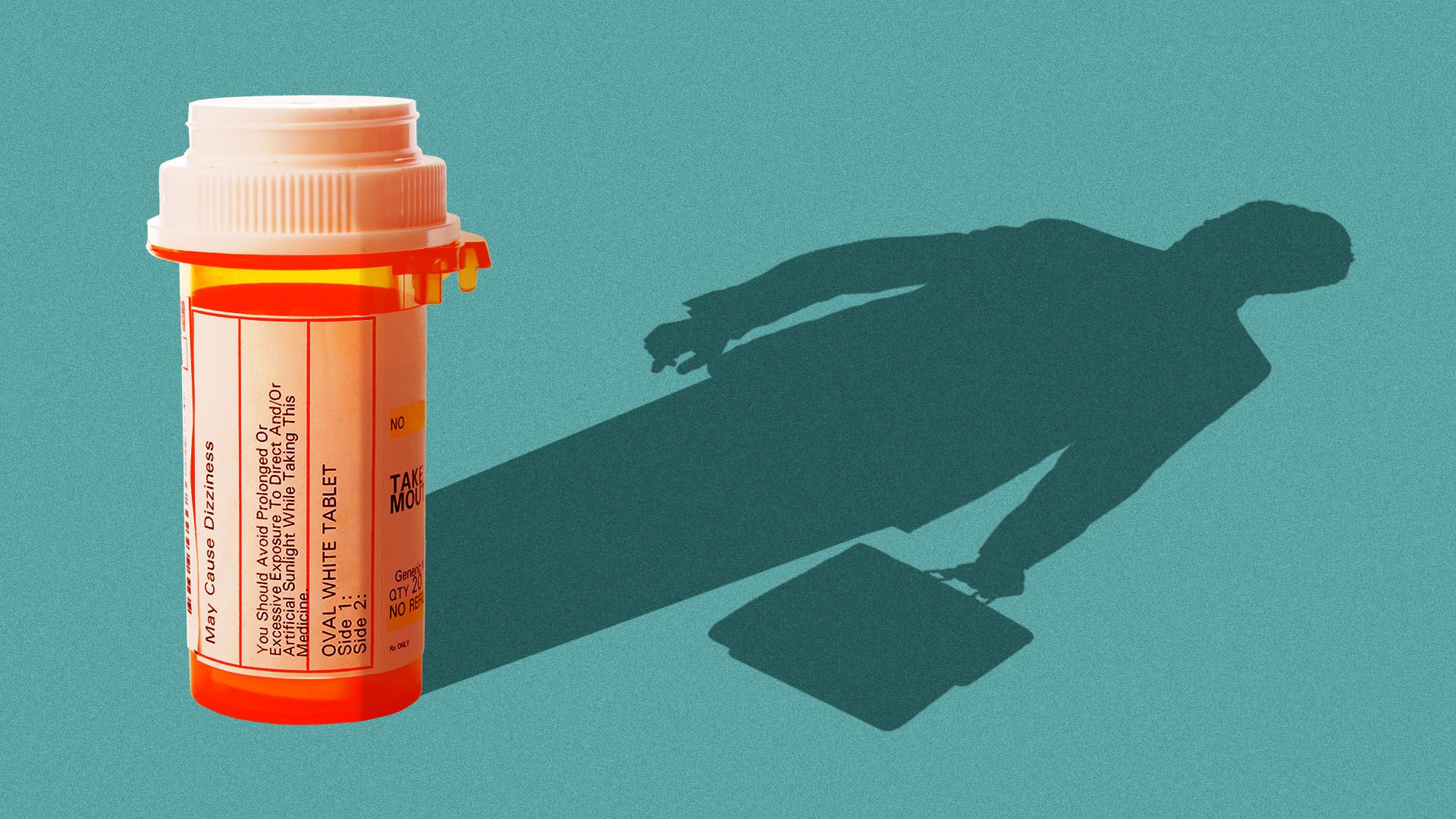
Illustration of a pill bottle casting a shadow of a businessman

Employers are the linchpin of the U.S. health care system. But they don’t always act like it.

The big picture: Employers play a minor role in the political debate over health care costs, but they have a lot on the line — and a lot more political muscle than they’re choosing to flex. An increasingly bipartisan cadre of policy experts is trying to tell them that staying on the sidelines is both counterproductive and unsustainable.

Collectively, private-sector employers are one of the biggest and most politically powerful stakeholder groups in the health care debate. They cover more people than any other source, and account for about 20% of all health care spending — almost $700 billion in 2017.

  • You would think that employers have a ton to gain by engaging in these discussions” around cost, said Dan Mendelson, the founder of the consulting firm Avalere Health. But they have consistently “failed to realize those expectations.”

The catch: Even though businesses are the core of the health care system, health care typically isn’t the core of what they do. They have similar structural interests, but they’re not necessarily organized around those interests.

  • For years, businesses have responded to rising health care costs primarily by shifting more of those costs onto their workers, through higher deductibles and other cost-sharing. The average deductible is now 212% higher than it was in 2008.
  • If employers ever reach the conclusion that they’ve taken this kind of cost-shifting as far as it can go, they could be powerful voices in the political debate over more aggressive cost-control measures — and they do want to control costs. But for now, they’re still on the sidelines.
  • “The frustration is definitely rising, but I would be hesitant to predict a breaking point,” Mendelson said. “It would be great if they were more engaged, but at the same time it’s rational that they are trying to reduce their exposure.”

There are exceptions. Walmart, for example, has undertaken an especially aggressive effort to overhaul its health benefits, even ditching traditional insurers and bargaining directly with health systems that have reputations for high-quality care.

  • Then there’s Haven, the joint effort from Amazon, Berkshire Hathaway and JPMorgan Chase. But it’s still not clear whether that project will try to affect systemwide change, or simply a better deal for its many employees, more similar to Walmart’s direct-purchasing goals. Those tools are only available to the largest companies.

Most employers still rely on their insurers to negotiate the best prices, preferring to stay out the weeds themselves. But insurers are becoming increasingly vocal about the difficulty of negotiating big discounts on hospital care, as hospitals consolidate, and for new prescription drugs that don’t have any competition.

  • Government-led efforts to directly control those costs run into fierce industry opposition. But if anything could help them break through politically, the most likely inflection point would likely be some kind of “enough is enough” moment from employers.
  • “I think you’re going to see more and more pressure, and even openness to public policy interventions that take advantage of negotiations” — for example, tying some private payment rates to Medicare’s, Democratic health care strategist Chris Jennings said.

It’s not just Democrats.

  • John Bardis, a former Trump administration health care official, said in a speech this week that employers need to take more aggressive stances toward cost containment.
  • Avik Roy, a conservative policy analyst who advised Mitt Romney’s presidential campaign on health care, has also endorsed more direct intervention. In the most concentrated, least competitive markets, the government should cap how much hospitals can charge private insurers, using Medicare rates as a baseline, he says.

The bottom line: If there’s ever going to be a turning point that would make cost containment more politically attainable, employers would probably need to be the ones who drive it.


How Pending Decision on Obamacare Could Upend 2020 Campaign

Supporters of expanding Medicare at a town hall meeting this summer in Forked River, N.J.  Health care registers as a top priority for voters in poll after poll.

A federal appeals court’s ruling on the Affordable Care Act could be a huge headache for the president and take Democrats’ focus off Medicare for all.

 A federal appeals court in New Orleans is preparing a ruling on the Affordable Care Act that could put the law’s future front and center in the presidential race, overwhelming the current Democratic debate over Medicare for all and reigniting the health care-driven worries that helped Democrats win back the House last year.

Three judges on the Fifth Circuit Court of Appeals are weighing whether to uphold a Texas judge’s ruling that the law’s requirement for most Americans to have health insurance is unconstitutional, and that the rest of the sprawling law cannot function without it. It is hard to imagine a thornier domestic issue for President Trump, whose administration not only refused to defend the law in the case filed by Texas and 19 other states but sided with the plaintiffs, asking the court to invalidate it.

A ruling against Barack Obama’s signature domestic achievement as president, which provides health coverage for about 24 million Americans, would almost certainly be stayed pending further appeal.

But if it comes in the next few weeks, it could create significant confusion during open enrollment for the Obamacare plans offered through the law’s online marketplaces. And it would open a huge vulnerability for Mr. Trump, whose health care platform largely consists of attacking as socialism Democratic plans to expand government health care, either through Medicare for all or a government-run health care option that would be offered through the Affordable Care Act’s marketplaces.

A ruling against the health law would probably reframe the Democratic conversation on health policy away from moving beyond the Affordable Care Act toward Republican efforts to take health care away. That message, a driving force in the 2018 midterm campaigns, could resonate more broadly than the party’s current arguments over expanding coverage.

“Democrats will do better talking about what Trump can take away than about their new policy visions,” said Chris Jennings, a longtime Democratic adviser on health care. “The Texas case may reframe discourse around health policy more toward that type of discussion, which of course Republicans will hate.”

The law’s most popular provision is protections for people with pre-existing medical conditions, but it includes much more, such as health insurance exchanges where people can buy private coverage with subsidies, an expansion of Medicaid and requirements for what insurance must cover, from emergency services to prescription drugs.

The appeals court panel could decide to partly reverse Judge Reed O’Connor of the Federal District Court in Fort Worth, affirming that the mandate that most Americans have health insurance is unconstitutional but rejecting Judge O’Connor’s ruling that the rest of the law cannot stand without it. That would cause barely a ripple, because the tax penalty for not having insurance was reduced to zero in the 2017 tax overhaul and the effects have been negligible.

But a ruling that upheld his decision in full, or even one that said the mandate and pre-existing condition protections had to go, would send shock waves through the health care and political systems. Either outcome would probably play into Democratic hands, especially in contests against vulnerable Republicans like Senators Martha McSally of Arizona, Cory Gardner of Colorado, Susan Collins of Maine and Thom Tillis of North Carolina.

Republicans are not conceding that possibility. Asked how a ruling against the law might affect members of the party seeking re-election, the spokesman for the House Republican campaign arm, Chris Pack, said: “Both Democrats and Republicans oppose Obamacare. The only difference is that Democrats want to replace it with socialized single-payer health care that makes private health insurance illegal.”

In fact, most Democrats would welcome a renewed debate over the Affordable Care Act. Many Democrats in Congress have resisted Medicare for all; instead they have sought to shore up the existing health law and trap Republicans on pre-existing conditions. Senator Chuck Schumer of New York, the Democratic leader, intends to force a floor vote as soon as next week on a resolution to overturn a Trump rule that lets states promote skimpy-but-inexpensive insurance plans that do not meet the law’s coverage standards.

The vote, Mr. Schumer said Tuesday on the Senate floor, “will present our Republican colleagues with a choice: whether to protect Americans with pre-existing conditions or not to protect them.”

Mr. Trump is in a box on health care, the issue that registers as a top priority for voters in poll after poll. He wants deals on ending surprise medical bills and lowering prescription drug prices, but the Senate and House are far apart on what drug price legislation they would agree to, and impeachment proceedings could derail any chance of bipartisan measures.

Public support for the health law remains high, driven in part by swing voters. And few Americans believe Mr. Trump will offer details of a new health care plan before the end of the year, according to a Kaiser poll released this week. They also doubt any plan he releases would offer “better care at lower costs,” as he has promised.

Alex M. Azar II, the secretary of health and human services, has repeatedly played down the importance of expanding coverage to the remaining uninsured; instead, he has said, Mr. Trump wants to improve the health care system for all Americans. His efforts thus far have mostly been directed at discrete groups of patients: a plan to reduce new H.I.V. infections by 75 percent over five years, for example, and another to move people with advanced kidney disease to home-based, instead of clinic-based, dialysis.

At oral arguments before the appeals court panel in July, a lawyer from the Justice Department indicated the Trump administration would seek a stay if the panel upheld Judge O’Connor’s decision. The losing side could appeal directly to the Supreme Court, increasing the chances of a ruling or at least oral arguments before that court in the final months of the presidential campaign. Alternatively, it could first ask for a hearing by the full appeals court, which would slow down the process.

The appeals panel could also send the case back to Judge O’Connor to reconsider, an option that August Flentje, a lawyer for the Justice Department, embraced during oral arguments. That would also draw out the court fight.

When the six-week open enrollment period starts next month, there will be more insurers offering plans through the Affordable Care Act markets. Premiums have stabilized, too, after a few years of price increases. But it will be a much lower-profile effort than in past years; the Trump administration has cut the budget for both advertising and enrollment help. As a result, a court ruling against the law would paralyze open enrollment if people assume there is no use buying or renewing coverage under a law that was ruled unconstitutional, and if no effort is mounted to counter that misunderstanding.

“It will require a doubling down, a dramatic increase in education — which is exactly the opposite of what this administration has done,” said Leslie Dach, executive director of Protect Our Care, a consumer advocacy group aligned with Democrats. “Someone will need to educate people that low-cost, quality health insurance is still available to them.”


The Case for the Public Option Over Medicare for All

https://hbr.org/2019/10/the-case-for-the-public-option-over-medicare-for-all?utm_source=The+Fiscal+Times&utm_campaign=27ee43ca78-EMAIL_CAMPAIGN_2019_10_16_09_52&utm_medium=email&utm_term=0_714147a9cf-27ee43ca78-390702969

How can the United States better control its health care costs and quality and still achieve universal coverage? The strongest choice is not Medicare for All, which would eliminate private insurance; it’s the public option, which would allow people to choose from Medicare or private insurers. But the public option can only succeed in controlling costs and quality and achieving universal coverage if it is implemented without the financing gimmicks that characterize Medicare.

In this article, we define the principles that can make the public option the legitimate and powerful competitor to private insurance firms and how this competition would expand access and improve cost and quality. But first we’ll clarify how extremely important the universal coverage is.

Universal Health Care Coverage: Life and Death Politics

Universal health care coverage is central to the physical, fiscal, and political well-being of a nation. Nowhere is that more evident than in the United States, the wealthiest nation in the world, which  still has 28.3 million people without health insurance. Americans have literally died, gone bankrupt, become disabled, and stayed in dead-end jobs that offer insurance. And yet, despite the lack of universal coverage, the United States spends more as a percentage of GDP than any other nation and its quality of care is erratic. Even with its world-class resources and medical technology, it ranks the lowest among developed nations in avoiding preventable deaths.

Universal coverage has a long history in other developed countries. It began as primarily employer-based health insurance coverage in the 1880s in Germany, morphed into government-backed universal coverage in England in 1948, marched across Western and Eastern Europe in the ensuing 25 years, and then into Latin America, Africa, Asia, and Canada, making the United States the exception among developed countries. Finally, after 65 years and 12 presidents, the United States passed the Affordable Care Act (ACA) in 2010 to significantly reduce the 45 million Americans who did not have insurance.

The passage of the legislation was hard fought and its results, nine years later, are mixed. On the plus side, the ACA insured more than 20 million additional Americans, lowering the percentage of the U.S. population that was uninsured from 17% in 2008 to 10% in 2016, and fewer people have suffered financial shocks since being insured through the ACA. Although the data are early, it may help make Americans healthier.

But there are negatives too. The ACA’s slogan, “if you like your plan or doctor, you can keep it,” proved to be false for many. And 14.7 million of the more than 20 million were insured through Medicaid, the U.S. health insurance for the indigent, which the important Oregon Health Insurance Experiment found had no effect on health status (but it did have a positive effect on self-reported mental health status). Health care remains unaffordable to millions: Premiums for insurance purchased on ACA-related exchanges rose by a staggering 26%, which helps explain why unsubsidized enrollment declined by 2.5 million people between 2017 and 2018. Those newly insured who were not covered by Medicaid faced ACA policies with substantial deductibles of at least $1,400 for an individual or $2,800 for a family. Finally, the small numbers of insurers that agreed to participate in the ACA had little incentive to compete on price, lower out-of-pocket costs, or by offering a broad choice of providers.

So what the United States needs, and Americans want, are lower premiums and out-of-pocket costs for health care, a sufficient number of competitive private insurers to honor the promise “if you like your plan or doctor, you can keep it,” and, as surveys reveal, no  exclusion for pre-existing conditions, no lifetime limits on benefits, and coverage for children up to age 26 on parents’ insurance.

The Medicare for All option, which would eliminate all private insurers, is clearly not the answer Americans want. They do not want to lose their private health insurance to a public bureaucracy or to pay its $3.2 trillion annual price tag in the form of higher taxes.

How the Public Option Can Cure the U.S. Health Care System

The aim of improving health care affordability, continued private insurance, and better access to quality providers can be achieved with the public option, but only if it is implemented with rates that reflect realistic underwriting and accurate and fair cost accounting.

The Medicare component of the public option is wildly popular: 85% of Medicare beneficiaries are satisfied with the federal program. And why not? Many doctors accept it, and the beneficiaries pay only a fraction of the cost, passing the rest onto future generations. The U.S. Congress, Democrats and Republicans alike, gives away benefits to users whose value substantially exceeds what they pay. Each beneficiary on average receives $310,000 more in benefits than they paid. The unpaid bills — $37 trillion at last count — have been kicked down the road to future generations in the form of bigger federal deficits. The Galen Institute reports that Medicare’s annual deficits are responsible for one-third of U.S. federal debt.

Yet, Medicare’s enormous scale confers genuine administrative and purchasing efficiencies. Medicare spends up to seven times less than private insurers on administrative costs. It also pays hospitals 40% less and providers 2 to 3.5 times less than private insurers do for the same services. Some contend that providers merely shift Medicare and Medicaid’s unpaid charges to private insurers, but that charge has been refuted. Rather, it is plausible that these payments appropriately help to squeeze out the one-third of health care expenditures that many experts view as sheer waste.

The public option can take advantage of these efficiencies but only if it is implemented without the financing gimmicks that have artificially lowered the costs of Medicare at the expense of our progeny and that would allow it to unfairly compete with private insurers.

To assure that all insurers play on a level playing field, public-financing principles must conform to those of private insurers. For one, the public option’s expenses must be financed by current users, not future generations. In other words, it should be pay as you go, just like private insurance. The public option’s accounting also should include all its expenses, such as the unfunded liability for Medicare employees’ post-retirement benefits, which are often buried in some fund other than Medicare’s. It must also account for the cost of the money that American taxpayers and debt holders have invested in building Medicare’s infrastructure, including its buildings, equipment, and workers. After all, private insurers incur costs to build the infrastructure that allows them to market their products; yet, under current accounting practices, Medicare gets these assets for free. To keep it real, expert accountants would routinely audit the public option’s financial statements to certify that its expenses are accurately stated, just as they do for private insurers.

Private insurers will be forced to compete with the public option’s lower costs through improved pricing, service, and quality. They can offer, for example, low-cost policies that transport enrollees from high-cost states to high-quality, low-cost ones such as Utah. Or they can emulate Ashley Furniture’s sending an enrollee to low-cost Mexico for an orthopedic procedure, replete with an American surgeon who was paid three times Medicare’s rate payments to the patient of $5,000 plus all her travel and out-of-pocket costs. (For political reasons, Medicare cannot emulate policies that favor certain states or send its enrollees out of the United States.) To help the private insurers to compete, new legislation should allow bundling of health, life, casualty, disability, and any other products, as well as the ability to sell across state lines. This enhanced competition among insurers and providers would lower costs, thereby increasing access to coverage and likely improving the quality of care.

We personally believe that the United States would be better off emulating three European countries — Germany, Switzerland, and The Netherlands — which are lauded for the quality of their universal coverage health care systems and yet spend far less on them than the United States. These countries are fiscally much healthier than nations with government-run health insurance systems akin to Medicare for All. But the reality is this model is politically untenable in the United States because it relies entirely on private insurers and would require eliminating highly popular Medicare and giving people vouchers for buying private-insurance policies.

Americans generally like both private insurance and Medicare but universally deplore their costs. Medicare for All eliminates private insurers and increases taxpayers’ burden. The public option keeps private insurers and controls health care costs.  However, it will require legislative and governmental administrative backbone and independent oversight to assure that the public option achieves these goals legitimately — without resorting to Medicare’s financing gimmicks.


Americans already pay a ‘gigantic’ hidden health-care tax, economists say

https://www.washingtonpost.com/business/2019/10/16/americans-already-pay-gigantic-hidden-health-care-tax-economists-say/?fbclid=IwAR1dG0uH1k6nZ8hC3UL7z8pDZtyTQa55NAWxM1Nni1uh7CLsD0sEaGjqie8

Image without a caption


The topic of Medicare-for-all was front and center — again — during Tuesday night’s Democratic presidential debate. Moderators were particularly interested in how its supporters, like Sen. Elizabeth Warren (D-Mass.), would pay for it. Specifically, would it require raising taxes on the middle class?

To some economists, the question is moot: Americans already pay a massive “tax” to fund health care, they say. It just happens to go to private insurance companies, rather than the federal government.

That’s the argument put forth in Emmanuel Saez and Gabriel Zucman’s new book,The Triumph of Injustice.” The economists at the University of California at Berkeley, who have advised Warren and Sen. Bernie Sanders (I-Vt.) on the creation of a wealth tax, call private health insurance costs “taxes in everything but name.” They are automatically deducted from workers’ paychecks. And they are essentially mandatory for families who don’t want to be crippled by long-term health-care costs or unexpected illnesses.

“Whether insurance premiums are paid to a public monopoly (the government) or to a private monopoly (the notoriously uncompetitive US private health insurance system) makes little difference,” the economists write. “Both payments reduce the take-home pay of workers; and although it’s always possible to evade taxes or to refuse to pay one thin dime to insurance companies, in practice almost everyone abides.”

The issue sparked a spirited discussion during Tuesday’s debate in Ohio for the 12 Democrats vying to take on President Trump in 2020, with Warren and Sanders’s plans getting blasted as being overly expensive and unworkable. Warren was specifically called out for refusing to say whether her proposal would result in higher taxes for the middle class or get into how it would eliminate employer-sponsored coverage for 160 million Americans. Although she vowed that her plan would not raise overall costs for the middle class, she notably evaded the specific issue of taxes.

Saez and Zucman have produced an estimate of just how much we’re already paying for health insurance and find it’s a little north of $1 trillion per year: “close to 6% of national income in 2019 — the equivalent of one-third of all federal income tax payments!” Health insurance costs raise the average effective tax rate on American labor from 29 percent to 37 percent, they said.

Thinking about health-care costs in this way is useful, Saez and Zucman write, because it allows for better tax comparisons between the United States and other wealthy countries, most of which fund health care via their tax codes. “Americans on average keep about the same fraction of their pretax income as their European brethren,” they write.

One of the key uncertainties about transitioning to a Medicare-for-all plan like the ones proposed by Warren and Sanders is whether doing so would raise or lower total health-care costs. Preliminary estimates have so far yielded wildly divergent outcomes, in part, because the financing specifics behind various candidates’ plans are largely still up in the air. How the change would affect the wallet of the typical middle-class tax payer relative to other groups also remains an open question.

But the Saez and Zucman data underscore that Americans already are paying a large health-care levy that is for all intents and purposes mandatory. If you consider health insurance costs as a tax on labor, as they do, it means the extremely rich, who derive most of their income from capital, are carrying a disproportionately light share of the total health cost load.