About 8,000 Marshfield (Wis.) Clinic Health System employees have requested black ID badge reels to indicate they are fully vaccinated, the health system told Becker’s Aug. 11.
The nine-hospital health system, which has more than 12,000 employees, started offering the black reels in July. Many Marshfield employees are already required to wear white reels. However, the new black reels are voluntary. Employees who have them may meet in person, but must be masked, if all meeting attendees are vaccinated, the health system said.
“We all look forward to having the opportunity to interact with co-workers outside of the virtual world,” said health system spokesperson Jeff Starck. “The badge reels are a way for more personal interaction and create a sense of normalcy for many employees during what has been a challenging, mostly virtual work environment. The reaction has been overwhelmingly positive.”
Mr. Starck said that some employees may not have not asked for the new reels because they use clips or other devices to display their name badges. Employees who work off-site and don’t attend in-person meetings may not have requested them since they haven’t needed them, and some employees who are vaccinated simply may not want to identify themselves, he speculated.
Marshfield Clinic announced Aug. 4 that it would require employees to become fully vaccinated for COVID-19 by Nov. 15.
As of Aug. 11, about 72 percent of employees are vaccinated, although the health system said that number will rise as it receives proof of vaccination from employees who were inoculated outside the health system.
The delta variant has overtaken the U.S. in a matter of weeks as it spreads around the world in what President Biden’s chief medical adviser Anthony Fauci called a “global outbreak” of the strain.
The highly contagious variant of COVID-19 is considered at least two times more contagious than the previously dominant alpha strain, and experts say the increased transmissibility has likely fueled the surge in COVID-19 cases, hospitalizations and deaths nationwide.
But much is still unknown about delta as scientists scramble to better understand the strain.
Here’s what we know about the delta strain and how it blunted earlier momentum in the fight against the coronavirus.
Delta is more transmissible than previous COVID-19 strains
Delta’s contagiousness is considered key to its domination, having spread to at least 117 countries after first being detected in India. Like other viruses, COVID-19 is evolving, particularly through unplanned mutations.
A study from the United Kingdom in May suggested the delta strain could be 60 percent more transmissible than the alpha variant, which was already more contagious than the original strain.
But experts are split on that figure, with some saying delta could be more transmissible and others saying it could be less.
“You don’t necessarily want to attribute that all to the virus. You know, a lot of it may reflect the people as well,” said David Dowdy, an associate professor of epidemiology at the Johns Hopkins Bloomberg School of Public Health.
Researchers aren’t certain about what makes the delta variant more transmissible, but there are some clues.
Michael Farzan, head of the Department of Immunology and Microbiology at Scripps Research, said one of the variant’s advantages is that it can more strongly attach to a certain receptor when spreading in the body.
“This is one of the reasons why the virus … in a person gets made at a higher level, meaning that there’s a lot more being spit out or coughed out, meaning that it’s more likely to hit the next person,” he said.
The Centers for Disease Control and Prevention (CDC) has its own figures illustrating how the strain became so prevalent this summer. The agency’s latest projection is that 97.4 percent of all coronavirus cases come from all the different lineages of the delta variant, as of the week ending last weekend.
That marks an astronomical increase from the 1.6 percent estimated at the beginning of May and the 14.1 percent from the beginning of June.
Most people infected with COVID-19 at this point won’t know for sure whether they contracted the delta strain since available testing doesn’t make the distinction between strains — it only shows whether the virus itself is present.
It has a higher magnitude of viral loads
Health experts are examining the delta variant’s viral load, the measure of how much virus a person carries and can potentially transmit, compared to previous COVID-19 strains.
A study from China suggested that the strain’s viral load could be more than 1,000 times higher than the original strain, which Fauci on Thursday said “is a mechanistic reason why you have such a tremendous increase in transmissibility.”
Basically a higher viral load can make it more likely that an infected person can “shed” the virus, allowing someone nearby to contract it.
“If a little droplet that you sent out, it has more particles and that means it’s more likely to infect the next person over and it’s more likely to infect the next person over more times,” Farzan said.
Dowdy of Johns Hopkins cautioned that other variables, including people’s behavior, may be influencing how scientists understand delta’s viral load. With more people relaxing their COVID-19 precautions and interacting with others indoors, those same people could contract more of the virus than they might otherwise.
A study of a Massachusetts outbreak indicated that delta led to fully vaccinated people having a similar viral load compared to the unvaccinated, sparking the CDC to update its mask guidance late last month.
The outbreak on Cape Cod, where nearly three-quarters of confirmed cases were among fully vaccinated people, suggested that vaccinated people could potentially transmit and spread the delta variant. But researchers said at the time that microbiological studies would be needed to confirm whether vaccinated individuals can transmit the strain.
Vaccines are still effective against delta
Studies have found that at least five vaccines, including all three used in the U.S., are effective against the delta variant in lab and real-world settings, Fauci said on Thursday.
It was previously unclear whether the Johnson & Johnson vaccine, which requires only one dose instead of two, was equally effective. But a study released last week found the immune response lasted at least eight months, resulting in the first real-world data for the vaccine, Fauci said.
Recent studies have indicated that vaccines may see a very slight dip in effectiveness against symptomatic versions of the coronavirus caused by the delta variant. The COVID-19 vaccines, like any other, are also not perfect at preventing all delta infection and illness.
But scientists agree that studies have demonstrated that the vaccinated population is less likely to get infected and much less likely to be hospitalized or die from the delta variant than the unvaccinated.
“The only reason our case numbers are lower now than they were back in December is because half of our population has been fully vaccinated,” Dowdy said.
Still more to learn
Experts acknowledge there is much more to learn about the delta variant.
“A big thing is we still don’t know how much of what we’re seeing is due to the virus versus due to behavior,” Dowdy said. “That makes a big difference because things that are due to the virus, we can’t really change as a society.”
Although there’s a growing number of studies, not all scientists are certain that the variant itself necessarily causes more serious illness among the unvaccinated, leading to more hospitalizations and deaths. It’s also unclear whether the strain is sparking more severe illness among children as pediatric hospital admissions have picked up.
Additionally, scientists have more analysis to do on under-researched mutations that may give the virus more of an advantage, Farzan said.
Just a month ago, even as signs of a fourth wave of COVID-19 infections in the U.S. were blossoming in the lower Midwest, the memory of a long, miserable winter kept us warm. Even places with burgeoning case rates were far below their catastrophic peaks over the holidays, when a combination of cold weather and defiant travelers contributed to a third wave in infections and deaths that drowned out the previous two spikes in April and July of 2020.
This is regrettably no longer the case. In four states—Hawaii, Louisiana, Mississippi and Florida—the current number of daily new COVID-19 infections, averaged across seven days, has surpassed that winter peak, even with a substantial percentage of the population having received a complete dosage of the COVID-19 vaccine (though not nearly as many as public officials would prefer).
Hawaii is something of an anomaly, as its winter peak was not nearly as high as in colder, more accessible regions. But several other states threaten to join this quartet in the near future. Oregon’s daily rate of new infections is at 36.5 per 100,000 residents, or 99% of the peak value on Dec. 3, 2020. Nationwide, the rate is 37.7, just under 50% of the winter peak of 76.5.
What is perhaps most sobering about this surge is that COVID-19-related deaths, which typically lag behind case surges by about two weeks, are starting to rise again. No state has yet surpassed the winter peak in deaths, but at 65%, Louisiana very well may. That figure is still 15% nationwide, well below the Jan. 13, 2021 peak of 1.04 fatalities per 100,000 people. It is currently at 0.16.
When it comes to the pandemic, no one wants to sound like Chicken Little. The sky might not be falling. But neither is the national case rate, or the number of people dying.
Dr. Jesse O’Shea, an infectious disease physician, posted this x-ray showing the difference between two of his patients; one with and one without the vaccination. Very telling and compelling visual, and we wanted to share.
To follow his page, please visit: https://www.instagram.com/jesseosheamd“A Story of Two Chest X-Rays. One patient with a vaccine and one patient without. Version 2—for the crowd that wants specifics without violating patient privacy (these are published cases).
The top picture is a 47-year-old man who received Pfizer vaccine (1) and developed COVID19 2 weeks after. He was overweight (BMI = 29), but without any known comorbidities. He had runny nose, mild body aches, mild cough. His chest X ray is relatively normal.
The bottom picture is a 50-year-old active female patient without obesity and not on medications. Her chest X-ray shows diffuse opacities, consolidations in both lungs with lung damage (all the fluffy white) and a pattern that looks like the worst feared complication of COVID19—acute respiratory distress syndrome (ARDS). She needed intubation, mechanical ventilation, and ECMO (extra-corporal membrane oxygenation) – the most life support we can offer.
The mRNA vaccines are effective at preventing severe disease and death— even with the Delta variant.
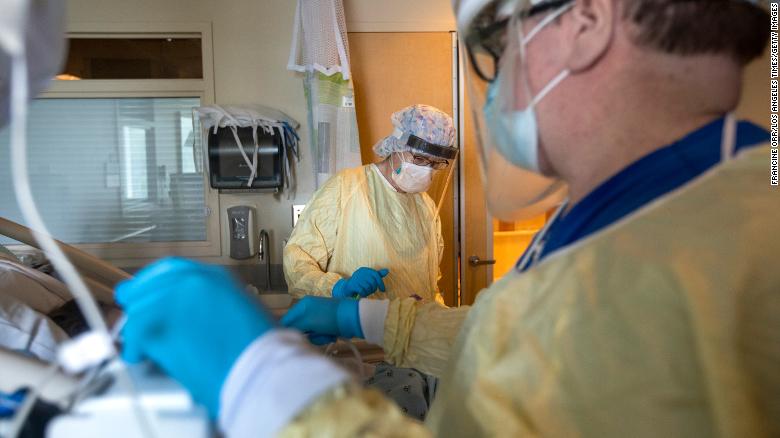
Our ICUs are starting to fill up with unvaccinated COVID19 patients again.
“To my fellow healthcare workers, keep your head up!”
With vaccine mandates on the rise among healthcare organizations, including many of the health systems we work with, we’ve begun to hear a new argument in favor of getting staff vaccinated—one that weighs against the worry that mandates will drive scarce clinical workers away.
With staffing already stretched, some systems have been concerned that implementing mandates could worsen shortages and force an increase in the use of costly agency labor. But, some executives are now telling us, so could not vaccinating staff. As the highly contagious Delta variant continues to sweep through unvaccinated populations, clinical workers who haven’t gotten their shots are especially susceptible to contracting the virus.
That’s driven a sharp increase in unvaccinated nurses and other workers calling out sick with COVID symptoms, which has made a difficult staffing situation even worse.
Some of the high-profile reports of hospitals running out of beds in the face of the Delta variant are actually driven by running out of staff to keep those beds in use—making it even more critical to ensure that frontline workers are protected against the virus.
As a growing number of hospitals and other care facilities mandate that their workers get vaccinated, we’d hope this unwelcome pressure on an already stretched workforce begins to wane.
With US COVID case counts hitting levels not seen since February, hospitalizations climbing rapidly in many states—topping the number seen nationally during last summer’s surge—and mortality figures beginning to edge worrisomely upward, it’s increasingly clear that talk of a “hot vax summer” was premature at best.
While this week the nation crested President Biden’s July 4th goal of 70 percent of Americans getting at least one dose of the vaccine, attention has now turned in earnest to the need to dramatically accelerate vaccinations the face of the highly contagious Delta variant.
Of particular concern: a report from the Centers for Disease Control and Prevention (CDC) suggesting that vaccinated people who become infected with the variant may be able to spread the disease at a greater rate than previously thought.
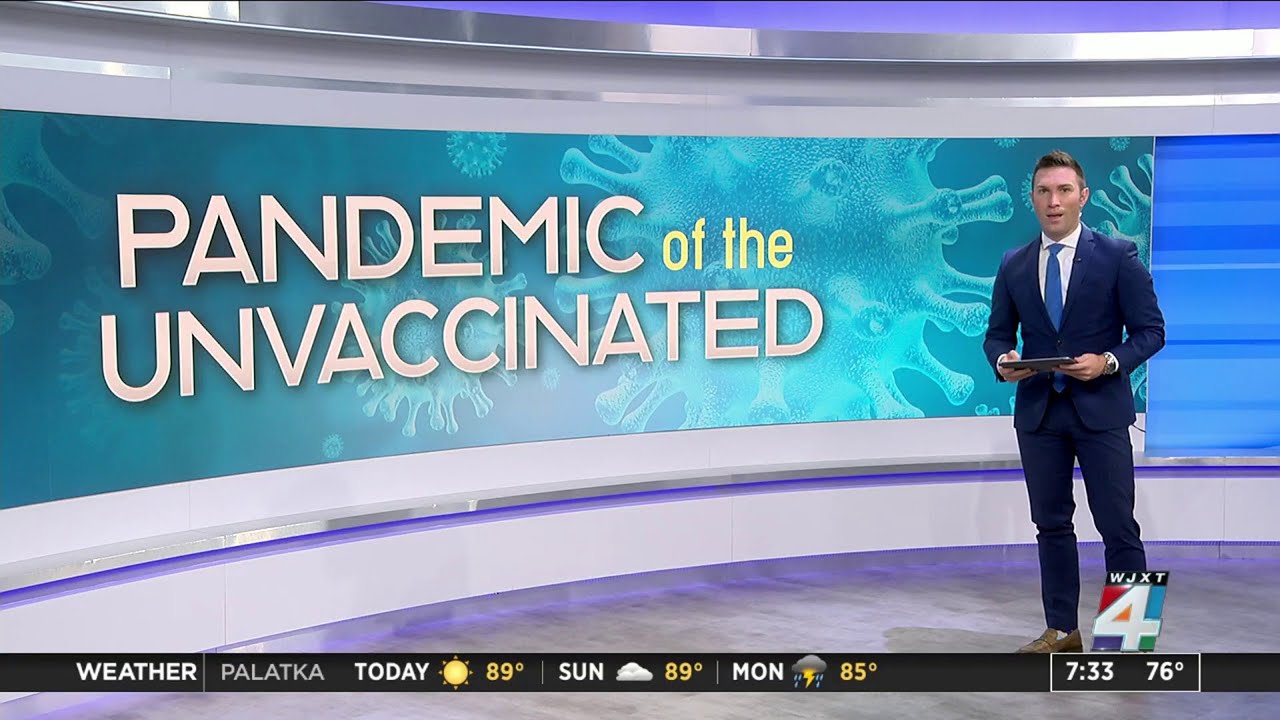
Although it’s clear that we’re largely experiencing a “pandemic of the unvaccinated” at this point, it wasn’t reassuring to learn that the CDC has been citing pre-Delta data (from January to July) on hospitalizations to bolster its reassurances to vaccinated Americans about the low numbers of “breakthrough” cases in hospitals, nor to hear (as we have, anecdotally) from hospital leaders that vaccinated patients now account for 15 percent of COVID admissions.
Attention has rapidly turned to the need for booster shots, with the Food and Drug Administration (FDA) reported to be readying a plan for early September, focused on the over-65 population and those whose immune systems are compromised. Already, Zuckerberg San Francisco General Hospital has begun supplemental mRNA boosters for those who received the one-dose Johnson & Johnson shot earlier this year.
Meanwhile, in an attempt to reassure those still harboring concerns about getting an “experimental” vaccine, the FDA is fast-tracking its full approval process for Pfizer’s vaccine, which can’t come soon enough.
The ticking clock: students of all ages, vaccinated or otherwise, return to school in less than a month. Will we be ready?
Moderna said Thursday that it expects a third dose of its coronavirus vaccine will be necessary before the winter, citing that protection from the shot will fade over time, The Hill reports.
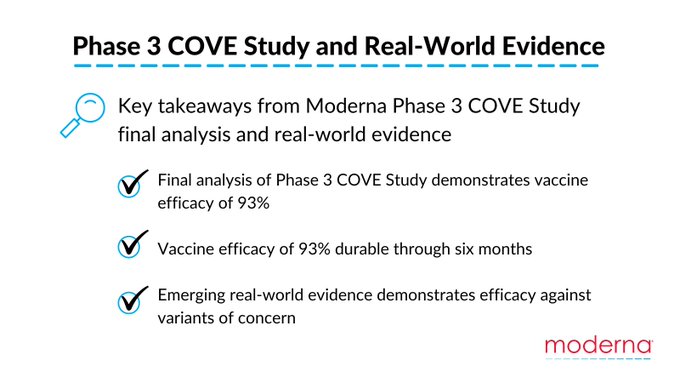
The biotech firm confirmed that its vaccine maintained 93% efficacy six months after the second dose but said that a booster shot will likely still be needed before the winter.
“We are pleased that our COVID-19 vaccine is showing durable efficacy of 93% through six months but recognize that the Delta variant is a significant new threat, so we must remain vigilant,” Moderna CEO Stephane Bancel said in a statement.
“Given this intersection, we believe dose 3 booster will likely be necessary prior to the winter season,” the company said.
The 93% efficacy after six months announced by Moderna is a promising sign and compares to the 84% efficacy reported by the Pfizer vaccine.
While there is strong data for six months, the company warned that the rise of the delta variant will cause an “increase of breakthrough infections in vaccinated individuals.”
Moderna: “you might need a booster sh—“ Me: signed in online, waiting outside the Rite Aid at 7am with my sleeve rolled up
More than 99.99% of people fully vaccinated against Covid-19 have not had a breakthrough case resulting in hospitalization or death, according to the latest data from the US Centers for Disease Control and Prevention.The data highlights what leading health experts across the country have highlighted for months: Covid-19 vaccines are very effective at preventing serious illness and death from Covid-19 and are the country’s best shot at slowing the pandemic down and avoiding further suffering.The CDC reported 6,587 Covid-19 breakthrough cases as of July 26, including 6,239 hospitalizations and 1,263 deaths. At that time, more than 163 million people in the United States were fully vaccinated against Covid-19.
Divide those severe breakthrough cases by the total fully vaccinated population for the result: less than 0.004% of fully vaccinated people had a breakthrough case that led to hospitalization and less than 0.001% of fully vaccinated people died from a breakthrough Covid-19 case.
Most of the breakthrough cases — about 74% — occurred among adults 65 or older.
Since May, the CDC has focused on investigating only hospitalized or fatal Covid-19 cases among people who have been fully vaccinated. The agency says the data relies on “passive and voluntary reporting” and is a “snapshot” to “help identify patterns and look for signals among vaccine breakthrough cases.”
“To date, no unexpected patterns have been identified in the case demographics or vaccine characteristics among people with reported vaccine breakthrough infections,” according to the CDC.
The agency shared a study this week that showed the Delta variant produced similar amounts of virus in vaccinated and unvaccinated people if they get infected. Experts continue to say that vaccination makes it less likely you’ll catch Covid-19 in the first place. But for those who do, the findings suggest they could have a similar tendency to spread it as unvaccinated people. That study also convinced CDC leaders to update the agency’s mask guidance on Tuesday, recommending that fully vaccinated people also wear masks indoors when in areas with “substantial” and “high” Covid-19 transmission to prevent further spread of the Delta variant. Guidance for unvaccinated people remains to continue masking until they are fully vaccinated. Beyond severe cases, an analysis of official state data from the Kaiser Family Foundation showed that breakthrough cases of any kind are also extremely rare.vAbout half of states report data on Covid-19 breakthrough cases, and in each of those states, less than 1% of fully vaccinated people had a breakthrough infection, ranging from 0.01% in Connecticut to 0.9% in Oklahoma.
The KFF analysis also found that more than 90% of cases — and more than 95% of hospitalizations and deaths — have been among unvaccinated people. In most states, more than 98% of cases were among the unvaccinated.
Pace of vaccinations is going up
But experts say those vaccinated, while they may be able to transmit the virus, remain very well protected against getting seriously ill. Amid the latest surge of Covid-19 cases nationwide fueled by the Delta variant, local leaders across the US are reporting that the majority of new infections and hospitalizations are among unvaccinated people. The Delta variant is now so contagious, one former health official recently warned that people who are not protected — either through vaccination or previous infection — will likely get it. Amid concerns over the rising cases and the dangerous strain, the country has seen a steady rise in the pace of vaccinations in the past three weeks — and an even sharper increase in states that had been lagging the most, according to a CNN analysis of CDC data.
The seven-day average of new doses administered in the US is now 652,084, up 26% from three weeks ago. The difference is even more striking in several southern states: Alabama’s seven-day average of new doses administered is more than double what it was three weeks ago. The state has the lowest rate of its total population fully vaccinated in the US, at roughly 34%. Arkansas, with just 36% of its population fully vaccinated, has also seen its average daily rate of doses administered double in the last three weeks. Louisiana, which had by far the most new Covid-19 cases per capita last week and has only fully vaccinated 37% of its population, saw daily vaccination rates rise 111% compared to three weeks ago.


:no_upscale()/cdn.vox-cdn.com/uploads/chorus_image/image/69062792/icm_fullxfull.336535675_95ew78665csgwwwo8wo4.0.jpg)






 HENRY KOTULA