A new way to visualize the surge in Covid-19 cases in the U.S.

The month of July has seen Covid-19 cases in the United States increase at the fastest pace since last winter, marking the start of the latest wave of infections to afflict the nation. A new STAT analysis of Covid-19 case data reveals this new wave is already outpacing the spring and summer waves of 2020.

There are many metrics that governments, scientists, and media outlets have used to try and reckon with the Covid-19 pandemic. One of the most popular ways of visualizing Covid data has been to track the weekly average of new cases. This is pictured below.

Chart showing new Covid-19 Cases Reported in the U.S.
J. EMORY PARKER/STAT

The number represented by the line could be thought of as the velocity of cases in the U.S. It tells us how fast case counts are increasing or decreasing and does a good job of showing us the magnitude of each wave of cases.

The chart, however, fails to show the rate of acceleration of cases. This is the rate at which the number of new cases is speeding up or slowing down.

As an analogy, a car’s velocity tells you how fast the car is going. Its acceleration tells you how quickly that car is speeding up.

Using Covid-19 case data compiled by the Center for Systems Science and Engineering at Johns Hopkins University and Our World in Data, combined with data from the Centers for Disease Control and Prevention, STAT was able to calculate the rate of weekly case acceleration, pictured below.

J. EMORY PARKER/STAT

In this chart, we see how quickly the weekly average of new cases is changing. When the values are positive, new case counts are increasing, and when the values are negative, new case counts are falling. Highlighted in red, we can see each previous wave’s intensity and duration.

Looking at the data this way is useful because the rate at which cases increase is a reasonable indicator of how intense that wave might be and how long it might last. For example, case acceleration in the U.S. reached a peak in November 2020, closer to the start of the nation’s deadly winter wave than to when cases reached their zenith in January of 2021.

This view of the data reveals that the United States is currently in the midst of a fifth wave of cases and that this new wave is growing faster than the first and second waves from spring and summer of 2020.

STAT also calculated case acceleration rates for each state and major territory in the U.S., revealing where cases are increasing the fastest.

Chart showing case acceleration ranked by state
J. EMORY PARKER/STAT

In the last two weeks, new case counts in Louisiana accelerated the fastest in the nation at an average rate of 444 cases per week per day (2.38 cases per 100,000 people per week per day). Only 36% of the state’s residents are vaccinated, making it among the least vaccinated in the country.

Chart showing covid cases per day in LA
J. EMORY PARKER
Chart showing case acceleration is LA
J. EMORY PARKER/STAT

By looking at the state’s case acceleration rate, we can see that cases in Louisiana are currently increasing faster than they did at the start of last winter’s wave.

Likewise, in the state of Florida, the case acceleration rate has outpaced that state’s 2020 summer wave.

Chart showing new covid cases in Florida
J. EMORY PARKER/STAT
Chart showing case acceleration in Florida
J. EMORY PARKER/STAT

In Florida, about 48% of residents are fully vaccinated against Covid-19.

Cases are increasing in nearly every region of the country, but they are not increasing at the same rate everywhere. Vaccination rates likely help explain these variations.

The five states where cases are accelerating the fastest all have vaccination rates below the national average. But consider the state of Massachusetts, where about 63% of the population is fully vaccinated.

The New York Times’ Covid Dashboard reports the state has an alarming 351% increase in cases over the last 14 days, the highest such percentage change in the nation. Looking at Massachusetts’ case acceleration paints a different picture.

Chart showing new covid cases is Mass
J. EMORY PARKER/STAT
Chart showing case acceleration in Mass.
J. EMORY PARKER/STAT

While cases in Massachusetts are increasing, the rate at which case reports are accelerating is much lower than it has been for any of the state’s previous waves, and is below the national average for case acceleration.


A tidal wave of vaccine mandates

EP14: What Motivates You? The Carrot or the Stick? | Live and Lead for  Impact Podcast with Kirsten E Ross

State governments, private businesses and even part of the federal government are suddenly embracing mandatory coronavirus vaccinations for their employees.

Why it matters: Vaccine mandates have been relatively uncommon in the U.S. But with vaccination rates stagnating and the Delta variant driving yet another wave of cases, there’s been a new groundswell of support for such requirements.

Driving the news: Monday was a turning point.

  • The VA became the first federal agency to require its employees to be vaccinated.
  • More than 50 medical groups called for mandatory vaccinations of all health care workers, WaPo first reported.
  • California announced that state employees and health care workers must show proof of vaccination or get tested regularly.
  • New York City brought all municipal workers — including teachers and police officers — under a vaccine requirement that had previously only applied to health workers.
  • Even the SF Bar Owner Alliance hopped onboard, announcing that the 500 San Francisco bars it represents will require indoor customers to show proof of vaccination or a negative test.

The big picture: Vaccine requirements are also gaining steam internationally.

  • France has required health workers to get vaccinated. Members of the public must also have a vaccine or a negative test to enter most indoor venues.
  • Although the measure has sparked protests, it’s also encouraged millions of people to get vaccinated, per the NYT.

Yes, but: Many Republican-led states have preemptively prohibited vaccine requirements, at least in some settings.

The bottom line: Vaccine mandates have been unpopular in part because they’ll inevitably create a backlash.

  • But the vaccination effort seems to have run out of carrots to incentivize more people to get a shot, and with rates remaining as low as they are in light of a worsening domestic situation, resorting to sticks has clearly become a more attractive option.

Our personal “canary in the coal mine” for COVID risk

https://mailchi.mp/b5daf4456328/the-weekly-gist-july-23-2021?e=d1e747d2d8

The Canary in the Coal Mine

Here’s our personal bellwether for how the Delta variant is impacting health systems: we’ve had three different, in-person leadership retreats cancel across the course of the past week, due to COVID concerns. Three very different parts of the country, on both coasts and in the heartland.

Case counts are up, hospitalizations are up, and clinical leaders are (rightly) becoming more skittish about large, in-person meetings. As many have noted, this latest wave of infections is unevenly distributed across the country, primarily affecting the unvaccinated but also putting vaccinated people at risk of transmitting the virus or becoming ill.

As frequent business travelers who thrive on meeting face-to-face with our members, we had just begun to get comfortable being back out “on the road”—but now that’s changing, too. The recent cancellations are a good reminder that we’re still in a fluid situation in this pandemic, and that being flexible and adaptable will continue to be critical for the foreseeable future. (Thank goodness we’re not in the conference business—that’s got to be a nightmare right now.)

Just as we always check the weather forecast for places we’re traveling to, we’ve started checking the number of cases per 100,000 and the test positivity rate as well—over 10 per 100,000, or over 5 percent, and we’ll think twice about visiting.

And our masks have gone back on. We’ll hope to see you out there soon, but in the meantime—stay safe and get vaccinated!

Encouraging hospitals to implement vaccine mandates

https://mailchi.mp/b5daf4456328/the-weekly-gist-july-23-2021?e=d1e747d2d8

Bills to Block Mandatory Worker Vaccines Falter in the States | The Pew  Charitable Trusts

With the Delta variant now accounting for more than 83 percent of all new COVID cases in the US, daily new case counts more than quadrupling across the month of July, and hospitalizations—particularly in states with low vaccination rates—beginning to climb significantly, we appear to have entered a new and uncertain phase of the pandemic, now being dubbed a “pandemic of the unvaccinated”.

Welcome news, then, that this week the American Hospital Association (AHA) publicly encouraged its members to put in place vaccine mandates for their employees. While several large health systems have taken the lead in implementing vaccine mandates, including Trinity Health, the Livonia, MI-based Catholic system that operates hospitals across 22 states, Phoenix, AZ-based Banner Health, Houston Methodist in Texas, and the academic giant NewYork-Presbyterian, others have been more reticent to compel employees to get vaccinated, citing concerns over employee privacy and the potential for workforce backlash.

The New York Times reports that a quarter of all hospital employees remain unvaccinated nationwide, with many facilities reporting that more than half of their healthcare workers have not gotten the COVID vaccine. In our discussions with health system executives, one consideration frequently cited is the desire for full Food and Drug Administration (FDA) approval of the new vaccines before mandates are put in place.

In a CNN town hall meeting this week, President Biden suggested that approval could come as soon as the end of August, although other reports point to likely approval much later, potentially not until January of next year. Facing a new variant of the virus that is much more transmissible and possibly more virulent than earlier strains, hospitals—and their patients—can’t afford to wait that long. 

For safety’s sake, hospitals should quickly put in place vaccine mandates, with appropriate exceptions.

Trinity Health mandates COVID-19 vaccination for all 117,000 employees, business partners

https://www.fiercehealthcare.com/hospitals/trinity-health-mandates-covid-19-vaccination-for-all-117-000-employees-business-partners

Trinity Health is the latest—and now the largest—U.S. provider organization to roll out a COVID-19 vaccination requirement for all of its employees.

Announced Thursday and effective immediately, the nonprofit, Catholic healthcare system said the policy will extend across its entire workforce of more than 117,000 employees, including clinical staff, remote employees, contractors and “those conducting business in its healthcare facilities.”

Trinity said it will approve exemptions for religious or health reasons that are formally requested and documented. Others who don’t meet the criteria for exemption and fail to provide proof of vaccination “will face termination of employment,” according to the announcement.

Trinity said an estimated 75% of its employees have already received at least one dose of a COVID-19 vaccine, and it hopes the new policy will bring that number closer to 100%.

“Safety is one of our core values. We feel it is important that we take every step available to us to stop the spread and protect those around us—especially the most vulnerable in our communities who cannot be vaccinated including young children and the more than 10 million people who are immunocompromised,” Trinity Health President and CEO Mike Slubowski said in a statement.

“Over the last year, Trinity Health has counted our own colleagues and patients in the too-high coronavirus death toll. Now that we have a proven way to prevent COVID-19 deaths, we are not hesitating to do our part,” he said.

Livonia, Michigan-based Trinity operates 91 hospitals and 113 continuing care locations serving more than 30 million people across 22 states. The system reports $19.4 billion in annual operating revenues and is on track to top that number having recently reported $15.1 billion in operating revenues for the nine-month period between July 2020 and March 2021.  

Trinity said that most of its locations will be requiring employees to submit their proof of vaccination by Sept. 21. Should it be determined that COVID-19 vaccine boosters will be necessary down the line, the hospital said that it would similarly require employees to submit proof of their receipt “as needed.”

“The science has shown us that the COVID-19 vaccine is the single most effective tool in slowing, and even stopping, the spread of the virus,” Dan Roth, M.D., Trinity Health executive vice president and chief clinical officer, said in a statement. “As a Catholic Health Ministry—even if we work remotely or do not regularly encounter patients—we view ourselves as caregivers, and it’s important that we do everything we can to end the pandemic and save lives.”

Trinity is among the growing number of provider organizations taking a hard stance on employee COVID-19 vaccination. Among the larger of these to announce mandatory policies over the last few months are St. Louis-based MercyDetroit-based Henry Ford Health SystemSt. Louis-based SSM Health and the member hospitals of the Connecticut Hospital Association (PDF).

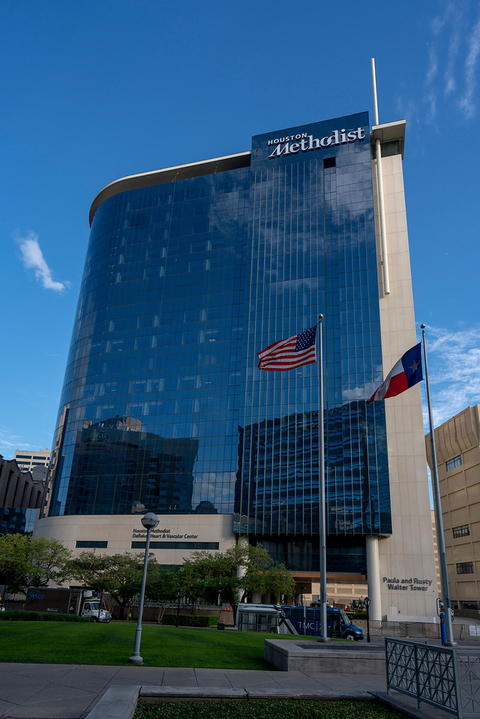
But perhaps the best known of the bunch has been Houston Methodist, which drew a line in the sand on June 8 and has since cut loose 153 employees who did not comply with the vaccine mandate.

That policy led to protests from the dissenting employees as well as a lawsuit that argued the system was “forcing its employees to be human ‘guinea pigs’ as a condition for continued employment.” The case was dismissed by a U.S. district judge and quickly appealed by the employees.

Other organizations such as Mass General Brigham have signaled support for a mandatory COVID-19 vaccination policy but said that they would not enforce the requirement until a COVID-19 vaccine receives formal approval from the FDA.

Earlier this year, the U.S. Equal Employment Opportunity Commission paved the way for employer-mandated COVID-19 vaccine policies with guidance permitting the requirements “so long as employers comply with the reasonable accommodation provisions of the [Americans with Disabilities Act] and Title VII of the Civil Rights Act of 1964 and other [Equal Employment Opportunity] considerations.”

117 Houston Methodist employees sue over COVID-19 vaccine mandate

Hospital employees sue over mandatory COVID-19 vaccine policy for workers |  BenefitsPRO

A group of 117 employees is suing Houston Methodist over its COVID-19 vaccination mandate for workers, ABC News reported May 29.

Houston Methodist, which comprises an academic medical center and six community hospitals, rolled out its mandatory vaccination policy March 31, setting an April 15 deadline for managers to receive at least one dose or get an exemption. More than 99 percent of the management team complied by the deadline. By June 7, all about 26,000 employees are required to be vaccinated. However, employees can receive medical or religious exemptions or a deferral if they are pregnant.

Now, 117 Houston Methodist employees have filed a lawsuit, claiming that the mandate is illegal.

The lawsuit, filed May 28 in Montgomery County District Court in Texas, alleges the hospital is “illegally requiring its employees to be injected with an experimental vaccine as a condition of employment,” according to ABC News. It specifically cites that the COVID-19 vaccines are authorized for emergency use by the FDA but have not been fully approved.

The employees allege that Houston Methodist is violating Texas public policy and the Nuremberg Code, a medical ethics code for human experimentation drafted in 1947 because of the Nuremberg trials at the end of World War II, according to the report.

The plaintiffs’ attorney, Jared Woodfill, told ABC News the health system’s mandate is meant “to promote its business and increase profits at the expense of other healthcare providers and their employees’ health. Defendants advertise to the public that they ‘require all employees and employed physicians to get a COVID-19 vaccine.’ More clearly, defendants’ employees are being forced to serve as human ‘guinea pigs’ to increase defendants’ profits.”

Houston Methodist said earlier this year that employees who do not comply with the vaccination mandate initially will have a discussion with their supervisor, then could face suspension followed by termination. The lawsuit seeks to prevent the health system from terminating unvaccinated workers.

Houston Methodist President and CEO Marc Boom, MD, shared a statement about the lawsuit with Becker’s. As of May 28, he said 99 percent of Houston Methodist’s employees have met the requirements for the vaccination mandate.

“We are extremely proud of our employees for doing the right thing and protecting our patients from this deadly virus,” Dr. Boom said. “As healthcare workers, it is our sacred obligation to do whatever we can to protect our patients, who are the most vulnerable in our community. It is our duty and our privilege.

“It is unfortunate that the few remaining employees who refuse to get vaccinated and put our patients first are responding in this way. It is legal for healthcare institutions to mandate vaccines, as we have done with the flu vaccine since 2009. The COVID-19 vaccines have proven through rigorous trials to be very safe and very effective and are not experimental. More than 165 million people in the U.S. alone have received vaccines against COVID-19, and this has resulted in the lowest numbers of infections in our country and in the Houston region in more than a year. We proudly stand by our employees and our mission to protect our patients.”

Houston Methodist implements mandatory COVID-19 vaccinations

Houston Methodist's new $700M tower sends a message in competitive market |  FierceHealthcare

Houston Methodist will make the COVID-19 vaccine mandatory for employees, with the first phase including managers and new hires, the health system said March 31. 

In an email, Marc Boom, MD, president and CEO, told managers new hires are already required to be vaccinated as a condition to joining Houston Methodist, and management is now also required to do the same.

“When we choose to be vaccinated against COVID-19, we are prioritizing safety by helping stop the spread of this deadly virus and keeping our patients, visitors and colleagues safe,” Dr. Boom wrote to managers. “As we move closer to announcing mandatory vaccinations for all employees, we need you to go first — to lead by example and show our employees how important getting vaccinated is.”

At Houston Methodist, 95 percent of management and all executives have already received at least one dose of a COVID-19 vaccine. Dr. Boom said managers who have not done this have until April 15 to receive at least one dose or get an approved exemption. Those who do not comply would first have a discussion with their supervisor, then could face suspension then termination. 

All 26,000 Houston Methodist employees and employed physicians soon will be required to receive at least one shot.

Overall, about 83 percent of the health system’s employees have been vaccinated.