Failure of Fiduciary Duty?

https://www.axios.com/newsletters/axios-vitals-0460cccc-499e-4609-80e6-745311cef1ad.html?utm_source=newsletter&utm_medium=email&utm_campaign=newsletter_axiosvitals&stream=top

Featured image

Sen. Bernie Sanders still may eke out a win in Iowa, and is the consensus front-runner in New Hampshire.

  • But most venture capitalists investing in America’s health care industry — the primary target of Bernie’s ire — have shoved their heads so deep in the sand that they’ve found water, Axios’ Dan Primack writes.

Why it matters: At some point, it could become a failure of fiduciary duty.

Health care accounts for over 20% of all U.S. venture activity.

  • A majority of that is in biotech/pharma, which last year saw 866 deals raise around $16.6 billion.
  • Investors view many of those deals as binary: Either the drug doesn’t work, resulting in a total write-off, or it does work and the financial sky’s the limit. Strike out or grand slam.
  • Sanders pledges to limit the upside, either by limiting drug prices under the current system or (if he gets Medicare for All) by establishing a single, centralized buyer.

Few health care VCs Dan spoke with are working on a Plan B in the event of their risk/reward models being made obsolete. Three main reasons:

  1. They don’t believe Sanders will win.
  2. Even if he does win, they don’t believe Sanders will get Medicare for All.
  3. If Sanders wins and implements his full plan, then it’s such a revolutionary shift that there’s not much health care VCs can do to counter it.

The bottom line: For now, health care venture’s strategy is see no Bernie, hear no Bernie. We’ll see how long that’s viable.


The Recurring Themes of Disease Outbreaks

The Recurring Themes of Disease Outbreaks

Image result for Disease Outbreaks"

With news this weekend that the coronavirus is poised to become a global pandemic and that China covered up early evidence of its spread, I was pleased to see an article from Ashley Fuoco Antonelli of the Advisory Board’s Daily Briefing revisiting a four-year-old post of mine. Kristina Daugirdas (my wife) and I had just taught a class on global outbreaks, and we pulled together a list of recurring patterns.

Fuoco Antonelli goes through that list and carefully shows how each of them maps pretty well onto what we’ve seen so far with the coronavirus. Here’s a taste:

Bagley’s 2016 list features several recurring themes that center on governments’ responses to disease outbreaks. For instance, three themes that he highlighted are:

  • “Governments are typically unprepared, disorganized, and resistant to taking steps necessary to contain infectious diseases, especially in their early phases”;
  • “Public officials are reluctant to publicize infections for fear of devastating the economy”; and
  • “Local, state, federal, and global governing bodies are apt to point fingers at one another over who’s responsible for taking action. Clear lines of authority are lacking.”

Each of those themes certainly holds true today. Media outlets have reported that China was slow to report the new coronavirus outbreak and implement measures to contain it. And some observers have questioned whether Chinese officials downplayed the outbreak’s severity.

For example, the New York Times‘s Li Yuan writes that, as the first cases of the virus emerged, officials “insisted that it was controlled and treatable,” and “the [Chinese] government took pains to keep up appearances.” For example, she notes, “[T]wo days before Wuhan told the world about the severity of the outbreak, it hosted a potluck banquet attended by more than 40,000 families so the city could apply for a world record for most dishes served at an event.”

Media reports also have highlighted complications and conflict between local and central officials in China regarding what information could be shared with the public. For instance, the Wall Street Journal‘s Josh Chin writes that Wuhan Mayor Zhou Xianwang has cited rules set by leaders in Beijing for “limit[ing] what he could disclose about the threat posed by the pathogen.”

As I told Fuoco Antonelli, there’s a sense that we’ve seen this movie before, and history offers us resources for thinking about how this is likely to play out. That may explain why some of the best writing on the virus has come from historians of infectious disease—including in particular my colleague Howard Markel, who has criticized the Chinese authorities for their heavy-handed quarantine.

I wanted to close by flagging Ashish Jha’s recent post at the Health Affairs Blog. Ashish takes an early look at the American response and closes with a look toward the future:

Here is the bottom line: we need to be doing more. This outbreak, under the best of circumstances, is going to cost countries around the world tens of billions of U.S. dollars and American businesses possibly many billions more. Yet we spend a fraction of that each year on vaccine platforms, research on viruses, and capacity-building for rapid vaccine production.  Firefighting is always more expensive than fire prevention. In a highly connected world, with climate change upon us, novel disease outbreaks that become global is the new normal.

Indeed, if history teaches us anything, it’s that outbreaks of novel infectious diseases have always been normal. Even so, we’re almost never ready. History teaches us that too.


Payers, providers urge CMS to scrap rule targeting supplemental Medicaid payments

https://www.healthcaredive.com/news/payers-providers-urge-cms-to-scrap-rule-targeting-supplemental-medicaid-pa/571573/

Image result for supplemental Medicaid payments"

Dive Brief:

  • Payer and provider lobbying groups are urging CMS to pull back a proposed rule that aims to clamp down on supplemental Medicaid payments in order to contain spending growth.
  • The American Hospital Association wants CMS to withdraw the rule, warning it would “severely curtail the availability of health care services to millions of individuals,” according to comments it submitted in response to the proposal.
  • The insurance lobby wants CMS to start with a “more limited initial step” and focus on gathering data so it can “fully assess the current landscape of state Medicaid funding and payment mechanisms,” America’s Health Insurance Plans said in its comments. The Association for Community Affiliated Plans also asked the agency to withdraw the rule.

Dive Insight:

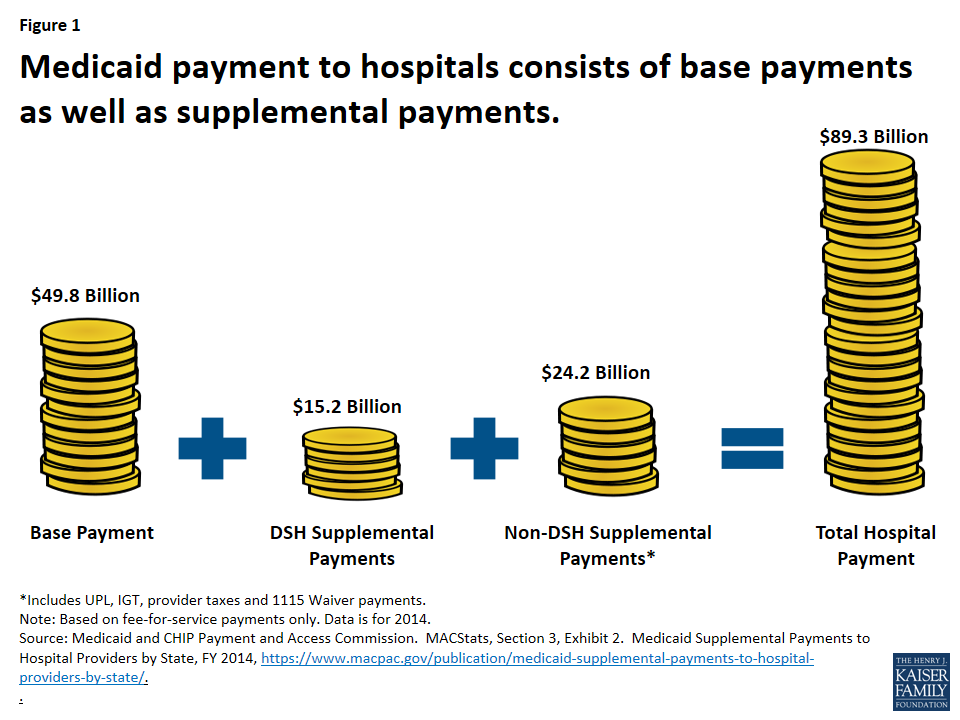
A sharp rise in these supplemental Medicaid payments caught the attention of CMS as spending has continued to increase and much of the growth has come from the federal share of the program, according to the agency.

These supplemental payments from the federal government to the states have risen from 9.4% of all other payments in fiscal year 2010 to 17.5% in 2017. This growth comes with “an urgent responsibility to ensure sound stewardship and oversight of the Medicaid program,” CMS said in November as it rolled out the proposed rule called Medicaid Fiscal Accountability Regulation.

A 2015 Government Accountability Office report found that states are increasingly relying on providers to help them finance the state’s portion of Medicaid funding. “A small number of providers supplied funds to the state for the nonfederal share, generally through intergovernmental fund transfers or provider taxes, and in turn received large supplemental payments, enabling states to obtain billions of dollars in additional federal matching funds,” according to the report.

CMS argues the proposed rule, which calls for states to provide more detailed information on these supplemental payments, including provider-specific payment data, would help beef up its oversight of the program.

AHA warned, however, the rule could cut Medicaid payments to hospitals by up to $31 billion annually, or nearly 17% of total hospital program payments. The group also argued the changes violate the Administrative Procedures Act and due process protections in the Constitution.

The Association of American Medical Colleges also opposed the rule, saying it would “limit the federal government’s congressionally mandated responsibility to the Medicaid program and could result in reductions in coverage, access, and quality care for the millions of vulnerable patients who rely on this critical program.”

CMS and the GAO report have noted a lack of data about these payments once they reach the states, making it hard to do any sort of analysis. In fact, GAO complained that the state of California did not have data on these payments for the agency to do an assessment.


Public Charge Rule Could Erode Enrollment in Insurance Coverage

Public Charge Rule Could Erode Enrollment in Insurance Coverage

Mother and baby at clinic with doctor. Baby is looking directly into the camera.

In a 5-4 vote reflecting the ideological split among the justices, the US Supreme Court on January 27 decided to allow the Trump administration to commence enforcement (PDF) of its “public charge” rule nationwide. Only Illinois, where a statewide injunction is currently in effect, will not begin enforcing the rule. The regulation was slated to take effect last October, but federal judges in California, Illinois, Maryland, New York, and Washington blocked its implementation after states and immigrant rights groups challenged its legality. Federal appeals courts later lifted all but New York’s nationwide injunction and Illinois’ statewide injunction. The Supreme Court has now “stayed,” or put on hold, New York’s injunction, allowing the rule to take effect while the litigation continues.Essential Coverage

The US Citizenship and Immigration Services agency said the new rule will become effective February 24.

The public charge rule sparked controversy because it “would expand the government’s ability to refuse green cards or visas for legal immigrants determined to be a ‘public charge,’ or dependent on public assistance,” Susannah Luthi explained in Politico. “Those using or likely to use Medicaid, food stamps, and other safety-net programs would face greater scrutiny from immigration officials.”

Experts have warned of a “chilling effect” among immigrant communities, meaning that even those who are not subject to the public charge rule could disenroll or avoid public benefits out of fear. The Institute for Community Health estimated that 195,000 to 455,000 California children in need of medical attention could leave Medi-Cal if the rule takes effect. Including adults, this estimate grows to between 317,000 and 741,000 Californians disenrolling from Medi-Cal, according to researchers from UCLA and UC Berkeley (PDF).

The chilling effect has been documented on a national scale. According to the Urban Institute, in 2018, the year when the Trump administration proposed expanding the public charge rule, about 14% of adults in immigrant families reported that fear prompted them or a family member not to apply for a public benefit program or to disenroll from one. Of the adults who experienced chilling effects, 42% said they or their family members did not participate in Medicaid or the Children’s Health Insurance Program.

Soon after the rule was finalized last year, Eisner Health, a community clinic in Los Angeles, started getting phone calls from patients enrolled in Medi-Cal and CalFresh who wanted to end their families’ coverage, Claudia Boyd-Barrett reported in California Health Report. Many of those patients were not yet permanent residents or were members of mixed immigration status families who feared being penalized for using public benefits.

New Rule Doesn’t Apply to Many Immigrants

It is important to note that many immigrants are not subject to the new public charge rule. “It is urgent that all of us working with immigrant communities — via government, legal aid, health care, and more — have accurate and accessible information for families,” Sandra R. Hernández, president and CEO of CHCF, wrote on Twitter.

Mark Ghaly, California Health and Human Services Agency secretary, released a statement emphasizing that immigrant families should learn their rights. “You can find a list of nonprofit organizations providing free legal immigration services on the California Department of Social Services (CDSS) website, here,” Ghaly said.

CDSS offers a list of legal services providers across California who can assist with public charge questions. Protecting Immigrant Families (a partnership of the National Immigration Law Center and The Center for Law and Social Policy) also has resources on the public charge rule.

Following the Supreme Court’s order to stay the nationwide injunction, California Attorney General Xavier Becerra reiterated his commitment to fighting the rule. “We are a nation of immigrants, so we will lean forward in the face of heartless attacks on working families,” Becerra said in a statement. “Together, we’ll continue our fight to stand up for the right of each and every person who calls the United States their home.”

The legal challenges to the public charge rule will continue to move forward in courts around the nation — including in California — the New York Times’s Adam Liptak reported.

Medicaid Block Grants Could Reduce Access for Many

The Trump administration has announced its plan to let states volunteer to convert a portion of their Medicaid funding into block grants. The program, which has been branded a “Healthy Adult Opportunity,” represents a radical change in financing for Medicaid. Medicaid programs, which are operated by states with significant federal funding and oversight, constitute the nation’s health insurance program for Americans with low incomes. Covering over 75 million people, or one in five Americans, Medicaid programs provide services to 83% of children from low-income families, 48% of children with special health care needs, and 45% of nonelderly adults with disabilities.

On January 30, the administrator of the US Centers for Medicare & Medicaid Services, Seema Verma, sent to state Medicaid directors a letter (PDF) about the new block grant program. Verma gave states “the possibility of trading away an entitlement program that expands and contracts depending on how many poor people need the government health coverage,” Amy Goldstein wrote in the Washington Post. “In exchange, for able-bodied adults in the program, states could apply to receive a fixed federal payment and freedom from many of the program’s rules.”

Additionally, participating states would be allowed to limit the health benefits and drugs offered by their Medicaid programs, Rachel Roubein and Dan Diamond reported for Politico. According to one official, patients with behavioral health needs or HIV would be protected under the new plan.

Criticism from Medicaid advocates was swift. Twenty-seven patient and consumer groups, including the American Lung Association, American Cancer Society, and National Alliance on Mental Illness, issued a statement expressing strong opposition to the new guidance. “Block grants and per capita caps will reduce access to quality and affordable health care for patients with serious and chronic health conditions and are therefore unacceptable to our organizations,” they wrote.

“Worst Medicaid Idea Ever”

Frederick Isasi, executive director of Families USA, said in a statement, “Having spent many years working with governors and Medicaid programs, block grants are possibly the worst Medicaid idea ever presented to states by a federal administration. They would allow the federal government to off-load shared Medicaid responsibility at the expense of deep cuts to state budgets, vital programs supported by states, and the people who rely on those programs.”

Joan Alker, executive director and a cofounder of Georgetown University’s Center for Children and Families, warned in a statement that “if states accept a fixed cap on federal funding to meet their health care needs, they may be able to get by in the short term, but they put the health of their citizens and future state budgets at serious risk down the road.”

The block grant program is unlikely to affect California, which has invested heavily in expanding Medi-Cal access and is not expected to apply to participate.

Nonetheless, the block grant proposal shows that the Trump administration continues to prioritize changes that weaken the foundation of the nation’s health care safety net and could dramatically reduce health coverage for millions of Americans with low incomes.


We’re going to our primary care doctors less

https://www.axios.com/newsletters/axios-vitals-ded63eb6-2431-48d0-a186-2f3b52417f2f.html?utm_source=newsletter&utm_medium=email&utm_campaign=newsletter_axiosvitals&stream=top

Image result for primary care physician"

Adults in the U.S. are visiting primary care doctors less often, according to a new study in the Annals of Internal Medicine, which could foreshadow worse health outcomes and higher costs.

By the numbers: The study focused on adults enrolled with a large commercial insurer.

  • Between 2008 and 2016, visits to primary care physicians declined by 24.2%, and nearly half of adults didn’t visit one in any given year by the end of the time frame.
  • Groups with the largest declines were young adults, adults without chronic conditions, and those living in the lowest-income areas.

Meanwhile, visits to alternative facilities like urgent care clinics increased by 46.9%.

The big picture: Primary care doctors are there to keep people healthy. The less often we go to them, the more likely we are to get or remain sick, which ultimately costs the health care system more money.