A new health system-employer partnership takes flight

https://mailchi.mp/192abb940510/the-weekly-gist-february-7-2020?e=d1e747d2d8

Image result for direct contracting healthcare american airlines

This week, Dallas, TX-based Baylor Scott & White Health (BSWH) announced a new relationship with American Airlines, creating a lower-cost, narrow-network health plan option for American’s 55,000 employees based in the Dallas-Ft. Worth region.

The new “DFW ConnectedCare” will provide employees access to over 5,000 doctors and 50 hospitals that are part of the Baylor Scott & White Quality Alliance (BSWQA), BSWH’s accountable care organization; participants will also have zero deductibles and receive priority access to network providers. The American Airlines contract builds on a decade of work to move as many of BSWH’s contracts to total cost-risk arrangements as possible, delivering cost savings for Medicare beneficiaries, the system’s own employees, and other DFW-area employers, including Dallas Area Rapid Transit, which re-upped its direct contract with the system this year.

Whereas most accountable care organizations have focused on the Medicare population, three-quarters of the estimated 815,000 covered lives BSWQA will manage this year are in the commercial sector. With growing frustration with high deductibles and other forms of employee cost sharing, large employers like American Airlines, General Motors and others appear to be open to novel network arrangements that offer lower costs and other benefits in exchange for reduced choice—and are willing to work with regional health system partners for a subset of their employee population.

Health systems have a window of opportunity to demonstrate that direct contract arrangements can generate sustainable cost savings and provide the levels of access and service required for a long-term relationship with large employers. But to truly change the commercial market, these arrangements must also be scalable across medium and small employers, who have much lower purchasing sophistication and risk tolerance in selecting health benefits.


The growth of private equity investment in physician practice

https://mailchi.mp/192abb940510/the-weekly-gist-february-7-2020?e=d1e747d2d8

Private equity (PE) investment in US healthcare has ballooned over the past decade—2018 and 2019 saw record numbers of deals, representing more than $100 billion in total value. As we show below, in 2018 just under a fifth of these transactions were in the physician practice space, with the largest number of deals in dermatology and ophthalmology.

While these two specialties remain active areas of PE investment, a growing number of recent deals have focused on women’s health, gastroenterology, and urology practices.

Across all these areas, PE firms see an opportunity to grow revenue from high-margin ancillary services, cash procedures, and retail products.

Physician groups are pursuing PE investment as an alternative to joining health systems or large payer-owned physician organizations to access capital and fund buyouts of legacy partners. Doctors’ heads are increasingly being turned by the current sky-high multiples PE firms are offering, often up to 10 or even 12 times EBITA.

Private equity roll-ups of physician practices are far from over. Recent activity suggests that the behavioral health market is heating up, as it remains very fragmented in a time of increasing consumer demand.

And we predict a rush for further investment in cardiology and orthopedic practices, as investors look to profit from the shift of lucrative joint and heart valve replacement procedures to outpatient facilities.


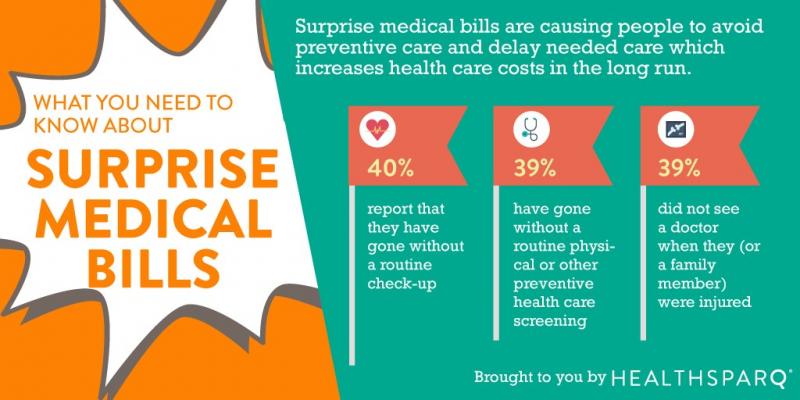
Bipartisan Ways and Means leaders unveil measure to stop surprise medical bills

https://thehill.com/policy/healthcare/481985-bipartisan-ways-and-means-leaders-unveil-measure-to-stop-surprise-medical?utm_source=&utm_medium=email&utm_campaign=27536

Image result for surprise medical bills

The bipartisan leaders of the House Ways and Means Committee on Friday released their legislation to protect patients from getting massive, surprise medical bills as congressional action on the subject intensifies.

The legislation is backed by the panel’s chairman, Rep. Richard Neal (D-Mass.), and its top Republican, Rep. Kevin Brady (Texas). It would protect patients from getting bills for thousands of dollars when they go to the emergency room and one of their doctors happens to be outside their insurance network.

Surprise billing is seen as a rare area of possible bipartisan action this year and has support from President Trump.

But the effort has been slowed by varying approaches and intense lobbying from doctor and hospital groups.

The Ways and Means bill is a rival approach to the bipartisan bill passed out of committee last year by the House Energy and Commerce Committee.

The divide between those two committees will have to be overcome for any bill to move forward.

Neal and Brady said in a statement Friday that their approach “differs” from others because “we create a more balanced negotiation process.”

“Our priority throughout the painstaking process of crafting our legislation has been to get the policy right for patients, and we firmly believe that we have done that,” Neal and Brady said. “We look forward to working with our Democratic and Republican colleagues in Congress, as well as the Administration, to advance this measure swiftly.”

The Ways and Means Committee is planning to vote on the legislation next week.

While all sides in the surprise billing fight agree the patient should be protected, the main dispute has been how much the insurer will pay the doctor once the patient is taken out of the middle. 

Doctors and hospitals have lobbied hard against the Energy and Commerce approach, which they fear would lead to damaging cuts to their payments. That approach sets the payment based on the median rate in that geographic area, with the option of going to arbitration for some high-cost bills.

The Ways and Means approach has generally been seen as more favorable to doctors and hospitals, but industry groups have not yet responded to the details on Friday morning.

The Ways and Means bill gives the decision on how much the insurer should pay the doctor to an outside arbiter, although that arbiter will have to consider the median rate usually paid for that service in making its decision.

The House Education and Labor Committee is also planning to vote on legislation next week, and released a bill on Friday that closely reflects the Energy and Commerce and Senate Health Committee legislation, isolating Ways and Means.

Shawn Gremminger, senior director of federal relations at the liberal health care advocacy group Families USA, said it is “disappointing” that Ways and Means is using an approach that will not lower health costs as much, but he said it is good the process is moving forward.

The Energy and Commerce leaders, along with leaders of the Senate Health Committee, who also back their bill, released a conciliatory statement on Friday about the Ways and Means bill.

“Protecting innocent patients has been our top goal throughout this effort, and we appreciate that the other two House committees share this priority,” said Reps. Frank Pallone Jr. (D-N.J.) and Greg Walden (R-Ore.) and Sens. Lamar Alexnader (R-Tenn.) and Patty Murray (D-Wash.). “We look forward to working together to deliver a bill to the president’s desk that protects patients and lowers health care costs for American consumers.”


The Supreme Court isn’t done with the ACA case yet. Here are the next steps.

https://www.healthcaredive.com/news/the-supreme-court-isnt-done-with-the-aca-case-yet-here-are-the-next-steps/570816/

The U.S. Supreme Court is scheduled to review the legal challenge to the Affordable Care Act on Feb. 21 to potentially weigh whether to take the case. However, legal expert Katie Keith from Georgetown University cautioned Healthcare Dive it’s common for the court to reschedule or relist cases for a later conference date.

Tuesday’s one-sentence order from the U.S. Supreme Court denying a request to fast-track the challenge to the Affordable Care Act is not the final word from the high court.

The justices will now decide whether to take up the legal case threatening to overturn the landmark law during their next term, which begins in October.

Essentially, the order returns the case to the typical review process as a group of blue states, led by California’s Democratic Attorney General Xavier Becerra, try to convince the Supreme Court it should hear the case at some point instead of letting it wind its way back through the lower courts.

“The court did not say we’re not reviewing this case at all,” MaryBeth Musumeci, an associate director at Kaiser Family Foundation and graduate of Harvard Law School, told Healthcare Dive.

The blue states sought to expedite the case, which would have resulted in a ruling before the presidential election in November. Some Democrats hoped that would pressure Republicans to come up with a replacement had the law been tossed, or more publicly defend efforts that would kill popular provisions like protections for pre-existing conditions.

The court refused to accelerate its review despite requests from hospitals, insurers, advocacy groups including AARP and a group of bipartisan economic scholars.

“It’s disappointing but it’s not altogether unsurprising. They typically don’t like to grant expedited review,” Katie Keith, a lawyer and health policy expert at Georgetown University​, told Healthcare Dive.

Other legal experts warned against reading too much into Tuesday’s order and what it may mean for the case going forward.

“Expediting was always unlikely. It’s a big ask for little purpose here. I wouldn’t read anything else into it,” Jonathan Adler, a law professor at Case Western Reserve University, told Healthcare Dive​.

Careful observers of the case should expect the justices to vote on whether to take it up by June at the latest, Keith said.

In the meantime, Tuesday’s order sets off another wave of briefs. First, the red states will try to convince the court of its position on whether the legal challenge should be heard in October. Expect that motion in the first few days of February, experts told Healthcare Dive.

Robert Henneke, the lawyer representing the individual plaintiffs, told Healthcare Dive his team will argue that the case is still premature for Supreme Court review. “The opinion from the Fifth Circuit was not a complete opinion,” Henneke said.

The appeals court in part affirmed a lower court’s decision, ruling that the individual mandate is unconstitutional because it can no longer be considered a tax. However, it sent the key question of whether the rest of the ACA can stand without the mandate back to the lower court for further analysis.

Becerra has argued that the lower court’s decision is wrong and, without a definitive ruling from the Supreme Court, the challenge only fuels doubt about the future of the ACA — credited with significantly reducing the ranks of the uninsured.

“The health and wellbeing of millions of our loved ones who rely on the ACA for healthcare is too important. We will do everything in our power to keep fighting for them,” Becerra said in a tweet following the order.

Nevertheless, Tuesday’s result likely thrusts the issue of the ACA back in the spotlight for another presidential campaign cycle.

Much of the healthcare debate among Democrats vying to take on President Donald Trump has revolved around a “Medicare for All” idea. One question now is, will Democrats shift to talk about rescuing the ACA, a law in place but remains in jeopardy?

The problem is the outcome is still uncertain, Stephanie Kennan, senior vice president of federal public affairs at McGuireWoods Consulting, told Healthcare Dive. However, it does give Democrats the opportunity to talk about what’s popular in the bill, noting protections for those with pre-existing conditions.

“It certainly gives them a springboard for them to talk about the things they could do to fix it,” Kennan said.

Despite Tuesday’s outcome, there will still be some Democratic contenders who will campaign for Medicare for All, Bill Jordan, chair of Alston and Bird’s healthcare litigation group, told Healthcare Dive. But this ruling gives Democrats another tool against Republicans, he said.

“As time has gone on, the Affordable Care Act has become more popular, not less popular,” Jordan said.

But he cautioned that anything can happen in the next election, which could entirely alter the political landscape and influence whether the case makes it back up to the Supreme Court if the justices pass this time.


Patients Caught In Crossfire Between Giant Hospital Chain, Large Insurer

Patients Caught In Crossfire Between Giant Hospital Chain, Large Insurer

After Zoe Friedland became pregnant with her first child, she was picky about choosing a doctor to guide her through delivery.

“With so many unpredictable things that can happen with a pregnancy, I wanted someone I could trust,” Friedland said. That person also had to be in the health insurance network of Cigna, the insurer that covers Friedland through her husband’s employer.

Friedland found an OB-GYN she liked, who told her that she delivered only at Sequoia Hospital in Redwood City, California, a part of San Francisco-based Dignity Health. Friedland and her husband, Bert Kaufman, live in Menlo Park, about 5 miles from the hospital, so that was not a problem for them — until Dec. 12.

That’s the day Friedland and Kaufman received a letter from Cigna informing them their care at Sequoia might not be covered after Jan. 1. The insurance company had not signed a contract for 2020 with the hospital operator, which meant Sequoia and many other Dignity medical facilities around the state would no longer be in Cigna’s network in the new year.

Suddenly, it looked as if having their first baby at Sequoia could cost Friedland and Kaufman tens of thousands of dollars.

“I was honestly shocked that this could even happen because it hadn’t entered my mind as a possibility,” Friedland said.

She and her husband are among an estimated 16,600 people caught in a financial dispute between two gigantic health care companies. Cigna is one of the largest health insurance companies in the nation, and Dignity Health has 31 hospitals in California, as well as seven in Arizona and three in Nevada. The contract fight affects Dignity’s California and Nevada hospitals, but not the ones in Arizona.

“The problem is price,” Cigna said in a statement just before the old contract expired on Dec. 31. “Dignity thinks that Cigna customers should pay substantially more than what is normal in the region, and we think that’s just wrong.”

Tammy Wilcox, a senior vice president at Dignity, said, “At a time when many nonprofit community hospitals are struggling, Cigna is making billions of dollars in profits each year. Yet Cigna is demanding that it pay local hospitals even less.”

In 2018, the most recent full year for which earnings data is available, Cigna generated operating income of $3.6 billion on revenue of approximately $48 billion. Dignity Health reported operating income of $529 million on revenue of $14.2 billion in its 2018 fiscal year.

It’s possible Cigna and Dignity can still reach an agreement. Both sides said they will keep trying, though no talks are scheduled.

Disagreements between insurers and health systems that leave patients stranded are a perennial problem in U.S. health care. Glenn Melnick, a professor of health economics at the University of Southern California, said such disputes, which are disruptive to consumers, are often settled.

Melnick believes Dignity is using an “all or nothing” strategy in contract negotiations, meaning either all its facilities are in the insurer’s network or none are.

“This allows them to increase their market power to get higher prices, which is not necessarily good for consumers,” Melnick said.

Dignity replied in an emailed statement: “We do not require payers to contract with all or none of Dignity Health’s providers. We do try to make sure patients have access to the full range of Dignity Health services and facilities in each of our communities.”

Dignity faces a number of legal and financial challenges while it works to implement a February 2019 merger with Englewood, Colorado-based Catholic Health Initiatives that created one of the nation’s largest Catholic hospital systems — known as CommonSpirit Health.

California Attorney General Xavier Becerra approved the deal with conditions, including that Dignity’s California hospitals spend $10 million in the first three years on services for people experiencing homelessness and offer free care to more low-income patients.

The requirement to treat more poor patients at no charge followed a period, from 2011 to 2016, in which Dignity’s charity care declined about 35% while its net income was $3.2 billion.

Last October, CommonSpirit announced an operating loss of $582 million on revenue of nearly $29 billion for the 2019 fiscal year, its first annual financial statement after the merger took effect. Much of the loss was due to merger-related costs and special charges.

The same month, Dignity completed a five-year “corporate integrity agreement” with the U.S. Office of the Inspector General following an investigation into how it billed the government for hospital inpatient stays. Dignity said it “fully complied” with the agreement.

Dignity is also defending itself in a class-action lawsuit alleging that it bills uninsured patients at grossly inflated rates even though it claims to provide “affordable” care at “the lowest possible cost.”

More recently, an appeals court judge ruled Dignity could not charge higher prices — often a lot higher than state-set rates — for treating enrollees of L.A. Care’s Medi-Cal health plan at its Northridge Hospital Medical Center.

Dignity disagreed with the court’s ruling in that case, saying that although the Northridge facility did not have a contract with L.A. Care, many of the health plan’s enrollees who initially sought emergency treatment there stayed in the hospital for additional care after they had been stabilized. The hospital “seeks appropriate reimbursement for providing this care,” Dignity said.

If Dignity does not reach an agreement with Cigna, its hospitals, outpatient surgery centers and medical groups in most of California will soon be out-of-network for many Cigna enrollees. In-network coverage for Open Access (OAP) and Preferred Provider (PPO) ended Feb. 1, and for HMO patients it is set to end April 1.

Peter Welch, president and general manager for Cigna in Northern California and the Pacific Northwest, said Cigna can provide “adequate access” to other hospitals and doctors.

Certain Cigna enrollees can apply to continue visiting Dignity facilities and doctors under California’s Continuity of Care law, enacted in 2014. Eligible enrollees include patients with chronic conditions, those already scheduled for pre-authorized services, people in need of emergency care and pregnant women in their third trimester.

Friedland and Kaufman applied, hoping she would be able to continue seeing her Dignity-affiliated OB-GYN at in-network rates.

On Jan. 22, less than a month from Friedland’s Feb. 15 due date, they received written confirmation that their request had been approved. They wouldn’t have to shop for a new doctor or face stiff medical bills after all.

Early Tuesday evening, Friedland gave birth to a baby girl, Eliza, who entered the world 11 days earlier than expected, weighing in at 7 pounds, 3 ounces.

“While the ordeal was stressful, and the communication fraught, we were happy to receive confirmation of continuity of care and that it ended in the best possible way — with the birth of our healthy baby daughter with the provider where we established care,” Kaufman said. “For the sake of those caught in the middle and now having to start relationships with new health care providers, we hope the two sides can come to an agreement.”


Latest boost for Medicare Advantage

https://www.axios.com/newsletters/axios-vitals-0460cccc-499e-4609-80e6-745311cef1ad.html?utm_source=newsletter&utm_medium=email&utm_campaign=newsletter_axiosvitals&stream=top

Image result for medicare advantage

The Trump administration yesterday announced more changes designed to make Medicare Advantage more appealing and to lower prescription drug costs for seniors.

Why it matters: Although the proposal mainly tinkers around the edges, it could have a meaningful impact on some seniors’ pocketbooks while furthering the administration’s commitment to Medicare Advantage, a cash cow for insurers.

Details: The proposal aims to create more transparency within Medicare’s prescription drug benefit, and to enhance price competition.

  • Beginning in 2022, plans would be required to give beneficiaries tools to compare the out-of-pocket costs of different drugs, which would allow patients to know their drug costs ahead of time and to shop around for the cheapest medications.
  • The proposal also aims to create more price competition among specialty drugs, which tend to be the most expensive drugs on the market.

It also would allow all seniors with end-stage renal disease to enroll in Medicare Advantage, beginning in 2021.

  • Medicare Advantage beneficiaries this year are gaining access to telehealth benefits that aren’t available to seniors enrolled in traditional fee-for-service Medicare, and the new proposal would build on these benefits.