Why Major Hospitals Are Losing Money By The Millions

https://www.forbes.com/sites/robertpearl/2017/11/07/hospitals-losing-millions/#67f501c67b50

Related image


A strange thing happened last year in some the nation’s most established hospitals and health systems. Hundreds of millions of dollars in income suddenly disappeared.

This article, part two of a series that began with a look at primary care disruption, examines the economic struggles of inpatient facilities, the even harsher realities in front of them, and why hospitals are likely to aggravate, not address, healthcare’s rising cost issues.

According to the Harvard Business Review, several big-name hospitals reported significant declines and, in some cases, net losses to their FY 2016 operating margins. Among them, Partners HealthCare, New England’s largest hospital network, lost $108 million; the Cleveland Clinic witnessed a 71% decline in operating income; and MD Anderson, the nation’s largest cancer center, dropped $266 million.

How did some of the biggest brands in care delivery lose this much money? The problem isn’t declining revenue. Since 2009, hospitals have accounted for half of the $240 billion spending increase among private U.S. insurers. It’s not that increased competition is driving price wars, either. On the contrary, 1,412 hospitals have merged since 1998, primarily to increase their clout with insurers and raise prices. Nor is it a consequence of people needing less medical care. The prevalence of chronic illness continues to escalate, accounting for 75% of U.S. healthcare costs, according to the CDC.

Part Of The Problem Is Rooted In The Past

From the late 19th century to the early 20th, hospitals were places the sick went to die. For practically everyone else, healthcare was delivered by house call. With the introduction of general anesthesia and the discovery of powerful antibiotics, medical care began moving from people’s homes to inpatient facilities. And by the 1950s, some 6,000 hospitals had sprouted throughout the country. For all that expansion, hospital costs remained relatively low. By the time Medicare rolled out in 1965, healthcare consumed just 5% of the Gross Domestic Product (GDP). Today, that number is 18%.

Hospitals have contributed to the cost hike in recent decades by: (1) purchasing redundant, expensive medical equipment and generating excess demand, (2) hiring highly paid specialists to perform ever-more complex procedures with diminishing value, rather than right-sizing their work forces, and (3) tolerating massive inefficiencies in care delivery (see “the weekend effect”).

How Hospital CEOs See It

Most hospital leaders acknowledge the need to course correct, but very few have been able to deliver care that’s significantly more efficient or cost-effective than before. Instead, hospitals in most communities have focused on reducing and eliminating competition. As a result, a recent study found that 90% of large U.S. cities were “highly concentrated for hospitals,” allowing those that remain to increase their market power and prices.

Historically, such consolidation (and price escalation) has enabled hospitals to offset higher expenses. As of late, however, this strategy is proving difficult. Here’s how some leaders explain their recent financial struggles:

“Our expenses continue to rise, while constraints by government and payers are keeping our revenues flat.”

Brigham Health president Dr. Betsy Nabel offered this explanation in a letter to employees this May, adding that the hospital will “need to work differently in order to sustain our mission for the future.”

A founding member of Partners HealthCare in Boston, Brigham & Women’s Hospital (BWH) is the second-largest research hospital in the nation, with over $640 million in funding. Its storied history dates back more than a century. But after a difficult FY 2016, BWH offered retirement buyouts to 1,600 employees, nearly 10% of its workforce.

Three factors contributed to the need for layoffs: (1) reduced reimbursements from payers, including the Massachusetts government, which limits annual growth in healthcare spending to 3.6%, a number that will drop to 3.1% next year, (2) high capital costs, both for new buildings and for the hospital’s electronic health record (EHR) system, and (3) high labor expenses among its largely unionized workforce.

“The patients are older, they’re sicker … and it’s more expensive to look after them.”

That, along with higher labor and drug costs, explained the Cleveland Clinic’s economic headwinds, according to outgoing CEO Dr. Toby Cosgrove. And though he did not specifically reference Medicare, years of flat reimbursement levels have resulted in the program paying only 90% of hospital costs for the “older,” “sicker” and “more expensive” patients.

Of note, these operating losses occurred despite the Clinic’s increase in year-over-year revenue. Operating income is on the upswing in 2017, but it remains to be seen whether the health system’s new CEO can continue to make the same assurances to employees as his predecessor that, “We have no plans for workforce reduction.”

“Salaries and wages and … and increased consulting expenses primarily related to the Epic EHR project.”

Leaders at MD Anderson, the largest of three comprehensive cancer centers in the United States, blamed these three factors for the institution’s operational losses. In a statement, executives attributed a 77% drop in adjusted income last August to “a decrease in patient revenues as a result of the implementation of the new Epic Electronic Health Record system.”

Following a reduction of nearly 1,000 jobs (5% of its workforce) in January 2017, and the resignation of MD Anderson’s president this March, a glimmer of hope emerged. The institution’s operating margins were in the black in the first quarter of 2017, according to the Houston Chronicle.

Making Sense Of Hospital Struggles

The challenges confronting these hospital giants mirror the difficulties nearly all community hospitals face. Relatively flat Medicare payments are constraining revenues. The payer mix is shifting to lower-priced patients, including those on Medicaid. Many once-profitable services are moving to outpatient venues, including physician-owned “surgicenters” and diagnostic facilities. And as one of the most unionized industries, hospitals continue to increase wages while drug companies continue raising prices – at three times the rate of healthcare inflation.

Though these factors should inspire hospital leaders to exercise caution when investing, many are spending millions in capital to expand their buildings and infrastructure with hopes of attracting more business from competitors. And despite a $44,000 federal nudge to install EHRs, hospitals are finding it difficult to justify the investment. Digital records are proven to improve patient outcomes, but they also slow down doctors and nurses. According to the annual Deloitte “Survey of US Physicians,” 7 out of 10 physicians report that EHRs reduce productivity, thereby raising costs.

Harsh Realities Ahead For Hospitals

Although nearly every hospital talks about becoming leaner and more efficient, few are fulfilling that vision. Given the opportunity to start over, our nation would build fewer hospitals, eliminate the redundancy of high-priced machines, and consolidate operating volume to achieve superior quality and lower costs.

Instead, hospitals are pursuing strategies of market concentration. As part of that approach, they’re purchasing physician practices at record rates, hoping to ensure continued referral volume, regardless of the cost.

Today, commercial payers bear the financial brunt of hospital inefficiencies and high costs but, at some point, large purchasers will say “no more.” These insurers may soon get help from the nation’s largest purchaser, the federal government. Last month, President Donald Trump issued an executive order with language suggesting the administration and federal agencies may seek to limit provider consolidation, lower barriers to entry and prevent “abuses of market power.”

With pressure mounting, hospital administrators find themselves wedged deeper between a rock and a hard place. They know doctors, nurses, and staff will fight the changes required to boost efficiency, especially those that involve increasing productivity or lowering headcount. But at the same time, their bargaining power is diminishing as health-plan consolidation continues. The four largest insurance companies now own 83% of the national market.

What’s more, the Centers for Medicare & Medicaid Services (CMS) announced last week a $1.6 billion cut to certain Medicare Part B drug payments along with reduced reimbursements for off-campus hospital outpatient departments in 2018. CMS said these moves will “provide a more level playing field for competition between hospitals and physician practices by promoting greater payment alignment.”

The American healthcare system is stuck with investments that made sense decades ago but that now result in hundreds of billions of dollars wasted each year. Hospitals are a prime example. That’s why we shouldn’t count on hospital administrators to solve America’s cost challenges.

Change will need to come from outside the traditional healthcare system. The final part of this series explores three potential solutions and highlights the innovative companies leading the effort.


New healthcare fraud trends managed care organizations need to watch

http://managedhealthcareexecutive.modernmedicine.com/managed-healthcare-executive/news/new-healthcare-fraud-trends-managed-care-organizations-need-watch?GUID=A13E56ED-9529-4BD1-98E9-318F5373C18F&rememberme=1&ts=17112017

Related image


Even traditional fraud schemes can be difficult to detect, and new methods will only make things more difficult for security teams watching healthcare dollars, says Shimon R. Richmond, special agent in charge at the Miami Regional Office in the Office of Investigations for the Office of the Attorney General.

Richmond gave a presentation on healthcare fraud trends on November 16 at the annual National Healthcare Anti-Fraud Association conference in Orlando, and says hypervigilance is key because obvious red flags are rare.

Where fraud is most prevalent

Richmond says these methods are often based in home health care, personal services, community-based services, and hospice care.

“We see a lot of unnecessary services and billing for services not provided. In the personal care services arena there are a lot of incestuous relationships in terms of who’s providing the care, who’s receiving the care, and who’s billing,” Richmond says. “One really kind of significant theme is pervasive and that’s the overwhelming influence of kickbacks in every area of fraud that we’re seeing.”

Kickbacks can be difficult to detect because this type of fraud often occurs outside of medical systems, he says. Data analytics systems can help, particularly if a system can recognize spikes in billing patterns or from certain providers.

“That’s a red flag. There are those anomalies that we can identify in a proactive manner. But the outside financial arrangements are really something that law enforcement is really only able to get into once we delve into an investigation,” Richmond says.

New fraud trends  

Emerging fraud trends are another challenge when counteracting fraud. It’s difficult to get in front of a new problem that hasn’t been seen before, and the game is always changing, Richmond says.

Recently, Richmond says he has seen an uptick in inappropriate prescriptions for  SUBSYS (fentanyl sublingual spray), which is meant to be prescribed to treat breakthrough pain in cancer patients.

“We’ve seen a huge issue lately where it is being marketed and prescribed to noncancer patients,” Richmond says. “Huge amounts of this drug are being prescribed, but the prescriber is not an oncologist.”

Pharmacies can also be involved in fraudulent activities by searching patient insurance plans to find high-cost prescriptions that can be filled and paid for. The pharmacies then target those consumers to push medications they don’t need, or bill for prescriptions that are never filled.

“A lot of times it’s a bait-and-switch type situation where they’ll do some kind of advertising for a knee brace or some other kind of thing just to get patients to call a number,” Richmond says. Once patients call, they are told the product they were interested in is not available but are offered a more expensive substitute. “There are a lot of marketing companies out there that are acting as lead generators where they are essentially selling to patients the idea of trying out these pains creams or scar creams.”

Hospitals and provider groups in financial distress are also becoming involved in fraud schemes, setting up in-house labs or working with outside labs to generate claims, often for fraudulent genetic testing or urine/drug screens. They may bill for unneeded tests with a kickback, or collect samples that never get tested but are still billed, he says.

Cyber threats and identity theft also continue to be a problem, Richmond says, with a huge spike in the area of telemedicine.

New fraudsters enter the arena

“We are seeing bulk cash transfers, weapons caches, and drug organizations migrating in as they develop their technological abilities and acumen in how to exploit electronic health records,” Richmond says. “This is kind of an evolving threat, and unfortunately, so much of the information is obtainable either online or through an employee that compromises the organization and practice.”

Security teams have to focus on trending information from data on encounters and billing practices, and analyze patterns just to try and keep up.

“I can’t emphasize enough the value of the investments in the analytics and proactive monitoring. That is crucial. Being in the law enforcement arena, a lot of our proactive efforts involve a combination of those analytics and looking for those outliers, or those parts that don’t make sense,” Richmond says. “At the end of the day, it’s all about hypervigilance.

A hospital without patients

https://www.politico.com/agenda/story/2017/11/08/virtual-hospital-mercy-st-louis-000573

Nurse Veronica Jones speaks with patient Richard Alfermann, who suffers from Chronic Obstructive Pulmonary Disease, during a video call on Thursday, Nov. 2, 2017, at the Mercy Virtual Care Center in Chesterfield, Mo. Jones says that she and other nurses who work with homebound patients like Alfermann feel like they have “50 grandparents.”


Located off a superhighway exit in suburban St. Louis, nestled among locust, elm and sweetgum trees, the Mercy Virtual Care Center has a lot in common with other hospitals. It has nurses and doctors and a cafeteria, and the staff spend their days looking after the very sick―checking their vital signs, recording notes, responding to orders and alarms, doing examinations and chatting with them.

There’s one thing Mercy Virtual doesn’t have: beds.

Instead, doctors and nurses sit at carrels in front of monitors that include camera-eye views of the patients and their rooms, graphs of their blood chemicals and images of their lungs and limbs, and lists of problems that computer programs tell them to look out for. The nurses wear scrubs, but the scrubs are very, very clean. The patients are elsewhere.

Mercy Virtual is arguably the world’s most advanced example of something gaining momentum in the health care world: A virtual hospital, where specialists remotely care for patients at a distance. It’s the product of converging trends in health care, including hospital consolidation, advances in remote-monitoring technology and changes in the way medicine is paid for. The result is a strange mix of hospital and office: Instead of bright fluorescent lighting, beeping alarms and the smell of chlorine, Mercy Virtual Care has striped soft rugs, muted conversation and a fountain that spills out one drop a minute. The mess and the noise are on screens, visible in the hospital rooms the staffers peer into by video—in intensive care units far away, where patients are struggling for their lives, or in the bedrooms of homebound patients, whose often-tenuous existence they track with wireless devices.

The virtual care center started as an office in Mercy’s flagship St. Louis hospital in 2006, but got its own building and separate existence two years ago. It is built on many of the new ideas gaining traction in U.S. health care, such as using virtual communication to keep chronically ill patients at home as much as possible, and avoiding expensive hospitalizations that expose patients to more stress, infections and other dangers.

But perhaps the most important factor driving Mercy Virtual isn’t technology or new thinking but new payment systems. In the near future, the hospital’s administrators believe, instead of earning fees for each treatment administered, insurers and the government will pay Mercy Virtual to keep patients well. A visit to the hushed carrels and blinking monitors is a glimpse into a future in which hospital systems are paid more when their patients are healthy, not sick.

Even now, Mercy Virtual is in the black, because of existing Medicare payment reforms that have already converted some of the agency’s payments into lump sums for treating specific illnesses. Mercy can get its patients out of the hospital much faster than average, so it pockets the money it doesn’t need for longer stays, says Mercy Virtual President Randy Moore.

The hospital is well placed, he adds, for the full transition to a payment system based on efficiency and preserving wellness. “Our idea is to deliver better patient care and outcomes at lower cost, so we can say to an insurer, ‘You expect to spend $100 million on this population this year. We can do it for $98 million with fewer hospitalizations, fewer deaths and everyone’s happy,’” says Moore. “It’s a very strong future business model.”

One weird thing about thinking this way is that it radically reimagines traditional notions of medical care—not just how it’s delivered, but when. Most hospitals wait for a sick person to walk through the doors or come into the ER. Mercy Virtual reaches out to patients before they’re even aware of symptoms. It uses technology to sense changes in hospitalized patients so subtle that bedside nurses often haven’t picked up on them. When the computer notes irregularities, nurses can turn a series of knobs that allow them to “camera in” on the patient; they can get close enough to check the label on an IV bag, or to observe a patient struggling for breath or whose skin is turning gray.

There are those who say that even an intensive care unit could, in principle, be brought to a patient’s home. But for now, the future looks like this: Hospitals will keep doing things like deliveries, appendectomies and sewing up the victims of shootings and car wrecks. They’ll also have to care for people with diseases like diabetes, heart failure and cancer when they take bad turns. But in the future, the mission of the hospital will be to keep patients from coming through their doors in the first place.

Racing the Symptoms

On a recent Monday morning, nurse Veronica Jones touched a button on a screen in front of her to make a video call with Richard Alfermann, a retired 75-year-old banker living on a wooded acre outside Washington, Missouri, 50 miles west of the center. A lifelong smoker until 10 years ago, Alfermann suffers from chronic obstructive pulmonary disease, or COPD. He has trouble breathing and even slight exertion can floor him. The most minor illness, in the past, was enough to force him into the hospital.

Seated on a couch in his home, Alfermann happily greets Jones, with whom he has spoken through video at least twice a week since entering the virtual care program in August 2016. The previous year, he was hospitalized three times. Since then, Alfermann has managed to stay in his home.

One paradox of care at home is this: Monitoring patients from afar with regularity can create more intimacy between patient and his caregivers than a sporadic, once-every-three-months visit in person. Jones and the other nurses on the virtual ward say they feel like “we have 50 grandparents now,” she says. In addition to the touchless warmth, regular interactions enable more individualized care. For example, many COPD patients have such high pulse rates on a good day that an unsuspecting doctor might immediately send them to an ICU. A tele-doctor in regular contact, however, can distinguish a true crisis from a baseline reading that might seem alarming but is normal for that patient.

In Alfermann’s case, if he shows signs of failing health, his physician―Carter Fenton, an emergency medicine doctor with 450 patients under his care—can call in home health care nurses, who can examine Alfermann more closely, take X-rays and EKGs and blood samples if necessary. In a sense, Mercy has given Alfermann his own hospital, a home hospital.

And that’s the main purpose of the “engagement at home” program—to keep very sick patients out of the hospital, where their care runs up enormous bills and is laced with dangers to the patient, ranging from nasty bacterial infections to misplaced drug orders to the disorientation of constant alarms, tests and injections. “A telemedicine visit is never going to be as good as having a doctor and his or her team at your bedside,” says Moore. “But 99 percent of the time we can’t make that happen. With virtual we can at least see any patient just like that―rather than tomorrow or next week. And that can be a life or death thing.”

One major aspect of the hospital of the future, it seems, is “less hospital, more future,” says Robin Cook, a former ophthalmologist and the best-selling author of medical thrillers that feature things like roboticized hospitals and killer apps that actually kill their patients. People will continue to go to hospitals—or, increasingly, outpatient surgical centers―to get operations, but their stays will be shorter. “It’s going to be progressively more procedure-oriented, with a lot less parking people to monitor them,” says Cook.

As Alfermann, his nose fitted with a cannula bringing him 100 percent oxygen, pops up on the monitor in front of her, Jones is examining his vital signs, which include blood pressure, pulse, temperature and blood oxygen readings that feed wirelessly into the system from devices that Alfermann attaches to himself at home.

Most medical interventions take place when a patient presents himself at a doctor’s office or an emergency room. Because “frequent flyers” hate going to the hospital—often a traumatic place for the old and infirm–they’re often in denial about any symptoms they may have, which, ironically, raises the risk that things will get to a critical point if no medical staff are watching.

“A lot of times they’ll say, ‘I feel fine,’ but I can see on the monitor that they are struggling to breathe,” says Fenton. “I remind them that this is how things got started the last time they were hospitalized. There’s a trust factor at first. Sometimes it takes a trip to the ER to vindicate us.”

Today, the concern is Alfermann’s pulse. It’s been above 100 beats per minute twice the last three mornings, from its usual level around 85. Pulse is “a big clue that he may not know what’s happening but something may be about to happen,” Fenton says. He and Jones worry that with cooler weather and drier air, Alfermann might be developing a cold that could exacerbate his COPD.

“Any shortness of breath or changes in your cough?” Jones asks. “Any fever or chills?”

“I don’t think so,” responds Alfermann, a fan of bowling, fishing, and the St. Louis Cardinals. “Yeah. Nothing better, nothing worse. Same old shit.”

“If anything changes with that you know you got to call me right way.”

Jones and Fenton monitor Alfermann carefully over the next several days to make sure there’s no incipient problem. But by Wednesday his pulse is back to normal. Until the next time. “I don’t feel super, but I’m OK,” he tells Fenton. “I haven’t felt good in so long I don’t know what good is.”

Reassured for the moment, Fenton knows there’s always an escape valve. “We always tell the patients, if you feel like you’re getting worse, you need to just go to the hospital,” he said.

Virtual ICU
On the other end of the second floor at Mercy Virtual Care, which is a maze of desks and computer screens, nurses and doctors have their fingers deep in the business of colleagues at hospitals across the country, from North Carolina to Oklahoma. They run a series of programs —TeleICU, TeleStroke, TeleSepsis and TeleHospitalist — all aimed at keeping hospitalized patients from growing sicker and at getting them home faster.

In part, the virtual ICU is dealing with a problem that technology created. All the beeping monitors in the patient’s hospital room crank out massive amounts of information, presented in too cumbersome a way for nurses and doctors on site—at least in typically understaffed hospitals―to deal with quickly. So Mercy Virtual provides nurses and doctors who can focus on monitoring and digesting these data streams, looking for signs of trouble. That way the nurses and doctors on site can pay more attention to the patients and less to the machines.

Electronic health records, which most hospitals started using over the past decade, “inundated us with data,” says Chris Veremakis, who runs Mercy’s TeleICU program. “The EHR has become a thing of its own, and you find people spending so much time in front of the EHR instead of spending time with the patient.”

A layer of backstopping colleagues, watching the data roll in in real time, can improve the quality of treatment by making sure good care standards are being met and catching signs that a patient is going downhill, Veremakis says: “We let the nurses on the floor do their regular work and not be pulled in a million different directions.”

One of the intense professionals doing this is Tris Wegener, who was an ICU nurse for 22 years before a snowmobiling accident wrecked her arm and led her to virtual nursing. Now she spends most of her days at Mercy seated in front of a bank of computer screens. She’s waiting for the appearance of a little red flower icon, which means that a computer program, after taking in data from the monitors in the patient’s room, is warning of a danger of sepsis, an immune response to a bacterial bloodstream infection that is the No. 1 hospital killer.

Sepsis can be hard to spot, manifesting itself in irregular symptoms. It’s on the increase among chronically ill patients who are living longer than before―about 1.5 million people get sepsis in the U.S. every year, and 1 in 6 die. When one of the red sepsis flowers pops up, Wegener makes a series of inquiries to rule out false positives. If the patient meets all the criteria—typically very low blood pressure, high fever, infection and high levels of lactic acid—she calls the nurse or doctor on duty. The hospital might be in High Point, North Carolina, Joplin, Missouri, or a dozen other places.

“I get the data as soon as it enters the system,” she says. “The nurse on duty might have three other patients. Is she aware of the problem? Sometimes, sometimes not. She might have another patient who’s coding in the emergency room. They don’t have time to check out this patient whose X-ray looks clear, but we know that tomorrow, if this isn’t taken care of, he’s going to code with pneumonia.”

It’s not unusual for the entire staff of a small ICU to rush into a patient’s room when a patient crashes. When that happens and Mercy is watching, its remote nurses can keep an eye on the other patients while those at the scene take care of the most critical case.

Working on a single shift not long ago, Wegener and two other virtual nurses had to sort through 136 sepsis alerts from hospitals around the country. Each one takes as long as 40 minutes to resolve. “It keeps your mind going,” she said.

“The job isn’t physically demanding but mentally, oh gosh,” says Lindsey Langley, whose expertise is in diagnosing and ordering treatment for stroke—a condition in which speedy diagnosis and treatment can be the difference between a minor tic and death, or a grave, lifelong disability. “You go home every day exhausted. You are tapped out.”

Most of Mercy’s telehealth and remote monitoring covers patients and hospitals inside the small Catholic hospital system, which has facilities in Missouri, Arkansas, Oklahoma and Kansas. But it also partnered with hospital systems at the University of North Carolina and Penn State. Part of the attraction is the backup Mercy provides to hospitals that serve uninsured or low income patients and can’t afford to staff up to levels that might be desirable.

“Mercy runs 24/7 in the background collecting analytics on our patient population,” said Dale Williams, chief medical officer at 351-bed High Point Regional hospital in North Carolina, which is part of the UNC system. As they gather vital signs, EKG data and so on, the Mercy staff can alert brick-and-mortar staff to any significant changes. If there isn’t a nurse or doctor in the room, they intervene.

Of course, a nurse in St. Louis can’t fill an IV fluid bag in North Carolina, but she can use a camera in the room to see that an IV bag is almost empty—then call and instruct a nurse on the floor to refill it. The telemedicine cameras are powerful enough to detect a patient’s skin color; microphones can pick up coughs and gasps and groans.

Making that order from far-off St. Louis can be a delicate matter until the virtual nurses and doctors establish good working relationships with their partners in the flesh-and-blood world. Unsurprisingly, when Mercy starts its virtual relationships with these hospitals, the professionals on site often aren’t exactly enthused to be getting instructions from afar.

“People just think that they can put the technology in place and get amazing results,” said Moore, who estimated that Mercy had spent $300 million to create the virtual care center. But acculturation is key to the process. At most ICUs and other hospital services, physicians and nurses already think they are operating at top capability. It takes work to convince them that their services would be better with help from outside.

“We’ll spend time with them and say, ‘This isn’t Big Brother looking over your shoulders: We’re partners,’” he said. “But doctors don’t necessarily want other doctors writing their orders, and if they won’t accept it, it doesn’t work. If a nurse ignores our team because she’s too busy and not used to TeleICU, nothing happens.”

Sometimes the cultural shifts required may be a bit too much to work. Tampa General Hospital piloted a TeleICU relationship with Mercy Virtual for six months, but ended the agreement Nov. 15. The hospital gave no explanation for the decision.

Longer term partners, however, seem to have converted to the concept. “A decade ago I would have said, ‘I don’t know that that can work,’” said Williams, who has been working with Mercy Virtual for about two years. “I’ve been convinced. It would be ideal to have a doctor in each unit 24/7, but even then they can’t be looking at the analytics the way these people do. They have critical care-trained nurses and doctors looking at this stuff all the time. They can camera in and count the pores on someone’s nose.”

Williams’ hospital has two critical care doctors who take care of the 28-bed intensive care unit from 7 a.m. to 6 p.m. each day, with “Mercy running in the background,” he said. After 6 p.m., nurses on the ward continue to do their thing, but Mercy is in charge.

“This allows our guys to go home on backup call,” he said. If needed, the doctor can always drive back to the hospital, but most nights Mercy’s intensivists take care of problems. “This allows us the best of both worlds. We have constant analytics and if something is changing that’s not seen by nursing staff, they’re right there monitoring it in St. Louis.”

The relationship has improved outcomes at High Point, Williams said. Doctors who used to get burned out and quit after a year or two tend to leave less often. And the hospital’s care has improved year after year—fewer hospital infections, fewer patient days on ventilators, fewer readmissions and better patient survival, he said.

For now, Mercy and its partners have one foot in the old payment system and the other in the new world, where best outcomes and money align. But there are still administrators at Mercy hospitals who see fewer admissions and days in the hospital and “aren’t particularly happy about it,” Veremakis said. “There is an awkwardness in this time. But enough people with vision recognize this is the right way to go.”

Mercy Virtual’s ICU nurses, most of whom had years of experience before coming here, are sometimes a bit nostalgic for the bedside, with its immediacy and adrenaline. “You’re used to being in charge. Here you’re part of a team,” said Wegener. “If you think something is not being done you have to be polite.

“And there’s no way I can put a price on being able to put my hand on a patient and say, ‘My name is Tris.’”

Lawsuit: Epic’s software double-bills Medicare, Medicaid for anesthesia services

https://www.beckershospitalreview.com/finance/lawsuit-epic-s-software-double-bills-medicare-medicaid-for-anesthesia.html

Image result for false claims act

Health IT giant Verona, Wis.-based Epic Systems has been hit with a False Claims Act lawsuit that alleges the company’s software double-bills Medicare and Medicaid for anesthesia services, resulting in the government being overbilled by hundreds of millions of dollars.

The lawsuit, which was filed under the qui tam provision of the False Claims Act in 2015 and made public Thursday, alleges Epic’s billing software’s default protocol is to charge for both the applicable base units for anesthesia provided on a procedure and the actual time taken for the procedure. This results in the provider being reimbursed twice for the base unit component, according to the lawsuit.

The whistle-blower who filed the lawsuit, Geraldine Petrowski, worked at Raleigh, N.C.-based WakeMed Health from September 2008 through June 2014. In her role as supervisor of physician’s coding, Ms. Petrowski served as the hospital liaison for Epic’s implementation of its software at WakeMed Health.

Ms. Petrowski claims she provided examples to Epic representatives illustrating the double-billing practice, and the company initially ignored her complaints. “It was only after relator, Petrowski, reiterated her direction to fix this software setting that [Epic] relented and fixed it only for the WakeMed Health facility,” according to the lawsuit.

The lawsuit alleges the unlawful billing protocol has resulted “in the presentation of hundreds of millions of dollars in fraudulent bills for anesthesia services being submitted to Medicare and Medicaid as false claims.”

In a statement to Healthcare IT News, an Epic spokeswoman said, “The plaintiff’s assertions represent a fundamental misunderstanding of how claims software works.”

The Department of Justice declined to intervene in the case, and the whistle-blower will move forward in the case without the government.

EHRs Play Role in More Malpractice Claims

http://www.healthleadersmedia.com/technology/ehrs-play-role-more-malpractice-claims?spMailingID=12201343&spUserID=MTY3ODg4NjY1MzYzS0&spJobID=1262028504&spReportId=MTI2MjAyODUwNAS2#

Image result for EHRs Play Role in More Malpractice Claims

There was a continuous increase over the past decade in malpractice claims in which the use of EHRs contributed to patient injury, says a new study.

As EHR usage grows more widespread, so too does the technology’s role in malpractice claims, finds a new study.

The Doctors Company, a physician-owned medical malpractice insurer, found a continuous increase over the past decade in malpractice claims in which the use of EHRs contributed to patient injury.

From 2007 through 2010, there were just two claims in which EHRs were a factor. From 2011 through December 2016, however, that number skyrocketed to 161.

David B. Troxel, MD, study author and medical director at The Doctors Company, noted in a statement that the EHR is typically a contributing factor in a claim, rather than the primary cause.

The Doctors Company says this is its second study of EHR-related claims.

Its latest research compares 66 claims made from July 2014 through December 2016 with the results of the first study of 97 claims from 2007 through June 2014.

Compared with the earlier research, the new study shows that system factors that contributed to claims increased 8%. These factors include things like technology and design issues, lack of integration of hospital EHR systems, and failure or lack of alerts and alarms.

On the other hand, user factors, such as copy-and-paste errors, data entry errors, and alert fatigue, decreased 6%.

Internal medicine, hospital medicine, and cardiology showed marked decreases among specialties involved in claims, while orthopedics, emergency medicine, and obstetrics/gynecology showed increases, the study found.

The study also notes that hospital clinics/doctors’ offices remain the top location for EHR-related claim events.

Adoption of EHRs has been relatively fast. Data released last summer showed that only 4% of U.S. hospitals didn’t use EHRsThe Doctors Company study notes that the technology “has great potential to advance both the practice of good medicine and patient safety.”

“However, there are always unanticipated consequences when new technologies are rapidly adopted—and the EHR is no exception,” the study concludes.


The Critical Skills for Leading Major Change in America’s Health System

https://hbr.org/2017/10/the-critical-skills-for-leading-major-change-in-americas-health-system

Image result for transparent decision making


At a time of profound volatility in the U.S. health system, change management is an essential skill for public and private leaders alike. For these leaders — and young people aspiring to careers as health care managers — one very practical question emerges: What are the critical skills for leading major change in our health system?

As someone who has led large change management projects in both the federal government and a large private health system, my view is that effective leadership of fundamental change requires the following: a commitment to transparency; involving stakeholders so they feel that their voices are heard; making listening a personal priority of the leader; going overboard in communicating; emphasizing that the sought-after change is achievable; and developing a motivating narrative.

Two personal stories illustrate these points.

The first concerns the challenge of creating the meaningful use program for the HITECH Act when I served as national coordinator of health information technology from 2009 to 2011, at the beginning of the Obama administration. The second involves the task of replacing the electronic health record system (EHR) at Harvard-affiliated Partners HealthCare, the largest health system in New England. The latter was a project I led after returning to Partners in 2011. This was a $1.2 billion capital investment, the biggest in the organization’s history.

Both challenges were fundamentally political with a small “p.” And the road to success was in many ways the same.

The HITECH Act, which was part of the federal stimulus program enacted in response to the financial crisis of 2008, tasked the Obama administration and its Department of Health and Human Services with creating a nationwide, interoperable, private, and secure electronic-health-information system. The president made this goal even more formidable by promising that every American would have an electronic health record by 2014.

The HITECH Act provided a wide array of authorities:

  • As much as $30 billion in new spending under Medicare and Medicaid. This was for incentive payments and supplemental reimbursement for services provided by health professionals and hospitals that became meaningful users of IT.
  • $3 billion in discretionary spending authority for the national coordinator to set up the national infrastructure needed to support and facilitate the adoption and meaningful use of EHRs.
  • Authority to write new regulations defining meaningful use of these systems, creating a certification process for EHRs, and specifying standards that would enable records to support meaningful use, as defined by regulation.

The HITECH Act also included constraints — many about timing. Regulations setting out standards had to be issued within about nine months from the time I arrived. Furthermore, payments to providers for conforming to meaningful use were to be available under the law in less than two years — by January 1, 2011. So any infrastructure supports to assist providers in becoming meaningful users had to be in place very fast — by early 2010 at the latest.

Still another constraint — one of those important details that are appreciated by students of management — was that the Office of the National Coordinator that I inherited was tiny (a total of 35 FTEs) and had never written a regulation or made a grant before. There was, for example, no grants-management office even though we were expected to rapidly expend $3 billion in infrastructure grants and contracts to prepare the nation for meaningful use.

Though the implementation of the HITECH Act seemed superficially like a technology project, I gradually came to realize that it was much more than that.  Nothing in the law required hospitals or doctors to adopt or meaningfully use electronic health records. They had incentives to do so, but they could easily refuse.

In fact, we were actually engaged not in a technology-implementation program but in a huge change-management initiative. We had to convince hundreds of thousands of health professionals and thousands of hospitals and hospital managers to take on the difficult, complex, costly, disruptive, and frustrating task of changing the way they managed what is arguably the most critical resource used in daily patient care: information. We were in a contest for the hearts and minds of professionals running our health care system. This larger battle for hearts and minds conditioned everything we did in applying our authorities and meeting our practical challenges.

First, to create the credibility and trust we needed to lead this movement, we insisted on transparency. We formulated the meaningful-use regulation in public through a series of hearings and public deliberations, which were streamed live. Whenever we faced the option of whether to make a decision in public or private, we chose the public approach. We held scores of open meetings involving our advisory committees during the two years I was national coordinator.

Second, to deepen public trust, we made listening a priority. Understanding that people affected by government policy want to be heard, I took every meeting I could with representatives of health care stakeholders, especially physicians and hospitals. After one meeting, I got feedback about what a great exchange we had. In fact, I had said nothing at all beyond introducing myself at the outset.

Third, we communicated extensively. When we released the proposed rule, we did so with a press event in the Great Hall of the Department of Health and Human Services with a packed crowd. I then went on a national tour — to Tampa, Minneapolis, Tucson, Salt Lake City, Omaha, Burlington, Buffalo, Houston, and beyond — to explain the proposed regulation.

Fourth, we emphasized the feasibility of complying with the meaningful-use rule. We needed to make clear that becoming a meaningful user was not a superhuman task. We wanted adoption to be so manageable that non-adopters would be embarrassed among their peers at golf outings or weekend cocktail parties.

Fifth, we sought narratives — metaphors for what we were trying to accomplish — and I used them repeatedly in my speeches. The one that stuck was an escalator image: We were getting on an escalator toward increasingly sophisticated and powerful uses of EHRs. We were starting on the first step, but the rest would follow in due time.

We also spoke of inevitability. It was inconceivable, we argued, that within 10 years, physicians and hospitals would still be walled off from the information age. They could make the conversion now — with government support — or they could wait and do it on their own. But either way, they were going to have to make the change. They were going to have to get on that escalator.

The meaningful-use program has had its problems, but it did succeed in one of its most fundamental purposes: the adoption of EHRs, which are now ubiquitous in medical practice.  In the end, the program got very close to fulfilling President Obama’s promise that every American would have an electronic health record by 2014.

Now let’s turn to the task of implementing a new EHR in a large operating health system that included two major teaching institutions (Massachusetts General Hospital and Brigham and Women’s Hospital); multiple community hospitals; a rehab hospital; a nationally-known, inpatient, psychiatric facility; a half-dozen community health centers; a home-health-care agency; thousands of community-based physicians; and the largest non-profit, private, biomedical-research program in the world.

The Partners HealthCare System was already sophisticated electronically.  The problem was that it had multiple, homegrown, electronic health records onto which local physician-developer teams had layered a wide variety of specialty specific applications. The result was an electronic tower of Babel that was becoming increasingly expensive to service and modernize. But the key problem was that the records were not internally interoperable, which had become a growing barrier to improving quality and efficiency in an increasingly demanding local-health-care environment.

Before I arrived in 2011, Partners leadership had made the decision to replace all this complexity with a single, commercial EHR. It was my job to lead the process of picking one and rolling it out.

Now, though Partners was legally a single health-care-delivery system, I knew from having worked there for much of my professional life that it was in fact a loose confederation of independent institutions populated by equally independent and skeptical professionals. Winning their support, and that of managers throughout the system, was critical to success. Once again, we were battling for hearts and minds, which meant that many of the approaches we relied on in government were relevant.

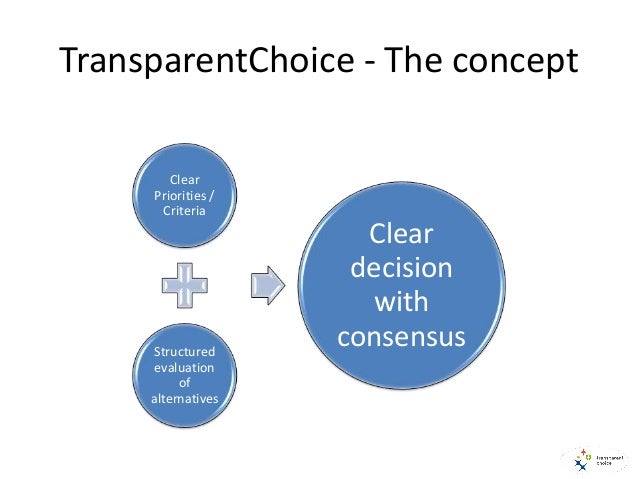
Building trust through a transparent decision process was the first strategy we pursued. The initial and critical decision we faced was which EHR to purchase.  There were two finalists. To choose, we collected evidence, evaluated the alternatives, and made decisions in highly public and inclusive ways. We invited thousands of professionals to test and rate the two products. We reported the results publicly on a project website. We conducted site visits to health care organizations around the country using the products we were considering. Site visit teams were diverse and representative of major Partners institutions and stakeholders. They rated the sites’ experiences with the EHRs, using a standardized protocol. We reported results on the website.

Then, we held a public debate between advocates of the two contending records — in which teams argued about relative merits before the audience voted. The vote was highly influential in our final choice. This transparent and inclusive decision-making process included an enormous amount of built-in listening and feedback from affected staff, another critical part of the change-management process.

To address the need for inclusive governance and representative decision making, we put in place a governing council for the EHR project. Members included representatives of critical Partners institutions and stakeholder groups. This council approved all major decisions with respect to the choice of the EHR and implementation policy. We then took those approved decisions to senior management of Partners, and ultimately to the Partners board, for final endorsement. Obviously, the fact that a representative body had approved our recommendations enormously increased their weight with management and board members.

As in the case of the meaningful-use program, communication was important. It didn’t require traveling the country, but it did require visiting all the major Partners institutions to speak with their staff and management, to answer questions, and to take in feedback.

Finally, we needed a rationale and a narrative that conveyed the necessity of undertaking this admittedly expensive and disruptive change in Partners affairs.  The rationale and narrative focused on the institution’s obligation to its patients. This was conveyed first in a motto: one patient, one record, one billing statement. To make this motto concrete, we made a video of a patient describing how she had had to carry a paper record from one Partners institution to another — all of which had siloed EHRs — as she got care for her breast cancer: surgery at Newton-Wellesley Hospital, chemotherapy at Dana-Farber Cancer Institute, and radiation at the Massachusetts General Hospital. I recall vividly the impact this video had during a presentation I made to the academic chairs of departments at Mass General. Patients’ stories had an almost unimpeachable legitimacy, even with the most senior Harvard academic leaders.

Before I left Partners to join the Commonwealth Fund in 2013, we had chosen the EHR and begun the rollout of the new IT infrastructure. While that rollout has not been perfect and, typical of such massive implementations, there have been plenty of complaints about the difficulty of using the new record, it has largely proceeded according to plan.

Change management is at the core of everything that public and private institutions are striving to achieve in reforming national policy and care-delivery approaches in order to improve the quality and cost of health care services provided daily to Americans. The effectiveness of leaders in both the public and private sectors in managing ambitious change efforts will determine their ultimate success. And my experience suggests that the skills required in these two sectors are remarkably similar — because change management, regardless of setting, involves convincing human beings to give up something they know for something new and uncertain.

The 5 drivers pointing toward the decentralization of healthcare

http://www.healthcaredive.com/news/decentralization-health-care-health-2-0-keynote/506377/

Health 2.0 co-chairs Indu Subaiya and Matthew Holt said these factors pose big questions to healthcare companies, including “What is your job in the new healthcare ecosystem?”

ONC Pushes Public Health Agencies to Improve HIE Integration

https://ehrintelligence.com/news/onc-pushes-public-health-agencies-to-improve-hie-integration

HIE Integration

The few public health agencies with HIE integration have reported more complete, higher quality data than those without a connection.

An ONC resource on how public health agencies utilize health information exchange (HIE) integration contains best practices and insights using interviews from public health agencies in 16 jurisdictions.

The findings detailed in the report focus on strategies for public health and HIE integration across six categories: leadership, technical, financial, privacy and security, policy, and health IT developers.

ONC partnered with Clinovations Government + Health (CGH) to examine HIE use among public health agencies. These state and community agencies can assist in improving the health of populations through disease prevention activities using data from public health screening and treatment services, laboratories, pharmacies, environmental health monitors, emergency medical services, local public health agencies, and clinical care providers.

Public health agencies function within states and communities and collect data from providers to use for data registries and disease surveillance systems. With an HIE connection, public health agencies can benefit from improved interoperability and reduce redundant connections.

While public health information systems with HIE integration have increased in recent years according to ONC, the practice is not yet widespread. In 2012, a survey from the Association of State and Territorial Health Officials (ASTHO) found 13 state public health agencies received lab results and nine received reportable diseases through HIE organizations.

“This trend occurs as researchers discover instances of higher quality in public health data transmitted from HIE organizations, as compared to clinical information systems,” stated the report. “For example, a 2013 investigation of electronic lab report messages finds data enriched by an HIE organization is more complete, compared to data from clinical systems.”

Public health systems with integrated HIE organizations have also been shown to yield improvements in care coordination and clinical efficiency, according to qualitative research in upstate New York, central Texas, Indiana, and New Mexico.

Still, HIE integration within public health systems is a relatively recent undertaking.

ONC highlighted three factors as contributing to this lack of integration:

  • An existing reporting infrastructure already facilitates public health reporting for health care providers.
  • The HIE organization’s technical solution does not often supply public health agencies with the level of data required for public health functions
  • Limited resources are available to dedicate to HIE infrastructure.

In its report, ONC determined that a combination of flexible, standardized technical solutions, policy enabling standardized public health reporting through HIE organizations and secondary data use, and affordable connectivity solutions offered by health IT developers could address these issues.

Interviewees highlighted a number of objectives driving the need to encourage more HIE integration in this care setting.

Most stated HIE integration could streamline the number of connections and thereby reduce costs for healthcare providers, HIE organizations, and public health agencies sharing information. Additionally, integration could support providers in achieving public health requirements for the EHR incentive programs.

Other interviewees expressed interest in developing a sustainable platform for clinical and public health data exchange for improved analytics and quality measurement.

To achieve these aims, ONC outlined ways public health agencies can overcome barriers to HIE integration — specifically, lack of standardization, gaps in standard use and adoption, lack of aligned messaging standards, and inconsistent data quality pose issues in integration.

Improving standards for public health data exchange is especially necessary.

“EHRs that meet ONC’s Health IT Certification Program requirements support transport protocols such as Direct for transport of Continuity of Care Documents (CCDs),” wrote ONC. “Public health content is standardized at the provider (EHR) and public health level, but the method of transport is not. The HL7 implementation guides and certification standards for public health information exchange do not require any specific transport mechanism, which can vary by state or region.”

Using transport methods such as the Direct standard could assist in improving standardization in public health data exchange.

To help public health agencies more efficiently exchange health data, ONC provided a summary of best practices for HIE use.

“One jurisdiction’s HIE organization respondents describe an increasingly electronic environment as being overall good for the community with the ability to share information across trading partners,” stated ONC.

“However, public health agency respondents caution against the growing electronic gap between public health and health care providers, where health care providers increasingly use health IT with exchange capabilities, but public health agencies do not have comparable technology to participate in exchanges,” the agency advised.

Finally, ONC emphasized the need for collaboration between public health agencies, HIEs, healthcare providers, and health IT developers to work toward bidirectional, standards-based health data exchange.

“Standards alignment must integrate public health information systems and HIE organizations, with transport mechanisms and terminologies meeting all of the public health data requirements,” maintained ONC.

Talk over Coffee into a Data Revolution for northern Nevada’s largest hospital system

http://www.beckershospitalreview.com/hospital-management-administration/steal-this-idea-how-renown-ceo-dr-tony-slonim-turned-a-talk-over-coffee-into-a-data-revolution-for-northern-nevada-s-largest-hospital-system.html

Image result for starbucks coffee for meetings

In May 2016, Tony Slonim, MD, DrPH, met fellow New Jersey native Joe Grzymski, PhD, at a Starbucks for coffee. Dr. Slonim, CEO of Reno, Nev.-based Renown Health, said he expected to trade stories about their home state, but they soon found their professional interests as compatible as their personal ones.

“Like all good things, it started at Starbucks over a coffee on a Saturday morning,” Dr. Slonim said, “As we let our minds expand and started thinking about complementary ways we could collaborate, this idea came up.”

This idea is a partnership between Renown and the Desert Research Institute, where Dr. Grzymski is senior director of applied research.

The duo began to think of ways they could combine the clinical data 946-bed Renown had on hand with the DRI’s environmental data to better understand the ways outside factors affect health outcomes in their community.

But the idea didn’t stop there. The pair also recognized that social determinants play an equally influential role in shaping a person’s health, so they made sure to include social data from the Governor’s Office of Economic Development in their new project, which did not yet have a name, but more importantly had a purpose.

“If we believe in population health, and the vision for population health, we’ve got to do a better job of understanding the health and the wellbeing of the people we’re serving,” said Dr. Slonim. “As an organization that’s got a large market share, it’s incumbent upon me as the CEO to think about how to use the most efficient resources for the most benefit for people that need it.”

At first, the collaboration was seen as a data-sharing project that would connect skilled researchers and analysts at the DRI with a wealth of combined information that had been inaccessible to a single provider in the past. However, it was only once Dr. Slonim and Dr. Grzymski took their idea to the 2016 BIO International Convention in San Francisco that they were able to find a third partner to provide them with yet another data set that would help them fully see the big picture of a person’s health.

Representatives from retail genetics firm 23andMe approached Dr. Grzymski following his talk at BIO. The company offered to provide genetic testing and sequencing for the project. Dr. Grzymski jumped at the opportunity, which would enrich the already robust data collection he and Dr. Slonim had begun to compile.

With genetic information as a fourth pillar of their potential data set, Renown and the DRI founded the Renown Institute for Health Innovation. The IHI’s most important initiative would go on to be named the Healthy Nevada Project.

At a September 2016 press conference, Dr. Slonim and other IHI leaders teamed up with Nevada Gov. Brian Sandoval to announce that the first 5,000 Reno residents who signed up to submit genetic samples would receive free access to the test results. Dr. Slonim believes offering this access to community members is what encouraged 5,000 people to sign up in only the first 24 hours of the enrollment period. With such an enthusiastic response, the leaders at the IHI decided to open up 5,000 more slots, which took one more day to fill. In only 48 hours, the Healthy Nevada Project had succeeded in enrolling 10,000 local residents to submit samples for genetic testing.

The project was off and running — quickly. And Dr. Slonim’s work was only just beginning.

Once 23andMe completed genetic sequencing of all 10,000 study participants in December, the Healthy Nevada Project still faced a looming question: What to do with all the data they’d collected?

“One-hundred more people per 100,000 die of cardiovascular disease in northern Nevada than national estimates. Our cancer rates are significantly higher and nobody knows why. So [we’re] trying to understand what the backdrop and the context is,” Dr, Slonim said. “Is it the mines that we have here? Is it the weather patterns that change because we’re in a valley? Our air pollution is higher, our particulate matter is higher — is that what causes lung cancer? We’re trying to figure this out, but you can’t do anything without data, so we started there.”

Dr. Slonim understands epidemiologists and analysts will have to spend many careful hours with the data to come to any concrete conclusions, but he believes the Healthy Nevada Project represents an essential first step for the future of the healthcare industry. If he and his colleagues could begin to harness the power of data in EHRs, then he sees a world of untapped potential that can help his community improve their health while also improving Renown’s organizational efficiency.

“This is the ultimate in strategic planning. If I figure out that our community is more at risk for cardiovascular disease 10 years from now, I can be thoughtful about how I go about recruiting cardiologists. If I know that the population is growing in pediatrics, I can start a program for pediatric residents at the medical school and grow my own pediatricians,” Dr. Slonim says. “The horizon for planning can be kept in view because we’re learning about our population’s health and disease. The second reason why I did this is because it’s the best way to engage consumers in their own healthcare to modify their behaviors.”

Dr. Slonim’s advice to hospital leaders looking to improve their capacity for innovative data concepts is simple: Take the first step. For the most part, the benefits of the Healthy Nevada project still lay ahead, as it has been only 15 months since that coffee meeting, but the game-changing potential cannot be understated. Dr. Slonim is confident that putting in the work to collect and analyze this comprehensive data will revolutionize the way Renown cares for its patients, and he believes other providers can follow suit.

“If you’re a large contributor to your market in healthcare with full range of integrated services across the continuum, get the environmental data. Get partnerships with the social data,” Dr. Slonim says. “Figure out how you can exercise your clinical EMRs and the great repository of data that are in there and put them in a big data warehouse and figure out how to analyze them. We’re not using predictive analytics in healthcare the way that other industries are, and we need to be better at that.”

Editor’s Corner—Why the Biden-Faulkner exchange over EHR access touched a nerve

http://www.fiercehealthcare.com/ehr/editor-s-corner-why-biden-faulkner-exchange-over-ehr-access-touched-a-nerve?mkt_tok=eyJpIjoiTWpnMFlUY3dNREExTUdReSIsInQiOiJ4WGdTalwvWk9ZTVFSaXQ0Y2R4OEVqUHFBWFE5NllQc2xHVEl2Z2VYc1d0aTJwUnZwczE5Y1pNVGcxSGFIa2lhZFZaaVRHc0FhSGhwaVRiR3NuNWJRZDhFNW5COTAyRXpQODdJR2VIcDlHTHBcL0RDZ2ZFU2lCSWxyRWNKRTdEdXE3In0%3D&mrkid=959610&utm_medium=nl&utm_source=internal

Joe Biden

It’s hard to say exactly what transpired at that January meeting between then-Vice President Joe Biden and Epic CEO Judy Faulkner.

What we do know is that it triggered a visceral online reaction over the importance of interoperability and access to health data—and even some Twitter threads on the nuances of HIPAA. But that might be more telling about where the industry currently stands and the direction it’s quickly heading.

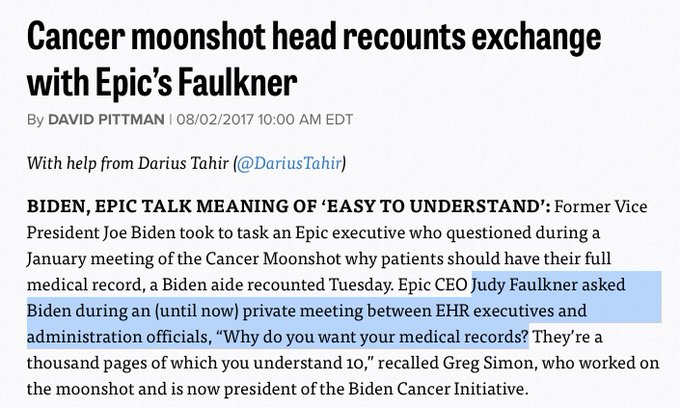
It began last week when Politico recounted the exchange between Biden and Faulkner as told by the vice president’s aide Greg Simon, who now serves as president of the Biden Cancer Initiative. The short version: Faulkner reportedly asked Biden why he wanted 1,000 pages of medical records to which Biden retorted, “None of your business.”

“It went downhill from there,” Simon said.

The story developed more on Monday, when former White House Chief Technology Officer Aneesh Chopra told CNBC the meeting was cordial and there “was a motivation and desire to work together to improve data access.” An Epic spokesperson told Health IT News that the company “supports patients’ rights to access their entire record,” adding that Biden was “consistently polite and positive” during the meeting.

By then, Twitter had worked itself into a full lather. Many were particularly incensed at Faulkner’s insinuation that that length and complexity of a medical record somehow rendered it useless to patients.

The reactions to Biden’s exchange with Faulkner may say more about the state of health IT than the interaction itself that was either contentious or cordial, depending on who you ask. There’s still a lot of frustration over the amount of money invested in EHR adoption and the fact that interoperability is still a challenging task.

At the same time, the vast majority of the industry is embracing the concept of replacing medical paternalism with patient-centered care, and more healthcare consumers are recognizing the benefits of having all of your health information at your fingertips.

In other words, demand is growing, but healthcare is still short on supply. That might explain the visceral reactions.

This week, Chilmark Research analyst Brian Eastwood argued that the debate over patient access to data revolves more around culture than software, and that’s probably true. Embracing the idea that patients should be able to access their medical record is a basic hurdle before anyone can tackle the technology that can make that happen.

But the heated debate that followed shows how much people across the healthcare industry see this as a core priority. It may not have infiltrated every corner of the ecosystem, but it touched a nerve that was far more basic than the technical minutia of interoperability or data standardization. It’s clear that the broader notion that patient records aren’t just the property of the health system—or even the software vendor—is carving out a substantial role in healthcare’s ongoing transformation. Any insinuation to the contrary is seen as shortsighted.

Clearly, it’s not ubiquitous yet, but there’s a strong undercurrent pushing the industry beyond the question of why patients might want their data and into the how. Perhaps that’s a small measure of progress. – Evan | @DB_Sweeney@FierceHealthIT