Los Angeles hospital closes, lays off all 638 employees

https://www.beckershospitalreview.com/finance/los-angeles-hospital-closes-lays-off-all-638-employees.html

Image result for Pacific Alliance Medical Center


Pacific Alliance Medical Center in Los Angeles, which provided care for more than 150 years, closed Nov. 30.

The hospital, which was originally slated to close Dec. 11, cited the costs of retrofitting its facilities to meet California’s seismic standards as the reason for the closure. The hospital said it lacked a financially responsible way to make the required updates.

“PAMC does not own the land on which our hospital sits, and the owner is unwilling to sell the land to us,” the hospital said in a statement to Becker’s Hospital Review in October. “The hospital building does not meet current California seismic standards, and it is not economically viable for us to invest nearly $100 million to build a hospital on land that we would not own.”

A California Worker Adjustment and Retraining Notification Act notice dated Oct. 9 indicated all 638 of the hospital’s employees would be laid off when the hospital shut down. The hospital confirmed that number in its closure announcement.

In addition to the challenges related to the seismic requirements, Pacific Alliance Medical Center faced a few other major hurdles in the months leading up to its closure. In June, the hospital and its parent company agreed to pay $42 million to resolve allegations they violated the False Claims Act, Anti-Kickback Statute and Stark Law. The companies allegedly had improper financial relationships with certain physicians and billed Medicare and California’s Medicaid program for services provided to patients referred to Pacific Alliance Medical Center. In August, the hospital announced it was recovering from a ransomware attack that compromised the protected health information of 266,123 patients.

Broward Health counter-sues former CEO: 5 things to know

https://www.beckershospitalreview.com/legal-regulatory-issues/broward-health-counter-sues-former-ceo-5-things-to-know.html

Image result for conflicts of interest

Fort Lauderdale, Fla.-based Broward Health’s ex-CEO Pauline Grant sued her former employer in December 2016. The health system fired back in a counter-suit filed Dec. 1, alleging Ms. Grant violated the Anti-Kickback Statute.

Here are five things to know about the litigation.

1. North Broward Hospital District, which does business as Broward Health, claims Ms. Grant violated the system’s code of conduct by serving as secretary of the board of directors of a long-term care provider that had contracts with Broward Health, according to the Sun Sentinel.

2. The health system alleges Ms. Grant’s position on the board violated the terms of a corporate integrity agreement the hospital district entered into with the federal government in 2015. The agreement was put into place after Broward Health paid $69.5 million in September 2015 to settle allegations it violated the False Claims Act by holding improper financial relationships with physicians.

3. Broward Health also claims Ms. Grant violated the Anti-Kickback Statute while she was CEO of Broward Health North in Deerfield Beach, Fla., one of the health system’s six hospitals.

4. Broward Health’s board voted 4-1 on Dec. 1, 2016, to fire Ms. Grant. The board voted to remove Ms. Grant from her position after an independent counsel review showed potential violations of the Anti-Kickback Statute. A subsequent independent investigation found Ms. Grant “ran afoul” of federal anti-kickback law when awarding emergency room contracts to orthopedic physicians seeking to participate in Broward Health North’s on-call emergency department rotation.

5. Following her ouster, Ms. Grant sued Broward Health, accusing the system’s general counsel and four board members of violating the Florida open-meetings law to bring about her termination.


Outlook Darkens for Not-for-Profit Hospitals

http://www.healthleadersmedia.com/finance/outlook-darkens-not-profit-hospitals?spMailingID=12500545&spUserID=MTY3ODg4NTg1MzQ4S0&spJobID=1300449776&spReportId=MTMwMDQ0OTc3NgS2

Image result for bulls and bears


The revised outlook from Moody’s comes amid a larger-than-expected drop in cash flow this year and the ongoing uncertainty regarding federal healthcare policy for public and not-for-profit hospitals.

Moody’s Investors Service has downgraded from stable to negative its 2018 outlook for the not-for-profit hospital sector based on an expected drop in operating cash flow.

“Operating cash flow declined at a more rapid pace than expected in 2017, and we expect continued contraction of 2%-4% through 2018,” said Eva Bogaty, a Moody’s vice president.

“The cash flow spike from insurance expansion under the Affordable Care Act in 2014 and 2015 has largely worn off, but cash flow has not stabilized as expected because of a low revenue and high expense growth environment,” Bogaty said.

In a briefing released Monday, Moody’s said hospital revenue growth is slowing and is expected to remain slightly above medical inflation, which declined to a low of 1.6% in September. Hospitals can’t translate volume growth into stronger revenue growth because of the lower reimbursement rate increases across all insurance providers and higher expense growth.

In addition, rising exposure to governmental payers will dampen revenue growth for the foreseeable future due to a rapidly aging population and low reimbursement rates. Medicare and Medicaid, represent 60% of gross patient revenue in 2017, Moody’s said.

Key drivers of expense growth include rising labor costs, driven by an acute nursing shortage and ongoing physician and medical specialist hiring. Technology costs are also rising as systems are upgraded and IT staff is needed for training and maintenance. While the ACA’s arrival heralded a drop in bad debt from 2014-16, bad debt rebounded in 2017 and will continue to grow at a rate of 6%-7% in 2018, Bogaty said.

“Rising copays and use of high deductible plans will increase bad debt for both expansion and non-expansion states,” she said.

In the near-term, uncertainty regarding federal healthcare policy will have a marginal fiscal impact on NFP hospitals. Bogaty said ambiguity surrounding the ACA does affect the planning and modelling of long-term strategies, while recent federal tax proposals will add to rising costs for hospitals.

The outlook could be revised to stable if operating cash flow resumes growth of 0%-4%. A change to positive could result from expectations of accelerated operating cash flow growth of more than 4% after inflation, Moody’s said.

Advocate-Aurora Merger Latest in Healthcare Consolidation Trend

http://www.healthleadersmedia.com/leadership/advocate-aurora-merger-latest-healthcare-consolidation-trend?spMailingID=12500545&spUserID=MTY3ODg4NTg1MzQ4S0&spJobID=1300449776&spReportId=MTMwMDQ0OTc3NgS2#

Image result for advocate health care headquarters

Image result for aurora health care headquarters

Deal likely to steer clear of FTC pitfall that foiled Advocate’s prior merger plans.

Advocate Health Care and Aurora Health Care announced plans Monday for a merger that would create the 10th-largest not-for-profit health system in the country.

The proposed deal would serve as a “50-50 merger” between Chicago-based Advocate and Milwaukee-based Aurora, with no job layoffs expected, the companies said. Should the deal receive regulatory approval, the merged system, which would go by the name Advocate Aurora Health, is projected to have a total operating revenue of about $11 billion and employ 70,000 people across hundreds of facilities in Illinois and Wisconsin, including 27 hospitals.

The announced merger continues a trend among health systems to merge, buy, or sell. Since the Tenet-Vanguard merger in 2013, a $4.3 billion acquisition, large-scale mergers between health systems have become routine to keep pace with an increasingly competitive and consolidated industry.

As health systems and hospitals adjust to the push for value-based care, alternative payments and accountable care organizations, systems with less experience and knowledge have to factor in how they will achieve those goals.

The attraction of corporate consolidation

David Chou, Chief Information and Digital Officer for Children’s Mercy Kansas City, says healthcare organizations are pursuing mega-merger deals in order to maintain relevance. A company used to need $6 billion to compete, a number that has since ballooned to $10 billion, he says.

Companies have pushed toward consolidation also to achieve scale, which can enable cost-reduction and improve financial viability. Chou says healthcare companies ultimately aim to mirror the “classic Kaiser model,” referencing industry giant Kaiser Permanente of Oakland, California. In 2016, Kaiser Permanente’s total operating revenue was $64.6 billion.

Sarah Wilson, a senior analyst with Decision Resources Group, says a specific amount, such as Chou’s $10 billion figure, isn’t always a prerequisite to staying relevant, but she agreed that large-scale mergers have become increasingly common in the healthcare sector. She attributes this to the increasing cost of healthcare delivery despite the push to drive down costs.

Distance makes the heart grow fonder

Ken Field, JD, MBA, who worked for the FTC from 2006 through 2012 and now co-chairs Jones Day’s global healthcare practice, says Advocate’s proposed merger with Aurora is likely to sidestep the controversy that spoiled Advocate’s prior plan to merge with NorthShore University HealthSystem.

Given their respective geographic footprints, Advocate and Aurora appear to be complements to one another, not substitutes, Field says. While Aurora, located 93 miles north of Chicago, does serve some patients in northern Illinois, its primary clientele base hails from Wisconsin.

By contrast, Advocate’s failed NorthShore merger entailed two systems serving some of the same Chicagoland areas. Advocate defended its merger plans successfully at trial, but the decision was overruled on appeal. The prolonged and expensive legal fight ended last March.

The FTC’s acting chair, Maureen K. Ohlhausen, cited the foiled Advocate-NorthShore merger as among her team’s 2017 victories in the fight to protect competition in healthcare markets—a series of victories that mark a shift in the case law affecting the business of healthcare.

“Last year we successfully blocked two major hospital mergers, winning victories in cases involving healthcare systems in the suburbs of Chicago and the Harrisburg area of Pennsylvania,” Ohlhausen said during a speech last month at the American Bar Association’s fall forum, according to her remarks as prepared for delivery. “Together, these two cases moved an important area of the law into a much more settled place and will likely serve both the agency and the public for many years to come. We have already started building on that very sound foundation.”

Field says these two cases affirmed the FTC’s analytical framework for hospital competition as the appropriate interpretation of the law. So now there’s precedent to support the FTC’s model, which could soon prove decisive in a similar case in South Dakota, where the FTC and state attorney general are challenging Sanford Health’s planned acquisition of Mid Dakota Clinic.

Even with the new direction-setting in Washington under President Trump, the FTC’s approach to protecting competition in healthcare is expected to stay the course.

“The only indication so far is that they’re going to continue applying the same model and with the same vigor that we experienced in the last administration,” Field says.

The FTC declined to comment on Advocate’s planned Aurora merger, noting that the commission does not confirm the existence of any investigation.

Dust settling after the announcement

Wilson, the analyst, says effective mega-mergers rely on a significant amount of backend work prior to the announcement. After the plan is unveiled, companies must follow due diligence in meetings with federal and state regulatory authorities to secure approval.

“I think there’s that process of speaking with regulators, going through all of the paperwork and preparing for the actual merger to ensure you have alignment,” Wilson says. “Once you get down to the closing of the deal, [companies] make sure to have their mission, vision and values lined up. It’s a lot of work getting everything ready, speaking with employees and working through best practices.”

The risk of duplication of duties remains at a company with two CEOs, which is an interesting obstacle to face. Chou said he will be interested to see who “calls the shots” after the merger is formalized.

Citing her experience in handling health system mergers and acquisitions, Wilson says “50-50 mergers” are not uncommon. The move to keep two CEOs could be successful since the companies do not compete in the same market, she says.

Another challenge includes how to combine each company’s assets and decide on how to implement practices which provide the best care to patients. Chou advised both companies to focus on fostering a cohesive environment for employees and providing the best care for patients, rather than fixating on the politics of the merger.

Wilson echoed Chou’s sentiments, saying the post-announcement process should be deliberative and ensure employees understand the merger and its effects on the company culture.


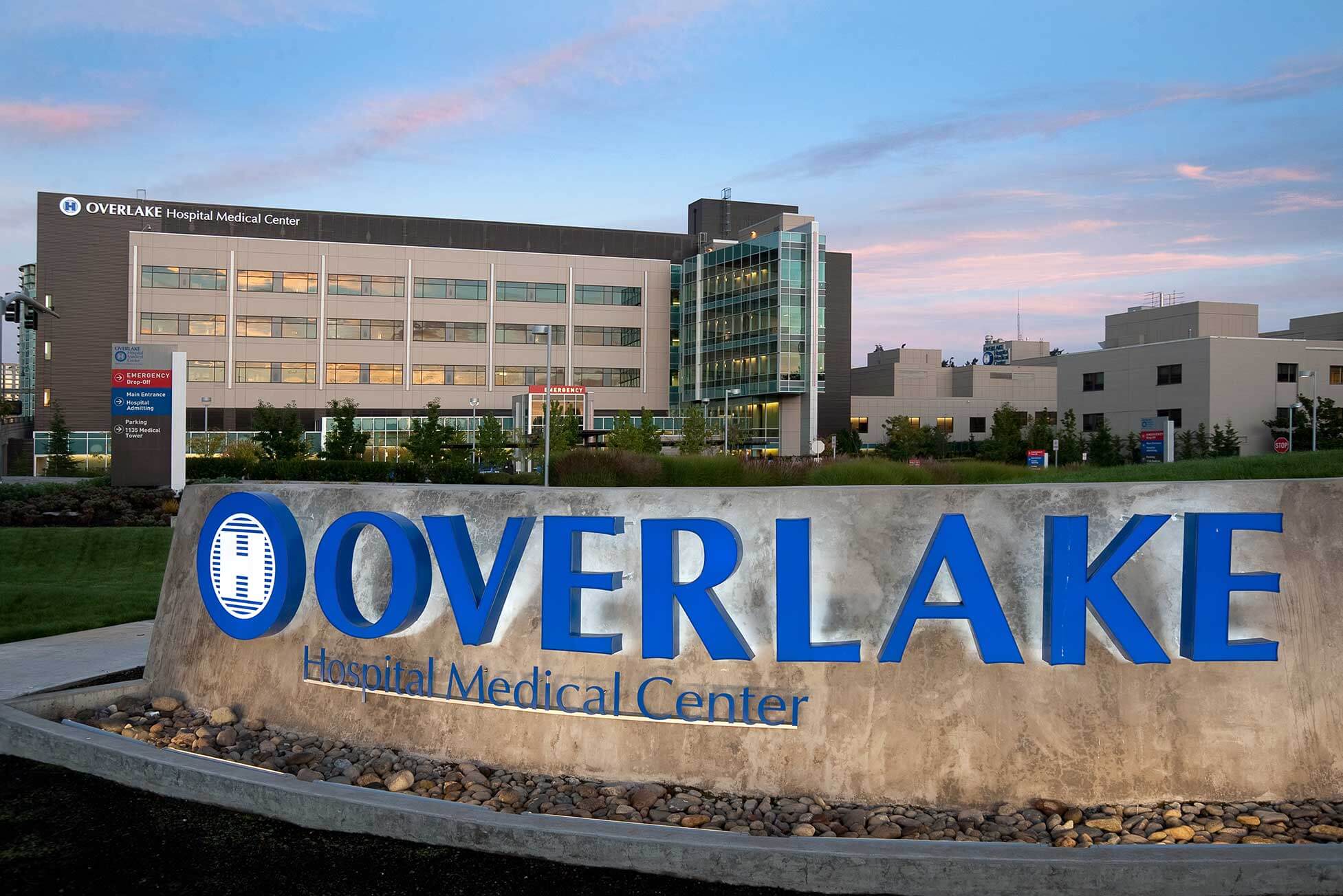
S&P assigns ‘A’ to Overlake Hospital Medical Center

https://www.beckershospitalreview.com/finance/s-p-assigns-a-to-overlake-hospital-medical-center.html

Image result for overlake hospital medical center

S&P Global Ratings assigned its “A” rating to Bellevue, Wash.-based Overlake Hospital Medical Center’s proposed $94.2 million series 2017A and $84.7 million series 2017B revenue bonds.

The assignment is a result of several factors, including its strong market position, affiliation with Oakland, Calif.-based Kaiser Permanente, healthy balance sheet and growing outpatient presence. S&P also acknowledged the OHMC’s sizable capital plans and highly competitive market.

The outlook is stable.

Moody’s affirms ‘Aa3’ on Yale New Haven Health

https://www.beckershospitalreview.com/finance/moody-s-affirms-aa3-on-yale-new-haven-health.html

Image result for yale new haven health

Moody’s Investors Service affirmed its “Aa3” rating on Yale New Haven (Conn.) Health, affecting $1.1 billion of outstanding debt.

The affirmation is a result of the health system’s strong market position, favorable operating margins, moderate capital spending, solid liquidity, manageable leverage and affiliation with New Haven-based Yale University. Moody’s also acknowledged the health system’s sizable pension, large operating lease obligations and reimbursement pressures coming from Medicaid an state hospital tax funding.

The outlook is stable, reflecting Moody’s expectation that Yale New Haven Health will maintain its healthy operating performance to offset any reimbursement pressures.

Trinity Health races to sell $889M in bonds ahead of tax changes

https://www.beckershospitalreview.com/finance/trinity-health-races-to-sell-889m-in-bonds-ahead-of-tax-changes.html

Image result for big dollars

The possibility that Congress could eliminate federal tax breaks for a large portion of the municipal market has hospitals and other debt issuers hurrying to issue tax-free bonds before borrowing costs rise, according to Reuters.

Nonprofit hospitals and health systems issue tax-exempt bonds to finance capital projects. Under House Republicans’ tax plan, interest on newly issued private activity bonds would no longer be tax-exempt. This change would reduce financing options for some healthcare organizations by raising the cost of capital, according to S&P Global Ratings.

“From a credit perspective, higher borrowing rates can lead to budget imbalances, a challenge for all, and a hallmark of struggling credits,” said S&P.

In response to the tax bill passed by the House in November, Livonia, Mich.-based Trinity Health moved up the sale of about $889 million of new and refunding revenue bonds to this week from January 2018.

“I look at it as kind of a risk mitigation. We were able to accelerate and mitigate any risk of where these proposals may eventually land,” Dina Richard, senior vice president of treasury and chief investment officer of Trinity Health, told Reuters.

The move to eliminate tax exemptions for new private activity bonds is not included in a bill passed by Senate Republicans on Saturday, according to Reuters.


The benefits of bankruptcy? How one hospital found redemption in Chapter 11

http://www.healthcarefinancenews.com/news/benefits-bankruptcy-how-one-hospital-found-redemption-chapter-11?mkt_tok=eyJpIjoiWkRObE1XWmhNemt3TjJFNCIsInQiOiJuWXNFaDk2M2RINGpwRlZ6ck1oekJyVkg0clVSUjlQek9TUExrdVVYUlNubjAzU2pkS0FtNndPODc0dVpBaTkvUEFKd05aK01mMXp6dDc5NzVTNDVQZmVZWmFXTjFCd08xMnRKWGljZzNGTEFPSHFIY21UT1Y2TnYwTk5QWWVGUCJ9

Image result for hospital bankruptcies

Filing for bankruptcy might make hospital finance executives cringe with desperation, if not failure, but strategically pursuing Chapter 11 can actually lay the foundation for a brighter future.

In fact, Morehead Memorial Hospital in Eden, North Carolina, actually owes its future to its leader’s decision to file for Chapter 11. Like so many rural hospitals, whose ranks are shrinking fast, Morehead faced common problems including flat or declining populations, migration of patients who find work in other communities and get care there, as well as the prevalence of Medicare and Medicaid in payer mixes that cause financial losses and vulnerabilities.

The albatross: Old debt

Morehead CEO Dana Weston’s original inclination was to look for a buyer, but after a year of searching a realization sunk in: the large amount of debt attached to the hospital was a liability akin to a brick wall between Morehead and a path forward.

Weston said they got consistent feedback that organizations felt it wasn’t in their current strategy to acquire a struggling rural hospital, since many systems already have more than one such facility under their umbrella. Most of the debt was at least a decade old, and addressing it was really the only way to make themselves attractive to potential buyers.

So Weston and the executive team did something that sounded more like an end than a beginning: Morehead filed for Chapter 11 bankruptcy on July 10.

Navigating Chapter 11, especially for a struggling rural hospital with limited resources and personnel must be done properly for the strategy to succeed.

And Morehead had some unique complexities, according to Ron Winters, managing director of hospital and healthcare services management firm Healthcare Management Partners. Winters has followed Morehead’s case and pointed out that the hospital is near a state border so they deal with different insurers from other states and are within 90 minutes of several larger competing hospitals, which didn’t help. Even worse, the size and scope of the their complex debt picture, including a $34 million U.S. Department of Housing and Urban Development loan that offered limited flexibility on repayment, really limited their options, Winters said.

“You couldn’t just go to HUD and say let’s make a deal,” Winters explained. “You needed the bankruptcy code to make a transaction happen.”

That’s because when a hospital enters bankruptcy, Winters said it is effectively drawing a line in the sand on the very day it files. Chapter 11 code dictates that any obligation incurred after the petition date is superior to anything owed prior to the petition date. So new debt legally takes priority over old in terms of what will be covered by proceeds from a transaction. Moreover, bankruptcy rules state that any buyer that acquires an entity that went through chapter 11 proceedings is assured no creditor can come after them for the acquired hospital’s debt. They only pay what they agreed to for the transaction, providing security and alleviating risk.

Eliminating the risk of old debt is the precise upside Morehead leveraged to make itself attractive to a prospective buyer.

Common misperceptions

The phrase Chapter 11, and this is true in any industry, hits an organization’s reputation pretty hard.

The legalese is hard to translate to employees and the community, and Weston said the sale of assets, which is how their bankruptcy transaction is referred to, caused quite a stir because it sounded like a liquidation.

“People had this picture in their mind of an auction where the furniture, equipment, everything was just gonna be sold off to the highest bidder,” Weston said. “That’s not the case at all.”

She insisted that the board’s decision to file for Chapter 11 was the right one because it removed one of the major barriers to interest in buying Morehead by addressing the debt through bankruptcy and shedding that liability.

Without a partner, Morehead simply had no future.

Avoiding bankruptcy’s downside

Winters warned that there is a risk to bankruptcy and two main drawbacks are costs and the consequences of not being prepared with a plan. First, a debtor must hire a bankruptcy lawyer and other experts such as a patient care ombudsman to monitor the care provided to patients and look after patient rights. If a hospital doesn’t have available assets to pay for those things, that’s a problem.

“It’s ideal to have some unpledged assets to use as liquidity for the proceedings or have a buyer lined up the very first day,” Winters said.

Having a buyer lined up on the first day would seem an ideal scenario, and is called a stalking horse purchaser. Bankruptcy code provides that a debtor must create protections so that the stalking horse can’t be easily outbid or outbid at all. A winning bidder that beats the stalking horse must do so by a minimum amount, for instance, and reimburse them for costs related to establishing stalking horse status.

Without a buyer ready to go or other financing plans laid out, creditors get worried, Winters said. “With financing, your creditors should be satisfied that all obligations following the bankruptcy petition will be satisfied.”

Hospitals would do well to start thinking about options like seeking a partner or bankruptcy while they still have some amount of liquidity and unpledged assets. “When you have none left you’re not going to be able to drive an attractive transaction and you run the greatest risk of collapsing,” Winters said.

The new future

Weston’s plan worked and Morehead’s survival is now all but assured.

On Nov. 13, a federal bankruptcy judge chose UNC Health Care as the winning bidder for Morehead, setting a course for emergence from Chapter 11 for early 2018.

The closing is expected to take 60 days, and Morehead will operate as usual during the transition. UNC personnel will be visiting Morehead in the coming weeks to start building relationships with hospital staff and the community.

Collapsing was never an option, according to Weston. The first-time CEO said there was far too much at stake. She said what keeps her up at night are the employees at Morehead and the community it serves. The hospital is vitally important to its hometown and to Rockingham County. It’s the biggest employer in Eden and the 4th or 5th largest in the county.

“The most valuable thing for me in this role is for the 700 who work here to trust that I am in this with them,” Weston said. “This community is my family.”

CapEx vs. OpEx

http://www.healthcarefinancenews.com/news/why-operations-finance-leaders-should-be-spearheading-healthcare-migrations-cloud?mkt_tok=eyJpIjoiWkRObE1XWmhNemt3TjJFNCIsInQiOiJuWXNFaDk2M2RINGpwRlZ6ck1oekJyVkg0clVSUjlQek9TUExrdVVYUlNubjAzU2pkS0FtNndPODc0dVpBaTkvUEFKd05aK01mMXp6dDc5NzVTNDVQZmVZWmFXTjFCd08xMnRKWGljZzNGTEFPSHFIY21UT1Y2TnYwTk5QWWVGUCJ9

Quick strategy question: If you could start from scratch and implement Microsoft Outlook by cutting a fat check to acquire the software and hardware to run it on-site, and then foot the bill to maintain both, would you really sign-off on that rather than simply subscribing to a cloud-based email service and letting someone else take care of the maintenance and upgrades?

That answer is a resounding ‘unlikely.’

Black Book, in fact, found that 92 percent of hospital C-suite executives believe that cloud shifts the IT cost burden from capital expenditure to operational expenditure with positive results. Doug Brown, Black Book Managing Partner, pulled that from research the firm conducted for its upcoming 2018 Health IT Trends report.

“Moving software purchases to a cloud model and the resulting flexibility in how a healthcare organization can account for these tools as an OpEx versus a CapEx is one of the many advantages that the cloud has brought to organizations,” Brown said.

Cloud: Here today and to stay

Cloud computing is not the next big thing, it’s already here and at this point moving to the cloud model is largely being driven by end users and tech shops. And that is creating something of a mess. Symantec researchers found that at the end of 2016, enterprises in various industries had 926 cloud apps in use, up from 841 the year before, but top executives estimated that number to be between 30 and 40 apps.

“The ultimate decision often comes down to the CIO,” said IDC Health Insights Research Director Mutaz Shegewi.

That poses its own set of problems, notably that some CIOs want to keep their data on-premise for fear of losing hold over it or are concerned about the larger value IT provides as a department when pieces of its role can be outsourced to the cloud, Shegewi said.

“Increasingly and with time, I have seen resistive CIOs give in and even advocate for the switch once they understand the value and benefits that could be brought about by the cloud, especially around security and vulnerability,” Shegewi said.

Therein lies the opportunity for forward-thinking finance executives to help lead their IT counterparts toward the cloud and its OpEx cost advantages. Who better to spearhead that migration?

Former hospital CFO Kim Lee, who is now COO at Faith Community Hospital in Wichita Falls, Texas, ranked the cloud model’s positive points as lower upfront costs and shorter implementation time as well as upgrades managed for customers, and less of a support burden on the IT team. She added to that list with easier remote access and connecting to apps, as well as improved security management.

Lee said that Faith Community Hospital as an organization, in fact, recommends certain cloud-based apps to its user base.

“We find cloud apps are less likely to experience security issues compared to utilizing a third-party vendor who may have to go through an interface process to talk to the software,” Kim said. “It takes out the middleman approach and the mobility support is provided by your software vendor.”

And with Black Book predicting that 57 percent of hospitals with 200 or more beds will pair back, if not freeze altogether, CapEx investments in IT during 2018 and the same goes for 85 percent of hospitals with fewer than 200 beds, now is the time for finance teams to get more involved in cloud decisions by working closely with the CIO and other technology leaders.

That’s not to suggest everything should be moved into the cloud strictly for the sake of OpEx, of course.

CapEx vs. OpEx considerations

Northwell Health CFO Michele Cusack works with the IT department to help make choices about what to put in the cloud and what should really stay on-site.

Cusack said it’s important to evaluate which systems can better fuel the overall mission on-premise or do so in the cloud. Certain applications, like email, commodity and productivity apps, are a good OpEx fit.

Software that houses sensitive patient data, on the other hand, requires more careful consideration before transitioning that out to the cloud, if at all.

Northwell is now in amidst a shift to the cloud for its human capital management system, for instance, and it subscribes to other key applications running in private clouds.

“We look at the overall savings by comparing the monthly fees to the upfront capital costs, the potential reduction or elimination of certain on premise IT infrastructure, the cost benefit of seamless future upgrades to systems, and the cost benefit of being able to scale resources quickly in response to demand,” Cusack explained.

Lee added to that list of aspects to account for when tapping into the cloud for apps or bigger software services.

“A few of the top considerations when choosing a cloud-based software is reviewing your contract to ensure there are procedures in place for internet downtimes, procedures for access to facility records long-term, certification of compliance with HIPAA, Security Risk Assessments and PHI, processes in place to accommodate your back up requirements and adequate planning prior to implementation and timely notification for new software releases,” Lee said.

CFO as the new cloud champions

Cusack and Lee are not the only CFOs reaping the cloud’s OpEx advantages.

Seventy-two percent of the finance chiefs Black Book polled reported that IT spend as a percentage of operating expenses in their organizations increased at least 50 percent since 2015’s study.

“In current economic times with most organizations in the pursuit of maintaining a lean balance sheet to preserve cash flow, the cloud migration decision is appropriately led by the Chief Financial Officer,” said Doug Brown, managing partner of research firm Black Book. “It shouldn’t be a CIO’s job to determine CapEx or OpEx or the benefits of accounting for technology investments as an operational expense versus a capital expense.”


Fitch: Rating downgrades will likely outweigh upgrades for US healthcare companies in 2018

https://www.beckershospitalreview.com/finance/fitch-rating-downgrades-will-likely-outweigh-upgrades-for-us-healthcare-companies-in-2018.html

Image result for fitch

US healthcare companies will likely see more credit rating downgrades than upgrades in 2018, according to Fitch Ratings.

Fitch attributes the increased pressure on industry credit ratings to the uncertain future of the ACA, a changing tax plan, the adoption of alternative payment models and the potential for outsider disruption, which includes Amazon’s entrance into healthcare and advancements in technology.

Further, Fitch explains that technology is increasingly moving patients away from hospitals and enabling decentralization — thus reshaping the healthcare landscape. Due to this changing landscape, the healthcare industry is, “facing secular challenges to pricing power and profitability and these forces are expected to influence certain segments more than others in 2018,” Fitch notes.

However, despite the higher potential for credit downgrades, the US healthcare sector outlook is stable for 2018 due to sheer demand for services, an overall favorable liquidity profile, and generally consistent leverage and debt coverage.