


Tag Archives: Medicare
Why some KC-area hospitals are still throwing their hat into ACA payment model
http://www.bizjournals.com/kansascity/news/2017/01/26/prime-healthcare-aco.html
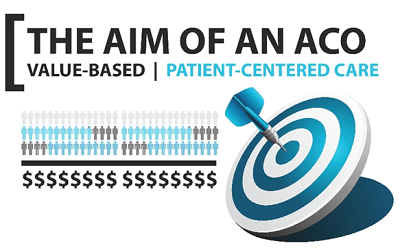
A Kansas City-area health network may benefit from its new designation through a pilot program created under the Affordable Care Act — if it isn’t repealed. As an accountable care organization (ACO), physicians affiliated with the Prime Healthcare ACO in Kansas and Missouri could benefit from cost-sharing incentives for Medicare patients.
Specifically, providers and the Centers for Medicare and Medicaid Services would split the savings from reducing costs for a patient through coordinated care, such as not ordering duplicate tests. Of course, ACO providers still must meet key quality metrics.
“It’s looking back at those procedures that have already occurred,” said Paula Ellis, chief nursing officer at Saint John Hospital, a Prime Healthcare affiliate in Leavenworth. “It’s really being a lot more mindful, and looking at all of the information that’s out there. It’s seeing where (the patient) is getting care that their primary care provider doesn’t know about.”
Prime Healthcare also owns Providence Medical Center in Kansas City, Kan., St. Joseph Medical Center in Kansas City, Mo., and St. Mary’s Medical Center in Blue Springs
While savings between different ACO providers have been mixed, Ellis said other markets under Prime Healthcare have found success. The California-based for-profit hospital operator launched its first ACO in California last year.
Its application for the Kansas City ACO model was granted on Jan. 1. It is serving about 10,000 Medicare patients who use Prime Healthcare physicians as their primary care provider.
“The model’s been out there for a few years,” Ellis said. “It has a track record.”
It’s worth noting that the future of ACOs, for the most part, is unknown. The model is part of the Medicare Shared Saving Program, established under the Affordable Care Act, to reduce costs and improve care. A substantial number of providers have adopted it; CMS reported 480 ACOs served a total of 9 million assigned beneficiaries as of January.
Medicare ACO explosion: CMS boasts 570 participants for 2017

More than 570 Medicare accountable care organizations will participate this year in Centers for Medicare & Medicaid Service models, including the Shared Savings Program, Next Generation ACO Model and The Comprehensive ESRD Care Model, with 131 in a risk-bearing track.
MSSP added 99 new participants and 79 ACOs renewed their commitment to the program, bringing the total number of MSSP ACOs to 480 across all U.S. states, the District of Columbia and Puerto Rico, according to a CMS announcement. Medicare officials have also revealed a new track under MSSP to begin in 2018, the Medicare ACO Track 1+ Model, that offers lower risk to encourage smaller practices and rural hospitals to participate.
After three high-profile members left the Next Generation ACO program last year, many questions emerged about the future of the model. However, the agency said that 28 new participants have joined the Next Generation program for 2017, bringing the total to 45 and more than doubling the number in the program.
Atrius Health is among the new participants in the program for 2017, and in an announcement officials at the Boston-region health system said its previous experience in the Pioneer ACO program have prepared it to take on the higher financial risks associated with the Next Generation model.
“Our experience as a Pioneer ACO has enabled us to build upon our strengths in providing high-quality, coordinated care for our patients across the continuum,” CEO Steven Strongwater, M.D., said in the announcement. “CMS has been an excellent partner in this work, and we look forward to further collaboration and innovation with them in the years to come.”
Joe Damore, vice president for population health, Premier, said the growing number of participants is a “clear signal” that the shift to value-based care will continue.
In an emailed statement, Cliff Gaus, CEO and president of The National Association of ACOs, agreed. “We, along with the ACO community, are feeling confident about the future of the program and we’re looking forwarding to seeing the ACO program grow and stabilize in the coming years,” he said.
The Myth of a Cheap Obamacare Replacement
News on the Obamacare-replacement front was dominated this past weekend by Donald Trump and Sen. Rand Paul (R-Ky.), who both touted their Obamacare replacement plans.
To be absolutely precise, they touted the claim that they had Obamacare replacement plans. They didn’t go into any great detail about what would be in those plans. (That didn’t stop CNN from captioning its interview with Paul, “Rand Paul Releases Obamacare Replacement Details.”)
The few details, or guideposts, or guidelines that they did disclose only underscored how difficult it will be for Trump, Paul and the the Republicans on Capitol Hill to fashion a replacement that meets all their stated goals. For Trump, according to an interview with the Washington Post published Sunday, this includes “insurance for everybody” that will encompass “great health care … in a much simplified form. Much less expensive and much better.” He promised “lower numbers, much lower deductibles.”
Paul, speaking on CNN’s Sunday morning “State of the Union” program, said his plan would “insure the most amount of people, give access to the most amount of people, at the least amount of cost.” That sounds like a set of concrete goals, but actually they’re ambiguous. “Most people” compared to what? “Least cost” compared to what?
Before we get into the details, such as they are, we should recognize that if one takes as the goal of healthcare policy to provide universal coverage in which everyone is “beautifully covered,” as Trump promised, then a few limitations immediately appear. Health coverage is the product of three factors: How many people are covered; the benefits provided; and the cost of those benefits. Since the 1940s, U.S. politicians and policymakers have tried to find a balance among these factors. Every effort has been confounded by the immutable facts that treating the sick costs money and treating more people costs more money. One can save money by treating fewer people, or giving the same number of people less treatment. So any politician who says he can do more for less money is almost certainly blowing smoke.
How do the Trump and Paul “details” stack up?
Rampaging goats and $10 million mansions: your guide to the weird world of Obamacare rhetoric
Rampaging goats and $10 million mansions: your guide to the weird world of Obamacare rhetoric

The Obamacare repeal effort is just getting underway and already the political wordplay is dizzying. On the GOP side, the rhetoric has gone from “repeal and replace” to “insurance for everybody” to “repair and rebuild.” Meanwhile, Democrats continually warn that the Republicans are trying to “rip apart our health care system.”
To help you keep pace with the debate, we’ve assembled this handy glossary of buzzwords and talking points. Enjoy.
From the Republicans:
Repair and rebuild
This is the GOP’s attempt to describe its legislative strategy for Obamacare, and an evolution of the phrase “repeal and replace.” As Politico reported Thursday, it is the mantra of Oregon Representative Greg Walden, who is leading the offensive against Obamacare in the House. It is meant to soften the GOP’s tone and suggest the replacement effort will be carefully staged and surgical. It also opens the door to delay tactics if things don’t quickly shape up in the GOP’s favor.
From the Democrats:
‘Make America Sick Again’
A play on Donald Trump’s campaign slogan, this phrase emerged in early January as Democrats held rallies to generate support for Obamacare. Judging by the nation’s $3.2 trillion tab for health care costs in 2015, a number expected to jump as high as $3.6 trillion this year, it seems clear a lot of us are pretty sick already. But you get the point.
Healthcare Leaders Split on Incoming Trump Administration

While 41% of executives are generally positive about the potential impact of a Trump administration, nearly as many (37%) are generally negative about the prospects. The figures regarding Tom Price at HHS and Seema Verma at CMS are similar in a HealthLeaders Media survey.
Health Spending Projections: 2015-2025

National health spending will reach $5.6 trillion by 2025. Get the data on payers, per enrollee costs, payment sources, and spending on types of services.
Gut check: Change is coming, and healthcare executives don’t necessarily think it’s a bad thing

The future of healthcare policy is a bit murky these days. President-elect Donald Trump has pledged to repeal the Affordable Care Act, and the Republican-run U.S. Congress is already fast at work to make that happen.
What’s not known, however, is what will change for the thousands of U.S. healthcare businesses that have not only adapted to the ACA but also made millions in investments in areas such as electronic health records, value-based reimbursement and reporting to align with the policies of the outgoing administration.
Healthcare Finance spoke with several executives at healthcare businesses to get their perspectives on not only the changes they expect but also their thoughts on what the healthcare sector actually needs to do to provide the best care while still safeguarding the health of its business model.
Private vs. public prices
http://www.academyhealth.org/blog/2017-01/private-vs-public-prices

You probably knew that the prices private health insurers pay hospitals are higher than those of Medicare and Medicaid. But you may not have known that the gap between private and public payers used to be a lot smaller and has grown tremendously in recent years.
Using Medical Expenditure Panel Survey (MEPS) data, by payer (private health insurance, Medicare, and Medicaid) and over time (1996-2012), the chart shows average hospital payment rates (in constant dollars), adjusted for age, sex, race/ethnicity, geography, income, health conditions, charges, length-of-stay, and whether or not a surgical procedure was performed. To produce figures for the chart, the authors used this model to predict hospital payment per stay for each MEPS observation, as if they were covered by private insurance, Medicare, or Medicaid, in turn.
As is clear from the chart, adjusted, average private pay rates have always been above public rates, but were closest in 1996-2000. Back then, private rates were no more than 10% above Medicare rates. Perhaps this was the effect of managed care, which kept growth in private rates down. Those rates began to grow during the managed care backlash, until 2005. From 2005-2009, adjusted, average private hospital rates—while considerably above Medicare and Medicaid rates—held steady. Then, in 2009, they took off again. In 2012, adjusted, average private rates were about 75% higher than Medicare rates.*
Medicaid payments were about 90% of Medicare’s in most study years.
Top 10 challenges facing physicians in 2017
http://medicaleconomics.modernmedicine.com/medical-economics/news/top-10-challenges-2017

2016 was a challenging year on many fronts for healthcare providers.
Physicians have just started to digest the Medicare Access and CHIP Reauthorization Act of 2015 (MACRA) and its changes to physician reimbursement. A long presidential election finally reached its conclusion, but the consequences of a Republican Congress and President-elect Donald J. Trump for U.S. doctors and patients remain unclear. And running a private practice did not get any easier. Balancing the need to deal with patients who won’t listen or won’t pay while also seeking positive patient satisfaction scores remains a daily struggle for many.
These were just some of the challenges physician readers told Medical Economics they experienced this year and anticipate continuing for the foreseeable future.
For the fourth consecutive year, Medical Economics reveals its list of obstacles physicians will face in the coming year and, more importantly, how to overcome them. For this latest presentation, we asked readers to tell us what challenges they face each day and where they needed solutions.
Here are their responses, starting with the biggest challenge of the coming year.
 HENRY KOTULA