Trump rejects Obamacare special enrollment period amid pandemic

https://www.politico.com/news/2020/03/31/trump-obamacare-coronavirus-157788?fbclid=IwAR1nbCE7Uwvo2CNi6d6W5NG9zEIQulyh-noy1RXdk_0RJstMM0C5VYJ8mO4

Trump rejects opening ObamaCare special enrollment period amid ...

Before the coronavirus outbreak, nearly 30 million Americans were uninsured and as many as 44 million were under-insured, paying for bare-bones plans with soaring deductibles and copays. Today, millions more Americans will begin losing their employer-based health insurance because they’ve lost their jobs during this pandemic.

Meanwhile, the Trump administration is still actively trying to repeal the entirety of the Affordable Care Act in court, which would cause an additional 20 million people to lose insurance *in the middle of a pandemic*.

And today, Trump refused to reopen ACA enrollment to those millions of uninsured Americans for a special enrollment window, leaving them without any affordable options to get covered. People are going to die because they can’t afford to seek treatment or end up saddled with thousands of dollars of medical debt if they do. Remember this the next time someone tries to tell you Medicare for All is too radical.

What do you think?

The Trump administration has decided against reopening Obamacare enrollment to uninsured Americans during the coronavirus pandemic, defying calls from health insurers and Democrats to create a special sign-up window amid the health crisis.

President Donald Trump and administration officials recently said they were considering relaunching HealthCare.gov, the federal enrollment site, and insurers said they privately received assurances from health officials overseeing the law’s marketplace. However, a White House official on Tuesday evening told POLITICO the administration will not reopen the site for a special enrollment period, and that the administration is “exploring other options.”

The annual enrollment period for HealthCare.gov closed months ago, and a special enrollment period for the coronavirus could have extended the opportunity for millions of uninsured Americans to newly seek out coverage. Still, the law already allows a special enrollment for people who have lost their workplace health plans, so the health care law may still serve as a safety net after a record surge in unemployment stemming from the pandemic.

Numerous Democratic-leaning states that run their own insurance markets have already reopened enrollment in recent weeks as the coronavirus threat grew. The Trump administration oversees enrollment for about two-thirds of states.

Insurers said they had expected Trump to announce a special enrollment period last Friday based on conversations they had with officials at the Centers for Medicare and Medicaid Services, which runs HealthCare.gov enrollment. It wasn’t immediately clear why the Trump administration decided against the special enrollment period. CMS deferred comment to the White House.

Trump confirmed last week he was seriously considering a special enrollment period, but he also doubled down on his support of a lawsuit by Republican states that could destroy the entire Affordable Care Act, along with coverage for the 20 million people insured through the law.

People losing their workplace coverage have some insurance options outside of the law’s marketplaces. They can extend their employer plan for up to 18 months through COBRA, but that’s an especially pricey option. Medicaid is also an option for low-income adults in about two-thirds of states that have adopted Obamacare’s expansion of the program.

Short-term health insurance alternatives promoted by Trump, which allow enrollment year-round, is also an option for many who entered the crisis without coverage. Those plans offer skimpier coverage and typically exclude insurance protections for preexisting conditions, and some blue states like California and have banned them or severely restricted them. The quality of the plans vary significantly and, depending on the contract, insurers can change coverage terms on the fly and leave patients with exorbitant medical bills.

Major insurers selling Obamacare plans were initially reluctant to reopen the law’s marketplaces, fearing they would be crushed by a wave of costs from Covid-19, the disease caused by the novel coronavirus. But the main insurance lobby, America’s Health Insurance Plans, endorsed the special enrollment period roughly two weeks ago while also urging lawmakers to expand premium subsidies to make coverage more affordable for middle-income people.

Congress in last week’s $2 trillion stimulus passed on that request, as well as insurers’ petition for an open-ended government fund to help stem financial losses from an unexpected wave in coronavirus hospitalizations.

Democrats pushing for the special enrollment period are also grappling with the high costs facing many people with insurance despite new pledges from plans to waive cost-sharing. Obamacare plans and a growing number of those offered by employers impose hefty cost-sharing and high deductibles that could still burden infected Americans with thousands of dollar in medical bills.

House Energy and Commerce Chairman Frank Pallone (D-N.J.) on a press call Monday contended that “we also need to have free treatment” after Congress eliminated out-of-pocket costs for coronavirus tests.

“We did the testing, which is now free, and everybody, regardless of their insurance, gets it,” Pallone said. “But that has to be for the treatment as well.”


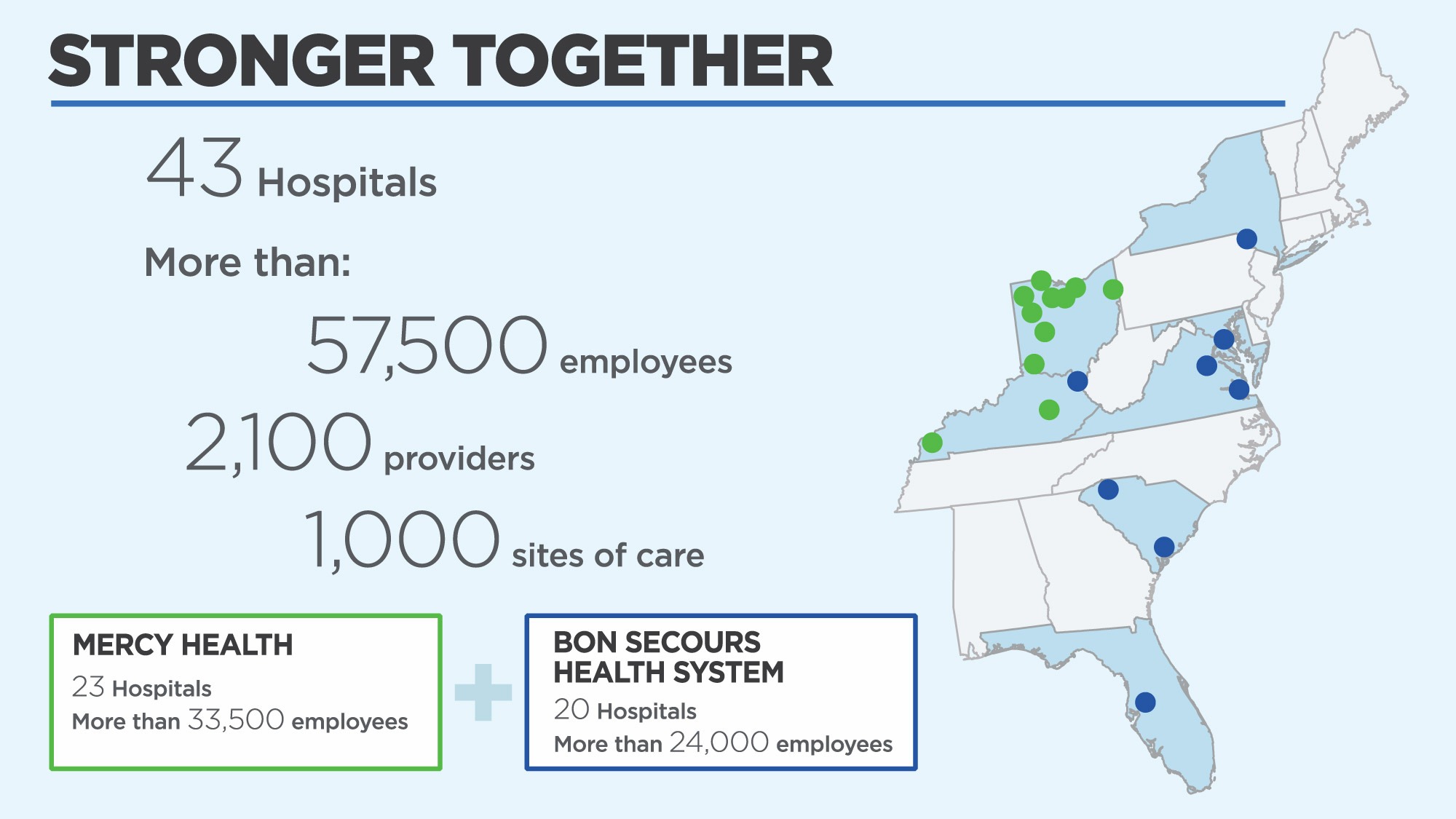
Bon Secours Mercy Health to furlough 700, estimates $100M monthly operating loss

https://www.beckershospitalreview.com/finance/bon-secours-mercy-health-to-furlough-700-estimates-100m-monthly-revenue-loss.html?utm_medium=email

Bon Secours Mercy Health Sells $1.2B Majority Stake in Ensemble ...

Citing a revenue hit from the COVID-19 pandemic, Cincinnati-based Bon Secours Mercy Health will furlough 700 employees and freeze wages of all nonclinical personnel, according to The Cincinnati Business Journal

The furloughs will affect workers in the system’s shared services business office, which includes entry-level workers and those who are senior vice presidents. No caregiver, pharmacy or supply chain jobs will be affected.

The furloughs are expected to begin next week and last 30 to 90 days, depending on how long the pandemic lasts, according to Bon Secours Mercy Health CEO John Starcher.

The cost-cutting measures are a result of an anticipated decline in revenue due to government-imposed bans on elective procedures. Bon Secours Mercy Health estimates it will see an operating loss of at least $100 million per month while the pandemic lasts.

In addition to the furloughs and wage freeze, the health system is freezing hiring for all noncritical care positions.

“We don’t shy away from making the difficult decisions, and this certainly is one of those, because we always have a mind’s eye on what the long-term ramifications and implications are,” Mr. Starcher told the Business Journal. “We’re laser-focused on making sure this ministry is as successful and vibrant for the next 150 years as it’s been for the last 150.”


$40M sale of 2 California hospitals includes commitment to COVID-19 patient care

https://www.beckershospitalreview.com/hospital-transactions-and-valuation/40m-sale-of-2-california-hospitals-includes-commitment-to-covid-19-patient-care.html?utm_medium=email

Verity Health gets $610 million offer for four hospitals

Verity Health Gets $610M Offer to Buy St. Vincent, St. Francis and ...

El Segundo, Calif.-based Verity Health has agreed to sell two California hospitals to AHMC Healthcare and is seeking an expedited review of the transaction, according to Bloomberg Law.

Verity, which entered Chapter 11 bankruptcy in 2018, filed a motion with the bankruptcy court March 29, seeking approval for the sale. Under the proposed transaction, Verity would sell Seton Medical Center in Daly City, Calif., and Seton Coastside in Moss Beach, Calif., to AHMC for $40 million. The agreement also includes a commitment by AHMC to continue to support the state’s efforts to address the COVID-19 pandemic.

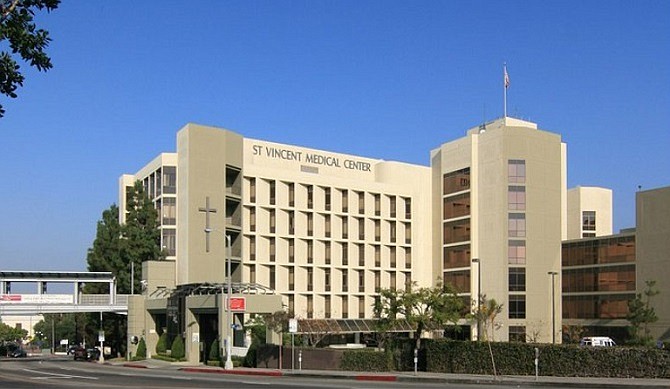
The proposed deal comes after California Gov. Gavin Newson announced March 21 that the state will use $30 million in emergency funding to lease Seton Medical Center and St. Vincent Medical Center in Los Angeles, which Verity closed in January. The state is leasing the hospitals for three months to expand capacity for COVID-19 patients.


New York hospital to split with Ascension after 18 years

https://www.beckershospitalreview.com/hospital-transactions-and-valuation/new-york-hospital-to-split-with-ascension-after-18-years.html?utm_medium=email

St. Mary's Healthcare announces it will return to being an ...

St. Mary’s Healthcare in Amsterdam, N.Y., is slated to become an independent hospital after 18 years as a member of St. Louis-based Ascension, according to The Daily Gazette.

There are several advantages to being a member of a large health system like Ascension, but being an independent hospital with a local board of directors is the best option for St. Mary’s Healthcare, CEO Vic Giulianelli told The Daily Gazette. He said the hospital could save millions from the split.

“When you belong to a system, there are system expenses, and upstate New York hospitals, like St. Mary’s, are among the least expensive in the country and that gets back to where we reside and to where we deliver care, and the cost here has to be lower, because the [Medicare and Medicaid] reimbursements here are not stellar,” Mr. Giulianelli told The Daily Gazette.

St. Mary’s joined Ascension in 2002. In 2015, the two organizations began exploring opportunities for St. Mary’s “to pursue a future apart from Ascension,” according to a March 25 news release.

“We believe this is the best approach for the individuals and communities St. Mary’s serves as well as for its dedicated and compassionate associates, providers and volunteers,” Ascension Executive Vice President and COO Craig Cordola said.


Geisinger, AtlantiCare sever merger

https://www.beckershospitalreview.com/hospital-transactions-and-valuation/geisinger-atlanticare-sever-merger.html

HFMA: Mergers will significantly impact care delivery system ...

Danville, Pa.-based Geisinger and Atlantic City, N.J.-based AtlantiCare have reached an agreement to part ways, the two health systems announced March 31. 

AtlantiCare has been part of the Geisinger system since 2015, when the Danville, Pa.-based system acquired it.

The decision to separate comes after months of negotiations between the two parties after AtlantiCare voted to break away from Geisinger in September 2019.

In response to the September vote, Geisinger sued AtlantiCare in an attempt to stop the health system from leaving. In the lawsuit, Geisinger accused AtlantiCare of violating the signed merger agreement.

The merger agreement, signed in 2014, allowed AtlantiCare to terminate the merger within 10 years, but only if Geisinger became controlled by a for-profit organization or affiliated with a religious organization. Neither of those circumstances occurred, according to the lawsuit.

The lawsuit didn’t disclose the reason the New Jersey health system wanted to regain its independence.

However, now the two parties have reached a mutual agreement to go their separate ways. 

Geisinger has also agreed to drop the lawsuit.

“Throughout this process, both Geisinger and AtlantiCare have been guided by the desire to do what is best for the people and communities we serve in Pennsylvania and New Jersey. We believe this agreement best supports the long-term health and wellness of our communities and makes the best use of our nonprofit resources today and into the future. We remain committed to working together to ensure the continued delivery of high-quality healthcare services,” the two systems said in a joint statement.

The separation of the two organizations is expected to take six to 18 months.