Kaiser Permanente averts strike in tentative deal with health care workers

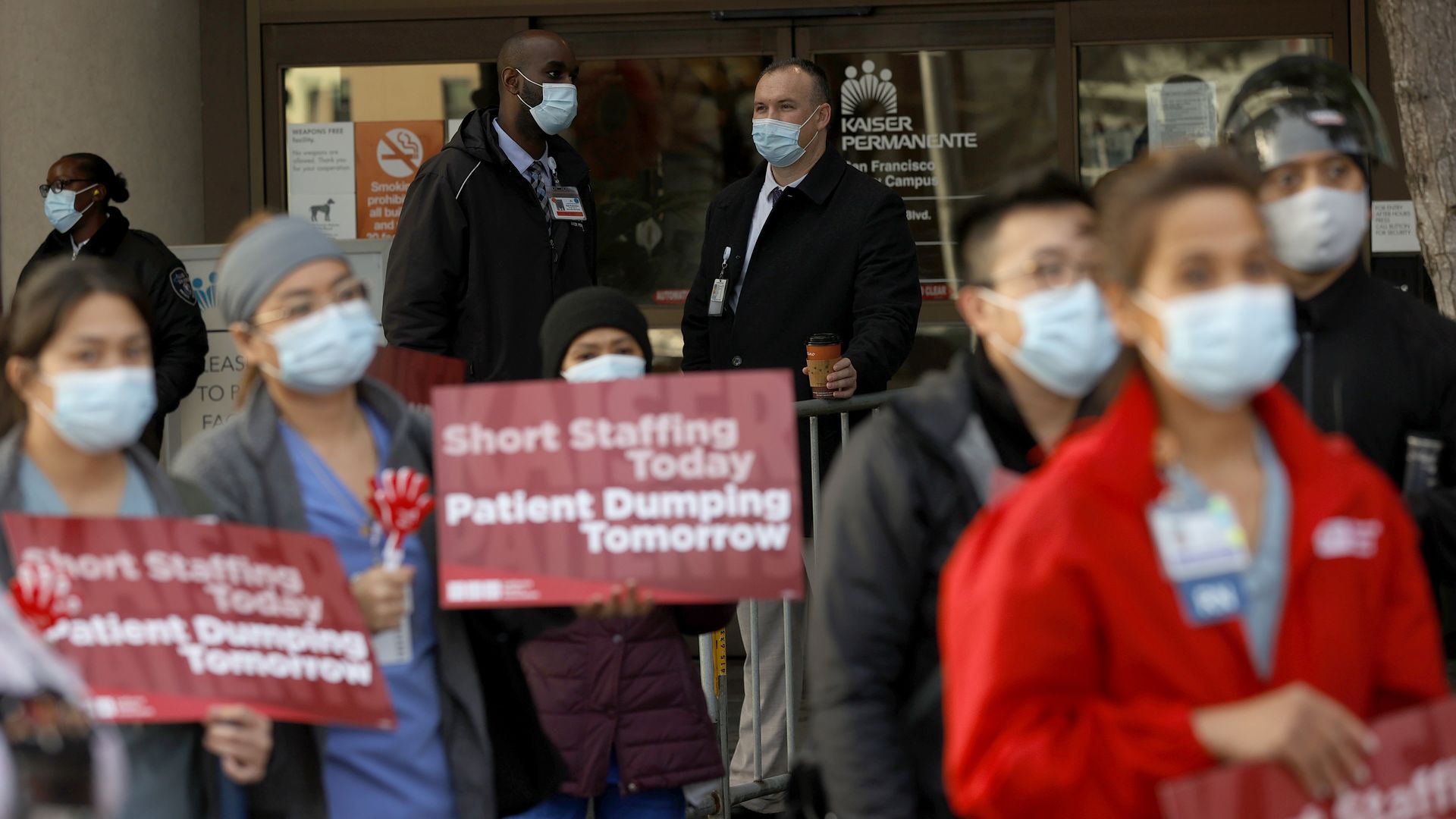
Kaiser Permanente security guards monitor an informational picket outside of the Kaiser Permanente San Francisco Medical Center on November 10, 2021 in San Francisco, California.

Union leaders representing nearly 50,000 health care workers and medical staff reached a tentative agreement in a labor dispute Saturday, avoiding a strike set to begin Monday.

Why it matters: The breakthrough in talks comes as nurses, front-line technicians and other hospital employees face worker shortages and burnout due to the ongoing COVID-19 pandemic.

The big picture: More than 30,000 Kaiser Permanente employees in Oregon, Washington, California and other states threatened to walk out on Monday over lower pay for new hires, Reuters reports.

  • Kaiser and the Alliance of Health Care Unions ended up reaching a tentative four-year deal that includes wage increases, health and retirement benefits and bonus opportunities, per CBS News.

What they’re saying: “This agreement will mean patients will continue to receive the best care, and Alliance members will have the best jobs,” Hal Ruddick, executive director of Alliance, said in the statement.

  • “This landmark agreement positions Kaiser Permanente for a successful future focused on providing high-quality health care that is affordable and accessible for our more than 12 million members and the communities we serve,” said Christian Meisner, senior vice president and chief human resources officer at Kaiser.

What’s next: The agreement heads to union members for ratification, and, if ratified, it will become retroactive to Oct. 1.

Medicare’s looming premium hike

Two workers serve food to two elderly women at a senior living center.

Monthly premiums that cover physician and outpatient care for Medicare patients will increase by 15% next year, the Biden administration said in a notice Friday evening.

Why it matters: People on Medicare are getting slammed with a big hike during an election year, due largely to the big price tag from the questionable Alzheimer’s treatment, Aduhelm, and uncertainty stemming from the coronavirus.

By the numbers: Standard Medicare Part B premiums will be $170.10 per month next year, up from $148.50 per month this year.

  • That equals an extra $259.20 in extra costs over the course of the year, just in premiums.
  • The Part B deductible also is increasing 15%, from $203 to $233.

Between the lines: Medicare is still determining whether it will pay for Aduhelm yet, but federal actuaries have to plan for a “high-cost scenario of Aduhelm coverage,” regulators said.

  • The FDA approved Aduhelm in June, and Biogen priced Aduhelm at $56,000 per year on average.
  • That price tag, along with all of the hospital and doctor costs associated with administering the drug and ancillary tests, could lead to “very significant” costs for the taxpayer-funded program, according to the notice.

The bottom line: The pandemic has made it difficult to predict future Medicare spending, such as trying to determine whether patients will get more non-COVID care that had been put off.

  • But Aduhelm — a treatment that has not conclusively proved that it improves brain function of Alzheimer’s patients — is now a high-profile example of pharma pricing power affecting Medicare patients’ pocketbooks and represents a redistribution of taxpayer money into Biogen’s coffers.

Out-of-network costs spin out of control

https://www.axios.com/billed-and-confused-cindy-beckwith-out-of-network-care-578a22be-b6b4-4959-8333-9e2e970b19d5.html

Out of Network costs vary greatly among California PPO health plans -

People who have health insurance but get sick with rare diseases that require out-of-network care continue to face potentially unlimited costs.

The big picture: Federal regulations cap how much people pay out of pocket for in-network care, but no such limit exists for out-of-network care.

Zoom in: Cindy Beckwith, 57, of Bolton, Connecticut, was diagnosed with pulmonary artery sarcoma, a rare tumor on a main artery. She also has fibromuscular dysplasia, a rare blood vessel condition.

  • She has ConnectiCare health insurance, which she gets through her husband’s employer.
  • Her local doctors suggested she see specialists at the University of Pennsylvania Health System because her conditions were so uncommon, but the system was out-of-network.
  • “I had to go out of my network,” Beckwith said. “I didn’t have a choice.”

The bill: $20,138.40 from Penn Medicine, the parent of UPHS, a profitable system with $8.7 billion of revenue last year.

  • Over a few years, Beckwith received a lot of care from the hospital, including two open-heart surgeries and inpatient chemotherapy.
  • This bill showed charges of $270,000, just for services received in 2019. Beckwith and the hospital settled on $20,138.40. Penn Medicine “insisted” she pay a minimum of $441 per month until 2023, she said.
  • Beckwith and her husband have already paid more than $11,000, and even though she says they are doing OK with her various medical bills, “there’s not a lot of extra money left over.”

Between the lines: The new surprise billing regulation only protects patients if they get non-emergency care from out-of-network doctors at in-network facilities.

  • That means people with employer coverage that doesn’t have an out-of-pocket maximum for out-of-network care could experience large bills based on hospitals’ inflated charges, and have to negotiate payment on their own.
  • “Out-of-network charges kind of seem like a little bit of funny money to consumers,” said Katherine Hempstead, a health insurance expert at the Robert Wood Johnson Foundation. “These are the things that make people feel kind of defeated.”
  • “We didn’t expect this to happen,” said Beckwith, who has worked in medical coding for 30 years, said of her condition. “When it does, it can wipe you out.”

The other side: Beckwith’s hospital and insurance providers did not make anyone available for interviews.

  • A ConnectiCare spokesperson said the insurer does “not speak about our members’ private health information.”
  • A Penn Medicine spokesperson said in a statement the system “has a longstanding commitment to work with patients to help them understand the costs associated with their care, including out-of-pocket costs.”

The resolution: After Axios submitted a HIPAA authorization waiver, signed by Beckwith, to Penn Medicine to discuss Beckwith’s case, Beckwith received a call from Penn Medicine, whom she hadn’t heard from in months.

  • The hospital knocked $4,000 off her remaining balance, telling her they reprocessed some old claims. She still owes almost $4,800.

Austria orders nationwide lockdown for the unvaccinated

https://www.yahoo.com/news/austria-orders-nationwide-lockdown-unvaccinated-120902629.html

FILE - The patient Kurt Switil, left, receives a Pfizer vaccination against the COVID-19 disease by a doctor in the vaccination center ‚Am Schoepfwerk' in Vienna, Austria, April 10, 2021. The Austrian government ordered a nationwide lockdown for unvaccinated people starting midnight Sunday, Nov. 14, 2021, to slow the fast spread of the coronavirus in the country. (AP Photo/Lisa Leutner, File)

The Austrian government has ordered a nationwide lockdown for unvaccinated people starting at midnight Sunday to combat rising coronavirus infections and deaths.

The move prohibits unvaccinated people 12 and older from leaving their homes except for basic activities such as working, grocery shopping, going for a walk — or getting vaccinated.

Authorities are concerned about rising infections and deaths and that soon hospital staff will no longer be able to handle the growing influx of COVID-19 patients.

“It’s our job as the government of Austria to protect the people,” Chancellor Alexander Schallenberg told reporters in Vienna on Sunday. “Therefore we decided that starting Monday … there will be a lockdown for the unvaccinated.”

The lockdown affects about 2 million people in the Alpine country of 8.9 million, the APA news agency reported. It doesn’t apply to children under 12 because they cannot yet officially get vaccinated.

The lockdown will initially last for 10 days and police will go on patrol to check people outside to make sure they are vaccinated, Schallenberg said, adding that additional forces will be assigned to the patrols.

Unvaccinated people can be fined up to 1,450 euros ($1,660) if they violate the lockdown.

Austria has one of the lowest vaccination rates in Western Europe: only around 65% of the total population is fully vaccinated. In recent weeks, Austria has faced a worrying rise in infections. Authorities reported 11,552 new cases on Sunday; a week ago there were 8,554 new daily infections.

Deaths have also been increasing in recent weeks. On Sunday, 17 new deaths were reported. Overall, Austria’s pandemic death toll stands at 11,706, APA reported.

The seven-day infection rate stands at 775.5 new cases per 100,000 inhabitants. In comparison, the rate is at 289 in neighboring Germany, which has already also sounded the alarm over the rising numbers.

Schallenberg pointed out that while the seven-day infection rate for vaccinated people has been falling in recent days, the rate is rising quickly for the unvaccinated.

“The rate for the unvaccinated is at over 1,700, while for the vaccinated it is at 383,” the chancellor said.

Schallenberg also called on people who have been vaccinated to get their booster shot, saying that otherwise “we will never get out of this vicious circle.”

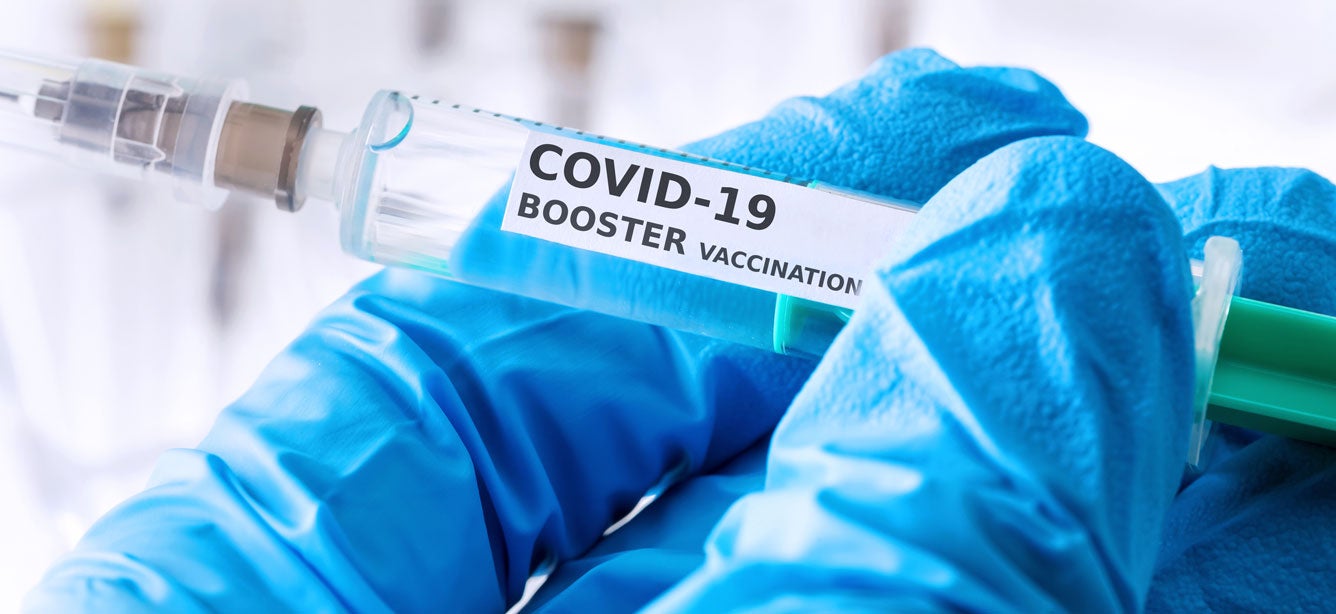
Should You Get a Covid Vaccine Booster?

COVID Booster Shot: Do I Need It?

As booster shots become available in the United States, many Americans are scrambling to get them. But are these shots the best use of our resources? Who really benefits from them and what is the most prudent way to use our vaccine supplies?