Cartoon – Medicare Co-Payment Explained

After an exhausting and contentious election campaign, and a vote count that was prolonged by enormous voter turnout and record-breaking use of early and mail-in voting, the major news networks have now made their calls. Joseph R. Biden, Jr. will be the 46th President of the United States, and Kamala D. Harris will be the first woman, and first person of color, to become Vice President. Securing an electoral victory by achieving razor-thin victories in a number of battleground states, President-elect Biden received the largest number of votes of any candidate in American history. Although the Trump campaign vowed to pursue legal challenges to the validity of the election, Biden’s win appeared to be secure.
The election results came in the midst of a dramatic acceleration of the coronavirus pandemic. Over the last week, the average number of new cases per day in the US surpassed 96,000, up 54 percent from just two weeks earlier. On Friday the nation recorded a pandemic-high 132,700 new cases, along with at least 1,220 COVID deaths. Hospitalizations were up in most states, hospital bed and workforce capacity are strained, and public health experts warned that the coming weeks and months will bring even worse news. Unsurprisingly, the pandemic was a top issue on the minds of voters. According to exit polls, however, the electorate was deeply divided on the issue: 82 percent of Biden voters cited the pandemic itself as one of the most important issues in determining their vote, with only 14 percent of Trump voters agreeing. Conversely, 82 percent of Trump voters said the economy was the most important issue on their minds, as opposed to Biden voters, only 17 percent of whom listed the economy as their top issue. Based on that data, it appears that at least one important split among the electorate was “lives” versus “livelihoods”—whether the pandemic response, or its impact on the economy, was of greatest concern.
In the coming weeks, attention is likely to turn in earnest to addressing both aspects of the issue during the lame duck period. Senate Majority Leader Mitch McConnell (R-KY) has signaled that he intends to resume negotiations on a stimulus package with Democrats in the House, whose majority was diminished in the election. At this writing, it appears likely that control of the Senate will come down to the results of two runoff elections in Georgia, and McConnell will undoubtedly want to make the case that Senate Republicans have taken decisive action to bolster the economic recovery. It’s also possible that, as part of the Trump administration’s Operation Warp Speed, a coronavirus vaccine will be granted approval by the end of the year. Health officials at both federal and state levels must continue to work closely together to tackle the complex logistics of distributing and administering the vaccine, and it will be critical for the incoming administration to seek ways to collaborate with the Trump team to ensure a smooth transition of this vital work.
The outcome of the Senate runoffs in Georgia will determine whether the Biden administration must work with divided Congress, or an evenly split Senate in which Vice President-elect Kamala Harris casts the deciding vote. In either case, given the political realities underscored by the electoral result, it’s very unlikely than any of the more sweeping proposals in the Biden campaign platform—lowering the eligibility age for Medicare, establishing a government-run “public option” insurance plan, extending premium subsidies to middle-income workers—will advance very far. Rather, as we’ve discussed before, we’d expect a Biden administration’s first actions to focus on an enhanced federal response to managing the pandemic, including issuing a national mask mandate, enhancing efforts to augment and coordinate personal protective equipment (PPE) supply, and rejoining the World Health Organization.
As we look to the next two years, most healthcare policy changes are likely to come in the form of regulatory reform, such as reversing waivers for Medicaid programs to establish work requirements and withdrawing flexibility for short-term plans that fail to comply with the Affordable Care Act (ACA). Other Trump-era regulatory changes might continue. There’s broad bipartisan support for efforts to make value-based Medicare payment reforms more successful, to increase price transparency, and to address the issues of surprise billing and the cost of prescription drugs. But even in if Democrats beat the odds and win back control of the Senate, we believe the Biden administration will have other legislative priorities that will supersede any attempt to dramatically overhaul healthcare coverage—voting reforms, climate change legislation, immigration reform, and long-overdue infrastructure investments.
Unless, that is, the Supreme Court throws a spanner in the works by overturning the ACA. Should the Court rule that the individual mandate is not severable from the rest of the law, and that the entire ACA is unconstitutional, the new administration would be forced to take quick action to protect coverage and insurance protections for millions of Americans. In that event, healthcare would rocket to the top of the agenda. Either the Biden team would be forced to find a compromise solution that could pass a divided Congress, or (if Harris is the tie-breaking vote) find a way to use the budget reconciliation process to address coverage. That potential drama lies months in the future, as we won’t know the outcome of the case until next spring. We’ll monitor the oral arguments in the ACA case closely, and let you know what we hear, and what we think it means for the future of the case.
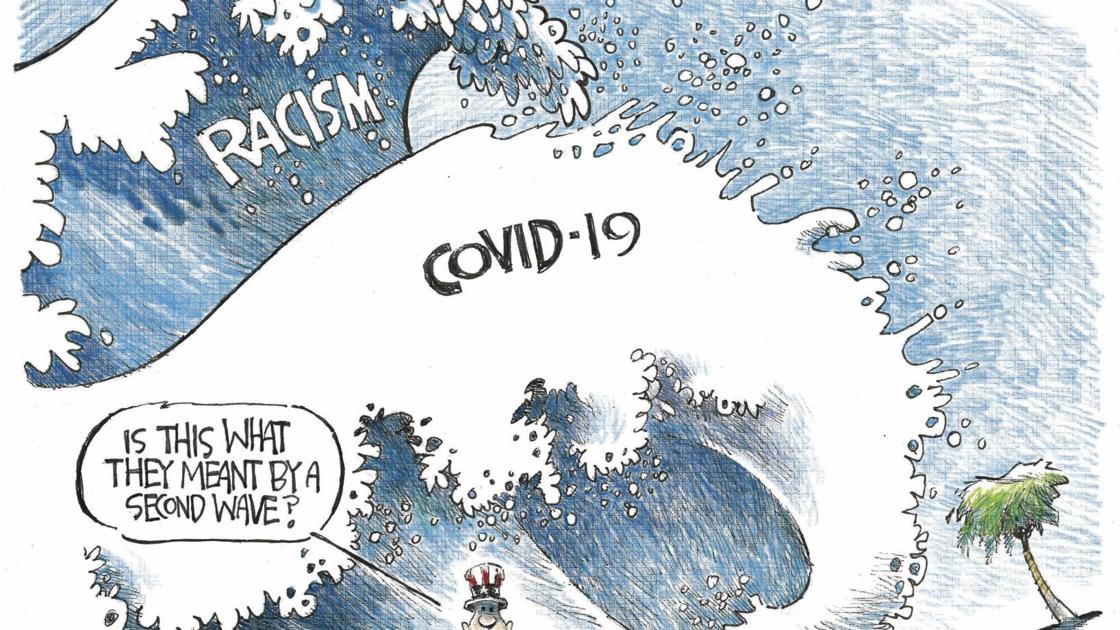
In the coming weeks, we’ll be watching for answers to some of the big healthcare questions that lie ahead: How will the Trump administration handle the worsening pandemic situation in the 75 days between now and Inauguration Day? Will any new stimulus package include additional economic relief for healthcare providers? When and how will a COVID vaccine become widely available? And perhaps most importantly, what toll will the “third wave” of the pandemic take on a nation already exhausted by a difficult year, and a bitter political fight? Surely one reason to be optimistic is that, having turned out to vote in the largest numbers in a century, Americans are more engaged than ever in finding a way forward amid the problems that confront us. Let’s hope our political leaders from across the ideological spectrum will rise to the occasion, and meet this difficult moment with positive, constructive solutions.

More than 132,700 new cases were announced across the United States on Friday. The country also reported more than 1,000 deaths for the fourth straight day.
As the eyes of a tired nation remained transfixed on the results of the presidential election, the United States set a daily record for new cases for the third straight day, with more than 132,700 new cases on Friday. And it reported more than 1,000 deaths for the fourth straight day, the first such stretch since August.
The United States first reported a record of over 107,000 cases in a single day on Wednesday. On Thursday, it was over 121,000 new cases, another record, according to a New York Times database.
The country recorded more than 1,220 deaths on Friday. It was the first time over 1,000 deaths had been recorded for four consecutive days since Aug. 25-28.
At least 17 states reported single day records for new cases on Friday. And four states reported record deaths: Kansas, Nebraska, South Dakota and Utah.
In 27 states, there have been more cases announced in the past week than in any other seven-day stretch since the pandemic began. More than 54,800 people were hospitalized with the virus on Friday, according to the Covid Tracking Project.
Driven by surges in the United States and Europe, new daily cases have surpassed 605,000 globally for the first time and a harrowing 50 million total cases appears to be close on the horizon.
Across the continent, hospitals and health care systems are stretched thin, prompting fresh lockdowns and restrictions.
Portugal declared a new state of emergency on Friday. Romania, which passed 10,000 daily cases for the first time, announced that it would close schools and implement an overnight curfew. Poland reported a record 445 virus deaths on Friday and admitted the first patient to its new field hospital at a stadium in Warsaw.
As of Saturday morning, at least 1,242,600 people with Covid-19 worldwide had died since the start of the pandemic. Both new infections and deaths have risen more than 30 percent in the past 14 days.
The number of confirmed cases lags behind the true number of infections, though it is guesswork to say by how much. Countries around the world have worked to increase their testing capacity, but the new surges are straining even that in some places.
Germany, which had been lauded for its testing capacity early on, is tightening the rules governing who gets a test paid for by the public health insurers. Under new rules those with flulike symptoms are only eligible if they also belong to a high-risk group, or can prove contact to someone either infected or at high risk of becoming infected.
“Test, test test — but target,” read a government announcement released on Friday. In the first week of November, the country’s labs were able to handle nearly 1.6 million tests a day, but as the new cases rise and with more people becoming sick with seasonal flu, the system is under stress.