Public Charge Rule Could Erode Enrollment in Insurance Coverage

Public Charge Rule Could Erode Enrollment in Insurance Coverage

Mother and baby at clinic with doctor. Baby is looking directly into the camera.

In a 5-4 vote reflecting the ideological split among the justices, the US Supreme Court on January 27 decided to allow the Trump administration to commence enforcement (PDF) of its “public charge” rule nationwide. Only Illinois, where a statewide injunction is currently in effect, will not begin enforcing the rule. The regulation was slated to take effect last October, but federal judges in California, Illinois, Maryland, New York, and Washington blocked its implementation after states and immigrant rights groups challenged its legality. Federal appeals courts later lifted all but New York’s nationwide injunction and Illinois’ statewide injunction. The Supreme Court has now “stayed,” or put on hold, New York’s injunction, allowing the rule to take effect while the litigation continues.Essential Coverage

The US Citizenship and Immigration Services agency said the new rule will become effective February 24.

The public charge rule sparked controversy because it “would expand the government’s ability to refuse green cards or visas for legal immigrants determined to be a ‘public charge,’ or dependent on public assistance,” Susannah Luthi explained in Politico. “Those using or likely to use Medicaid, food stamps, and other safety-net programs would face greater scrutiny from immigration officials.”

Experts have warned of a “chilling effect” among immigrant communities, meaning that even those who are not subject to the public charge rule could disenroll or avoid public benefits out of fear. The Institute for Community Health estimated that 195,000 to 455,000 California children in need of medical attention could leave Medi-Cal if the rule takes effect. Including adults, this estimate grows to between 317,000 and 741,000 Californians disenrolling from Medi-Cal, according to researchers from UCLA and UC Berkeley (PDF).

The chilling effect has been documented on a national scale. According to the Urban Institute, in 2018, the year when the Trump administration proposed expanding the public charge rule, about 14% of adults in immigrant families reported that fear prompted them or a family member not to apply for a public benefit program or to disenroll from one. Of the adults who experienced chilling effects, 42% said they or their family members did not participate in Medicaid or the Children’s Health Insurance Program.

Soon after the rule was finalized last year, Eisner Health, a community clinic in Los Angeles, started getting phone calls from patients enrolled in Medi-Cal and CalFresh who wanted to end their families’ coverage, Claudia Boyd-Barrett reported in California Health Report. Many of those patients were not yet permanent residents or were members of mixed immigration status families who feared being penalized for using public benefits.

New Rule Doesn’t Apply to Many Immigrants

It is important to note that many immigrants are not subject to the new public charge rule. “It is urgent that all of us working with immigrant communities — via government, legal aid, health care, and more — have accurate and accessible information for families,” Sandra R. Hernández, president and CEO of CHCF, wrote on Twitter.

Mark Ghaly, California Health and Human Services Agency secretary, released a statement emphasizing that immigrant families should learn their rights. “You can find a list of nonprofit organizations providing free legal immigration services on the California Department of Social Services (CDSS) website, here,” Ghaly said.

CDSS offers a list of legal services providers across California who can assist with public charge questions. Protecting Immigrant Families (a partnership of the National Immigration Law Center and The Center for Law and Social Policy) also has resources on the public charge rule.

Following the Supreme Court’s order to stay the nationwide injunction, California Attorney General Xavier Becerra reiterated his commitment to fighting the rule. “We are a nation of immigrants, so we will lean forward in the face of heartless attacks on working families,” Becerra said in a statement. “Together, we’ll continue our fight to stand up for the right of each and every person who calls the United States their home.”

The legal challenges to the public charge rule will continue to move forward in courts around the nation — including in California — the New York Times’s Adam Liptak reported.

Medicaid Block Grants Could Reduce Access for Many

The Trump administration has announced its plan to let states volunteer to convert a portion of their Medicaid funding into block grants. The program, which has been branded a “Healthy Adult Opportunity,” represents a radical change in financing for Medicaid. Medicaid programs, which are operated by states with significant federal funding and oversight, constitute the nation’s health insurance program for Americans with low incomes. Covering over 75 million people, or one in five Americans, Medicaid programs provide services to 83% of children from low-income families, 48% of children with special health care needs, and 45% of nonelderly adults with disabilities.

On January 30, the administrator of the US Centers for Medicare & Medicaid Services, Seema Verma, sent to state Medicaid directors a letter (PDF) about the new block grant program. Verma gave states “the possibility of trading away an entitlement program that expands and contracts depending on how many poor people need the government health coverage,” Amy Goldstein wrote in the Washington Post. “In exchange, for able-bodied adults in the program, states could apply to receive a fixed federal payment and freedom from many of the program’s rules.”

Additionally, participating states would be allowed to limit the health benefits and drugs offered by their Medicaid programs, Rachel Roubein and Dan Diamond reported for Politico. According to one official, patients with behavioral health needs or HIV would be protected under the new plan.

Criticism from Medicaid advocates was swift. Twenty-seven patient and consumer groups, including the American Lung Association, American Cancer Society, and National Alliance on Mental Illness, issued a statement expressing strong opposition to the new guidance. “Block grants and per capita caps will reduce access to quality and affordable health care for patients with serious and chronic health conditions and are therefore unacceptable to our organizations,” they wrote.

“Worst Medicaid Idea Ever”

Frederick Isasi, executive director of Families USA, said in a statement, “Having spent many years working with governors and Medicaid programs, block grants are possibly the worst Medicaid idea ever presented to states by a federal administration. They would allow the federal government to off-load shared Medicaid responsibility at the expense of deep cuts to state budgets, vital programs supported by states, and the people who rely on those programs.”

Joan Alker, executive director and a cofounder of Georgetown University’s Center for Children and Families, warned in a statement that “if states accept a fixed cap on federal funding to meet their health care needs, they may be able to get by in the short term, but they put the health of their citizens and future state budgets at serious risk down the road.”

The block grant program is unlikely to affect California, which has invested heavily in expanding Medi-Cal access and is not expected to apply to participate.

Nonetheless, the block grant proposal shows that the Trump administration continues to prioritize changes that weaken the foundation of the nation’s health care safety net and could dramatically reduce health coverage for millions of Americans with low incomes.


We’re going to our primary care doctors less

https://www.axios.com/newsletters/axios-vitals-ded63eb6-2431-48d0-a186-2f3b52417f2f.html?utm_source=newsletter&utm_medium=email&utm_campaign=newsletter_axiosvitals&stream=top

Image result for primary care physician"

Adults in the U.S. are visiting primary care doctors less often, according to a new study in the Annals of Internal Medicine, which could foreshadow worse health outcomes and higher costs.

By the numbers: The study focused on adults enrolled with a large commercial insurer.

  • Between 2008 and 2016, visits to primary care physicians declined by 24.2%, and nearly half of adults didn’t visit one in any given year by the end of the time frame.
  • Groups with the largest declines were young adults, adults without chronic conditions, and those living in the lowest-income areas.

Meanwhile, visits to alternative facilities like urgent care clinics increased by 46.9%.

The big picture: Primary care doctors are there to keep people healthy. The less often we go to them, the more likely we are to get or remain sick, which ultimately costs the health care system more money.


Health care is Iowa’s only winner right now

https://www.axios.com/newsletters/axios-vitals-ded63eb6-2431-48d0-a186-2f3b52417f2f.html?utm_source=newsletter&utm_medium=email&utm_campaign=newsletter_axiosvitals&stream=top

Image result for health policy"

Iowa Democrats reported last night that their biggest priorities were beating President Trump and health care — but the meltdown of their election reporting systems left their presidential choices unresolved.

Why it matters: We’ve been writing for months that Democrats have a major choice ahead, either picking an advocate of Medicare for All — and siding with the plan that’s less popular with the rest of the country — or a public option advocate.

  • The Iowa debacle means the path the party will take won’t be clear for a while longer.

By the numbers: Several polls — including ones by NBC News, the National Exit Poll and AP Votecast — found that around four in 10 caucus voters said health care was their top issue.

  • Previous polling has found that Medicare for All is less popular overall than a public option, but both were popular among Democratic caucus-goers last night.
  • Seven in 10 said they back a single-payer plan, and almost nine in 10 said they support a public option, per AP Votecast, which was conducted by NORC at the University of Chicago for The Associated Press and Fox News.

Yes, but: Caucus-goers said they prefer a Democratic candidate who can beat Trump over one that agrees with them on issues, CNN reports.

The big picture: Republicans are more than happy to talk about Medicare for All — and its subsequent tax increases and expanded government role in health care — instead of protecting and building on the Affordable Care Act.

  • Whereas the former gives them an opportunity to go on offense, the latter puts the GOP on defense against its 2017 repeal-and-replace efforts and ongoing lawsuit that would strike down the whole health care law, including its protections for pre-existing conditions.


First Case of Coronavirus Lands in U.S.

https://www.medpagetoday.com/infectiousdisease/publichealth/84458?xid=NL_breakingnewsalert_2020-01-21&eun=g885344d0r&utm_source=Sailthru&utm_medium=email&utm_campaign=VirusUpdateAlert_012120&utm_term=NL_Daily_Breaking_News_Active

Image result for First Case of Coronavirus Lands in U.S.

The first travel-related case of the novel coronavirus has been detected in the U.S. in a man from Washington state, CDC officials said on Tuesday.

The man tested positive for the novel coronavirus via laboratory testing, CDC officials said. According to Washington health officials, he arrived without symptoms on an “indirect” flight into Seattle-Tacoma International Airport on Jan. 15, prior to implementation of the new screening procedures at other U.S. airports. Described as “an astute gentleman,” the passenger was aware of the virus and promptly shared information with his provider when his symptoms developed.

Currently, the patient is hospitalized “out of an abundance of caution,” but not because of severe illness. He reported he did not visit any of the implicated markets in the Wuhan area.

A statement released by the CDC details how the man sought care at a nearby medical facility, where health professionals suspected novel coronavirus, and based on the patient’s travel history and symptoms, sent specimens out for testing. CDC confirmed the diagnosis on Monday.

Washington health officials emphasized that this was one of the hospitals that had “done a drill” about this type of illness, including how to transport a patient in an ambulance and what type of isolation is needed. They said that the patient here is “isolated and poses low risk to staff or to the general public.”

Julie Fischer, PhD, of Georgetown University in Washington, D.C., told MedPage Today that this looks to be a similar pattern for human-to-human transmission as SARS, where currently most cases of this novel coronavirus “are probably close contacts,” including healthcare workers. Chinese health officials announced that 14 healthcare workers had been infected.

“This is a big heads up to the rest of the world to go ahead and start preparing your healthcare workers and make sure they have proper equipment,” she said. “It’s a reminder of what we already knew was a risk.”

Fischer said that in addition to taking precautions to avoid infection (such as personal protective equipment), clinicians should “pay attention to evolving guidance.”

The CDC had already decided to step up screening at two additional U.S. airports prior to this case being reported, with additional screening being added at both Hartsfield-Jackson Atlanta International Airport (ATL) and Chicago O’Hare International Airport (ORD) this week. In addition, passengers from Wuhan will be “funneled” into airports with enhanced screening measures, CDC officials said.

“The long incubation period [for the virus] also makes early detection much harder, especially as we do not know how many passengers have flown abroad and how many will do so in the coming weeks,” Stratfor Senior East Asia analyst Zhixing Zhang said in a statement.

Fischer added that screening will be especially challenging, given that this is in the middle of increased flu activity in the U.S. and that clinicians must rely on a “non-specific, place-based case definition” (based on travel) until new diagnostics emerge.

She emphasized the importance of “a good diagnostic test,” saying that only a handful of labs are capable of testing for the virus now. Once molecular testing is available, such as a polymerase chain reaction (PCR) test, the CDC will figure out how best to optimize it and share it more widely, Fischer said.

Indeed, CDC officials said that they are having “active conversations” about diagnostics, as well as research into vaccines.

Over the weekend, the case count for the novel coronavirus rose to over 300, with 6 deaths, according to news reports. The World Health Organization (WHO) is scheduled to meet on Wednesday about whether this virus constitutes an international health emergency.


For 2020, California Goes Big On Health Care

https://khn.org/news/for-2020-california-goes-big-on-health-care/

https://www.comstocksmag.com/kaiser-health-news/2020-california-goes-big-health-care

California is known for progressive everything, including its health care policies, and, just a few weeks into 2020, state leaders aren’t disappointing.

The politicians’ health care bills and budget initiatives are heavy on ideas and dollars — and on opposition from powerful industries. They put California, once again, at the forefront.

The proposals would lower prescription drug costs, increase access to health coverage, and restrict and tax vaping. But most lawmakers agree that homelessness will dominate the agenda, including proposals to get people into housing while treating some accompanying physical and mental health problems.

“This budget doubles down on the war on unaffordability — from taking on health care costs and having the state produce our own generic drugs to expanding the use of state properties to build housing quickly,” Gov. Gavin Newsom said in a letter to the legislature, which accompanied the $222.2 billion budget proposal he unveiled last Friday. About a third of that money would be allocated to health and human services programs.

But even with a Democratic supermajority in the legislature, these proposals aren’t a slam-dunk. “There are other factors that come into play, like interest groups with strong presence in the Capitol,” including Big Pharma and hospitals, said Shannon McConville, a senior researcher at the nonpartisan Public Policy Institute of California.

Drug Pricing

Newsom’s plan to create a state generic drug label is perhaps his boldest health care proposal in this year’s budget, as it would make California the first state to enter the drug-manufacturing business. It may also be his least concrete.

Newsom wants the state to contract with one or more generics manufacturers to make drugs that would be available to Californians at lower prices. Newsom’s office provided little detail about how this would work or which drugs would be produced. The plan’s cost and potential savings are also unspecified. (Sen. Elizabeth Warren of Massachusetts, who is seeking the Democratic presidential nomination, proposed a similar plan at the federal level.)

Because the generics market is already competitive and generic drugs make up a small portion of overall drug spending, a state generic-drug offering would likely result in only modest savings, said Geoffrey Joyce, director of health policy at USC’s Leonard D. Schaeffer Center for Health Policy & Economics.

However, it could make a difference for specific drugs such as insulin, he said, which nearly doubled in price from 2012 to 2016. “It would reduce that type of price gouging,” he said.

Representatives of Big Pharma said they’re more concerned about a Newsom proposal to establish a single market for drug pricing in the state. Under this system, drug manufacturers would have to bid to sell their medications in California, and would have to offer prices at or below prices offered to any other state or country.

Californians could lose access to existing treatments and groundbreaking drugs, warned Priscilla VanderVeer, vice president for the Pharmaceutical Research and Manufacturers of America, the industry’s lobbying arm.

This proposal could “let the government decide what drugs patients are going to get,” she said. “When the governor sets an artificially low price for drugs, that means there will be less money to invest in innovation.”

Newsom’s drug pricing proposals build on his executive order from last year directing the state to negotiate drug prices for the roughly 13 million enrollees of Medi-Cal, the state’s Medicaid program for low-income residents. He also ordered a study of how state agencies could band together — and, eventually, with private purchasers such as health plans — to buy prescription drugs in bulk.


Homelessness

California has the largest homeless population in the nation, estimated at more than 151,000 people in 2019, according to the U.S. Department of Housing and Urban Development. About 72% of the state’s homeless slept outside or in cars rather than in shelters or temporary housing.

Newsom has asked for $1.4 billion in the 2020-21 state budget for homelessness, most of which would go to housing and health care. For instance, $695 million would boost health care and social services for homeless people via Medi-Cal. The money would fund programs such as recuperative care for homeless people who need a place to stay after they’ve been discharged from the hospital, and rental assistance if a person’s homelessness is tied to high medical costs.

A separate infusion of $24.6 million would go to the Department of State Hospitals for a pilot program to keep some people with mental health needs out of state hospitals and in community programs and housing.


Surprise Bills

California has some of the strongest protections against surprise medical bills in the nation, but millions of residents remain vulnerable to exorbitant charges because the laws don’t cover all insurance plans.

Surprise billing occurs when a patient receives care from a hospital or provider outside of their insurance network, and then the doctor or hospital bills the patient for the amount insurance didn’t cover.

Last year, state Assembly member David Chiu (D-San Francisco) introduced legislation that would have limited how much hospitals could charge privately insured patients for out-of-network emergency services. The bill would have required hospitals to work directly with health plans on billing, leaving the patients responsible only for their in-network copayments, coinsurance and deductibles.

But he pulled the measure because of strong opposition from hospitals, which criticized it as a form of rate setting.

Chiu said he plans to resume the fight this year, likely with amendments that have not been finalized. But hospitals remain opposed to the provision that would cap charges, a provision that Chiu says is essential.

“We continue to fully support banning surprise medical bills, but we believe it can be done without resorting to rate setting,” said Jan Emerson-Shea, a spokesperson for the California Hospital Association.


Medi-Cal For Unauthorized Immigrants

California is the first state to offer full Medicaid benefits to income-eligible residents up to age 26, regardless of their immigration status.

Now Democrats are proposing another first: California could become the first to open Medicaid to adults ages 65 and up who are in the country illegally.

Even though Medicaid is a joint state-federal program, California must fund full coverage of unauthorized immigrants on its own.

Newsom set aside $80.5 million in his 2020-21 proposed budget to cover about 27,000 older adults in the first year. His office estimated ongoing costs would be about $350 million a year.

Republicans vocally oppose such proposals. “Expanding such benefits would make it more difficult to provide health care services for current Medi-Cal enrollees,” state Sen. Patricia Bates (R-Laguna Niguel) said in a prepared statement.


Vaping

Dozens of California cities and counties have restricted the sale of flavored tobacco products in an effort to curb youth vaping.

But last year, state legislators punted on a statewide ban on flavored tobacco sales after facing pressure from the tobacco industry.

Now, state Sen. Jerry Hill (D-San Mateo) is back with his proposed statewide flavor ban, which may have more momentum this year. Since last summer, a mysterious vaping illness has sickened more than 2,600 people nationwide, leading to 60 deaths, according to the Centers for Disease Control and Prevention. In California, at least 199 people have fallen ill and four have died.

Hill’s bill would ban retail sales of flavored products related to electronic cigarettes, e-hookahs and e-pipes, including menthol flavor. It also would prohibit the sale of all flavored smokable and nonsmokable tobacco products, such as cigars, cigarillos, pipe tobacco, chewing tobacco, snuff and tobacco edibles.

Newsom has also called for a new tax on e-cigarette products — $2 for each 40 milligrams of nicotine, on top of already existing tobacco taxes on e-cigarettes. The tax would have to be approved by the legislature as part of the budget process and could face heavy industry opposition.

Tobacco-related bills are usually heard in the Assembly Governmental Organization Committee, “and that is where a lot of tobacco legislation, quite frankly, dies,” said Assembly member Jim Wood (D-Healdsburg), who supports vaping restrictions.


MedPAC: 340B hospitals spent more on lung, prostate cancer drugs compared to other facilities

https://www.fiercehealthcare.com/hospitals-health-systems/medpac-340b-hospitals-spent-more-cancer-drugs-compared-to-other-facilities?mkt_tok=eyJpIjoiTTJaaE5EY3lZMlEzTVdZdyIsInQiOiI1UEZJUjBpbldUSVBteFl3OGpnd0FPRnIxMFJFUXIzSjE1YUJDMVdDSSsrdDlibDI1KzU5bXZsU1RIUjBZUWNPR2s1OTdwQXV5ZVY2cUhuWXkzYnpDWE55akhCczMxOVEyRWdpdkNYK1hKcjdIV01qNTdPemxyWkFVK1pDUmNzNyJ9&mrkid=959610

Image result for 340b drug pricing program

Hospitals in the 340B drug discount program spent more on drugs for prostate and lung cancers compared to facilities not in the program, a new analysis found.

But the preliminary analysis from the Medicare Payment Advisory Commission (MedPAC) couldn’t find that the controversial program incentivizes hospitals to pursue higher-priced drugs. The analysis, released Friday as part of MedPAC’s monthly meeting, was requested by Congress on the program, which has faced major cuts by the Trump administration.

Some lawmakers have argued that 340B, which offers safety-net hospitals discounts on drugs, has not worked as intended and led to hospitals specifically choosing higher-priced drugs to get a big discount.

So MedPAC looked at the spending from 2013 to 2017 of 340B and non-340B hospitals as well as physicians’ offices for five types of cancers: breast, colorectal, prostate, lung and leukemia and lymphoma.

MedPAC’s analysis found that 340B hospitals spent between 2% and 5% higher on average on cancer drugs than non-340B hospitals. But there were mixed results when 340B hospitals were compared to physicians’ offices, with 340B facilities spending 1% lower to 7% higher than physicians’ offices on cancer drugs.

The reason 340B hospitals spent more on cancer drugs than hospitals not in the program was linked to two types of cancer: lung and prostate.

For lung cancer, a possible reason for the higher spending is that a larger share of patients in 340B hospitals received new immuno-oncology therapies that are more expensive, MedPAC said. Prostate cancer also had higher drug prices per unit for both drugs in Medicare Part B, which reimburses for physician-administered drugs, and Part D.

However, MedPAC staff cautioned they couldn’t conclude 340B is incentivizing the spikes in spending.

The reason is “we lack access to the discount data,” said MedPAC staffer Shinobu Suzuki at the commission’s meeting Friday in Washington, D.C.

MedPAC also didn’t find that gaining 340B status led to a spike in average cancer drug spending, suggesting that 340B discounts “may not have had any effects on them,” the report said.

The analysis also found that the higher cancer spending would likely have a small, if any, impact on cost sharing for Medicare patients depending on the type of cancer and supplemental coverage.

The study will be finalized and likely included in MedPAC’s March report to Congress. It comes with some caveats, including a small sample size and that it did not examine the impact of a 22.5% cut to 340B payments that went into effect in 2018.

The hospital industry has been fighting the Trump administration in court over the cuts, which the industry claims are unlawful.

Despite the caveats, MedPAC’s findings could play a major part in lawmaker deliberations on the program, which some Republicans claim has gotten too big and led to hospitals bilking the federal government.

The pharmaceutical industry has also led an extensive campaign to shed more light on the program. 340B requires pharmaceutical companies to provide discounts to safety-net hospitals in exchange for participating in Medicaid.

The Government Accountability Office has also called for greater oversight of 340B.

340B industry group 340B Health praised the findings.

“The thoughtful analysis MedPAC presented today sheds important light on the role 340B hospitals play in treating people living with cancer,” said Maureen Testoni, 340B Health president, in a statement.


Supreme Court denies blue states’ effort to expedite ObamaCare challenge

Supreme Court denies blue states’ effort to expedite ObamaCare challenge

Supreme Court denies blue states' effort to expedite ObamaCare challenge

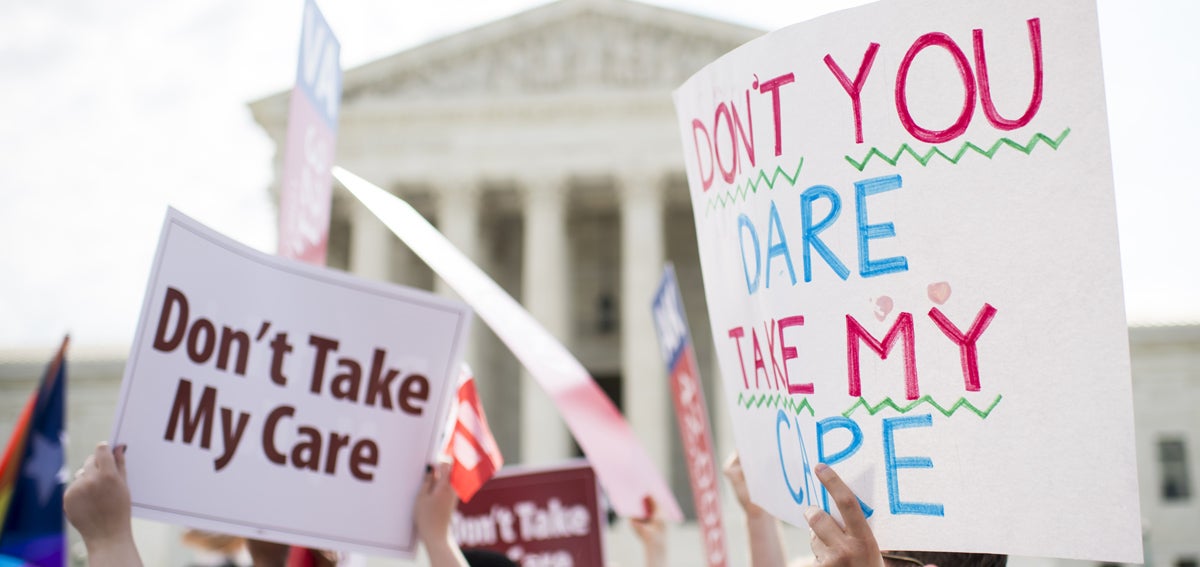
The Supreme Court on Tuesday rejected an effort by Democrats to expedite a challenge to a lower court’s ruling striking down a key tenet of ObamaCare, narrowing the possibility that the court takes up the contentious case this year.

The House of Representatives and a group of blue states had asked the court to fast-track their appeal after the 5th Circuit Court of Appeals ruled that the Affordable Care Act’s individual mandate is unconstitutional.

“Under the current state of affairs, there is considerable doubt over whether millions of individuals will continue to be able to afford vitally important care,” the House wrote in a court filing earlier this month.

“Millions of individuals will live with the insecurity of not knowing that they have access to affordable health care, and will be forced to make important life decisions without knowing how those decisions will affect their continued access to such care.”

“If the Court does not hear the case this Term, that uncertainty will likely persist through next year’s open enrollment period,” the House wrote.

Tuesday’s order makes it unlikely that the high court will rule on the health care law before the November presidential election, where health insurance policy is sure to play a prominent role.

The 5th Circuit’s ruling delivered a victory for the coalition of conservative state attorneys general challenging the Obama administration’s signature achievement.

The Trump administration has declined to defend the Affordable Care Act in court, and the president has cheered on legal efforts to dismantle it.

“This decision will not alter the current healthcare system,” President Trump said in a statement last month. “My Administration continues to work to provide access to high-quality healthcare at a price you can afford, while strongly protecting those with pre-existing conditions. The radical healthcare changes being proposed by the far left would strip Americans of their current coverage. I will not let this happen.”

It’s still unclear whether the Supreme Court will decide to hear the challenge to the 5th Circuit ruling. Now that the justices have chosen to adhere to a normal briefing schedule, that decision will likely not come until March at the earliest.


Remembering King’s fight for health-care equity

https://www.limaohio.com/news/393041/remembering-kings-fight-for-health-care-equity

Image result for martin luther king on healthcare

America celebrates a distortion of Martin Luther King Jr., void of his prophetic call to justice by any nonviolent means necessary. Particularly around the annual remembrance of his life Monday, watch for his words to be repackaged in tasty sound bites and stripped of the so-called extremism that prompted FBI Director J. Edgar Hoover to label him “the most dangerous man in America.”

Chicago was a seminal backdrop for King’s work toward justice and the place where he sounded his call for health care justice. Before a medical conference in 1966 he proclaimed, “Of all the forms of inequality, injustice in health is the most shocking and the most inhuman because it often results in physical death.” National criticism ensued because this activist, two years after he won the Nobel Peace Prize, dared to articulate a prophetic truism still relevant in 2020.

Researchers at New York University found that Chicago has the largest gap in life expectancy of any city in the United States (followed by Washington, D.C., and New York). Although the national trend in the gap between blacks and non-Hispanic whites continues to improve, ZIP codes can still determine life expectancy with alarming racial disparities. Like real estate, health inequality is about location, location, location.

Dallas is another city with a dubious distinction. The Urban Institute ranked it last out of 274 U.S. cities in racial equity and racial segregation. A study by Parkland Health and Hospital System and the Dallas County Health Department found that geography is deeply linked to health inequity, where a difference of 2 miles has a life expectancy gap of 26 years. Although separated by 1,000 miles, Dallas and Chicago share similar systemic inequities that perpetuate racial disparities in health.

These glaring divides are an enduring legacy of decades of isolating black Americans seeking homeownership by marking mortgage lending maps with red lines. Today, more than 50 years since the passage of the Fair Housing Act, 91% of the communities identified as “best” on the redlined maps remain middle to upper class, with 85% of these communities having majority white populations. Accordingly, 3 out of 4 redlined neighborhoods remain impoverished, and 67% of redlined neighborhoods remain populated by racial minorities. Many were intentionally located in proximity to industrial areas, municipal landfills and toxic waste sites — and the subsequent negative health impacts persist across generations.

This lengthy history of systemic inequality will take time to remedy, as will the legacy of distrust of the medical establishment from the history of experimentation without consent on black Americans. A doctor known as the “Father of Modern Gynecology” performed barbaric vaginal operations on enslaved women. They were denied anesthesia, physically restrained, repeatedly mutilated. The U.S. Public Health Service denied 600 men therapeutic penicillin from 1932 to 1972 to allow the study of the natural progression of latent syphilis in the Tuskegee syphilis experiment. Their health was compromised, as were their partners and children who were predictably exposed to the disease. Black women, many of them teenagers, were the prime target for controlled breeding through forced sterilization. This practice of eugenics did not end until the 1980s. And there was the Pentagon-funded study of nontherapeutic, whole-body irradiation from 1960 to 1971, in which 25% of the subjects died within one month of exposure. All were poor, most were black, and the Radiological Society of North America awarded the lead physician its highest honor.

Nearing his death, King was deemed “unfavorable” by two-thirds of Americans in a 1966 Gallup poll. Decades later in a 1999 Gallup poll, more than 90% of Americans had a favorable opinion and ranked him as the second most admired person of the 20th century (behind Mother Teresa). As we celebrate his legacy, we should embrace his prescient view on health care inequity and further his goal of creating a just society for all.

Perhaps King’s greatest threat was to recognize that, from Chicago to Dallas and to other cities and towns across the land, we are more alike than different. He dared to criticize health inequities embedded in communities from urban ghettos to the mountains of West Virginia. And although his life was ended while he was building bridges across racial and ethnic divides, his dream of proper health care for all should not. Because if raising his voice against persistent health inequality made King a dangerous man, add us to that list.

Health inequality remains among the greatest injustices of our time, and, as King penned in “Letter From Birmingham Jail,” “injustice anywhere is a threat to justice everywhere.” Like King, let us commit ourselves anew to eradicating these death-dealing realities “until justice rolls down like waters, and righteousness like a mighty stream” (Amos 5:24).