Trust issues plague the relationship between Ascension St. Joe’s and the community it serves

https://www.jsonline.com/story/news/health/2019/12/16/st-joes-accountability-coalition-seek-commitment-ascension-hospital/3831008002/?utm_source=Sailthru&utm_medium=email&utm_campaign=Issue:%202019-12-17%20Healthcare%20Dive%20%5Bissue:24684%5D&utm_term=Healthcare%20Dive

Image result for ascension st joseph hospital milwaukee

Three empty chairs at a community meeting epitomized the mistrust between the leaders of Ascension Wisconsin and the St. Joe’s Accountability Coalition.

The coalition, composed primarily of community leaders from Milwaukee’s north side, invited Ascension Wisconsin to that Oct. 1 meeting to press the health system to sign a legal contract binding it to a list of commitments. The commitments included keeping Ascension St. Joseph hospital open and providing an urgent care clinic, affordable housing assistance, local hiring, more employee training and living wages for all employees.

Ascension didn’t show.

For one, Ascension Wisconsin officials said they were told they would not be allowed to speak at the event. For another, they said signing a contract was unnecessary because they have promised to keep the hospital open, already hire locally and provide employee training.

The hospital, which employs about 800 people, is one of the neighborhood’s largest employers.

The coalition wants the hospital to sign a community benefits agreement, known as a CBA, which is a contract between community groups and real estate developers or government entities.

Reggie Newson, Ascension Wisconsin’s vice president of government and community services, said the health system is proving its commitment to the community by expanding and adding services to St. Joseph.

For example, two certified nurse-midwives were just hired for the hospital’s new midwifery clinic and a third is being recruited. The hospital is also planning to hire a cardiac nurse practitioner and cardiologist.

But members of the coalition aren’t convinced, because they say there is no legal penalty if Ascension fails to follow through on its promises.

Nate Gilliam, an organizer with the Wisconsin Federation of Nurses & Health Professionals, advisory board member of the University of Wisconsin Population Health Institute and coalition spokesman, said the coalition just wants accountability.

“It’s good that they’re saying all these great things on paper and to the media,” he said. “But if they are going to do that, they shouldn’t have a problem with signing a CBA.”

Future bright despite history of mistrust, Ascension says

The lack of trust between the coalition and Ascension Wisconsin started 18 months ago, when hospital administrators — citing losses of roughly $30 million a year — proposed cutting some of Ascension St. Joseph’s surgical and medical units and other services, such as cardiology support.

The hospital, at 5000 W. Chambers St., serves a majority African American population on the city’s north side, an area facing steep socioeconomic disadvantages. Decades of limited access to health care have contributed to higher rates of chronic disease. Higher rates of poverty means many residents rely on Medicaid for health insurance.

Residents interpreted Ascension’s proposal as a precursor to closing the hospital and — in an area where transportation is scarce — feared they would have to go farther for health care.

The proposal was criticized by Mayor Tom Barrett, several aldermen and community leaders, including George Hinton, CEO of the Social Development Commission and former president of Aurora Sinai Medical Center, who wrote an op-ed in opposition.

Ascension dropped the proposal.

But that was 18 months ago.

Since then, Newson said the hospital surveyed more than 1,000 people by telephone and held five community listening sessions. The information was used to develop priorities for the hospital and corresponding programs, such as the midwifery program and heart and vascular community care center.

Similarly, members of the coalition conducted their own survey, knocking on hundreds of doors and collecting 584 detailed responses.

When surveyed on non-clinical services, over 40% of residents said housing assistance, local hiring and living wages were their top priorities. From the coalition’s survey on clinical services, 61.6% said access to urgent care was most important to them.

Kevin Kluesner, Ascension St. Joseph’s chief administrative officer, said he and others are well aware of the health disparities and disadvantages within the community they serve.

He said Ascension Wisconsin’s push to expand services is proof the hospital isn’t going anywhere.

That commitment is despite the hospital’s having lost roughly $150 million since the 2012 fiscal year. In the 2018 fiscal year, the most recent for which information is available, Ascension St. Joseph lost $31.6 million.

By comparison, Froedtert Hospital reported $134 million in profits for the 2018 fiscal year, according to information filed with the Wisconsin Hospital Association. Aurora St. Luke’s Medical Center reported $166 million in profits in 2018.

Gilliam said that since the hospital is a non-profit venture, lost profits shouldn’t matter. He also said that Ascension Wisconsin has more profitable locations across the state, that can offset the losses at St. Joseph.

Coalition wants accountability

The results from the coalition’s survey mirrored what residents at the Oct. 1 community meeting described.

Charles Hawkins said he likes his primary care physicians, but said they keep leaving.

Another resident who lives blocks away from the hospital, Arkesia Jackson, said when her brother-in-law experienced a flare-up of his COPD, or chronic obstructive pulmonary disease, she was thankful a community hospital was nearby.

“He ran inside the emergency and collapsed, car running,” she said. “He is a patient at St. Joe’s. They had all his records, they knew who he was, they knew what he was suffering from.”

Newson said the goal is to provide consistent, quality care for all patients.

Gilliam acknowledged that details of what the coalition is asking for, such as racially equitable health care and helping with housing assistance, are somewhat vague. However, that’s because its members said they want to sit down with Ascension and hammer out an agreement — as long as Ascension commits to signing one.

Coalition members argue that other hospitals have worked with community groups on similar initiatives.

Robert Silverman, a professor in the Department of Urban and Regional Planning at the University of Buffalo, said there are some rare examples of CBAs being used in the health care field.

For example, Yale University signed a CBA with the Community Organized for Responsible Development group in 2006 regarding the construction of a new cancer center.

It still remains unlikely that Ascension, a national organization, would willingly set such a precedent for its hospitals.

Gilliam said he thinks it’s important for hospitals to be accountable to the community.

“I don’t see why they see a community benefits agreement as adversarial off the top,” Gilliam said. “Whenever they’re ready to come to the table in earnest, we’ll be there. That’s it.”

But with the addition and expansion of several new programs, Kluesner said he’s not sure what else hospital officials can do to prove they are serious about being a reliable anchor institution on the city’s north side.

“We’ve signed 11 new providers. That’s the best proof we could give of our commitment to growing services here at St. Joseph. If people are wondering what are we doing at Ascension St. Joseph, I think that actions speak louder than words,” he said.

 

Hospitals lose challenge to 2020 site-neutral pay cuts

https://www.beckershospitalreview.com/finance/hospitals-lose-challenge-to-2020-site-neutral-pay-cuts.html?origin=CFOE&utm_source=CFOE&utm_medium=email

Image result for site-neutral pay cuts

A Washington, D.C., federal judge ruled Dec. 16 that the court cannot stop CMS from enacting site-neutral payments for off-campus providers in 2020.

In its final Outpatient Prospective Payment System rule for 2019, CMS made payments for clinic visits site-neutral by reducing the payment rate for evaluation and management services provided at off-campus provider-based departments.

In an attempt to overturn the rule, the American Hospital Association and dozens of hospitals sued CMS, arguing it exceeded its authority when it finalized the cuts in the rule.  

U.S. District Judge Rosemary Collyer sided with the association and other hospitals in September, ruling CMS overstepped its authority when it expanded the site-neutral pay policy. But CMS moved forward with the site-neutral  cuts in its 2020 OPPS rule, slashing off-campus department payments to a rate of 40 percent of the OPPS rate.

The association asked Ms. Collyer to uphold her September decision in an attempt to stop the 2020 payment cuts from taking effect Jan. 1, but ruled Dec. 16 that the court doesn’t have jurisdiction to stop the continuation of the cuts next year.

“As a technical matter, the government correctly argues that the court’s previous order was limited only to the 2019 final rule,” the judge wrote.

The court loss for the association representing hospitals comes just days after CMS agreed to repay hospitals that were paid at the reduced rate this year.

“The AHA and other plaintiffs remain confident that the courts will find the 2020 cuts to be illegal, just as they found the 2019 cuts,” Melinda Hatton, the AHA’s general counsel, wrote in a statement to Becker’s Hospital Review.

Access the full ruling here.


Philadelphia hospital sells for $50M

https://www.beckershospitalreview.com/hospital-transactions-and-valuation/philadelphia-hospital-sells-for-50m-121619.html?origin=CFOE&utm_source=CFOE&utm_medium=email

Image result for st christopher hospital philadelphia

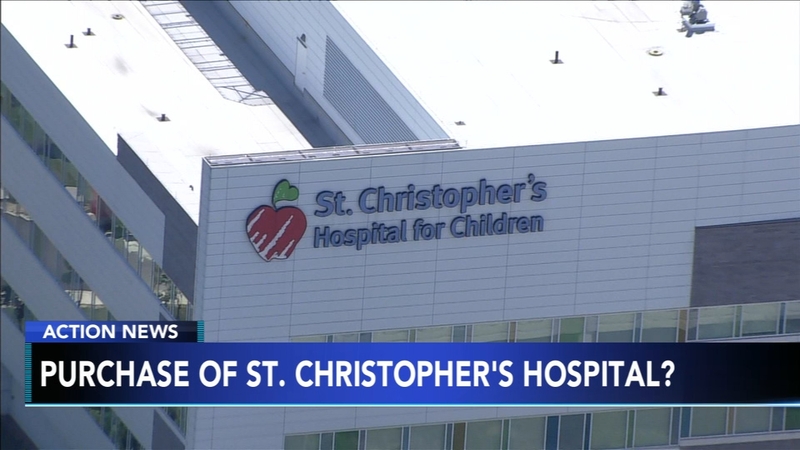
West Reading, Pa.-based Tower Health and Drexel University completed the $50 million acquisition of St. Christopher’s Hospital for Children in Philadelphia on Dec. 15.

St. Christopher’s was put up for sale after it and Philadelphia-based Hahnemann University Hospital filed for Chapter 11 bankruptcy at the end of June. Hahnemann closed in September, the same month Tower Health and Drexel University entered into a $50 million agreement to acquire St. Christopher’s.

With the sale complete, 188-bed St. Christopher’s will return to nonprofit status.

“We are grateful for the continuing dedication and hard work of the physicians and employees at St. Christopher’s,” Tower Health President and CEO Clint Matthews said in a press release. “We are excited about a bright future for St. Christopher’s as it continues to serve as a center for healthcare, medical education and research, and innovation.”


South Carolina is the next battleground for Medicaid work requirements

https://www.axios.com/south-carolina-medicaid-work-requirements-f8c52243-d1de-47bf-bf47-5ea82326cea4.html

Image result for Medicaid work requirements

The Trump administration is losing the legal battle over Medicaid work requirements — one of its most impactful and controversial health care policies — but it is leaning into that fight even more aggressively.

Driving the news: The Centers for Medicare & Medicaid Services formally signed off yesterday on South Carolina’s work requirements. Medicaid recipients in the state will have to perform 80 hours per month of work or community service, unless they receive an exemption.

Why it matters: Other states have primarily sought work requirements as a condition of their Medicaid expansions, but South Carolina will impose its new rules without expanding.

Where it stands: A federal judge has already ruled against work requirements in Arkansas, Kentucky and New Hampshire, arguing that they’re inconsistent with Medicaid’s statutory goals.

  • Judge James Boasberg has leaned heavily on the fact that work requirements would cause thousands of people to lose their Medicaid coverage.
  • That will also happen in South Carolina, and those coverage losses will be a factor in the inevitable lawsuits over these rules.

Yes, but: Those rulings are working their way through the appeals process, and rather than change course or slow down in the face of legal setbacks, the administration is getting work requirements on the books wherever it can and hoping for an eventual win in the courts.


Hospitals win back $800 million from Medicare

https://www.axios.com/hospitals-medicare-trump-administration-regulation-c7161fba-51b8-421b-b1d6-3e4615dd265c.html

Illustration of a statue of Justice wearing a doctor's coat and a stethoscope

The Trump administration is backtracking on a major policy that cut payments to hospitals while the policy is stuck in the courts.

The big picture: The hospital industry is getting back almost $800 million, and the Trump administration has failed to implement another regulation — one that most experts support, too.

Details: Any hospital that was paid a lower amount for a routine clinic visit in 2019 will automatically be paid the difference from the older, higher amount, the Centers for Medicare & Medicaid Services said in a bulletin on Thursday.

  • CMS wanted to create a level playing field, arguing that hospitals should not be paid more for these standard checkups when they could be done for far less in an independent doctor’s office.
  • Hospitals naturally hated the idea, took the government to court, won, and are now fighting to eliminate the policy from future years.


Government funding bill deal will repeal key ACA taxes

https://www.axios.com/government-funding-bill-affordable-care-act-taxes-ce13c0af-15d8-4e54-8210-296afa68e9b0.html

U.S. Capitol building

Congress is expected to soon announce a deal to repeal the Affordable Care Act’s health insurance, medical device and “Cadillac” employer health plan taxes — and to raise the smoking age to 21, according to a senior House Democratic aide familiar with talks.

Why it matters: The decision is a colossal win for the health care industry.

  • If this wasn’t good enough news for the industry, the deal won’t address surprise medical bills — and it avoids prescription drug prices except for the CREATES Act, which helps generics get to market faster.
  • The taxes have been repeatedly delayed. And while the industry has pushed for their repeal for years, it hasn’t yet been successful.

Between the lines: Voters are decidedly not asking Washington to lift industry taxes while avoiding dealing with two of the most popular health care issues, but if that’s how this plays out, it’s a great indicator that the industry’s lobbying strength is as good as ever.

  • It’s also a good sign that cost control — the intention of the Cadillac tax, a 40% excise tax on the most generous employer plans — is still not very popular with lawmakers, even as health care costs continue to rise.
  • The tax was expected to raise $200 billion over 10 years.

The other side: The industry says that the ACA taxes end up getting passed along to patients.