The Most Important Leadership Competencies, According to Leaders Around the World

https://hbr.org/2016/03/the-most-important-leadership-competencies-according-to-leaders-around-the-world?utm_source=facebook&utm_medium=social&utm_campaign=hbr&fbclid=IwAR3P_HH0Xd1-7iiT-xo0OydmS9uu6OOONRkj0ox_CH2phzt1wwr9p3suryE

Image result for The Most Important Leadership Competencies, According to Leaders Around the World

What makes an effective leader? This question is a focus of my research as an organizational scientist, executive coach, and leadership development consultant. Looking for answers, I recently completed the first round of a study of 195 leaders in 15 countries over 30 global organizations. Participants were asked to choose the 15 most important leadership competencies from a list of 74. I’ve grouped the top ones into five major themes that suggest a set of priorities for leaders and leadership development programs. While some may not surprise you, they’re all difficult to master, in part because improving them requires acting against our nature.

Demonstrates strong ethics and provides a sense of safety.

This theme combines two of the three most highly rated attributes: “high ethical and moral standards” (67% selected it as one of the most important) and “communicating clear expectations” (56%).

Taken together, these attributes are all about creating a safe and trusting environment. A leader with high ethical standards conveys a commitment to fairness, instilling confidence that both they and their employees will honor the rules of the game. Similarly, when leaders clearly communicate their expectations, they avoid blindsiding people and ensure that everyone is on the same page. In a safe environment employees can relax, invoking the brain’s higher capacity for social engagement, innovation, creativity, and ambition.

Neuroscience corroborates this point. When the amygdala registers a threat to our safety, arteries harden and thicken to handle an increased blood flow to our limbs in preparation for a fight-or-flight response. In this state, we lose access to the social engagement system of the limbic brain and the executive function of the prefrontal cortex, inhibiting creativity and the drive for excellence. From a neuroscience perspective, making sure that people feel safe on a deep level should be job #1 for leaders.

But how? This competency is all about behaving in a way that is consistent with your values. If you find yourself making decisions that feel at odds with your principles or justifying actions in spite of a nagging sense of discomfort, you probably need to reconnect with your core values. I facilitate a simple exercise with my clients called “Deep Fast Forwarding” to help with this. Envision your funeral and what people say about you in a eulogy. Is it what you want to hear? This exercise will give you a clearer sense of what’s important to you, which will then help guide daily decision making.

To increase feelings of safety, work on communicating with the specific intent of making people feel safe. One way to accomplish this is to acknowledge and neutralize feared results or consequences from the outset. I call this “clearing the air.” For example, you might approach a conversation about a project gone wrong by saying, “I’m not trying to blame you. I just want to understand what happened.”

Empowers others to self-organize.

Providing clear direction while allowing employees to organize their own time and work was identified as the next most important leadership competency.

No leader can do everything themselves. Therefore, it’s critical to distribute power throughout the organization and to rely on decision making from those who are closest to the action.

Research has repeatedly shown that empowered teams are more productive and proactive, provide better customer service, and show higher levels of job satisfaction and commitment to their team and organization. And yet many leaders struggle to let people self-organize. They resist because they believe that power is a zero-sum game, they are reluctant to allow others to make mistakes, and they fear facing negative consequences from subordinates’ decisions.

To overcome the fear of relinquishing power, start by increasing awareness of physical tension that arises when you feel your position is being challenged. As discussed above, perceived threats activate a fight, flight, or freeze response in the amygdala. The good news is that we can train our bodies to experience relaxation instead of defensiveness when stress runs high. Try to separate the current situation from the past, share the outcome you fear most with others instead of trying to hold on to control, and remember that giving power up is a great way to increase influence — which builds power over time.

Fosters a sense of connection and belonging.

Leaders who “communicate often and openly” (competency #6) and “create a feeling of succeeding and failing together as a pack” (#8) build a strong foundation for connection.

We are a social species — we want to connect and feel a sense of belonging. From an evolutionary perspective, attachment is important because it improves our chances of survival in a world full of predators. Research suggests that a sense of connection could also impact productivity and emotional well-being. For example, scientists have found that emotions are contagious in the workplace: Employees feel emotionally depleted just by watching unpleasant interactions between coworkers.

From a neuroscience perspective, creating connection is a leader’s second most important job. Once we feel safe (a sensation that is registered in the reptilian brain), we also have to feel cared for (which activates the limbic brain) in order to unleash the full potential of our higher functioning prefrontal cortex.

There are some simple ways to promote belonging among employees: Smile at people, call them by name, and remember their interests and family members’ names. Pay focused attention when speaking to them, and clearly set the tone of the members of your team having each other’s backs. Using a song, motto, symbol, chant, or ritual that uniquely identifies your team can also strengthen this sense of connection.

Shows openness to new ideas and fosters organizational learning.

What do “flexibility to change opinions” (competency #4), “being open to new ideas and approaches” (#7), and “provides safety for trial and error” (#10) have in common? If a leader has these strengths, they encourage learning; if they don’t, they risk stifling it.

Admitting we’re wrong isn’t easy. Once again, the negative effects of stress on brain function are partly to blame — in this case they impede learning. Researchers have found that reduced blood flow to our brains under threat reduces peripheral vision, ostensibly so we can deal with the immediate danger. For instance, they have observed a significant reduction in athletes’ peripheral vision before competition. While tunnel vision helps athletes focus, it closes the rest of us off to new ideas and approaches. Our opinions are more inflexible even when we’re presented with contradicting evidence, which makes learning almost impossible.

To encourage learning among employees, leaders must first ensure that they are open to learning (and changing course) themselves. Try to approach problem-solving discussions without a specific agenda or outcome. Withhold judgment until everyone has spoken, and let people know that all ideas will be considered. A greater diversity of ideas will emerge.

Failure is required for learning, but our relentless pursuit of results can also discourage employees from taking chances. To resolve this conflict, leaders must create a culture that supports risk-taking. One way of doing this is to use controlled experiments — think A/B testing — that allow for small failures and require rapid feedback and correction. This provides a platform for building collective intelligence so that employees learn from each other’s mistakes, too.

Nurtures growth.

“Being committed to my ongoing training” (competency #5) and “helping me grow into a next-generation leader” (#9) make up the final category.

All living organisms have an innate need to leave copies of their genes. They maximize their offspring’s chances of success by nurturing and teaching them. In turn, those on the receiving end feel a sense of gratitude and loyalty. Think of the people to whom you’re most grateful — parents, teachers, friends, mentors. Chances are, they’ve cared for you or taught you something important.

When leaders show a commitment to our growth, the same primal emotions are tapped. Employees are motivated to reciprocate, expressing their gratitude or loyalty by going the extra mile. While managing through fear generates stress, which impairs higher brain function, the quality of work is vastly different when we are compelled by appreciation. If you want to inspire the best from your team, advocate for them, support their training and promotion, and go to bat to sponsor their important projects.

These five areas present significant challenges to leaders due to the natural responses that are hardwired into us. But with deep self-reflection and a shift in perspective (perhaps aided by a coach), there are also enormous opportunities for improving everyone’s performance by focusing on our own.




Healthcare Executives See a Mixed Outlook

https://www.jpmorgan.com/commercial-banking/insights/healthcare-mixed-outlook

Image result for Healthcare Executives See a Mixed Outlook

In a recent survey of healthcare leaders, most were confident about their own organizations going into the new year. But respondents expressed concern about a range of evolving industry-wide challenges, including costs, technology and talent.

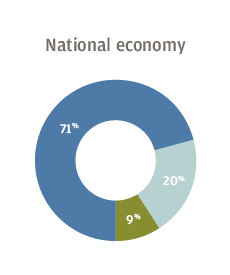
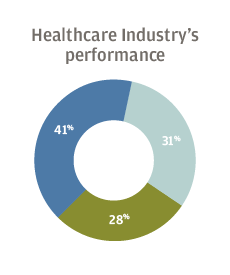
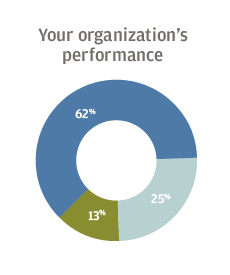
A majority of US healthcare executives surveyed by J.P. Morgan said they were optimistic about the financial performance of their own organizations going into 2019, as well as the national and local economies. But most were less positive about the outlook for the industry as a whole, with 28 percent expressing pessimism and another 31 percent merely neutral.

National economy 71% optimistic, 20% neutral, 9% pessimistic
Healthcare Industry's performance 41% optimistic, 31% neutral, 28% pessimistic
Your organization's performance 62% optimistic, 13% neutral, 25% pessimistic
Legend - Optimistic, Blue
Legend: Neutral Gray
Legend: Pessimistic, Green

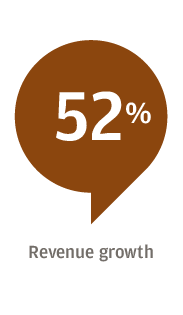
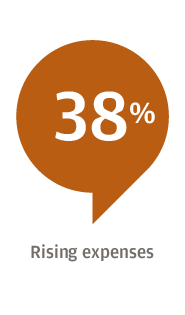
Respondents to the survey, conducted Oct. 16 to Nov. 2 of 2018, said their biggest concerns were revenue growth, rising expenses and labor costs. The executives said their organizations plan to invest the most in information technology and physician recruitment.

Healthcare Changes Shape Perceptions

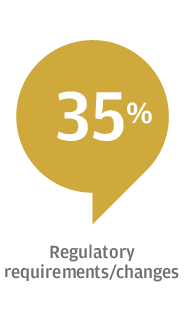
The pessimism about the industry likely stems, in part, from regulatory uncertainty and an ongoing shift from a fee-for-service model toward a value-based payment system, said Will Williams, Senior Healthcare Industry Executive within J.P. Morgan’s Commercial Banking Healthcare group. “Healthcare is going through the most transition of any industry in the country right now,” he said. Amid this upheaval, healthcare organizations face a combination of challenges, including lower reimbursement rates for Medicaid and Medicare patients, increased competition, and higher costs for labor, pharmaceuticals and technology investments.

The optimism that executives feel about their own hospital or healthcare group may come from a sense that an individual organization can adapt to industry changes, said Jenny Edwards, Commercial Banker in the healthcare practice at J.P. Morgan. “You can control certain factors, and make adjustments to compensate for the headwinds.”

Biggest Challenges for the New Year

Growth Strategies

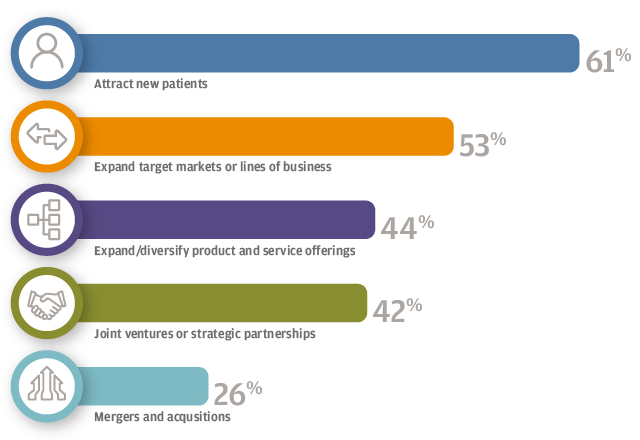
For 61 percent of respondents, the focus is on attracting new patients, followed by expanding target markets or lines of business (53 percent), and expanding or diversifying product and service offerings (44 percent). Hospitals, for example, have worked to add more patients to their broader healthcare system by opening clinics for urgent care or physical therapy, Edwards said.

As patient habits change, hospital systems have needed to become more consumer-focused, Edwards said. Patients are more likely to shop around for their care, expect transparent pricing and review healthcare workers on social media sites. This “retail-ization” trend in healthcare is accelerating, Edwards said. “You can shop for healthcare like you would a new pair of jeans.”

Skilled Talent Wanted

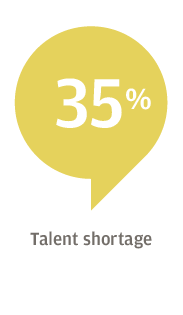
The talent shortage is top of mind for many healthcare executives, with 92 percent of survey respondents saying they were at least somewhat concerned with finding candidates with the right skill set. For 35 percent of respondents, the talent shortage is one of their top three challenges.

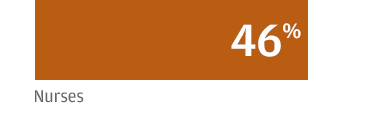
For those respondents who expressed concern, the most difficulty arises in filling positions for physicians (52 percent) and nurses (46 percent). To address the challenge, 76 percent said they expect to increase compensation of their staff over the next 12 months. According to 37 percent of respondents, the talent pool’s high compensation expectations factor into the shortage.

Most Challenging Positions to Fill

52%
46%
38%
29%
21%
21%

The talent shortage is an issue across the industry, Williams said, and burnout among doctors and nurses presents an ongoing problem. One contributing cause could be evolving changes in daily practice, with considerably more time today spent on electronic medical record entries and less on patient care. Williams said, “Doctors are getting frustrated. The problem is trying to replace those doctors as they quit practicing.”

Healthcare executives are particularly concerned about shortages of primary care professionals. “Rural communities already have these shortages,” said Brendan Corrigan, Vice Chair of the J.P. Morgan Healthcare Council.

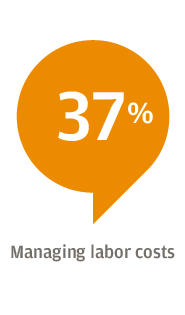
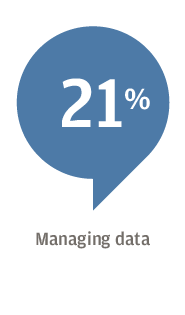
Labor costs tend to be higher in healthcare than in other sectors, Williams said, as a hospital must have coverage for all of its major roles 24 hours a day. When asked where they struggle with workforce management, the survey respondents cite staff turnover and its associated cost (47 percent), the ability to flex staff based on patient volumes (41 percent), and the cost of overtime and premium labor (36 percent). These workforce issues not only represent specific challenges; they all contribute to labor costs, which, as noted above, rank in the top three challenges for 2019.

Investments for a Changing Industry

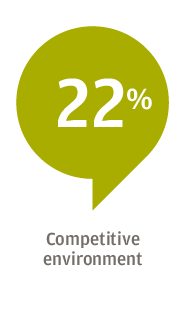
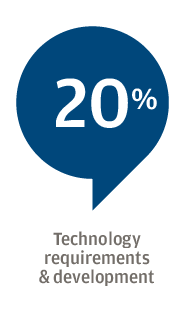
A majority (51 percent) of organizations plan to invest in IT over the next 12 months. Other areas for investment included physician recruitment (44 percent) and new or replacement facilities (36 percent).

Since healthcare organizations manage a large amount of private patient health information, data security remains a large part of IT expenditures. “It’s a huge focus—they’re spending a lot of time and money on preventing a breach,” Edwards said. She goes on to note that the transition to patient EMR systems brings another big IT expense—more than $1 billion for the largest healthcare systems.

Overall, the survey showed healthcare executives grappling with rising costs and structural changes that affect the entire industry. “Healthcare is trying to figure out how to fix themselves,” Williams said.


Healthcare’s Leading Financial Challenges and Opportunities in 2019

https://www.jpmorgan.com/commercial-banking/insights/healthcare-financial-challenges-2019

Image result for Healthcare’s Leading Financial Challenges and Opportunities in 2019

Faced with slim margins and rising costs, the healthcare industry is looking to blockchain, data analytics and innovation to help drive savings and unlock new revenue.

The healthcare industry is facing an urgent need to reduce costs and increase revenue. Research from the Healthcare Advisory Council reveals the not-for-profit health system will need between $40 million and $44 million annually in cost avoidance over the next eight years to maintain a sustainable margin. The challenge is significant, but emerging technologies and innovative strategies are creating opportunities for greater efficiency, better patient care and decreased costs, according to executives and other leaders in healthcare.

Making a Margin on Medicare

Health systems with the best margin sustainability pursue effective cost-avoidance practices, including:

  • Embedding cost discipline throughout the organization
  • Escalating spending decisions
  • Reducing unnecessary hires
  • Matching patient acuity to the level of care
  • Reducing drug formulary costs

But even with these practices, cost avoidance is challenging—particularly when it comes to Medicare-reliant seniors, who often require frequent medical treatments and hospital admissions. Turning to advanced electronic medical records (EMRs) that are designed around a health system’s risk and workflow can improve treatment decisions and continuity of care, leading to decreased admissions, better cost effectiveness and a greater profit margin.

Simultaneously, some health systems are looking to a pre-paid, value-based medicine model, as opposed to the more common fee-for-service model. Value-based medicine moves the payment upstream, incentivizing providers to focus on maintaining patient health rather than on providing medical interventions. Decreasing the amount of care needed to keep patients healthy has a direct impact on the size of an organization’s margins.

Blockchain: The Potential to Change Healthcare

One of the most common inefficiencies in healthcare is how physicians are credentialed. The months-long process for clinician credentialing commands significant time and costs. Emerging blockchain technology may be one solution to this persistent point of inefficiency.

With blockchain, rather than sending a clinician credentialing application to several organizations for verification, the physician and all credentialing locations—as members of a dedicated blockchain network—can have access to the physician’s highly encrypted log. Any changes to the physician’s log can be transmitted to the network and validated by private keys known only to each party and with algorithms agreed upon by the network. In this, trust transfers from a third-party clearinghouse to the network as a whole.

In the blockchain world, the physician could provide access codes to the hospital to review their verified credentials. This could save as much as 80 percent of the current cost and time invested in physician credentialing. Using the same technology and process, blockchain may also be a valuable tool for finding efficiencies when working with patient records.

Venture Capital: Strategic Investing 2.0

Healthcare system-based venture capital funds are growing rapidly. In 2017, more than 150 distinct corporate venture groups operated within the healthcare arena, according to Health Enterprise Partners, and these groups participated in 38 percent of all healthcare IT financing.

There are four common objectives for starting such a fund:

  • Generate new income sources not subject to healthcare reimbursement pressure
  • Identify promising companies that executives might not otherwise encounter
  • Create a vehicle to enhance brand integrity and expand market reach
  • Foster a culture of innovation

Once healthcare investors establish their fund objectives (or mix of objectives), they define their investment approach. This includes establishing a decision-making chain with operational leaders and board members that can allow decisions to be made quickly and in an established pattern. It also includes building infrastructure and could mean adopting a rigorous information environment system, like a healthcare customer relationship management (CRM) system, as well as developing stringent custody and accounting procedures for securities.

Funds should gather resources to support the interactions between the investment fund and the companies in which they invest. At the outset, they should decide the relationship they will have with their investment targets and whether return on investment is a primary or secondary goal. As a part of choosing investment targets, it is important that funds address an important problem of the parent organization and in a way that the organization supports.

Time Is Money: Accelerating the Pace of Care

For health systems, every patient hour costs $250 in direct operating costs, more than half of which owe to labor. By this, improving efficiency and decreasing the time needed for tasks can save money and support a healthy margin. A mix of advanced analytical data and targeted interpersonal relations can help reduce the time required for common hospital and health system tasks. Predictive analytic modeling software can help yield clearer insight into operations, revealing ways to break down barriers between departments and more effectively manage census levels. This optimizes census distribution inside a complex medical center.

Another rich source of potential healthcare savings lies in the staff hiring process. Successful staff hiring for all income levels is one of the great challenges for health systems, but data analytics can help make the hiring process more efficient. With models built on the characteristics of successful hires, predictive analytics can point to applicants with the best potential for success, improving confidence in hiring decisions. Importantly, while analytics and automation can play a big part in finding the best applicants, once a candidate becomes an employee, important decisions like promotions or relocations require direct personal contact.

Data and Dollars Innovation

As health systems explore avenues for increased efficiency, lower costs and better margins, J.P. Morgan has developed digital innovations to support healthcare investment, strategy and operation. Two of the most applicable include:

  • Enhanced Healthcare Lockbox: J.P. Morgan has supercharged its lockbox technology with machine learning. The auto-posting rate has increased by nearly one-fifth, allowing hospitals and health systems to redeploy assets to other revenue-generating sectors like denial management. The high-tech upgrade has also saved three to four days in clients’ working capital.
  • Corporate Quick Pay: The need for hospitals and health systems to collect an increasing amount of money directly from patients has resulted in an explosion in low-dollar patient refunds. This creates a problem for the accounts payable departments of healthcare institutions, which were not designed to issue thousands of small checks to patients. J.P. Morgan’s Corporate Quick Pay solution allows health systems to send payments directly to a patient’s bank account using email or text message.

These innovations in artificial intelligence and machine learning drive efficiency across a range of areas. Consider the benefits one client enjoyed by virtue of J.P. Morgan’s digital tools:

  • 70,000 paper-based claims converted to electronic
  • 99.3 percent lift rate for all paper received in lockbox
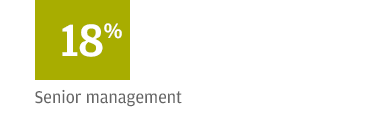
  • 18 percent increase in auto-posting after implementation
  • Three to four days’ improvement to working capital

Going forward, emerging technologies and strategies are indispensable for healthcare systems striving to grow margins in a time when health costs and needs are increasing. Ultimately, hospitals and health systems that find pathways to greater profitability will be best positioned to achieve their primary goal: delivering better care that leads to better patient outcomes.


The Tragedy of the Healthcare Data Commons

The Tragedy of the Healthcare Data Commons

Image result for The Tragedy of the Healthcare Data Commons

Once the system can discriminate on a multitude of data points, the commons collapses.

A theme of my writing over the past ten or so years has been the role of data in society. I tend to frame that role anthropologically: How have we adapted to this new element in our society? What tools and social structures have we created in response to its emergence as a currency in our world? How have power structures shifted as a result?

Increasingly, I’ve been worrying a hypothesis: Like a city built over generations without central planning or consideration for much more than fundamental capitalistic values, we’ve architected an ecosystem around data that is not only dysfunctional, it’s possibly antithetical to the core values of democratic society. Houston, it seems, we really do have a problem.

Last week ProPublica published a story titled Health Insurers Are Vacuuming Up Details About You — And It Could Raise Your Rates.  It’s the second in an ongoing series the investigative unit is doing on the role of data in healthcare. I’ve been watching this story develop for years, and ProPublica’s piece does a nice job of framing the issue. It envisions  “a future in which everything you do — the things you buy, the food you eat, the time you spend watching TV — may help determine how much you pay for health insurance.”

Unsurprisingly, the health industry has  developed an insatiable appetite for personal data about the individuals it covers. Over the past decade or so, all of our quotidian activities (and far more) have been turned into data, and that data can and is being sold to the insurance industry:

“The companies are tracking your race, education level, TV habits, marital status, net worth. They’re collecting what you post on social media, whether you’re behind on your bills, what you order online. Then they feed this information into complicated computer algorithms that spit out predictions about how much your health care could cost them.”

HIPPA, the regulatory framework governing health information in the United States, only covers and protects medical data – not search histories, streaming usage, or grocery loyalty data. But if you think your search, video, and food choices aren’t related to health, well, let’s just say your insurance company begs to differ.

Lest we dive into a rabbit hole about the corrosive combination of healthcare profit margins with personal data (ProPublica’s story does a fine job of that anyway), I want to pull back and think about what’s really going on here.

The Tragedy of the Commons

One of the most fundamental tensions in an open society is the potential misuse of resources held “in common” – resources to which all individuals have access. Garrett Hardin’s 1968 essay on the subject, “The Tragedy of the Commons,” explores this tension, concluding that the problem of human overpopulation has no technical solution. (A technical solution is one that does not require a shift in human values or morality (IE, a political solution), but rather can be fixed by application of science and/or engineering.) Hardin’s essay has become one of the most cited works in social science – the tragedy of the commons is a facile concept that applies to countless problems across society.

In the essay, Hardin employs a simple example of a common grazing pasture, open to all who own livestock. The pasture, of course, can only support a finite number of cattle. But as Hardin argues, cattle owners are financially motivated to graze as many cattle as they possibly can, driving the number of grass munchers beyond the land’s capacity, ultimately destroying the commons. “Freedom in a commons brings ruin to all,” he concludes, delivering an intellectual middle finger to Smith’s “invisible hand” in the process.

So what does this have to do with healthcare, data, and the insurance industry? Well, consider how the insurance industry prices its policies. Insurance has always been a data-driven business – it’s driven by actuarial risk assessment, a statistical method that predicts the probability of a certain event happening. Creating and refining these risk assessments lies at the heart of the insurance industry, and until recently, the amount of data informing actuarial models has been staggeringly slight. Age, location, and tobacco use are pretty much how policies are priced under Obamacare, for example. Given this paucity, one might argue that it’s utterly a *good* thing that the insurance industry is beefing up its databases. Right?

Perhaps not. When a population is aggregated on high-level data points like age and location, we’re essentially being judged on a simple shared commons – all 18 year olds who live in Los Angeles are being treated essentially the same, regardless if one person has a lurking gene for cancer and another will live without health complications for decades. In essence, we’re sharing the load of public health in common – evening out the societal costs in the process.

But once the system can discriminate on a multitude of data points, the commons collapses,  devolving into a system rewarding whoever has the most profitable profile. That 18-year old with flawless genes, the right zip code, an enviable inheritance, and all the right social media habits will pay next to nothing for health insurance. But the 18 year old with a mutated BRCA1 gene, a poor zip code, and a proclivity to sit around eating Pringles while playing Fortnite? That teenager is not going to be able to afford health insurance.

Put another way, adding personalized data to the insurance commons destroys the fabric of that commons. Healthcare has been resistant to this force until recently, but we’re already seeing the same forces at work in other aspects of our previously shared public goods.

A public good, to review, is defined as “a commodity or service that is provided without profit to all members of a society, either by the government or a private individual or organization.” A good example is public transportation. The rise of data-driven services like Uber and Lyft have been a boon for anyone who can afford these services, but the unforeseen externalities are disastrous for the public good. Ridership, and therefore revenue, falls for public transportation systems, which fall into a spiral of neglect and decay. Our public streets become clogged with circling rideshare drivers, roadway maintenance costs skyrocket, and – perhaps most perniciously – we become a society of individuals who forget how to interact with each other in public spaces like buses, subways, and trolley cars.

Once you start to think about public goods in this way, you start to see the data-driven erosion of the public good everywhere. Our public square, where we debate political and social issues, has become 2.2 billion data-driven Truman Shows, to paraphrase social media critic Roger McNamee. Retail outlets, where we once interacted with our fellow citizens, are now inhabited by armies of Taskrabbits and Instacarters. Public education is hollowed out by data-driven personalized learning startups like Alt School, Khan Academy, or, let’s face it, YouTube how to videos.

We’re facing a crisis of the commons – of the public spaces we once held as fundamental to the functioning of our democratic society. And we have data-driven capitalism to blame for it.

Now, before you conclude that Battelle has become a neo-luddite, know that I remain a massive fan of data-driven business. However, if we fail to re-architect the core framework of how data flows through society – if we continue to favor the rights of corporations to determine how value flows to individuals absent the balancing weight of the public commons – we’re heading down a path of social ruin. ProPublica’s warning on health insurance is proof that the problem is not limited to Facebook alone. It is a problem across our entire society. It’s time we woke up to it.

So what do we do about it? That’ll be the focus of a lot of my writing going forward.  As Hardin writes presciently in his original article, “It is when the hidden decisions are made explicit that the arguments begin. The problem for the years ahead is to work out an acceptable theory of weighting.” In the case of data-driven decisioning, we can no longer outsource that work to private corporations with lofty sounding mission statements, whether they be in healthcare, insurance, social media, ride sharing, or e-commerce.

Originally published here.

2018 July 27


Stanford’s $2B hospital to open in October

https://www.beckershospitalreview.com/facilities-management/stanford-s-2b-hospital-to-open-in-october.html?origin=cfoe&utm_source=cfoe

After more than a decade of planning and construction, Palo Alto, Calif.-based Stanford Health Care plans to open a $2 billion hospital in late October, according to the Palo Alto Weekly.

The 824,000-square-foot facility will house an expanded level 1 trauma center and emergency department, 368 private patient rooms, 20 operating rooms and five gardens with native California plants. It will be next to the hospital’s current facility.

After the new hospital opens, the old facility will be renovated at brought up to earthquake-resistant standards. Together, the two buildings will house 600 patient rooms. 

More than 4,000 medical staff will be trained this summer to familiarize themselves with the new facility before it opens to patients, hospital officials said.

Read the full report here.