US health care: An industry too big to fail

https://theconversation.com/us-health-care-an-industry-too-big-to-fail-118895

Image result for US health care: An industry too big to fail

As I spoke recently with colleagues at a conference in Florence, Italy about health care innovation, a fundamental truth resurfaced in my mind: the U.S. health care industry is just that. An industry, an economic force, Big Business, first and foremost. It is a vehicle for returns on investment first and the success of our society second.

This is critical to consider as presidential candidates unveil their health care plans. The candidates and the electorate seem to forget that health care in our country is a huge business.

Health care accounts for almost 20% of GDP and is a, if not the, job engine for the U.S. economy. The sector added 2.8 million jobs between 2006 and 2016, higher than all other sectors, and the Bureau of Labor Statistics projects another 18% growth in health sector jobs between now and 2026. Big Business indeed.

This basic truth separates us from every other nation whose life expectancy, maternal and infant mortality or incidence of diabetes we’d like to replicate or, better still, outperform.

As politicians and the public they serve grapple with issues such as prescription drug prices, “surprise” medical bills and other health-related issues, I believe it critical that we better understand some of the less visible drivers of these costs so that any proposed solutions have a fighting chance to deflect the health cost curve downward.

As both associate chief medical officer for clinical integration and director of the center for health policy at the University of Virginia, I find that the tension between a profit-driven health care system and high costs occupies me every day.

The power of the market

Housing prices are market-driven. Car prices are market-driven. Food prices are market-driven.

And so are health care services. That includes physician fees, prescription drug prices and non-prescription drug prices. So is the case for hospital administrator salaries and medical devices.

All of these goods or services are profit-seeking, and all are motivated to maximize profits and minimize the cost of doing business. All must adhere to sound business principles, or they will fail. None of them disclose their cost drivers, or those things that increase prices. In other words, there are costs that are hidden to consumers that manifest in the final unit prices.

To my knowledge, no one has suggested that Rolls-Royce Motor Cars should price its cars similarly to Ford Motor Company. The invisible hand of “the market” tells Rolls Royce and Ford what their vehicles are worth.

Prescription drugs pricing has different rules

Ford can (they won’t) tell you precisely how much each vehicle costs to produce, including all the component parts that they acquire from other firms. But this is not true of prescription drugs. How much a novel therapeutic costs to develop and bring to market is a proverbial black box. Companies don’t share those numbers. Researchers at the Tufts Center for the Study of Drug Development have estimated the costs to be as high as US$2.87 billion, but that number has been hotly debated.

What we can reliably say is that it’s very expensive, and a drug company must produce new drugs to stay in business. The millions of research and development(R&D) dollars invested by Big Pharma has two aims. The first is to bring the “next big thing” to market. The second is to secure the almighty patent for it.

U.S. drug patents typically last 20 years, but according to the legal services website Upcounsel.com: “Due to the rigorous amount of testing that goes into a drug patent, many larger pharmaceutical companies file several patents on the same drug, aiming to extend the 20-year period and block generic competitors from producing the same drug.” As a result, drug firms have 30, 40-plus years to protect their investment from any competition and market forces to lower prices are not in play.

Here’s the hidden cost punchline: concurrently, several other drugs in their R&D pipelines fail along the way, resulting in significant product-specific losses . How is a poor firm to stay afloat? Simple, really. Build those costs and losses into the price of the successes. Next thing you know, insulin is nearly US$1,500 for a 20-milliliter vial, when that same vial 15 years ago was about $157.

It’s actually a bit more complicated than that, but my point is that business principles drive drug prices because drug companies are businesses. Societal welfare is not the underlying use. This is most true in the U.S., where the public doesn’t purchase most of the pharmaceuticals – private individuals do, albeit through a third party, an insurer. The group purchasing power of 300 million Americans becomes the commercial power of markets. Prices go up.

The cost of doing business, er, treating

I hope that most people would agree that physicians provide a societal good. Whether it’s in the setting of a trusted health confidant, or the doctor whose hands are surgically stopping the bleeding from your spleen after that jerk cut you off on the highway, we physicians pride ourselves on being there for our patients, no matter what, insured or not.

Allow me to state two fundamental facts that often seem to elude patient and policymaker alike. They are inextricably linked, foundational to our national dialogue on health care costs and oft-ignored: physicians are among the highest earners in America, and we make our money from patients. Not from investment portfolios, or patents. Patients.

Like Ford or pharmaceutical giant Eli Lilly, physician practices also need to achieve a profit margin to remain in business. Similarly, there are hidden-to-consumer costs as well; in this case, education and training. Medical school is the most expensive professional degree money can buy in the U.S. The American Association of Medical Colleges reports that median indebtedness for U.S. medical schools was $200,000.00 in 2018, for the 75% of us who financed our educations rather than paying cash.
Our “R&D” – that is, four years each of college and medical school, three to 11 years of post doctoral training costs – gets incorporated into our fees. They have to. Just like Ford Motors. Business 101: the cost of doing business must be factored into the price of the good or service.

For policymakers to meaningfully impact the rising costs of U.S. health care, from drugs to bills to and everything in between, they must decide if this is to remain an industry or truly become a social good. If we continue to treat and regulate health care as an industry, we should continue to expect surprise bills and expensive drugs.

It’s not personal, it’s just…business. The question before the U.S. is: business-as-usual, or shall we get busy charting a new way of achieving a healthy society? Personally and professionally, I prefer the latter.



Many Americans clueless about out-of-pocket medical costs, study finds

https://www.beckershospitalreview.com/finance/many-americans-clueless-about-out-of-pocket-medical-costs-study-finds.html?origin=cfoe&utm_source=cfoe

Image result for cartoon clueless on out-of-pocket medical costs

When it comes to out-of-pocket medical costs, many people are unaware of their potential financial burden, according to a new study released by Discover Personal Loans, a provider of banking tools and resources across various financing options.

For the study, researchers examined the average cost of certain medical procedures and compared them to perceptions of costs from 969 surveyed U.S. residents.

Four takeaways from the study:

1. Researchers found that a three-day hospitalization, knee replacement surgery and an appendectomy had the greatest variation of average actual costs compared to average perceived costs.

2. For example, surveyed Americans perceived the average cost of a three-day hospitalization to be $11,013, while the actual average cost posted on Healthcare.gov is about $30,000. That’s a variation of 63 percent.

3. The variation between average actual cost and average perceived cost for a knee replacement surgery and an appendectomy were 34 percent and 32 percent, respectively.

4. Surveyed Americans anticipate spending $2,016 for an emergency room visit, up 5 percent from the average actual cost from the Health Care Cost Institute and cited by CNN, $1,917.

Read more about the study here.


Recession could come in 6 to 9 months, Morgan Stanley says

https://www.beckershospitalreview.com/strategy/recession-could-come-in-6-to-9-months-morgan-stanely-says.html?origin=cfoe&utm_source=cfoe

Image result for cartoon recession

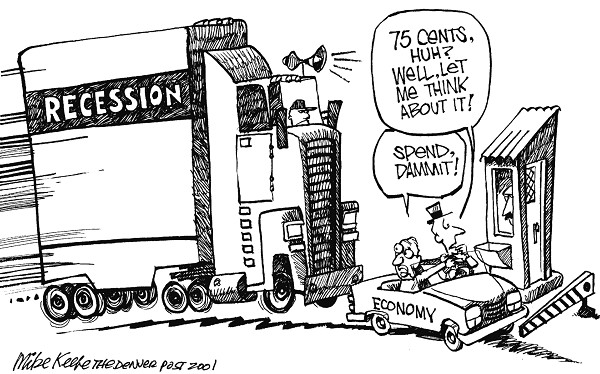
Recent moves from President Donald Trump to raise tariffs on Chinese goods are leading the global economy closer to the brink of recession, according to a Morgan Stanley note cited by Newsweek.

In a recent research note, Morgan Stanley said if President Trump goes through with proposals to raise existing tariffs and China responds, the global economy would fall into recession in the next six to nine months. Specifically, Morgan Stanley’s U.S. public policy lead, Michael Zezas, said the tariffs would be what pushes the global economy into recession.

“Friday’s escalation of tariffs between the U.S. and China suggests they’ve not moved any closer on the key negotiation points that have separated them since May 5,” he said, according to Newsweek. “Neither side sees the benefit to cooperating as better than hanging tough. … We expect that tensions will continue to escalate at least until the costs of doing so are too big to ignore.”

The president said Aug. 23 that he plans to raise existing tariffs to 30 percent from 25 percent on $250 billion of Chinese goods starting Oct. 1. Additionally, he proposed tariffs on another $300 billion of Chinese imports to increase from 10 percent to 15 percent over the coming months. The president’s proposals come after China said it will impose tariffs on another $75 billion of U.S. imports, and that it would reinstate tariffs on auto products that were previously suspended.

Read more here.


The plight of America’s rural health care

https://www.axios.com/the-plight-of-americas-rural-health-care-a34b6c66-7674-4f78-abdc-33f8e711a601.html

Illustration of a tractor plowing a field in the shape of a heart monitor that is petering out

Rural America is stuck in a cycle of increasingly vulnerable patients with declining access to health care.

Why it matters: Rural patients often can’t afford care, are being hounded by hospitals and collection agencies over their unpaid bills, and are facing the reality of life in communities where the last hospital has closed.

Rural Americans tend to be older, sicker and lower-income than urban Americans. They suffer from higher rates of obesity, mental health issues, diabetes, cancer and opioid addiction, as my colleagues Stef Kight and Juliet Bartz reported.

  • They’re also more likely to be uninsured or covered by Medicare or Medicaid, which pay doctors and hospitals less than private insurance does.
  • A small and shrinking population, mostly covered by insurance plans that don’t pay very much, many of whom need a lot of care, puts more financial pressure on providers, especially hospitals. Physician shortages are common.

What they’re saying: “Rural hospitals have long been right there on the edge on average, and we’re seeing more and more of them flip over to red,” said Mark Holmes, a professor at UNC-Chapel Hill and director of the Cecil G. Sheps Center for Health Services Research.

And hospital closures often exacerbate the problems communities were already facing.

  • Hospitals are often the largest or second-largest employer in a rural community.
  • 113 rural hospitals have closed since 2010, according to the Sheps Center.
  • These are disproportionately located in the South — the region with the nation’s worst health outcomes, and where most states haven’t expanded Medicaid — leaving hospitals with more uninsured patients.
  • A 2018 study in Health Affairs found that Medicaid expansion is “associated with improved hospital financial performance and substantially lower likelihoods of closure, especially in rural markets.”

The bottom line: “What we have here is not one root cause; there’s multiple things going on here,” Holmes said. “All these sort of modest kind of trends are adding up to something that’s quite considerable.”

Go deeper:

  • Bloomberg Businessweek reported on eastern Montana’s sole psychiatrist, despite being the state with the nation’s highest suicide rate.
  • The Washington Post detailed a hospital in Missouri’s practice of suing its patients for payment — money that the hospital needed but patients generally don’t have.
  • Kaiser Health News and NPR have profiled the fallout in a rural community in Kansas after its sole remaining hospital closed, which included a 2-week lapse in nearby emergency care.


Rates for Affordable Care Act plans aren’t going up much

https://www.axios.com/affordable-care-act-plans-premiums-arent-going-up-much-1bfabbbe-5b97-400b-8c19-023bd7e4e545.html

Image result for Rates for Affordable Care Act plans aren't going up much

Premiums for Affordable Care Act coverage are going down in some places, and barely rising in others.

The big picture: Health insurers raised ACA rates dramatically over the past few years, largely due to political chaos. But their plans have still proven to be extremely profitable. Now many companies are lowering premiums as they expect to send money back to their customers.

Driving the news: Blue Cross Blue Shield of North Carolina is reducing the average premium for ACA plans by 5.5% in 2020.

  • Nationally, average ACA premiums are basically flat for next year and are going down in a handful of states, according to an analysis by ACA tracker Charles Gaba.

Between the lines: Insurers jacked up ACA premiums after the Trump administration cut off cost-sharing subsidies and nullified the individual mandate, and as Republicans threatened to eradicate the entire law, among other things. Now, they’re correcting for that overpricing.

  • BCBS of North Carolina CEO Patrick Conway said in an interview premiums are falling because the plan cut some providers from its already narrow network and changed the way it pays some hospitals. But he also said the company has “more expertise in the market than when we started.”
  • BCBS of North Carolina’s ACA plans have been extremely lucrative — in fact, too lucrative. The ACA requires insurers to spend at least 80% of their premiums on medical care, or rebate the difference back to their customers.
  • In the first quarter of this year, BCBS of North Carolina spent just 67 cents of every premium dollar on care for most of its ACA plans, according to financial documents.
  • Many other insurers are in the same boat.

The bottom line: ACA plans for many middle-class people remain prohibitively expensive — often around $600 a month for individuals who get no subsidies. But for those who get financial help, “this is a stable, functional, mature market,” said David Anderson, a health policy researcher at Duke University.


Health care costs as much as a new car

https://www.axios.com/health-care-costs-insurance-premiums-deductibles-car-580fa6c8-0dd2-427b-8dda-c898d568e51e.html

Illustration of a car key with a health plus on the unlock button.

Buying a new car every year would be a very impractical expense. It would also be cheaper than a year’s worth of health care for a family.

Why it matters: The cost-shifting and complexity of health insurance can hide its high cost, which crowds out families’ other needs and depresses workers’ wages.

By the numbers: Health care for a family covered by a large employer cost, on average, $22,885 last year.

  • That’s $2,000 more than the sticker price for a brand-new Volkswagen Beetle.
  • If the iconic Beetle isn’t your style, $22,885 would also be more than enough to get you a Ford Focus ($17,950), a Toyota Corolla ($18,600) or a Hyundai Sonata ($22,050).

Between the lines: Roughly $15,000 of that $22,885 comes from employers’ contribution to their workers’ premiums. That share alone is enough to buy a basic sedan.

  • Workers chip in an average of $4,706 per year premiums, and then spend an additional of $3,020 out of pocket. Combined, that’s almost 4 times more than the average family spends on gas in a year.

The Beetle is being discontinued in the U.S. after this year. But as health care costs continue to rise, they’ll be comparable to even fancier cars. They’re already inching up toward the cheapest Cadillac — a familiar car metaphor.

  • The Affordable Care Act’s “Cadillac tax” was intended to put downward pressure on prices by taxing the most generous health plans. But it actually affects a broad range of plans, and Congress has delayed the tax until 2022. The House has voted to repeal it altogether.


The fight over the future of our most expensive drugs

https://www.axios.com/the-fight-over-the-future-of-our-most-expensive-drugs-034b6e4d-b596-4f48-9b53-6e2c267e01e3.html

An illustration of a hammer and a concrete pill.

The market designed to create competition for biologics — typically our most expensive drugs — has been slow to take off, but some experts say that even its best-case scenario doesn’t do enough to lower drug prices.

Why it matters: While wonks debate the future of biosimilars in policy journals and on editorial pages, the argument is reflected in the political divide over whether enhanced drug competition or price regulation is the best way to address drug prices.

The big picture: Congress created the pathway for biosimilars to come to market knowing that they’d look different than small-molecule generics, and even their most ardent supporters say biosimilars will never achieve the steep discounts that generics do.

  • That’s because biosimilars are much harder to make than normal generics, meaning that drug companies have to charge enough to make their endeavor worthwhile.
  • Nevertheless, the Biosimilars Council says on its website that biosimilars could lead to more than $54 billion in savings over the next decade. A recent analysis by the Pacific Research Institute found that biosimilars could save $7.2 billion a year under the most optimistic modeled scenario.

Yes, but: Some experts are arguing that that’s not enough, and that biosimilars aren’t the best way to control biologic prices.

  • Last week, Memorial Sloan Kettering Cancer Center’s Peter Bach and MIT’s Mark Trusheim published an editorial in the Wall Street Journal arguing that biosimilars don’t produce enough savings and that the resources spent developing them would be better used to bring new, innovative drugs to market.
  • Bach and Trusheim proposed that the government instead regulate the price of older biologics after they’ve been on the market for a certain period of time, which they wrote could save around $50 billion a year.

The other side: Former FDA Commissioner Scott Gottlieb wrote an editorial in the WSJ yesterday in response, arguing that Congress should speed up the use and development of biosimilars instead of regulating prices.

  • “Among other dangers, [price regulation] could trigger shortages of the drugs. It would also discourage investment in manufacturing, as few drugmakers would want to produce complex drugs in perpetuity for little profit,” Gottlieb writes.

The bottom line: This argument isn’t just for the academics. The leading Democratic presidential candidates are also arguing for drug price regulation, a major shift left for the party.

  • “Price regulation may be a tough sell in some quarters, but it’s the best way to keep the promise of America’s extraordinary pharmaceutical industry alive,” Bach and Trusheim write.


The provider lobby takes on Congress

https://www.axios.com/the-provider-lobby-takes-on-congress-57d2acc6-b26b-4b57-aa64-a75606e612b8.html

Illustration of a giant health plus on top of a pile of cash, the ground underneath is cracking.

Ending surprise medical bills inspires bipartisan kumbaya in a way nearly unheard of these days, and yet a brutal lobbying and public relations blitz by doctor and hospital groups is threatening to kill the entire effort.

Driving the news: Provider-backed groups are spending millions of dollars to sway lawmakers and the public opinion against Congress’s efforts to ban surprise billing, according to a handful of recent reports.

Details:

  • A dark money group called Doctor Patient Unity has spent more than $13 million on advertising in states where senators are up for re-election, Bloomberg Government reported on Monday — the most expensive campaign on any congressional health care topic this year.
  • Modern Healthcare’s Susannah Luthi reported yesterday that some congressional staffers worry that the provider onslaught will cause the entire surprise billing effort to collapse. The staffers say that may be what the groups want; providers insist this isn’t the case.
  • My colleague Bob Herman reported last week that physician outsourcing companies — which are often the source of surprise medical bills — and private equity firms have flooded Congress with lobbyists.

The other side: Other congressional aides are less worried about the surprise billing effort being killed.

  • “If anything, [providers’] tactics are backfiring. Compassion is winning. Members are more concerned for patients than a profit fight between industries,” a GOP aide familiar with the effort told me.
  • Instead, “members are beginning to question private equity’s interest in this. What is it they’re willing to invest $13 million to save and why are they hiding behind dark money?”


Medicare Advantage is booming but not producing savings, report finds

https://www.healthcaredive.com/news/medicare-advantage-is-booming-but-not-producing-savings-report-finds/561187/

Image result for Medicare Advantage is booming but not producing savings, report finds

Dive Brief:

  • Medicare Advantage is not producing any savings but spends between 2% and 5.5% more than traditional Medicare, a report in Health Affairs finds.
  • On the other hand, the report found Medicare’s accountable care organizations are reducing costs as compared to traditional Medicare. The Medicare Shared Savings Program, which includes accountable care organizations, saved about 1% to 2% in 2016. 
  • The authors suggest a number of changes for policymakers to consider if they want to improve competition and address flaws among the two programs.

Dive Insight:

As the popularity of programs such as Medicare Advantage grows, it’s important to understand the spending ramifications and whether the program is yielding any savings for taxpayers.

More and more seniors are choosing coverage options outside of traditional Medicare. Together, Medicare Advantage and the Medicare Shared Savings Program cover about half of all Medicare beneficiaries. In a six-year period, Medicare Advantage alone grew by 57% and as of 2018 covered nearly 20 million seniors.

Medicare Advantage allows private insurers to contract with the federal government to care for eligible Medicare beneficiaries. Private plans receive a fixed payment — typically a per member, per month allotment — to coordinate care for beneficiaries who choose MA plans. 

It’s these “predictable” payments that allow MA plans to invest in unconventional coverage options such as meal delivery and transportation to appointments, the authors said.

But despite the program’s popularity, it’s not yielding the savings that was originally expected.

“When a beneficiary joins MA, Medicare spends more, on average, than it would have if the patient had remained in traditional Medicare. We find the opposite in the MSSP: When a patient joins the Medicare ACO program, Medicare costs fall,” according to Health Affairs.

There are also differences between the two programs that should be fixed, the authors said. 

The MSSP is only punitive, which is not true for the star-rating program for MA. One way to achieve a more equitable ratings system is to “radically” reduce the number of quality measures, which have become a burden for physicians, the authors said.

“We propose limiting quality measurement to five measures that are outcome oriented: hospital and ER use, patient satisfaction, and diabetes A1c and blood pressure control.”

It’s also important to find a risk adjustment model that can be used for both MA and MSSP populations, the authors said.

CMS has committed itself to reducing the amount of burden on payers and providers, and paring down quality ratings overhead is a key part of that. The agency’s removed a number of measures across its reporting programs in 2018 as part of its “Meaningful Measures” initiative, and is currently looking at others in MSSP, MA and the Merit-based Incentive Payment System.


Northwell CEO Urging Healthcare Providers to Mobilize for Gun Control

https://www.healthleadersmedia.com/strategy/northwell-ceo-urging-healthcare-providers-mobilize-gun-control

Image result for Gun Control

The prominent executive is pushing beyond a letter he released last week and is now seeking to rally his peers around solving what he sees as a public health crisis.


KEY TAKEAWAYS

‘All of us have allowed this crisis to grow,’ he wrote in a letter published Thursday in The New York Times.

Healthcare CEOs should put pressure on politicians without resorting to ‘blatant partisanship,’ he said.

Northwell Health President and CEO Michael J. Dowling isn’t done pushing fellow leaders of healthcare provider organizations to take political action in the aftermath of deadly mass shootings.

Dowling addressed healthcare CEOs in a call to action published online last week by the Great Neck, New York–based nonprofit health system. Now he’s published a full-page print version of that letter in Thursday’s national edition of The New York Times, while reaching out directly to peers who could join him in a to-be-determined collective action plan to curb gun violence.

“To me, it’s an obligation of people who are in leadership positions to take some action, speak out, and prepare their organizations to address this as a public health issue,” Dowling tells HealthLeaders.

Wading into such a politically charged topic is sure to give some healthcare CEOs pause. Even if they keep their advocacy within all legal and ethical bounds, they could face rising distrust from community members who oppose further restrictions on firearms. But leaders have a responsibility to thread that needle for the sake of community health, Dowling says.

“I do anticipate that there’ll be criticism about this, but then again, if you’re in a leadership role, criticism is what you’ve got to deal with,” he says.

Dowling argues that healthcare leaders have successfully spoken out about other public health crises, such as smoking and drug use. But they have largely failed to respond adequately as gun violence inflicts considerable harm—both physical and emotional—on the communities they serve, he says.

“It is easy to point fingers at members of Congress for their inaction, the vile rhetoric of some politicians who stoke the flames of hatred, the lax laws that provide far-too-easy access to firearms, or the NRA’s intractable opposition to common sense legislation,” Dowling wrote in the print version of his letter. “It is far more difficult to look in the mirror and see what we have or haven’t done. All of us have allowed this crisis to grow. Sadly, as a nation, we have become numb to the bloodshed.”

His letter proposes a four-part agenda for healthcare leaders to tackle together:

  1. Put pressure on elected officials who “fail to support sensible gun legislation.” He urged healthcare CEOs to increase their political activity but avoid “blatant partisanship.” The online version of his letter links to OpenSecrets.org‘s repository of information on campaign contributions from gun rights interest groups to politicians.
  2. Invest in mental health without stigmatizing. Most mass murderers aren’t “psychotic or delusional,” Dowling wrote. Rather, they’re usually just disgruntled people who let their anger erupt into violence, which is why firearms sales to people at risk of harming themselves or others should be prohibited, he wrote.
  3. Increase awareness and training. Individuals shouldn’t be allowed to buy or access certain types of firearms “that serve no other purpose than to inflict mass casualties,” he wrote. Healthcare leaders should support efforts to spot risk factors and better understand so-called “red flag” laws that empower officials to take guns away from people deemed to be a potential threat to themselves or others, he wrote.
  4. Support universal background checks. In the same way that doctors shouldn’t write prescriptions without knowing a patient’s medical history to ensure the drug will do no harm, gun sellers shouldn’t be allowed to complete a transaction without having a background check conducted on the buyer, Dowling wrote, adding that a majority of Americans support this idea.

The letter notes that the U.S. has nearly 40,000 firearms-related deaths each year and that several dozen people have died in mass shootings thus far in 2019, including 31 earlier this month in separate shootings in El Paso, Texas, and Dayton, Ohio.

Corporate Responsibility

The way for-profit companies think about their relationship with the communities in which they operate has been shifting for some time. The most recent evidence of that shift came earlier this week, when the influential Business Roundtable released a revised statement on the principles of corporate governance, responding to criticism over the so-called “primacy of shareholders.”

The 181 CEOs who signed onto the new statement said they would run their business not just for the good of their shareholders but also for the good of customers, employees, suppliers, and communities. There’s some similarity between that updated notion of corporate responsibility and the sort of advocacy work Dowling wants to see from his for-profit and nonprofit peers alike.

Every single organization has a social mission, and large organizations that have sway in a local community have a responsibility to the community’s health, Dowling says.

“A healthy community helps and creates a healthy organization,” he says.

One major factor that may be pushing more CEOs to take a public stance on politically sensitive issues—or at least giving them the cover to do so confidently—is the generational shift in the U.S. workforce. Although most Americans overall say CEOs shouldn’t speak out, younger workers overwhelmingly support such action, as Fortune‘s Alan Murray reported, citing the magazine’s own polling.

Dowling says he has received hundreds of letters, emails, and phone calls from members of Northwell Health’s 70,000-person workforce expressing support in light of his original letter published online last week.

“The feedback has been absolutely universal in support,” he says.

But Which Policies?

Even among healthcare professionals who agree it’s appropriate to speak out on politically charged topics, there’s sharp disagreement over which policies lawmakers should enact and whether those policies would infringe on the public’s Second Amendment rights.

The group Doctors for Responsible Gun Ownership (DRGO) rejects the premise of Dowling’s argument: “Firearms are not a public health issue,” the DRGO website states, arguing that responsible gun ownership has been shown to benefit the public health by preventing violent crime.

Dennis Petrocelli, MD, a psychiatrist in Virginia, wrote a DRGO article that called Virginia’s proposed red flag law “misguided” and perhaps “the single greatest threat to our constitutional freedoms ever introduced in the Commonwealth of Virginia.” His concern is that the government might be able to take guns away without any real evidence of a threat.

While gun rights advocates may see Dowling as merely their latest political foe, Dowling contends that he’s pushing for a cause that can peaceably coexist with the constitutional right to bear arms.

“You can have effective, reasonable legislative action around guns that still protects the essence of what many people believe to be the core of the Second Amendment,” Dowling says. “It’s not an either/or situation.”

Others Speaking Out

Dowling isn’t, of course, the only healthcare leader speaking out about gun violence.

On the same day last week that Northwell Health published Dowling’s online call to action, Ascension published a similar letter from President and CEO Joseph R. Impicciche, JD, MHA, who referred to gun violence in American society as a “burgeoning public health crisis.”

“Silence in the face of such tragedy and wrongdoing falls short of our mission to advocate for a compassionate and just society,” Impicciche wrote, citing the health system’s Catholic commitment to defend human dignity.

The American Medical Association (AMA) and American College of Emergency Physicians (ACEP) each issued statements this month calling for public policy changes in response to these recent shootings, continuing their long-running advocacy work on the topic.

American Hospital Association 2019 Chairman Brian Gragnolati, who is president and CEO of Atlantic Health System in Morristown, New Jersey, said in a statement this month that hospitals and health systems “play a role in the larger conversation and are determined to use our collective voice to prevent more senseless tragedies.”