Fauci says ‘troublesome’ omicron ‘might evade immune protection’

Fauci says ‘troublesome’ omicron ‘might evade immune protection’

Dr. Fauci Says We Need to Learn to Live With COVID Because 'We're Not Going  to Eradicate' It


President Biden
’s chief medical adviser, Anthony Fauci, on Sunday called the newly discovered omicron variant of COVID-19 “troublesome” and raised concerns that it “might evade immune protection.”

“Right now, what we have is we have the window into the mutations that are in this new variant. And they are troublesome in the fact that there are about 32 or more variants in that very important spike protein of the virus, which is the business end of the virus,” Fauci said during an interview on NBC’s “Meet the Press.” 

“And there are about 10 or more of these mutations that are on that part of the virus — we call it the receptor binding domain — that actually binds to the cells in your nasopharynx and in your lung,” Fauci continued. “In other words, the profile of the mutations strongly suggest that it’s going to have an advantage in transmissibility and that it might evade immune protection that you would get, for example, from a monoclonal antibody or from the convalescent serum after a person’s been infected and possibly even against some of the vaccine-induced antibodies.”

Though Fauci confirmed that the omicron strain has not yet been detected in the U.S., he said on ABC’s “This Week” that it was “inevitable” that it would hit the country.

Fauci’s comments come as scientists are racing to learn more about the variant, which was first found in South Africa.

The director of the National Institutes of Health, Francis Collins, said during an interview on “Fox News Sunday” that it would take several weeks for scientists to better understand whether omicron could evade the protection of the COVID-19 vaccines.

However, Collins said that because the COVID-19 vaccines have been effective against other variants such as delta, there was reason to believe that it also be effective against omicron.

“Given that history, we expect that most likely the current vaccines will be sufficient to provide protection. And especially the boosters will give that additional layer of protection because there’s something about the booster that causes your immune system to really expand its capacity against all kinds of different spike proteins, even ones it hasn’t seen before,” Collins said.
Booster strategy could backfire

https://www.axios.com/covid-vaccine-boosters-thanksgiving-5851be4a-79a7-423a-93bb-390d1eb7d4d3.html

Federal officials waited months before making all American adults eligible for a COVID-19 booster shot — meaning millions of Americans may not have the strongest possible protection as they head into holiday travel.

Why it matters: Critics say the confusing process undermined what has now become a critical effort to stave off another wave of the pandemic.

  • Most vaccinated people, even without a booster, still have very strong protection against serious illness or death. But a third shot drastically increases people’s defenses against even mild infections, which could in turn help reduce the virus’ spread.
  • And some vulnerable vaccinated adults are at risk of serious breakthrough cases.

What they’re saying: “We have a consensus. Boosters are very important in maintaining people’s defenses against COVID. We need to get as many people vaccinated and boosted [as possible] as the winter sets in,” David Kessler, the chief science officer of Biden’s COVID response, said in an interview.

Context: Preliminary data released months ago suggested a significant decline in the vaccines’ effectiveness at preventing infection, although they held up well against severe disease.

  • Based on that data, the Biden administration had hoped to begin allowing booster shots in September for any American adult who was at least eight months removed from their second dose.
  • The CDC and the FDA opted instead to only authorize boosters for seniors, people with high-risk medical conditions and people at high risk of infection, before opening them last week to everyone at least six months out from their initial shots.

In the meantime, red and blue states alike decided to ignore the CDC and open up booster eligibility on their own, and breakthrough infections have become increasingly common.

  • Millions of people who weren’t technically eligible for boosters got them anyway, and a large portion of the most vulnerable patients still haven’t gotten one.
  • Where it stands: Only 41% of vaccinated Americans 65 and older have received a booster shot, as have 20% of all vaccinated adults, per the CDC.

“Some of us were there several months ago. Some wanted more data. In the end, there’s a convergence of opinions. It’s the way an open scientific public health process should work,” Kessler said.

Between the lines: The U.S. drug approval process — with its insistence on high-quality data and careful expert reviews — is the world’s gold standard precisely because it moves deliberately. Regulators have been trying this whole time to figure out how to adapt that system to a fast-moving pandemic.

Some federal officials, as well as many outside experts, said there wasn’t enough data to make a broad booster recommendation earlier this fall.

  • Early on, many public health experts also argued that it was unethical to give Americans a third shot while much of the rest of the world awaited their first shots.
  • Israel embraced boosters before the U.S. beginning over the summer, and its emerging data has been key to making the case that boosters are needed and can help bring surges under control. However, experts still don’t know how long the enhanced protection they give will last.

What they’re saying: “Some argued early on that the primary series was good enough and we should conserve doses for the world. What’s emerging is that all people in the world are going to need to be boosted,” a senior administration official said.

  • “Everyone has a different threshold for how much data they need in making a decision,” the official added. “What made this different is that there’s a pandemic underway, and many saw we were heading into a winter surge.”

30% of hospital healthcare workers remained unvaccinated as of September

Dive Brief:

  • Some 30% of U.S. healthcare workers employed at hospitals remained unvaccinated as of Sept. 15, according to an analysis of Centers for Disease Control and Prevention data published Thursday by the Association for Professionals in Infection Control and Epidemiology.
  • The findings include data from 3.3 million healthcare workers at more than 2,000 hospitals, collected between Jan. 20 and Sept. 15.
  • Healthcare personnel working in children’s hospitals had the highest vaccination rates, along with those working in metropolitan counties.

Dive Insight:

The vaccination rate for healthcare workers is roughly in line with that of the general population, though the risk of exposure and transmission can be higher in settings where infected COVID-19 patients are treated, Hannah Reses, CDC epidemiologist and lead author of the analysis, said.

When the shots were initially rolled out, vaccination rates climbed among healthcare workers, rising from 36% to 60% between January and April of 2021, the analysis found. But a major slowdown occurred shortly after.

From April to August, vaccination rates rose just 5%. They then rose 5% again in just one month — from August to September — likely due to the delta variant and more systems implementing their own mandates, the report said.

Researchers also found discrepancies in vaccination rates based on the type of hospitals and their geographic locations.

By September, workers at children’s hospitals had the highest vaccination rates (77%), followed by those at short-term acute care hospitals (70%), long-term care facilities (68.8%), and critical access hospitals (64%).

Among healthcare workers at facilities in metropolitan areas, about 71% were vaccinated by September, compared to 65% of workers at rural facilities.

The findings come as health systems work to comply with new vaccination mandates from the Biden administration.

Healthcare facilities must follow the CMS rule, which stipulates employees must be fully vaccinated by Jan. 4 or risk losing Medicare and Medicaid funding. Unlike the Occupational Safety and Health Administration’s rule that applies to businesses with 100 employees or more but excludes healthcare providers, the CMS rule does not allow for a testing exception.

Both agencies’ rules were met with pushback. The attorneys general of 10 mostly rural states — Missouri, Nebraska, Arkansas, Kansas, Iowa, Wyoming, Alaska, South Dakota, North Dakota and New Hampshire — filed a lawsuit on Oct. 10 against CMS for its rule and said the mandates would exacerbate existing staffing shortages.

“Requiring healthcare workers to get a vaccination or face termination is unconstitutional and unlawful, and could exacerbate healthcare staffing shortages to the point of collapse, especially in Missouri’s rural areas,” the state’s attorney general, Eric Schmitt, said in a statement.

But some regional systems that implemented their own mandates have seen positive results.

After UNC Health and Novant Health in North Carolina required the shots, staff vaccination rates rose to 97% and 99%, respectively, according to a White House report.

Among Novant Health’s 35,000 employees, about 375 were suspended for not complying, and about 200 of those suspended employees did end up getting vaccinated so they could return to work, according to the report.

And some major hospital chains across the country are joining suit with the looming deadline, including HCA with its 183 hospitals and more than 275,000 employees.

The chain is requiring employees be fully vaccinated by the CMS deadline on Jan. 4, a spokesperson said in an email statement.

At the same time, this year’s flu season is difficult to predict, though, “the number of influenza virus detection reported by public health labs has increased in recent weeks,” Reses said.

“The CDC is preparing for flu and COVID to circulate along with other respiratory viruses, and so flu vaccination therefore will be really important to reduce the risk of flu and potentially serious complications, particularly in combination with COVID-19 circulating,” Reses said.

An unsettling start to the school year

https://mailchi.mp/a2cd96a48c9b/the-weekly-gist-october-1-2021?e=d1e747d2d8

As a long hoped-for sign of the “return to normal”, most children went back to in-person learning this fall. And with the patchwork of COVID safety protocols and masking policies across school districts, classrooms became a learning lab for scientists studying the efficacy of masking and other precautions.

Unsurprisingly, getting a bunch of unvaccinated kids back together caused a surge in pediatric COVID cases. But recent Centers for Disease Control and Prevention (CDC) data from 500 counties demonstrate just how effective mask mandates have been at mitigating outbreaks.

The graphic above shows that cases in counties without school mask mandates increased at nearly three times the rate of those with mask mandates. In the five-week period spanning the start of the school year, cases in counties without a mask mandate rose by 62.6 cases per 100K children, while cases in counties with a mask mandate rose by only 23.8 per 100K. COVID outbreaks are incredibly disruptive to learning; according to a recent KFF survey, nearly a quarter of parents report their child has already had to quarantine at home this school year following a possible COVID exposure.

Even once vaccines are approved for children under 12, recent data suggest that a majority of parents will be hesitant to vaccinate their child. Just over half of 12- to 17-year-olds have received at least one dose of the vaccine so far, and only a third of parents of 5- to 11-year-olds plan to vaccinate their child right away, once the shot is approved.

Many want more information, or are worried about side effects—concerns that will best be assuaged by their pediatricians and other trusted sources of unbiased information.

The Biden administration’s booster strategy gets clumsily underway

https://mailchi.mp/72a9d343926a/the-weekly-gist-september-24-2021?e=d1e747d2d8

After a confusing week of mixed messaging and conflicting opinions from the public health officials advising the Food and Drug Administration (FDA) and the Centers for Disease Control and Prevention (CDC), late Thursday night CDC Director Dr. Rochelle Walensky announced her decision to recommend COVID booster vaccines for adults over 65, residents of long-term care facilities, and those younger than 65 with underlying medical conditions.

Controversially, Dr. Walensky contradicted the CDC’s own Advisory Committee on Immunization Practices (ACIP) by also recommending that people who are at greater risk of COVID exposure due to occupation or institutional setting—including healthcare workers and teachers—receive a booster shot. Earlier Thursday, ACIP members voted down a recommendation to provide boosters to healthcare workers, despite the FDA’s endorsement of that approach earlier in the week.
 
By Friday morning, President Biden announced he would soon get a booster shot himself, urging those eligible to do so, and re-emphasizing the administration’s primary focus on delivering first doses to those still unvaccinated. There will be more to come on boosters: the FDA and CDC guidance only applies to those who received the Pfizer-BioNTech vaccine at least six months ago; boosters for the Moderna and Johnson & Johnson vaccines are still under review.

This week’s saga caps a month of back-and-forth between public health officials, the White House, and the medical community, following Biden’s August promise—considered by many to be premature—that boosters would be broadly available starting September 20th. The inclusion of healthcare workers in the booster campaign is welcome news; we were flummoxed by ACIPs decision to bypass that critical segment, given mounting hospital staffing shortages amid the surging Delta variant.

More broadly, we’re increasingly distressed by the relatively uncoordinated and poorly-managed communication approach of the Biden administration on vaccines—particularly following a campaign in which competence was touted as a key advantage over the previous administration.
 

CDC: Unvaccinated 11 times more likely to die from COVID-19

https://thehill.com/policy/healthcare/571706-cdc-covid-vaccines-remain-highly-effective?rnd=1631294709

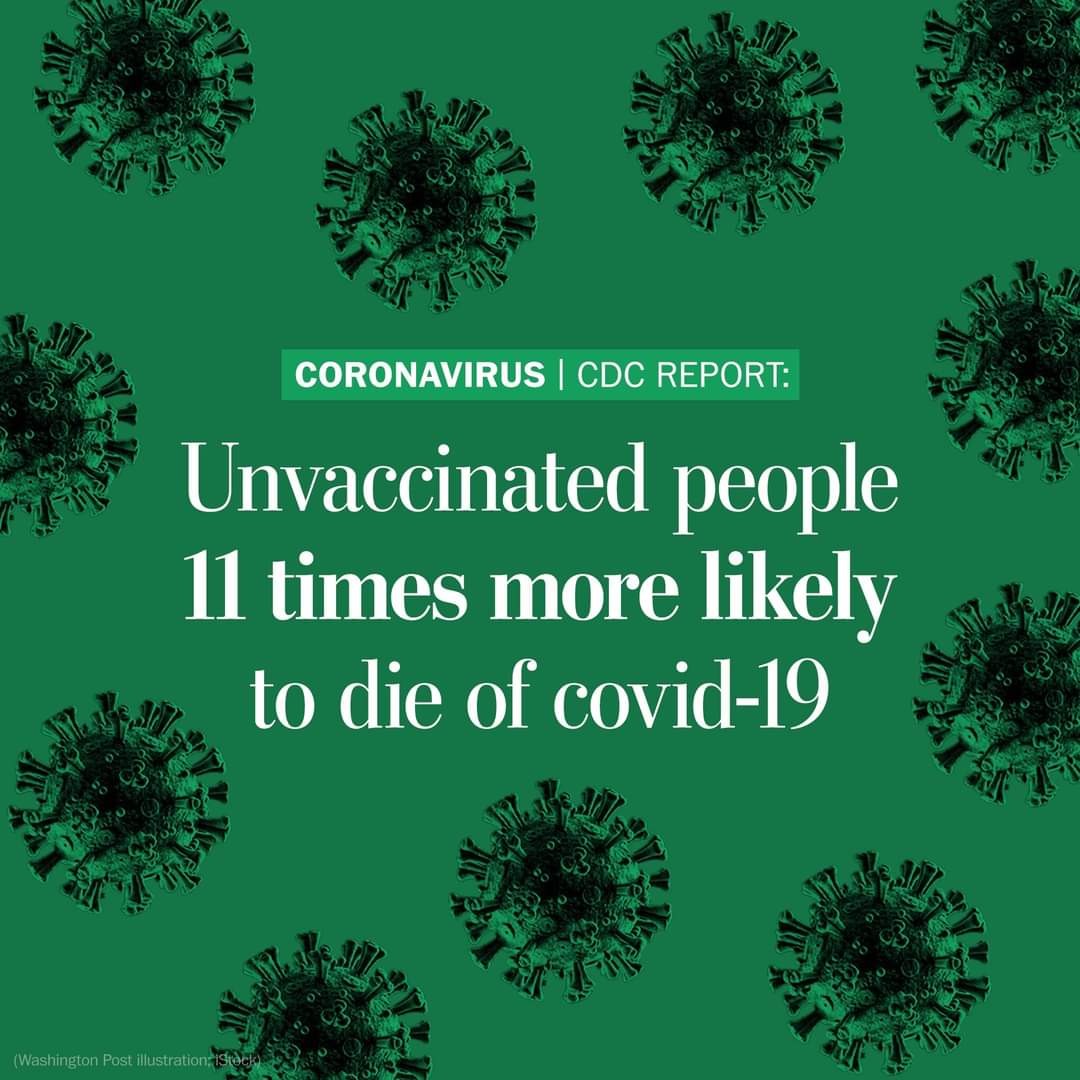
The Centers for Disease Control and Prevention (CDC) announced results from a study Friday that found unvaccinated individuals were 11 times more likely to die from COVID-19 than fully vaccinated people. 

The research, spanning more than 600,000 people in 13 jurisdictions, also determined that unvaccinated populations were over 10 times more likely to be hospitalized — figures that underscore COVID-19 vaccines protect recipients from deaths and hospitalizations.

The study also showed that unvaccinated people were 4 1/2 times more likely to contract COVID-19 than the fully vaccinated. 

The studies come just one day after President Biden announced a new rule that would require private companies with 100 employees or more to mandate vaccinations or frequent coronavirus testing.

The Biden administration as a whole has pushed for the use of vaccines as the best way to combat the pandemic. 

CDC Director Rochelle Walensky on Friday made the case for vaccines yet again, citing the study along with two others and stating that COVID-19 shots still work to protect recipients from the worst of the disease amid the rampant spread of the delta variant. 

“As we have shown study after study, vaccination works,” Walensky said during the briefing. “CDC will continue to do all we can do to increase vaccination rates across the country by working with local communities and trusted messengers and providing vaccine confidence consults to make sure that people have the information they need to make an informed decision.”

“The bottom line is this: We have the scientific tools we need to turn the corner on this pandemic,” Walensky said. “Vaccination works and will protect us from the severe complications of COVID-19. It will protect our children and allow them to stay in school for safe in-person learning.”

The agency and Biden administration are promoting the data behind the vaccine effectiveness in their bolstered push to get the unvaccinated shots.

The U.S. has made progress with vaccinations, reaching 75 percent of adults who have had at least one dose earlier this week.

But the portion of unvaccinated people continues to affect the U.S.’s trajectory in the pandemic, with the unvaccinated making up almost all of the growing hospitalizations and deaths.

The other two studies in the CDC’s Morbidity and Mortality Weekly Report (MMWR) released Friday focused on the vaccine’s effectiveness against hospitalization.

One involving five Veterans Affairs Medical Centers found the mRNA vaccines’ overall effectiveness against hospitalization reached 86.8 percent.

Another similarly calculated that effectiveness at 86 percent among patients in emergency departments, urgent cares and hospitals across nine states. 

However, the studies also provided some evidence that the effectiveness of the vaccines are starting to wane among the older population, prompting the researchers to call for further investigation.

For the patients in emergency departments, urgent cares and hospitals across nine states, the effectiveness among those aged 75 and older was 76 percent, while among those aged 18 to 74, effectiveness reached 89 percent. 

But researchers urged caution, with the report saying “this moderate decline should be interpreted with caution and might be related to changes in SARS-CoV-2, waning of vaccine-induced immunity with increased time since vaccination, or a combination of factors.”

The study involving Veterans Affairs facilities determined that the mRNA vaccine effectiveness among those aged 65 and older was 79.8 percent, compared to 95.1 percent among those aged 18 to 64.

More than 82 percent of those aged 65 and older are considered fully vaccinated, according to CDC data.

Surgeon General Vivek Murthy said Friday the administration is aiming to get “as close to 100 percent as possible” through expanded outreach.

“We know that every senior matters in terms of getting them vaccinated as a potential life saved,” he said, adding that booster vaccinations “will likely be helpful” for the older population. 

The Biden administration had announced it planned to start administering additional shots to recipients on Sept. 20 beginning eight months after their second shot.

But the plan led to criticism from some experts who said the administration was getting ahead of the review process at the Food and Drug Administration (FDA), although officials say the strategy depends on FDA approval.

Cartoon – State of the Union (Vaccine Hesitancy)

May be a cartoon of text that says 'JON ADAMS @CITYCYCLOPS "Honey, come look! I've found some information all the world's top scientists and doctors missed."'

Cartoon – Fire Fauci!

Mike Luckovich's Editorial Cartoons at www.cartoonistgroup.com - Cartoon  View and Uses

Encouraging hospitals to implement vaccine mandates

https://mailchi.mp/b5daf4456328/the-weekly-gist-july-23-2021?e=d1e747d2d8

Bills to Block Mandatory Worker Vaccines Falter in the States | The Pew  Charitable Trusts

With the Delta variant now accounting for more than 83 percent of all new COVID cases in the US, daily new case counts more than quadrupling across the month of July, and hospitalizations—particularly in states with low vaccination rates—beginning to climb significantly, we appear to have entered a new and uncertain phase of the pandemic, now being dubbed a “pandemic of the unvaccinated”.

Welcome news, then, that this week the American Hospital Association (AHA) publicly encouraged its members to put in place vaccine mandates for their employees. While several large health systems have taken the lead in implementing vaccine mandates, including Trinity Health, the Livonia, MI-based Catholic system that operates hospitals across 22 states, Phoenix, AZ-based Banner Health, Houston Methodist in Texas, and the academic giant NewYork-Presbyterian, others have been more reticent to compel employees to get vaccinated, citing concerns over employee privacy and the potential for workforce backlash.

The New York Times reports that a quarter of all hospital employees remain unvaccinated nationwide, with many facilities reporting that more than half of their healthcare workers have not gotten the COVID vaccine. In our discussions with health system executives, one consideration frequently cited is the desire for full Food and Drug Administration (FDA) approval of the new vaccines before mandates are put in place.

In a CNN town hall meeting this week, President Biden suggested that approval could come as soon as the end of August, although other reports point to likely approval much later, potentially not until January of next year. Facing a new variant of the virus that is much more transmissible and possibly more virulent than earlier strains, hospitals—and their patients—can’t afford to wait that long. 

For safety’s sake, hospitals should quickly put in place vaccine mandates, with appropriate exceptions.

US’s largest registered nurses union calls on CDC to bring back universal mask guidelines

Nurses' Union Condemns C.D.C.'s New Mask Advice - The New York Times

The largest union for registered nurses in the U.S. called on the Centers for Disease Control and Prevention (CDC) to bring back recommendations for universal masking in public regardless of people’s vaccination status. 

The National Nurses Union (NNU) in a Monday letter to CDC Director Rochelle Walensky requested that the agency reinstitute guidelines for all people to wear masks in public and in close proximity to those outside their household.

NNU Executive Director Bonnie Castillo pointed to a 16 percent uptick in U.S. COVID-19 cases from last week, according to CDC data, as well as rises in case counts in more than 40 states and hospitalizations in more than 25 states as reasons to return to previous, stricter guidelines.

“NNU strongly urges the CDC to reinstate universal masking, irrespective of vaccination status, to help reduce the spread of the virus, especially from infected individuals who do not have any symptoms,” Castillo wrote in the letter. “Our suggestions are based on science and the precautionary principle and are made in order to protect nurses, other essential workers, patients, and the public from Covid-19.”

The union also cited the World Health Organization’s (WHO) call for vaccinated people to continue wearing masks in public amid the spread of the highly transmissible delta variant. Several U.S. officials and experts have said the WHO’s guidance reflects the state of the pandemic worldwide, which overall has seen lower vaccination rates than the U.S.

Castillo acknowledged that COVID-19 vaccines are effective at preventing severe illness and death but noted “no vaccine is 100 percent effective, and the emergence and spread of variants of concern may reduce vaccine effectiveness.”

The NNU in its letter also appeals for the CDC to update its guidance to “fully recognize aerosol transmission,” mandate tracking and reporting of cases among health care and essential workers, and keep records of cases, including mild and asymptomatic infections, among fully vaccinated people to measure the shots’ effectiveness. 

The CDC did not immediately return a request for comment on the letter, but officials have consistently defended the updated mask guidance, saying fully vaccinated individuals are protected against the virus.

The NNU vocally opposed the CDC’s current mask guidance updated in May to permit fully vaccinated individuals to go maskless in virtually all settings. The union has argued that the change in recommendations endangered patients, front-line workers and nurses as the pandemic continues.

In the Monday letter, the union wrote that the CDC’s relaxation of mask guidance “failed to account for” the possibility of fully vaccinated people contracting and spreading the virus. It also said the agency’s guidelines do not protect people, including children, who cannot get the vaccine.

The NNU sent the letter days after the CDC urged schools to reopen for full in-person learning in the fall, saying that fully vaccinated teachers and students do not need to wear masks.

It also comes after Los Angeles County and St. Louis County recommended their residents to wear masks in public indoors.