Trump considering suspending funding to WHO

https://thehill.com/homenews/administration/491671-trump-considering-suspending-funding-to-who?utm_source=&utm_medium=email&utm_campaign=28856

WHO declares the outbreak of the new coronavirus is a pandemic ...

President Trump said Tuesday that he would consider placing a hold on funding for the World Health Organization (WHO), expressing grievances with its handling of the novel coronavirus.

“They missed the call. They could have called it months earlier. They would have known, and they should have known, and they probably did know,” Trump told reporters at a White House press briefing, suggesting the WHO failed to sufficiently warn the global community about the virus.

“We’re going to be looking into that very carefully, and we’re going to put a hold on money spent to the WHO,” Trump continued. “We’re going to put a very powerful hold on it, and we’re going to see. It’s a great thing if it works, but when they call every shot wrong, that’s not good.”

Pressed later by a reporter on whether it was a good idea to put a hold on funding during a global pandemic, the president clarified that he was considering suspending funding to the WHO.

“I’m not going to say I’m going to do it,” Trump said. “We will look at ending funding.”

The United States is the largest contributor to the WHO’s budget. The president’s fiscal 2021 budget request proposed slashing funding to the WHO, a body of the United Nations responsible for international public health, from $122 million to about $58 million.

The president said the WHO seemed to be “very biased towards China” and accused the organization of disagreeing with his travel restriction on flights coming in from China. He suggested the organization was blind to the extent of the outbreak in Wuhan, the capital of China’s Hubei province, where the virus originated.

The WHO said in early February that widespread travel bans that interfere with international travel and trade were not necessary to prevent the spread of COVID-19, days after the Trump administration announced it would restrict travel coming into the U.S. from China. It did not take particular issue with the president’s travel restriction.

“They actually criticized and disagreed with my travel ban at the time I did it, and they were wrong. They’ve been wrong about a lot of things. They had a lot of information early, and they didn’t — they seemed to be very China-centric. We have to look into it,” Trump told reporters.

When a reporter asked Anthony Fauci, head of the National Institute of Allergy and Infectious Diseases, to answer a question on the WHO, Trump interjected before he answered, saying Fauci “respects the WHO, and I think that’s good.”

“But they did give us some pretty bad play-calling,” Trump said.

The remarks, expanding on a critical tweet he sent earlier Tuesday, come amid growing criticism among conservatives of the WHO’s handling of the coronavirus outbreak. Some have accused the organization of leaving other nations unprepared for the virus.

Sen. Martha McSally (R-Ariz.) last week called on WHO Director-General Tedros Adhanom Ghebreyesus to resign, after reports emerged that the U.S. intelligence community had concluded China underreported its count of coronavirus cases. McSally accused the WHO of helping China conceal the extent of the outbreak.

Trump has faced criticism for at first downplaying the threat from the coronavirus, and his administration has been scrutinized for early delays in testing that hampered the overall response. Trump has often pointed to his early action restricting travel from China as a sign his administration was quick to confront the outbreak.

Ezekiel Emanuel, a special adviser to the director general of the WHO, was critical of Trump’s remarks on the coronavirus at the end of February, saying he found much of what Trump said at his first press briefing on the domestic virus outbreak to be “incoherent.”


Trump says IG report finding hospital shortages is ‘just wrong’

https://thehill.com/policy/healthcare/491454-trump-says-ig-report-finding-hospital-shortages-is-just-wrong?utm_source=&utm_medium=email&utm_campaign=28856

Hospital Experiences Responding to the COVID-19 Pandemic: Results ...

President Trump on Monday claimed that an inspector general report finding “severe” shortages of supplies at hospitals to fight the novel coronavirus is “just wrong.”

Trump did not provide evidence for why the conclusions of the 34-page report are wrong.

He implied that he is mistrustful of inspectors general more broadly. He recently fired the inspector general of the intelligence community, which has drawn outrage from Democrats.

“Did I hear the word inspector general?” Trump said in response to the reporter’s question about the findings.

“It’s just wrong,” Trump said of the report.

The inspector general report, released earlier Monday, was based on a survey of 323 randomly selected hospitals across the country.

It found “severe” shortages of tests and wait times as long as seven days for hospitals. It also found “widespread” shortfalls of protective equipment such as masks for health workers, something that doctors and nurses have also noted for weeks.

“The level of anxiety among staff is like nothing I’ve ever seen,” one hospital administrator said in the report.

Brett Giroir, an assistant secretary of Health and Human Services, noted that the report’s survey of hospitals was conducted March 23 to March 27. He said testing had improved since then and that it was “quite a long time ago.”

Trump asked who the inspector general of the Department of Health and Human Services is.

“Where did he come from, the inspector general?” Trump said, adding, “What’s his name?”

The office is currently led by Christi Grimm, the principal deputy inspector general.

According to her online biography, Grimm joined the inspector general’s office in 1999. 
Trump said the U.S. has now done more testing than any other country. “We are doing an incredible job on testing,” he said.
He also berated the reporter asking the question, saying testing has been a success.
“You should say, ‘Congratulations. Great job’ instead of being so horrid,” Trump said.
The American Hospital Association (AHA) on Monday said the inspector general report was accurate.

The report “accurately captures the crisis that hospitals and health systems, physicians and nurses on the front lines face of not having enough personal protective equipment (PPE), medical supplies and equipment in their fight against COVID-19,” the AHA said.

https://oig.hhs.gov/oei/reports/oei-06-20-00300.pdf?utm_source=&utm_medium=email&utm_campaign=28856


‘We are not immune’: Henry Ford Health says 734 employees positive for COVID-19

https://www.beckershospitalreview.com/workforce/we-are-not-immune-henry-ford-health-says-734-employees-positive-for-covid-19.html?utm_medium=email

Detroit hospital: More than 600 employees tested positive for ...

More than 700 employees of Detroit-based Henry Ford Health System have tested positive for COVID-19, the health system confirmed to Becker’s.

Adnan Munkarah, MD, executive vice president and chief clinical officer, said Henry Ford has tested nearly 2,500 employees since tracking began March 12, and the majority have tested negative. However, as of April 6, 734 employees, or 2.1 percent of the health system’s workforce, have tested positive. Positive cases include employees not working directly on the front lines or those who contracted the virus in the community.

In announcing the update, Dr. Munkarah pointed to the health system’s strict adherence to the use of personal protective equipment during the pandemic, as well as other measures that have been put in place to protect employees and patients. Those measures include a universal mask policy for employees and visitors and the prioritization of testing for employees exhibiting even mild symptoms.

“As a health system caring for a large majority of our region’s COVID-19 patients, we know we are not immune to potential exposure and we remain grateful for the courage and dedication of our entire team,” said Dr. Munkarah.

Michigan is one of the states hardest hit by the pandemic. As of 7:25 a.m. CDT April 7, there were 17,221 confirmed cases of COVID-19 in the state.  


Special Report: Doctors embrace drug touted by Trump for COVID-19, without hard evidence it works

https://www.reuters.com/article/us-health-coronavirus-usa-hydroxychloroq/special-report-doctors-embrace-drug-touted-by-trump-for-covid-19-without-hard-evidence-it-works-idUSKBN21O2VO

Special Report: Doctors embrace drug touted by Trump for COVID-19 ...

The decades-old drug that President Donald Trump has persistently promoted as a potential weapon against COVID-19 has within a matter of weeks become a standard of care in areas of the United States hit hard by the pandemic — though doctors prescribing it have no idea whether it works.

Doctors and pharmacists from more than half a dozen large healthcare systems in New York, Louisiana, Massachusetts, Ohio, Washington and California told Reuters they are routinely using hydroxychloroquine on patients hospitalized with COVID-19. At the same time, several said they have seen no evidence that the drug, used for years to treat malaria and autoimmune disorders, has any effect on the virus.

Use of hydroxychloroquine has soared as the United States has quickly become the epicenter of the pandemic. More than 355,000 people in the United States have tested positive for the novel coronavirus, and more than 10,000 have died. The federal government estimates that as many as 240,000 people in the country may die from the disease before the outbreak is over.

Facing those numbers, and in the absence of any known effective treatments, doctors on the frontlines said they began using hydroxychloroquine and the related chloroquine on patients who are deteriorating based on a few small studies suggesting a possible benefit. Some said they had come under pressure from patients to use the therapies widely touted by Trump and other supporters.

“I may take it,” Trump said on Saturday, referring to hydroxychloroquine, though he has twice tested negative for coronavirus, according to the White House. “We’re just hearing really positive stories, and we’re continuing to collect the data.”

Potential side effects of hydroxychloroquine include vision loss and heart problems. But doctors interviewed by Reuters say they are comfortable prescribing the drug for a short course of several days for coronavirus patients because the risks are relatively low and the therapies are inexpensive and generally available.

However, protocols directing how these drugs should be used vary from one hospital to another, including when to introduce them and whether to combine them with other drugs. In addition, some studies showing promise involve patients who took the therapies for mild or early-stage illness. Many of those people are likely to recover from the virus on their own.

Patients admitted to the hospital in the United States are generally much sicker than the mildly ill cases cited in such studies when they receive therapy. These factors, doctors said, have made it difficult for them to determine whether the drugs are making a difference. “I have seen hundreds of patients with severe COVID and most of these people are on hydroxychloroquine,” Dr Mangala Narasimhan, regional director of critical care at Northwell Health, a 23-hospital system in New York, said in an email. “In my opinion, although it is very early, I do not see a dramatic improvement from the hydroxychloroquine in these patients.” Dr Daniel McQuillen, an infectious disease specialist at Lahey Hospital & Medical Center in Burlington, Massachusetts, said he has prescribed a course of hydroxychloroquine for about 30 COVID-19 patients so far because the drug has shown “a little bit of antiviral activity.” But he has not seen “marked improvement for patients.”

“Anecdotally, it may have had limited effect in patients with milder disease,” McQuillen said. The therapy “has had no effect in limiting or slowing progression of our patients that have been at or near ICU level when they arrived.”

‘SEE WHAT STICKS’

The experience of David Lat, a legal recruiter and commentator who founded the blog Above the Law, reflects the mixture of hope and uncertainty surrounding the drugs now being pursued as possible coronavirus treatments.

Since early March, the 44-year-old New Yorker has chronicled his near-fatal infection with coronavirus in social media posts followed by thousands of people. Lat’s case has resonated with a U.S. audience that has begun to recognize the risk that coronavirus poses not only to elderly patients with serious medical conditions, but also to generally healthy younger adults.

After more than a week of worsening symptoms, Lat was admitted to NYU Langone Medical Center on March 16 and later placed on a ventilator. On March 28, he shared on Facebook that his doctors had taken him off of the ventilator and had moved him out of intensive care after his condition improved dramatically.

In an exchange of text messages with Reuters, Lat said he was treated with hydroxychloroquine and the antibiotic azithromycin. He also received the experimental therapy clazakizumab, which aims to regulate an overreaction by the body’s immune system thought to trigger the respiratory distress seen in severe COVID-19. After the story was published, Lat clarified that he received a fourth therapy, the antiviral Kaletra, not Kevzara, as he had initially recalled.

“The doctors haven’t concluded what caused my recovery,” Lat said. “The state of coronavirus research is very much ‘throw stuff against a wall and see what sticks’ – but when something does stick, in terms of a good patient outcome, you’re not sure what stuck.” Lat’s doctors were not immediately available to comment on his treatment.

Some doctors have been vocal in advocating the drug. Dr Vladimir Zelenko, a general practitioner in upstate New York, has claimed that a three-drug cocktail of hydroxychloroquine, azithromycin and zinc sulfate has helped mitigate the infection in nearly 200 hundred of his patients before they became sick enough to require hospitalization. His recommendations have attracted the attention of Trump’s supporters. Zelenko wasn’t immediately available for comment.

Despite such encouraging reports, hard evidence that any of the therapies now under study will work is weeks and possibly months way.

Early, but mixed, data has emerged from COVID-19 trials of the malaria drugs in China. A research team in Marseilles, France, has published data showing that out of 80 mild COVID-19 patients treated with hydroxychloroquine and azithromycin, 93 percent had no detectable levels of the virus after eight days.

Doctors have questioned the value of the Marseille study and several papers from China as being too small or poorly designed to offer hard evidence of benefit. Most do not compare outcomes of patients who received the malaria therapies with people who did not, considered the most reliable measure of a drug’s effectiveness. Last week, doctors in Paris reported that they tried to replicate the results of the Marseille study and failed. Results from a trial conducted in Wuhan, China, were released that included a control group of patients who did not receive the anti-malarial therapy for comparison. But critics questioned why information on the trial’s main goal — detecting viral load — was not disclosed, and said data was missing for some patients. More rigorous U.S.-led trials are now underway. But most focus on whether the drugs can help prevent illness in people exposed to the coronavirus, such as healthcare workers or relatives of confirmed patients, and not people who are already sick. Randomized, controlled trials of the drugs are being conducted in other countries, including China, Brazil and Norway.

Until the evidence is in, “each institution is setting their own treatment guidelines,” said Dr Otto Yang, an infectious disease specialist at the University of California, Los Angeles Medical Center. “There is simply no data,” he said. “It is a matter of opinion, and opinions differ.”

GAME-CHANGER?

Trump is deeply invested in the idea that the malaria drugs will show a benefit, and personally pressured federal health officials to make them available, Reuters reported on Saturday. The president announced on Twitter last month that hydroxychloroquine, when combined with azithromycin, has the potential to become “one of the biggest game changers in the history of medicine.”


‘Between 25% and 50%’ of people who get the coronavirus may show no symptoms but still be contagious, Anthony Fauci said. Here’s the latest research on asymptomatic carriers.

https://www.yahoo.com/news/1-4-people-coronavirus-may-234600518.html

Coronavirus carriers can transmit it without symptoms: What to ...

  • The coronavirus has infected more than 1.2 million people worldwide in just a few months. Scientists are racing to discover how it spreads so quickly.
  • According to Anthony Fauci, “between 25% and 50%” of people may be asymptomatic carriers — people who are contagious but not physically sick.
  • These carriers are thought to play a significant role in the virus’ spread and are the reason US residents have been asked to start covering their faces in public.

At least one-third of the world is under some type of lockdown because of the coronavirus pandemic, as governments urge social distancing to stymie the virus’ spread.

That’s because the COVID-19 virus is insidious.

“There’s significant transmission by people not showing symptoms,” Stephen Morse, an epidemiologist at Columbia University, told Business Insider.

According to Anthony Fauci, the director of the National Institute of Allergy and Infectious Disease, “somewhere between 25% and 50%” of people infected with the new coronavirus may never show symptoms or fall ill — but can still transmit the illness to others.

During a White House briefing on Sunday, Fauci cautioned that this was just an estimate, and said there is disagreement even among his colleagues as to how many people are asymptomatic. He added that antibody tests — which can confirm whether a person has already had COVID-19 — are needed to answer that question “in a scientifically sound way.”

Robert Redfield, director of the Centers for Disease Control and Prevention, gave NPR a similar estimate on Tuesday, saying that as many as 25% of people infected with the new coronavirus may never show symptoms.

These asymptomatic carriers, Redfield added, are most likely contributing to the rapid spread of the coronavirus worldwide — the number of confirmed cases passed 1 million last week — and making it challenging for experts to assess the true extent of the pandemic.

“We don’t know all the unidentified cases out there,” Morse said. “It’s mostly sicker people in hospitals who are being tabulated.”

The prevalence of asymptomatic transmission doesn’t bode well for global containment efforts, as Bill Gates recently wrote in an article published in the New England Journal of Medicine.

“That means COVID-19 will be much harder to contain than the Middle East respiratory syndrome or severe acute respiratory syndrome (SARS), which were spread much less efficiently and only by symptomatic people,” Gates said.

What we know about asymptomatic and presymptomatic transmission

The first confirmation that the novel coronavirus could be transmitted by asymptomatic people came in February, when a case study described a 20-year-old woman from Wuhan, China, who passed the coronavirus to five family members but never got physically sick herself.

World Health Organization report about the coronavirus outbreak in China, also published in February, found few instances in which a person who tested positive never showed any symptoms. Instead, most people who were asymptomatic on the date of their diagnosis (a relatively small group) went on to develop symptoms later.

“The proportion of truly asymptomatic infections is unclear but appears to be relatively rare,” the report authors wrote.

In the WHO study, 75% of people in China who were first classified as asymptomatic later developed symptoms, ProPublica reported. That means, technically, “presymptomatic transmission” is what’s probably common.

Other research has reaffirmed these findings. A CDC study of coronavirus patients in a nursing home in King County, Washington, found that of 23 people who tested positive, only 10 showed symptoms on the day of their diagnosis. Ten people in the other group developed symptoms a week later.

“These findings have important implications for infection control,” the authors wrote, adding that many public-health approaches “rely on presence of signs and symptoms to identify and isolate residents or patients who might have COVID-19.”

The CDC also evaluated coronavirus patients on the Diamond Princess cruise ship, which was quarantined in Japan in February. Of the 3,711 people on board, 712 tested positive, but almost half of them had no symptoms at the time.

Other examples of asymptomatic and presymptomatic transmission abound

Redfield told NPR “it appears that we’re shedding significant virus” about 48 hours before symptoms appear.

“This helps explain how rapidly this virus continues to spread across the country, because we have asymptomatic transmitters and we have individuals who are transmitting 48 hours before they become symptomatic,” he added.

A handful of recent studies and reports suggest that presymptomatic and asymptomatic transmission is not unusual.

  • A small study among Japanese ex-pats evacuated from Wuhan in February found that 31% of people who tested positive showed no symptoms.
  • Research that examined coronavirus cases in Singapore found that of 157 cases acquired locally, 10 involved presymptomatic transmission. The scientists concluded that most presymptomatic transmission exposure occurred one to three days before a person developed symptoms.
  • Research from China in February found that 13% of the 468 confirmed cases studied involved presymptomatic transmission.
  • The Los Angeles Times recently reported that a three-quarters of a group of singers who attended a 60-person choir practice got the COVID-19 virus, even though none showed symptoms at the practice.
  • Last month, 14 NBA players, coaches, and staff tested positive for the coronavirus. Half of them didn’t have symptoms when they received their diagnosis, according to The Wall Street Journal.
  • A biotech company in Iceland that has tested more than 9,000 people found that about half of those who tested positive said they were asymptomatic, the researchers told CNN.

Presymptomatic people are shedding the highest amount of the virus

An especially troubling aspect of presymptomatic transmission is that people seem to shed more coronavirus in the earlier stages of their infection. But the average symptom onset takes five days.

Research that examined 23 coronavirus patients in two Hong Kong hospitals found that people’s viral load — how many viral particles they were carrying and shedding into their environment — peaked during the first week of symptom onset and then gradually declined. A SARS patient, by contrast, sheds the most virus seven days to 10 days after getting visibly sick.

A study from Guangzhou found similar results: Among 94 patients, people were most contagious right when symptoms started to show, or just before.

Children could be asymptomatic carriers

A notable group of asymptomatic carriers could be children. Thus far, children are among those least sickened by the novel coronavirus — but some could be getting very mild infections and then spreading the virus.

Research published March 25 in the journal The Lancet looked at 36 children who tested positive for the coronavirus from January 17 to March 1 in three Chinese hospitals. Half of those children had “mild disease with no presenting symptoms,” the authors wrote.

Another study, published today, looked at more than 2,500 coronavirus cases among children younger than 18 in the US between February 12 and April 2, 2020. The authors found that 73% of patients in this age group had a fever, cough, or shortness of breath, compared to 93% of adults between the ages of 18 and 64.

The researchers concluded that “children do not always have fever or cough as reported signs and symptoms” of COVID-19.

Yet another recent study, which has yet to be peer-reviewed, found that 56% of 700 children infected with COVID-19 in China had mild, if any, symptoms.

John Williams, an expert in pediatric infectious disease at the University of Pittsburgh Medical Center, told ABC that “asymptomatic infection is common in children, occurring in 10-30%” of cases.

Wearing masks could help reduce presymptomatic transmission

On Friday, the CDC recommended that people in the US wear cloth masks when they go out in public, even if they feel healthy.

The policy is different from the agency’s recommendations during the early days of the coronavirus outbreak, when CDC experts said they did not “recommend the use of face masks for the general public” and the US surgeon general urged Americans to stop buying masks.

The prevalence of presymptomatic transmission is a primary reason for the change.

“We have always recommended that symptomatic people wear a mask because if you’re coughing, if you have a fever, if you’re symptomatic, you could transmit disease to other people,” Surgeon General Jerome Adams said at the White House Friday. He added, “we now know from recent studies that a significant portion of individuals with coronavirus lack symptoms. This means that the virus can spread between people interacting in close proximity, for example, coughing, speaking, or sneezing, even if those people were not exhibiting symptoms.”

Face protection for the most part doesn’t benefit the wearer; instead, masks primarily protect others from the wearer’s germs.


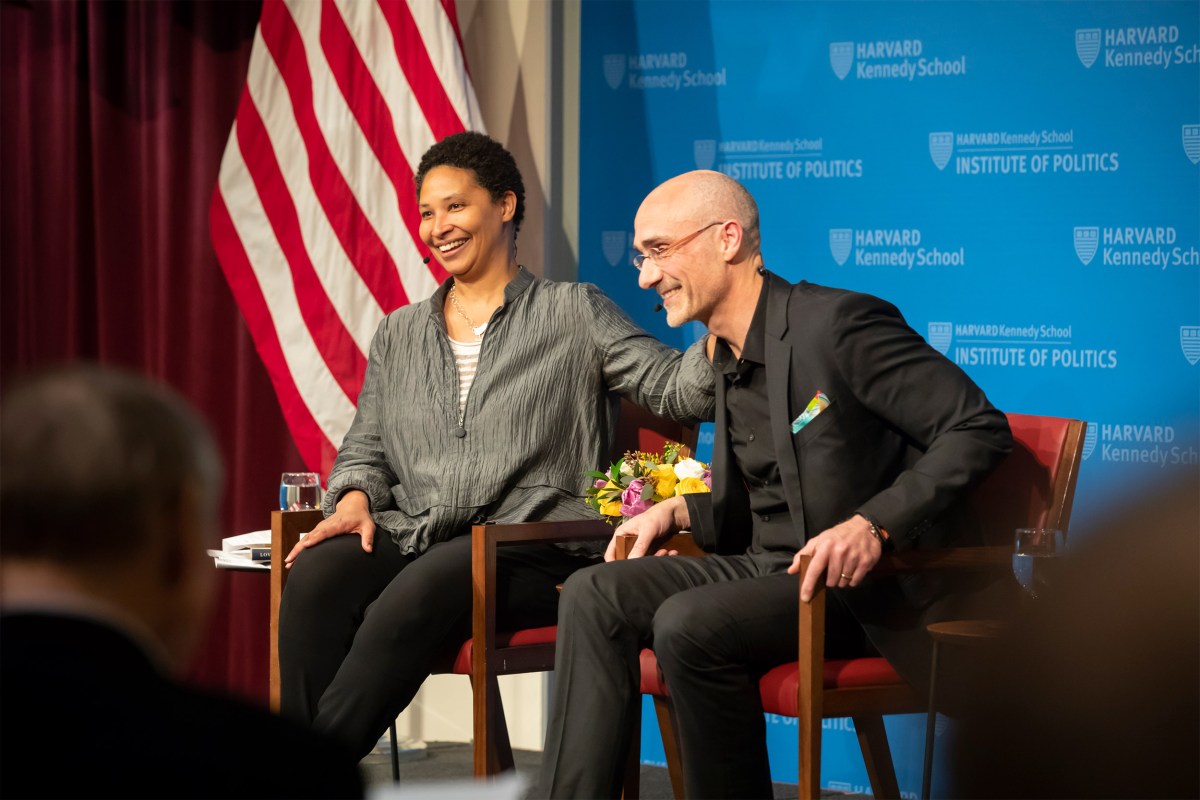
TED Danielle Allen: Here’s how we might save both lives and the economy

Harvard professors take a lively look at love and politics ...

As the coronavirus pandemic sweeps the globe, it’s hard to know where to turn or what to think. TED Connects is a free, live, daily conversation series featuring experts whose ideas can help us reflect and work through this uncertain time with a sense of responsibility, compassion and wisdom.

Danielle Allen serves as Director of the Edmond J. Safra Center for Ethics at Harvard University. The Center seeks to advance teaching and research on ethical issues in public life. Widespread ethical lapses of leaders in government, business, and other professions prompt demands for more and better moral education. More fundamentally, the increasing complexity of public life – the scale and range of problems and the variety of knowledge required to deal with them – make ethical issues more difficult, even for men and women of good moral character. Not only are the ethical issues we face more complex, but the people we face them with are more diverse, increasing the frequency and intensity of our ethical disagreements.

Given these changes in the United States and in societies around the globe, the Center seeks to help meet the growing need for teachers, scholars, and leaders who address questions of moral choice across many of the professions and in public life more generally, and promotes a perspective on ethics informed by both theory and practice. We explore the connection between the problems that professionals confront and the social and political structures in which they act. More generally, we address the ethical issues that all citizens face as they make the choices that profoundly affect the present and future of their societies in our increasingly interdependent world.

https://scholar.harvard.edu/danielleallen/edmond-j-safra-center-ethics


Inside the epic White House fight over hydroxychloroquine

https://www.axios.com/coronavirus-hydroxychloroquine-white-house-01306286-0bbc-4042-9bfe-890413c6220d.html

Huge fight breaks out among White House coronavirus task force ...

The White House coronavirus task force had its biggest fight yet on Saturday, pitting economic adviser Peter Navarro against infectious disease expert Anthony Fauci. At issue: How enthusiastically should the White House tout the prospects of an antimalarial drug to fight COVID-19?

Behind the scenes: This drama erupted into an epic Situation Room showdown. Trump’s coronavirus task force gathered in the White House Situation Room on Saturday at about 1:30pm, according to four sources familiar with the conversation. Vice President Mike Pence sat at the head of the table.

  • Numerous government officials were at the table, including Fauci, coronavirus response coordinator Deborah Birx, Jared Kushner, acting Homeland Security Secretary Chad Wolf, and Commissioner of Food and Drugs Stephen Hahn.
  • Behind them sat staff, including Peter Navarro, tapped by Trump to compel private companies to meet the government’s coronavirus needs under the Defense Production Act.

Toward the end of the meeting, Hahn began a discussion of the malaria drug hydroxychloroquine, which Trump believes could be a “game-changer” against the coronavirus.

  • Hahn gave an update about the drug and what he was seeing in different trials and real-world results.
  • Then Navarro got up. He brought over a stack of folders and dropped them on the table. People started passing them around.
  • “And the first words out of his mouth are that the studies that he’s seen, I believe they’re mostly overseas, show ‘clear therapeutic efficacy,'” said a source familiar with the conversation. “Those are the exact words out of his mouth.”

Navarro’s comments set off a heated exchange about how the Trump administration and the president ought to talk about the malaria drug, which Fauci and other public health officials stress is unproven to combat COVID-19.

  • Fauci pushed back against Navarro, saying that there was only anecdotal evidence that hydroxychloroquine works against the coronavirus.
  • Researchers have said studies out of France and China are inadequate because they did not include control groups.
  • Fauci and others have said much more data is needed to prove that hydroxychloroquine is effective against the coronavirus.
  • As part of his role, Navarro has been trying to source hydroxychloroquine from around the world. He’s also been trying to ensure that there are enough domestic production capabilities inside the U.S.

Fauci’s mention of anecdotal evidence “just set Peter off,” said one of the sources. Navarro pointed to the pile of folders on the desk, which included printouts of studies on hydroxychloroquine from around the world.

  • Navarro said to Fauci, “That’s science, not anecdote,” said another of the sources.

Navarro started raising his voice, and at one point accused Fauci of objecting to Trump’s travel restrictions, saying, “You were the one who early on objected to the travel restrictions with China,” saying that travel restrictions don’t work. (Navarro was one of the earliest to push the China travel ban.)

  • Fauci looked confused, according to a source in the room. After Trump imposed the travel restrictions, Fauci has publicly praised the president’s restriction on travel from China.
  • Pence was trying to moderate the heated discussion. “It was pretty clear that everyone was just trying to get Peter to sit down and stop being so confrontational,” said one of the sources.
  • Eventually, Kushner turned to Navarro and said, “Peter, take yes for an answer,” because most everyone agreed, by that time, it was important to surge the supply of the drug to hot zones.
  • The principals agreed that the administration’s public stance should be that the decision to use the drug is between doctors and patients.
  • Trump ended up announcing at his press conference that he had 29 million doses of hydroxychloroquine in the Strategic National Stockpile.

Between the lines: “There has never been a confrontation in the task force meetings like the one yesterday,” said a source familiar with the argument. “People speak up and there’s robust debate, but there’s never been a confrontation. Yesterday was the first confrontation.”

  • In response to a request for comment on Axios’ reporting, Katie Miller, a spokesperson for the vice president, said: “We don’t comment on meetings in the Situation Room.”

The bottom line: The way to discuss the drug’s potential has become a fraught issue within the Trump administration.

  • Most members of the task force support a cautious approach to discussing the drug until it’s proven.
  • Navarro, on the other hand, is convinced based on his reading that the drug works against the coronavirus and speaks about it enthusiastically.
  • Some of Trump’s favorite TV hosts, including Fox’s Sean Hannity, and friends including Rudy Giuliani, have also been touting the malaria drug for the coronavirus. Trump has made no secret who he sides with.
  • “What do you have to lose? Take it,” the president said in a White House briefing on Saturday. “I really think they should take it. But it’s their choice. And it’s their doctor’s choice or the doctors in the hospital. But hydroxychloroquine. Try it, if you’d like.”


How insurers are covering COVID-19

https://www.healthcaredive.com/news/how-insurers-are-covering-covid-19/575372/

Private Health Coverage of COVID-19: Key Facts and Issues | The ...

Insurers are weighing how best to respond to the outbreak of the novel coronavirus as cases swell in the U.S. Here is a tracker to follow the latest policy and coverage decisions from the nation’s largest insurers.

The nation’s health insurers are responding to the coronavirus pandemic with changes to coverage associated with COVID-19 as the number of cases continues to swell across the U.S.

The biggest payers have said they will waive patient cost-sharing — copays, coinsurance and deductibles — for testing. Although some, such as Cigna and Humana, have gone farther by eliminating cost-sharing for all COVID-19 treatment.

In addition to coverage decisions, insurers are weighing the ways they can reduce administrative barriers to promote quicker access to care for those infected with the novel coronavirus. All are cutting back on prior authorization in various ways to ease access to care.

Hospitals say that’s not enough, and are calling on the biggest payers to follow actions taken by Congress and CMS to help resolve cash flow issues, by accelerating payments or opting into releasing interim periodic payments. The American Hospital Association also is urging payers to eliminate administrative burdens such as prior authorizations.

“This crisis is challenging for all of us, and everyone has a role to play,” AHA said in its letter to the nation’s largest insurers. “You could make a significant difference in whether a hospital or health system keeps their doors open during this critical time.”

Despite the policy changes by payers, employers with self-funded plans can opt out of these policies. A majority of workers are covered by self-insured plans, which essentially allow employers to decide coverage decisions given they’re paying for the claims and having insurers simply perform administrative services.

Below is a tracker with the latest coverage decisions for the nation’s largest insurers.

Blue Cross Blue Shield Association

The BCBSA is eliminating cost-sharing for COVID-19 diagnostic testing. It will also waive cost-sharing for treatment at in-network or Medciare rates through May 31, including inpatient stays.

BCBSA will remove prior authorization requirements for testing and for services that are medically necessary to treat an infected patient. BCBSA also is waiving limits on early refills to make it easier to access medications and expanding access to telehealth services.

Molina

Molina is halting cost-sharing for testing and treatment. That policy applies to Medicare, Medicaid and marketplace members nationwide.

Aetna (CVS)

Aetna will waive cost-sharing for certain members admitted to an in-network hospital with COVID-19 or complications from the disease. The policy applies to all of Aetna’s commercial plans, though self-insured members can opt out. The policy will apply to admissions through June 1. Aetna also is waiving cost-sharing for testing and associated visits, including telehealth.

Aetna also is attempting to make access to hospitalization faster for those with COVID-19 by easing prior authorization requirements, particularly in areas hard hit by the outbreak like New York and Washington.

Anthem

The nation’s second largest commercial insurer will waive cost-sharing for COVID-19 treatment and will reimburse providers at either in-network or Medicare rates through May 31. The policy applies to Anthem’s fully insured, individual, Medicaid and Medicare Advantage members. Self-insured plans can opt out. Anthem also is waiving cost-sharing for COVID-19 testing and in-network visits associated with testing whether it’s conducted at a physician’s office, urgent care or ER.

Anthem also is easing its limits on early refills for 30-day prescriptions. Anthem said it would waive cost sharing for telehealth visits, including those for mental health for a period of 90 days starting March 17. Self-insured plans have the option to opt in the new virtual care policy.

Centene

Centene will waive cost-sharing for COVID-19 related screening, testing and treatment for its Medicaid, Medicare and Marketplace members through June 30.

Centene also will eliminate prior authorization requirements for care for all its Medicare, Medicaid and Marketplace members. The company is also working to supply federally qualified health centers with personal protective equipment and assistance in providing small business loans to behavioral health providers and long-term service support organizations.

Cigna

Cigna will waive cost-sharing for all COVID-19 treatment, including testing and telehealth screenings through May 31. The policy applies to Cigna’s fully-insured group plans, individual coverage and Medicare Advantage plans. Self-insured plans can opt out.

Cigna will reimburse providers either at in-network or Medicare rates depending on the member. Cigna also is easing access to maintenance medication by offering free shipping for a 90-day supply. Cigna is easing prior authorization requirements for patients being discharged from the hospital to post-acure stays.

Humana

Humana is waiving cost-sharing for testing and treatment, including hospital admissions for COVID-19 cases. The policy applies to its Medicare Advantage plans, fully-insured commercial plans, Medicare supplement and its Medicaid plans. The policy is indefinite with no current end date. Cost-sharing will be waived for all telehealth visits and members can opt to refill prescriptions early.

Humana also is easing administrative barriers to allow infected patients to easily move from a hospital to post-acute care settings. It’s suspending prior authorization and referral requirements and requesting notification within 24 hours. It’s also implementing an expedited claims process to reimburse providers faster, Humana said.

UnitedHealthcare

The nation’s largest commercial insurer, will waive cost-sharing for COVID-19 treatment through May 31. The policy applies to its fully-insured commercial, Medicare Advantage and Medicaid plans. United also is waiving cost-sharing for COVID-19 testing at approved locations in accordance with Centers for Disease Control guidelines. There will be no cost-sharing for visits related to testing including at physician offices, urgent care, ERs and telehealth visits. The policy applies to United’s commercial, Medicare Advantage and Medicaid members.

UnitedHealthcare is opening a special enrollment period for some of its commercial members who opted out of coverage during the traditional enrollment period with their employers. This enrollment period will end April 6. The insurer also is easing prior authorization requirements through May 31, suspending prior approval for post-acute care and switching to a new provider.


Cartoon – Famous Last Words

Granlund cartoon: Famous last words - Opinion - Morning Sun ...


An explosion of coronavirus cases cripples a federal prison in Louisiana

https://www.washingtonpost.com/national/an-explosion-of-coronavirus-cases-cripples-a-federal-prison-in-louisiana/2020/03/29/75a465c0-71d5-11ea-85cb-8670579b863d_story.html?fbclid=IwAR2rjY1fk7FF2H1vhUxaeZ4c8F3_Vi1HUJhCUkhP-bjFdc_tbuHV8KrKN80&utm_campaign=wp_main&utm_medium=social&utm_source=facebook

Federal prison in Louisiana crippled by coronavirus cases as ...

A federal prison in Louisiana has, within days, exploded with coronavirus cases, leading to the death of one inmate on Saturday, the admission of a guard into a hospital intensive care unit, and positive test results for another 30 inmates and staff.

Patrick Jones, 49, was the first inmate in the Federal Bureau of Prisons diagnosed with the novel coronavirus, which causes covid-19, and the first to die.

At least 60 inmates at the Oakdale prison are in quarantine and an unknown number of staff are self-quarantining at home, said Corey Trammel, a union representative for correctional officers at the 1,700-inmate facility about 110 miles northwest of Baton Rouge.

“It’s been simultaneous, just people getting sick back to back to back to back,” Trammel said. “We don’t know how to protect ourselves. Staff are working 36-hour shifts — there’s no way we can keep going on like this.”

The prison bureau is not releasing the names of other infected inmates or staff, citing medical and privacy concerns. Jones complained of a “persistent cough” on March 19, the prison bureau said, and was transported to a hospital where he was diagnosed and placed on a ventilator.

The prison bureau also said Jones had “long-term, preexisting medical conditions” that increased his risk of developing the disease. Jones was convicted in 2017 of possession with intent to distribute crack cocaine within 1,000 feet of a junior college. He was serving a 27-year sentence.

Louisiana ranks 10th highest among states for reported coronavirus cases, with more than 3,300 people who have tested positive and another 137 who have died, government reports show. A week before the Oakdale prison had its first positive case, Gov. John Bel Edwards (D) issued a stay-at-home order and closed all public schools.

Trammel said the prison bureau has been slow to respond to the crisis across the country. The bureau last week banned family and friends from visiting inmates, but the officers’ union had lobbied the federal prison system to take this action for weeks to keep the disease from infiltrating the prison walls.

The Bureau of Prisons updates confirmed coronavirus cases most afternoons on its website, but there has been a lag between cases reported by the officers’ union and prison officials. As of Sunday afternoon, the prison system had only confirmed 14 inmates and 13 staff have tested positive.

At Oakdale, Trammel said staff also asked prison officials — weeks before the first coronavirus case — to shut down a prison labor program within the facility, where more than 100 prisoners make inmate clothing. The program, Trammel said, was not shut down until after the first inmate tested positive.

The Bureau of Prisons — which operates 122 prisons with more than 175,000 inmates — did not immediately respond Sunday to a request for comment. Oakdale Warden Rod Myers could also not be reached for comment.

Trammel said he asked the prison bureau on Saturday to send specialized medical teams to the facility to help with staffing shortages. He’s also asking for hazard pay, which would increase their salaries by 25 percent as they respond to the crisis. And he’s asking for more robust protective gear, including masks with respirators and perhaps face shields.

“We are bringing inmates to the hospitals and are staying right beside them around the clock,” Trammel said. “All we have is these itty bitty masks — a piece of towel over our faces — and nurses are coming into the room for a few minutes and they are all suited up.”

He also said he believes all Oakdale prison staff have now been exposed to the virus. Days ago, he interacted with an inmate who had a fever and still doesn’t know if the prisoner has received a test.

“We should all be in quarantine,” Trammel said. “We should not be going in to spread this monster of a virus.”

Prison reform advocates, who have been pushing for the early release of elderly and severely ill inmates due to covid-19, said the death of a federal inmate illustrates why government officials need to be doing a better job of protecting people like Jones.

“The conditions and reality of incarceration make prisons and jails tinderboxes for the spread of disease,” said Udi Ofer, director of the American Civil Liberties Union’s Justice Division. “A prison sentence should not become a death sentence. Our leaders must immediately take steps to release those identified by the CDC as most vulnerable to covid-19. With every hour of inaction that passes, the greater the human tragedy.”