Why Walgreens’ US Health President Is ‘Bullish’ on the Role of Retail in Healthcare

During a fireside chat at AHIP 2024, Mary Langowski, executive vice president and president of U.S. healthcare at Walgreens Boots Alliance, said she sees a bright future for retail in healthcare.

Retailers are facing several headwinds in healthcare in 2024. Walmart and Dollar General both recently ended healthcare endeavors, and CVS Health is reportedly looking for a private equity partner for Oak Street Health (which it acquired in 2023). VillageMD, which is backed by Walgreens, is shuttering numerous clinics.

Still, Mary Langowski, executive vice president and president of U.S. healthcare at Walgreens Boots Alliance, sees a strong future for retailers in healthcare.

“I happen to be very bullish on the role of retail in healthcare and frankly, having a very central role in healthcare,” she said. “And part of that is because over 80% of people want health and wellness offerings in a pharmacy and in a retail setting. Consumers want the ease, they want the convenience of it. And those are important things to keep in mind, that demand is there.”

Langowski, who joined Walgreens in March, made these comments during a Tuesday fireside chat at the AHIP 2024 conference held in Las Vegas. She added that what the industry is seeing is not an “evolution” of whether retailers will exist in healthcare, but a shift around what the “right model is going to be.” 

“We really think that if you take our core assets, … we can be a really good partner to not just one provider entity but many, many provider entities and payers across the United States,” Langowski said. “We’re everywhere. We’re in the community, we’re digitally inclined. I think a strategy for us is less capital-intensive, capital-light and very scaled models.”

She also told the health plans in the audience that she wants to collaborate more. She said she sees retail as a “really critical entry point” in the healthcare system.

“We have people using their pharmacists two times more than any doctor and Medicare patients see us eight times more than their physician,” Langowski declared. “We’re not doing enough together to take advantage of those moments where we can engage people and we can create interventions way earlier in their healthcare disease state.”

Langowski noted that insurers are under a lot of pressure, including rising costs, regulatory issues and challenges contracting with providers. However, Walgreens’ assets are “highly complementary” to insurers’ assets, she said. 

“We aren’t going to do what you do. You don’t do what we do, but we work really well together,” she said. “And what it will take is being clever about the commercial and economic model and I believe there are multiple ways to create win-win scenarios where everybody does well. Most importantly, patients get healthier and they have a much better and much more seamless experience with the system.”

Big pharma entering the direct-to-consumer (DTC) prescription fray

https://mailchi.mp/cd8b8b492027/the-weekly-gist-january-26-2024?e=d1e747d2d8

Recently published in Stat, this article outlines how the launch of telehealth platforms by pharmaceutical companies, most notably Eli Lilly’s LillyDirect, portends a gamechanger for DTC prescription marketing

Spurred by the escalating demand for Eli Lilly’s Zepbound and Mounjaro GLP-1 drugs, LillyDirect connects consumers with a third-party telehealth provider for prescriptions, an online pharmacy for fulfillment, and in-house payment support through streamlined coupon applications and prior authorization troubleshooting. In exchange, Eli Lilly gets access to reams of patient data, in addition to boosted sales. Pharma companies insist that the platforms have proper firewalls in place, as no money directly changes hands between them and their affiliated telehealth providers.

The Gist: With so manyothercompanies hopping on the GLP-1 virtual prescription bandwagon, it’s no wonder why pharma companies are opting to enter the market directly. What LillyDirect offers is not fundamentally different than platforms like Ro or Teladoc: using telehealth to blur the lines between prescription and over-the-counter medications by empowering consumers to seek out the care they want. 

However, Eli Lilly’s control of the drug supply, ability to offer coupons, relationships with pharmacy benefit managers, and inherent brand association with the drugs give it a leg up on the competition. 

By replacing “talk to your doctor about” with “visit our website for”, these consumer-focused platforms perpetuate the ongoing fragmentation of care and risk tapping into the potentially harmful side of consumerization in healthcare.

Amazon announces One Medical membership discount for Prime members

https://mailchi.mp/f12ce6f07b28/the-weekly-gist-november-10-2023?e=d1e747d2d8

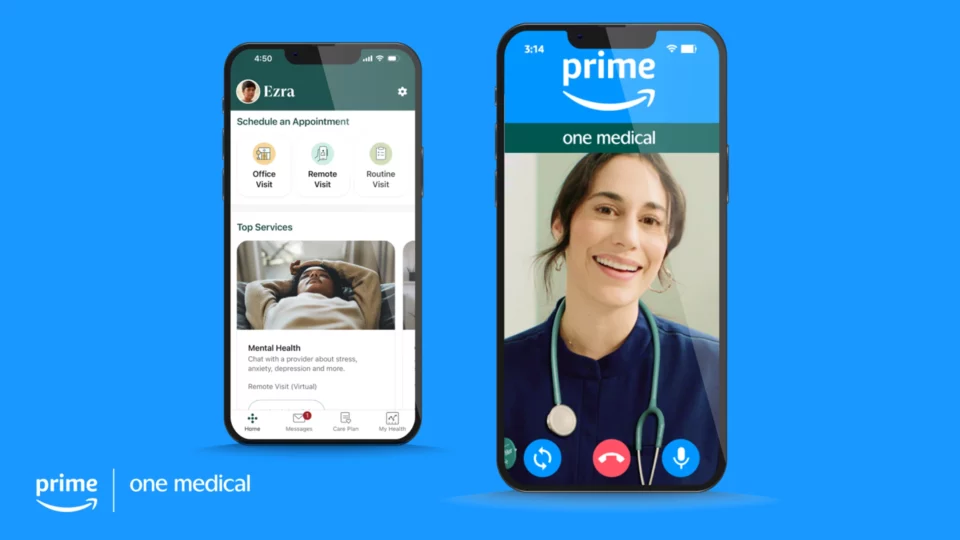
On Wednesday, e-commerce giant Amazon announced that its 167M US-based Prime members can now access One Medical primary care services for $9 per month, or $99 per year, which amounts to a 50 percent annual discount on One Medical membership. (Additional Prime family members can join for $6/month or $66/year.) 

One Medical, which Amazon purchased for $3.9B last year, provides its 800K members with 24/7 virtual care as well as app-based provider communication and access to expedited in-person care, though clinic visits are either billed through insurance or incur additional charges. Amazon also recently started offering virtual care services through its Amazon Clinic platform, at cash prices ranging from $30 to $95 per visit. 

The Gist: After teasing this type of bundle with a Prime Day sale earlier this year, Amazon has made the long-expected move to integrate One Medical into its suite of Prime add-ons, using a similar pricing model as its $5-per-month RxPass for generic prescription medications.

At such a low price, Amazon risks flooding One Medical’s patient population with demand it may struggle to meet. But if Amazon can scale One Medical, while maintaining its quality and convenience, it may be able to make the provider organization profitable. 

Known for its willingness to take risks and absorb financial losses, Amazon is continuing to build a healthcare ecosystem focused on hybrid primary care and pharmacy services that delivers a strong consumer value proposition based on convenience and low cost. 

Amazon launches direct-to-consumer virtual care platform

https://mailchi.mp/4b683d764cf3/the-weekly-gist-november-18-2022?e=d1e747d2d8

On Tuesday, the e-commerce giant unveiled its latest healthcare endeavor, Amazon Clinic, a “virtual health storefront” that can asynchronously connect patients to third-party telemedicine providers. It offers diagnosis and treatment for roughly 20 low-acuity, elective health conditions—including acne, birth control, hair loss, and seasonal allergies—at flat, out-of-pocket rates. (The service does not currently accept insurance.) It also refills prescriptions, which customers can send to any pharmacy, including Amazon’s. At its launch, Amazon Clinic is available in 32 states. 

The Gist: This is exactly the kind of venture at which Amazon excels: creating a marketplace that’s convenient for buyers and sellers (patients and telemedicine providers), pricing it competitively to pursue scale over margins, and upselling customers by pairing care with Amazon’s other products or services (like Amazon Pharmacy). 

Its existing customer base and logistics expertise could position it to replace telemedicine storefront competitors, including Ro and Hims & Hers, as the leading direct-to-consumer healthcare platform, at least among those that don’t take insurance.

It bears watching to see how Amazon builds on this service, including whether it eventually incorporates insurance coverage, partners with health systems (similar to Hims & Hers), or connects Amazon Clinic to Prime in order to attract greater numbers of—generally young, healthy, and relatively wealthy—consumers.

Telehealth blurs the line between Prescription and Over-the-Counter Drugs

https://mailchi.mp/e60a8f8b8fee/the-weekly-gist-september-23-2022?e=d1e747d2d8

 A recent STAT News article highlights a concerning new trend in direct-to-consumer pharmaceutical marketing, enabled by access to virtual care. Pitched as a tool for patient empowerment, pharmaceutical companies are now offering consumers immediate treatment for a variety of health conditions at the click of a button that says, “Talk to a doctor now.”

Over 90 percent of eligible patients receive a prescription for the drug they “clicked” on, after connecting with a virtual care provider on a third-party telehealth platform. Not only does this practice give drug companies direct access to prospective patients, but it also delivers lucrative data on patient age, zip code, and medication history that can be used to target marketing efforts.

The Gist: Articles like this remind us why the US is one of only two countries in the world that allows direct-to-consumer marketing of prescription drugs (the other, interestingly, is New Zealand). 

As the number of Americans with a primary care provider continues to decline, this kind of Amazon-style, easy-button drug shopping experience will be increasingly appealing to many consumers. But wherever innovation outpaces regulation, situations in which for-profit companies prioritize profits over providing the best care for patients are sure to occur.

While we support the idea of greater consumer empowerment in healthcare, we worry that this highly fragmented approach to consumer-driven health can result in abuse and patient harm.

Are new moms really the key to health system loyalty?

https://mailchi.mp/d88637d819ee/the-weekly-gist-march-19-2021?e=d1e747d2d8

Healthcare Marketing Blog for Hospitals and Health Systems | BPD Advertising

It’s long been accepted as a truism that “moms” make most of a family’s healthcare choices. This has led many health systems to invest in high-end women’s services, especially labor and delivery facilities, with the hope of winning the entire family’s long-term healthcare loyalty.

This conventional wisdom has existed since the middle of the last century, when the postwar Baby Boom coincided with the rise of commercial insurance. But it’s hard to find real evidence that these investments deliver on their intent—and we think the argument deserves to be reexamined.

An expectant mother is likely years away from her family’s major healthcare spending events. Giving her a fantastic virtual care experience, or taking great care of her teenager who blows out a knee playing soccer, is likely to engender greater loyalty to the health system when she’s looking for her first mammogram, than her labor and delivery experience from a decade earlier. That’s not to say that top-notch obstetrics isn’t important—but market-leading labor and delivery facilities are likely more critical for wholesale purchasers, such as an employer considering a narrow network, or for physicians choosing where to build an OB practice.

Direct-to-consumer strategies should be built on more sophisticated consumer research that takes into account the preferences of a new generation of consumers, for whom not all healthcare choices are equal—that same consumer will be in different “segments” and make different choices for different problems over time, not all pre-determined by one memorable birthing experience.