More than 4,400 people in the country died of the coronavirus on Tuesday, the day before lawmakers were set to charge President Trump with inciting last week’s violence at the Capitol.
As America slogs through this grimmest of winters, there is no relief in the daily tabulations of coronavirus-related deaths: More than 4,400 were reported across the United States on Tuesday, according to a New York Times database, a number once unimaginable.
Yet even as Covid-19 touches thousands of families, the nation is distracted by the political crisis gripping Washington in the last days of the Trump administration.
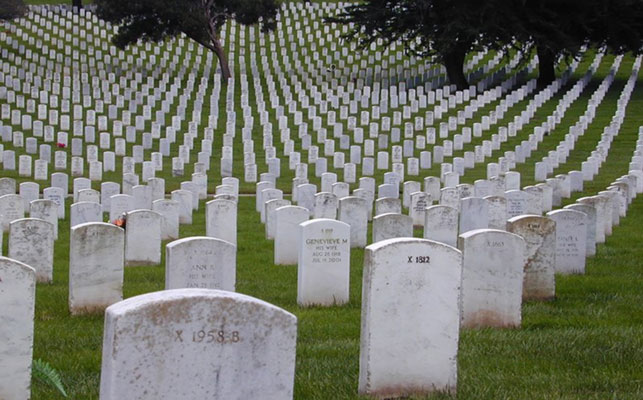
Tuesday’s death count, which set another daily record, represented at least 1,597 more people than those killed in the terrorist attacks of Sept. 11, 2001.
The U.S. death toll, already the world’s highest by a wide margin, is now about 20,000 shy of 400,000 — only a month after the country crossed the 300,000 threshold, a figure greater than the number of Americans who died fighting in World War II.
But much of the nation’s attention is focused on the fallout from the Capitol siege, prompted in part by President Trump’s efforts to prevent Congress from certifying Joseph R. Biden Jr.’s victory in the November election.
On Wednesday, the House will vote to formally charge Mr. Trump with inciting violence against the country. House lawmakers have formally notified Vice President Mike Pence that they will impeach the president if Mr. Pence and the cabinet do not remove Mr. Trump from power by invoking the 25th Amendment.
As people in the country wait to see how Mr. Trump’s tenure will end, they have also focused on the stories of the five people who were left dead after last week’s rampage — in particular, the death of Brian D. Sicknick, a Capitol Police officer who was overpowered by the mob and struck on the head with a fire extinguisher.
“Brian is a hero,” his brother Ken Sicknick said. “That is what we would like people to remember.”
Each coronavirus death is no less painful to the families and friends who have lost loved ones. Among the latest victims are a revered basketball coach, a travel writer who loved country winters and an architect who had survived the Holocaust.
“This next phase reflects the urgency of the situation we face,” he said. “Every vaccine dose that is sitting in a warehouse rather than going into an arm could mean one more life lost or one more hospital bed occupied.”
In the first week of 2021, roughly two people died from Covid-19 in the U.S. every minute, amid a struggling national vaccination effort, soaring coronavirus cases and the deadliest day of the pandemic yet.
KEY FACTS
According to data from the Covid Tracking Project, 19,418 people died from the disease in the first seven days of 2021.
The U.S. is the country hardest hit by the novel coronavirus — more than 4,000 people died on Thursday, the deadliest day yet of the pandemic, and over 355,000 people have died from the disease since the pandemic began.
Experts warn that things are likely to get worse before they get better as hospitals across the country are stretched to breaking point — hospitals in LA are reportedly rationing oxygen and many are running out of beds.
More than 132,000 Americans are currently admitted in hospitals for Covid-19-related care.
Widespread vaccination, which could help turn the tide against the virus, has failed to gain momentum and the U.S. is way behind its inoculation targets.
The Centers for Disease Control and Prevention says that only 28% of the more than 21 million vaccines it has distributed have been used — many are reportedly languishing in storage.
WHAT TO WATCH FOR
President-elect Joe Biden has said he will release all available Covid-19 vaccine doses for immediate use upon taking office, ending Trump’s strategy of saving doses to ensure people have access to a recommended second shot. Some countries, such as the U.K., have decided to space out doses beyond what manufacturers recommend in a bid to provide as many people as possible with some degree of immunity. Experts are torn on the strategy. The U.S. Food and Drug Administration recommends the vaccines are distributed as intended, with a second shot after a 21 or 28 day gap. The British medical regulator, and more recently the World Health Organization, say the second shot can be delayed, although they do not agree on how long this should be.
CRUCIAL QUOTE
Biden warned that the U.S. is falling “far behind” what is needed to control the pandemic. Trump’s approach would take “years,” he said.
WHAT WE DON’T KNOW
A highly infectious variant of coronavirus, first discovered in the U.K., could be circulating in the U.S.. At least 52 cases have been reported so far. Fortunately, scientists do not believe the variant is able to evade the recently-developed vaccines.
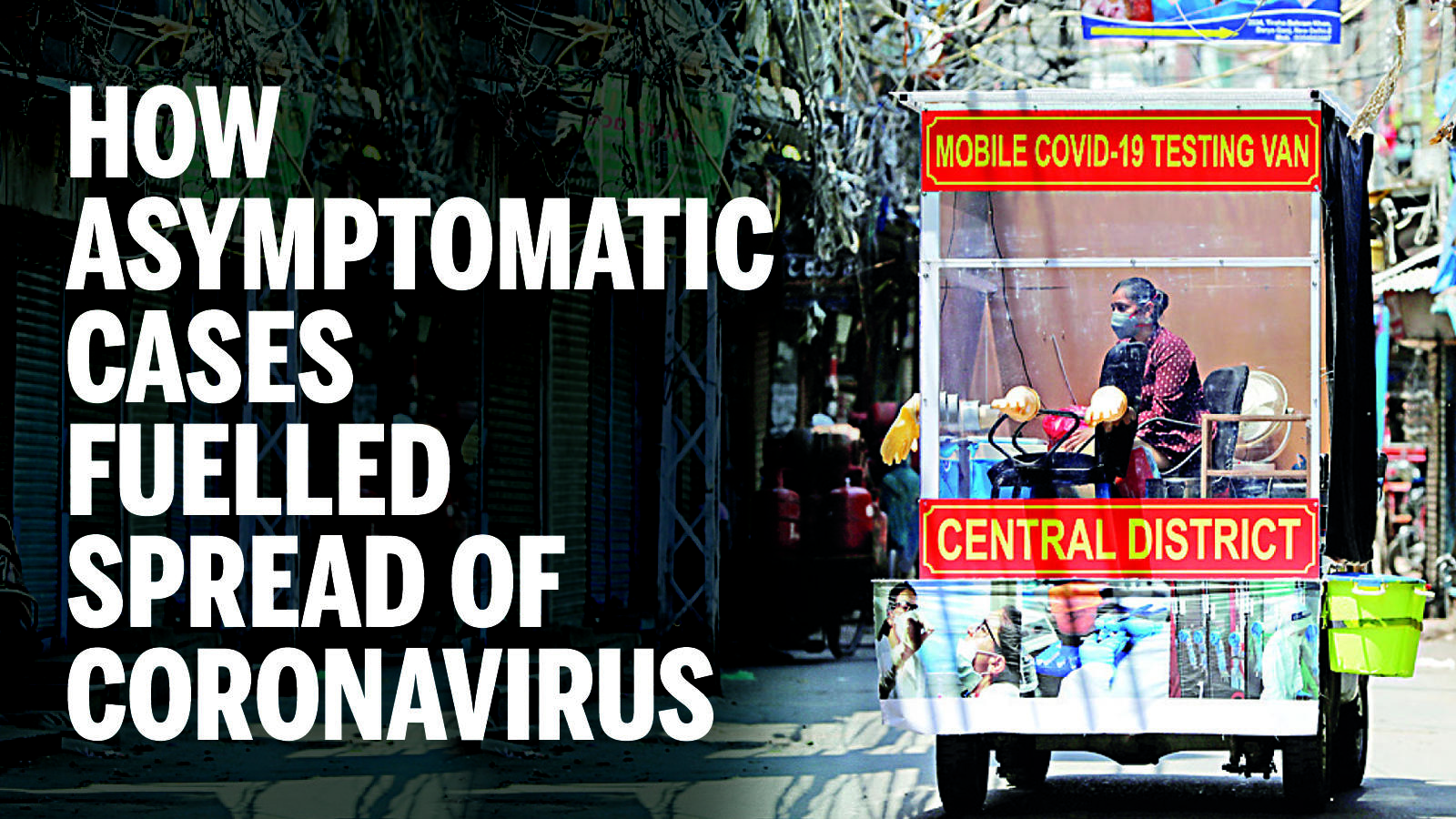
People with COVID-19 who don’t exhibit symptoms may transmit 59 percent of all virus cases, according to a model developed by CDC researchers and published Jan. 7 in JAMA Network Open.
Since many factors influence COVID-19 spread, researchers developed a mathematical approach to assess several scenarios, varying the infectious period and proportion of transmission for those who never display symptoms according to published best estimates.
In the baseline model, 59 percent of all transmission came from asymptomatic transmission. That includes 35 percent of new cases from people who infect others before they show symptoms and 24 percent from people who never develop symptoms at all. Under a broad range of values for each of these assumptions, at least 50 percent of new COVID-19 infections were estimated to have originated from exposure to asymptomatic individuals.
The more contagious variant first identified in the U.K. and since found in six states underscores the importance of the model findings, said Jay Butler, MD, CDC deputy director for infectious diseases and a co-author of the study.
“Controlling the COVID-19 pandemic really is going to require controlling the silent pandemic of transmission from persons without symptoms,” Dr. Butler told The Washington Post. “The community mitigation tools that we have need to be utilized broadly to be able to slow the spread of SARS-CoV-2 from all infected persons, at least until we have those vaccines widely available.”
Whether vaccines stop transmission is still uncertain and was not a scenario addressed in the model.
North Dakota has administered the highest percentage of COVID-19 vaccines it has received, according to the CDC’s COVID-19 vaccine distribution and administration data tracker.
The CDC’s data tracker compiles data from healthcare facilities and public health authorities. It updates daily to report the total number of COVID-19 vaccines that have been distributed to each state and the total number each state has administered.
As of 9 a.m. ET Jan. 7, a total of 21,419,800 vaccine doses have been distributed in the U.S. and 5,919,418 have been administered, or 27.64 percent. That means about 1.8 percent of the U.S. population has been vaccinated.
Below are the states ranked by the percentage of COVID-19 vaccines they’ve administered of those that have been distributed to them.
North Dakota Doses distributed to state: 43,950 Doses administered: 27,289 Percentage of distributed vaccines that have been administered: 62.09
West Virginia Doses distributed to state: 126,275 Doses administered: 74,016 Percentage of distributed vaccines that have been administered: 58.61
South Dakota Doses distributed to state: 59,900 Doses administered: 33,389 Percentage of distributed vaccines that have been administered: 55.74
New Hampshire Doses distributed to state: 77,075 Doses administered: 37,369 Percentage of distributed vaccines that have been administered: 48.48
Connecticut Doses distributed to state: 219,125 Doses administered: 100,889 Percentage of distributed vaccines that have been administered: 46.04
Nebraska Doses distributed to state: 132,800 Doses administered: 53,548 Percentage of distributed vaccines that have been administered: 40.32
Montana Doses distributed to state: 69,025 Doses administered: 27,693 Percentage of distributed vaccines that have been administered: 40.12
Tennessee Doses distributed to state: 454,800 Doses administered: 179,811 Percentage of distributed vaccines that have been administered: 39.54
Iowa Doses distributed to state: 191,675 Doses administered: 74,224 Percentage of distributed vaccines that have been administered: 38.72
Kentucky Doses distributed to state: 244,350 Doses administered: 94,443 Percentage of distributed vaccines that have been administered: 38.65
Vermont Doses distributed to state: 48,550 Doses administered: 18,740 Percentage of distributed vaccines that have been administered: 38.6
Maine Doses distributed to state: 96,475 Doses administered: 37,128 Percentage of distributed vaccines that have been administered: 38.48
Rhode Island Doses distributed to state: 72,175 Doses administered: 27,696 Percentage of distributed vaccines that have been administered: 38.37
New Mexico Doses distributed to state: 133,125 Doses administered: 48,306 Percentage of distributed vaccines that have been administered: 36.29
Colorado Doses distributed to state: 361,375 Doses administered: 130,445 Percentage of distributed vaccines that have been administered: 36.1
Utah Doses distributed to state: 191,075 Doses administered: 62,662 Percentage of distributed vaccines that have been administered: 34.8
Oklahoma Doses distributed to state: 264,000 Doses administered: 85,978 Percentage of distributed vaccines that have been administered: 32.57
Texas Doses distributed to state: 1,676,925 Doses administered: 545,658 Percentage of distributed vaccines that have been administered: 32.54
New York Doses distributed to state: 1,134,800 Doses administered: 353,788 Percentage of distributed vaccines that have been administered: 31.18
Massachusetts Doses distributed to state: 449,025 Doses administered: 137,858 Percentage of distributed vaccines that have been administered: 30.7
Ohio Doses distributed to state: 576,250 Doses administered: 175,681 Percentage of distributed vaccines that have been administered: 30.49
Indiana Doses distributed to state: 409,625 Doses administered: 123,835 Percentage of distributed vaccines that have been administered: 30.23
Florida Doses distributed to state: 1,355,775 Doses administered: 402,802 Percentage of distributed vaccines that have been administered: 29.71
Illinois Doses distributed to state: 737,125 Doses administered: 213,045 Percentage of distributed vaccines that have been administered: 28.9
Missouri Doses distributed to state: 401,050 Doses administered: 113,369 Percentage of distributed vaccines that have been administered: 28.27
New Jersey Doses distributed to state: 572,250 Doses administered: 155,458 Percentage of distributed vaccines that have been administered: 27.17
Maryland Doses distributed to state: 371,425 Doses administered: 100,049 Percentage of distributed vaccines that have been administered: 26.94
Delaware Doses distributed to state: 64,375 Doses administered: 16,677 Percentage of distributed vaccines that have been administered: 25.91
Hawaii Doses distributed to state: 95,200 Doses administered: 24,558 Percentage of distributed vaccines that have been administered: 25.80
South Carolina Doses distributed to state: 225,850 Doses administered: 58,044 Percentage of distributed vaccines that have been administered: 25.7
Minnesota Doses distributed to state: 378,425 Doses administered: 97,098 Percentage of distributed vaccines that have been administered: 25.66
Pennsylvania Doses distributed to state: 789,250 Doses administered: 202,498 Percentage of distributed vaccines that have been administered: 25.66
Wisconsin Doses distributed to state: 322,775 Doses administered: 82,170 Percentage of distributed vaccines that have been administered: 25.46
Alaska Doses distributed to state: 87,325 Doses administered: 21,830 Percentage of distributed vaccines that have been administered: 25
Virginia Doses distributed to state: 556,625 Doses administered: 136,924 Percentage of distributed vaccines that have been administered: 24.60
Oregon Doses distributed to state: 262,100 Doses administered: 61,672 Percentage of distributed vaccines that have been administered: 23.53
Washington Doses distributed to state: 518,550 Doses administered: 121,354 Percentage of distributed vaccines that have been administered: 23.40
Wyoming Doses distributed to state: 40,400 Doses administered: 9,324 Percentage of distributed vaccines that have been administered: 23.08
California Doses distributed to state: 2,314,350 Doses administered: 528,173 Percentage of distributed vaccines that have been administered: 22.82
Idaho Doses distributed to state: 104,925 Doses administered: 22,822 Percentage of distributed vaccines that have been administered: 21.75
Louisiana Doses distributed to state: 298,825 Doses administered: 64,664 Percentage of distributed vaccines that have been administered: 21.64
North Carolina Doses distributed to state: 647,450 Doses administered: 139,474 Percentage of distributed vaccines that have been administered: 21.54
Nevada Doses distributed to state: 187,375 Doses administered: 39,761 Percentage of distributed vaccines that have been administered: 21.22
Michigan Doses distributed to state: 662,450 Doses administered: 137,887 Percentage of distributed vaccines that have been administered: 20.81
Alabama Doses distributed to state: 245,100 Doses administered: 48,888 Percentage of distributed vaccines that have been administered: 19.95
Arizona Doses distributed to state: 453,275 Doses administered: 88,266 Percentage of distributed vaccines that have been administered: 19.47
Arkansas Doses distributed to state: 212,700 Doses administered: 40,899 Percentage of distributed vaccines that have been administered: 19.23
Kansas Doses distributed to state: 191,225 Doses administered: 36,538 Percentage of distributed vaccines that have been administered: 19.11
Mississippi Doses distributed to state: 159,625 Doses administered: 28,356 Percentage of distributed vaccines that have been administered: 17.76
Georgia Doses distributed to state: 619,250 Doses administered: 103,793 Percentage of distributed vaccines that have been administered: 16.76
President-elect Joseph R. Biden Jr. plans to release nearly all available coronavirus vaccine doses “to ensure the Americans who need it most get it as soon as possible,” the Biden transition team said Friday, a move that represents a sharp break from the Trump administration’s practice of holding back some of the vaccine.
The announcement coincided with a letter from eight Democratic governors — including Andrew M. Cuomo of New York and Gretchen Whitmer of Michigan, both of whom have clashed with President Trump — imploring the current administration to release all available doses to the states as soon as possible.
“The failure to distribute these doses to states who request them is unconscionable and unacceptable,” the governors wrote in the letter, which was obtained by The New York Times and sent Friday to the secretary of health, Alex M. Azar II, and Gen. Gustave F. Perna, who is in charge of vaccine distribution. “We demand that the federal government begin distributing these reserved doses to states immediately,” the letter said.
Because both of the vaccines with emergency approval require two doses, the Trump administration has been holding back roughly half of its supply to ensure those already vaccinated receive the booster dose. The vaccine rollout has been troubled from the start.
As of Thursday, the Trump administration had shipped more than 21 million vaccine doses, and millions more were already in the federal government’s hands. Yet only 5.9 million people had received a dose. State and local public health officials, already overwhelmed with rising infections, have been struggling to administer the vaccine to hospital workers and at-risk older Americans while most people remain in the dark about when they might be protected. Mr. Biden has promised that 100 million doses of the vaccine would be administered by his first 100th day in office.
Releasing the vast majority of the vaccine doses raises the risk that second doses would not be administered on time. Officials from the Food and Drug Administration — experts whose advice Mr. Biden has pledged to follow — have spoken out strongly against changing the dosing schedule, calling such a move “premature and not rooted solidly in the available evidence.”
A transition official, speaking anonymously to provide insight into the president-elect’s thinking, said would use the Defense Production Act, if needed, to ensure that enough doses are available.
However, the official also noted that the Biden team has “faith in our manufacturers that they can produce enough vaccines to ensure people can get their second dose in a timely manner, while also getting more people their first dose.”
A spokesman for Operation Warp Speed, the Trump administration’s vaccine initiative, released a statement sharply criticizing Mr. Biden’s approach.
“If President-elect Biden is calling for the distribution of vaccines knowing that there would not be a second dose available, that decision is without science or data and is contrary to the FDA’s approved label,” said the spokesman, Michael Pratt. “If President-elect Biden is suggesting that the maximum number of doses should be made available, consistent with ensuring that a second dose of vaccine will be there when the patient shows up, then that is already happening.”
A spokesman for the transition team, T.J. Ducklo, said Mr. Biden “believes we must accelerate distribution of the vaccine while continuing to ensure the Americans who need it most get it as soon as possible.”
“He supports releasing available doses immediately, and believes the government should stop holding back vaccine supply so we can get more shots in Americans’ arms now,” Mr. Ducklo said. “He will share additional details next week on how his Administration will begin releasing available doses when he assumes office on January 20th.”
Dr. Leana Wen, an emergency physician and public health expert at the George Washington University School of Public Health, said she was surprised and concerned about the new strategy, which seemed to offer a solution incongruous with the biggest problems in the vaccine rollout. Distribution has sputtered in large part because of a lack of administering capacity and several logistical hurdles, rather than a severe shortage of doses.
“This is not the problem we’re trying to solve right now,” Dr. Wen said.
For such a plan to work, Dr. Wen added, the Biden administration will need to be confident in both improved distribution tactics and sufficient vaccine production, “so all who receive the first dose of the vaccine will receive the second in a timely manner.”
Should a high number of delayed second doses occur — ostensibly shirking the regimens laid out in clinical trials — “it runs the risk of substantially eroding public trust in vaccines,” Dr. Wen said. The recommended timeframe for administering the second dose for the Pfizer-BioNTech vaccine is 21 days later, and for the Moderna vaccine, 28 days.
Mr. Biden’s announcement came amid growing pressure to step up the slow pace of mass vaccinations.
Speaking at a news briefing on Friday, Dr. Stephen Hahn, the F.D.A. commissioner, urged states that have utilized only a small part of their supply to begin vaccinating lower-priority groups, while still observing government guidelines.
“We think that will go a long way toward using these vaccines appropriately and getting them into the arms of individuals,” he said.
Mr. Biden also formally announced nearly two dozen members of his National Security Council staff on Friday, including a senior official for global health threats whose office was downgraded before the coronavirus pandemic.
Among the 21 appointees is Elizabeth Cameron, who will be the council’s senior director for global health security and biodefense, the job she held until John R. Bolton, Mr. Trump’s then-national security adviser, eliminated the office in May 2018, reassigning its responsibilities elsewhere within the N.S.C. Ms. Cameron has argued publicly that the move “contributed to the federal government’s sluggish domestic response” to the pandemic, and Mr. Biden vowed as a candidate to restore the office.
England will enter a national lockdown until at least mid-February to stem the spread of the coronavirus, Prime Minister Boris Johnson announced Monday, as the so-called U.K. variant continues to spread throughout the country.
KEY FACTS
Coronavirus is again surging in the U.K. because of a new, more transmissible mutation of Covid-19 called B.1.1.7.
The lockdown will close all non-essential businesses and restaurants will be required to limit service to takeout orders.
Schools will be closed to all students except for the children of essential workers.
Johnson’s announcement comes after Scotland imposed a similar lockdown earlier Monday.
Around half a million Americans are now getting a coronavirus vaccine shot every day. But that pace must accelerate considerably if the United States has any hope of quashing the virus in 2021.
Public health experts differ on how quickly that might happen — and when things might start to feel “normal” again around the country.
To inaugurate our first Health 202 of the new year, we asked eight experts for their predictions.
After all, we all want to know when we can go to concerts and ballgames again. Or even just go to the office. (Let’s start small.)
We asked two questions. The first has to do with when the United States will reach “herd immunity” — the point at which enough people are immune to a virus, either by recovering from it or getting vaccinated against it. Herd immunity generally kicks in when about 70 percent of people are immune, although experts differ on the precise threshold.
To reach herd immunity with the coronavirus, approximately 230 million Americans would need the vaccine. As of yesterday, just 4 million had gotten the first of two shots. Daily immunizations have increased considerably over the past few days, with about 500,000 people getting the shot each day, but experts say that number needs to at least double and ideally quadruple.
We also asked these experts when they personally expect their lives to return to normal.
Here are their responses, edited lightly for clarity and brevity.
When will enough Americans be vaccinated for the U.S. to reach herd immunity, based on how things look right now?
Carlos del Rio, professor of medicine and global health at Emory University:
“At the current pace it will take a really long time. … I think if we can get our act together and start vaccinating 1 million people a day like President-elect Biden is promising, then we can get to 260 million people getting at least one dose … more or less or by late August or early September.If we really scale up and get to 3 million per day, then we can get to 260 million people in [less than] 100 days or three months. Can we do it? Yes! But it will require coordination, leadership and funding. So, as you see, my answer is: It depends.”
Eric Topol, director and founder of Scripps Research Translational Institute:
“I think by July, if we get 2 to 3 million people vaccinated per day, and even sooner, if we have a rapid neutralization antibody assay to be able to defer those who have had a prior infection and mounted a durable immune response. Yes, that is optimistic, but it can be done.”
Jay Bhattacharya, professor of medicine at Stanford University:
“There is a lot of disagreement in the scientific literature about the herd immunity threshold, which is certain to vary from place to place. I don’t think anyone responsible would confidently say what it is, and would never put forward a single number for the U.S. as a whole. Rather, the key question is how rapidly we inoculate people who have a high risk of mortality conditional on infection — most older folks and some late middle-aged folks with severe chronic conditions. Prioritizing them for vaccination will yield the greatest benefit in reducing covid-19-related mortality, regardless of when herd immunity is hit.”
Jesse Goodman, professor of medicine and infectious diseases at Georgetown University:
“I am not sure that in the near future we will reach a level of population immunity where the virus will be virtually shut down, as we are accustomed to with measles. Through immunity due to vaccination, combined, unfortunately, with infections in the unvaccinated, we should reach a state where the risk of exposure is reduced due to a mostly immune population. While cases will still occur, our health system will no longer be stressed and large outbreaks should be less common.
“I am hopeful we can get to such a situation in the last quarter of this year, provided vaccine production, access and acceptance go well and no mutant viruses arise that gain the ability to escape current vaccines.”
Kimberly Powers, associate professor of epidemiology at the University of North Carolina at Chapel Hill:
“That question is difficult to answer, as there is considerable uncertainty around the level of immunity we would need in the population to achieve herd immunity, along with the speed with which we can expect widespread vaccine uptake to occur.”
Leana Wen, public health professor at George Washington University and former Baltimore health commissioner:
“Right now, vaccine distribution is progressing at an unacceptably slow speed, and at this current rate, it will take years to reach herd immunity — if ever. If we are able to pick up speed by many times in January, there is still a chance we could substantially slow down the infection and perhaps approach herd immunity in 2021.”
Marc Lipsitch, professor of epidemiology at Harvard University:
“I think you mean ‘will enough Americans be vaccinated to reach the herd immunity threshold?’ My answer is possibly not because we don’t know if the vaccines protect enough against transmission for the threshold to be achievable, and because the new variant may increase that threshold substantially.”
Michael Osterholm, chairman of the Center for Infectious Disease Research and Policy at the University of Minnesota:
“There are three factors that will independently determine when enough Americans will either be protected from covid-19 via vaccination or development of antibody following actual infection.
“First, when will there be sufficient vaccine produced and distributed so everyone can receive their two doses? This includes vaccinating those who may have immune protection from actual infection but are vaccinated anyway to increase durable protection. Second, will enough people agree to be vaccinated? And finally, what is the durability of vaccine-induced protection over time?
“Each of these factors will play a role in achieving local, regional or national herd immunity protection. I feel confident we can achieve the first factor of sufficient vaccine by the late summer or early fall. But ultimately, the second two factors, how many will be vaccinated and how durable is immune protection will determine the answer to this question. I hope, when considering all three factors, it will be late summer or early fall, but we all realize hope is not a strategy.”
When do you expect your own daily life to feel similar to pre-pandemic times?
Carlos del Rio:
“I am hoping to be ‘close to normal’ by December 2021 more or less. However, as a physician seeing patients, I will probably continue to wearing a face mask and goggles for much longer.”
Eric Topol:
“In 2022.”
Jay Bhattacharya:
“Given the changes that the previous year has had on my professional and personal life, I do not expect my daily life to ever feel similar to pre-pandemic times. More broadly though and given the disappointingly slow roll out of the vaccine to the vulnerable in many states, I anticipate that American society will start to feel more like normal by April 2021.”
Jesse Goodman:
“Hopefully late this year, life should begin to feel similar to pre-pandemic times. However, it is likely that both great vigilance and some social distancing will still be needed, particularly if the population is not nearly all vaccinated. In addition, we may well require periodic immunization against the current and, possibly, other emerging coronavirus variants.”
Kimberly Powers:
“I expect daily life to feel more normal by sometime this summer, but I think it will be 2022 before some mitigation measures can be fully relaxed. And I expect that our society will feel ongoing consequences of this pandemic — physical, mental, emotional, and economic — for years to come.”
Leana Wen:
“I don’t know. I was much more optimistic a few weeks ago. But given the lag in vaccine rollout thus far and how under-resourced our public health systems are, I am concerned things for much of 2021 will feel more like 2020 than 2019.”
Marc Lipsitch:
“I think that sometime in the second half of the yearthere will be enough vaccination in the U.S. and some other countries that we will begin to treat covid-19 more like seasonal flu, which is deadly to large numbers of people but does not overwhelm health care and does not cause us to curtail normal social contact. This is because with enough vaccine in those at high risk of death and hospitalization, transmission may continue (at a reduced level thanks to some immunity in the population from prior infection and vaccine) but the outcomes will be less severe.”
Michael Osterholm:
“I’m not sure it ever will. We will not go back to a pre-covid-19 normal. We will instead exist in world with a new normal. And even that will in part be determined by the availability of adequate vaccine supply to cover everyone in high, middle and low income countries. I look forward to the day when my office hours are as they were pre-covid-19.”
Anthony Fauci, the nation’s top infectious diseases expert, said Sunday he did not expect the death toll from the coronavirus to be so high in the U.S.
“There is no running away from the numbers,” Fauci told guest host Martha Raddatz on ABC’s “This Week.”
“It’s something that we absolutely have got to grasp and get our arms around and turn that, turn that inflection down by very intensive adherence to the public health measures uniformly throughout the country with no exceptions,” he added.
Statistics held by John Hopkins University show that 350,215 deaths have been recorded in the United States so far, a number that has been quickly growing over the last two months.
“I did not” expect the death toll to reach the recent milestone of 350,000 in the U.S., Fauci said.
“But, you know, that’s what happens when you’re in a situation where you have surges related to so many factors inconsistent adhering to the public health measures, the winter months coming in right now with the cold allowing people or essentially forcing people to do most of their things indoors as opposed to outdoors.”
Raddatz asked Fauci how effective he thought proposals by President-elect Joe Biden would be, such as a 100-day mask mandate and a target of 100 million vaccinations.
“The goal of vaccinating 100 million people in the first 100 days is a realistic goal. We can do 1 million people per day,” Fauci said. “You know we’ve done massive vaccination programs, Martha, in our history. There’s no reason why we can’t do it right now.”
More than 350,000 people have died of the coronavirus in the U.S., with another surge of cases and deaths expected in the coming weeks as a result of smaller holiday gatherings.
The country reached the grim milestone early Sunday morning, according to data compiled by Johns Hopkins University. More than 20 million people have been infected since the pandemic began nearly one year ago, according to the tally.
Public health experts attributed a nationwide spike in cases, hospitalizations and deaths in early December to a large number of Americans traveling over the Thanksgiving holiday, and pleaded with citizens to stay home for Christmas and New Year’s celebrations.
Multiple states have reported a record number of cases, including North Carolina and Arizona, according to the Associated Press. New York hit 1 millions cases total as of Saturday, becoming the fourth state to do so along with Texas, Florida and California.
Last month, federal officials approved two vaccines by Pfizer and Moderna for emergency use. The first round of doses have been administered to doctors, nurses and other front line healthcare workers as well as nursing home residents.
The elderly and other patients deemed “high risk” are the next group of Americans slated to receive vaccines with public health officials estimating younger and healthy citizens can expect to be eligible for vaccination toward the middle to end of spring.
The Centers of Disease Control and Prevention last week reported more than 2 million people in America have been vaccinated, far short of the 20 million figure the federal government initially said it hoped to top by this time. That number has since grown to 4.2 million as of Sunday.
“We would have liked to have seen it run smoothly and have 20 million doses into people today by the end of the 2020, which was the projection,” saidDr. Anthony Fauci, the nation’s leading infectious disease doctor. “Obviously, it didn’t happen, and that’s disappointing.”
Fauci said a targeted approach in assisting local governments in vaccine rollout programs is the best way for the federal government to make up for lost time.
“There really has to be a lot more effort in the sense of resources for the locals, namely, the states, the cities, the counties, the places where the vaccine is actually going into the arms of individuals,” Fauci said.
The first month of the pandemic was also supposed to be the month I got pregnant, but my clinic closed and plans changed. Doctors and nurses needed personal protective equipment to tend to patients with covid-19, not women with recurrent miscarriages.
When the clinic reopened several months later, it turned out my husband and I had only been delaying yet another loss: In late August, he obeyed the medical center’s strict coronavirus protocols by waiting anxiously in the car while I trudged inside, masked and hand-sanitized, to receive a miscarriage diagnosis alone. I searched the ultrasound screen for the rhythmic beat of a heart, and then accepted that whatever had once been there was now gone.
But that was 2020 for you, consistent only in its utter crappiness. For every inspiring video of neighbors applauding a shift change at the hospital, another video of a bone-tired nurse begging viewers to believe covid was real, it wasn’t a hoax, wear a mask.
For every protest organized by activists who understood racism is also a long-term crisis, an appearance by the Proud Boys; for every GoFundMe successfully raising money for a beloved teacher’s hospital bills, a bitter acknowledgment that online panhandling is our country’s version of a safety net.
Millions of citizens stood in line for hours to vote for the next president and then endured weeks of legal petitions arguing that their votes should be negated. The basis for these legal actions were conspiracy theories too wild to be believed, except that millions of other citizens believed them.
And that was 2020 for you, too: accepting the increasingly obvious reality that the country was in peril, built on iffy foundations that now buckled under pressure. My loved ones who worked as waiters or bartenders or physical therapists were choosing between health and paychecks, and even from the lucky safety of my work-from-home job, each day began to feel like watching America itself arrive at a hospital in bad shape, praying that doctors or clergy could find something they were able to save.
Is there a heartbeat?
You want the answer to be yes, but even so, it was hard to imagine how we would come back from this.
What kind of delusional person would even try to get pregnant in this world? In my case it would never be a happy accident; it would always be a herculean effort. And so it seemed I should have some answers.
How do you explain to a future child: Sorry, we can’t fix climate change; we can’t even get people to agree that we should wear masks in grocery stores? How do you explain the frustration of seeing brokenness, and then the wearying choice of trying to fix it instead of abandoning it? How do you say, Love it anyway. You’re inheriting an absolute mess, but love it anyway?
I found myself asking a lot of things like this in 2020, but really they were all variations of the same question: What does it mean to have hope?
But in the middle of this, scientists worked quietly in labs all over the world. They applied the scientific method with extraordinary discipline and speed. A vaccine was developed. Tens of thousands of volunteers rolled up their sleeves and said, Try it out on me.
It was approved, and a nurse from Long Island was the first American televised receiving it. Her name was Sandra Lindsay, an immigrant from Jamaica who had come to the United States 30 years ago and who had spent the last year overseeing critical care teams in back-to-back shifts. She said she had agreed to go first to show communities of color, long abused, brushed-off or condescended to by the medical system, that the vaccine was safe.
Here was hope. And more than that, here was hope from a woman who had more reason than most to be embittered: an exhausted health-care worker who knew too well America’s hideous racial past and present, who nonetheless also knew there was only one way out of the tunnel. Here she was, rolling up her own sleeve, and there were the lines of hospital employees ready to go after her, and there were the truck drivers ferrying shipments of syringes.
I can’t have been the only person to watch the video of those early inoculations, feeling elated and tired, and to then burst into tears. I can’t have been the only person to realize that even as 2020 revealed brokenness, it also contained such astounding undercurrents of good.
The scientific method works whether you accept it or not. Doctors try to save you whether you respected public-health guidelines or not. Voter turnout was astronomical because individual citizens realized they were all, every one of them, necessary pieces in a puzzle, even if they couldn’t see what the final picture was supposed to look like.
The way to believe in America is to believe those things are passed down, too.
Sometime in October, a couple of months after my last miscarriage — when the country was riding up on eight months of lonely and stoic birthdays, graduations, deaths and weddings — I went into the bathroom and saw a faint second line on a First Response pregnancy test. It was far from my first rodeo, so I knew better than to get excited. I mentioned it to my husband with studied nonchalance, I told him that I’d test again in a few days but that we should assume the worst would happen.
Two weeks after that, I had a doctor’s appointment, and then another a week later, each time assuming the worst, but each time scheduling another appointment anyway, until eventually I was further along than I’d ever gotten before — by one day, then three days, then thirty.
I am not a superstitious person. I don’t believe that good things always come to those who deserve them. I believe that stories regularly have sad endings and that it’s often nobody’s fault when they do, and that we should tell more stories with sad endings so that people who experience them know that they’re not alone.
But 2020 has taught me that I am, for better or worse, someone who wants to hope for things. To believe in the people who developed vaccines. In the people who administered them. In Sandra Lindsay. In the people who delivered groceries, who sewed masks, who have long cursed America’s imperfect systems and long fought to change them, who still donate $10 to a sick teacher’s GoFundMe.
At my most recent appointment, the doctor’s office was backed up in a holiday logjam. I sat in the exam room for nearly three hours while my husband again waited anxiously in the car. I texted him sporadic updates and tried to put hope in a process that so far had not seemed to warrant my hope.
It all felt precarious. The current reality always feels precarious.
And yet there we all are together, searching for signs of life, hoping that whatever we emerge to can be better than what we had before, and that whatever we build will become our new legacy. The sonographer finally arrived and turned on the machine.




 HENRY KOTULA