White House plans to scale back coronavirus task force

https://thehill.com/homenews/administration/496211-white-house-signals-it-will-wind-down-coronavirus-task-force

Anthony Fauci - Axios

The White House is in the early stages of winding down its coronavirus task force, Vice President Pence’s office confirmed Tuesday.

The surprise decision comes as most states are preparing to loosen restrictions meant to slow the spread of the virus, while a number of areas continue to see increases in new COVID-19 cases and deaths.

Pence’s office confirmed to The Hill that the vice president told reporters at a limited briefing that his plan is to scale back the task force’s role by Memorial Day. Pence has been leading the task force since late February.

Members are likely to return to their respective departments and manage the coronavirus response from there.

Dr. Deborah Birx, who was brought in from the State Department to coordinate the White House virus response, will “continue to review and analyze data and work with the departments in agencies to help that data inform their decision making processes,” a spokesman for Pence’s office said.

The New York Times first reported on the expected demise of the task force.

The task force, which includes nearly two dozen officials from various government agencies, held near-daily press briefings for more than a month but has been less visible in recent weeks as President Trump and others transition their focus to the economic consequences of the pandemic.

There have been no coronavirus task force briefings in more than a week, and the daily meetings have become less frequent. The group was scheduled to meet Tuesday afternoon.

But the decision to formally disband the task force is sure to raise concern among public health experts who have warned the coronavirus will likely be part of life in the U.S. until there is a widely available vaccine, which could take a year or longer to develop.


There’s a more accurate way to compare coronavirus deaths to the flu

https://www.washingtonpost.com/business/2020/05/02/theres-more-accurate-way-compare-coronavirus-deaths-flu/?fbclid=IwAR3OAIJLKvmK5f9lwxCbBsxdt3EbqsyRXEaWj1I_TWXyJahAHue8ABrPUCI&utm_campaign=wp_main&utm_medium=social&utm_source=facebook

Flu vs Covid19 death rate by age per CDC : Coronavirus

If we measure flu mortality the same way we count covid-19 deaths, the picture becomes very stark.

Months into the coronavirus pandemic, some politicians and pundits continue to promote ham-handed comparisons between covid-19 and the seasonal flu to score political points.

Though there are many ways to debunk this fundamentally flawed comparison, one of the clearest was put forth this week by Jeremy Samuel Faust, an emergency room physician at Brigham and Women’s Hospital at Harvard Medical School.

As Faust describes it, the issue boils down to this: The annual flu mortality figures published by the Centers for Disease Control and Prevention are estimates produced by plugging laboratory-confirmed deaths into a mathematical model that attempts to correct for undercounting. Covid-19 death figures represent a literal count of people who have either tested positive for the virus or whose diagnosis was based on meeting certain clinical and epidemiological criteria.

Such a comparison is of the apples to oranges variety, Faust writes, as the former are “inflated statistical estimates” and the latter are “actual numbers.”

To get a more accurate comparison, one must start with the number of directly confirmed flu deaths, which the CDC tracks on an annual basis. In the past seven flu seasons, going back to 2013, that tally fluctuated between 3,448 and 15,620 deaths.

Note that these numbers are very different from the CDC’s final official flu death estimates. For 2018-2019, for instance, the 7,172 confirmed flu deaths translated to a final estimate of between 26,339 and 52,664 deaths. Again, that’s because the CDC plugs the confirmed deaths into a model that attempts to adjust for what many epidemiologists believe is a severe undercount.

Now, let’s add a bar for this season’s covid-19 deaths, which as of this writing stands at 63,259, and which will be even higher by the time you read this. Note the drastic change in the y-axis to accommodate the scale of covid-19 mortality.

This year’s data are necessarily incomplete, as 22 weeks remain in the flu season. There are not likely to be many more flu deaths, as we are well past the worst of the season. But covid-19 mortality has plateaued at around 2,000 deaths per day. Where it will head next is anyone’s guess.

Using an apples-to-apples comparison, we can say that the coronavirus has already killed eight times as many people as the flu. By the time we get data for the entire season, the difference appears likely to be at least tenfold, or a full order of magnitude.

The coronavirus, Faust writes, “is not anything like the flu: It is much, much worse.”

One of the most challenging things about this pandemic is making sense of the profound uncertainty surrounding the many quantities that might appear, at first glance, to be rock solid. On the surface, comparing flu and coronavirus deaths seems like a simple proposition: dig up the official numbers of both and see which is greater.

But that effort gets complicated as soon as you realize that flu mortality is not reported as a tally but as an estimated range, which is far different from the individual counts, based on testing and diagnoses, used for covid-19. And because we can’t test and diagnose everyone, those covid-19 deaths are probably undercounted as well. Soon, what once appeared to be a simple mathematical exercise turns into a mess of algorithms, estimates and uncertainty.

People encountering that uncertainty for the first time, as many of us are during this pandemic, are likely to react in one of two ways. Some cherry-pick a single number that comports with their biases, creating an artificial certainty to score political points or avoid upsetting their preconceptions. That’s what the politicians and talking heads using faulty flu data to downplay the outbreak are doing. Others throw their hands up and declare the truth to be unknowable, indulging in the cynicism that believes you can “make statistics say whatever you want.”

But rather than try to make sense of this uncertainty ourselves, there’s a third option: turning to the experts who’ve devoted their entire careers to these questions. We can listen to the epidemiologists and physicians, people like Faust and his colleagues, who are trained to draw the best possible conclusions out of uncertain data, understanding that those conclusions may have to be updated as new information comes in.

And while the experts might not all agree on some points, something like a critical consensus emerges if we listen to enough of them. Then, that consensus can be used to inform policy that helps save lives and protect the economy.


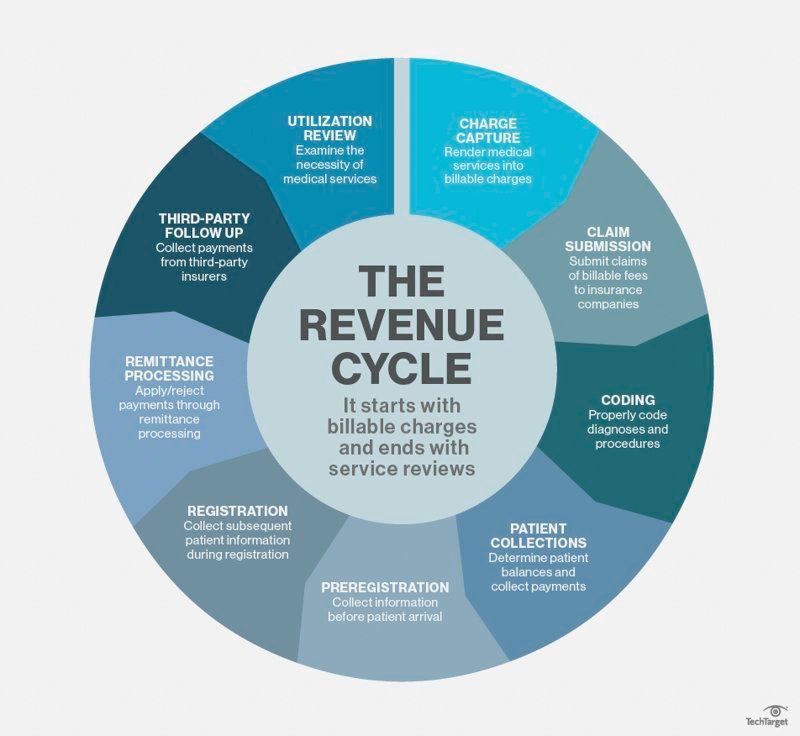
Five components of an intelligent middle revenue cycle

https://www.beckershospitalreview.com/healthcare-information-technology/five-components-of-an-intelligent-middle-revenue-cycle.html

What is revenue cycle management (RCM)? - Definition from WhatIs.com

Keys to achieving revenue integrity and compliance across your organization

It’s old news: Revenue cycle complexity continues to increase, exacerbating existing challenges. And as we tackle those, new ones arise to take their place.

Ever-changing regulations are a given, but adopting value-based reimbursement (VBR) models currently poses a major challenge. New payment models complicating revenue cycle activity become more difficult with additional quality reporting and other requirements. Add in the operational realities of siloed workflows, data proliferation, and disparate systems, and it’s clear why efficient collaboration can seem nearly impossible.  Intelligent middle revenue cycle operations that manage to these challenges are vital to achieving revenue integrity and financial stability.


Use the right solutions at the right time

Today’s environment requires sharpening the way you ensure revenue integrity. Providers need an easy, seamless way to manage middle revenue cycle operations, and there are several effective strategies to accomplish that. Of course, it’s important to recognize and make use of your EMR system’s capabilities. It’s also essential to leverage complementary technologies with specific core competencies that will improve revenue cycle performance. For example, a solution that continuously monitors records in real time enables timely auditing, coding adjustments and case completion to reduce billing turnaround and reimbursement delays.


Take a smart approach to enabling technology

Augmenting your core systems with complementary technologies or capabilities on a single, integrated platform makes it much easier to support internal collaboration between different departments or teams. An integrated platform also enables you to seamlessly deploy additional capabilities onto that platform, ensuring speed to value. Instead of using multiple disparate tools, a shared platform enables interdepartmental communication and helps minimize inefficiency.  A smart technology platform that crosses departmental siloes and brings transparency across teams is critical. Platforms that leverage clinically aware artificial intelligence and other automation enable staff to proactively focus on the areas where their expertise has the most impact. In addition, when leveraging an integrated platform, one expert team’s work will not get cancelled out by another team’s contributions.

Regardless of which core system you use, integrating technology with targeted competencies and connectivity adds value to the EMR. It can provide a depth of specialized expertise that drives better documentation, coding and real time audit interaction — keys to a high-performing revenue cycle.


Prioritize comprehensive, correct documentation and coding

Unfortunately, it seems the battle against claim denials is here to stay. You can’t overlook the importance of front-end data validation to eliminate rework and inefficiency. However, the ability to ensure complete and accurate clinical documentation for every case will significantly impact revenue capture and reduce the inefficiency of denials and rework.

Broaden the scope of your CDI program with technology that uses clinical intelligence to drive concurrent documentation review for all payers. Getting it right up front contributes to better coding, accurate reimbursement, and appropriate quality measures, all of which are vital to success under VBR.


Increase collaboration with payers

As long as payers and providers continue working at odds, the costly onslaught of denials will persist. In a perfect world, both sides would join forces to find mutually beneficial solutions for claim errors, denials and payment delays. Imagine the savings in administrative inefficiency alone. However, we’re not in that world yet. Therefore, it’s important to make a proactive effort to understand the specifics of each payer’s contract and adjust your internal processes and technology rules accordingly. As operating margins get smaller, organizations have no choice but to increase efficiency and accuracy, and working together with payers can contribute significantly to that goal.


Consolidate, collaborate, communicate

Industry pressures to improve performance are unrelenting, especially around smart solutions, innovation, and increasing both efficiency and the bottom line. Organizations are expected to improve these areas while, at the same time, enabling patient-centric operations. One way to achieve this is to leverage innovative, integrated tools to augment core systems and promote partnership, communication and efficiency across multiple related disciplines.

Consider clinical documentation, coding and auditing. Numerous departments need pieces of that information for different reasons, including utilization review, medical necessity determinations, chart audits and quality monitoring, in addition to bill preparation. A single repository containing up-to-date data in a real-time view driven by supporting workflow, rules and alerts provides consistent and reliable information when and where it’s needed.

As patient care becomes more complex, so does the middle revenue cycle. Seek solutions that will simplify and manage the complexity in an administratively efficient way. Consider your prospective vendor’s core competencies when evaluating solutions and look for integration and intelligent automation that will add the most value to your organization.


The pandemic didn’t come out of nowhere. The U.S. ignored the warnings.

https://www.washingtonpost.com/opinions/global-opinions/the-pandemic-didnt-come-out-of-nowhere-the-us-ignored-the-warnings/2020/04/21/3bf37566-7db3-11ea-a3ee-13e1ae0a3571_story.html?utm_campaign=wp_opinions&utm_medium=email&utm_source=newsletter&wpis

The pandemic didn't come out of nowhere. The U.S. ignored the ...

“CAME OUT of nowhere,” President Trump said March 6 of the coronavirus pandemic. “I just think this is something . . . that you can never really think is going to happen.” A few weeks later, he added, “I would view it as something that just surprised the whole world.” Mr. Trump also said, “Nobody knew there would be a pandemic or epidemic of this proportion.”

Of course, no one can pinpoint the exact moment that lightning will strike. But a global pandemic? Experts have predicted it, warned about the preparedness gaps and urged action. Again and again and again.

Just look at 2019. In January, the U.S. intelligence community issued its annual global threat assessment. It declared, “We assess that the United States and the world will remain vulnerable to the next flu pandemic or large-scale outbreak of a contagious disease that could lead to massive rates of death and disability, severely affect the world economy, strain international resources, and increase calls on the United States for support. . . . The growing proximity of humans and animals has increased the risk of disease transmission. The number of outbreaks has increased in part because pathogens originally found in animals have spread to human populations.”

In September, the Johns Hopkins Center for Health Security issued a report titled “Preparedness for a High-Impact Respiratory Pathogen Pandemic.” The report found that if such a pathogen emerged, “it would likely have significant public health, economic, social, and political consequences. . . . The combined possibilities of short incubation periods and asymptomatic spread can result in very small windows for interrupting transmission, making such an outbreak difficult to contain.” The report pointed to “large national and international readiness gaps.”

In October, the Nuclear Threat Initiative, working with the Johns Hopkins center and the Economist Intelligence Unit, published its latest Global Health Security Index, examining open-source information about the state of health security across 195 nations, and scoring them. The report warned, “No country is fully prepared for epidemics or pandemics, and every country has important gaps to address.” The report found that “Fewer than 5 percent of countries scored in the highest tier for their ability to rapidly respond to and mitigate the spread of an epidemic.”

In November, the Center for Strategic and International Studies published a study by its Commission on Strengthening America’s Health Security. It warned, “The American people are far from safe. To the contrary, the United States remains woefully ill-prepared to respond to global health security threats. This kind of vulnerability should not be acceptable to anyone. At the extreme, it is a matter of life and death. . . . Outbreaks proliferate that can spread swiftly across the globe and become pandemics, disrupting supply chains, trade, transport, and ultimately entire societies and economies.” The report recommended: “Restore health security leadership at the White House National Security Council.”

Came out of nowhere? Not even close. The question that must be addressed in future postmortems is why all this expertise and warning was ignored.


World coronavirus updates

https://www.axios.com/coronavirus-latest-developments-8b8990c4-6762-494a-8ee0-5091746bda9b.html

Coronavirus brings clearer skies but darker world to 50th Earth ...

Children in Spain were allowed to go outside on Sunday for the first time since a nationwide lockdown aimed at slowing the spread of the novel coronavirus began six weeks ago.

By the numbers: The coronavirus has infected over 2.9 million people and killed over 200,000, Johns Hopkins data shows. More than 829,000 people have recovered from COVID-19. The U.S. has reported the most cases in the world (more than 940,000 from 5.1 million tests), followed by Spain (over 223,000).

What’s happening: Australian Health Minister Greg Hunt announced a new coronavirus tracing app on Sunday that the government hopes at least 50 percent of the population will use. A top health official said the app is “only for one purpose, to help contact tracing,” as he sought to reassure Australians on privacy issues.

  • China reported 11 new cases and no deaths on Sunday. It’s been 10 days since the country reported any deaths. China’s reported infections and deaths have been treated with suspicion by foreign leaders and the CIA.
  • Argentina is extending a nationwide shelter-in-place order that was due to expire Sunday until May 10, President Alberto Fernandez said on Saturday, per Reuters. The country has confirmed over 3,700 cases, according to Johns Hopkins.
  • Spain will gradually ease nationwide stay-at-home restrictions starting May 2 if coronavirus cases continue to decline, Prime Minister Pedro Sánchez said Saturday.
  • British Prime Minister Boris Johnson plans to return to work on Monday after recovering from the coronavirus.
  • The World Health Organization said Saturday there is “no evidence” that people who recover from COVID-19 and have antibodies are protected from a second infection.
  • India announced it will be easing lockdown measures for its 1.3 billion people in the areas outside of hotspots — providing some relief for locally owned businesses and daily wage workers.
  • The director of Israel’s foreign intelligence agency, Mossad, said in a briefing to health care officials on Thursday that Iran and its regional allies are intentionally underreporting cases and deaths from the coronavirus.
  • Brazil and Ecuador are becoming coronavirus epicenters in Latin America, as prolonged lapses in tracking and testing have led to severely undercounted death tolls, the Washington Post and the N.Y. Times report.
  • New Zealand’s level 4 lockdown measures requiring non-essential workers to stay home have been extended to 11:59 p.m next Monday, when the country moves into a still-strict level 3. NZ reported just three cases on Thursday.
  • Pakistan has decided to keep mosques open during the fasting month of Ramadan, which began Thursday, as cases continue to climb, AP reports.

The big picture: The world faces its gravest challenge in decades, but geopolitical tensions won’t wait until it’s over. Trump’s threat on Wednesday to “destroy” Iranian boats that harass U.S. ships comes amid arrests of Hong Kong pro-democracy activists and clashes in Afghanistan that could further undermine peace there.

Between the lines: Policy responses to the crisis have been every-country-for-itself and — in the case of the U.S. and China — tinged with geopolitical rivalry.

  • But the scientific work under way to understand the virus and develop a vaccine has been globalized on an unprecedented scale.

Coronavirus symptoms: Fever, cough, shortness of breath.


U.S. with 1/3 of Confirmed Coronavirus Cases with Less Than 2% of Population Tested

https://coronavirus.jhu.edu/map.html

Coronavirus outbreak affecting some Durham high school students ...

By the numbers: The coronavirus has infected over 2.9 million people and killed over 200,000, Johns Hopkins data shows. More than 829,000 people have recovered from COVID-19. The U.S. has reported the most cases in the world (more than 940,000 from 5.1 million tests), followed by Spain (over 223,000).


Cartoon – At last a Sport We can Watch

KAL's cartoon | The world this week | The Economist

W.H.O., Now Trump’s Scapegoat, Warned About Coronavirus Early and Often

W.H.O. Warned Trump About Coronavirus Early and Often - The New ...

The World Health Organization, always cautious, acted more forcefully and faster than many national governments. But President Trump has decided to cut off U.S. funding to the organization.

On Jan. 22, two days after Chinese officials first publicized the serious threat posed by the new virus ravaging the city of Wuhan, the chief of the World Health Organization held the first of what would be months of almost daily media briefings, sounding the alarm, telling the world to take the outbreak seriously.

But with its officials divided, the W.H.O., still seeing no evidence of sustained spread of the virus outside of China, declined the next day to declare a global public health emergency. A week later, the organization reversed course and made the declaration.

Those early days of the epidemic illustrated the strengths and weaknesses of the W.H.O., an arm of the United Nations that is now under fire by President Trump, who on Tuesday ordered a cutoff of American funding to the organization.

With limited, constantly shifting information to go on, the W.H.O. showed an early, consistent determination to treat the new contagion like the threat it would become, and to persuade others to do the same. At the same time, the organization repeatedly praised China, acting and speaking with a political caution born of being an arm of the United Nations, with few resources of its own, unable to do its work without international cooperation.

Mr. Trump, deflecting criticism that his own handling of the crisis left the United States unprepared, accused the W.H.O. of mismanaging it, called the organization “very China-centric” and said it had “pushed China’s misinformation.”

But a close look at the record shows that the W.H.O. acted with greater foresight and speed than many national governments, and more than it had shown in previous epidemics. And while it made mistakes, there is little evidence that the W.H.O. is responsible for the disasters that have unfolded in Europe and then the United States.

The W.H.O. needs the support of its international members to accomplish anything — it has no authority over any territory, it cannot go anywhere uninvited, and it relies on member countries for its funding. All it can offer is expertise and coordination — and even most of that is borrowed from charities and member nations.

The W.H.O. has drawn criticism as being too close to Beijing — a charge that grew louder as the agency repeatedly praised China for cooperation and transparency that others said were lacking. China’s harsh approach to containing the virus drew some early criticism from human rights activists, but it proved effective and has since been adopted by many other countries.

A crucial turning point in the pandemic came on Jan. 20, after China’s central government sent the country’s most famous epidemiologist, Zhong Nanshan, to Wuhan to investigate the new coronavirus racing through that city of 11 million people. Dr. Zhong delivered a startling message on national television: Local officials had covered up the seriousness of the outbreak, the contagion spread quickly between people, doctors were dying and everyone should avoid the city.

Dr. Zhong, an eccentric 83-year-old who led the fight against the SARS outbreak of 2002 and 2003, was one of few people in China with enough standing to effectively call Wuhan’s mayor, Zhou Xianwang, a rising official in the Communist Party, a liar.

Mr. Zhou, eager to see no disruption in his plans for a local party congress from Jan. 11 to 17 and a potluck dinner for 40,000 families on Jan. 18, appears to have had his police and local health officials close the seafood market, threaten doctors and assure the public that there was little or no transmission.

Less than three days after Dr. Zhong’s warning was broadcast, China locked down the city, preventing anyone from entering or leaving and imposing strict rules on movement within it — conditions it would later extend far behind Wuhan, encompassing tens of millions of people.

The national government reacted in force, punishing local officials, declaring that anyone who hid the epidemic would be “forever nailed to history’s pillar of shame,” and deploying tens of thousands of soldiers, medical workers and contact tracers.

It was the day of the lockdown that the W.H.O. at first declined to declare a global emergency, its officials split and expressing concern about identifying a particular country as a threat, and about the impact of such a declaration on people in China. Such caution is a standard — if often frustrating — fact of life for United Nations agencies, which operate by consensus and have usually avoided even a hint of criticizing nations directly.

Despite Dr. Zhong’s warning about human-to-human transmission, Tedros Adhanom Ghebreyesus, the W.H.O.’s director-general, said there was not yet any evidence of sustained transmission outside China.

“That doesn’t mean it won’t happen,” Dr. Tedros said.

“Make no mistake,” he added. “This is an emergency in China, but it has not yet become a global health emergency. It may yet become one.”

The W.H.O. was still trying to persuade China to allow a team of its experts to visit and investigate, which did not occur until more than three weeks later. And the threat to the rest of the world on Jan. 23 was not yet clear — only about 800 cases and 25 deaths had been reported, with only a handful of infections and no deaths reported outside China.

“In retrospect, we all wonder if something else could have been done to prevent the spread we saw internationally early on, and if W.H.O. could have been more aggressive sooner as an impartial judge of the China effort,” said Dr. Peter Rabinowitz, co-director of the MetaCenter for Pandemic Preparedness and Global Health Security at the University of Washington.

Amir Attaran, a public health and law professor at the University of Ottawa, said, “Clearly a decision was taken by Dr. Tedros and the organization to bite their tongues, and to coax China out of its shell, which was partially successful.”

“That in no way supports Trump’s accusation,” he added. “The president is scapegoating, dishonestly.”

Indeed, significant shortcomings in the administration’s response arose from a failure to follow W.H.O. advice.

The Centers for Disease Control and Prevention bungled the rollout of diagnostic tests in the United States, even as the W.H.O. was urging every nation to implement widespread testing. And the White House was slow to endorse stay-home restrictions and other forms of social distancing, even after the W.H.O. advised these measures were working in China.

It is impossible to know whether the nations of the world would have acted sooner if the W.H.O. had called the epidemic a global emergency, a declaration with great public relations weight, a week earlier than it did.

But day after day, Dr. Tedros, in his rambling style, was delivering less formal warnings, telling countries to contain the virus while it was still possible, to do testing and contact tracing, and isolate those who might be infected. “We have a window of opportunity to stop this virus,” he often said, “but that window is rapidly closing.”

In fact, the organization had already taken steps to address the coronavirus, even before Dr. Zhong’s awful revelation, drawing attention to the mysterious outbreak.

On Jan. 12, Chinese scientists published the genome of the virus, and the W.H.O. asked a team in Berlin to use that information to develop a diagnostic test. Just four days later, they produced a test and the W.H.O. posted online a blueprint that any laboratory around the world could use to duplicate it.

On Jan. 21, China shared materials for its test with the W.H.O., providing another template for others to use.

Some countries and research institutions followed the German blueprint, while others, like the C.D.C., insisted on producing their own tests. But a flaw in the initial C.D.C. test, and the agency’s slowness in approving testing by labs other than its own, contributed to weeks of delay in widespread testing in the United States.

In late January, Mr. Trump praised China’s efforts. Now, officials in his administration accuse China of concealing the extent of the epidemic, even after the crackdown on Wuhan, and the W.H.O. of being complicit in the deception. They say that lulled the West into taking the virus less seriously than it should have.

Larry Gostin, director of the W.H.O.’s Center on Global Health Law, said the organization relied too heavily on the initial assertions out of Wuhan that there was little or no human transmission of the virus.

“The charitable way to look at this is that W.H.O. simply had no means to verify what was happening on the ground,” he said. “The less charitable way to view it is that the W.H.O. didn’t do enough to independently verify what China was saying, and took China at face value.”

The W.H.O. was initially wary of China’s internal travel restrictions, but endorsed the strategy after it showed signs of working.

“Right now, the strategic and tactical approach in China is the correct one,” Dr. Michael Ryan, the W.H.O.’s chief of emergency response, said on Feb. 18. “You can argue whether these measures are excessive or restrictive on people, but there is an awful lot at stake here in terms of public health — not only the public health of China but of all people in the world.”

A W.H.O. team — including two Americans, from the C.D.C. and the National Institutes of Health — did visit China in mid-February for more than a week, and its leaders said they were given wide latitude to travel, visit facilities and talk with people.

Whether or not China’s central government intentionally misstated the scale of the crisis, incomplete reporting has been seen in every other hard-hit country. France, Italy and Britain have all acknowledged seriously undercounting cases and deaths among people who were never hospitalized, particularly people in nursing and retirement homes.

New York City this week reported 3,700 deaths it had not previously counted, in people who were never tested. The United States generally leaves it to local coroners whether to test bodies for the virus, and many lack the capacity to do so.

In the early going, China was operating in a fog, unsure of what it was dealing with, while its resources in and around Wuhan were overwhelmed. People died or recovered at home without ever being treated or tested. Official figures excluded, then included, then excluded again people who had symptoms but had never been tested.

On Jan. 31 — a day after the W.H.O.’s emergency declaration — President Trump moved to restrict travel from China, and he has since boasted that he took action before other heads of state, which was crucial in protecting the United States. In fact, airlines had already canceled the great majority of flights from China, and other countries cut off travel from China at around the same time Mr. Trump did.

The first known case in the United States was confirmed on Jan. 20, after a man who was infected but not yet sick traveled five days earlier from Wuhan to the Seattle area, where the first serious American outbreak would occur.

The W.H.O. said repeatedly that it did not endorse international travel bans, which it said are ineffectual and can do serious economic harm, but it did not specifically criticize the United States, China or other countries that took that step.

Experts say it was China’s internal travel restrictions, more severe than those in the West, that had the greatest effect, delaying the epidemic’s spread by weeks and allowing China’s government to get ahead of the outbreak.

The W.H.O. later conceded that China had done the right thing. Brutal as they were, China’s tactics apparently worked. Some cities were allowed to reopen in March, and Wuhan did on April 8.

The Trump administration has not been alone in criticizing the W.H.O. Some public health experts and officials of other countries, including Japan’s finance minister, have also said the organization was too deferential to China.

The W.H.O. has altered some of its guidance over time — a predictable complication in dealing with a new pathogen, but one that has spurred criticism. But at times, the agency also gave what appeared to be conflicting messages, leading to confusion.

In late February, before the situation in Italy had turned from worrisome to catastrophic, Prime Minister Giuseppe Conte and other government officials, citing W.H.O. recommendations, said the regional governments of Lombardy and Veneto were doing excessive testing.

“We have more people infected because we made more swabs,” Mr. Conte said.

In fact, the W.H.O. had not said to limit testing, though it had said some testing was a higher priority. It was — and still is — calling for more testing in the context of tracing and checking people who had been in contact with infected patients, but few Western countries have done extensive contact tracing.

But the organization took pains not to criticize individual countries — including those that did insufficient testing.

On March 16, Dr. Tedros wrote on Twitter, “We have a simple message for all countries: test, test, test.” Three days later, a W.H.O. spokeswoman said that there was “no ‘one size fits all’ with testing,” and that “each country should consider its strategy based on the evolution of the outbreak.”

The organization was criticized for not initially calling the contagion a pandemic, meaning an epidemic spanning the globe. The term has no official significance within the W.H.O., and officials insisted that using it would not change anything, but Dr. Tedros began to do so on March 11, explaining that he made the change to draw attention because too many countries were not taking the group’s warnings seriously enough.


COVID-19 fatality rates vary widely, leaving questions for scientists

COVID-19 fatality rates vary widely, leaving questions for scientists

Coronavirus death toll: Americans are almost certainly dying of ...

The COVID-19 outbreak that has infected more than half a million Americans is killing people or causing them to become seriously ill at vastly different rates in different states, baffling scientists who are still learning about the coronavirus that causes the illness.

The virus so far has killed at least 23,529 people in the United States, a case fatality rate of just over 4 percent.

But the true mortality rate of COVID-19 is almost certainly much lower. Studies have showed that many infected with the virus show no symptoms, or nothing worse than a common cold, suggesting that the actual number of people who have contracted the virus is much larger than the 579,390 who had tested positive as of Tuesday morning.

The worst outcomes have come in states with the highest number of cases. Experts said that is likely a function of state rules that govern who is eligible to get one of the limited number of tests available: Only those who are sickest, and thus most likely to die from the disease, are tested, while those who are likely to make a speedy recovery are sent home to convalesce.

“In lots of places that are hard hit, what they have to do is limit testing to those who have symptoms, and sometimes pretty severe symptoms,” said Amira Roess, an epidemiologist and global health expert at George Mason University’s College of Health and Human Services.

“Different states are having to make testing decisions. They’re having to change their testing policies as they move through the epidemic.”

In Michigan, where 25,635 people have tested positive, the case fatality rate stands at 6.3 percent, the highest level in the country. New York, the epicenter of the outbreak in the United States, has recorded 10,056 deaths out of 195,031 cases, a fatality rate of 5.1 percent. And in Washington, where an early outbreak claimed dozens of lives at a nursing home, the case fatality rate stands at 5 percent.

Connecticut and New Jersey also have high case fatality rates amid outbreaks that are concentrated in the New York City suburbs.

Other states near the top of the list have large numbers of residents who suffer from the underlying conditions that seem to exacerbate the coronavirus. Kentucky, Oklahoma and Indiana all have relatively high case fatality rates, even though their number of confirmed cases is lower than in other states; they are among the states with higher-than-average obesity, diabetes and smoking rates.

“If you’re having a large number of elderly or people with underlying conditions getting infected, then you’re going to have a higher case fatality rate,” Roess said.

On the other end of the spectrum are smaller rural states that have seen relatively few cases so far, and where geography or population density have created a sort of built-in social distancing.

Wyoming on Monday became the last state in the union to report a death from the coronavirus. It has only reported 275 confirmed cases. Utah and South Dakota both have case fatality rates under 1 percent, though the number of cases in South Dakota has risen rapidly for such a small state in recent weeks.

West Virginia, Montana, Hawaii and Idaho all have case counts under 2 percent. So does North Carolina, a larger state but one with a substantial rural population.

The United States is trending better than the global average case fatality rate, according to data compiled by the European Centers for Disease Control. Worldwide, COVID-19 has killed a little more than 6 percent of confirmed cases. The rates are much higher in places like Italy and Spain, where health systems were overwhelmed by a huge explosion of cases in early March and where fatality rates stand north of 10 percent.

But the United States is faring worse than places like Germany and South Korea, where aggressive testing regimes have identified more people with the coronavirus — and therefore, more people who show few if any symptoms and are most likely to recover. The case fatality rate in Germany is about 2.4 percent, while it stands at just 2.1 percent in South Korea.

In Iceland, where huge teams of contact tracers have fanned out across Reykjavik and the country’s rural communities in what may be the world’s most ambitious testing regime, the case fatality rate stands at 0.5 percentage points.

Case fatality rates in countries like China and Iran are unclear, as scientists raise questions about the accuracy and transparency of the data those nations have made public.

Epidemiologists say they will earn a better understanding of the true toll of COVID-19 once they are able to do broader studies, randomized tests — like a public opinion poll, but with blood samples — to see just how many people in society at large have been infected by the virus, including the asymptomatic cases who might never know anything is wrong with them.

“We don’t have infection rates. We haven’t done a very simple test in epidemiology, which is to try to randomly sample a population in an overall area,” said Jennifer Prah Ruger, director of the Health Equity and Policy Lab at the University of Pennsylvania. “We don’t know how many people have been infected, have already recovered.”

Case fatality rates can change over time, and experts said they are already seeing a difference in states that promoted or enforced social distancing policies early on. The fast start to the outbreak in Washington state meant the fatality rate there was among the highest in the world in its earliest days — at one point in early March, nearly a third of the confirmed COVID-19 patients had died.

But as the state enforced distancing rules, and as the virus spread outside of the nursing home at its epicenter, the case fatality rate has dropped steadily. California, too, acted aggressively to ban large gatherings and encourage people to work from home, efforts that have paid off.

“The early social distancing has had a huge effect on mortality, which is what we’re really trying to do. We may be closer to being able to come out of shelter in place than other locations,” said George Rutherford, an epidemiologist at the University of California-San Francisco.

In states that waited longer to implement strict measures, the fatality rate may be on the rise — and the number of cases is growing quickly. Southern states like Florida, Alabama and Georgia have seen their case counts rising in recent days, after governors in those states were slow to take steps like closing beaches, restaurants and bars.

“They’ve come to the party late in terms of social distancing, and there may still be a price to be paid,” Rutherford said.