California hospital beats suit over ER fee nondisclosure

California moves end surprise ER bills after Vox's reporting - Vox

A California hospital was properly dismissed from a lawsuit alleging it violated state consumer protection laws by failing to disclose emergency room visit fees before treatment, a state appellate court ruled June 29. 

Joshua Yebba filed the lawsuit against AHMC Anaheim (Calif.) Regional Medical Center, alleging the hospital violated California’s Unfair Competition Law and Consumer Legal Remedies Act when it did not disclose a separate fee for an emergency room visit before treating him. Mr. Yebba claimed he would have gone to a different ER if he knew about the fee. He sued on behalf of himself and others who allegedly were charged the separate ER fee without knowing about it. 

The lawsuit centered on whether the hospital had a duty to disclose the ER fee to patients before treating them and whether the hospital violated the consumer protection laws by not disclosing them. 

The hospital argued that it fulfilled any duty to disclose the fee because it has a written or electronic copy of its chargemaster available. However, Mr. Yebba contended that Anaheim Regional had a duty to tell him personally while checking in or to at least post a sign about the fees in the ER. 

A lower court dismissed the case against the hospital on the grounds that Anaheim Regional had no duty to disclose the separate ER fee to Mr. Yebba before treating him and that the allegations didn’t violate the consumer protection acts.

The California Court of Appeals 4th District affirmed the dismissal, saying that California lawmakers have determined what pricing information hospitals must disclose to patients and when, and a court decision increasing the requirements “upsets the legislative balance between the consumers’ right to information and the hospitals’ burden of providing it.”

Read the full court opinion here

ACLA appeals dismissal of PAMA lawsuit, pushes legislative fixes

Dive Brief:

  • A trade group representing LabCorp and Quest Diagnostics has appealed the dismissal of its lawsuit challenging the implementation of the Protecting Access to Medicare Act, which sets laboratory payment rates according to market data reported by industry.
  • Federal district courts have previously dismissed the lawsuit, most recently in March, but the American Clinical Laboratory Association continues to argue that PAMA is a case of “harmful regulatory overreach” that forces an “unsustainable reimbursement model” on its members.
  • ACLA is targeting PAMA through the courts while continuing to push for Congress to change the law. The trade group said that, regardless of the outcome of the appeal, a legislative solution is needed to a law it argues has led to artificially low Medicare rates.

Dive Insight:+

ACLA began its legal case against the implementation of PAMA late in 2017, weeks after the release of the final private payer rate-based clinical laboratory fee schedule. As ACLA sees it, HHS diverged from PAMA directives by exempting “significant categories and large numbers of laboratories” from reporting market data, meaning “Medicare rates will not be consistent with market-based rates.”

The U.S. District Court for the District of Columbia dismissed the case on the grounds that ruling on the establishment of PAMA payment amounts was barred by the statute. ACLA successfully appealed that ruling in 2019. However, the lower court again dismissed the case in late March.

The trade group said the court relied “on the same conclusions that the D.C. Circuit [appeals court] rejected.” The court ruling said the case was dismissed “for lack of subject matter jurisdiction.”

ACLA’s filing of a notice of appeal restarts a process that could take months to play out. The last time the trade group appealed, there was a nine-month wait between the submission of a notice and the delivery of the opinion of the court.

While preparing its opening brief and then waiting on the decision of the appeals court, ACLA will try to tackle PAMA from another angle.

“ACLA will continue to work with policymakers to establish a Medicare Clinical Laboratory Fee Schedule that is truly representative of the market and supports continued innovation and access to vital laboratory services, as Congress originally intended,” Julie Khani, president of ACLA, said in a statement.

Congress has already delayed the next set of fee cuts until 2022. ACLA said the cuts will reduce rates for certain tests used to diagnose chronic diseases by 15%, potentially threatening access to testing. Rates were previously cut in 2018, 2019 and 2020.

Talking to investors in April, LabCorp CEO Adam Schechter said he expects the 2022 impact to “be about the same as it was in 2019, around the $100 million mark.”

HHS asks Supreme Court to keep site-neutral payments in place

Dive Brief:

  • The United States Supreme Court should keep in place a lower court ruling that bars hospitals from receiving higher Medicare reimbursements for outpatient services compared to other providers, according to a brief HHS filed late last week.
  • The 33-page brief filed with the high court is in response to a petition by the American Hospital Association and the Association of American Medical Colleges to hear the case. The Court of Appeals for the District of Columbia ruled last July that HHS had the right to cut payments to hospital-owned facilities in order to achieve site neutrality, reversing the judgment of a district court.
  • Hospitals and HHS have been wrangling about the issue since the federal agency moved to cut payments to hospital-owned outpatient sites in 2019. The Supreme Court will have the final say, whether it decides to hear the case or not.

Dive Insight:

Site-neutral payments have been a hot button issue in the healthcare world for the better part of a decade, after many larger hospital systems began buying up physician practices. Hospitals are reimbursed by Medicare for evaluation and management services at a higher rate than standalone physician groups.

They began collecting those higher fees at the outpatient sites they acquired or opened. From 2012 to 2015, E&M encounters per Medicare enrollee grew at outpatient sites by 22%, versus a 1% drop at physician practices, HHS noted in its brief.

That strategy not only drove up costs to the Medicare program but also put more pressure on individual medical practices to merge with one another to better compete with hospital-owned practices, or be bought out. HHS attempted to remedy the issue by moving toward a site-neutral payment scheme beginning in 2019. Acute care providers, led by AHA and AAMC, sued to stop the change. They appealed to the Supreme Court last summer.

The brief filed by HHS attorneys with the high court asked that its new site-neutral payment policy be retained. The department argued that it did not act beyond the powers delegated to it by Congress, and that body would remedy such a disturbing financial trend on its own if it needed to.

The likelihood the high court will hear the case is low. Attorneys note that the Supreme Court only agrees to hear no more than 5% of cases brought to it for review that involve a federal agency. Moreover, they are even less likely to act if there is no conflict on the issue between the appeals court — which HHS noted in its brief.

If the Supreme Court declines to hear the case, the appellate court ruling would stand and the site neutral payment rule would remain on the books.

Supreme Court pulls Medicaid work requirements case off docket

The Supreme Court announced Thursday it will no longer hear oral arguments later this month on an appeal over the controversial Medicaid work requirements program in New Hampshire and Arkansas.

Legal experts say the move likely means the case won’t be heard this term and possibly may not be heard at all, especially with the Biden administration signaling a different approach to work requirements.

“By taking the cases off the docket, the court is signaling that it won’t hear them this term and probably that it’ll never hear them at all,” University of Michigan Law Professor Nicholas Bagley told Fierce Healthcare.

A major question mark, though, is whether the court will vacate the decisions by several appellate courts that upheld lower court rulings that the programs should be struck down. 

“If the Supreme Court is not going to vacate the D.C. Circuit ruling, that means the decision on the books is one that clearly explains why work requirements are not permitted under the Medicaid statute,” said Rachel Sachs, associate professor of law at Washington University, in an interview with Fierce Healthcare. 

She added that it is unlikely for the case to come back and “extremely unlikely that this issue will return in the near future.”

The Biden administration asked the court back in February to cancel the oral arguments originally scheduled for March 29. The administration said in a filing that allowing the requirements to take effect won’t promote the objectives of Medicaid to extend health insurance to low-income people.

President Joe Biden’s Department of Justice called for the court to vacate judgments of appeals courts and remand the case back to the Department of Health and Human Services so it can finish a review of all the waivers.

Arkansas Attorney General Leslie Rutledge said in a statement back in February that the legal filing seeking the delay was a “politically motivated stunt designed to avoid a Supreme Court decision upholding a program that encourages personal responsibility while still providing healthcare coverage for those seeking gainful employment.”

Arkansas’ work requirements program was installed in 2018 and led to approximately 18,000 people losing Medicaid coverage before the program was struck down by a federal judge.

Appellate courts upheld judgments from lower courts that New Hampshire and Arkansas’ programs did not meet the objectives of the Medicaid program. The states appealed to the Supreme Court, which agreed to hear the cases late last year.

Court rulings have also struck down programs in other states including Kentucky and Michigan. Kentucky pulled its program in 2019 after a Democrat was elected governor.

Arkansas and New Hampshire’s attorneys general did not return requests for comment on the Supreme Court’s decision Thursday.

Jefferson Health and Einstein Healthcare merger moves forward after FTC withdraws challenge

https://www.healthcarefinancenews.com/news/jefferson-health-and-einstein-healthcare-network-merger-moves-forward-after-ftc-withdraws-0

Jefferson Health and Einstein Healthcare Network merger clear final hurdle after  FTC will no longer challenge - 6abc Philadelphia

Jefferson’s hospital network will grow to 18 locations with Einstein’s three general acute care hospitals and an inpatient rehabilitation hospital.

The merger between Pennsylvania-based Jefferson Health and Einstein Healthcare Network can now close after the Federal Trade Commission voted to withdraw its opposition to the deal, Jefferson Health announced this week.

The deal is now expected to be finalized within the next six months.

Earlier this year, the FTC voted 4-0 to voluntarily dismiss its appeal to the Third Circuit of the district court, according to the commission’s case summary.

Once the deal is complete, Jefferson’s network of hospitals will grow to 18 with the addition of Einstein’s three general acute care hospitals and an inpatient rehabilitation hospital.

WHY IT MATTERS

Merger plans were first announced in 2018 in a deal estimated to be worth $599 million.

The FTC initially blocked the merger because it believed it would reduce competition in the Philadelphia and Montgomery counties.

It alleged the deal would give the two health systems control of at least 60% of the inpatient general acute care hospital services market in North Philadelphia, at least 45% of that market in Montgomery County, and at least 70% of the inpatient acute rehabilitation services market in the Philadelphia area.

But late last year, a federal judge blocked the FTC’s attempt to stop the merger. Judge Gerald Pappert of the U.S. District Court for the Eastern District of Pennsylvania wrote that the FTC failed to demonstrate that there’s a credible threat of harm to competition. He pointed to other competitors in the region, such as Penn Medicine, Temple Health and Trinity Health Mid-Atlantic.

The FTC and the Commonwealth of Pennsylvania attempted to appeal the court’s decision, but after Jefferson and Einstein filed a motion to withdraw the case, the commission unanimously voted to drop its appeal.

THE LARGER TREND

The FTC is taking a closer look at healthcare mergers and acquisitions to better understand how physician practice and healthcare facility mergers affect competition. Earlier this year, it sent orders to Aetna, Anthem, Florida Blue, Cigna, Health Care Service Corporation and United Healthcare to share patient-level claims data for inpatient, outpatient and physician services across 15 states from 2015 through 2020.

Although M&A activity was down in 2020 due to the COVID-19 pandemic, Kaufman Hall called the 79 transactions that did take place “remarkable” for falling within the range of the 92 deals from the year before.

The analysts expect activity to ramp up moving forward, however. They predict that as health systems evaluate their business strategies post-pandemic, those in strong positions will take advantage of other systems’ divestitures to grow their capabilities and expand into new markets.

ON THE RECORD

“We are excited to have Einstein and Jefferson come together, as our shared vision will enable us to improve the lives of patients, the health of our communities and enhance our health education and research capabilities,” said Ken Levitan, the interim president and CEO of Einstein Healthcare Network.

“By bringing our resources together, we can offer those we care for – particularly the historically underserved populations in Philadelphia and Montgomery County – even greater access to high-quality care.”

Hospitals ask Supreme Court to reverse payment cuts

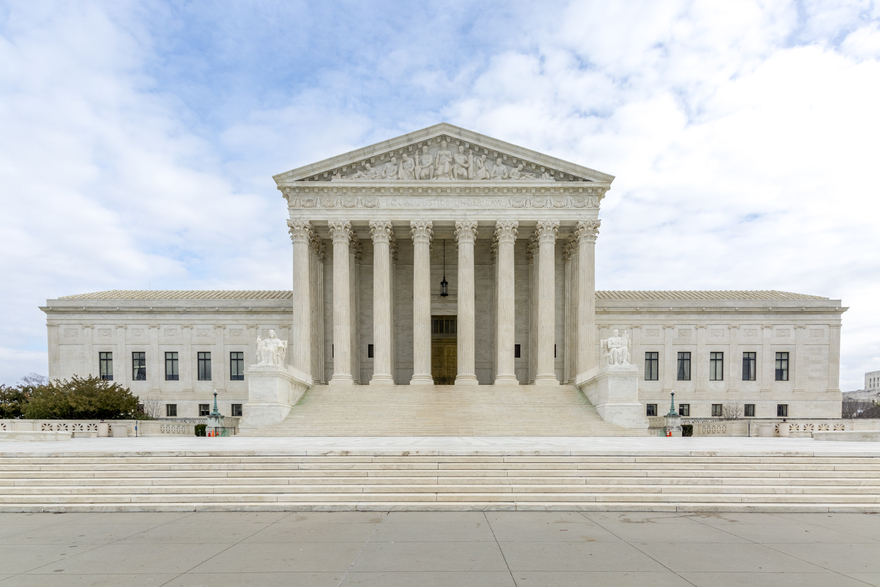
Image result for Supreme Court

The American Hospital Association, other trade groups and individual hospitals filed petitions Feb. 10 asking the U.S. Supreme Court to reverse appeals court decisions in two cases involving outpatient payment cuts to hospitals. 

One lawsuit hospitals are asking the Supreme Court to hear challenges HHS’ payment reductions in 2019 for certain outpatient off-campus provider-based departments. 

Under the 2019 Medicare Outpatient Prospective Payment System final rule, CMS made payments for clinic visits site-neutral by reducing the payment rate for evaluation and management services provided at off-campus provider-based departments by 60 percent.

In an attempt to overturn the rule, the AHA, the Association of American Medical Colleges and dozens of hospitals across the nation sued HHS. They argued CMS exceeded its authority when it finalized the payment cut in the OPPS rule. They further claimed the site-neutral payment policy violates the Medicare statute’s mandate of budget neutrality. 

HHS argued that under the Bipartisan Budget Act of 2015 it has authority to develop a method for controlling unnecessary increases in outpatient department services. Since “method” is not defined in the statute, the government argued its approach satisfies generic definitions of the term. U.S. District Judge Rosemary M. Collyer rejected that argument and set aside the regulation implementing the rate reduction in September 2019.

HHS filed an appeal in the case, and the appellate court reversed the lower court’s decision July 17.

The second lawsuit hospitals are asking the Supreme Court to hear challenges HHS’ nearly 30 percent cut to 2018 and 2019 outpatient drug payments for certain hospitals participating in the 340B Drug Pricing Program. 

A district court sided with hospitals and found the payment reductions were unlawful. Two members of a three-judge panel of the U.S. Court of Appeals overturned that ruling in July. 

The hospitals argue in both petitions that the Supreme Court should review the cases because of the “excessive deference” the appeals court gave to HHS’ interpretation of the respective governing statutes. 

Purdue Pharma pleads guilty to federal criminal charges related to nation’s opioid crisis

https://www.cnn.com/2020/11/24/us/purdue-pharma-oxycontin-guilty-plea/index.html?fbclid=IwAR2DM1jxDtKxFaCW1o-HJ45Tuh1-HOVw5DjNx_ncuhfajyjdkvP9wnMHUMg

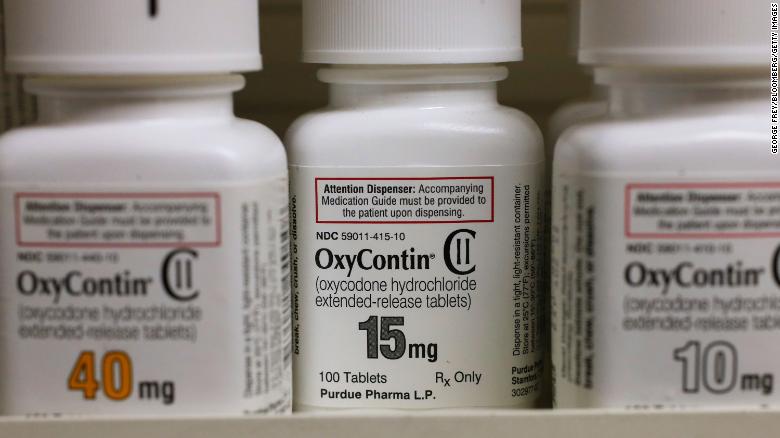
Purdue Pharma, the maker of OxyContin, pleaded guilty Tuesday to three federal criminal charges related to the company’s role in creating the nation’s opioid crisis. Purdue Pharma board chairman Steve Miller pleaded guilty on behalf of the company during a virtual federal court hearing in front of US District Judge Madeline Cox Arleo.

The counts include one of dual-object conspiracy to defraud the United States and to violate the Food, Drug, and Cosmetic Act, and two counts of conspiracy to violate the Federal Anti-Kickback Statute.

The plea deal announced in October includes the largest penalties ever levied against a pharmaceutical manufacturer, including a criminal fine of $3.544 billion and an additional $2 billion in criminal forfeiture, according to a Department of Justice press release.

The company, which declared bankruptcy last year, will be dissolved as a part of the plea agreement, and its assets will be used to create a new “public benefit company” controlled by a trust or similar entity designed for the benefit of the American public.

The Justice Department has said Purdue Pharma will function entirely in the public interest rather than to maximize profits. Its future earnings will go to paying the fines and penalties, which in turn will be used to combat the opioid crisis.

In pleading guilty to the criminal charges, the company is taking responsibility for past misconduct, Purdue Pharma said in a statement to CNN Tuesday.”Having our plea accepted in federal court, and taking responsibility for past misconduct, is an essential step to preserve billions of dollars of value for creditors and advance our goal of providing financial resources and lifesaving medicines to address the opioid crisis,” the statement said. “We continue to work tirelessly to build additional support for a proposed bankruptcy settlement, which would direct the overwhelming majority of the settlement funds to state, local and tribal governments for the purpose of abating the opioid crisis.”

According to the US Centers for Disease Control and Prevention, about 70,000 Americans died of drug overdoses in 2018, just one year of the opioid crisis, and about 70% of those deaths were caused by prescription or illicit opioids like OxyContin. In that year, an estimated 10.3 million Americans 12 and older misused opioids, including 9.9 million prescription pain reliever abusers and 808,000 heroin users, according to the US Department of Health and Human Services Substance Abuse and Mental Health Services Administration.

The Sackler family, and other current and former employees and owners of the company, still face the possibility that federal criminal charges will be filed against them. The court did not set a date for a sentencing hearing.

Appeals court sides with hospitals in latest challenge of DSH payment calculations

lady justice

A federal appeals court upheld a ruling that would allow hospitals to calculate their disproportionate share hospital (DSH) payments using Medicaid patients as well as patients eligible for treatment under experimental Medicaid “demonstration projects” approved by the Department of Health and Human Services (HHS).

The opinion, issued Friday, upheld the decision of a lower court that sided with 10 Florida hospitals seeking to include days of care funded by Florida’s Low Income Pool, an approved Medicaid demonstration project. Through the pool, the state and federal governments jointly reimbursed hospitals for care provided to uninsured and underinsured patients.

HHS argued against allowing the hospitals to include those patients in their Medicaid fraction on the ground that the patients were treated out of charity rather than as designated beneficiaries of a demonstration project.

“The district court found the Secretary’s arguments to the contrary unpersuasive. The Secretary argued the text of the regulation allows hospitals to include days of care provided under a demonstration project only if the project entitles specific patients to specific benefit packages,” the judges said (PDF). “As the court noted, however, this is not what the regulation says. Rather, a patient must have been ‘eligible for inpatient services,’ meaning the demonstration project enabled the patient to receive inpatient services, regardless whether the project gave the patient a right to these services or allowed the patient to enroll in an insurance plan that provided the services.”

DSH payments have traditionally been calculated using the costs incurred to treat Medicaid and uninsured patients. However, the Centers for Medicare & Medicaid’s 2017 rule says costs incurred treating other patients are applicable. For example, a dually eligible patient who’s admitted to the hospital will likely have their stay paid for by Medicare, the agency said, as Medicaid is treated as the “payer of last resort.” As such, those costs would be eligible to be subtracted from DSH payouts.

In backing the hospitals on the DSH dispute, the judges pointed to a similar case considered by the Fifth Circuit last year in which the agency sought to exclude from the Medicaid fraction days of care funded through an “uncompensated care pool” created by a demonstration project. That pool reimbursed hospitals in Mississippi for services provided to uninsured patients affected by Hurricane Katrina but did not entitle specific patients to specific services.

In that case, the Fifth Circuit held “plain regulatory text demands that such days be included—period.”

“We see no flaw in Judge Collyer’s analysis and therefore embrace the district court’s opinion as the law of this circuit,” the judges said.

Los Angeles hospital can force Anthem to cover ER visits, court rules

https://www.beckershospitalreview.com/legal-regulatory-issues/los-angeles-hospital-can-force-anthem-to-cover-er-visits-court-rules.html?utm_medium=email

Innovating in Emergency Medicine: CMS Launches ET3 — A New Treatment Model  for EMS | by StartUp Health | StartUp Health

A federal appellate court recently ruled that Anthem is required to pay Martin Luther King Jr. Community Hospital in Los Angeles for about 75 emergency room visits from covered patients, according to Bloomberg Law

The appeal centered on whether Anthem was required to cover services MLK Jr. Community Hospital rendered to employees of Budco Group, an Ohio company, when the hospital was assigned the patients’ benefit payments. Anthem is the administrator of Budco’s Employee Retirement Income Security Act plan, and the employees who received services at the hospital were beneficiaries of the plan. 

Between 2015 and 2017, Budco employees visited MLK Jr. Community Hospital’s emergency room at least 75 times and assigned their benefits under the company’s ERISA plan to the hospital as a condition of receiving care. Instead of paying MLK Jr. Community Hospital, which was out of Anthem’s network, the insurance company paid the beneficiaries, forcing the hospital to attempt to recover payment from the beneficiaries. The Budco employees deposited payment into their personal accounts and did not send any of the benefit payments to the hospital. 

The hospital sued Anthem and Budco in 2016, seeking benefit payments and declaratory relief. The district court granted summary judgment in favor of the hospitals, and Anthem and Budco appealed. 

On appeal, Anthem argued the case was blocked by a provision in its health plan that prevented patients from assigning their rights to third parties such as MLK Jr. Community Hospital, according to Bloomberg Law. The hospital argued that the “anti-assignment” provision did not bar assignments in this case. 

In an unpublished split decision filed Oct. 2, the U.S. Court of Appeals for the Ninth Circuit ruled in favor of the hospital, holding that the language cited by Anthem allowed assignments to healthcare providers, including those that were out of network. 

“The provision lists three entities other than the beneficiary that Anthem may pay directly. Providers are included among those entities,” the court stated. “In the same paragraph, and only two sentences later, the anti-assignment provision forbids beneficiaries from assigning benefits to ‘anyone else.’ This sentence restricting assignment must be read consistently with the entire paragraph, which concerns benefit payments to entities other than the beneficiary. Thus, we interpret the anti-assignment provision’s reference to ‘anyone else’ to permit assignments to those entities, including ‘providers.'”

Alternatively, the appellate court held that the anti-assignment provision is not part of the health plan documents. 

“The anti-assignment provision is plainly not a benefit, and therefore the district court correctly determined it should not be incorporated as a description of the plan’s benefits,” the appellate court held. 

In his dissenting opinion, Judge Daniel Collins said the anti-assignment provision is an express term of the documents that govern the Budco plan. He also disagreed with the majority’s alternative conclusion that the language of the anti-assignment provision did not bar the assignments that plan beneficiaries made to MLK Jr. Hospital. 

Drug payment cuts to 340B hospitals spur debate on best path forward

https://www.healthcarefinancenews.com/news/drug-payment-cuts-340b-hospitals-spur-debate-best-path-forward

340B hospitals breathing easier under Dem-controlled House

Hospitals say revenue from the 340B program is essential, while others contend the original law is being abused.

On August 3, an federal appeals court ruled that 340B hospitals will now be subject to Medicare cuts in outpatient drug payments by nearly 30%, reversing an earlier ruling calling those cuts illegal. The 2-1 decision by the U.S Court of Appeals for the District of Columbia Circuit essentially gives the Trump Administration and the Department of Health and Human Services the legal authority to reduce payment for Medicare Part B drugs to 340B hospitals.

HHS Secretary Alex Azar said the action means patients – particularly those who live in vulnerable areas – will pay less out-of-pocket for drugs in the Medicare Part B program. But providers, including the American Hospital Association, the Association of American Medical Colleges and America’s Essential Hospitals, said the 340B decision will hurt hospitals and patients in these vulnerable areas.

Hospitals that serve large numbers of Medicaid, Medicare and uninsured patients were getting the drugs for a discounted price, but, getting reimbursed at the higher price, HHS pays all hospitals for Medicare Part B drugs. The hospitals, many of which are in the red or operating on thin margins, were using the pay gap in the price difference to cover operational expenses. HHS deemed it inappropriate that these facilities would use Medicare to subsidize other activities and initiatives, and the appeals court agreed.

As per the original 340B legislation, discounts on drugs can range from 13% to 32% off the average retail price for participating providers, but Medicare Part D sets reimbursement in an entirely different way, leading to the significant reimbursement discrepancies – until the ruling, which furthered HHS’ push to narrow the spread between acquisition price and reimbursement.

THE DEBATE

“The opportunity to exploit this buy/sell differential probably has something to do with the explosive growth there’s been in the number of participating institutions in 340B,” said Michael Abrams, cofounder and managing partner of Numerof and Associates. “According to the data I came across, discounted 340B purchases grew 23% from 2018 to 2019, and currently make up about 8% of the total of the U.S. drug market. So from my perspective this looks like a loophole that’s been used by a small number of large institutions, who in many cases don’t serve that many disadvantaged patients, but nonetheless serve enough to qualify for the 340B program and to purchase the drugs they buy at the discounted rate.”

Groups representing U.S. hospitals would disagree with that assessment, and, in fact, when the appeals court handed its ruling, the AHA, AAMC and America’s Essential Hospitals said 340B hospitals and their patients would “suffer lasting consequences.”

“The decision conflicts with Congress’ clear intent and defers to the government’s inaccurate interpretation of the law, a point that was articulated by the judge who dissented from the opinion,” the groups wrote in a statement. “For more than 25 years, the 340B program has helped hospitals stretch scarce federal resources to reach more patients and provide more comprehensive services. Hospitals that rely on the savings from the 340B drug pricing program are also on the front-lines of the COVID-19 pandemic, and today’s decision will result in the continued loss of resources at the worst possible time.”

President and CEO of 340B Health Maureen Testoni also lamented the appeals court’s decision, calling the cuts “discriminatory.”

“These cuts of nearly 30% have caused real and lasting pain to safety-net hospitals and the patients they serve,” she said earlier this month. “Keeping these cuts in place will only deepen the damage of forced cutbacks in patient services and cancellations of planned care expansions. These effects will be especially detrimental during a global pandemic.

Abrams contends that much of the confusion and legal wrangling can be attributed to the vagueness of the original 340B legislation, the stated goal of which was to “enable participating institutions to stretch scarce financial dollars.” With little else to go on in terms of the language, those on each side of the issue were able to interpret it in their own way, with participating institutions saying it’s within the bounds of the law to use that revenue stream to enhance their mission – another phrase that’s open to wide interpretation.

“There’s no question this is being put to uses that were never intended,” said Abrams, adding that the profits generated by the buy/sell differential often disappear into balance sheets with little to no accountability.

Hospitals, for their part, feel they’re under siege by HHS at a critical time for the healthcare system’s financial viability. Even before the COVID-19 pandemic, hospitals saw the migration of lucrative inpatient procedures, such as hip and knee replacements, to freestanding outpatient facilities, which in some cases are not owned by the hospital. That represents a significant loss of revenue. Factor in the lost revenue from cancelled or delayed elective procedures due to the coronavirus, as well as patients who are too cautious to enter the healthcare system, and hospitals are hurting. AHA President and CEO Rick Pollack said in July that half of all U.S. hospitals will likely be in the red by the end of the year.

A COMPLICATED PICTURE

Actions by the pharmaceutical industry are also adding to the complication. A recent statement from America’s Essential Hospitals alleges that recent actions by pharmaceutical manufacturers “hinder access to affordable medications for millions of people who face financial hardships and defy clear statutory requirements that they provide drugs to 340B Drug Pricing Program covered entities.”

The manufacturers have threatened punitive actions – including withholding 340B drugs to contract pharmacies – for failing to comply with reporting requirements that Essential Hospitals call “arbitrary.”

“These data requests have no clear link to program integrity,” the group said. “Rather, they seem to be little more than a fishing expedition.”

A concrete example can be found in AstraZeneca’s decision to refuse 340B pricing to hospitals with on-site pharmacies for any drugs that will be dispensed through contract pharmacies. In a statement this week, Testoni of 340B called this action an “attack” on the 340B program that will hurt healthcare institutions as well as low-income and rural Americans.

“We believe that refusing to offer discounts that the 340B statute requires is a violation of federal law,” said Testoni. “We are calling on Health and Human Services Secretary (Alex) Azar to exercise his authority to stop these overcharges before they cause permanent damage to the healthcare safety net.”

Abrams sides more with the appeals court decision, saying that requiring the pharmaceutical industry to sell drugs at a discount comes with significant regulation to ensure they do so – a stark contrast to the lack of regulation around the resulting revenue. Though another appeal certainly isn’t out of the question, Abrams expects participation in the program to shrink back to a level reflecting the size of the target populations.

“This is about helping disadvantaged patients get their drugs, and that should be the driving activity of the program,” he said. “I’m fine with HHS taking this problem on, because it was an abuse that was never intended in the original legislation. It just seems to me that HHS really wants the healthcare sector to deliver care that is more accountable both for efficient use of resources and outcomes.”

One person who disagrees is Circuit Judge Cornelia Pillard, who wrote the dissenting opinion in the appeals court decision.

“The challenged rules took a major bite out of 340B hospitals’ funding,” she said. “Often operating at substantial losses, 340B hospitals rely on the revenue that Medicare Part B provides in the form of standard drug-reimbursement payments that exceed those hospitals’ acquisition costs. 340B hospitals have used the additional resources to provide critical healthcare services to communities with underserved populations that could not otherwise afford these services.”