

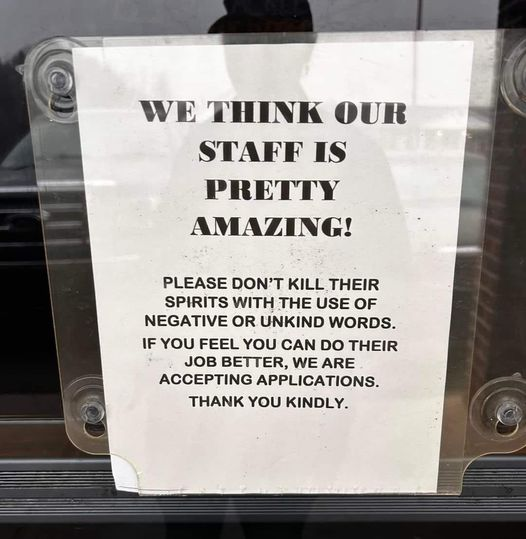
Sign of the Times: On Staffing


Fortune and Great Place to Work released their list of the “Best Workplaces in Health Care” on Sept. 7.
Survey responses from more than 161,000 employees were analyzed to determine the best workplaces in the healthcare industry. To be considered for the list, organizations were required to be Great Place to Work-Certified and be in the healthcare industry. Learn more about the methodology here.
Below are the nine best large health systems to work for, ordered by their corresponding number in the overall list of 30 organizations. Health systems with 1,000 or more employees were considered for the large category.
1. Texas Health Resources (Arlington)
3. Southern Ohio Medical Center (Portsmouth)
5. Northwell Health (New Hyde Park, N.Y.)
6. Baptist Health South Florida (Coral Gables)
7. OhioHealth (Columbus)
8. Scripps Health (San Diego)
9. WellStar Health System (Marietta, Ga.)
10. Atlantic Health System (Morristown, N.J.)
21. BayCare Health System (Clearwater, Fla.)
Fortune and Great Place to Work also released a list of the best small and medium healthcare organizations to work for. Organizations with up to 999 employees were considered for the small and medium category. No hospitals or health systems were listed in that category.
As hospitals and health systems continue to grapple with staffing shortages, employers are using perks beyond pay to recruit and retain talent.
Incentives beyond the norm are attractive to employees: They prove the employer values them personally, beyond their work performance.
These four health systems offer perks beyond pay, like extra paid time off, well-being coaches, adoption assistance and local discounts.
Food, entertainment and staycations
Nashville, Tenn.-based Vanderbilt Health said it will launch a new employee awards program in September that offers workers perks, discounts and a grand prize “staycation.”
The month-long Work Perks program will feature a website where employees can play games to earn perks in music and entertainment, health and wellness, dining and Nashville-area attractions, according to an Aug. 29 news release shared with Becker’s.
Workers will also be able to enter a drawing for a staycation. Five employees will win grand prizes including a one-night stay at a downtown hotel, passes to Nashville attractions, dinner at a local restaurant and a gift basket with items from Nashville businesses, including a winery and chocolate company, Vanderbilt Health said.
“We’re excited to show appreciation for our dedicated workforce in this way, and we’re grateful to so many generous partners to help make it happen,” Amy Schoeny, PhD, chief human resources officer, said in a release. “This is just one of the many benefits and perks that we offer to those who choose to pursue careers in making healthcare personal for our patients today and in the future.”
Work Perks will launch Sept. 5.
“We Hours” program
Marlton, N.J.-based Virtua Health told Becker’s it has instituted a “We Hours” program “to give employees more time to do the things that are important to them — from self-care to community service.”
The program offers eight additional hours of scheduled, paid time off per year for most of Virtua’s 13,000 employees.
“The ultimate goal is to encourage mindfulness and a healthy work-life balance,” Rhonda Jordan, Virtua’s executive vice president and chief human resources officer, told Becker’s. “We Hours are intended for colleagues to pursue something rewarding or fulfilling, such as volunteering, recognizing a religious or cultural event, or ‘recharging their battery’ with extra time away.”
Ms. Jordan said Virtua workers may also use the program for practical matters, such as a physician’s visit or attending to household repairs.
The program name stems from Virtua’s “Culture of We,” a set of guiding principles that include continuous learning and innovation, open communication and inclusive teamwork, among others.
A colleague committee developed the tenets in 2019, and employees are encouraged to share how they spend their We Hours in a private Facebook group, according to Ms. Jordan. She cited examples including photos from a visit to a botanical garden, a description of volunteer work helping nonprofit organizations, and a photo of the day one worker spent with her son, who’d been away serving in the U.S. Marine Corps.
“One of my favorite outcomes of the We Hours is that they invite us to learn more about our colleagues and the people, causes and activities that are most important to them,” Ms. Jordan adds.
Walking trails and well-being coaching
Charlotte, N.C.-based Atrium Health encourages all-around health through their LiveWell programs.
“[LiveWell] exists to support teammates in working meaningfully, eating healthfully, learning continuously and living fully … living their best lives so that we can deliver on the mission of Atrium Health,” Scott Laws, vice president of enterprise total rewards at Atrium Health, told Becker’s.
Physical health is encouraged through perks like discounted gym enrollment, tobacco cessation programs and on-site walking trails at Atrium Health facilities. Financial assistance is provided through free webinars and individual medication management consultations. One-on-one well-being coaches encourage employees to consider personal health.
Those that take advantage of the LiveWell resources are rewarded.
“By completing certain physical, personal and financial well-being goals — which include participation in wellness exams and programs or financial education — teammates are eligible for financial incentives, paid into their HSAs,” Mr. Laws said.
Adoption assistance
Springfield, Ill.-based Hospital Sisters Health System offers adoption assistance as part of its benefits package.
“HSHS provides financial support up to $7,500 per child for eligible adoption expenses to qualified colleagues,” Catie Sheehan, vice president of advocacy and communications at Hospital Sisters, told Becker’s.
Alicia Corman, an occupational therapist in the health system, was first to receive the benefit. After the adoption decree was signed, the human resources department helped her submit a breakdown of what the financial support would cover, Ms. Corman said in a video shared with Becker’s. The funds she received aided Ms. Corman and her husband in adopting their son.
“I’m very grateful because if you look across the U.S., adoption is not very supported in a workplace,” Ms. Corman said.
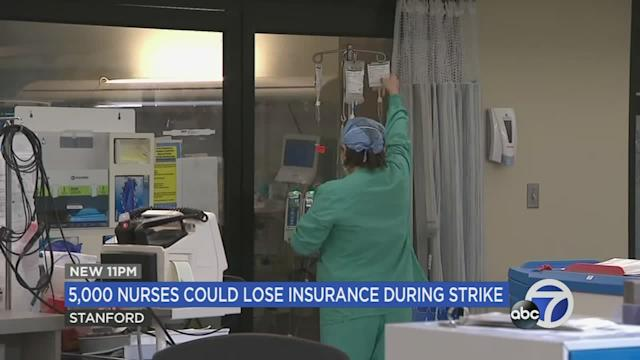
Stanford Health Care and Lucile Packard Children’s Hospital administrators have notified union leaders that its nurse members who strike later in April risk losing pay and health benefits, according to Palo Alto Weekly.
The Committee for Recognition of Nursing Achievement, a union at Stanford Health Care and Stanford Children’s Health that represents about 5,000 nurses, has scheduled a strike to begin April 25. The nurses’ contract expired March 31.
If the strike moves forward, Stanford Health Care and the Lucile Packard Children’s Hospital, both based in Palo Alto, Calif., are prepared to continue to provide safe, quality healthcare, according to a statement from Dale Beatty, DNP, RN, chief nurse executive and vice president of patient care services for Stanford Health Care, and Jesus Cepero, PhD, RN, senior vice president of patient care and chief nursing officer for Stanford Children’s Health.
But the statement, which was shared with Becker’s, said nurses who choose to strike will not be paid for shifts they miss.
“In addition, employer-paid health benefits will cease on May 1 for nurses who go out on strike and remain out through the end of the month in which the strike begins,” Drs. Beatty and Cepero said.
The leaders quoted from Committee for Recognition of Nursing Achievement’s “contingency manual” that the union provided to nurses: “If a strike lasts beyond the end of the month in which it begins and the hospitals discontinue medical coverage, you will have the option to pay for continued coverage.”
Drs. Beatty and Cepero said nurses who strike may pay to continue their health coverage through the Consolidated Omnibus Budget Reconciliation Act.
In a separate statement shared with Becker’s, Committee for Recognition of Nursing Achievement President Colleen Borges called Stanford and Packard management’s move regarding nurses’ health benefits “cruel” and “immoral.”
“Health benefits should not be used against workers, especially against the very healthcare professionals who have made Stanford a world-class health system,” said Ms. Borges, who is also a pediatric oncology nurse at Lucile Packard Children’s Hospital. “We have spent our careers caring for others and putting others first — now more than ever we need solutions that will ensure sustainability, safe staffing and strong benefits to retain nurses. But instead of taking our proposals seriously, hospitals are spending their time and energy weaponizing our medical benefits. We refuse to be intimidated from standing up for the fair contracts that we need in order to continue delivering world-class patient care.”
The union has organized a petition to tell Stanford not to cut off medical benefits for nurses and their families during the strike. As of April 19, the petition had more than 25,150 signatures.
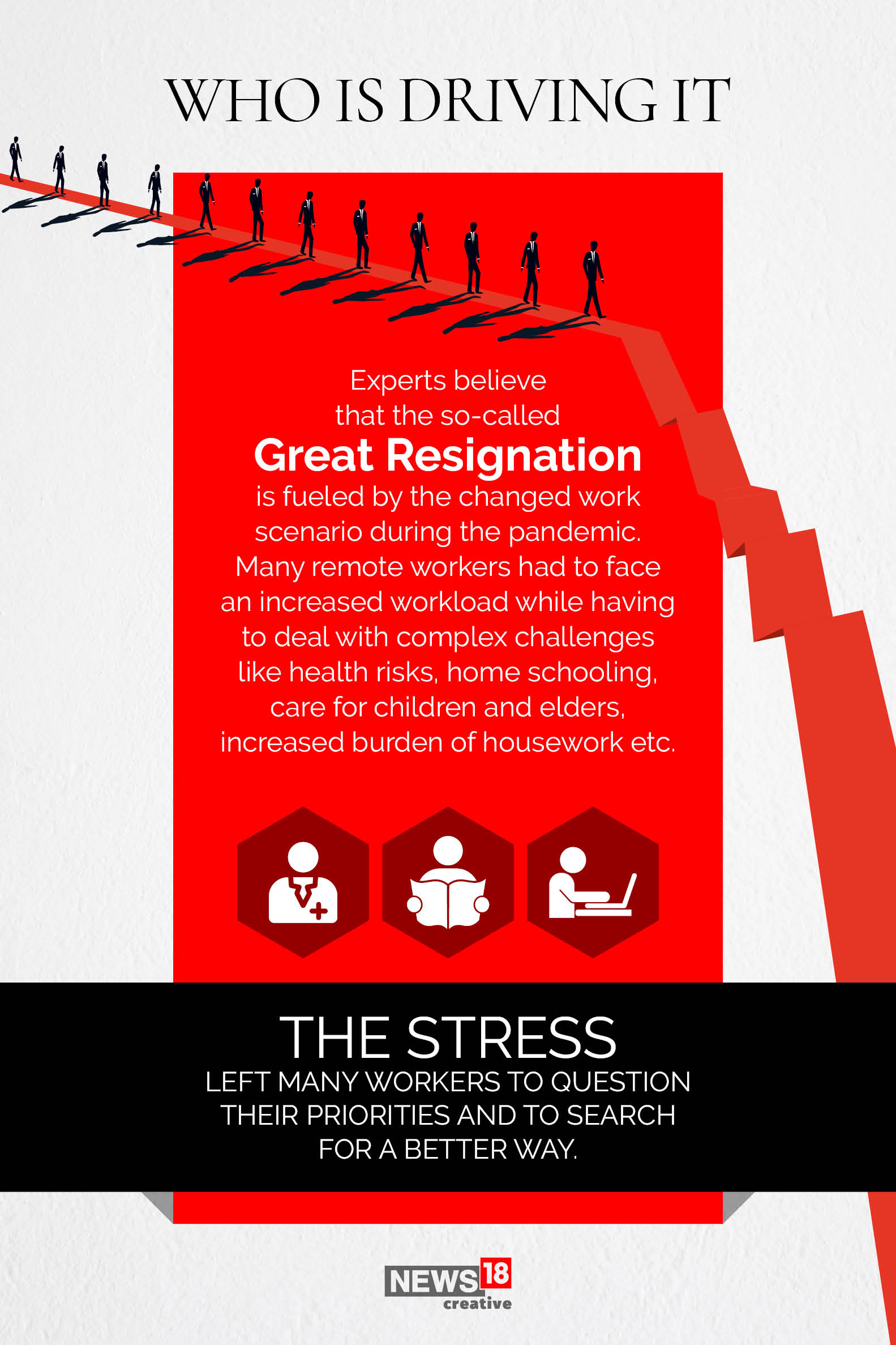
The workers who have stayed on at their jobs amid the Great Resignation are struggling to fill the gaps left by former colleagues, CNBC reported Nov. 2.
The effects of the Great Resignation continue to be felt by companies after a record high of 4.3 million workers quit their jobs in August alone. The workers who remained in their roles, though, are struggling with their new increased workload.
A report by the Society for Human Resource Management that surveyed 1,150 employed Americans in July as well as 220 executives illuminated some of the challenges of the workers who stayed.
It found that 52 percent of workers who stayed with their companies have taken on more responsibilities, with 30 percent of remaining employees stating they struggle to complete necessary tasks. A majority of workers are questioning whether their pay is high enough, and 27 percent feel less loyalty to their company.
This worker dissatisfaction opens up a vicious cycle, Johnny Taylor Jr., president and CEO of the Society for Human Resource Management, told CNBC.
“The employees who remain now say, ‘I’m working too hard, I don’t have balance in my life, etc.’ And so then they want to leave and thus a vicious cycle continues” Mr. Taylor told CNBC.
Thus, it’s more important now than ever for employers to exercise empathy and listen to what their employees are experiencing in the wake of workplace shifts.
“Invest in them today,” Alex Durand, a career transition and leadership coach, told CNBC. “Show them you care before they tell you they are leaving.”
 HENRY KOTULA