Retail wages are rising. Can hospital pay keep up?

While healthcare workers battle burnout, hospitals have been ramping up wages and other benefits to recruit and retain workers. It has created a culture of competition among health systems as well as travel agencies that offer considerably higher pay.

But other healthcare organizations are not hospitals’ only competitors. Some hospitals, particularly those in rural areas, are struggling to match rising employee pay among nonindustry employers such as Target and Walmart.

“We monitor and we’ve been looking and we ask around in the community and we can ask who’s paying what,” Troy Bruntz, CEO of Community Hospital in McCook, Neb., told Becker’s. “So we know where Walmart is on different things, and we’re OK. But if Walmart tried to match what Target’s doing, that would not be good.”

At Target, the hourly starting wage now ranges from $15-$24. The organization is making a $300 million investment total to boost wages and benefits, including health plans. Starting pay is dependent on the job, the market and local wage data, according to NPR.

Walmart raised the hourly wages for 565,000 workers in 2021 by at least $1 an hour, The New York Times reported. The company’s average hourly wage is $16.40, with the lowest being $12 and the highest being $17.

Meanwhile, Costco raised its minimum wage to $17 an hour, according to NPR. The federal minimum wage is $7.25.

Estimated employment for healthcare practitioners and technical occupations is 8.8 million, according to the latest data released March 31 by the U.S. Bureau of Labor Statistics. This includes nurse practitioners, physicians, registered nurses, physician assistants and respiratory therapists, among others. 

In sales and related occupations, estimated employment is 13.3 million, according to the bureau. This includes retail salespersons, cashiers and first-line supervisors of retail salespersons, among others.  

While retail companies up their wages, at least one hospital CEO is monitoring the issue.

Healthcare leaders weigh their options

Mr. Bruntz said rising wages among retailers is an issue his organization monitors. Although Target does not have a store in McCook, there is a Walmart, where pay is increasing.

“I was quoted a few months ago saying Walmart was approaching $15 an hour, and we can handle that,” Mr. Bruntz said. “But when it gets to $20 or $25, it’s going to be an issue.”

He also said he cannot solely increase the wages of the people making less than $15 or less than $25 because he has to be fair in terms of wages for different types of roles.

Specifically, he said he is concerned about what matching rising wages at retailers would mean for labor expenses, which make up about half of the hospital’s cost structure.

“I double that half, that’s 25 percent more expenses instantly,” Mr. Bruntz said. “And how is that going to ratchet to a bottom line anything less than a massive negative number? So it’s a huge problem.”

Clinical positions are not the only ones hospitals and health systems are struggling to fill; they are encountering similar difficulties with technicians and food service workers. Regarding these roles, competition from industries outside healthcare is particularly challenging.

This is an issue Patrice Weiss, MD, executive vice president and chief medical officer of Roanoke, Va.-based Carilion Clinic, addressed during a Becker’s panel discussion April 4. The organization saw workforce issues not just in its clinical staff, but among environmental services staff.

“When you look at what … even fast food restaurants were offering to pay per hour, well gosh, those hours are a whole lot better,” she said during the panel discussion. “There’s no exposure. You’re not walking into a building where there’s an infectious disease or patients with pandemics are being admitted.” 

Amid workforce challenges, Community Hospital is elevating its recruitment and retention efforts.

Mr. Bruntz touted the hospital as a hard place to leave because of the culture while acknowledging the monetary efforts his organization is making to keep staff.

He said the hospital has a retention program where full-time employees get a bonus amount if they are at the employer on Dec. 31 and have been there at least since April 15. Part-time workers are also eligible for a bonus, though a lesser amount.

“It also encourages staff [who work on an as-needed basis] to go part-time or full-time, and [those who are] part-time to go full-time,” Mr. Bruntz said. “That’s another thing we’re doing is higher amounts for higher status to encourage that trend.” 

Additionally, Community Hospital, which has 330 employees, offers a referral bonus to staff to encourage people they know to come work with them. 

“We want staff to bring people they like. [We are] encouraging staff to be their own ambassadors for filling positions,” Mr. Bruntz said.  

He said the hospital also will offer employees a sizable market wage adjustment not because of competition from Walmart but because of inflation.

Graham County Hospital in Hill City, Kan., is also affected by the tight labor market, although it has not experienced much competition with retail companies, CEO Melissa Atkins told Becker’s. However, the hospital is struggling with competition from other healthcare organizations, particularly when it comes to patient care departments and nursing. While many hospitals have struggled to retain employees from travel agencies, Graham County Hospital has mostly been able to avoid it.

“As the demand increases, so does the wage,” Ms. Atkins said. “In addition to other hospitals offering sign-on bonuses and increased wages, nurse agency companies are offering higher wages for traveling nurse aides and nurses. We are extremely fortunate in that we have not had to use agency nurses. Our current staff has stepped up and filled in the shortages [with additional incentive pay].”

To combat this trend, the hospital has increased hourly wages and shift differentials, as many healthcare organizations have done. It has also provided bonuses using COVID-19 relief funds.

Overall, Mr. Bruntz said he prefers “not to get into an arms race with wages” among nonindustry competitors. 

“It’s not going to end well for anybody. We prefer not to use that,” he said. “At the same time, we’re trying to do as much as possible without being in a full arms race. But if Walmart started paying $25 for a door greeter and cashier, we would have to reassess.”

Stanford, Packard nurses greenlight strike

Thousands of nurses at Stanford and Lucile Packard Children’s hospitals in Palo Alto, Calif., have authorized the union representing them to call a strike. 

In an April 8 news release, the Committee for Recognition of Nursing Achievement said more than 4,500 nurses at Stanford and Packard, or 93 percent of all nurses eligible, voted in favor of strike authorization. They are calling on hospital management to adequately address staffing, citing consistent overtime and nurses’ complaints of inadequate resources, training or staff. They also seek improved access to mental health counseling, as well as competitive wages and benefits.

“The decision by members to overwhelmingly authorize a strike shows that we are fed up with the status quo of working conditions at the hospitals,” Colleen Borges, union president and a nurse in the pediatric oncology department, said in the release. “We need contracts that allow us to care for ourselves and our families so we can continue providing world-class care.”

Nurses authorized the strike after bargaining for the last 13 weeks and are working without contracts. The vote does not mean a strike will occur, but it gives the union the ability to issue an official strike notice. 

In a statement shared with Becker’s, Stanford expressed its support for negotiations rather than a strike.

“We are committed, through good faith bargaining, to reach agreement on new contracts that provide nurses a highly competitive compensation package, along with proposals that further our commitment to enhancing staffing and wellness benefits for nurses,” the statement said.

The hospital also said it is taking the steps to prepare for the possibility of a strike, while hoping a strike is averted.

“Given the progress we have made by working constructively with the union, we should be able to reach agreements that will allow us to continue to attract and retain the high caliber of nurses who so meaningfully contribute to our hospitals’ reputation for excellence,” the statement read. 

South Carolina hospital offers employees up to $10K for homebuyer assistance

Beaufort News, Weather, Safety, Sports | NewsBreak Beaufort, SC

Beaufort (S.C.) Memorial Hospital has created a homebuyer assistance program to help staff purchase a home or refinance mortgages, with up to $10,000 in assistance.

To be eligible for the program, employees must be full time, have worked at the hospital for at least six months, attend a homebuyer education workshop and meet household income requirements, among other criteria, according to a Jan. 10 news release from the hospital.

Additionally, properties must be within a 15-mile radius of a designated Beaufort Memorial campus, be the buyer’s primary residence and have monthly mortgage payments of no more than 33 percent of monthly income.

Recipients can use the funds for down payments and closing costs, the release said.

The hospital is partnering with development financial institution CommunityWorks for the program.

“We know that homeownership provides stability, security and a means to building financial health and wealth for future generations,” Beaufort Memorial President and CEO Russell Baxley said. “We also recognize that a major obstacle can be coming up with the money needed for a down payment or closing costs. This assistance program will help our employees bridge that financial gap.”

How much nurse pay is rising—and why

Travel Nurse Guaranteed Pay: The Truth - The Gypsy Nurse

Amid a nationwide staffing shortage, rising demand for nurses has led hospitals to increase salaries and other benefits to attract and retain workers, Melanie Evans reports for the Wall Street Journal.

Hospitals increase salaries, benefits to keep up with nursing demand

Hospitals across the country have been struggling amid staffing shortages, particularly of nurses, Evans reports. According to health care consultancy Premier, nurse turnover rates have increased to around 22% this year, up from the annual rate of about 18% in 2019.

“We are employing more nurses now than we ever have, and we also have more vacancies than we ever had,” said Greg Till, chief people officer at Providence Health & Services.

To retain their current nurses and attract new staff, many hospitals have increased their nurses’ salaries to remain competitive in the job market, Evans reports.

For example, HCA Healthcare, one of the largest hospital chains in the country, said it increased nurse pay this year to keep up with Covid-19 surges and compete with rivals also trying to fill vacant positions.

Similarly, Jefferson Health in May raised salaries for its nearly 10,000 nurses by 10% after the system discovered that rivals had increased their compensation. “The circumstances required it,” said Kate Fitzpatrick, Jefferson’s chief nurse executive.

In addition, Citizens Memorial Hospital in Bolivar, Mo., this month raised its nurses’ salaries by up to 5% after rivals in other nearby cities increased their workers’ wages. Sarah Hanak, Citizen Memorial’s CNO, said the hospital also increased the hourly wages of nurses working overnight shifts by around 15% to ensure sufficient staffing for those shifts.

“We were forced to,” Hanak said. “We absolutely have to stay competitive.”

Overall, the average annual salary for RNs, not including bonus pay, grew to $81,376, according to Premier—a 4% increase across the first nine months of the year. This is larger than the 3.3% increase in the average annual nurse salary for 2020 and the 2.6% increase in 2019, Evans writes.

In addition to salary increases, some organizations, such as Providence, are also offering other benefits to attract and retain nurses, such as more time off, greater schedule flexibility, and new career development opportunities. Many hospitals are also hiring new graduates to work in specialized roles in ORs and other areas, allowing them to advance their careers more quickly than they would have before.

Overall, this rising demand for nurses has allowed those entering the workforce to negotiate higher salaries, more flexible working hours, and other benefits, Evans writes.

“I think you get to write your ticket,” said Tessa Johnson, president of the North Dakota Nurses Association.

Nurse compensation increases were inevitable—here’s why

It was inevitable that we would get to this point: baseline nurse compensation on a clear upward trajectory. Inevitable because this boils down to laws of supply and demand. Amid a clear nursing shortage, organizations are being forced to raise baseline compensation to compete for increasingly scarce qualified nurses. This is true in nearly every market, even for those considered to be ‘destination employers.’

If anything, what’s most surprising in the data from Premier is the moderated increase of around 4%. From a worker’s perspective, that’s not even covering cost of living increases due to inflation. However, amid this new data, it’s important to keep two things in mind:

Two considerations for health care leaders

  1. New data only captures baseline compensation.Differentials—which organizations must standardize and expand across shifts, specialties, and even settings—plus overtime put baseline compensation much higher. Not to mention lucrative sign-on bonuses, that members tell us are increasingly table stakes in their markets. In general, we don’t recommend this type of incentive that does nothing for retention. You’re better off investing those resources in baseline compensation as well as beefing up your RN bonus plan to incentivize retention.
  2. There is a new floor for wages (and it’s only going up from here).

Open questions (and important indicators) we are assessing

  • What happens to wages for entry-level clinical roles? As the shortage of RNs persists, organizations will need to make a shift to team-based models of care, and those are only possible with a stable workforce of entry-level personnel. Right now, that part of the health care workforce is anything but stable. When you consider their work and their wages in comparison to out-of-industry players that pay the same or better, that’s a clear area where investment is required. 
  • Will the share of nurses working permanently with travel agencies return to pre-pandemic levels? That’s to say, what will those RNs who experienced the traveler lifestyle and pay value more moving forward: the flexibility and premium pay or stability of permanent employment? Even if this number stabilizes a couple percentage points above pre-pandemic levels, that will aggravate provider’s sense of shortage.

Hospitals paying $24 billion more for labor during the COVID-19 pandemic

https://www.healthcarefinancenews.com/news/hospitals-paying-24-billion-more-labor-during-covid-19-pandemic

Clinical labor costs are up by an average of 8% per patient day, translating to $17 million in additional annual labor expenses.

As the delta variant pushes COVID-19 caseloads to all-time highs, hospitals and health systems across the country are paying $24 billion more per year for qualified clinical labor than they did pre-pandemic, according to a new PINC AI analysis from Premier.

Clinical labor costs are up by an average of 8% per patient day when compared to a pre-pandemic baseline period in 2019. For the average 500-bed facility, this translates to $17 million in additional annual labor expenses since the beginning of the public health emergency.

The data also shows that overtime hours are up 52% as of September. At the same time, the use of agency and temporary labor is up 132% for full-time and 131% for part-time workers. The use of contingency labor – positions created to complete a temporary project or work function – is up nearly 126%.

Overtime and the use of agency staff are the most expensive labor choices for hospitals – usually adding 50% or more to a typical employee’s hourly rate, Premier found.

And hospital workers aren’t just putting in more hours – they’re also working harder. The analysis shows that productivity, measured in worked hours per unit of departmental volume, increased by an average of 7% to 14% year-over-year across the intensive care, nursing and emergency department units, highlighting the significance of the increases in cost-per-hour.

Another complicating factor is that hospital employees are more exposed to COVID-19 than many other workers, with quarantines and recoveries requiring the use of sick time. The data shows that use of sick time, particularly among full-time employees (FTEs) in the intensive care unit, is up 50% for full-time clinical staff and more than 60% for part-time employees when compared with the pre-pandemic baseline.

WHAT’S THE IMPACT

The combined stressors of working more hours while under the constant threat of coronavirus exposure are pushing many hospital workers to the breaking point. In fact, the data shows clinical staff turnover is reaching record highs in key departments like emergency, ICU and nursing. 

Since the start of the pandemic, the annual rate of turnover across these departments has increased from 18% to 30%. This means nearly one-third of all employees in these departments are now turning over each year, which is almost double the rate from two years ago.

This is a number that could increase as new vaccination mandates take effect. Already, one Midwestern system reported a loss of 125 employees who chose not to be vaccinated, while a New York facility reported another 90 resignations. Overall, staffing agencies are predicting up to a 5% resignation rate once vaccine mandates kick in. 

While a minority of the overall workforce, losses of even a few employees during times of extreme stress can have a ripple effect on hospital operations and costs.

THE LARGER TREND

According to the American Hospital Association, hospitals nationwide will lose an estimated $54 billion in net income over the course of the year, even taking into account the $176 billion in federal CARES Act funding from last year. Added staffing costs were not addressed as part of CARES and are further eating into hospital finances. 

As a result, some are now predicting that more than half of all hospitals will have negative margins by the end of 2021 – a trend that could be dire for some community hospitals. 

Prior to the pandemic, about one quarter of hospitals had negative margins, the Kaufman Hall data showed. At the beginning of 2021, after almost a year of COVID-19, half of hospitals had negative margins.

Meanwhile, the most potentially disruptive forces facing hospitals and health systems in the next three years are provider burnout, disengagement and the resulting shortages among healthcare professionals, according to a March survey of 551 healthcare executives.

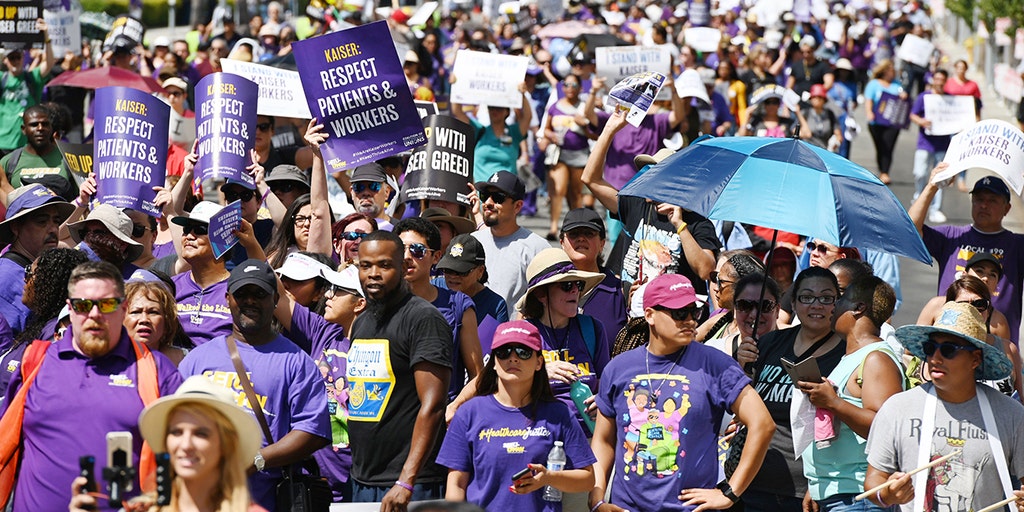
Possible strike looms for 28,000 Kaiser workers in Southern California

80,000 Kaiser Permanente workers to strike nationwide in October | Fox  Business

Nurses and other healthcare workers have voted to authorize a strike at Kaiser Permanente in Southern California, according to a union news release.

The vote covers 21,000 registered nurses, pharmacists, midwives, physical therapists and other healthcare professionals represented by the United Nurses Associations of California/Union of Health Care Professionals, as well as 7,000 members of United Steelworkers. It does not mean a strike is scheduled. However, it gives bargaining teams the option of calling a strike. Unions representing the workers would have to provide a 10-day notice before striking.

The vote comes as Oakland, Calif.-based Kaiser is negotiating for a national contract with UNAC/UHCP, along with about 20 other unions in the Alliance of Health Care Unions. The alliance, which has been in negotiations with Kaiser since April, covers more than 50,000 Kaiser workers nationwide.

UNAC/UHCP said union members are facing “protracted understaffing” amid record levels of burnout during the COVID-19 pandemic.

“While healthcare workers are facing record levels of burnout after 18 months of the COVID pandemic, they continue to deal with protracted understaffing. Talks at the table center on how to recruit to fill open positions that impact patient care and service,” the union said in a news release. “Kaiser Permanente … wants to slash wages for new nurses and healthcare workers and depress wages for current workers trying to keep up with rising costs for food, housing and other essentials.”

Kaiser has defended its pay amid a challenging pandemic, saying its proposal includes wage increases for current employees “on top of the already market-leading pay and benefits,” as well as a market-based compensation structure for those hired in 2023 and beyond.

In a statement shared with Becker’s Oct. 11, the system also emphasized its continued focus on high-quality, safe care.

“In the event of any kind of work stoppage, our facilities will be staffed by our physicians along with trained and experienced managers and contingency staff,” the system said. 

This strike would affect Kaiser hospitals and medical centers in Anaheim, Bakersfield, Baldwin Park, Downey, Fontana, Irvine, Los Angeles, Ontario Vineyard, Panorama City, Riverside, San Diego, West Los Angeles and Woodland Hills, as well as various clinics and medical office buildings in Southern California.

Shortage of healthcare workers amid high demand for jobs

https://mailchi.mp/13ef4dd36d77/the-weekly-gist-august-27-2021?e=d1e747d2d8

The US now has more job openings than any time in history—and the mismatch in workforce supply and demand in the broader economy is even more acute in the healthcare sector. While the industry saw significant job losses in April 2020, employment in many healthcare subsectors quickly rebounded to slightly below pre-pandemic levels, according to data from the Bureau of Labor Statistics. 

While ambulatory and hospital employment has mostly recovered, employment in nursing and residential care facilities has continued to decline. 

Healthcare’s sluggish return to pre-pandemic employment levels is not for lack of demand. The number of job listings has grown nearly 30 percent since the second quarter of 2020, to nearly 4.5M openings, while new hires have flatlined, resulting in over half of healthcare job listings remaining unfilled as of Q2 2021. 

In a recent McKinsey & Company survey of over 100 large US hospitals, health system executives ranked workforce shortages among nurses and clinical staff as their greatest barrier to increasing capacity.

Amid the current COVID surge, many systems are offering sizeable bonuses to attract new employees. These strategies will be critical across the next year, as systems look to reduce spending on costly travel nurses, manage COVID surges while continuing to offer elective care, and forestall further burnout.

But longer term, rethinking job functions, integrating new technology and finding ways to educate and upskill critical clinical talent will be key to winning the war for talent.

Trinity Health Michigan raises minimum wage for 2,100 workers

https://www.beckershospitalreview.com/compensation-issues/trinity-health-michigan-raises-minimum-wage-for-2-100-workers.html?utm_medium=email

Why this is not the right time to push for higher minimum wage - American  Experiment

Trinity Health Michigan is raising its minimum wage to $15 per hour for hospital and medical group employees, the organization announced in an Oct. 19 news release.

The wage increase will affect 2,100 full- and part-time employees at Norton Shores-based Mercy Health and Canton-based Saint Joseph Mercy Health System, and their medical groups, IHA, St. Joe’s Medical Group and Mercy Health Physician Partners.

Employees affected by the wage increase include non-union environmental services workers, medical assistants, patient companions, food and retail services and transporters.

Trinity Health Michigan officials said an additional 6,000 employees making between $15 to $19 an hour will also “have their wage adjusted in order to maintain meaningful distinctions in pay.” They said the additional wage increases are to improve pay for a large number of employees, and help retain and attract talented workers.

“Our dedicated and compassionate employees are at the heart of what makes our health ministry remarkable,” Rob Casalou, president and CEO of Trinity Health Michigan, said in a statement. “As we continue to face the COVID pandemic and work together to address economic challenges, we want to recognize our employees whose commitment and talent have enabled us to care for our communities during this challenging time. These investments in our people are part of an overall philosophy to offer equitable and market-competitive pay and benefits for our staff, as together we build a strong future.”

Trinity Health Michigan officials said eligible employees are still slated to receive their annual wage increases for 2020-2021, and no increases are planned in medical health plan premium contributions for employees for 2021. Additionally, they said the base minimum of the employer’s core contributions will climb from $1,200 to $1,400 for calendar year 2021. 

Mercy Health and Saint Joseph Mercy Health System are part of Livonia, Mich.-based Trinity Health’s Michigan region. Mercy Health serves the Grand Rapids, Muskegon, Shelby and the Lakeshore communities, and Saint Joseph Mercy Health System has hospitals in Ann Arbor, Chelsea, Howell, Livonia and Pontiac, according to Trinity Health’s website