Truth dies in silence. Sadly, so do people.

https://www.kevinmd.com/blog/2020/04/truth-dies-in-silence-sadly-so-do-people.html
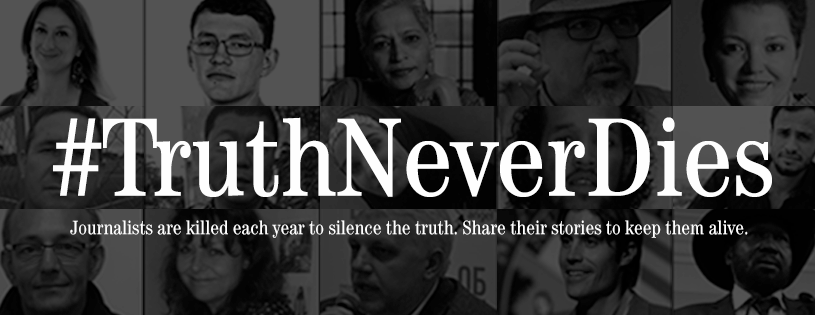
UNESCO launches “Truth Never Dies” campaign to tackle crimes ...

I have been writing columns for physicians for twenty years.  And year after year, I have had physicians say this: “I’m glad you said what you did. If I said it, I’d be fired.” There are variations on the theme, but they’re much the same.  Twenty years, and far more than 20 years, during which the alleged health care leaders in America have been routinely muzzled because they aren’t supposed to speak the truth.  Open discussions shut down because they might embarrass someone or upset an administrator. Because it might, heaven forbid, shine a light on a genuine problem.

Some years ago, as the mental health crisis was gathering steam across the emergency departments of the land, I was contacted by a news show in France.  The producers wanted to come to South Carolina and follow me on some shifts in my ED. They wanted to see how mental health was working out here. “We have socialized care, but mental health is also a huge problem in our country,” the producer said.

I dutifully, and appropriately, went to administration. “No, we can’t do that,” I was informed. I was given this explanation when everyone knew the mental health system was at the breaking point: “What if they uncover a problem?” Here was a chance for publicity, for potential grant money or to demonstrate that a political solution was in order.  How dare we let in fresh air? How dare we suggest that things were not perfect?

The same thing is happening in the midst of the pandemic.  Physicians, nurses, and other assorted health care professionals are being threatened for wearing masks.  Administrators say, “They make the patients nervous.” Also likely, administrators have realized they don’t have adequate equipment.  Facilities and systems with enormous budgets caught unprepared in a pandemic.

I see the stories of these professionals as I follow online forums.  Physicians, nurses, and others, threatened with firing because they dared to speak out on the issue of PPE (personal protective equipment).

Like police officers without ballistic vests, these physicians don’t want to go into the rooms of COVID-19 patients without the masks and respirators, gloves, gowns, and face shields that will keep them safe. The equipment that will allow them to return home to their loved ones and prevent them from infecting their families.  This isn’t a good look.  A hospital that refuses to acknowledge the concerns and safety of its professionals is a hospital that ultimately doesn’t deserve them.

The same veil of silence pervades dialogue on the treatment of coronavirus.  When I follow discussions, I see a lot of shaming. “There just isn’t enough evidence to try hydroxychloroquine, Zithromax, convalescent plasma, an untried vaccine, HIV drugs, etc.” Those who suggest we might try are considered reckless or ignorant.  As the battle rages and lives are lost, innovation and risk are viewed with disdain.  And our medical establishment is locked into the paradigm of double-blinded, placebo-controlled studies involving tens of thousands of people and lasting years. Here’s a view of the same from the U.K. Unfortunately, to suggest that we may need to react faster is only met with ridicule, and often tied to political views instead of expediency. Worse,  it ignores the deep, fundamental need to offer hope, any hope, to hundreds of millions of professionals and citizens who are living in fear.

There is a tragic irony here; a painful coincidence.  Physicians silenced. Let’s see.  Where did we see that sort of thing resulting in a worldwide pandemic?  Does China come to mind? The Chinese Communist Party threatened (and who knows what else) physicians who dared to speak out about coronavirus, even when they knew its danger.  Even when they knew how easily and widely it spread.

They continued to soft-peddle numbers about total cases and case fatality.  The party continued to allow travel to and from China long after the problem was known. They even suggested that Italians have a “hug a Chinese person” campaign to combat alleged racism; a charge delightfully accepted and repeated by gullible Western journalists in pursuit of a narrative.

Truth dies in silence.  Sadly, so do people.  And certainly when we tell dedicated health care professionals to keep their mouths shut when they have identified problems, offered solutions and simply asked for help.  Whether it’s a private business, a totalitarian government, or anything in between, we should insist that the truth be spoken; freely and without fear of punishment.

Because, for the foreseeable future, lives will depend on it.


Trump reportedly squandered 3 crucial weeks to mitigate the coronavirus outbreak after a CDC official’s blunt warnings spooked the stock market

https://www.businessinsider.com/trump-wasted-3-weeks-coronavirus-mitigation-time-february-march-nyt-2020-4

Dow closes with decline of 950 points as coronavirus continues to ...

  • President Donald Trump’s administration wasted three key weeks between February and March that could have been spent enacting mitigatory measures against COVID-19, The New York Times reported on Saturday.
  • By the end of February, top officials knew that time was running out to stem the virus spread, and wanted to present Trump with a plan to enact aggressive social distancing and stay-at-home measures.
  • But on February 26, a top CDC official issued stark warnings about the virus’ spread right before the stock market plummeted, which angered Trump for being, in his view, too alarmist. 
  • The Times reported that the entire episode killed off the efforts to persuade Trump to take aggressive, action to mitigate the virus’ spread. In the end, Trump didn’t issue stay-at-home guidance until March 16. 

President Donald Trump’s administration stalled three key weeks in February that could have been spent enacting mitigatory measures against COVID-19 after Trump was angered by a public health official issuing a dire warning about the virus, The New York Times reported on Saturday.

On Saturday,The Times published a lengthy investigation of all the instances Trump brushed aside warnings of the severity of the coronavirus crisis, failed to act, and was delayed by significant infighting and mixed messages from the White House over what action to take and when. 

The Times wrote: “These final days of February, perhaps more than any other moment during his tenure in the White House, illustrated Mr. Trump’s inability or unwillingness to absorb warnings coming at him.”

The Times conducted dozens of interviews with current and former officials and obtained 80 pages of emails from a number of public health experts both within and outside of the federal government who sounded the alarm about the severity of the crisis on an email chain they called “Red Dawn.”

One of the members of the email group, Health & Human Service disaster preparedness official Dr. Robert Kadlec, became particularly concerned about how rapidly the virus could spread when Dr. Eva Lee, a Georgia Tech researcher, shared a study with the group about a 20-year-old woman in China who spread the virus to five of her family members despite showing no symptoms.

“Eva is this true?! If so we have a huge [hole] on our screening and quarantine effort,” he replied on February 23. 

At that point, researchers and top officials in the federal government determined that since it was way too late to try to keep the virus out of the United States, the best course of action was to introduce mitigatory, non-pharmaceutical interventions (NPIs) like social distancing and prohibiting large gatherings.

As officials sounded the alarm that they didn’t have any time to waste before enacting aggressive measures to contain the virus, top public health officials including Dr. Robert Kadlec concluded that it was time to present Trump with a plan to curb the virus called “Four Steps to Mitigation.”

The plan, according to The Times, included canceling large gatherings, concerts, and sporting events, closing down schools, and both governments and private businesses alike ordering employees to work from home and stay at home as much as possible, in addition to quarantine and isolating the sick.

But their entire plan was derailed by a series of events that ended up delaying the White House’s response by several weeks, wasting precious time in the process.

Trump was on a state visit to India when Dr. Kadlec and other experts wanted to present him with the plan, so they decided to wait until he came back.

But less than a day later, Dr. Nancy Messonnier, the director of the National Center for Immunization and Respiratory Diseases at the CDC, publicly sounded the alarm about the severity of the coronavirus outbreak in a February 26 press conference, warning that the outbreak would soon become a pandemic.

“It’s not so much a question of if this will happen anymore but rather more a question of exactly when this will happen and how many people in this country will have severe illness,” Messonnier said, bluntly warning that community transmission of the virus would be inevitable.

The Times reported that Trump spent the plane ride stewing in anger both over Messonnier’s comments and the resulting plummet of the stock market they caused, calling Secretary of Health & Human Services Alex Azar “raging that Dr. Messonnier had scared people unnecessarily,” The Times said. 

The Times reported that the entire episode effectively killed off any efforts to persuade Trump to take aggressive, decisive action to mitigate the virus’ spread and led to Azar being sidelined, writing, ” With Mr. Pence and his staff in charge, the focus was clear: no more alarmist messages.” 

In the end, Dr. Kadlec’s team never made their presentation. Trump did not issue nationwide social distancing and stay-at-home guidelines until March 16, three weeks after Messonnier warned that the US had limited time to mitigate community transmission of the virus, and several weeks after top experts started calling for US officials to implement such measures.

In those nearly three weeks between February 26 and March 16, the number of confirmed COVID-19 cases rose from just 15 to 4,226, The Times said. As of April 12, there are over half a million confirmed cases in the United States with over 21,000 deaths.


The Dalai Lama on Why Leaders Should Be Mindful, Selfless, and Compassionate

https://hbr.org/2019/02/the-dalai-lama-on-why-leaders-should-be-mindful-selfless-and-compassionate?utm_source=facebook&utm_medium=social&utm_campaign=hbr&fbclid=IwAR1V6SVujsniYZwOQMFJNIeg9po7ojuHG6NBaMJ_qtcwNOaUeJ3LYj86qog

Over the past nearly 60 years, I have engaged with many leaders of governments, companies, and other organizations, and I have observed how our societies have developed and changed. I am happy to share some of my observations in case others may benefit from what I have learned.

Leaders, whatever field they work in, have a strong impact on people’s lives and on how the world develops. We should remember that we are visitors on this planet. We are here for 90 or 100 years at the most. During this time, we should work to leave the world a better place.

What might a better world look like? I believe the answer is straightforward: A better world is one where people are happier. Why? Because all human beings want to be happy, and no one wants to suffer. Our desire for happiness is something we all have in common.

But today, the world seems to be facing an emotional crisis. Rates of stress, anxiety, and depression are higher than ever. The gap between rich and poor and between CEOs and employees is at a historic high. And the focus on turning a profit often overrules a commitment to people, the environment, or society.

I consider our tendency to see each other in terms of “us” and “them” as stemming from ignorance of our interdependence. As participants in the same global economy, we depend on each other, while changes in the climate and the global environment affect us all. What’s more, as human beings, we are physically, mentally, and emotionally the same.

Look at bees. They have no constitution, police, or moral training, but they work together in order to survive. Though they may occasionally squabble, the colony survives on the basis of cooperation. Human beings, on the other hand, have constitutions, complex legal systems, and police forces; we have remarkable intelligence and a great capacity for love and affection. Yet, despite our many extraordinary qualities, we seem less able to cooperate.

In organizations, people work closely together every day. But despite working together, many feel lonely and stressed. Even though we are social animals, there is a lack of responsibility toward each other. We need to ask ourselves what’s going wrong.

I believe that our strong focus on material development and accumulating wealth has led us to neglect our basic human need for kindness and care. Reinstating a commitment to the oneness of humanity and altruism toward our brothers and sisters is fundamental for societies and organizations and their individuals to thrive in the long run. Every one of us has a responsibility to make this happen.

What can leaders do?

Be mindful

Cultivate peace of mind. As human beings, we have a remarkable intelligence that allows us to analyze and plan for the future. We have language that enables us to communicate what we have understood to others. Since destructive emotions like anger and attachment cloud our ability to use our intelligence clearly, we need to tackle them.

Fear and anxiety easily give way to anger and violence. The opposite of fear is trust, which, related to warmheartedness, boosts our self-confidence. Compassion also reduces fear, reflecting as it does a concern for others’ well-being. This, not money and power, is what really attracts friends. When we’re under the sway of anger or attachment, we’re limited in our ability to take a full and realistic view of the situation. When the mind is compassionate, it is calm and we’re able to use our sense of reason practically, realistically, and with determination.

Be selfless

We are naturally driven by self-interest; it’s necessary to survive. But we need wise self-interest that is generous and cooperative, taking others’ interests into account. Cooperation comes from friendship, friendship comes from trust, and trust comes from kindheartedness. Once you have a genuine sense of concern for others, there’s no room for cheating, bullying, or exploitation; instead, you can be honest, truthful, and transparent in your conduct.

Be compassionate

The ultimate source of a happy life is warmheartedness. Even animals display some sense of compassion. When it comes to human beings, compassion can be combined with intelligence. Through the application of reason, compassion can be extended to all 7 billion human beings. Destructive emotions are related to ignorance, while compassion is a constructive emotion related to intelligence. Consequently, it can be taught and learned.

The source of a happy life is within us. Troublemakers in many parts of the world are often quite well-educated, so it is not just education that we need. What we need is to pay attention to inner values.

The distinction between violence and nonviolence lies less in the nature of a particular action and more in the motivation behind the action. Actions motivated by anger and greed tend to be violent, whereas those motivated by compassion and concern for others are generally peaceful. We won’t bring about peace in the world merely by praying for it; we have to take steps to tackle the violence and corruption that disrupt peace. We can’t expect change if we don’t take action.

Peace also means being undisturbed, free from danger. It relates to our mental attitude and whether we have a calm mind. What is crucial to realize is that, ultimately, peace of mind is within us; it requires that we develop a warm heart and use our intelligence. People often don’t realize that warmheartedness, compassion, and love are actually factors for our survival.

Buddhist tradition describes three styles of compassionate leadership: the trailblazer, who leads from the front, takes risks, and sets an example; the ferryman, who accompanies those in his care and shapes the ups and downs of the crossing; and the shepherd, who sees every one of his flock into safety before himself. Three styles, three approaches, but what they have in common is an all-encompassing concern for the welfare of those they lead.