Californians increasingly concerned about access to mental healthcare and rising cost of care

https://www.healthcarefinancenews.com/node/139807?mkt_tok=eyJpIjoiTldNMllXTmpNVEJpTVRNMSIsInQiOiI1MVlQdys0d2FHbVZESVVjMDNFS2tnQVNJSlNjS2xsT1BCXC9FdGFZbWI2TDZQcnBJZHZIU2p4Qm9GNEw1K1ZsM1M5SVVPYU51OGxxOVJNRndtTlY1UXFkaFNueDVXbTlWbHRmSHF2YWhhVVdZdkthc0FzOHBIWFN3ZTNXdHVoVTkifQ%3D%3D

For the second year in a row, residents say making sure people with mental health problems can get treatment is their top healthcare priority.

Mental healthcare access remains a top priority for nine in 10 Californians, while the rising cost of physical and mental healthcare is causing increasing numbers of Californians to struggle to pay for prescription drugs, medical bills, and healthcare premiums, finds a new poll from the California Health Care Foundation.

The poll, Health Care Priorities and Experiences of California Residents, offers detailed insight into Californians’ views on a range of critical health issues, including healthcare affordability and access, perceptions on homelessness, the healthcare workforce, Medi-Cal, and the experiences of the uninsured. Results from the survey are also compared to a 2019 CHCF poll on the same topics to identify emerging trends.

WHAT’S THE IMPACT

For the second year in a row, California residents say making sure people with mental health problems can get treatment is their top healthcare priority. Nine in 10 said this was extremely or very important, and 52% said it was “extremely” important — topping all other health issues.

More than one in four Californians (27%) say that they or a family member received treatment for a mental health condition in the past 12 months; 7% say they or a family member received treatment for an alcohol or drug use problem.

Among those with insurance who tried to make an appointment for mental healthcare in the past 12 months, almost half (48%) found it very or somewhat difficult to find a provider who took their insurance. More than half (52%) of those who tried to make an appointment (with or without insurance) believe they waited longer than was reasonable to get one.

Nearly nine in 10 (89%) respondents are in favor of increasing the number of mental healthcare providers in parts of the state where providers are in short supply. And 89% favor enforcing rules requiring health insurance companies to provide mental healthcare at the same level as physical health care.

WHAT ELSE YOU SHOULD KNOW

Meanwhile, a little more than half of Californians (51%) have skipped or postponed physical or mental healthcare due to cost — up from 44% last year. Of those who took this step, 42% said it made their condition worse.

Compared to last year’s survey, Californians are more worried about paying for unexpected medical bills (63% last year; 69% today), out-of-pocket healthcare costs (55% vs. 66%), prescription drugs (42% vs. 50%), and health insurance premiums (39% vs. 44%).

Nearly a quarter of residents said they or someone in their family had problems paying, or an inability to pay medical bills in the past 12 months, while almost one-third of those with incomes under 200% of the federal poverty level report having problems paying their medical bills, compared to 19% of those with higher incomes. Uninsured adults report trouble paying their medical bills (45%) at twice the rate of those with employer-sponsored health insurance (20%).

More than eight in 10 (82%) respondents say it is important to lower the price of prescription drugs — up from 75% last year.

When compared to other issues facing the state, Californians rank healthcare affordability as their top priority among a range of public challenges presented in the poll — with 84% of respondents citing it as extremely or very important.

Improving public education received the same response (84%), closely followed by addressing homelessness (83%), attracting and retaining businesses and jobs (78%), and making housing more affordable (76%). Support for making healthcare more affordable cut across party identification, race, and income lines.

THE LARGER TREND

Ninety-six percent of employers believe improving mental health in the workplace is good for their business, but only 65% indicate their company provides adequate mental health services, according to findings from a December survey released by national nonprofit Transamerica Center for Health Studies.

Generally, there’s awareness that an employee’s physical health has an impact on absenteeism and productivity. But mental health, formerly a taboo subject, is garnering increasing recognition as well, and for the same reasons.

While almost all employers believe improving mental health in the workplace is good for their business, 17% of employers acknowledge not offering any resources at all. The most common mental health resources offered by employers are stress management classes (39%) and mental health awareness training (39%).
 

How runaway healthcare costs are a threat to older adults — and what to do about it

https://www.healthcarefinancenews.com/node/139803?mkt_tok=eyJpIjoiTW1JMFptSmhNR1F4WVRNeSIsInQiOiJOK3RWYTlrV0djQ1JEYWcyRlhqZDlHVGF2ejRRWXE3UDdHaGpcL2R5bVwvMHlHOUgyY0V0d1wvUE8rK3pMRlFFSXJsZGEzTVwvRVZRVHh3OGdLT0pOWG5LVDZaNFNadTVmYVFWdkFTamFcL2JhZUpPd3lia1hySCtzVlhROXpmWTh1Zm1mIn0%3D

Authors call for allowing Medicare to directly negotiate drug prices with manufacturers, which is currently prohibited by law.

Empowering Medicare to directly negotiate drug prices, accelerating the adoption of value-based care, using philanthropy as a catalyst for reform and expanding senior-specific models of care are among recommendations for reducing healthcare costs published in a new special report and supplement to the Winter 2019-20 edition of Generations, the journal of the American Society of Aging.

The report, “Older Adults and America’s Healthcare Cost Crisis,” includes a dozen articles by experts and leaders from healthcare, business, academia and philanthropy.

The authors examine the major drivers of the high cost of healthcare and its impact on patients, then offer solutions that can reduce costs and potentially improve the quality of care for older adults and society at large.

Topics include the employer’s role in reining in healthcare prices; the high cost of prescription drugs; investing in the social determinants of health; the value of home-based acute care; the need for oral health programs for older adults; value-based payment reform; and the geriatric emergency care movement.

WHAT’S THE IMPACT

In the report’s lead article, West Health President and CEO Shelley Lyford and Timothy Lash, chief strategy officer of West Health and president of the West Health Policy Center, called for allowing Medicare to directly negotiate drug prices with manufacturers, which is currently prohibited by law.

They write it “would be a game-changing lever that could force prescription drug manufacturers to bring down prices and lower costs for older Americans.” They also said it’s essential to quickly move from unfettered fee-for-service to value-based payment models, and that more transparency on price and quality is needed so consumers and other purchasers can make more informed decisions about care.

Among the other recommendations are for employers to demand greater price accountability from hospitals and health plans, and to take the lead in adopting value-based payment models.

Authors also call for establishing senior-specific models of care, including geriatric emergency departments, which may improve health outcomes and reduce hospital admissions, and senior dental centers, which can address what they call an epidemic of oral health problems among older adults.

They also support widespread use of home-based acute care, which they say increases the value of healthcare.

THE LARGER TREND

As spiraling U.S. healthcare costs dominate policy agendas at the state and federal level, older adults — the largest group of consumers of healthcare services — have a particularly high stake in solving the crisis. According to a 2019 West Health-Gallup poll, seniors withdrew an estimated $22 billion from long-term savings in the past year to pay for healthcare and an estimated 7.5 million were unable to pay for a prescribed medicine.


Cartoon – I can’t afford that diagnosis

Image result for Cartoon high cost of medical care

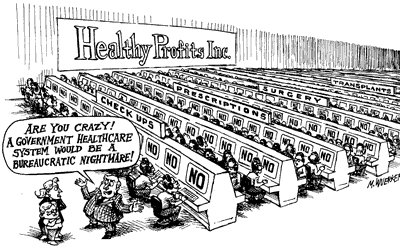
Cartoon – A Bureaucratic Nightmare?

Image result for Cartoon high cost of medical care


Cartoon – We found the Problem

Image result for Cartoon high cost of medical care

California Health Policy Poll Released

https://elink.clickdimensions.com/m/1/52313696/02-b20044-0c24a5f919b04c9baf7a61e0f9656ec6/6/989/a24990fd-e009-4b4b-be17-ea9b7c8eef0e

Increases in Worry Over Health Care Costs and Skipping/ Postponing Treatment Due to Cost Over the Last Year

PERCENTAGE WHO SAY THEY ARE VERY OR SOMEWHAT WORRIED ABOUT…


President Trump’s budget cuts target Medicaid, Medicare

https://www.healthcarefinancenews.com/news/president-trumps-budget-cuts-target-medicaid-medicare?mkt_tok=eyJpIjoiWVRnM01UZzNaR0V6TTJFNSIsInQiOiJ6aXpsQnNCRjhHdCs4SnN0UytlZnJVUlZUeFdreEZyQ2V6RWE0YklvYmFMOGJnbWpXT3ZHeG0rOHMwNkJPcE9rMUlGb3NzVkpId3NrZHNkZmR2VlZISXZCVGgrbU94cFV3aVlNR1NYamlhazF1R1kzaXd3RXVISm9OSGJoYmVrVCJ9

Image result for medicaid cuts

Blueprint includes cuts for care in hospital outpatient departments, teaching hospitals and post-acute care providers, AHA says.

President Trump’s proposed $4.8 trillion budget slashes billions of dollars from Medicaid, food stamps and other safety net programs in an attempt to shrink the federal deficit.

Medicaid and the Affordable Care Act see about $1 trillion in cuts over the next decade, according to The Hill. The budget eliminates the enhanced federal match for Medicaid expansion enrollees. An additional $150 billion is expected to be shaved off of Medicaid from the implementation of work requirements, which is expected to result in people losing their healthcare coverage.

The “President’s health reform vision” to ax the Affordable Care Act takes $844 billion over 10 years from the ACA, the report said.

The decrease in federal spending on Medicare would total about $750 billion over 10 years, but that includes shifting two programs out of the budget. After accounting for those changes, the reduction is just over $500 billion, according to CNN. Much of that cut comes from reducing payments to providers.

The budget needs Congressional approval and is not expected to get past a Democratic-controlled House without changes.

House Speaker Nancy Pelosi tweeted: “The budget is a statement of values. Once again, the #TrumpBudget makes it painfully clear how little the President values the good health, financial security and well-being of America’s hard-working families.”

Ways and Means Committee Chairman Richard E. Neal, D-MA, said, “When I saw the President’s proposed budget today, I felt an immense sense of relief – relief that there is absolutely no chance of his ruthless cuts to critical programs ever becoming law. Slashing billions from Medicare and Medicaid will only make it harder for Americans to access the healthcare they need.

Cutting nutrition assistance and Social Security benefits for the disabled won’t enable people to get back on their feet financially.”

Senator Lamar Alexander, R-Tenn said, “Under the Constitution, it is Congress’ job to set spending priorities and pass appropriations bills, and as a member of the Senate Appropriations Committee, my priorities will continue to be making sure our national defense, national laboratories, the National Institutes of Health and national parks have the resources they need. I am encouraged to see the president is calling to end surprise medical billing.”

The budget adds money to the National Institutes of Health. The NIH will invest $50 million for new research on chronic diseases, using AI and related approaches, according to the White House briefing. It adds $7 billion over 10 years to fight opioid abuse and for mental health in the Medicaid program.

WHY THIS MATTERS

Cuts to Medicare and Medicaid mean uncompensated care to providers, or a reduction in the government payments.

The American Hospital Association said, “The budget request, which is not binding, proposes hundreds of billions of dollars in reductions to Medicare and Medicaid over 10 years.”

AHA President and CEO Rick Pollack said, “Every year, we adapt to a constantly changing environment, but every year, the Administration aims to gut our nation’s healthcare infrastructure. The proposals in this budget would result in hundreds of billions of dollars in cuts that sacrifice the health of seniors, the uninsured and low-income individuals. This includes the one in five Americans who depend on Medicaid, of which 43% of enrollees are children.

“In addition to the hundreds of billions in proposed reductions to Medicare, the blueprint includes cuts we strongly oppose for care in hospital outpatient departments, teaching hospitals and post-acute care providers. These cuts fail to recognize the crucial role hospitals serve for their communities, such as providing 24/7 emergency services. Post-acute cuts threaten care for patients with the most medically complex conditions.”


AARP, United Healthcare and CVS keep prescription drug prices higher for seniors

https://www.washingtontimes.com/news/2020/feb/11/aarp-united-healthcare-and-cvs-keep-prescription-d/

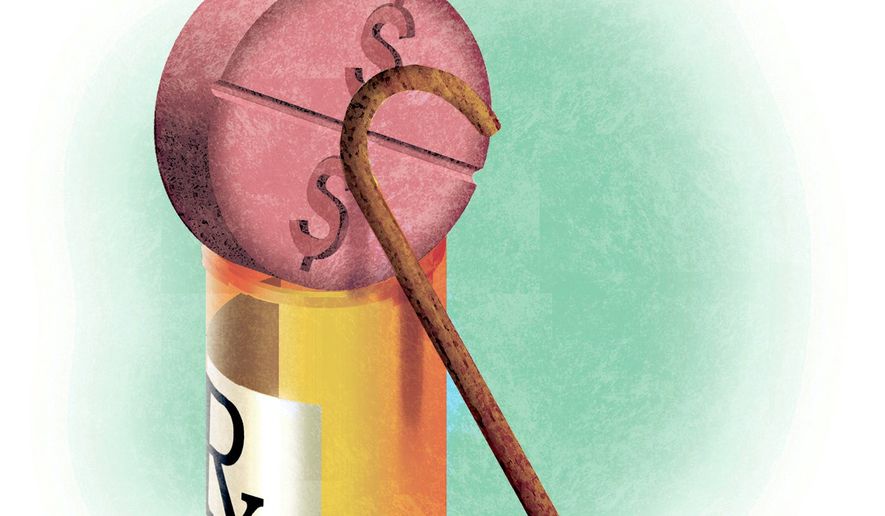
Illustration on overpriced prescription drugs for seniors by Alexander Hunter/The Washington Times

Most folks think of the AARP as a membership organization that gives older Americans discounts on magazine subscriptions and cellphone plans. In fact, those business lines are secondary to AARP’s real source of income, a lucrative partnership with United Healthcare.

AARP partners with United Healthcare to offer health insurance plans to its membership. On its face, there’s nothing inappropriate about this type of affinity branding; the problem is that United Healthcare (and, frankly, other insurance companies) have made some decisions at the expense of seniors and the Medicare program, which should run counter to what a seniors-focused advocacy organization endorses. Recent actions by United Healthcare to limit seniors’ access to less expensive versions of Medicare drugs calls into question whether the AARP is looking out for older Americans or its own bottom line.

During the past three years, President Trump has maintained a laser focus on drug prices, causing pharmaceutical companies to respond in a variety of ways, including reducing or, in some instances, halting altogether annual price increases, pledging responsible pricing for new medications and reducing the price of medicines in certain instances.

For example, last year Eli Lilly launched a half-price version of its insulin drug, Humalog, to address affordability barriers for diabetic patients. Gilead created a subsidiary company in order to offer its two revolutionary hepatitis C products, Harvoni and Epclusa, as “authorized generics” at prices more than 70 percent lower than the identical brand version. In 2018, two companies competing in the cardiovascular space, Sanofi and Amgen, each introduced less costly versions of their cholesterol medications for patients who are unresponsive to statins — at 60 percent below the original price. These are all big wins for Mr. Trump’s jawboning campaign.

But the system is not working: These less expensive versions of innovative drugs are not available to many seniors because of how insurance companies and their negotiators (known as “pharmacy benefit managers” or PBMs) design drug coverage via formularies, particularly in Medicare. A perfect case study is cardiovascular disease, the No. 1 cause of death in the United States: For the past 14 months, in many instances, United Healthcare formulary design kept patients on the more expensive versions of the Sanofi and Amgen cholesterol medicines which came coupled with a high out-of-pocket co-insurance for the patient. Further, CVS (which is merging with insurance company Aetna) admitted to creating barriers for patients by requiring doctors to provide a “documented clinical reason” for prescribing the identical, cheaper version of the same medicine. Today in Medicare, CVS continues to block affordable access to the lower cost versions by not covering these medicines anywhere on their national formulary, effectively dissuading a patient at high risk for a heart attack or stroke from purchasing the medicine prescribed by his/her cardiologist.

Why would insurance companies and PBMs want to keep paying for the more expensive version of an identical drug? The answer lies in the backward way drugs are priced in America. Drug manufacturers set the “list price” of a drug the same way a car dealership lists the price of cars or colleges list the price of tuition. What’s actually paid by an insurer in the final transaction is usually steeply discounted from the starting price by the drug company “rebating” a portion — 40 percent on average, oftentimes more — to the PBM/insurance company (which then pocket it). That negotiation should result in reduced out-of-pocket drug costs for seniors. The problem is that this model results in perverse incentives.

Medicines have high “list prices” because the drug company knows that it will need to provide significant discounts/rebates in order to be listed on a health plan’s formulary. Positive formulary placement = patient access to a medicine. Insurance companies and PBMs like the higher list prices because they profit from both the steep, negotiated rebates and the higher co-insurance the patient pays to the plan. In Medicare, once a patient barrels through the initial drug coverage phase, the federal government picks up 80 percent of a senior’s drug costs, reducing the insurer’s liability. In the end, it’s patients who suffer at the pharmacy counter and in the long run.