Health Plan Merger: Harvard Pilgrim, Tufts Pursue Tie-Up

https://www.healthleadersmedia.com/strategy/health-plan-merger-harvard-pilgrim-tufts-pursue-tie

Image result for hospital merger

The organizations expect their combined strengths will enable them to improve affordability, increase access, improve quality, and streamline the customer experience.

Two major nonprofit health plan companies in New England are looking to join forces.

Harvard Pilgrim Health Care and Tufts Health Plan announced Wednesday that they intend to combine their two nonprofit organizations. 

“Our communities and consumers today face four major hurdles in health care: affordability, access, quality of health and a fragmented health care experience across various stakeholders and health systems,” said Tufts Health Plan President and CEO Tom Croswell in a statement. “Through our shared vision, we believe we can tackle these issues and bring more value to the communities we serve.”

Croswell is expected to serve as CEO of the combined organization, while Harvard Pilgrim Health Care President and CEO Michael Carson serves as president, overseeing the combined business lines and subsidiary, according to the announcement.

Joyce Murphy, board chair for Harvard Pilgrim Health Care, is expected to chair the combined board of directors, which will have equal representation from each legacy organization.

“Through the combination of two strong organizations with a commitment to non-profit health care in New England, we will be able to provide even greater value to consumers, as well as improve access to care throughout the region,” Murphy said in the statement.

The two organizations said they expect their combined strengths will enable them to improve affordability “through scale and administrative cost efficiencies,” increase healthcare access, improve healthcare quality, and streamline the customer experience.

The combined organization, which has yet to be named, would serve nearly 2.4 million plan members in Maine, New Hampshire, Massachusetts, Connecticuit, and Rhode Island.

Both boards approved the agreement, but the organizations will remain separate pending regulatory approvals, according to the announcement.


Federal appeals court limits hospitals’ disproportionate-share funding

https://www.modernhealthcare.com/payment/federal-appeals-court-limits-hospitals-disproportionate-share-funding?utm_source=modern-healthcare-daily-finance-wednesday&utm_medium=email&utm_campaign=20190814&utm_content=article1-headline

Hospitals that care for a large share of Medicaid, low-income and uninsured patients stand to receive less funding from the federal government after the D.C. Circuit reconsidered how Medicaid disproportionate-share hospital reimbursement is calculated.

A three-judge panel of the U.S. Court of Appeals for the District of Columbia Circuit reversed a lower court and reinstated a 2017 rule establishing that payments by Medicare and private insurers are to be included in calculating a hospital’s DSH limit, ultimately lowering its maximum reimbursement.

In Tuesday’s ruling, U.S. Circuit Judge Karen LeCraft Henderson opined that the rule aligns with the intent of the Medicaid Act.

“By requiring the inclusion of payments by Medicare and private insurers, the 2017 rule ensures that DSH payments will go to hospitals that have been compensated least and are thus most in need,” Henderson wrote.

The case, brought by four children’s hospitals in Minnesota, Virginia and Washington and an association representing eight children’s hospitals in Texas, concerns the calculation of the uncompensated costs of treating Medicaid beneficiaries known as the “Medicaid shortfall.

For instance, if a hospital spends $1 million on treating Medicaid patients who have no other healthcare coverage and Medicaid pays $600,000, then the Medicaid shortfall is $400,000. In some instances, Medicaid patients have additional third-party coverage such as Medicare or private insurance.

Hospitals cannot receive more money in Medicaid DSH payments than they spent to treat Medicaid beneficiaries or the uninsured. Part of the motivation behind that stipulation was to prevent hospitals from double dipping by collecting DSH payments to cover costs that had already been reimbursed. Previous cases also revealed that some states have made DSH payments to state psychiatric or university hospitals that exceed the net costs, or even total costs, of operating the facilities.

Providers successfully fought the 2017 rule that limited hospitals’ reimbursement. A federal judge sided with the hospitals that claimed the CMS overstepped its authority and essentially ignored payments by commercial insurers and Medicare. That was overturned Tuesday.

The Children’s Hospital Association of Texas said in a statement that it is exploring its options.

“We are disappointed with the result because it will reduce critical Medicaid funding to safety net providers like children’s hospitals,” the association said. “These hospitals are heavily reliant on Medicaid payments because between 50% and 80% of their inpatient days are covered by Medicaid. Children’s hospitals care for all children, and are, in fact, often the only place that children with complex conditions can get life-saving care.”


What Does Medicare Actually Cover?

What Does Medicare Actually Cover?

Image result for What Does Medicare Actually Cover?

If it followed the path of traditional Medicare, it would end up paying for a lot of coverage that has little medical value.

In the first congressional hearing held on “Medicare for all” in April, Michael Burgess, a Republican congressman from Texas and a physician, called such a proposal “frightening” because it could limit the treatments available to patients.

The debate over Medicare for all has largely focused on access and taxpayer cost, but this raises a question that hasn’t gotten much attention: What treatments would it cover?

A good starting place for answers is to look at how traditional Medicare currently handles things. In one sense, there are some important elements that Medicare does not cover — and  arguably should. But a little digging into the rules governing treatments also reveals that Medicare allows a lot of low-value care — which it arguably should not.

Many countries don’t cover procedures or treatments that have little medical value or that are considered too expensive relative to the benefits. American Medicare has also wrestled with the challenge of how to keep out low-value care, but for political reasons has never squarely faced it.

You might remember the factually misguided “death panel” attack on the Affordable Care Act, which preyed on discomfort with a governmental role in deciding what health care would or would not be paid for. (This discomfort also extends to private plans, exemplified by the backlash against managed care in the 1990s.)

Perhaps as a result, Americans don’t often talk about what treatments and services provide enough value to warrant coverage.

You can divide current Medicare coverage into two layers.

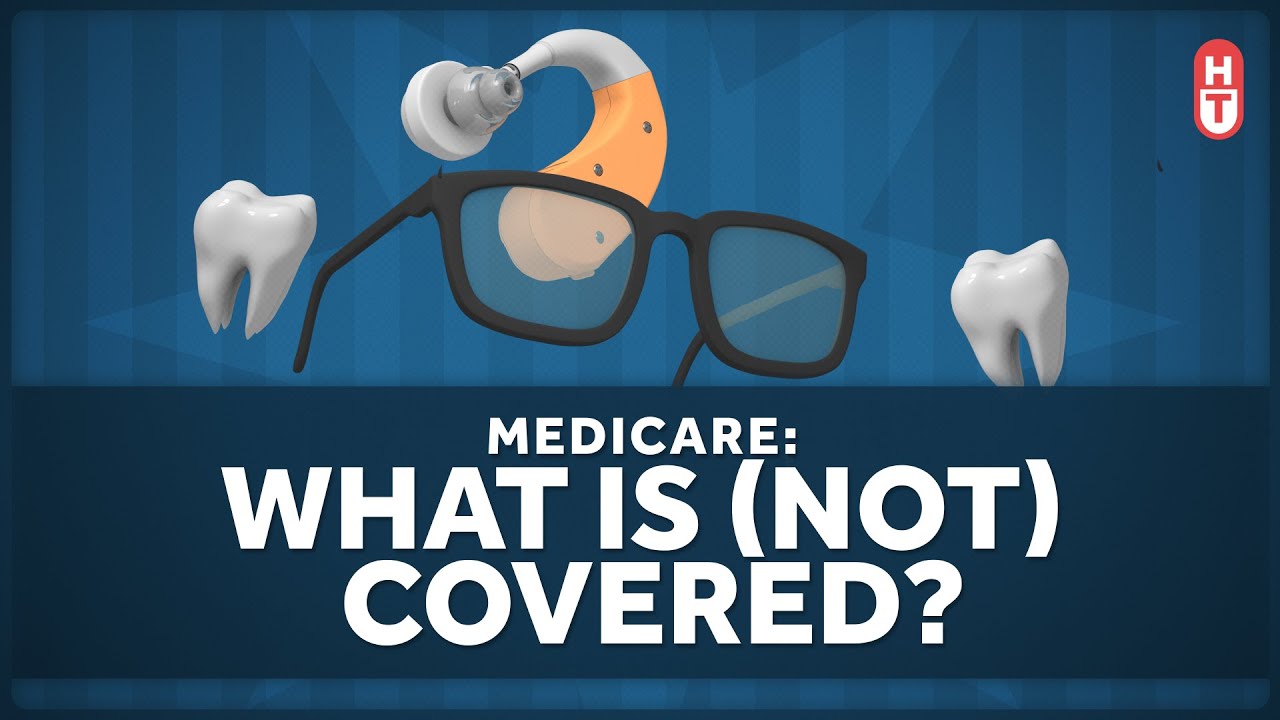
The first is relatively transparent. Traditional Medicare does not cover certain classes of care, including eyeglasses, hearing aids, dental or long-term care. When the classes of things it covers changes, or is under debate, there’s a big, bruising fight with a lot of public comment. The most recent battle added prescription drug coverage through legislation that passed in 2003.

Over the years, there have also been legislative efforts to add coverage for eyeglasses, hearing aids, dental and long-term care — none of them successful. Some of these are available through private plans. So a Medicare for all program that excluded all private insurance coverage and that resembled today’s traditional Medicare would leave Americans with significant coverage gaps. Most likely, debate over what Medicare for all would cover would center on this issue.

But there is a second layer of coverage that receives less attention. Which specific treatments does Medicare pay for within its classes of coverage? For instance, Medicare covers hospital and doctor visits associated with cancer care — but which specific cancer treatments?

This second layer is far more opaque than the first. By law, treatments must be reasonable and necessary” to be approved for Medicare coverage, but what that means is not very clear.

We think of Medicare as a uniform program, but some coverage decisions are local. What people are covered for in, say, Miami can be different from what people are covered for in Seattle.

Many treatments and services are covered automatically because they already have standard billing codes that Medicare recognizes and accepts. For treatments lacking such codes, Medicare makes coverage determinations in one of two ways: nationally or locally.

Although Medicare is a federal (national) program, most coverage determinations are local. Private contractors authorized to process Medicare claims decide what treatments to reimburse in each of 16 regions of the country.

In theory, this could allow for lots of variation across the country in what Medicare pays for. But most local coverage determinations are nearly identical. For example, four regional contractors have independently made local coverage determinations for allergen immunotherapy, but they all approve the same treatments for seasonal allergy sufferers.

There are more than 2,000 local coverage determinations like these. National coverage decisions, which apply to the entire country, are rarer, with only about 300 on the books.

When Medicare makes national coverage decisions, sometimes it does so while requiring people to enter clinical trials.

It has been doing this for over a decade. The program is called coverage with evidence development, and its use is rare. Fewer than two dozen therapies have entered the program since it was introduced in 2006. But it allows Medicare to gather additional clinical data before determining if the treatment should be covered outside of a trial. To be considered, the treatment must already be deemed safe, and it must already be effective in some population. The aim is to test if the treatment “meaningfully improves” the health of Medicare beneficiaries.

Only one therapy (CPAP, for sleep apnea) that entered this process has ever emerged to be covered as a routine part of Medicare. The others are in a perpetual state of limbo, neither fully covered nor definitively not covered. CAR-T cell therapy, a type of cancer immunotherapy, which appears to be very successful but is also very expensive, is one of the most recent to enter this process.

Despite the complexity of all these coverage determination methods — local, national, contingent on clinical trials — the bottom line is that very few treatments are fully excluded from Medicare, so long as they are of any clinical value. And this suggests that it’s not very likely that Medicare for all would deny coverage for needed care.

A 2018 study in Health Affairs found only 3 percent of Medicare claims were denied in 2015. And traditional Medicare doesn’t limit access to doctors or hospitals either, as it is accepted by nearly every one. (This is in contrast with Medicare Advantage.)

Medicare has a troubled history in considering cost-effectiveness in its coverage decisions. Past efforts to incorporate it have failed. For example, regulations proposed in 1989 were withdrawn after a decade of internal review.

As a result, Medicare covers some treatments that are extremely expensive for the program and that offer little benefit to patients. The Medicare Payment Advisory Commission recently studied this in detail. In a 2018 report to Congress, it noted that up to one-third of Medicare beneficiaries received some kind of low-value treatment in 2014, costing the program billions of dollars. If Medicare for all followed in traditional Medicare’s path, it could be wastefully expensive.

The United States has had a historical unwillingness to face cost-effectiveness questions in health care decisions, something many other countries tackle head-on. Some Americans favor Medicare for all because it would make the system more like some overseas. And yet, in choosing not to consider the value of the care it covers, Medicare remains uniquely American.


Healthcare workforce development: New strategies for new demands

https://www.healthcareitnews.com/news/healthcare-workforce-development-new-strategies-new-demands

As hospitals and ambulatory sites grapple with the challenges of quality improvement, value-based care, cybersecurity and more, the size and shape of the workforce is changing as technology and imperatives evolve.

The healthcare workforce is evolving, often by necessity, thanks to the same gravitational forces that are affecting the rest of the industry and the economy at large: technological advances, competitive market forces, shifting imperatives that demand new skill sets, challenges with job satisfaction and burnout.

Whether they’re C-suite leaders, physicians, nurses, IT staff, data scientists, case managers, security pros or revenue cycle, billing and accounting experts, hospitals and health systems large and small are facing an array of challenges when it comes to finding the right people to fit the right roles.

There’s a lot that needs doing in healthcare these days, after all – managing the clinical and operational demands of value-based reimbursement, caring for a growing aging population with a shrinking number of doctors and nurses, fighting the good fight against relentless cybersecurity threats – and finding the right employees to do it all is more important than ever.

During July, Healthcare IT News and our sister publication, Healthcare Finance, will explore how hospitals and health systems are managing these challenges – optimizing their workforces and positioning skilled leaders to help drive long-term strategic success in those areas and others.

From the C-suite to the trenches, unique challenges persist

The recent 2019 HIMSS U.S. Leadership and Workforce Survey polled 232 health information and technology leaders from acute and ambulatory providers nationwide to gain some insights about the challenges they’re prioritizing and the organizational structures they’re putting in place to deal with them.

Surprisingly or not, “hospitals and non-acute providers appear to have very different strategies regarding information and technology leadership and workers,” according to the report.

For instance, inpatient sites are much more able to prioritize the hiring of skilled C-suite execs to guide strategic initiatives. But “the absence of information and technology leaders in non-acute organizations is unsettling as it becomes more challenging to advance capabilities in settings without strong executive champions.”

Likewise, hospitals and practices also differ substantially when it comes to more rank-and-file employees. The larger inpatient sites “tend to operate environments with fairly extensive opportunities, whereas non-acute providers tend to deal with static workforce demands,” according to HIMSS. “The culture that can result from these different settings is something healthcare leaders should take into consideration when developing a staffing strategy.”

And health system hiring strategies are indeed shifting as providers face an array of challenges that need skilled and forward-thinking workers to help solve them. The HIMSS report listed the top 10 of these as:

  • Cybersecurity, Privacy, and Security
  • Improving Quality Outcomes Through Health Information and Tech
  • Clinical Informatics and Clinician Engagement
  • Culture of Care and Care Coordination
  • Process Improvement, Workflow, Change Management
  • User Experience, Usability and User-Centered Design
  • Data Science/Analytics/Clinical and Business Intelligence
  • Leadership, Governance, Strategic Planning
  • Safe Info and Tech Practices for Patient Care
  • HIE, Interoperability, Data Integration and Standards

The big hurdle, however, is that many “hospitals are continuing to be negatively impacted by staffing challenges,” according to the study. “The negative impacts on providers resulting from paused/scaled back projects are significant enough to at least warrant an exploratory consideration,” said HIMSS researchers.

A look at the numbers tells one story: When it comes to workforce vacancy barely one-third 36% of providers polled by HIMSS say they’re fully staffed – while more than half (52%) said they have open positions (12% didn’t answer or weren’t sure).

Indeed, there’s plenty of hiring to be done for health systems trying to tackle some of the biggest ongoing strategic challenges.

Even though the size in provider workforces since 2018 increased for 38% of the providers in this year’s survey – it stayed the same for 37% and decreased for just 14% – the projection for 2020 is a further expected hiring boost at 34% of providers (compared with a status quo for 42% and a contraction at just 9%).

Still, there’s nuance when one considers the differences between inpatient versus ambulatory organizations. While both are more likely to increase their workforces than to decrease them in 2020 (37% and 12% percent of hospitals, respectively, and 26% and 1% of outpatient sites), far more non-acute organizations expect their staff sizes to stand pat than hospitals (51 percent, compared with 38%).

“The variances in staffing growth trajectories evidenced in the two provider groups … has the potential to produce exceedingly different workplace cultures; a fast-paced environment in hospitals and a fairly stable setting in non-acute organizations,” according to the HIMSS report. “If true, then it is very possible these settings attract health IT workers with remarkably different needs/wants. Provider organizations looking to stabilize their workforce should take these factors into consideration when developing staff recruitment, retention and development strategies.”

What to expect in our Focus on Workforce Development

Over the course of this month, Healthcare IT News and Healthcare Finance will be exploring the many challenges related to staffing and workforce, across many facets of healthcare in the U.S.

We’ll examine the industry’s labor force spend (the percentage of total budgets may surprise you), and look at how how AI, telehealth and consumerism can help change that equation. We’ll learn how to attract top C-suite talent and combat clinician burnout. We’ll explore the benefits of apprenticeship programs, and see the strategies some hospitals are using to deal with labor shortages. And much more.

So, as your healthcare organization looks to the fiscal year or remaining calendar year ahead, be sure to check back at HITN and HF during July to learn from thought leaders and industry peers – about the best way to put the best people in the best position to help meet your strategic goals.


Nonprofit hospitals in Virginia garnish wages more often than for-profit hospitals, yielding only small payoffs

https://www.healthcarefinancenews.com/news/nonprofit-hospitals-virginia-garnish-wages-more-often-profit-hospitals-yielding-only-small

More than 70% of Virginia hospitals that garnish wages are nonprofit, and the money collected is only a tiny percentage of revenue.

Nonprofit hospitals in Virginia are more likely to garnish patients’ wages if they don’t pay their medical bills than for-profit hospitals in the state, and ultimately, the practice does little to drive revenue for those hospitals, according to a JAMA study published this week.

Researchers examined Virginia court records from 2017 that dealt with completed “warrant in debt” lawsuits, or cases where a party sues an individual for unpaid debt. They examined how hospital characteristics link to wage garnishments, and found that 71% of hospitals in Virginia that garnished wages were nonprofit.

A recent ProPublica report highlighted Methodist Le Bonheur Healthcare, which it said filed more than 8,300 lawsuits from 2014 through 2018. Methodist isn’t alone. The JAMA researchers unearthed more than 20,000 debt lawsuits filed by various Virginia hospitals in 2017; more than 9,300 garnishment cases took place that year, and almost three in four were liked to nonprofits.

Some even sue their own employees. Again looking at Methodist, ProPublica found the hospital has sued more than 70 of its employees for unpaid medical bills since 2014, including a suit brought against a hospital housekeeper in 2017 for $23,000 — $7,000 more than her annual salary.

Methodist responded by pointing out its considerable charity care, with community contributions estimated at more than $226 million annually. The federal government expects nonprofit hospitals to provide charity care and financial assistance since those hospitals are exempt from local, state and federal taxes.

WHAT’S THE IMPACT

Just five hospitals — four of them nonprofit — were responsible for more than half of the garnishment cases in the state, JAMA researchers found. Overall, 48 out of 135 Virginia hospitals garnished patient wages, amounting to 36 percent.

Despite the high prevalence of the practice, the money collected from garnishments comprised a minuscule share of hospital revenue. Hospitals that garnished wages collected annual gross revenue that averaged out to $806 million, while garnishments accounted for $722,342. That’s about 0.1% of gross revenue.

The garnishments, which ranged from $24.80 to $25,000, averaged $2783.15 per patient, researchers found.

According to a report filed by NPR, nonprofit Mary Washington Hospital in Fredericksburg was the hospital that sued the most patients in Virginia in 2017 — so much so that Fredericksburg General District Court reserved a morning each month to hear its cases.

The day after NPR published its report, Mary Washington announced its intention to suspend the practice of suing patients for unpaid bills, saying it was committed to a “complete re-evaluation of our entire payment process.”

The JAMA study found that, of those whose wages were garnished, Walmart, Wells Fargo, Amazon and Lowes were the most common employers.

THE LARGER TREND

Though researchers focused on Virginia, suing patients over medical debt is not a trend that’s unique to the state. Arizona hospitals have gone to court over personal injury claims, and Johns Hopkins Hospital in Baltimore, Maryland, was recently presented with a petition from citizens and unions to drop medical debt lawsuits.


11 hospitals with strong finances

https://www.beckershospitalreview.com/finance/11-hospitals-with-strong-finances-081219.html?origin=rcme&utm_source=rcme

Here are 11 hospitals and health systems with strong operational metrics and solid financial positions, according to recent reports from Moody’s Investors Service, Fitch Ratings and S&P Global Ratings.

1. Altamonte Springs, Fla.-based AdventHealth has an “Aa2” rating and stable outlook with Moody’s. The health system has strong margins, low operating leverage and solid cash levels, according to Moody’s.

2. Children’s Healthcare of Atlanta has an “Aa2” rating and stable outlook with Moody’s. The health system has strong margins, and its good management discipline and detailed planning capabilities will drive consistent operating performance, according to Moody’s.

3. Falls Church, Va.-based Inova Health System has an “Aa2” rating and stable outlook with Moody’s. The health system has a leading market position in the broader northern Virginia region and strong operating cash flow margins, according to Moody’s.

4. IHC Health Services, the borrowing group of Salt Lake City-based Intermountain Healthcare, has an “Aa1” rating and stable outlook with Moody’s. Intermountain’s exceptional credit quality is supported by low debt levels, strong cash levels, solid operating performance and its leading market position, according to Moody’s.

5. Oakland, Calif.-based Kaiser Permanente has an “AA-” rating and stable outlook with Fitch and S&P. Kaiser has a robust integrated business model, strong operational cash flow and ample unrestricted reserves, according to S&P.

6. Bryn Mawr, Pa.-based Main Line Health has an “Aa3” rating and stable outlook with Moody’s. The health system has a leading market position in the Philadelphia suburbs, strong balance sheet measures and a modest debt load, according to Moody’s.

7. Chicago-based Northwestern Memorial HealthCare has an “Aa2” rating and stable outlook with Moody’s. The health system has a prominent market position in the broader Chicago region because of its strong brand, and its consolidated operating model and comprehensive IT systems will allow it to execute growth strategies while maintaining good margins, according to Moody’s.

8. Renton, Wash.-based Providence St. Joseph Health has an “Aa3” rating and stable outlook with Moody’s and an “AA-” rating and stable outlook with Fitch. The health system has a large service area, a revenue base of more than $24 billion and an integrated care delivery platform, which includes health plans, employed physicians and inpatient and outpatient services, according to Moody’s.

9. Broomfield, Colo.-based SCL Health has an “AA-” rating and stable outlook with S&P. The health system has ample liquidity and a healthy balance sheet, according to S&P.

10. San Diego-based Scripps Health has an “Aa3” rating and stable outlook with Moody’s. The health system has strong market share within San Diego County, a history of strong and stable management, and favorable balance sheet measures, according to Moody’s.

11. Tahoe Forest Hospital District, which operates Tahoe Forest Hospital in Truckee, Calif., and Incline Village (Nev.) Community Hospital, has an “Aa3” rating and stable outlook with Moody’s. The hospital district has a healthy cash position, low debt burden and a large and increasing tax base, according to Moody’s.


Myth Diagnosis: Do hospitals charge more to make up for low government pay?

https://www.healthcaredive.com/news/myth-diagnosis-do-hospitals-charge-more-to-make-up-for-low-government-pay/560021/

Image result for hospital prices

It’s a mantra from providers to justify the disparate prices charged patients depending on their level of insurance coverage: It’s all in the name of cost shifting to make up for stingy government reimbursement.

The idea is that hospitals bill commercial payers more to make up for low rates from government payers and the costs from treating the uninsured. Providers and payers both insist the practice occurs, but academics are skeptical — and the notion is notoriously difficult to measure.

No one is doubting that the prices are different depending on who is footing the bill. The issue is whether they are dependent on each other.

“What is crystal clear is that there’s a huge unit cost payment differential between government and commercial payers,” John Pickering of Milliman told Healthcare Dive. “What isn’t clear is whether there’s a causal effect between those two.”

Heath economists, doctors and industry executives have been arguing about whether hospitals perform cost shifting for at least 40 years.

Government efforts to tamp down on runaway payments to providers may have sparked the debate. These include Medicare’s shift from strictly fee-for-service reimbursement to the prospective payment system in the 1980s.

Also, the Affordable Care Act attempted to codify efforts to pay providers based on performance with initiatives like the Hospital Readmission Reduction Program and alternative payment models.

Part of the difficulty is untangling factors like differences in geography, quality and market share, said Michael Darden, an associate professor at Carey Business School.

The body of research on healthcare cost shifting is mixed. There is evidence that some hospitals perform cost shifting, but not strong and clear results showing hospitals make such adjustments consistently or what exactly is causing them.

The debate has received some renewed attention as more states approve Medicaid expansion under the ACA and as employers consider offering high-deductible health plans that patients on the hook for more costs, Rick Gundling, senior vice president for healthcare financial practices with the Healthcare Financial Management Association, told Healthcare Dive.

“As folks get more price-sensitive through higher cost-sharing with patients and employers and these types of things — it’s certainly talked about. As it should be,” he said.

Policy implications

The topic may get even more attention as healthcare has come to dominate the early days of the 2020 presidential election, at least among the 20-plus contenders running in the primary.

While still a long way off, a “Medicare for All”-type system seems closer than any time in recent history.

While not all of the proposals explicitly or fully eliminate the private insurance industry, some (including those put forward by Sens. Bernie Sanders, I-Vt., and Elizabeth Warren, D-Mass.,) do, and others would at least severely curtail it. One key question for those plans is whether government rates would have to increase in order to keep hospitals and providers above water, and if so, by how much.

To counter, President Donald Trump and his administration have stepped up their scrutiny of industry billing practices. These efforts include pushing Congress to ban surprise billing and executive orders to revamp kidney care in the country and advance price transparency.

For their part,  providers say they’ll be forced to raise other rates if government programs pay less. Insurers will say the phenomenon means they must raise premiums to keep up.

In a statement to Healthcare Dive, America’s Health Insurance Plans pointed the finger at rising hospital prices, spurred in part from provider consolidation. The payer lobby argued health plans do their best to keep out-of-pocket costs affordable for customers through payment negotiations and by offering a number of coverage options.

“However, insurance premiums track directly with the underlying cost of medical care. The rising cost of doctor’s visits, hospital stays, and prescription medications all put upward pressure on premiums,” the group said.

Employers care about this issue as well, especially those that self-insure, said Steve Wojcik, vice president of public policy for the National Business Group on Health. Coverage can get expensive for businesses because they don’t get as good of a deal as government payers, he told Healthcare Dive.

Wojcik suggested more radical change away from fee-for-service payment arranges would be a better way of dealing with the issue. It’s an argument for many who push the healthcare sector’s slow march toward paying for quality and not quantity of treatment.

“I think, ultimately, it’s about driving transformation in healthcare delivery so that there’s more of a global payment for managing someone’s health or the health of a population rather than paying piecemeal for different services, which I think is inflationary,” he said.

Regardless, whether hospitals cost shift isn’t as important as whether they go out of business. “We may be missing the point if we focus on cost shifting,” Christopher Ody, a health economist at Northwestern University’s Kellogg School of Management, told Healthcare Dive.

Charging as much as they can?

A paper Darden helped author in the National Bureau of Economic Research found some hospitals that faced payment reductions from value-based Medicare programs did negotiate slightly higher average payments from private payers.

Health economist Austin Frakt noted the ability to negotiate better pricing could be related to quality improvement these hospitals likely undertook, knowing their quality measures would directly affect future payments.

It comes back to determining causality, Frakt, who holds positions with the Department of Veteran’s Affairs, Boston University and Harvard, told Healthcare Dive.

“It’s an important distinction, because the simplest economic model which is consistent with the evidence is that hospitals charge as much as they can to each type of payer,” he said. “So, they can’t really change what they receive from Medicare — those prices are fixed. But they charge private payers whatever the revenue- or profit-maximizing price is.”

Hospitals assert there is causality, but haven’t pointed to evidence that convinced Frakt of their argument. Frakt, for the record, understand why hospitals make the argument to policymakers, however.

“I’m not implying that this, throughout, is just to make a profit,” he said. “I think it’s possible to also have the best interests of patients in mind and to have this argument.”

Grundling said there has to be a breaking point somewhere so long as government rates fail to keep up with medical inflation. Also, hospitals have a federal legal responsibility to stabilize any patient regardless of ability to pay and have other philanthropic investments.

“It just puts a greater pressure on other payers in the system,” he said.

Frakt said the argument providers give for cost shifting doesn’t necessarily make sense for the average consumer. “It’s very strange that people find it intuitive that hospitals can readily cost shift because we don’t talk about any other industry like that,” he said. “Nobody says, well, my theater tickets was so much higher because you paid less.”

The idea that healthcare is vastly different from other industries is enduring, however, he said. “People don’t even want to think of healthcare as having prices,” he said. “How do you put a price on that?”


Kaiser’s net income surges to $2B in Q2

https://www.beckershospitalreview.com/finance/kaiser-s-net-income-surges-to-2b-in-q2.html

Image result for kaiser net income

Oakland, Calif.-based Kaiser Permanente’s revenue, operating income and net income for its nonprofit hospital and health plan units increased year over year in the second quarter of 2019.

The healthcare giant reported operating revenue of $21.4 billion in the second quarter of this year, up 9.3 percent from $19.6 billion in the same period a year prior.

Kaiser’s health plan unit — as well as favorable accounting estimates compared to the second quarter of 2018 — contributed to the growth. Kaiser saw health plan membership increase from 12.2 million as of June 30, 2018, to 12.3 million as of June 30.

As Kaiser’s revenue grew, so did operating expenses. Expenses climbed from $19.3 billion in the second quarter of 2018 to $20.3 billion in the second quarter of 2019.

With operating expenses accounted for, Kaiser reported operating income of $1.1 billion in the second quarter of 2019. That’s up from $345 million in the first quarter of 2018.

Kaiser’s nonoperating income was $930 million in the second quarter of this year, up from $308 million in the same period a year prior.

The boost was attributable to strong investment performance, along with an accounting change that took effect Jan. 1, the organization said. Under the accounting change, Kaiser reported unrealized gains on certain equities as net nonoperating income, which added $223 million to the organization’s nonoperating income and expenses in the second quarter of 2019.

Kaiser ended the second quarter of 2019 with net income of $2 billion. That’s up more than 213 percent from its net income of $653 million in the first quarter of last year.

“Strong results are essential for us to deliver on our nonprofit mission to improve affordability while advancing our high-quality care and service for our members and customers. This also allows us to make strategic investments in technology, people and care facilities,” said Kaiser Executive Vice President and CFO Kathy Lancaster. “At the same time, it’s critical we remain fiscally vigilant in today’s increasingly competitive environment with growing industry and financial pressures.”


One of the constants of healthcare: Rising executive pay

https://www.modernhealthcare.com/executive-compensation/one-constants-healthcare-rising-executive-pay?utm_source=modern-healthcare-daily-dose-wednesday&utm_medium=email&utm_campaign=20190807&utm_content=article4-readmore

Average total cash compensation for health system executives rose 6.5% from 2018 to 2019, extending a consistent rise in executive pay that governance experts do not expect to slow.

Annual and long-term performance-based incentives have driven pay hikes of 4% to 7% each of the last four years, according to Modern Healthcare’s annual Executive Compensation Survey. Health systems’ ongoing expansions coupled with a highly competitive executive market will continue to drive up their base salaries and bonuses, experts said. But this dynamic is drawing ire from rank-and-file employees who aren’t happy with their pay and from consumers who are spending more on their care. It is also spurring new legislation.

Nevertheless, with baby boomers retiring in large numbers and demand soaring, the pay hikes aren’t going away anytime soon. “Healthcare organizations are becoming more complex and leadership skills are evolving,” which often translates to higher pay, said Bruce Greenblatt, a managing principal at SullivanCotter, the compensation consulting firm that has supplied data for Modern Healthcare’s annual surveys since 2003.

“Qualified talent is in short supply, which requires a deliberate approach to talent strategy as new roles emerge and new responsibilities unfold,” he said.

Providers look to select metrics and targets that will shape their organization for years to come. In doing so, they toe a delicate line ensuring their bonuses are attainable to keep executives engaged while not making them out of reach and damaging morale.

With more pay based on performance, there’s greater risk of poor program design, said Steve Sullivan, a managing director at executive compensation consulting firm Pearl Meyer. If you make a mistake, there is a lot of money on the line, he said.

“You don’t want to have giveaways and you don’t want to have plans so egregiously hard that they never have payouts because executives will disengage from the program,” Sullivan said. “You have to strike a balance between responsible compensation and something that is motivating and incenting.”

Larger systems paying more

Health system executives’ average base salaries increased 4.2% and ticked up even higher among organizations with more than $3 billion in revenue based in high-cost cities, according to Modern Healthcare’s 39th Executive Compensation Survey, made up of data aggregated from 1,149 hospitals and 401 health systems. System CEOs earned an average total cash compensation of $1.4 million in 2019, a 6.3% increase.

Executives who saw the highest total cash compensation hikes of 6.6% up to 13.3% were business development officers, administrative officers, internal audit executives, chief financial officers, planning executives, reimbursement executives, chief nursing officers, chief human resources officers and chief operating officers.

Incentives are typically tiered with a minimum threshold, a target and a stretch goal. They are often based on quality, safety and patient experience as well as financial performance. They may be related to ambulatory market share, employee and patient engagement, facilitating access to capital, bolstering physician alignment, inking successful joint partnerships and mergers, emergency department wait times and utilization, population health, shared risk, readmissions, hospital-acquired infections and length of stay, among other metrics.

The types of incentives offered are heavily dependent on the provider and the market. Some hospitals and health systems have stuck to the more traditional financial and market-share-based measurements, while more progressive organizations are targeting outcomes.

The bonuses differ based on short- and long-term goals, the latter becoming more prominent in recent years as boards and compensation committees emphasize the entire organization’s performance. Sometimes there is a trigger, such as operating margin, where executives miss out on all bonuses if it isn’t reached. For instance, Mercy Health, which is now Bon Secours Mercy Health, did not pay executives an incentive in 2016 since the system did not reach its incentive thresholds, the Cincinnati-based Catholic health system said.

“You want to make sure everyone is rolling in the right direction,” said Tom Giella, chairman of healthcare services for executive recruiter Korn Ferry. “You want to do what is right for the system, not an individual hospital or inpatient versus outpatient. It creates an incentive for everyone to work together.”

But even if the baseline isn’t reached, there typically isn’t a penalty, experts said. It will only lower their earning potential. “In some industries there can be a negative adjustment,” Sullivan said. “I haven’t seen that in healthcare. In healthcare, if there is a modifier it is going to be positive.”

Long-term view

Nearly half of larger health systems surveyed report using long-term incentive plans.

Dignity Health said a “substantial portion” of executive compensation is linked to organizational performance related to key clinical-quality and patient-satisfaction measures as well as community health investments and financial performance. Similarly, Kaiser Permanente said a third to half of pay is based on performance, linked to membership growth, expenses, operating income, and clinical and service quality improvements. Bon Secours Mercy said each of its employees are rewarded under the same incentive program, which includes quality, growth, financial and community benefit targets.

More providers are using deferred compensation programs, which can amount to hefty payouts at the end of an executive’s tenure.

In a related Modern Healthcare analysis of more than 2,000 not-for-profit hospitals, the 25 highest-paid not-for-profit health system executives received a combined 33.2% increase in total compensation in 2017, as their compensation rose to $197.9 million from $148.6 million in 2016.

The pay increases have spawned rallies and protests from more than 1,000 employees at Beaumont Health and Providence St. Joseph Health, both of which had chief executives in the top 25. Beaumont and Providence said in prepared statements that their CEO pay are not outliers compared to their peers.

California policymakers introduced a bill, recently passed by a state Senate subcommittee, that aims to boost not-for-profit health systems’ public disclosure requirements for executives’ deferred compensation.

“What surprises people I think as compensation becomes very generous because it is a competitive market, some think a hospital administrator shouldn’t expect to make more than the average physician,” said Paul Keckley, an industry consultant and managing editor of the Keckley Report. “Those days are long gone.”

Executives’ pay along with their respective C-suites are growing as health systems expand. New C-suite positions in 2019 included reimbursement executive, communications executive, academic affairs executive and operations executive, according to SullivanCotter’s data.

Physician leaders continue to be in high demand as providers look to influence clinical delivery redesign, population heath activities and quality improvement, said Tom Pavlik, a managing principal at SullivanCotter. Administrative roles in finance, consumer experience, IT, marketing and human resources are being filled by healthcare industry outsiders, he said.

“There is a lot of change as organizations are realigning to be operationally efficient and integrate clinical care delivery,” Pavlik said.

Among hospital executives, average base salaries rose 3.7% for hospitals that exceeded $300 million in revenue compared to 3.2% for smaller facilities. System-owned hospitals saw slightly lower base salary hikes than independent ones.

Average total compensation increased 5.3%, while CEOs of independent hospitals took home the highest raises at 9.2%, followed by chief financial officers of independent hospitals (6.5%), chief operating officers of system-owned hospitals (5.8%) and chief financial officers of system-owned hospitals (5.3%). Independent hospital CEOs earned an average of $758,300.

Providers rely on third-party consultants for accurate portrayals of market-based compensation reports that inform their compensation structures. But some of Pearl Meyer’s prospective clients are concerned about how their current adviser is interpreting the market, Sullivan said.

“With all the M&A, you have to create larger peer groups to generate a bigger sample,” he said.

This is a relatively new dynamic as the number of megasystems have swelled, Giella said.

“There is a war for talent and a big demand as systems have amalgamated so quickly,” he said. “They are getting through these growing pains where they have never dealt with this scale before, so it’s hard to look at historical trends. It’s very fluid so it’s hard to tell if you are paying someone fair compensation.”

One of Keckley’s regional health system clients told him that they are trying to figure out the most efficient and lean model.

“When I asked him what is keeping him awake, he said, ‘I want to be sure we are market-focused and that we are not just busy moving the deck chairs around.’ ”

DATA: Executive Compensation: 2019


Dignity Health to pay $100 million, make mandatory pension contributions in settlement

https://www.pionline.com/courts/dignity-health-pay-100-million-make-mandatory-pension-contributions-settlement

Image result for drop in the bucket

Dignity Health, San Francisco, will pay $100 million to settle a long-running class-action lawsuit challenging its status as a church plan.

The settlement, set for final approval Aug. 1, calls for Dignity Health to contribute $50 million in 2020 and $50 million in 2021. It also requires mandatory funding contributions to the plan for five years and payment of $1.49 million to a related group of vested participants, according to motions filed June 27 with the U.S. District Court in San Francisco.

The settlement notice filed by the plaintiffs notes that Dignity Health has made previous voluntary contributions to the plan, including $271 million in fiscal 2018, but “has no obligation under the plan document to continue to do so,” and the impact of a merger into CommonSpirit Health on plan funding decisions is “unknown.”

Actuarial estimates provided by Dignity Health project required contributions of $162 million in 2021, $170 million in 2022, $178 million in 2023 and $187 million in 2024, according to the court filing.

The complaint in Rollins et al. vs. Dignity Health et al. was first filed in April 2013 by plaintiffs seeking more than $2 billion in missed pension contributions and other damages. Among other claims, the lawsuit challenged the interpretations made by the IRS and the Department of Labor that allowed the hospitals in the Dignity Health network, which have varying degrees of church associations, to be exempt from the Employee Retirement Income Security Act.

By December 2013, the District Court had ruled that Dignity Health did not qualify for a church plan exemption from ERISA because only a church can sponsor and maintain a church plan. After various motions, that decision was affirmed in July 2016, by the 9th U.S. Circuit of Appeals in San Francisco.

In August 2016, Dignity Health asked the U.S. Supreme Court to review the 9th Circuit’s decision, and the case was consolidated with two similar church plan challenges against Advocate Health Care Network and St. Peter’s Healthcare System.

The Supreme Court ruled in June 2017 that pension plans did not have to be established by a church to be exempt from ERISA, as long as they are controlled by or associated with one. Plaintiffs then filed an amended class-action complaint in November 2017 in the 9th Circuit.