‘We’re Going Away’: A State’s Choice to Forgo Medicaid Funds Is Killing Hospitals

Since its opening in a converted wood-frame mansion 117 years ago, Greenwood Leflore Hospital had become a medical hub for this part of Mississippi’s fertile but impoverished Delta, with 208 beds, an intensive-care unit, a string of walk-in clinics and a modern brick-and-glass building.

But on a recent weekday, it counted just 13 inpatients clustered in a single ward. The I.C.U. and maternity ward were closed for lack of staffing and the rest of the building was eerily silent, all signs of a hospital savaged by too many poor patients.

Greenwood Leflore lost $17 million last year alone and is down to a few million in cash reserves, said Gary Marchand, the hospital’s interim chief executive. “We’re going away,” he said. “It’s happening.”

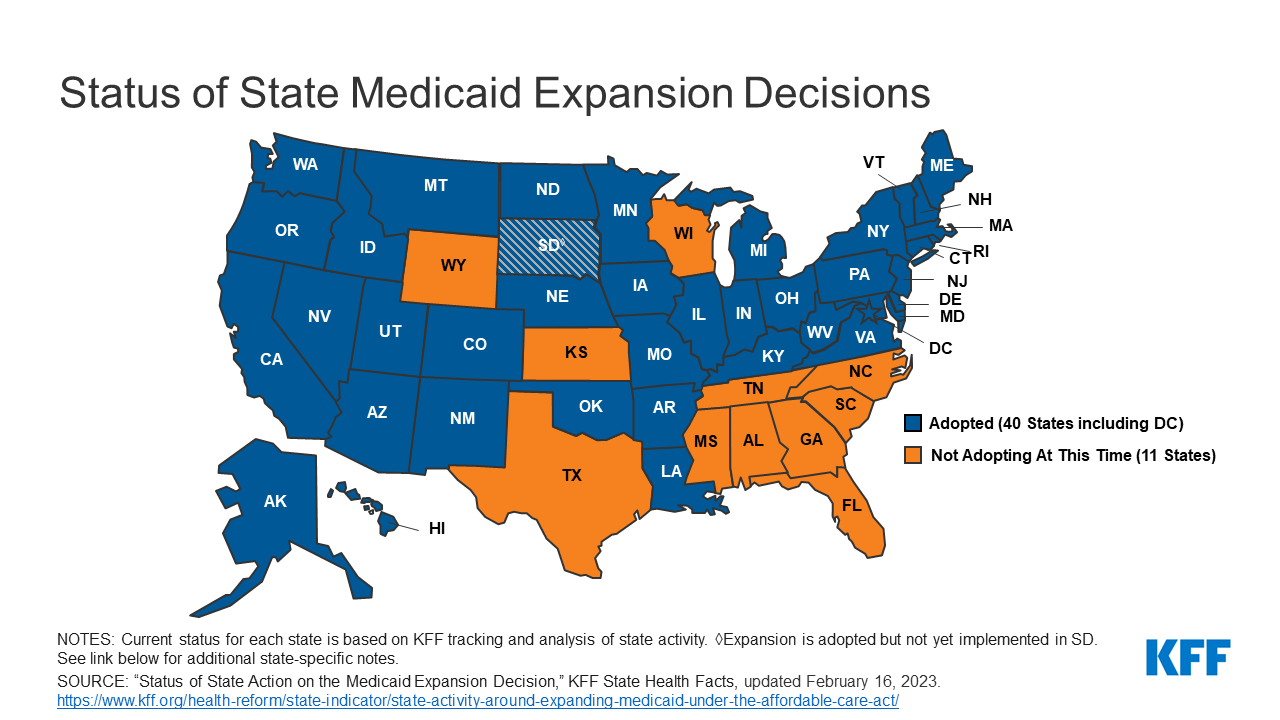
Rural hospitals are struggling all over the nation because of population declines, soaring labor costs and a long-term shift toward outpatient care. But those problems have been magnified by a political choice in Mississippi and nine other states, all with Republican-controlled legislatures.

They have spurned the federal government’s offer to shoulder almost all the cost of expanding Medicaid coverage for the poor. And that has heaped added costs on hospitals because they cannot legally turn away patients, insured or not.

States that opted against Medicaid expansion, or had just recently adopted it, accounted for nearly three-fourths of rural hospital closures between 2010 and 2021, according to the American Hospital Association.

Opponents of expansion, who have prevailed in Texas, Florida and much of the Southeast, typically say they want to keep government spending in check. States are required to put up 10 percent of the cost in order for the federal government to release the other 90 percent.

But the number of holdouts is dwindling. On Monday, North Carolina became the 40th state to expand Medicaid since the option to cover all adults with incomes below 138 percent of the poverty line opened up in 2014 under the terms of the 2010 Affordable Care Act. The law, a major victory for President Barack Obama, has continued to defy Republican efforts to kill or limit it.

“This argument about rural hospital closures has been an incredibly compelling argument to voters,” said Kelly Hall, the executive director of the Fairness Project, a national nonprofit that has successfully pushed ballot measures to expand Medicaid in seven states.

In Mississippi, one of the nation’s poorest states, the missing federal health care dollars have helped drive what is now a full-blown hospital crisis. Statewide, experts say that no more than a few of Mississippi’s 100-plus hospitals are operating at a profit. Free care is costing them about $600 million a year, the equivalent of 8 percent to 10 percent of their operating costs — a higher share than almost anywhere else in the nation, according to the state hospital association.

Expanding Medicaid would uncork a spigot of about $1.35 billion a year in federal funds to hospitals and health care providers, according to a 2021 report by the office of the state economist.

And it would guarantee medical coverage to some 100,000 uninsured adults making less than $20,120 a year in a state whose death rates are at or near the nation’s highest for heart disease, stroke, diabetes, cancer, kidney disease and pneumonia. Infant mortality is also sky-high, and the Delta has the nation’s highest rate of foot and leg amputations because of diabetes or hypertension.

Health officials blame those numbers in part on the high rate of uninsured residents who miss out on preventive care.

“I can tell you I have a number of patients who are on dialysis with renal failure for the rest of their life because they couldn’t afford the medication for their blood pressure, and that caused their kidneys to go bad,” said Dr. John Lucas, a Greenwood Leflore surgeon.

Among Mississippi adults, only disabled people and parents with extremely low incomes, along with most pregnant women, are eligible for Medicaid. Many of the ineligible are also too poor to qualify for the tax credits for insurance under the Affordable Care Act, leaving them without affordable options.

The same is true for close to two million other Americans who live in the states that have not expanded Medicaid. Three in five are adults of color, according to a 2021 study by the Center on Budget and Policy Priorities, a nonprofit research group. In Mississippi, more than half are Black.

Gov. Tate Reeves, a Republican, and key G.O.P. state lawmakers argue that a bigger Mississippi program is not in taxpayers’ best interest. The governor says the state’s $3.9 billion surplus would be best used to help eliminate Mississippi’s income tax.

“Don’t simply cave under the pressure of Democrats and their allies in the media who are pushing for the expansion of Obamacare, welfare and socialized medicine,” Mr. Reeves said in his annual State of the State address in January.

Opponents also argue that the newly insured would become dependent on Medicaid and therefore be less likely to work. “I believe we should be working to get people off Medicaid as opposed to adding more people to it,” said Philip Gunn, the powerful Republican House speaker.

Yet in Mississippi’s Delta, a flat swath of fields of corn, soybeans and other crops nearly as big as Delaware, access to any kind of medical care is drying up for lack of money. More than 300,000 people live here, nearly 35 percent of them Black. About the same percentage live in poverty, a rate three times the national average.

Dr. Daniel P. Edney, the state’s top health officer, said he did not set Medicaid policy, and he has been careful not to take sides. But he predicted emerging health care deserts where women would have to travel long distances to deliver babies and more sick people would die because they could not gain access to care.

Of the state’s hospitals, “I have maybe heard of two that are generating any profit,” he said. When he asks hospital executives if Medicaid expansion would help their balance sheets, he said, “they say it’s a game changer.”

He predicted that five hospitals would soon downgrade into mere emergency rooms, where doctors work to stabilize patients, then transfer them to the nearest hospital.

If that happens, some of the sickest will not make it, said Dr. Jeff Moses, an emergency room physician at Greenwood Leflore.

“Where are they going? Davy Jones’s locker,” he said. “It is very dark, and I’m not exaggerating this. I just can’t imagine what will happen to this community if this hospital closes.”

Nine years after states began expanding Medicaid, evidence is growing that broader coverage saves lives. In a 2021 analysis, researchers for the National Bureau of Economic Research estimated that in one four-year period, 19,200 more adults aged 55 to 64 survived because of expanded coverage, and nearly 16,000 more would have lived if that coverage was nationwide.

Other studies suggest why: Making medical care more affordable led to increases in regular checkups, cancer screenings, diagnoses of chronic diseases and prescriptions for needed medicines.

Especially during the first six years of the Medicaid expansion, when the federal government picked up 95 to 100 percent of the cost, many states found that the program was a net fiscal gain. Some states have imposed taxes on hospitals or health care providers to cover their share of the expense, the same strategy used to help fund other Medicaid costs.

Now the federal government is offering a new incentive for the holdouts: As part of a 2021 pandemic relief measure, it agreed to temporarily pay a higher proportion of costs for some existing Medicaid patients if states broadened eligibility.

Mississippi’s office of the state economist has estimated that for at least the first decade, those savings and others would fully cover the roughly $200 million a year that Medicaid expansion would cost the state government.

Tim Moore, the president of the Mississippi Hospital Association, said expansion was “a no-brainer.” The state is so poor, he said, that for every dollar it spends on Medicaid, the federal government pumps four back in.

Polls, including by Mississippi Today and Siena College, appear to show Mississippians support Medicaid expansion, regardless of their political affiliation. Brandon Presley, the Democratic candidate for governor, is highlighting hospital closures as a reason to deny Mr. Reeves a second term in elections this November.

In a possible sign of political nervousness, the governor and the legislature recently agreed to extend Medicaid coverage to pregnant women for 12 months after they give birth, prolonging a federal pandemic-era policy.

The legislators are also trying to prop up the hospitals with a one-time infusion of $83 million or more. But that is a pittance compared with what the state has given up in Medicaid payments.

The state has lost four hospitals since 2008, according to the hospital association, and Dr. Edney, the state health officer, said that it would inevitably lose more. He said he worried most about health care access in the Delta, where he grew up, the child of working-class parents with no health insurance.

On Saturday, Representative Bennie Thompson, Democrat of Mississippi, said victims of a tornado that struck the Delta last week had to be ferried 50 miles away for medical treatment because the local hospital had no power. More Medicaid dollars, he said, would have equipped it with an emergency generator.

An hour due west from Greenwood Leflore, another major hospital, run by Delta Health System, is also in serious trouble. Licensed for more than 300 beds, the hospital one day last month held just 72 inpatients.

Thirty-two of them were kept in the emergency department, partly because of nursing cuts. One upshot is that patients seeking emergency care now wait an average of two hours, four times as long as they should, according to Amy Walker, the chief nursing officer. Some simply walk out.

The neonatal intensive care unit closed last July. Now babies in trouble must be ferried by ambulance or helicopter 125 miles south to Jackson.

Iris Stacker, the chief executive, said the hospital could remain open through the end of the year; after that, she makes no promises. She is hoping federal grants will help keep the doors open, despite the state’s failure to expand Medicaid.

But she said, “It’s very hard to ask the federal government for more money when you have this pot of money sitting here that we won’t touch.”

A top message on Greenwood Leflore’s website is now a request for donations. So far, the hospital has raised less than $12,000.

Mike Hardin, a 70-year-old retiree, was one of a handful of inpatients one recent day. He had come to the emergency room two days before with slurred speech. Doctors quickly diagnosed a stroke and now were sending him home with revised medications.

“They have to do something to keep this hospital open,” he said as he was wheeled out of his room. “The people around this area wouldn’t have any place else to go.”

The hospital’s outpatient clinics are largely still in business, and doctors there say their caseloads are full of impoverished patients who should have been treated earlier.

Dr. Abhash Thakur, a cardiologist, said he routinely saw patients in the late stages of congestive heart failure who had never seen a cardiologist or been prescribed heart medication. Some have as little as 10 percent of their heart function left.

“They are not the exception,” he said, before examining a 52-year-old man who uses a wheelchair because of his heart disease. “Every day, probably, I will see a few of them.”

Dr. Raymond Girnys, a general surgeon, had just treated a man in his late 50s. He said that a week earlier, the man had punctured his foot on a sharp stick while walking in his tennis shoes in a field.

The man did not seek medical attention until the foot became infected because he was poor and uninsured. Dr. Girnys pointed out the irony: If his patient lost his foot, he would become eligible for Medicaid because then he would be disabled.

“If they had insurance, they wouldn’t be afraid to seek care,” he said.

Experts say that no more than a few of Mississippi’s 100-plus hospitals are operating at a profit.
Three things to watch during the House Ways and Means hearing with Becerra

https://www.washingtonpost.com/politics/2023/03/28/ten-states-still-spurn-medicaid-expansion-they-unlikely-budge-soon/

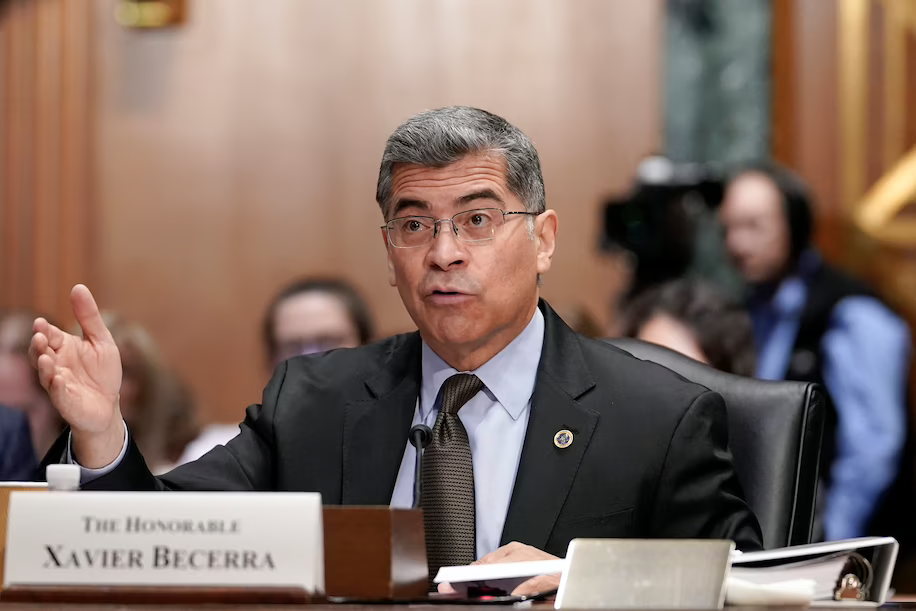
On tap today: Health and Human Services SecretarXavier Becerra will defend President Biden’s fiscal 2024 budget before the Republican-controlled House Ways and Means Committee this afternoon. Becerra will also appear before a House Appropriations subcommittee at 10 a.m.

What to expect: There are three main proposals in the president’s budget request that panel Chair Jason Smith (R-Mo.) and other Republicans on the panel plan to grill Becerra on during the hearing, according to people familiar with the matter. Those include:

While Becerra was summoned to Capitol Hill to discuss the president’s budget, lawmakers could use the opportunity to quiz him on a variety of health policies. He’s likely to face criticism and tough questions from Republicans on the federal health department’s final rule addressing the Affordable Care Act’s “family glitch,” its implementation of surprise billing protections and its strategy to combat illicit fentanyl trafficking, people familiar with the matter said.

What we’re watching tomorrow: Becerra will testify in front of the House Energy and Commerce health subcommittee at 10 a.m. Wednesday.

Ten states still spurn Medicaid expansion — and they’re unlikely to budge soon

https://www.washingtonpost.com/politics/2023/03/28/ten-states-still-spurn-medicaid-expansion-they-unlikely-budge-soon/

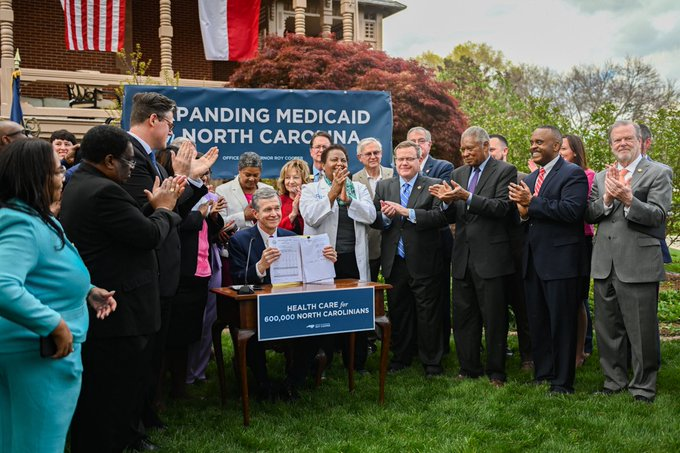
North Carolina is poised to become the 40th state to expand Medicaid. 

Yesterday afternoon, Gov. Roy Cooper (D) signed legislation crafted by the state’s two Republican leaders, an unlikely deal that puts an end to an over-a-decade-long political battle. 

But North Carolina may be the last of the Medicaid expansion holdout states to reverse course for a while. Supporters of extending the safety net coverage to hundreds of thousands more low-income adults have repeatedly run into Republican resistance in the 10 states that have long refused the Obamacare program — and another victory isn’t imminent. 

“Now we’re down to some of the hardest states to get expansion through,” said Frederick Isasi, the executive director of Families USA, a left-leaning consumer health lobby, though he expressed confidence the remaining states would eventually budge. 

Over the years, some steadfast GOP opposition to Medicaid expansion has softened, such as in North Carolina. The 2010 Affordable Care Act required states to extend the safety net program up to 138 percent of the federal poverty level, but the Supreme Court made doing so voluntary. 

The ballot measures

Since 2017, advocates have put expanding Medicaid directly to voters in seven conservative-leaning states. They argued it would bring federal taxpayer dollars back to their state and help struggling rural hospitals — and the ballot measures passed in every instance. 

But that strategy may be almost exhausted. Three of the holdout states have had citizen-led ballot measure processes — Florida, Wyoming and Mississippi — but at the moment, that path only appears viable in one state.

That’s Florida, where Medicaid advocates have their eye on fall 2026. Florida Decides Healthcare, a political committee supporting expansion, estimates it’ll cost roughly $10 million just to gather enough signatures to get the measure on the ballot, according to Jake Flaherty, the group’s campaign manager. 

  • Even if that happens in a few years, there’s another hurdle. An amendment to the constitution must garner the support of 60 percent of voters. Only once — in Idaho — has that happened for Medicaid expansion. 

The prospects are dim in the near future for the other two states. Wyoming advocates don’t believe they can use the ballot measure process to expand Medicaid, citing a mandate that an initiative not “make appropriations.” The next best chance is likely 2025, when the state legislature convenes again for a general session, according to Nate Martin, the executive director of Better Wyoming.

And in Mississippi, advocates filed paperwork to launch an expansion campaign in 2021. But it had to disband a month later when the state Supreme Court nullified the ballot measure process until state lawmakers fixed it, which the legislature failed to do this year, the Clarion Ledger reported.

Other states

North Carolina is the first state to expand Medicaid through the legislature since Virginia in 2018. And it’s still not finalized: The expansion is tied to the state passing a new budget, which is expected to occur over the summer. 

Other states that haven’t expanded include Alabama, Georgia, Kansas, South Carolina, Tennessee, Texas and Wisconsin. Republicans opposing expansion have often cited fiscal concerns with the policy, which supporters push back against and have pointed to extra two-year incentives signed into law in 2021.  

Several advocates said they’re watching Alabama closely, and that Gov. Kay Ivey (R) has the power to expand Medicaid without the GOP-led legislature’s sign-off. Last week, a House committee held an educational meeting on addressing the state’s coverage gap, the Alabama Reflector reported. In a statement to The Health 202, spokesperson Gina Maiola wrote that “the governor’s concern remains how the state would pay for it long-term.”

And in Kansas, Democratic Gov. Laura Kelly has been pushing the issue for years. But it’s an uphill battle to get it passed this year amid some Republican opposition, Will Lawrence, her chief of staff, acknowledged in an interview. Lawrence said he believes if a deal can be reached with the House speaker at some point, then the Senate may come along.

  • “We’ll continue to push those conversations,” Lawrence said. He added: “If it doesn’t happen this session, then we’ll be working over the summer and fall, like we did a few years ago, and we’ll come back with a strong push in January of next year.”

Biden administration proposes overhaul of organ transplant system

https://mailchi.mp/6f4bb5a2183a/the-weekly-gist-march-24-2023?e=d1e747d2d8

On Wednesday, the Health Resources and Services Administration (HRSA), a division of the Department of Health and Human Services, announced plans to modernize the US organ transplant system. For 40 years, the United Network for Organ Sharing (UNOS) has held an exclusive contract to facilitate the retrieval, matching, and distribution of all transplanted organs, handling a record 43K transplants last year. 

Starting this fall, HRSA will split out contracts and open the bidding process up to competition, hoping to increase efficiency, accountability, and transparency. While the Biden administration has asked Congress to double the funding appropriated to HRSA for the transplant system, it has the authority to institute many of these changes without Congressional action. 

The Gist: The US organ transplant system has long received criticism from patients and providers.With over 100K Americans currently on organ transplant waiting lists, and 6K dying annually while waiting (a group that is disproportionately Black and Latino), there’s vast room for improvement.

The government’s efforts to increase competition to solve operational and distribution challenges is overdue, but other aspects of the transplant process, including performance evaluation, deserve reassessment as well. For example, providers are scored on the survival rates of patients who receive transplants, but not those who die on waiting lists. Thus, they are disincentivized to operate on higher-risk patients or utilize organs that are potentially transplantable but have imperfections.

Hospitals and transplant specialists must take an active role in ensuring the overhauled process provides comprehensive reform, driven by the best interests of patients. 

California partners with Civica Rx to produce generic insulin

https://mailchi.mp/6f4bb5a2183a/the-weekly-gist-march-24-2023?e=d1e747d2d8

This week, California Governor Gavin Newsom announced the state has struck a 10-year, $50M partnership with nonprofit drugmaker Civica Rx to produce three versions of generic insulin.

These are intended to be made available nationwide for list prices of no more than $30 a vial.

Production is slated to begin in late 2023 at Civica’s Petersburg, VA plant, and Food and Drug Administration approval will be required. This deal advances California’s CalRx initiative to produce and distribute generic drugs at low costs; according to a Newsom administration official, the low-cost insulin will be available to state residents through mail-order and retail pharmacies. This is the first state-level partnership for Civica, a health system collaborative whose members now cover a third of all US hospital capacity.

The Gist: Since Congress capped insulin copays for Medicare beneficiaries at $35 per month, there’s been a remarkable sea change in the pricing of the drug. Last week, Sanofi joined Eli Lilly and Novo Nordisk, the three of which together control 90 percent of the US insulin market, in dramatically reducing insulin list prices and capping out-of-pocket costs (including for the uninsured), bringing them in line with the costs now paid by Medicare beneficiaries. 

Given that most Americans needing insulin are already covered by these policies, the impact of California’s initiative may be muted. However, it sets an important precedent for state partnership in pharmaceutical production that will surely expand to other drugs (Newsom stated generic naloxone could be next)—and works to position Newsom as an advocate for lower drug costs, should he seek higher office. 

North Carolina legislature approves Medicaid expansion

https://mailchi.mp/6f4bb5a2183a/the-weekly-gist-march-24-2023?e=d1e747d2d8

On Thursday, legislators in North Carolina’s Republican-led General Assembly passed a bill to expand Medicaid eligibility to more than 600K low-income residents. The bill is expected to be signed into law by Democratic Governor Roy Cooper, with expanded coverage beginning in 2024. The Tar Heel State is poised to become the 40th state to expand Medicaid through the Affordable Care Act, although it must still appropriate funding in upcoming budget negotiations. The North Carolina Healthcare Association, which represents the state’s health systems, helped get the deal over the line by supporting language that repeals state certificate of need (CON) review in certain instances, including ambulatory surgical centers (ASCs), behavioral health and substance treatment beds, and capital technology replacements costing below $3M.

The Gist: North Carolina legislators have been attempting to expand Medicaid since 2019. It’s notable that the state’s hospitals viewed the benefits of broader public insurance to be worth the elimination of CON rules restricting development of ambulatory surgery centers, which will surely increase competition from new insurer- and private equity-backed facilities.

North Carolina will become the fourth state to expand Medicaid using additional incentives from the American Rescue Plan, and there’s a chance Kansas will be next, given the recent push by Democratic Governor Laura Kelly.

Prospects for Medicaid expansion in the remaining nine states seem slim at best. 

Biden administration announces three new drug pricing pilots

https://mailchi.mp/89b749fe24b8/the-weekly-gist-february-17-2023?e=d1e747d2d8

This week, the Biden administration released a roadmap for implementing three new drug pricing pilots through the Centers for Medicare and Medicaid Innovation (CMMI). These models seek to offer certain common generic drugs to Medicare beneficiaries for two dollars per month, test new ways for how Medicaid pays for expensive cell and gene therapies, and explore alternative reimbursement models for drugs that receive accelerated Food and Drug Administration approval. 

The Gist: On the heels of last week’s State of the Union Address, the announcement of these pilots exemplifies the kind of health policy efforts we expect across the remainder of President Biden’s current term: smaller, incremental initiatives to curb healthcare costs at the margins.

But given that all these initiatives have lengthy timelines, in part to allow for industry input, they will likely require the support of the next administration, Biden’s or otherwise, to reach full implementation

Congressional control still undecided, but voters protect and expand state-level healthcare access in midterms

https://mailchi.mp/cfd0577540a3/the-weekly-gist-november-11-2022?e=d1e747d2d8

While the final balance of the House and Senate are still unknown after Tuesday’s midterm elections, both chambers are expected to be narrowly divided. 

Ballot initiatives on reproductive health produced more unambiguous results, with three states—California, Michigan, and Vermont—amending their constitutions to affirm reproductive rights, and two states—Kentucky and Montana—voting down proposals that would have imposed greater legal barriers to abortion access. South Dakota became the seventh, and likely final, state to expand Medicaid via ballot initiativemaking an additional 28K South Dakotans eligible for coverage, and reducing the number of states that have yet to expand Medicaid to 11.

The Gist: Democrats beat expectations, bucking historical trends in which midterm voters swing strongly against the President’s party. But healthcare did not feature prominently in voters’ choices, with this being the first election in over a decade where the state of the Affordable Care Act and protecting individuals’ access to care and coverage was not a significant choice driver. 

The fallout from the Supreme Court’s decision in June to overturn Roe v. Wade had a clear impact on voter turnout, with abortion tying inflation for voters’ top concern in exit polls. At the state level, South Dakota voters approved Medicaid expansion, where over 40 percent of the state’s uninsured adults could now gain access to coverage—another clear sign that voters, regardless of party affiliation, are behind the ACA’s expanded vision for the safety net program. 

Moving forward, a closely divided Congress is unlikely to take on significant healthcare legislation, regardless of who ultimately holds the House and Senate.

GOP floats Medicare changes while ducking details

https://www.axios.com/2022/11/03/gop-floats-medicare-reform

Some House Republicans aren’t waiting for the election to think about overhauling Medicare. But it’s hard to tell if there are specifics behind the talking point.

Why it matters: Past GOP attempts to cut Medicare landed with a thud, and Democrats in recent weeks have been hammering on the message that Republicans are intent on gutting the program.

  • The critical moment could be next year’s talks on the debt ceiling, if Republicans flip one or both houses of Congress.

What they’re saying: “If we’re going raise the debt ceiling, we can’t just raise it without focusing on some way to address the debt and the deficit,” Rep. Bruce Westerman (R-Ark.), a member of the House GOP’s health care task force, told Axios, adding Medicare should be made “sustainable over time.”

  • “We’re going to have a lot of hearings on this,” Rep. Jason Smith (R-Mo.), the current top Republican on the Budget Committee who wants to move up to chairman of Ways and Means, told Axios. “I’m not going to get into the inner details.”
  • “Everything is on the table, we haven’t really nailed down any specific policies one way or the other,” Rep. Buddy Carter (R-Ga.), who is running to chair the House Budget panel. “I think it could be wrapped up with that [debt ceiling talks], that’s shaping up to be pretty dynamic.”

Yes, but: Not all Republicans are eager to kick off their time in the majority with another grinding health care fight against a Democratic president. Health policy experts are also skeptical of how realistic Medicare reform may be, recalling failed GOP agendas from the pre-Trump years.

  • Senate GOP Leader Mitch McConnell (R-Ky.) earlier this year rebuked a plan from Sen. Rick Scott (R-Fla.) that would sunset all federal legislation every five years — including entitlement programs. McConnell told reporters a plan that “sunsets Social Security and Medicare within five years … will not be part of the Republican Senate majority agenda.”
  • House GOP Leader Kevin McCarthy (R-Calif.) raised eyebrows when he told Punchbowl News last month that he wouldn’t “predetermine” if Medicare and Social Security would be involved in talks on raising the debt ceiling. McCarthy later tried to clarify in a CNBC interview that “I never mentioned Social Security or Medicare.”
  • Joseph Antos, a senior fellow and health care scholar at the American Enterprise Institute, puts the odds of Medicare reform as “pretty unlikely,” adding, “I don’t see any major changes happening over the next two years, and I think Republicans might wait to see what Medicare policies the Republican presidential candidate will push.”

The big picture: While a GOP Medicare push is not certain, Democrats are seizing on the possibility.

  • “They’re coming after your Social Security and Medicare in a big way,” President Biden said Tuesday in a speech in Florida, saying Republicans would create “chaos” by risking government default over demands to raise the debt limit next year.

Between the lines: Republicans are not being specific about the changes they would push. But there’s a limited universe of possibilities.

  • The proposed budget of the Republican Study Committee, an influential group of House Republicans, includes proposals like raising the Medicare eligibility age to 67 to align with Social Security, and converting Medicare to a “premium support” system where seniors received a subsidy they could use on private plans competing against traditional Medicare.
  • Tricia Neuman, a Medicare expert at the Kaiser Family Foundation, said such a policy would have “uneven” results, where “some could save money but others might have to pay a whole lot more.”
  • Other GOP-backed Medicare changes are less partisan, like “site neutral” reforms to pay hospital outpatient departments the same rates as doctors’ offices, though hospitals oppose those measures.
  • The Committee for a Responsible Federal Budget, recently issued a fiscal blueprint to reduce the budget deficit, which included reforms such as changing Medicare provider payments, benefit design and payroll taxes, but included nothing about changing eligibility requirements.

The bottom line: Republicans point to the Medicare trust fund’s projected insolvency date in 2028 to argue change is needed to make the program sustainable. But any change is hard, and cuts that hit beneficiaries are not the only way to seek savings.

  • “McCarthy won’t shoot down talk of addressing debt because it matters to him and his caucus, and you can’t do debt without entitlement reform, but he knows at this point there’s no interest from Democrats, and any entitlement reform will require serious political capital from Ds and Rs,” said a former GOP leadership aide. “The last time those conversations happened in a meaningful way was in 2011.”

The next health care wars are about costs

All signs point to a crushing surge in health care costs for patients and employers next year — and that means health care industry groups are about to brawl over who pays the price.

Why it matters: The surge could build pressure on Congress to stop ignoring the underlying costs that make care increasingly unaffordable for everyday Americans — and make billions for health care companies.

[This special report kicks off a series to introduce our new, Congress-focused Axios Pro: Health Care, coming Nov. 14.]

  • This year’s Democratic legislation allowing Medicare to negotiate drug prices was a rare case of addressing costs amid intense drug industry lobbying against it. Even so, it was a watered down version of the original proposal.
  • But the drug industry isn’t alone in its willingness to fight to maintain the status quo, and that fight frequently pits one industry group against another.

Where it stands: Even insured Americans are struggling to afford their care, the inevitable result of years of cost-shifting by employers and insurers onto patients through higher premiums, deductibles and other out-of-pocket costs.

  • But employers are now struggling to attract and retain workers, and forcing their employees to shoulder even more costs seems like a less viable option.
  • Tougher economic times make patients more cost-sensitive, putting families in a bind if they get sick.
  • Rising medical debt, increased price transparency and questionable debt collection practices have rubbed some of the good-guy sheen off of hospitals and providers.
  • All of this is coming to a boiling point. The question isn’t whether, but when.

Yes, but: Don’t underestimate Washington’s ability to have a completely underwhelming response to the problem, or one that just kicks the can down the road — or to just not respond at all.

Between the lines: If you look closely, the usual partisan battle lines are changing.

  • The GOP’s criticism of Democrats’ drug pricing law is nothing like the party’s outcry over the Affordable Care Act, and no one seriously thinks the party will make a real attempt to repeal it.
  • One of the most meaningful health reforms passed in recent years was a bipartisan ban on surprise billing, which may provide a more modern template for health care policy fights.
  • Surprise medical bills divided lawmakers into two teams, but it wasn’t Democrats vs. Republicans; it was those who supported the insurer-backed reform plan vs. the hospital and provider-backed one. This fight continues today — in court.

The bottom line: Someone is going to have to pay for the coming cost surge, whether that’s patients, taxpayers, employers or the health care companies profiting off of the system. Each industry group is fighting like hell to make sure it isn’t them.