Is a ‘cash pay revolution’ coming for hospitals?

https://www.advisory.com/daily-briefing/2022/10/19/cash-pay-hospitals

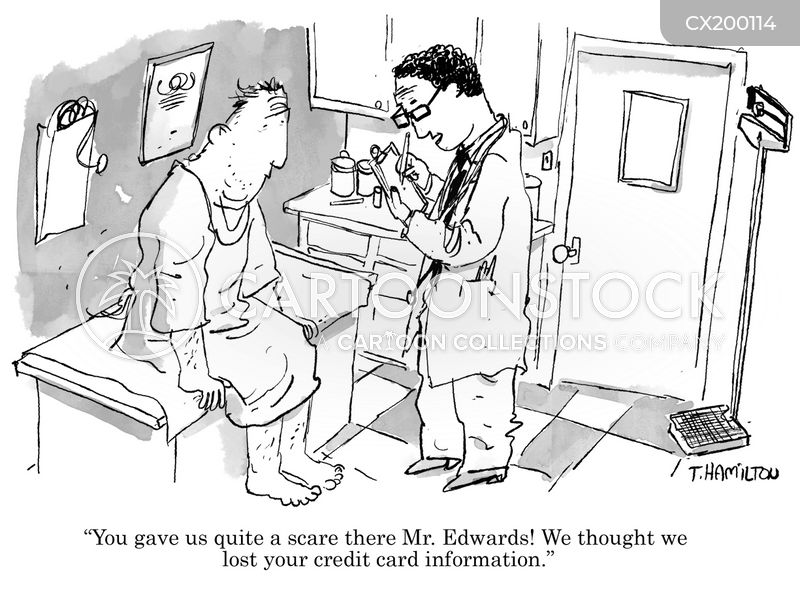
Amid new price transparency laws and growing consumer demand, more hospitals are adding cash pay options for certain health care services instead of just accepting insurance, Nora Tepper writes for Modern Healthcare—and some hospital officials say these offerings are “only going to go up” in the future.

How an ‘anomaly’ is becoming more common

Providers advertising cash pay rates for their services used to be considered an “anomaly,” Tepper writes. Now, the No Surprises Act, the federal price transparency law, and changing consumer expectations may make cash-only payments for health care services more common.

“The market is going there,” said Larry Van Horn, associate professor of management, law, and health policy and executive director of health affairs at Vanderbilt University. “You’ve got direct primary care, you’ve got physicians going and moving into cash pay. You’re gonna have to sit there at some point and say, ‘Wait a minute, they’re taking my business.'”

Although some hospitals and health systems that serve certain populations—such as Pomerene Hospital in Ohio with Amish and Anabaptist patients and the University of Texas MD Anderson Cancer Center with medical tourists—have long had cash-pay systems, it is still a relatively new concept for most providers in the United States.

According to data from Medscape, which surveyed more than 17,000 clinicians, just 17% of clinicians used cash-only, concierge, or direct-pay primary care models in 2020. Primary care providers (PCPs) made up the largest proportion of providers accepting cash pay, with 10% of practices charging patients a flat monthly fee for unlimited services.

“[S]ome providers embracing the cash pay revolution say their bottom line benefits from faster reimbursement, lower administration costs and higher patient retention,” Tepper writes.

In a 2020 report from the Society of Actuaries, almost all PCPs who operated under self-pay models reported “better or much better” personal and professional satisfaction compared to those under a traditional fee-for-service system. In addition, 34% of respondents reported “better or much better” earnings under a direct payment model.

How patients could benefit from cash-pay systems

According to Tepper, hospitals generally offer self-paying patients, who have typically been uninsured individuals or those with high-deductible health plans, lower rates for services compared to commercial insurers since they don’t have to handle administrative work or collections.

In a 2021 study published in JAMA Network Open, researchers analyzed rates for “shoppable” services at 922 hospitals and found that the proportion of hospitals that had lower cash prices than their median commercial negotiated rate ranged from 38.4% for liver tests to 68.5% for C-sections.

During the pandemic, more insured patients began to inquire about what services they could pay cash for, leading some health systems to create new payment models for certain procedures.

For example, Deaconess Health System launched an in-house bundled payment program, which includes cardiology, radiology, and urgent care services, in July 2020. The first year, the health system sold 130 bundled services, which increased to 351 in 2021, and 489 as of August 2022.

For any services not covered by the program, Deaconess offers a 50% discount on cash payments compared to its insurer rate. However, self-paying patients are required to pay the full cost of a procedure upfront.

“The patient has decided to take a bet on themselves,” said Steve Russell, VP and chief revenue cycle officer at Deaconess. “They have a high deductible, they don’t think they’re going to reach that threshold and their thought is, ‘If I don’t use my insurance, what kind of discount can you give me?'”

Separately, CommonSpirit Health‘s Catholic Health Initiatives (CHI) launched its own bundled cash price program in 2018 after noticing that many patients with high-deductible plans would defer care due to affordability concerns. The health system also advertises and sells its services on MDsave, an online marketplace that allows consumers to shop for health care procedures.

“With the No Surprises Act and the price transparency regulations, this has to be something that we offer,” said Jeanette Wojtalewicz, SVP and CFO at CHI Health’s Midwest division. “You’ll see more of this coming.”

The future of cash-pay systems in hospitals

According to Aaron Miri, SVP and chief digital and information officer at Baptist Health South Florida, although few patients are currently paying directly for health care services, the industry is heading towards that direction, which means health systems need to be prepared to meet the demand.

“When you look at the directionality of demand, this is only going to go up,” Miri said. “Patients are going to start seeing their total estimated bill and say, ‘I want to spend my $500 at a health system that was really transparent with me, and made me feel comfortable, versus the health system down the road that I’ve always gone to, but that simply can’t tell me what my actual amount due is.”

To make it easier for patients to directly pay for procedures, some health systems, including Baptist Health, have updated their payment options by adding Apple Pay, Google Pay, or other online payment systems instead of just accepting payment in-person or by phone.

However, even as direct payment models become more common, some insurers are “using their leverage to slow adoption of cash pay,” Tepper writes.

Kimberly Scaccia, VP of revenue management at MercyHealth, said some of the health system’s contracts with insurers prohibit it from offering cash discounts to insured patients.

“Some of the smaller payers, they’re fine with removing [cash pay restrictions],” Scaccia said. “Some of the very, very large payers, they simply will not allow it.”

In addition, Matthew Fiedler, a senior fellow of economic studies at the USC-Brookings Schaeffer Initiative for Health Policy, said clinicians may also be concerned about insurers asking to pay the lower cash rate during contract renewals or jeopardizing a provider’s network position.

“An insurer could say, ‘We’re gonna put this provider out-of-network, but we’re gonna put them in a preferred out-of-network position in our benefit design, where the cost-sharing is not that onerous, because we know they have this really good cash price,'” Fiedler said.

Large health systems accused of valuing “profits over patients.”

https://mailchi.mp/b1e0aa55afe5/the-weekly-gist-october-7-2022?e=d1e747d2d8

In an explosive two-part series published late last month, New York Times reporters Jessica Silver-Greenberg and Katie Thomas cast a spotlight on the revenue collection tactics used by two of the nation’s largest not-for-profit health systems, Renton, WA-based Providence and Cincinnati-based Bon Secours Mercy Health.

The articles detail how Providence leveraged help from consulting firm McKinsey & Company to collect sums as small as $2 from patients pressured to pay anything they could for their care, even if many were actually eligible for free care under state law. Bon Secours was scrutinized for conduct in its Richmond, VA market, where it was portrayed as leveraging safety-net facility Richmond Community Hospital for its 340B license, while stripping out essential services needed by the surrounding lower-income community.

Both health systems have responded to the Times investigation, Providence by refunding payments collected from hundreds of low-income patients, saying they were charged due to an “unintended error,” and Bon Secours by claiming the allegations in the article were “baseless” and stating that it has invested millions into its Richmond Community Hospital.    

The Gist: Providence and Bon Secours Mercy Health are far from the only health systems accused of pursuing patient collections though any means available, which makes these articles especially worrisome to many system executives: the tactics deployed by the two systems are relatively common across the industry.

Given current margin pressures, health systems are already beginning to double down on aggressive revenue cycle management. But as most are also not-for-profit organizations who anchor their missions in providing community benefit, their tactics must also pass muster when judged in the court of public opinion. 

Critics say Mark Cuban’s pharmacy isn’t tackling the big issue: brand-name drugs

Mark Cuban’s pharmacy, Cost Plus Drug Co., has hundreds of drugs marked at discounted prices, but some pharmacy experts say there’s a larger problem that needs fixing, CNBC reported July 28. 

The online pharmacy launched in January with about 100 drugs, and by its one-year anniversary, plans to have more than 1,500 medications, according to the company’s website. The business model, which allocates for a $3 pharmacy dispensing fee, $5 shipping fee and a 15 percent profit margin with each order, aims to uproot the pharmaceutical industry, which has faced criticism for years about its opaque business practices

Gabriel Levitt, the president of PharmacyChecker, a company that monitors the cheapest drug prices, told CNBC there’s more to be done.

“As much as I support the venture, what they’re doing does not address the big elephant in the room,” Mr. Levitt said. “It’s really brand-name drugs that are increasing in price every year and forcing millions of Americans to cut back on medications or not take them at all.”

Brand-name drugs are 80 percent to 85 percent more expensive than generics since brand-name drugs have to repeat clinical tests to prove efficacy, according to the FDA. Cost Plus Drug Co. only offers generics. Mr. Cuban told CNBC he hopes to sell brand-name medications “within six months,” but added that it’s a tentative timeline.

Insurers raise Affordable Care Act (ACA) plan premiums next year

https://mailchi.mp/efa24453feeb/the-weekly-gist-july-22-2022?e=d1e747d2d8

After a few years of relatively unchanged monthly premiums, a Kaiser Family Foundation analysis of 72 rate filings for 2023 finds a median 10 percent increase. Insurers say the biggest driver is rising medical costs, driven by higher rates for provider services and pharmaceuticals, as well as a return to pre-pandemic utilization levels. Insurers aren’t expecting COVID-19 or federal policy changes—including a potential extension of enhanced subsidies—to have much of an impact on rates. 

The Gist: High inflation and the growing wage-price spiral have left providers with much higher costs, which is sure to drive up the overall cost of healthcare. Where provider systems have the leverage to demand higher rates from insurers, this will inevitably drive up premiums—an effect that is already starting to show up in the individual insurance market.

If Congressional Democrats are able to extend ACA subsidies, most ACA enrollees won’t actually feel these premium increases, but as contracts in the group market come up for renewal, we’d expect inflation in employer-sponsored premiums as well. Given the cost-sharing now built into most benefit plans, individual consumers will likely see healthcare join gas, food, and housing as household costs that are experiencing unsustainable inflationary increases.

Finances of older Americans being dinged by high health costs, survey finds

https://www.healthcaredive.com/news/finances-older-americans-being-dinged-high-health-costs-survey-finds/625545/

Dive Brief:

  • Healthcare costs are becoming an increasing source of stress for older Americans, leading to some paring back on treatment, medicines or other spending on food and utilities — or skipping them altogether — to cover medical costs, according to new research conducted by Gallup in partnership with West Health.
  • The survey of U.S. adults released Wednesday found that almost half of adults aged 50 to 64 and more than a third of adults 65 and older are concerned they won’t be able to pay for needed healthcare services in the next year. That’s nearly 50 million older Americans.
  • About 80 million adults above age 50 see healthcare costs as a financial burden. Becoming eligible for Medicare seems to assuage those worries slightly, however: 24% of adults aged 50 to 64, who are not yet eligible for the federal health insurance, said health costs were a major burden. That percentage fell to 15% for those aged 65 and above.

Dive Insight:

The West Health-Gallup survey, conducted in September and October of 2021, is the latest vignette of how exorbitant healthcare costs in the U.S. are increasingly impacting the financial stability of Americans, especially those of retirement age who are more likely to have expensive medical needs.

Out-of-pocket healthcare expenses for adults aged 65 and older increased 41% from 2009 to 2019, according to HHS data. That population spends on average almost double their total expenditures on healthcare costs compared with the general population, despite Medicare coverage.

That cost problem is only likely to worsen amid surging inflation raising the cost of groceries, gas and other needed items. Additionally, U.S. demographics shifts are an added stressor. By 2030, the percentage of Americans 65 years and older will outweigh those under the age of 18, a first in the country’s history, according to Census Bureau projections.

The resulting stress on the Medicare program could impact benefits and cost for beneficiaries.

As sizable numbers of Americans 65 and older face tangible tradeoffs to pay for healthcare, many more Americans in the next decade will incur health and financial consequences because of high costs,” researchers wrote in the report.

The West Health-Gallup poll found about one in four adults aged 65 and above cut back on food, utilities, clothing or medication to cover healthcare costs. That’s compared to three in 10 for adults aged 50 to 64.

Older women and Black adults were more likely to forgo basic necessities to pay for healthcare than other demographics.

More than 20 million Americans aged 50 years and above said there was a time within the last three months when they or a family member was sick, but didn’t seek treatment due to cost.

More than 15 million Americans said they or a family member skipped a pill or dose of prescribed medicine in order to save money.

Researchers urged policymakers to act to improve efficiency and reduce the costs of medical care and prescription drugs in the U.S. Congress has yet to take meaningful action to lower medical costs, despite rising support for government intervention and high-profile proposals from the Biden administration.