US Supreme Court Agrees to Review Affordable Care Act — for the Third Time

US Supreme Court Agrees to Review Affordable Care Act — for the Third Time
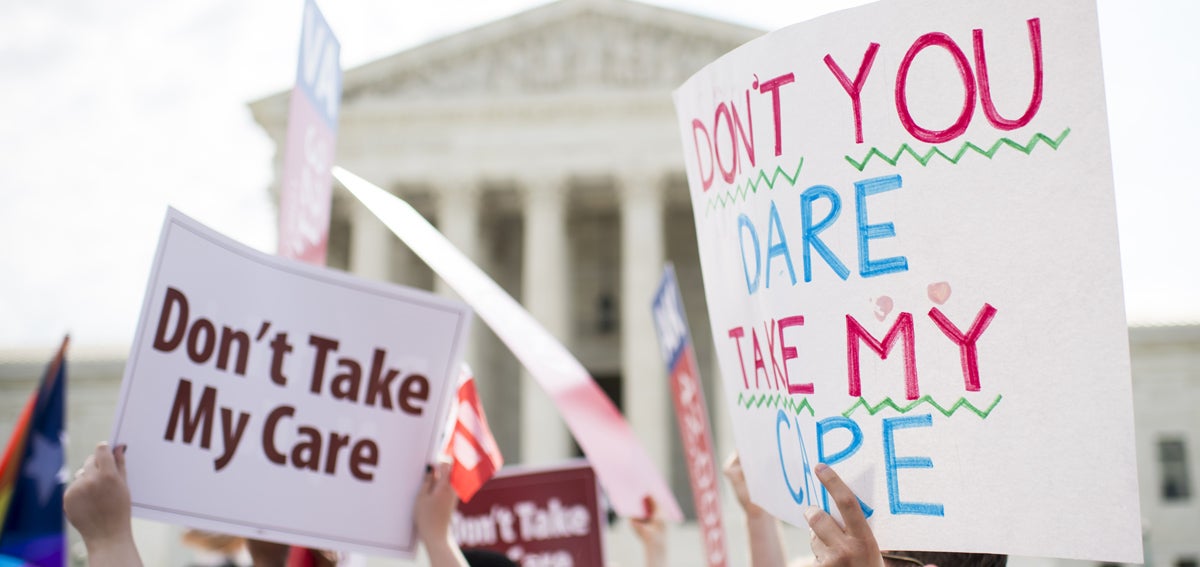
Image result for US Supreme Court Agrees to Review Affordable Care Act — for the Third Time

The fate of the Affordable Care Act (ACA) is once again in the hands of the US Supreme Court. On March 2, the court announced that it would hear a case challenging the health law, a wide-ranging measure that “touches the lives of most Americans, from nursing mothers to people eating at chain restaurants,” wrote Reed Abelson, Abby Goodnough, and Robert Pear in the New York Times. This will be the third time the court will rule on the ACA since President Barack Obama signed it on March 23, 2010.Essential Coverage

“The justices will review a federal appeals court decision that found part of the law . . . unconstitutional and raised questions about whether the law in its entirety must fall,” reported Robert Barnes in the Washington Post. He noted that it is one of the first cases accepted for the Supreme Court term beginning October 5, which means a decision is not likely until spring or summer of 2021.

Should the court overturn the ACA, many Americans would lose the benefits afforded under the law. As Dylan Scott wrote in Vox, “everything would go: protections for preexisting conditions, subsidies that help people purchase insurance, the Medicaid expansion.”

Let’s break down each of those categories.

Protections for Preexisting Conditions

Before the ACA, people with preexisting conditions, which included common medical conditions like asthma, diabetes, and cancer, were denied health insurance or charged higher insurance premiums. Important benefits like maternity care and mental health services frequently were carved out of the benefit packages in health plans sold in the individual market — that is, outside of employer-sponsored coverage. An issue brief (PDF) by the Department of Health and Human Services estimated that up to 133 million nonelderly Americans have a preexisting condition.

As Andy Slavitt, the former administrator of the Centers for Medicare & Medicaid Services under President Obama, wrote on Twitter, examples of being charged more included “$4,270 more for asthma, $17,060 for pregnancy, and $160,510 for metastatic cancer.”

Under the ACA, insurers are no longer allowed to deny coverage or charge higher prices to people with preexisting conditions. But if the Supreme Court rules against the ACA, these protections would vanish.

Medicaid Expansion

A key provision of the ACA is expanded eligibility for enrollment in Medicaid, a federally funded state option adopted so far by 36 states and the District of Columbia. More than 12 million adults with low incomes have gained Medicaid coverage through this provision, and research comparing expansion and nonexpansion states has linked expanded Medicaid access to better health outcomes.

According to the Urban Institute, if the ACA is repealed, “the uninsurance rate across all expansion states would increase from 9% of the nonelderly under current law to 17% under repeal. In nonexpansion states, the uninsurance rate would increase from 15% of the nonelderly to 21%.” Many of the newly uninsured would be the result of losing the Medicaid coverage the ACA provided.

“The uninsured rate for Black Americans would increase from 11% to 20% without Obamacare,” Scott reported. “There would also be a dramatic spike in uninsurance among Hispanics.”

Subsidies to Help People Purchase Insurance

To expand access to affordable health insurance for those who can’t get it through their jobs, the ACA offers federal subsidies to people with low and moderate incomes who buy insurance through the ACA insurance exchanges. The subsidies take the form of premium tax credits and cost-sharing subsidies.

Approximately 9.2 million Americans receive federal subsidies, reported Abelson, Goodnough, and Pear. “On average, the subsidies covered $525 of a $612 monthly premium for customers in the 39 states that use the federal marketplace,” they wrote.

If the ACA is overturned and the subsidies are eliminated, the cost of health insurance would become unaffordable for many of those 9.2 million people, and the uninsured population would soar.

Polls Show Public Support for the ACA

According to the February 2020 KFF Health Tracking Poll, 55% of Americans say they now favor the ACA, a new high compared to approval ratings below 40% as recently as 2016. Today 85% of Democrats express favorable views of the law, compared to 53% of independents and 18% of Republicans.

Though overall support for the health law remains partisan, many of its provisions have broad bipartisan support, KFF staff wrote in Health Affairs. For instance, large majorities of Democrats (94%), independents (88%), and Republicans (77%) have a favorable view of the ACA’s health insurance exchanges, and most Democrats (80%), independents (71%), and Republicans (54%) view the Medicaid expansion favorably.

Rising Health Costs Worsen California’s Coronavirus Threat

The global spread of the novel coronavirus disease known as COVID-19 puts threats to the ACA into perspective. Despite the coverage gains made under the ACA, nearly 28 million Americans remain uninsured, and that number would rise if the law were overturned. As Chris Sloan, associate principal at the consulting firm Avalere Health, told Caitlin Owens in Axios, we “could see uninsured or underinsured patients . . . skipping necessary treatment because they believe they can’t afford it.”

“Some lawmakers are concerned that the tens of millions who are underinsured — Americans with high deductibles or limited insurance — may also be at risk of unexpected expenses as more and more people are exposed to the virus,” Reed Abelson and Sarah Kliff reported in the New York Times.

Kristof Stremikis, director of CHCF’s market analysis and insight team, wrote in a recent blog post, “In an era when the average deductible facing a working family in California now exceeds $2,700, it’s not hard to imagine how many people missed detection and treatment opportunities because they could not afford to pay for them.”

To address some of these concerns, the California Department of Insurance (PDF) and the Department of Managed Health Care (PDF) directed all commercial health plans and Medi-Cal plans to “immediately reduce cost-sharing (including, but not limited to, co-pays, deductibles, or co-insurance) to zero for all medically necessary screening and testing for COVID-19, including hospital, emergency department, urgent care, and provider office visits where the purpose of the visit is to be screened and/or tested for COVID-19.”

Similar policies have been announced by state regulators in Washington and New York, the San Francisco Chronicle reported.



Pharma is on a stock buyback spree

https://www.axios.com/newsletters/axios-vitals-38324a12-c0f6-4610-bbc9-675192c94df1.html?utm_source=newsletter&utm_medium=email&utm_campaign=newsletter_axiosvitals&stream=top

Image result for stock buybacks

Pharmaceutical companies spending on R&D and buybacks.

In 2018, the year the Republican tax law went into full effect, 12 of the largest pharmaceutical companies spent more money buying back their stock than they spent on drug research and development, Axios’ Bob Herman reports.

The big picture: When billions of dollars became available to the biggest drug companies, their main priority was to juice earnings, along with the paydays of their executives and investors — not investments in new treatments or relief for patients who can’t afford their drugs.

By the numbers: Axios analyzed the stock buybacks and R&D expenses of the 12 largest American pharmaceutical companies, by revenue, between 2016 and 2019.

  • These companies repurchased $69.1 billion of their stock in 2018, while spending $65.9 billion on researching new medicines.
  • Over the entire four-year period, stock buybacks for these 12 companies totaled $183 billion, and research expenses were $251 billion. They’re sitting on another $47 billion that has been earmarked for stock buybacks.
  • Two drugmakers — Amgen and Biogen — spent more on stock buybacks for the entire period than they spent on R&D. Amgen’s stock repurchases ($31.6 billion) were more than twice as much as research ($15.3 billion).

What they’re saying: Amgen said in a statement that it repurchased large quantities of stock because the tax law allowed the company to bring home cash that was parked overseas. Biogen submitted a statement saying it has a “deep commitment to R&D,” but did not address questions about its stock buybacks.


Senators demand Cigna, Optum turn over documents on insulin prices

https://www.fiercehealthcare.com/payer/senators-demand-cigna-optum-turn-over-documents-insulin-prices-deliver-subpoena-threat?utm_medium=nl&utm_source=internal&mrkid=959610&mkt_tok=eyJpIjoiWm1Rd1kyVTNaVFl6WWpoayIsInQiOiJcL0ZDakZBUCtJWXhjNXBxUzVPRytqNUZBOU04ODlOU1I2ZFZyQ3ROcUo4eWoxckNMS2JsMVFBV1F6MEtHVkJZSVhZdWJQV2hoMVVTalwveTFnNUJYeFR6N3ZxaVZTUTNWVzI1UkMyQzh5MUxISUJaYm9KSEdYNlgyZVYyd0Q4Q0lvIn0%3D

Chuck Grassley

Sen. Chuck Grassley, R-Iowa, and Ron Wyden, D-Ore., are demanding Optum and Express Scripts turn over documents on how they determine insulin prices.

Leaders of the Senate Finance Committee demanded Cigna and Optum produce critical documents over the pricing of insulin, with a subpoena threat looming.

Cigna failed to produce any documents related to the committee’s request back in April 2019 and Optum didn’t produce essential documents, according to letters to both companies sent earlier this week by committee leaders. The documents would relate to the actions of pharmacy benefit managers such as Cigna’s Express Scripts on the rising costs of insulin.

“Cigna’s unwillingness to provide the documents we requested fits an industry-wide pattern of fighting efforts to shed light on PBMs’ practices,” the letter (PDF) to the insurer read.

Sens. Chuck Grassley, R-Iowa, and Ron Wyden, D-Ore., the committee’s chairman and ranking member respectively, wrote that Cigna’s failure to comply has “reached an endpoint.” The insurer has until March 10 to provide more information or face a subpoena.

UnitedHealth Group’s Optum did produce thousands of pages for the committee, but a majority of them were irrelevant, already publicly available or duplicative.

“For example, Optum has produced more than 4,000 pages of publicly available formulary information guides and internal formulary drug lists that contain virtually no information related to the insulin therapeutic class,” the senators’ letter (PDF) to Optum said.

The original request for documentation had called for internal communications that would help the committee understand how Optum made decisions on “the out-of-pocket price patients pay for their insulin,” the letter said.

Grassley and Wyden launched the investigation last February into the price of insulin, which has increased up to 500%. The senators sent letters to leading insulin manufacturers Eli Lilly, Novo Nordisk and Sanofi regarding the spike.

The senators also wanted to learn the process used for negotiations and agreements between PBMs and large plans on patient cost-sharing.

Cigna-Express Scripts said that it takes the committee’s inquiry “very seriously and have been engaged with them on this request. We are committed to being cooperative.”

Optum said that it share’s the committee’s concens regarding the high prices for insulin set by manufacturers.

“We have provided thousands of pages of documents in response to the committee’s request, and will continue to work with them on this important issue,” the company said.


High-priced specialty drugs: Exposing the flaws in the system

https://theconversation.com/high-priced-specialty-drugs-exposing-the-flaws-in-the-system-129598

Image result for High-priced specialty drugs: Exposing the flaws in the system

My husband, Andy, has Parkinson’s disease. A year ago, his neurologist recommended a new pill that he was to take at bedtime. We quickly learned that the medication would cost US$1,300 for a one-month supply of 30 pills. In addition, Andy could obtain the drug from only one specialty pharmacy and would have to use mail order.

This was our introduction to specialty drugs.

These medications are becoming increasingly common, though many Americans are unfamiliar with the term. In 2018, the Food and Drug Administration approved 59 new medications, of which 39 are considered specialty drugs.

Specialty drugs are generally high-cost drugs requiring special handling such as refrigeration or injection, though Andy’s did not. They treat complex conditions such as cancer and multiple sclerosis.

Specialty drugs are often available only through specialty pharmacies. In addition to filling prescriptions, these outlets provide educational and support services to patients. For example, they provide refill reminders and help patients learn how to inject their drugs.

In a forthcoming articleprofessor Isaac Buck and I argue that specialty drugs raise significant legal and ethical questions. These merit attention from the public and policymakers.

Specialty drug concerns

First, the term “specialty drug” is somewhat elusive and has no clear definition. In addition, government authorities and medical experts are not the ones who decide whether a medication is designated a specialty drug. Rather, the decision is entirely up to pharmacy benefit managers, or PBMs.

PBMs administer health plans’ drug benefit programs and thereby serve insurers. PBMs have been criticized for driving up health care costs. Drugs that are specialty drugs under one insurance policy are sometimes classified differently in other policies. Furthermore, some specialty drugs are simple pills that do not involve complicated instructions, and thus, it is unclear why they are categorized as specialty drugs.

The second problem is the very high cost of specialty drugs. The average price tag of the more than 300 medications that are considered specialty drugs is approximately $79,000 per year. Almost half of the dollars that Americans pay for medications are spent on specialty drugs. In fact, Medicare spent $32.8 billion on specialty drugs in 2015.

Because of these exorbitant costs, some insurers have created what they call a “specialty tier” in their health plans. In this tier, patients’ cost-sharing responsibilities are higher than they are for medications in other tiers. If your drug is placed in a specialty tier, your coinsurance payment, or the percentage of cost that you pay, may be 25% to 33% of the drug’s price.

This leads to a situation in which you may have the least generous insurance coverage for your most expensive drugs. Under some plans you might pay $10 per month for generic drugs but hundreds of dollars per month for specialty drugs. This can translate into many thousands of dollars in annual out-of-pocket costs, even for consumers with good health insurance. There are no federal regulations in the U.S. that limit drug prices or insurers’ tiering practices.

Conflict of interest and patient choice

A third problem is conflict of interest. PBMs own or co-own the top four specialty pharmacies in the U.S., which are responsible for two-thirds of nationwide specialty drug prescription revenues.

PBMs frequently require patients to purchase their medications from the specific specialty pharmacy that they own. Thus, PBMs have much to gain from designating medications as specialty drugs. Doing so may lead to significant revenues in the form of purchases at PBM-owned specialty pharmacies.

A related problem is the limiting of patient choice. Many specialty pharmacies fill prescriptions only through mail order. Consequently, patients may be restricted to using just one pharmacy and be forced to rely on the mail for delivery.

Some patients enjoy the convenience of home delivery. Others, however, prefer the traditional approach of visiting a drugstore in person. They may worry that the mail will be late, their package will be stolen, or they will be out of town when the drugs arrive. Yet, such patients do not have the option of a brick and mortar pharmacy.

Possible corrective measures

Both political parties have stated that health care costs are a priority for them. However, they have shown a limited appetite for tackling this herculean problem.

The House recently passed a bill that would enable the federal government to negotiate prices with drug manufacturers. Such negotiations could well lower specialty drug prices. The Senate, however, is unlikely to approve the bill, and Congress is unlikely to pass sweeping legislation in a divisive election year.

There has been more success at the federal level in promoting consumer choice. Medicare rules establish that Medicare plans may not force participants to use mail-order pharmacies.

In the meantime, individual states offer useful solutions. For example, some have provided patients with relief in the form of capping out-of-pocket costs. California limits consumers’ expenditures to $250 or $500 for a 30-day supply, depending on the drug type.

At least 15 states also have pharmacy choice statutes. Several ban PBM mandates that prevent patients from freely selecting their preferred qualified pharmacy. Many ban mail-order only requirements.

Some states have recognized that PBMs should not be entirely free to designate medications as specialty drugs. Because such designations can significantly disadvantage patients and may increase patients’ costs, such states have statutory definitions for the term “specialty drug.”

They generally mandate that the drug require special administration, delivery, storage or oversight. Such requirements may justify purchase from a specialty pharmacy. However, drugs without complicated instructions should not be deemed specialty drugs.

One more option that some insurers have already adopted is allowing patients to obtain just a few pills or doses for an initial trial period. Sometimes individuals quickly learn that they cannot tolerate a medication or that it is ineffective. Such “partial fill” programs can spare patients the exorbitant cost of a full 30-day specialty drug supply.

Specialty drugs contribute significantly to the American health care cost crisis. Additional state, or better yet, federal laws should be enacted to constrain PBMs’ authority over specialty drugs. We need further regulation concerning drug classification, pricing, conflicts of interest and patient choice.


The silent threat of the coronavirus: America’s dependence on Chinese pharmaceuticals

https://theconversation.com/the-silent-threat-of-the-coronavirus-americas-dependence-on-chinese-pharmaceuticals-130670

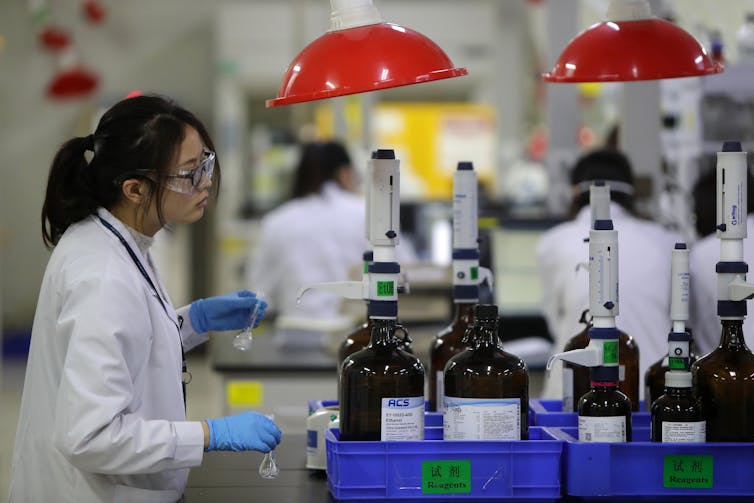
As the new coronavirus, called 2019-nCoV, spreads rapidly around the globe, the international community is scrambling to keep up. Scientists rush to develop a vaccine, policymakers debate the most effective containment methods, and health care systems strain to accommodate the growing number of sick and dying. Though it may sound like a scene from the 2011 movie “Contagion,” it is actually an unfolding reality.

In the midst of all of this, a potential crisis simmers in the shadows: The global dependence on China for the production of pharmaceuticals and medical equipment.

Chinese dominance in the pharmaceutical market

We represent an interdisciplinary group of scientists and policymakers at the Scowcroft Institute’s Pandemic and Biosecurity Policy Program based at the Bush School of Government at Texas A&M University who have been holding annual summits addressing pandemic-related issues for the past five years. One of our goals is to promote dialogue on potential risks related to pandemics and U.S. security, in this case the disruption of supply chains and availability of medical supplies and drugs.

Today, about 80% of pharmaceuticals sold in the U.S. are produced in China. This number, while concerning, hides an even greater problem: China is the largest and sometimes only global supplier for the active ingredient of some vital medications. The active ingredients for medicines that treat breast cancer and lung cancer and the antibiotic Vancomycin, which is a last resort antibiotic for some types of antimicrobial resistant infections, are made almost exclusively in China. Additionally, China controls such a large market portion of heparin, a blood thinner used in open-heart surgery, kidney dialysis and blood transfusions that the U.S. government was left with no choice but to continue buying from China even after a contamination scandal in 2007.

China is not only the dominant global supplier of pharmaceuticals, but it is also the largest supplier of medical devices in the U.S. These include things like MRI equipment, surgical gowns, and equipment that measures oxygen levels in the blood. Supplies of these essential products have not yet been severely disrupted by the coronavirus, but if China is no longer will or able to supply them to the U.S., thousands of Americans could die.

More concerning still are the limited options available to the U.S. and the rest of the globe to make up the shortfall. It could take years to develop the necessary infrastructure to reestablish U.S. manufacturing capacities and obtain Food and Drug Administration licensure to overcome the loss of the Chinese supply.

When a disease reaches epidemic levels, the first obligation for leaders in any country is to protect their own people. As this current crisis progresses, there may come a point when political leaders in China will face decisions on whether to prohibit the export of pharmaceuticals, medical devices and other vital medical components in order to treat or protect their own people. Such acts would be the logical outcome of an escalating situation. For the 2009 H1N1 pandemic response, for example, the U.S. was pushed to the back of the queue for vaccine deliveries even though we had existing contracts with a major vaccine manufacturer located in another country. Those vaccine deliveries were delayed.

Disruption of global pharmaceuticals?

While a total loss of active ingredient imports from China might seem far-fetched, we believe the increasing scale of the outbreak moves it closer to the realm of possibility.

About six weeks into international recognition of the epidemic in China, there are already shortages of vital personal protective equipment in both China and the U.S. UPS has transported more than 2 million masks and 11,000 gowns to Wuhan to help alleviate the shortage. But what happens when everyone runs out of protective equipment?

Wuhan is a significant player in the biotechnology and pharmaceutical industry, with multiple pharmaceutical companies located in the city. How many of these factories have closed as a result of the pandemic, and when will those that have closed open back up? Global supply chains could reach a crisis point if they are compromised because Hubei province, where Wuhan is located, is in quarantine and factories are shut down.

Additionally, Wuhan is the location of China’s first Biosafety Level (BSL) 4 laboratory, which was opened in 2017 to research SARS and other emerging diseases. It is the only lab in China that can safely handle the world’s most dangerous pathogens that pose a significant risk of transmission. Infection, death and quarantine in Wuhan and the surrounding Hubei province is restricting the ability of all types of commerce in the region. Meanwhile, the virus is already creating a significant supply chain imbalance within China. That means those medical supply companies will be under pressure to keep any products produced within the country for protection of their own health care workers, laboratory personnel and the general public.

The regulatory apparatus to insure that the Chinese manufactured pharmaceuticals being exported meet the highest standards of safety and quality control are weak or nonexistent, according to a congressional report last year. The pressure placed on supply chains by the outbreak could further exacerbate existing quality control challenges. In doing so, the virus has highlighted our reliance on China as a U.S. national security issue due to outsourcing our manufacturing capabilities and inability to ensure quality control.

As with all pandemics, the complexity of this outbreak demands international collaboration and transparency. At the same time, U.S. public health officials must acknowledge the country’s vulnerability due to our dependence on Chinese production of pharmaceuticals and medical equipment. The U.S. must develop a response plan for the inevitable shortages in the near-term and take necessary actions to reclaim control of our medical supply chain. Continuing to overlook this long-known vulnerability will only lead to catastrophe.


Healthcare spending is higher over 5 years, mostly due to a rise in prices, says new report

https://www.healthcarefinancenews.com/node/139806?mkt_tok=eyJpIjoiTldNMllXTmpNVEJpTVRNMSIsInQiOiI1MVlQdys0d2FHbVZESVVjMDNFS2tnQVNJSlNjS2xsT1BCXC9FdGFZbWI2TDZQcnBJZHZIU2p4Qm9GNEw1K1ZsM1M5SVVPYU51OGxxOVJNRndtTlY1UXFkaFNueDVXbTlWbHRmSHF2YWhhVVdZdkthc0FzOHBIWFN3ZTNXdHVoVTkifQ%3D%3D

Between 2014 and 2018, per-person yearly spending, for those with employer-sponsored insurance, climbed 18.4%.

A new report confirms concerns about healthcare costs, as it shows per-person spending is increasing faster than per-capita gross domestic product.

Between 2014 and 2018, per-person yearly spending, for those with employer-sponsored insurance, climbed  from $4,987 to $5,892, an 18.4% increase, according to the 2018 Health Care Cost and Utilization Report released Thursday.  The average annual rate of 4.3% outpaced growth in per-capita GDP, which increased at an average 3.4% over the same period.

There’s an exception from 2017 to 2018, when per-capita GDP grew slightly faster than healthcare spending per person.

The $5,892 total includes amounts paid for medical and pharmacy claims but does not subtract manufacturer rebates for prescription drugs.

Healthcare spending grew 4.4% in 2018, slightly above growth in 2017 of 4.2%, and the third consecutive year of growth above 4%.

After adjusting for inflation, spending rose by $610 per person between
2014 and 2018.

The cost estimates are consistent with National Health Expenditure data from the Centers for Medicare and Medicaid Services, the report said.

WHAT’S THE IMPACT

Higher prices for medical services were responsible for about three-quarters, 74%, of the spending increase above inflation. These increases were across all categories of outpatient and professional services.

Average prices grew 2.6% in 2018. While that is the lowest rate of growth over the period, consistent year-over-year increases mean that prices were 15% higher in 2018 than 2014.

The increase for outpatient visits and procedures was $87 in 2018, the largest annual increase between 2014 and 2018.

Average out-of-pocket price for ER visits increased more sharply than other subcategories of outpatient visits, though all saw an increase in the average amount for which patients were responsible

Professional service spending per person rose $86 in 2018, reflecting an acceleration in spending growth consistent with previous years’ trends, according to the report.

Inpatient services and prescription drugs also saw an increase in spending per person.

Inpatient admissions increased $24 in 2018, a smaller annual increase than in 2016 or 2017, but above the rise in 2015.

Per-person spending on prescription drugs rose $50, similar to increases in 2016 and 2017, but smaller than the rise in 2015. The total does not reflect manufacturer rebates.

On average, Americans with employer-sponsored insurance spent
$155 out-of-pocket on prescription drugs in 2018.

Prices rose, as did utilization, which grew 1.8% from 2017 to 2018, the fastest pace during the five-year period. And because of the higher price levels, the effect of the increase in utilization in 2018 on total spending was higher than it would have been in 2014.

Higher utilization may be the result of a population that got slightly older between 2014 and 2018. The population also became slightly more female.

People with job-based insurance saw their out-of-pocket costs rise by an average of 14.5%, or $114, between 2014 and 2018.

THE LARGER TREND

As most Americans have job-based health insurance, this data is critical for understanding overall health costs in the United States, the report said.

An estimated 49% of the U.S. population, about 160 million people, had employer-based health insurance in 2018, based on Census data.

The report combined data from large insurers, using 4,000 distinct
age/gender/geography combinations. It contains previously unreported information drawn from 2.5 billion insurance claims.

Claims data is the most comprehensive source of real-world evidence available to researchers as databases collect information on millions of doctors’ visits, healthcare procedures, prescriptions, and payments by insurers and patients, giving researchers large sample sizes, the report said.