‘People should worry:’ ACA in limbo after Bader Ginsburg’s passing

https://www.healthcaredive.com/news/people-should-worry-aca-in-limbo-after-bader-ginsburgs-passing/585545/?utm_source=Sailthru&utm_medium=email&utm_campaign=Issue:%202020-09-22%20Healthcare%20Dive%20%5Bissue:29794%5D&utm_term=Healthcare%20Dive

In less than two months, the Supreme Court is set to hear the case that could overturn the Affordable Care Act — without Ruth Bader Ginsburg on the bench, fanning anxieties the landmark law is in greater jeopardy due to her passing. 

“People should worry,” Nicholas Bagley, a health law expert and professor at the University of Michigan, said.

The death of the liberal justice on Friday at the age of 87 means that of the nine justices, there are now only three appointed by Democratic presidents instead of four.

Assuming the liberal wing was set to uphold the ACA, with Bader Ginsburg they would have only needed to pick up one more conservative justice to vote in favor of preserving the law. Chief Justice John Roberts has been a swing vote in several cases involving the law. Roberts’ 2012 vote saved the law from a fatal blow in a 5-4 decision when he deemed the individual mandate could be considered a tax. 

Without Bader Ginsburg, they’ll now need to sway two — raising concerns about whether that’s possible. 

“This opens it wide up and I really do think the law could be at risk,” Katie Keith, another legal expert who has followed the case closely, agreed.

The landmark but politically polarizing legislation ushered in health coverage gains and basic protections for millions under President Barack Obama (who appointed two of the three remaining liberal justices). The law’s latest time at the Supreme Court comes after a group of red states argued the law was moot after Republicans zeroed out a key part of it — a tax penalty for those that did not get insured as was required in the law.

However, a split decision may be welcome by ACA proponents.

If the the liberal wing is only able to sway one conservative justice, resulting in a 4-4 split case, it will buy more time for the law and its defenders, a set of blue states lead by California’s Attorney General Xavier Becerra. 

In that instance, the case would be punted all the way back down to Judge Reed O’Connor. The Fifth Circuit, which oversaw the appeal following a decision by O’Connor, ruled the individual mandate was unconstitutional but did not weigh in on whether the rest of the ACA could stand without the mandate. It sent that question back to O’Connor, and that’s where the case would land again, before O’Connor, in the event the Supreme Court punts.

That outcome buys more time, plus another opportunity to appeal and for the case to again work its way back before the Supreme Court.

But one legal expert said based on cases from this past term there is reason to be hopeful that two conservative justices could be swayed to leave the remainder of the ACA intact even if the mandate is ruled unconstitutional.

Legal experts point to cases from the most recent term in which Brett Kavanaugh and Roberts — both appointed by Republicans — weighed in on severability in a way viewed as favorable for the outcome of the ACA case. 

“I’m pretty hopeful,” Tim Jost, emeritus professor at Washington and Lee University School of Law, said.

Severability is an important question in the challenge to the ACA. The crux of the lawsuit centers on the argument that the individual mandate is so essential and intertwined into the fabric of the ACA that if the mandate is deemed unconstitutional than the entirety of the ACA must fall.

In their legal challenge, the red states and two individual plaintiffs argued that the individual mandate cannot be severed from the rest of the law, so the entire law should be overturned. That’s why ACA case watchers have tried to read the tea leaves by reviewing how justices have weighed in on severability in earlier cases.

Kavanaugh seemed emphatic about his belief that unconstitutional pieces of a larger law should not spell the demise for the entire law.

In a case decided this summer, political organizations were seeking to make robocalls to cell phones. However, a law, barred robocalls to Americans’ cellphones but was later amended by Congress to include an exception for the collection of debt. The plaintiffs argued this was a violation of the First Amendment, favoring debt-collection speech over political speech. The plaintiffs wanted the entirety of the robocall law overturned, not just the exception allowing robocalls for debt collection.

Kavanaugh wrote the 6-3 opinion, finding the exception for debt-collection unconstitutional, but ruling that the remainder of the law can stand. 

In his opinion, Kavanaugh wrote that the court’s preference has been to “salvage rather than destroy” the rest of the law in the event a part is deemed unconstitutional.

“The Court’s precedents reflect a decisive preference for surgical severance rather than wholesale destruction, even in the absence of a severability clause,” Kavanaugh wrote in his opinion in the case, Barr v. Association of Political Consultants.

And Roberts showed similar favor for surgically precise decisions when it comes to severability.  “We think it clear that Congress would prefer that we use a scalpel rather than a bulldozer,” he wrote in a separate 5-4 decision from this latest term regarding a challenge to the Consumer Financial Protection Bureau.


Three Million People Lost Health Coverage From Their Employers During The Pandemic

https://www.forbes.com/sites/brucejapsen/2020/09/20/pandemics-wrath-on-worker-health-coverage-tops-3-million-so-far/?utm_source=newsletter&utm_medium=email&utm_campaign=coronavirus&cdlcid=5d2c97df953109375e4d8b68#58cf3e92ed47

More than three million American workers lost health insurance coverage this spring and summer from their employers as the pandemic and spread of Covid-19 triggered massive job losses, a new study shows.

In all, there were 3.3 million adults under the age of 65 who lost employer-sponsored health insurance and almost two-thirds of them, or 1.9 million, “became newly uninsured from late April through mid-July,” according to a new analysis by The Urban Institute and funded by the Robert Wood Johnson Foundation. The loss of employer coverage has hit Hispanic adults particularly hard with 1.6 million losing health benefits, Urban Institute researchers said.

And it could get worse.

“With continued weakness in the labor market, researchers conclude federal and state policymakers will need to act to prevent job losses from leading to further increases in uninsurance,” the authors of the report wrote about their analysis, which was derived from  2020 U.S. Census data.

In particular, the analysis underscores the need to expand health benefits, particularly Medicaid under the Affordable Care Act, analysts say. The ACA dangled billions of dollars in front of states to expand Medicaid coverage for poor Americans but 12 states generally led by Republican Governors or legislatures have refused while President Donald Trump and his appointees at the U.S. Justice Department fight led by Republican Governors

 “The danger of an inadequate safety net can be seen in the non-expansion states, where the number of uninsured adults has already increased more than 1 million,” Robert Wood Johnson Foundation senior policy advisor Katherine Hempstead said in a statement accompanying the report.


One million Americans lost health insurance last year

https://www.washingtonpost.com/politics/2020/09/16/health-202-one-million-americans-lost-health-insurance-last-year/?utm_campaign=wp_the_health_202&utm_medium=email&utm_source=newsletter&wpisrc=nl_health202

Analysis | The Health 202: One million Americans lost health insurance last  year - Digital Tariq

Americans became wealthier and more held jobs last year.

Yet at the very same time, one million people lost health insurance. And that number has steadily climbed this year under the pandemic.

U.S. Census Bureau report released yesterday showed a continued slow erosion of the nation’s insured rate in 2019. The decline of coverage illustrates both the shortcomings of President Barack Obama’s 2010 health-care law and repeated attempts by President Trump and Republicans to undermine it.

“Though the reasons are sharply debated, the new data signifies that the first three years of President Trump’s tenure were a period of contracting health insurance coverage,” Amy Goldstein writes. “The decreases reversed gains that began near the end of the Great Recession and accelerated during early years of expanded access to health plans and Medicaid through the Affordable Care Act.”

Nearly 30 million Americans lacked health coverage in 2019.

The uninsured rate rose to 29.6 million people, totaling 9.2 percent of the population. It has slowly ticked upward since 2016, when 28.1 million people didn’t have a health plan. Between 2018 and 2019, the share of people without coverage increased in 19 states and decreased in just one.

The share of people on Medicare and with employer-sponsored coverage actually increased slightly. That was due to an aging population and last year’s booming economy, which meant more people had workplace plans — still the chief way Americans get their coverage.

The biggest erosions in coverage took place in state Medicaid programs.

Medicaid enrollment fell from 17.9 percent of Americans to 17.2 percent.

One reason for the decline is positive: As poverty rates fell for all major racial and ethnic groups, more people earned too much to qualify for the program. The poverty rate fell to 18.8 percent for Blacks, 15.7 percent for Hispanics and 9.1 percent for Whites.

But other factors were also at play. People no longer face a tax penalty for being uninsured, after Congress repealed it in 2017. Several GOP-led states expanded enrollment requirements. And wide disparities persisted in how states run their programs.

Missouri voters recently approved Medicaid expansion, making the state the seventh to do so under President Trump.

“There is huge variation state-to-state in the ease of enrollment, the administrative process, the mechanisms for verifying eligibility, how hard the state works to sign people up,” said Katherine Baicker, a health economist at the University of Chicago. “All those have big effects on net take-up rates.”

The trickle of coverage losses has become a flood under the pandemic.

Before the coronavirus pandemic upended life, the United States was enjoying a record-long economic expansion. By the end of last year, the unemployment rate was at a 50-year low of 3.5 percent.

Women outnumbered men in the workforce for only the second time, buoyed by a tight labor market and fast job growth in health care and education,” Amy writes. “Minimum-wage increases were also fueling faster wage growth for those at the bottom.”

But now millions of people have lost their jobs — and, in the process, their health insurance.

“Since March … job losses have disproportionately hit low-income workers and women, many of whom held service-sector jobs that were gutted by shutdown measures to help protect people from infection,” Amy writes. “Nearly 40 percent of households with income below $40,000 were laid off or furloughed by early April, according to the Federal Reserve.”

The Economic Policy Institute has estimated that 12 million people have lost health insurance received through their workplace or that of a family member. Some of those have been able to enroll in Medicaid — its rolls have risen by about 4 million during the pandemic — but others find it unaffordable.


Drug pricing politics aren’t dead

https://www.axios.com/newsletters/axios-vitals-319d5198-f7a8-401f-9b00-26118ca0b966.html?utm_source=newsletter&utm_medium=email&utm_campaign=newsletter_axiosvitals&stream=top

Ending The Cycle Of Drug Price Hikes, Death And Outrage | Cognoscenti

President Trump released an executive order yesterday ordering the Department of Health and Human Services to begin the process of limiting what Medicare pays for prescription drugs relative to other countries.

Why it matters: It’s September of an election year. That means that this executive order is, at best, a statement of Trump’s intention to keep trying to achieve something big on drug prices should he get a second term.

  • But given that he’s had four years already to act on what was also a big issue in 2016, there’s plenty of reason to be skeptical of this ever translating into official policy.
  • “President Trump’s executive order on drug pricing does not by itself do anything. It has to be followed up by regulations, which will take time. Trump has a history of bold talk on drug prices, only to pull back when it comes to putting actual regulations in place,” the Kaiser Family Foundation’s Larry Levitt tweeted.

Details: The order calls for Medicare to receive the “most-favored-nation” price for certain drugs.

  • This price is defined as “the lowest price, after adjusting for volume and differences in national gross domestic product, for a pharmaceutical product that the drug manufacturer sells in a member country of the [OECD] that has a comparable per-capita gross domestic product.”

The bottom line: Trump and Joe Biden have both pitched aggressive drug pricing policies — a good reminder that once we get the pandemic under control, the issue is bound to become front-and-center again.


A Doctor Went to His Own Employer for a COVID-19 Antibody Test. It Cost $10,984.

https://www.propublica.org/article/a-doctor-went-to-his-own-employer-for-a-covid-19-antibody-test-it-cost-10-984
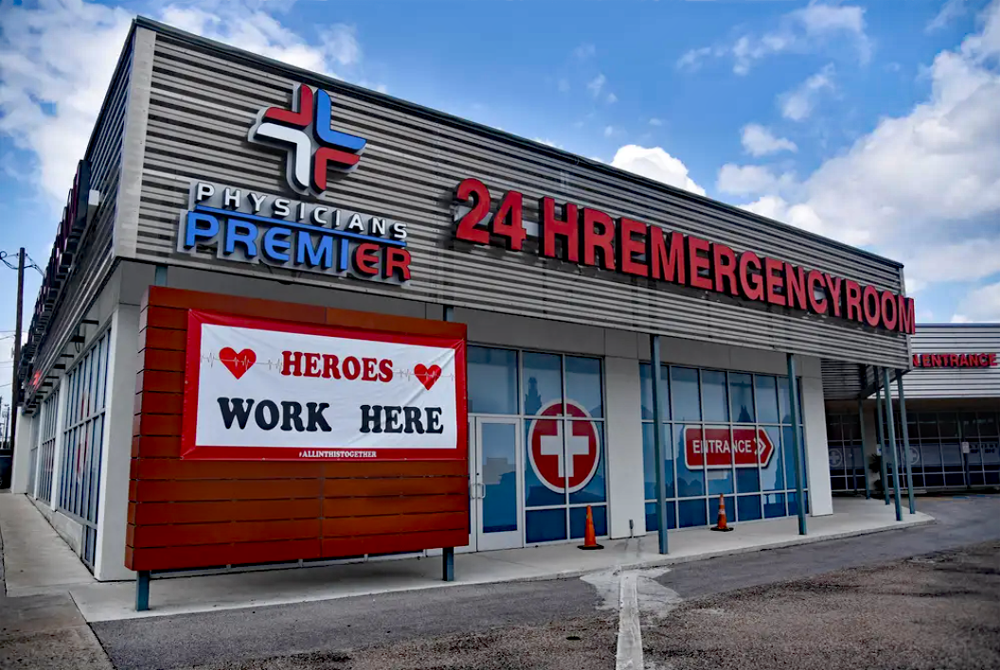
An Austin Doctor Went To His Own Employer For A COVID-19 Antibody Test. It Cost  $10,984. – Corridor News

Physicians Premier ER charged Dr. Zachary Sussman’s insurance $10,984 for his COVID-19 antibody test even though Sussman worked for the chain and knows the testing materials only cost about $8. Even more surprising: The insurer paid in full.

When Dr. Zachary Sussman went to Physicians Premier ER in Austin for a COVID-19 antibody test, he assumed he would get a freebie because he was a doctor for the chain. Instead, the free-standing emergency room charged his insurance company an astonishing $10,984 for the visit — and got paid every penny, with no pushback.

The bill left him so dismayed he quit his job. And now, after ProPublica’s questions, the parent company of his insurer said the case is being investigated and could lead to repayment or a referral to law enforcement.

The case is the latest to show how providers have sometimes charged exorbitant prices for visits for simple and inexpensive COVID-19 tests. ProPublica recently reported how a $175 COVID-19 test resulted in charges of $2,479 at a different free-standing ER in Texas. In that situation, the health plan said the payment for the visit would be reduced and the facility said the family would not receive a bill. In Sussman’s case, the insurer paid it all. But those dollars come from people who pay insurance premiums, and health experts say high prices are a major reason why Americans pay so much for health care.

Sussman, a 44-year-old pathologist, was working under contract as a part-time medical director at four of Physicians Premier’s other locations. He said he made $4,000 a month to oversee the antibody tests, which can detect signs of a previous COVID-19 infection. It was a temporary position holding him over between hospital gigs in Austin and New Mexico, where he now lives and works.

In May, before visiting his family in Scottsdale, Arizona, Sussman wanted the test because he had recently had a headache, which can be a symptom of COVID-19. He decided to go to one of his own company’s locations because he was curious to see how the process played out from a patient’s point of view. He knew the materials for each antibody test only amounted to about $8, and it gets read on the spot — similar to an at-home pregnancy test.

He could even do the reading himself. So he assumed Physicians Premier would comp him and administer it on the house. But the staff went ahead and took down his insurance details, while promising him he would not be responsible for any portion of the bill. He had a short-term plan through Golden Rule Insurance Company, which is owned by UnitedHealthcare, the largest insurer in the country. (The insurance was not provided through his work.)

During the brief visit, Sussman said he chatted with the emergency room doctor, whom he didn’t know. He said there was no physical examination. “Never laid a hand on me,” he said. His vitals were checked and his blood was drawn. He tested negative. He said the whole encounter took about 30 minutes.

About a month later, Golden Rule sent Sussman his explanation of benefits for the physician portion of the bill. The charges came to $2,100. Sussman was surprised by the expense but he said he was familiar with the Physicians Premier high-dollar business model, in which the convenience of a free-standing ER with no wait comes at a cost.

“It may as well say Gucci on the outside,” he said of the facility. Physicians Premier says on its website that it bills private insurance plans, but that it is out-of-network with them, meaning it does not have agreed-upon prices. That often leads to higher charges, which then get negotiated down by the insurers, or result in medical bills getting passed on to patients.

Sussman felt more puzzled to see the insurance document say, “Payable at: 100%.” So apparently Golden Rule hadn’t fought for a better deal and had paid more than two grand for a quick, walk-in visit for a test. He was happy not to get hit with a bill, but it also didn’t feel right.

He said he let the issue slide until a few weeks later when a second explanation of benefits arrived from Golden Rule, for the Physicians Premier facility charges. This time, an entity listed as USA Emergency sought $8,884.16. Again, the insurer said, “Payable at: 100%.”

USA Emergency Centers says on its website that it licenses the Physicians Premier ER name for some of its locations.

Now Sussman said he felt spooked. He knew Physicians Premier provided top-notch care and testing on the medical side of things. But somehow his employer had charged his health plan $10,984.16 for a quick visit for a COVID-19 test. And even more troubling to Sussman: Golden Rule paid the whole thing.

Sussman was so shaken he resigned. “I have decided I can no longer ethically provide Medical directorship services to the company,” he wrote in his July 13 resignation email. “If not outright fraudulent, these charges are at least exorbitant and seek to take advantage of payers in the midst of the COVID19 pandemic.”

Sussman agreed to waive his patient privacy so officials from the company could speak to ProPublica. USA Emergency Centers declined interview requests and provided a statement, saying “the allegations are false,” though it did not say which ones.

The statement also said the company “takes all complaints seriously and will continue to work directly with patients to resolve issues pertaining to their emergency room care or bill. …The allegations received pertain to a former contracted employee, and we cannot provide details or further comment at this time.”

Physicians Premier advertises itself as a COVID-19 testing facility on its website, with “results in an hour.” According to the claims submitted by Physicians Premier to Golden Rule, obtained by Sussman, the physician fee and facility fees were coded as emergency room visits of moderate complexity. That would mean his visit included an expanded, problem-focused history and examination. But Sussman said the staff only took down a cursory medical history that took a few minutes related to his possible exposure to COVID-19. And he said no one examined him.

The claims also included codes for a nasal swab coronavirus test. But that test was not performed, Sussman said. The physician’s orders documented in the facility’s medical record also do not mention the nasal swab test. Those charges came to $4,989.

The claims show two charges totaling $1,600 for the antibody test Sussman received. In a spreadsheet available on its website on Friday, Physicians Premier lists a price of $75 for the antibody test.

For comparison, Medicare lists its payment at $42.13 for COVID-19 antibody tests. That’s because Medicare, the government’s insurance plan for the disabled and people over 65, sets prices.

Complicating matters, Texas is the nation’s epicenter for free-standing emergency rooms that are not connected to hospitals. Vivian Ho, an economist at Rice University who studies the facilities, said their business model is based on “trying to mislead the consumer.” They set up in locations where a high proportion of people have health insurance, but they don’t have contracted rates with the insurers, Ho said. They are designed to look like lower-priced urgent care centers or walk-in clinics, Ho said, but charge much higher emergency room rates. (The centers have defended their practices, saying that they clearly identify as emergency rooms and are equipped to handle serious emergencies, and that patients value the convenience.)

The day after he resigned, Sussman texted an acquaintance who works as a doctor at Physicians Premier. The acquaintance said the facility typically only collects a small percentage of what gets billed. “I just don’t want to be part of the game,” Sussman texted to him.

Shelley Safian, a Florida health care coding expert who has written four books on medical coding, reviewed Sussman’s medical records and claims at ProPublica’s request. The records do not document a case of a complex patient that would justify the bills used to code the patient visit, she said. For example, the chief complaint is listed as: “A generic problem (COVID TESTING).” Under “final acuity,” the medical record says, “less urgent.” Under the medical history it says, “NO SYMPTOMS.”

Safian described the charges as “obscene” and said she was shocked the insurer paid them in full. “This is the exact opposite of an employee discount,” she said. “Obviously nobody is minding the store.”

Congress opened the door to profiteering during the pandemic when it passed the CARES Act. The legislation, signed into law in March, says health insurers must pay for out-of-network testing at the cash price a facility posts on its website, or less. But there may be other charges associated with the tests, and insurers generally have tried to avoid making patients pay any portion of costs related to COVID-19 testing or treatment.

The charges for Sussman’s COVID-19 test visit are “ridiculous,” said Niall Brennan, president and CEO of the Health Care Cost Institute, a nonprofit organization that studies health care prices. Brennan wondered whether the CARES Act has made insurers feel legally obligated to cover COVID-19 costs. He called it “well intentioned” public policy that allows for “unscrupulous behavior” by some providers. “Insurance companies and patients are reliant on the good will and honesty of providers,” Brennan said. “But this whole pandemic, combined with the CARES Act provision, seems designed for unscrupulous medical providers to exploit.”

It’s illegal for medical providers to charge for services they did not provide. But ProPublica has previously reported how little insurers, including UnitedHealthcare, do to prevent fraud in their commercial health plans, even though experts estimate it consumes about 10% of all health care costs. For-profit insurance companies don’t want to spend the time and money it takes to hold fraudulent medical providers accountable, former fraud investigators have told ProPublica. Also, the insurance companies want to keep providers in their networks, so they easily cave.

In mid-July, Sussman used the messenger system on Golden Rule’s website to report his concerns about the case. Short-term health plans are typically less expensive because they offer less comprehensive coverage. Sussman said he appreciated that his plan covered the charges, and felt compelled to tell the company what had happened.

That led to a phone conversation with a fraud investigator. They went line by line through the charges and Sussman told him many of the services had not been provided. “His attitude was kind of passive,” Sussman said of the fraud investigator. “There was no indignation. He took in stride, like, ‘Yep, that’s what happens.’” The investigator said he would escalate the case and see if the facility had submitted any other suspect claims. But Sussman never heard back.

Maria Gordon-Shydlo, a spokeswoman for UnitedHealthcare, which owns Golden Rule, would not provide anyone to be interviewed. She said in an emailed statement that the company’s first priority during the pandemic “has been to ensure our members get the care they need and are not billed for COVID testing and treatment. Unfortunately, there are some providers who are trying to take advantage of this and are inappropriately or even fraudulently billing.”

“Golden Rule has put processes in place to address excessive COVID-related billing,” the statement said. “We are currently investigating this matter and, if appropriate, will seek to recoup any overpayment and potentially refer this case to law enforcement.”

Golden Rule’s 100% payment of the charges may simply come down to “incompetence,” said Dr. Eric Bricker, a Texas internist who spent years running a company that advised employers who self-fund their insurance. Insurance companies auto-adjudicate millions of claims on software that may be decades old, said Bricker, who produces videos to help consumers and employers understand health care. If bills are under a certain threshold, like $15,000, they may sail through and get paid without a second look, he said.

UnitedHealth Group reported net earnings of $6.6 billion in the second quarter of 2020. Bricker said the company may be paying bills without questioning them because it doesn’t “want to create any noise” by saying no at a time its own earnings are so high, Bricker said.

Texas has a consumer protection law that’s designed to prevent businesses from exploiting the public during a disaster. The attorney general’s office has received and processed 52 complaints about health care businesses and billing or price gouging related to the pandemic, a spokeswoman from the office said in an email. The agency does not comment on the existence of any investigations, but has not filed any cases related to overpriced COVID-19 tests.

Sussman said he got one voicemail from a billing person at Physicians Premier, saying she wanted to explain the charges, but he did not call back. He said he spoke out about it to ProPublica because he opposes Medicare-for-all health care reform proposals. Bad actors in the profession could cause doctors to lose their privilege to bill and be reimbursed independently, he said. Most physicians are fair with their billing, or even conservative, he said. “If instances like these go unchecked it will provide more ammo for advocates of a single-payer system.”


Cartoon – 2020 Labor Day Picnic

Double Take 'Toons: Happy Labor Day! : NPR

Cartoon – Get a Job, Buddy!

Labor Day | Search results for "lab" | SpringerCreative.com: Editorial Cartoons

Cartoon – Happy Labor Day 2020

Happy Labour Day Pictures, Photos, and Images for Facebook, Tumblr,  Pinterest, and Twitter

How important is the ACA for people who lose their jobs?

https://us3.campaign-archive.com/?u=6ab1fc39a0b1b15521551487c&id=6f9ac3fd86&e=ad91541e82

https://www.nejm.org/doi/full/10.1056/NEJMp2023312

This week’s contributor is Larry Levitt, the Executive Vice President for Health Policy at the Kaiser Family Foundation.

For the first time in an economic downturn, the Affordable Care Act (ACA) exists as a health care safety net for people losing their jobs and employer-provided health insurance. A new study provides some clues as to how well the health care law works for people who lose their jobs and insurance.

The study – by Sumit Agarwal and Benjamin Sommers, published in the New England Journal of Medicine – compares people who lost their jobs before and after the ACA went into effect in 2014 to see if there is a difference in how many people retained health insurance. During the pre-ACA period (2011-2013), there was about a 5% increase in the uninsured rate for people following a job loss. After the ACA went into effect (2014-2016), no such increase occurred. Instead, Medicaid and the marketplaces saw large increases in utilization.

With millions of Americans losing their jobs during the pandemic, the number of people without health coverage has undoubtedly risen. However, by how much is unknown, since we don’t track insurance coverage in real-time like we do employment. Many who have lost jobs may not have had employer-sponsored insurance in the first place, if they worked an industry like food service or retail. And the vast majority of people who are unemployed are classified as on temporary layoff, with employers who may be continuing health benefits for their furloughed workers, at least for now. However, the share of unemployed workers who have permanently lost their jobs is growing.

If the economic crisis persists, the number of people losing job-based health insurance will climb, making the ACA’s role as a safety net more relevant than ever.


Poll: Half of Americans worried about medical bankruptcy

https://www.upi.com/Top_News/US/2020/09/01/Poll-Half-of-Americans-worried-about-medical-bankruptcy/5561598958953/?fbclid=IwAR328ND-qsLKiHR-ogO7migi7sIwkIQU8W2yFpKg_216MhyNwGBNfEpByVY

New Poll: Half in US Fear Bankruptcy From Major Health Event | Common  Dreams News

About half of Americans in the COVID-19 era fear a health-related incident could drive them into bankruptcy, according to a new survey Tuesday by Gallup and West Health.

Gallup and West Health said 50% of respondents said they’re concerned about medical bankruptcy — a 5% increase from early this year, before the pandemic. That concern rose 12 points among U.S. adults between 18 and 29 and non-White Americans.

“Dovetailing with the new health-related concerns brought on by the coronavirus outbreak is the economic catastrophe that — despite the recouping of millions of jobs since May — persists in form of 28 million people receiving some form of unemployment aid at the end of July,” Gallup wrote.

“As such, Americans’ concerns about a major health event putting them in bankruptcy, while substantial in early 2019, are likely only intensified today because of the pandemic.

The study found that 15% of respondents said at least one person in their home currently has medical debt that will not be repaid in the next 12 months.

“Those in households earning less than $40,000 per year are more than four times as likely as those in households earning $100,000 or more to be carrying long-term medical debt (28% vs. 6%, respectively),” Gallup added. “The rate is also about twice as high among self-identified political independents (18%) and Democrats(16%) as among Republicans (8%).”

More than a quarter of adults said they’d need to borrow to pay a medical bill of just $500. Many others said they would have to go into debt.

Gallup polled more than 1,000 U.S. adults for the survey, which has a margin of error of 4 points.