COVID-19 cases are up by nearly 70% over the past seven days due to huge spikes of cases in low vaccinated areas, Biden administration officials said Friday.
“This is becoming a pandemicof the unvaccinated,” said Rochelle Walensky, M.D., director of the Centers for Disease Control and Prevention, during a briefing Friday. “We are seeing outbreaks of cases in parts of the country that have low vaccination coverage because unvaccinated people are at risk. Communities that are fully vaccinated are generally faring well.”
The seven-day average of cases was 26,300 per day, an increase of nearly 70% from the last seven-day average, Walensky said.
Hospitalizations are also up to 2,790 per day, an increase of 36% from the previous seven-day period.
Deaths, a metric that has declined since prior surges earlier in the year, have also started to increase. The seven-day average increased by 26% to 211 per day, Walensky said.
“Our biggest concern is we are going to see preventable cases, hospitalizations and, sadly, deaths among the unvaccinated,” she said.
A major driver of the increases has been the highly transmissible Delta variant of COVID-19, but Walensky said that 97% of the patients hospitalized right now with the virus are unvaccinated.
The Biden administration is ramping up efforts to increase vaccinations in areas that have stubbornly low rates. The administration is sending more than 100 people to states to help enhance vaccine access and boost outreach efforts, said Jeff Zients, the White House coronavirus response coordinator, during the briefing.
States with the highest cases are starting to see their vaccination rates go up, Zients said.
“In the past week, the five states with the highest case rates had a higher rate of people getting newly vaccinated compared to the national average,” he added.
He added that so far the CDC and the Food and Drug Administration have not recommended a booster shot for the fully vaccinated.
Infectious disease expert Anthony Fauci, MD, said Friday that the federal government is looking into evidence accumulated on a daily basis on the need for a booster.
“At this particular time right now, we don’t recommend that there be boosters for people,” Fauci said.
The number of new coronavirus cases is increasing in every state, setting off a growing sense of concern from health officials who are warning that the pandemic in the United States is far from over, even though the national outlook is far better than during previous upticks.
The 160 million people across the country who are fully vaccinated are largely protected from the virus, including the highly contagious delta variant, scientists say. In the Upper Midwest, the Northeast and on the West Coast — including in Chicago, Boston and San Francisco — coronavirus infections remain relatively low.
But the picture is different in pockets of the country where residents are vaccinated at lower rates. Hot spots have emerged in recent weeks in parts of Missouri, Arkansas and Nevada, among other states, leaving hospital workers strained as they care for an influx of coronavirus patients. Less than a month after reports of new cases nationally bottomed out at around 11,000 a day, virus cases overall are increasing again, with about 26,000 new cases a day, and hospitalizations are on the rise.
The country is at an inflection point, and experts said it was uncertain what would come next. While nationwide cases and hospitalization numbers remain relatively low, more local hot spots are appearing and the national trends are moving in the wrong direction. Many of the oldest, most vulnerable Americans are already inoculated, but the vaccine campaign has sputtered in recent weeks.
“This will definitely be a surge,” said Michael Osterholm, director of the Center for Infectious Disease Research and Policy at the University of Minnesota. “It won’t be as big as what happened in January. But we still have 100 million people in the United States who are susceptible to COVID-19.”
Intensive care beds in hospitals have become scarce in parts of Missouri, where officials in Springfield on Wednesday asked for an alternative care site. In Mississippi, where cases are up 70% over the past two weeks, health officials have urged older adults to avoid large indoor gatherings even if they have been vaccinated. And in Los Angeles County, officials said Thursday that masks would once again be required indoors, regardless of vaccination status, because of the spread of the delta variant.
The slowdown of the vaccination effort has amplified concerns. About 530,000 people are now receiving a vaccine each day, a sharp decrease from 3.3 million shots a day in April. Less than half of the United States population has been fully vaccinated.
Still, the country’s prognosis remains better than at previous points in the pandemic. The vaccines are widely available, cases and hospitalizations remain at a tiny fraction of their peaks and deaths are occurring at some of the lowest levels since the early days of the pandemic.
Yet daily case numbers have increased in all 50 states, including 19 states that are reporting at least twice as many new cases a day.
Mayor Quinton Lucas of Kansas City, Missouri, where cases are increasing but remain far below levels in other parts of the state, said he worried that the outbreak in southwestern Missouri would keep spreading, given low vaccination rates there. He said strong recommendations for mask wearing — or even new mandates — may become necessary if his city’s outlook continued to worsen.
“I think when you start to see Springfield-level hospitalizations here in the Kansas City metro, then we’ll have to very seriously consider whether it’s time to return to previous restrictions,” Lucas said.
In a string of news conferences this week, public health officials pleaded with people who have not gotten shots to change their minds, urging them to consider that coronavirus vaccines are safe, free and available to anyone ages 12 and older.
“To any who have been hesitating about being vaccinated, please, I implore you to hesitate no longer,” Dr. Kiran Joshi, the senior medical officer for the Cook County Department of Public Health, which serves suburban Chicago, said Thursday.
Even in places in the United States that have not yet seen a significant uptick in infections, governors and public health officials worried that their states were vulnerable to an outbreak.
“I hope and pray that it doesn’t come to West Virginia and just absolutely runs across our state like wild,” said Gov. Jim Justice, whose state has recorded relatively few cases recently but has a low vaccination rate. “But the odds are it will.”
Few places are more worrisome than in Missouri, where a surge among unvaccinated people has left hospitals scrambling to keep up.
Just two months ago, when there were only 15 active coronavirus cases in his southwestern Missouri county, Larry Bergner, the director of the Newton County Health Department, had hoped the end of the pandemic might be in sight.
That has not happened.
As the delta variant has spread across the country, it has sent case totals spiking in Newton County, where less than 20% of residents are fully vaccinated. Bergner’s county now has a higher rate of recent cases than any state.
“It does give, I guess, some depression to think that we thought we were coming out of it, now here we go again, how high are we going to get,” Bergner said.
In Milwaukee County, where 48% of residents are fully vaccinated, the health department has tried to push the number higher by setting up a vaccine site outside the Fiserv Forum, where the Milwaukee Bucks are playing in the NBA Finals. Fewer than two dozen people have received a vaccine each day the site was in place, said Dr. Ben Weston, the director of medical services for the Milwaukee County Office of Emergency Management.
“In March, people flooded to our vaccination sites — all we had to do was open a door,” Weston said. “Now we have to go out and find people.”
As case numbers slowly rise, a sense of worry has begun to creep in for some Americans, even those who are fully vaccinated.
Vince Palmieri, 89, who gets around Los Angeles on public transportation, said he worried when he saw fellow riders not wearing masks as required. Though per capita case rates remain relatively low in Los Angeles County, they have grown sharply in recent weeks. The county is averaging about 1,000 new cases a day, up from fewer than 200 a day in mid-June.
“Once you get on a bus or a train you’re in no man’s land,” said Palmieri, who continues to wear a mask. “Their sneeze could take somebody out, but I’m frightened to talk up about the disease because people get ugly.”
Debora Weems, 63, who lives in New York City, has been following the case numbers closely. Her anxiety about the virus has risen alongside cases. New York City, which averaged fewer than 200 new cases a day in late June and early July, is now averaging more than 400 a day, far below past peaks.
“I’m just afraid we’re going to have to shut down again,” Weems said. Both she and her mother, who is 85, are vaccinated, but now she worries that their protection is not enough.
When the case numbers were at their lowest, she moved through the city more freely, with less thought about whether people nearby were vaccinated. But now she is trying to avoid leaving her neighborhood, and recently put up a new sign on her apartment door with a request: She and her mother are not receiving visitors because of COVID-19.
The largest union for registered nurses in the U.S. called on the Centers for Disease Control and Prevention (CDC) to bring back recommendations for universal masking in public regardless of people’s vaccination status.
The National Nurses Union (NNU) in a Monday letter to CDC Director Rochelle Walensky requested that the agency reinstitute guidelines for all people to wear masks in public and in close proximity to those outside their household.
NNU Executive Director Bonnie Castillo pointed to a 16 percent uptick in U.S. COVID-19 cases from last week, according to CDC data, as well as rises in case counts in more than 40 states and hospitalizations in more than 25 states as reasons to return to previous, stricter guidelines.
“NNU strongly urges the CDC to reinstate universal masking, irrespective of vaccination status, to help reduce the spread of the virus, especially from infected individuals who do not have any symptoms,” Castillo wrote in the letter. “Our suggestions are based on science and the precautionary principle and are made in order to protect nurses, other essential workers, patients, and the public from Covid-19.”
The union also cited the World Health Organization’s (WHO) call for vaccinated people to continue wearing masks in public amid the spread of the highly transmissible delta variant. Several U.S. officials and experts have said the WHO’s guidance reflects the state of the pandemic worldwide, which overall has seen lower vaccination rates than the U.S.
Castillo acknowledged that COVID-19 vaccines are effective at preventing severe illness and death but noted “no vaccine is 100 percent effective, and the emergence and spread of variants of concern may reduce vaccine effectiveness.”
The NNU in its letter also appeals for the CDC to update its guidance to “fully recognize aerosol transmission,” mandate tracking and reporting of cases among health care and essential workers, and keep records of cases, including mild and asymptomatic infections, among fully vaccinated people to measure the shots’ effectiveness.
The CDC did not immediately return a request for comment on the letter, but officials have consistently defended the updated mask guidance, saying fully vaccinated individuals are protected against the virus.
The NNU vocally opposed the CDC’s current mask guidance updated in May to permit fully vaccinated individuals to go maskless in virtually all settings. The union has argued that the change in recommendations endangered patients, front-line workers and nurses as the pandemic continues.
In the Monday letter, the union wrote that the CDC’s relaxation of mask guidance “failed to account for” the possibility of fully vaccinated people contracting and spreading the virus. It also said the agency’s guidelines do not protect people, including children, who cannot get the vaccine.
The NNU sent the letter days after the CDC urged schools to reopen for full in-person learning in the fall, saying that fully vaccinated teachers and students do not need to wear masks.
It also comes after Los Angeles County and St. Louis County recommended their residents to wear masks in public indoors.
The average number of new daily COVID-19 cases has increased 94 percent over the past two weeks, according to data from The New York Times, as worries over outbreaks climb nationwide.
The U.S. recorded a seven-day average of more than 23,000 daily cases on Monday, almost doubling from the average two weeks ago, as less than half of the total population is fully vaccinated.
Monday’s count of 32,105 newly confirmed cases pushed the seven-day average up from its Sunday level of more than 19,000 new cases — a 60 percent increase from two weeks prior.
All but four states — West Virginia, Maine, South Dakota and Iowa — have seen increased daily averages in the past 14 days, and the average in 16 states at least doubled in that period.
This comes as the highly transmissible delta variant was declared the dominant strain in the U.S. last week.
At the same time, vaccinations have stalled, with the daily rate reaching its lowest point during President Biden’s tenure on Sunday at slightly more than 506,000. Monday saw a small uptick in the average rate to more than 527,000 per day, according to Our World in Data.
The rise in case counts comes as the Centers for Disease Control and Prevention says just 48 percent of the total population is fully vaccinated. Officials have said fully vaccinated people are protected from the virus, while unvaccinated people are at much higher risk for serious illness and death.
This leaves a majority of Americans still vulnerable to the virus, particularly children under 12 years old, who are not authorized to get the vaccine. More than 56 percent of the eligible population aged 12 and older is fully vaccinated.
The Biden administration has strived to boost vaccination numbers over the past few months and signaled a new strategy focused on grassroots campaigning to promote the vaccine last week. The country fell short of the president’s goal to get 70 percent of adults at least one dose by the Fourth of July.
Increases in COVID-19 cases have previously signaled during the pandemic an upcoming rise in hospitalizations and deaths. The Times data shows that average deaths are still decreasing, but average daily hospitalizations are climbing, with a 16 percent increase from two weeks ago.
Still, case counts are much lower than the devastating peak that hit the U.S. in January, and experts say the country will not reach that level of infection again, as vulnerable populations have gotten vaccinated. Seventy-nine percent of those aged 65 and older are considered fully vaccinated.
Mounting evidence suggests the delta variant is the most contagious strain in the world, spreading about 225 percent faster than the original version of the virus. A small study published online July 7 may help explain why, NPR reported.
The delta variant, first identified in India, grows faster in people’s respiratory tracts and to much higher levels, according to researchers at the Guangdong Provincial Center for Disease Control and Prevention in China.
They analyzed virus levels in 62 people infected during China’s first delta variant outbreak between May 21 and June 18. They compared their findings to virus levels in 63 patients infected in 2020 by an earlier version of the virus.
On average, viral load was about 1,000 times higher for people infected with delta, compared to those infected with the earlier strain, researchers found. It also took about four days on average for delta to reach detectable levels in study participants, compared to six days for the other strain. This finding suggests people with delta likely become infectious sooner and are spreading the virus earlier in the course of their infection, researchers said.
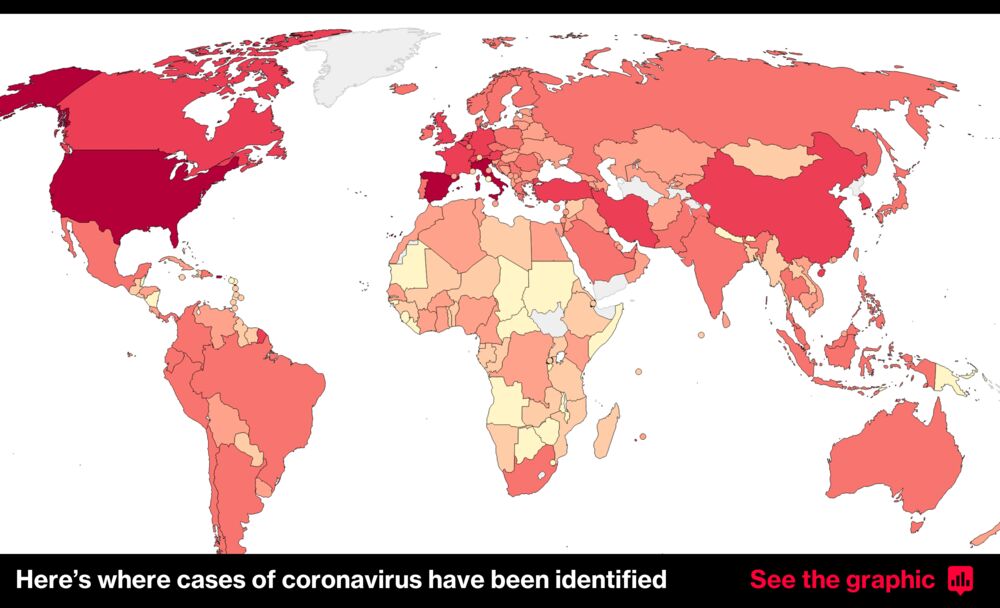
The coronavirus has killed nearly 4 million people since it first emerged in Wuhan, China, in 2019, according to data compiled by Johns Hopkins University.
New confirmed cases of covid-19, the disease caused by the virus, remain high, and the world struggles with unequal vaccine rollouts and new threats posed by fast-spreading variants.
“The pandemic is a long way far from over,” World Health Organization Director General Tedros Adhanom Ghebreyesus warned in May. “It will not be over anywhere until it’s over everywhere.”
Some countries have already found that the spread of the virus is outpacing their vaccination plans, especially in the face of proliferating variants. In India, new daily cases topped 400,000 in early May — a global record but probably an undercount.
China now leads the world in the number of vaccine doses given out, though some other nations have vaccinated far more of their population. The vaccines were developed and rolled out at record speed, and studies show most have impressive efficacy.
More than a billion doses have been administered around the world, far more than the number of confirmed cases of the coronavirus since the start of the pandemic — though a large number of cases were likely never recorded, experts caution.
But the vaccine rollout has been persistently unequal, with problems with global supply and pockets of opposition in many nations. Covax, a program to distribute vaccines fairly backed by the World Health Organization, only belatedly began distributing doses to low-income nations.
“I can’t say it’s surprising,” said Thomas J. Bollyky, a senior fellow at the Council on Foreign Relations. “In every previous pandemic where we have our global health crisis, where there has been limited supplies of medical intervention, wealthy nations have hoarded.”
The United States, which continues to have the highest cumulative number of confirmed cases and deaths globally. More than 590,000 deaths from covid-19 have been recorded across the country.
Though cases dipped after January, a new wave began only a few months later, prompting President Biden to urge governors to reinstate mask mandates and other virus-related restrictions. “This is deadly serious,” Biden said in March.
Behind the United States, India, Brazil, France and Turkey have the largest number of cases.
India’s record-setting surge this spring meant the country accounted for about 1 in 3 of all new confirmed cases. The spike, which has been blamed on complacency and the lifting of restrictions, along with the spread of variants, has seen the country’s health-care system overwhelmed amid widespread oxygen shortages.
Even after the spike in new cases subsided in mid-May, India still set records for the number of new daily deaths with more than 4,500 deaths from covid-19 reported in a single 24-hour period.
In India, as in Britain and Brazil before it, some of the spread of the virus has been blamed on fast-spreading variants rampant in the country.
The variant widespread in India, known by the name B.1.617.2, has spread far beyond its borders. In May, British officials warned that it would likely become dominant across Britain unless more was done to control its spread.
Sharon Peacock, director of the U.K.’s Covid-19 Genomics Consortium, told reporters that a fast-spreading variant such as B.1.617.2 had “a biological passport for international travel and global spread” — making its spread difficult, if not impossible, to fully contain.
Some countries have seen success at controlling the virus.
In New Zealand, which closed its borders and ordered people to stay home as a first wave hit in the spring of 2020, confirmed infections went down to zero for a time. Taiwan and Singapore have kept their outbreaks far smaller than those in other parts of the world, which some experts attribute to their early responses and sophisticated tracking and tracing.
China, the early epicenter of the crisis, has seen much of daily life return to normal. In the early months of the outbreak, it reported more cases than any other country. Its tally of new infections peaked in mid-February of 2020 and approached zero by mid-March, although questions surround the accuracy of its data.
Wuhan, the virus’s initial epicenter, ground to a standstill in January 2020 as the coronavirus spiraled out of control. But after months without a confirmed case of domestic transmission, about 1.4 million children in the city returned to classrooms at the start of September, and crowded events have resumed.
Countries that have successfully rolled out vaccines are also seeing important gains. Britain, one of the hardest-hit countries in terms of cases and deaths, has excelled in the distribution of coronavirus vaccines. It was the first country to roll out a fully tested vaccine to the general public in December, when it began distributing the vaccine developed by Pfizer and Moderna.
Data released by Public Health England in March suggested that vaccinations had saved over 6,000 lives among people over 70, if not more.
Israel, which has seen several waves of the virus, had raced ahead of other nations and given the first doses of Pfizer’s two-dose vaccine to more than a third of its population by the end of January. Data from Israel indicated that the Pfizer vaccine was around 94 percent effective at stopping asymptomatic infection.
Early signs from the country suggest that the large scale of vaccinations has had an impact on the spread of the virus.
But global health experts have cautioned that despite the success of vaccines, the virus remains a potent threat and returning to normal life too early could ultimately extend the length of the pandemic and lead to fresh new cases.
Though wealthy countries have taken some steps to ensure vaccines are shared around the world, such as by donating through Covax or supporting waivers on intellectual property such as the Biden administration has done, experts say they are worried by the ongoing level of spread.
“Sadly, unless we act now, we face a situation in which rich countries vaccinate the majority of their people and open their economies, while the virus continues to cause deep suffering by circling and mutating in the poorest countries,” United Nations Secretary General António Guterres said at a meeting of the World Health Assembly on May 24.
If you were anything like my family over the July 4 holiday, there were bowls of potato salad, casseroles of baked beans and platters of hotdogs, hamburgers and chicken all pulled from the grill and served family-style. For a lot of us, it was the first time seeing a wide net of our family in more than a year and we took advantage of ditching the masks, probably wrongly assuming our circles were vaccinated at higher levels than they were and maybe even handing kids lighters for sparklers they shouldn’t be wielding.
Our increasing return to normal makes it easy to believe the pandemic is almost over. Sure, we still had to wear masks on the flights, trains and buses. Grocery markets and big-box stores in some communities still asked that we wear them, too. The staff at Nationals Park here in D.C. and Progressive Field in Cleveland wore theirs as I visited both for MLB games. But the worst of the pandemic feels behind us here in the U.S., as vaccinations are climbing, deaths and new cases are sinking and headlines seem to be shifting to more run-of-the-mill topics like tropical storms.
A new and unusually long report from Congress’ independent think-tank is a stark warning to the U.S. government that even COVID-19 seems over, it actually isn’t, particularly when it comes to Americans’ well being. Released on Friday, the wonks at the Congressional Research Service (CRS) urged officials going into the long holiday weekend to remember amid the celebrations that we still don’t know the final toll of the pandemic, especially when it comes to long-term consequences for behavioral and mental health. Its notes about substance-abuse challenges are particularly worrying, given that lawmakers cannot ignore the already troubling fight against opioids.
Anecdotally, we know the last 18-or-so-months have taken a toll on our friends, colleagues and neighbors. Those of us lucky enough to have been allowed to work from home adapted in fits and starts. My colleagues with children or dependents were stretched to the points of breaking, but most have made it to the other side. Those in complete isolation actually came to look forward to Zoom meetings and telemedicine appointments. And tech-slow people like my grandmother probably wouldn’t have made it through without the good folks at the local public library loading her loans into the trunk through a touch-free lending system.
But you cannot make public policy on anecdotes alone, which is why the CRS report offers a roadmap for lawmakers. Noting upfront that the data is still coming in and comparisons so quickly after—and during, really—a so-recent period are imprecise, there are still warning signs that America has not healed the way we’d like to believe. The share of Americans suffering simultaneously from depression and anxiety grew five-fold, year-over-year, in just the first three-months of the pandemic-mandated lockdown, from April to June 2020, when the death toll still hovered around 120,000. Fatal overdoses grew 11% between March and May last year, and non-fatal overdoses rose 19% during that same short window. In the three months that followed, there were almost equal levels of depression or anxiety among households that had lost jobs and those that had not. No one was spared, but the hit came hardest for less-educated, essential and lower-paid workers.
Why is this Washington’s problem? An estimated 10% to 20% of Americans who needed mental-health services during the pandemic received no treatment. Another survey cited in the report estimates that up to a quarter of adults with depression or anxiety went untreated. As many as 27,000 Americans who survived COVID-19 may end up dead over the next decade as a result of behavioral health-related challenges, and that number may ultimately reach more than 154,000. At the moment, federal law does not require mental health services to be treated on par with treatments for physical health. Not Medicare. Not CHIP. Not even fancy private insurance plans.
There were, believe it or not, a few upsides to the COVID-19 pandemic that the CRS report notes. Under emergency powers granted in one of the relief bills, the Department of Health and Human Services waived the in-person requirement for some treatments, including mental health and substance abuse counseling. For now doctors can be paid for that phone call consultation rather than requiring patients to make a brick-and-mortar visit to qualify for Medicare and Medicaid money. The Department of Veterans Affairs allowed taxpayer dollars to help with mental health services via tech platforms, too. In all, billions of dollars were included in the raft of COVID-19 stimulus plans to shore up mental health and substance abuse programs.
But those were the bright spots. Not all of Washington’s urgent changes were for the better. The Drug Enforcement Agency allowed doctors to prescribe medicine without a physical appointment, Health and Human Services’ civil rights unit turned a lot of blind eyes to patients’ privacy rights as public health data seemed ubiquitous, and the Small Business Administration shoved piles of cash out the door to health clinics and larger rafts of money to hospitals with minimal upfront scrutiny.
So as Washington turns slowly toward the post-pandemic policies of this country, lawmakers have plenty to consider, especially if it wants to return America to its Before Times footing. As much as it may feel like the United States is rounding a corner—and it’s tough not to when you see big crowds gathering maskless for fireworks and parades—the reality is this: there’s still a lot of trauma under the surface that is all too easy to miss unless D.C. is looking for it.
Exactly 300 years ago, in 1721, Benjamin Franklin and his fellow American colonists faced a deadly smallpox outbreak. Their varying responses constitute an eerily prescient object lesson for today’s world, similarly devastated by a virus and divided over vaccination three centuries later.
As a microbiologist and a Franklin scholar, we see some parallels between then and now that could help governments, journalists and the rest of us cope with the coronavirus pandemic and future threats.
Smallpox strikes Boston
Smallpox was nothing new in 1721. Known to have affected people for at least 3,000 years, it ran rampant in Boston, eventually striking more than half the city’s population. The virus killed about 1 in 13 residents – but the death toll was probably more, since the lack of sophisticated epidemiology made it impossible to identify the cause of all deaths.
What was new, at least to Boston, was a simple procedure that could protect people from the disease. It was known as “variolation” or “inoculation,” and involved deliberately exposing someone to the smallpox “matter” from a victim’s scabs or pus, injecting the material into the skin using a needle. This approach typically caused a mild disease and induced a state of “immunity” against smallpox.
Even today, the exact mechanism is poorly understood and not muchresearch on variolation has been done. Inoculation through the skin seems to activate an immune response that leads to milder symptoms and less transmission, possibly because of the route of infection and the lower dose. Since it relies on activating the immune response with live smallpox variola virus, inoculation is different from the modern vaccination that eradicated smallpox using the much less harmful but related vaccinia virus.
The inoculation treatment, which originated in Asia and Africa, came to be known in Boston thanks to a man named Onesimus. By 1721, Onesimus was enslaved, owned by the most influential man in all of Boston, the Rev. Cotton Mather.
Cotton Mather heard about variolation from an enslaved West African man in his household named Onesimus. Bettman via Getty Images
Known primarily as a Congregational minister, Mather was also a scientist with a special interest in biology. He paid attention when Onesimus told him “he had undergone an operation, which had given him something of the smallpox and would forever preserve him from it; adding that it was often used” in West Africa, where he was from.
Inspired by this information from Onesimus, Mather teamed up with a Boston physician, Zabdiel Boylston, to conduct a scientific study of inoculation’s effectiveness worthy of 21st-century praise. They found that of the approximately 300 people Boylston had inoculated, 2% had died, compared with almost 15% of those who contracted smallpox from nature.
The findings seemed clear: Inoculation could help in the fight against smallpox. Science won out in this clergyman’s mind. But others were not convinced.
Stirring up controversy
A local newspaper editor named James Franklin had his own affliction – namely an insatiable hunger for controversy. Franklin, who was no fan of Mather, set about attacking inoculation in his newspaper, The New-England Courant.
From its first edition, The New-England Courant covered inoculation. Wikimedia Commons
One article from August 1721 tried to guilt readers into resisting inoculation. If someone gets inoculated and then spreads the disease to someone else, who in turn dies of it, the article asked, “at whose hands shall their Blood be required?” The same article went on to say that “Epidemeal Distempers” such as smallpox come “as Judgments from an angry and displeased God.”
In contrast to Mather and Boylston’s research, the Courant’s articles were designed not to discover, but to sow doubt and distrust. The argument that inoculation might help to spread the disease posits something that was theoretically possible – at least if simple precautions were not taken – but it seems beside the point. If inoculation worked, wouldn’t it be worth this small risk, especially since widespread inoculations would dramatically decrease the likelihood that one person would infect another?
Franklin, the Courant’s editor, had a kid brother apprenticed to him at the time – a teenager by the name of Benjamin.
Historians don’t know which side the younger Franklin took in 1721 – or whether he took a side at all – but his subsequent approach to inoculation years later has lessons for the world’s current encounter with a deadly virus and a divided response to a vaccine.
That he was capable of overcoming this inclination shows Benjamin Franklin’s capacity for independent thought, an asset that would serve him well throughout his life as a writer, scientist and statesman. While sticking with social expectations confers certain advantages in certain settings, being able to shake off these norms when they are dangerous is also valuable. We believe the most successful people are the ones who, like Franklin, have the intellectual flexibility to choose between adherence and independence.
Perhaps the inoculation controversy of 1721 had helped him to understand an unfortunate phenomenon that continues to plague the U.S. in 2021: When people take sides, progress suffers. Tribes, whether long-standing or newly formed around an issue, can devote their energies to demonizing the other side and rallying their own. Instead of attacking the problem, they attack each other.
Franklin, in fact, became convinced that inoculation was a sound approach to preventing smallpox. Years later he intended to have his son Francis inoculated after recovering from a case of diarrhea. But before inoculation took place, the 4-year-old boy contracted smallpox and died in 1736. Citing a rumor that Francis had died because of inoculation and noting that such a rumor might deter parents from exposing their children to this procedure, Franklin made a point of setting the record straight, explaining that the child had “receiv’d the Distemper in the common Way of Infection.”
Writing his autobiography in 1771, Franklin reflected on the tragedy and used it to advocate for inoculation. He explained that he “regretted bitterly and still regret” not inoculating the boy, adding, “This I mention for the sake of parents who omit that operation, on the supposition that they should never forgive themselves if a child died under it; my example showing that the regret may be the same either way, and that, therefore, the safer should be chosen.”
A scientific perspective
A final lesson from 1721 has to do with the importance of a truly scientific perspective, one that embraces science, facts and objectivity.
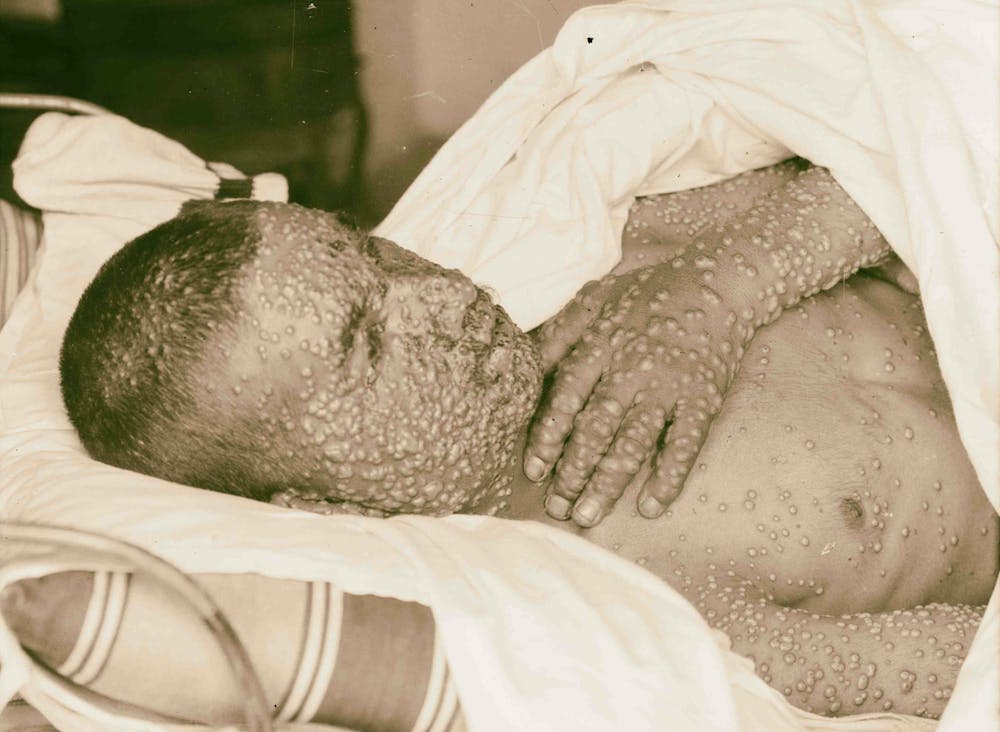
Smallpox was characterized by fever and aches and pustules all over the body. Before eradication, the virus killed about 30% of those it infected, according to the U.S. Centers for Disease Control and Prevention. Sepia Times/Universal Images Group via Getty Images
Inoculation was a relatively new procedure for Bostonians in 1721, and this lifesaving method was not without deadly risks. To address this paradox, several physicians meticulously collected data and compared the number of those who died because of natural smallpox with deaths after smallpox inoculation. Boylston essentially carried out what today’s researchers would call a clinical study on the efficacy of inoculation. Knowing he needed to demonstrate the usefulness of inoculation in a diverse population, he reported in a short book how he inoculated nearly 300 individuals and carefully noted their symptoms and conditions over days and weeks.
The recent emergency-use authorization of mRNA-based and viral-vector vaccines for COVID-19 has produced a vast array of hoaxes, false claims and conspiracy theories, especially in various social media. Like 18th-century inoculations, these vaccines represent new scientific approaches to vaccination, but ones that are based on decades of scientific research and clinical studies.
We suspect that if he were alive today, Benjamin Franklin would want his example to guide modern scientists, politicians, journalists and everyone else making personal health decisions.Like Mather and Boylston, Franklin was a scientist with a respect for evidence and ultimately for truth.
When it comes to a deadly virus and a divided response to a preventive treatment, Franklin was clear what he would do. It doesn’t take a visionary like Franklin to accept the evidence of medical science today.
Health officials are grappling with how to prevent potential COVID-19 outbreaks from the delta variant that is spreading rapidly across the U.S.
Concern over the highly transmissible delta strain prompted Los Angeles County this week to recommend that all people wear masks indoors, even if they’re vaccinated. The World Health Organization (WHO) has also encouraged fully vaccinated people to continue using masks.
But the Centers for Disease Control and Prevention (CDC) has not signaled any plans to revise its mask guidance, with Biden administration officials and some experts say that fully vaccinated Americans are safe from all existing COVID-19 variants.
“If you have been vaccinated, the message we’re conveying is you’re safe,” White House press secretary Jen Psaki said Wednesday. “Vaccines are effective, and that is something we want to be very clear with the public about.”
Still, the move by officials in Los Angeles County raises the prospect that mask recommendations and even mandates could make a return to certain parts of the country.
The CDC projected the delta variant made up more than a quarter of cases in the U.S. in the most recent two-week period, ending June 19 — a jump from 10 percent the previous two weeks.
Los Angeles County issued a statement Monday saying it “strongly recommends” all people wear masks in indoor settings where they don’t know everyone’s vaccination status.
Barbara Ferrer, director of the county’s Department of Public Health, told The Hill that officials want to take time to get more people vaccinated as research is conducted on delta variant transmission from the fully vaccinated.
“While we’re doing that work with building confidence, we’re going to go ahead and offer as much protection as possible for everyone,” she said.
Leana Wen, an emergency physician and public health professor at George Washington University, praised the county’s decision as the “right move,” saying she hopes other jurisdictions follow suit to protect both vaccinated and unvaccinated residents.
“People who are fully vaccinated are still at risk, albeit a low risk, from those who are unvaccinated,” Wen said.
“Fully vaccinated people can be around others who are fully vaccinated without any limitations,” she added. “However, if they’re going to be around unvaccinated people or vaccination status is not being checked, then those could be high-risk settings” where masks should be worn.
For now, Los Angeles County is an outlier as cities and states continue to loosen mask requirements. Washington’s King County, home to Seattle, and Pennsylvania were the latest jurisdictions to end their mandates, taking that step this week.
CDC Director Rochelle Walensky told NBC’s “Today” on Wednesday that the agency’s guidance that fully vaccinated people don’t need masks in most settings has not changed. She said the WHO has given conflicting instructions, saying the international organization is focused on the global community, which has a lower vaccination rate than the U.S.
“We have always said that local policymakers need to make policies for their local environment,” Walensky said. “But those masking policies are not to protect the vaccinated, they’re to protect the unvaccinated.”
So far, the delta strain has not led to any changes in masking policies at the White House or the Capitol.
The White House does not require masks if a person is vaccinated, although the administration is not checking to see whether all maskless people have gotten their COVID-19 shots.
In recent weeks, the House has ended its universal mask requirement, and few people in the Capitol continue to wear them. The overwhelming majority of lawmakers in both parties have shed masks and freely gather in large groups on the House floor.
The Senate, which never had a mask requirement since nearly all senators voluntarily wore facial coverings when it was recommended, has also relaxed its pandemic restrictions.
But the delta variant threat is influencing other activities in the House. Speaker Nancy Pelosi (D-Calif.) announced this week that proxy voting would be extended through Aug. 17, and House Majority Leader Steny Hoyer (D-Md.) said that was due to the global spread of the delta variant.
“As we know, there are some countries in the world that are seeing a virulent resurgence of this new variant of the COVID-19. Israel is a perfect example of that,” Hoyer told reporters, referring to Israel reimposing its indoor mask mandate despite having one of the world’s highest vaccination rates. “But even in Israel, where they have the vaccine available, they’re seeing a resurgence.”
“So, the Speaker correctly, along with the medical advice that she’s gotten, determined that there was still justification for staying on guard,” Hoyer said.
Recent studies have found that COVID-19 vaccines are effective against the strain. Both doses of Pfizer-BioNTech were found to be 88 percent effective against symptomatic disease.
There is “less data” on how Johnson & Johnson performs, Walensky said Wednesday, but “right now we have no information to suggest that you need a second shot after J&J, even with the delta variant.”
Jen Kates, senior vice president and director of global health & HIV policy at the Kaiser Family Foundation, said research shows the CDC guidance “still stands,” although she acknowledged the agency needs to be prepared to adjust.
Kates expressed concern that the resurgence of the mask debate could affect the vaccination effort, noting the variant is spreading mostly among unvaccinated people.
“The worst outcome, I think, is that people choose not to get vaccinated because they think the vaccines aren’t as effective against variants,” she said.
As most Americans have gotten vaccinated, COVID-19 cases, hospitalizations and deaths have declined significantly. But the U.S. is expected to fall short of President Biden’s goal to have 70 percent of adults receiving at least one vaccine dose by the Fourth of July.
The White House still plans to move forward with Independence Day festivities. The administration sent 1,000 invitations for people to gather at 1600 Pennsylvania Ave. on Sunday, with vaccinated people allowed to go without masks. All guests were instructed to get tested one to three days before arriving.
“We certainly feel comfortable and confident moving forward with our event here at the White House and individuals having barbecues in their backgrounds this week to celebrate the Fourth of July,” Psaki said on Wednesday.










 HENRY KOTULA
