To save lives, social distancing must continue longer than we expect

https://www.washingtonpost.com/outlook/2020/04/08/save-lives-social-distancing-must-continue-longer-than-we-expect/?fbclid=IwAR0mNfbcEn9yfF8wfYRsWX9pufLcaArlhqXc8ETSOeSN3_2VdAob0V7WPYQ

To save lives, social distancing must continue longer than we ...

The lessons of the 1918 flu pandemic.

After weeks of quarantine, school closures and binge-watching movies, Americans are getting restless. In a recent interview on “The View,” California Gov. Gavin Newsom (D) warned that complacency and cabin fever were his biggest concerns, and he urged audiences to “stick with this.”

He is right. More than 100 years ago, during the worst contagious crisis in human history (so far), the influenza epidemic of 1918-1919 took 40 million to 100 million lives worldwide and inspired a huge implementation of social distancing measures such as school closures, bans on public gatherings, isolation and quarantine.

But the experience of 1918 also reminds us that early, layered (i.e., more than one at the same time) and lengthy mitigation measures are the best strategy. For social distancing to work, it must be sweeping and enforced across a wide swath of the community. Essential businesses will, of course, need to continue. All other places where people congregate should cease operations for the time being. In 1918, social distancing measures were kept in place for many weeks, if not months, even if people and businesses did not always support them. But the key lesson: This approach worked.

By now, many have read of the comparisons between St. Louis, where a decisive health commissioner reacted with amazing rapidity to implement sweeping public health orders, and Philadelphia, which chose to stay open, even going ahead with plans for a huge parade.

St. Louis was rewarded with one of the best outcomes of any large U.S. city. Philadelphia’s fateful decision to carry on with its immense Liberty Loan Parade resulted in a massive spike in influenza cases in the days immediately following. The city endured some of the worst numbers of cases and deaths in the United States as a result.

Philadelphia was hardly alone, however. In Baltimore, the health commissioner dragged his feet when a group of physicians requested that the city ban public gatherings. “We do not consider such drastic steps necessary in view of the extreme low civilian death rate in the city,” he told them. More than 4,100 Baltimoreans lost their lives to the epidemic.

In Atlanta, the mayor sided with business interests and reopened the city after just three weeks of closures, over the vocal objections of his Board of Health. When the board predicted that Atlanta’s epidemic peak would not occur for another nine days, the mayor dismissed the science, arguing that there was no way to foretell future conditions. The city health officer sided with the mayor, mistakenly declaring that the peak had passed. It had not, and Atlanta’s fall wave of the epidemic raged on, unchecked, through the end of 1918. “The influenza situation in Atlanta is up to the people themselves,” the Public Safety Committee declared.

Atlanta may be a more extreme example, but its experience was hardly singular. In every city we studied from this era there was public pressure to quit the social distancing measures as soon as the epidemic seemed to peak and then ebb. Thinking that the proverbial coast was clear, many communities lifted social distancing measures before the battle was truly over. After weeks of being denied their usual social outlets, people were eager to return to a life of normalcy, and they did so in one giant rush. In city after city, masses lined up for movie houses and performance theaters, crowds packed into dance halls and cabarets, and throngs flocked to downtown shopping districts, often on the very day that the closure orders were lifted.

The result? Cases and deaths resurged. Most cities closed their schools once again. But the political, economic and social will to issue another round of sweeping business closures and gathering bans had evaporated as people grew weary of the dislocations of social distancing. In some cities, most notably Denver, Kansas City, Milwaukee and even the vaunted St. Louis, this second peak was even deadlier than the first.

Lastly, 1918 teaches us how quickly an unchecked epidemic can overwhelm our health-care infrastructure. Philadelphia had to erect 32 temporary hospitals just to handle its massive number of influenza cases. On a single day in mid-October, 10 trucks were needed to carry the bodies of indigent victims to the city’s potter’s field. Some of the deceased had to be buried in temporary graves until more permanent plots could be dug.

In Pittsburgh, the epidemic grew so bad that a local sporting club had to donate its tents to use as field hospitals. One San Antonio hospital had to rely on 18 student nurses to tend to hundreds of influenza patients; the 12 regular nurses were all sick with influenza themselves. Nashville’s City Hospital was overrun with cases in a single day. These cities, unfortunately, were not alone in their experiences.

Today we have two notable advantages over those in 1918: We know the causative agent of covid-19, and our medical care is far more advanced. In 1918, scientists believed the epidemic was caused by a bacterium, and the influenza virus would not be discovered for another quarter-century. The standard medical treatment for influenza victims in 1918 consisted of little more than propping patients up to prevent them from choking on their sputum. Today, it is only a matter of time before researchers discover pharmaceutical therapies and develop an effective vaccine against the disease. In 2020, physicians have the ability to drive down the fatality rate of this epidemic through the use ventilators and intensive care units — as long as such lifesaving machines are available.

Our health-care system can only do this, however, if we don’t allow our already-taxed hospitals, physicians and nurses to be overrun with cases. That means that, until an effective vaccine can be developed and deployed, we must “flatten the curve.” This will not be accomplished in a week, or even a month. We must implement and coordinate sweeping non-pharmaceutical interventions on a national level and keep these measures in place as long as necessary. These measures are not perfect. They are slow and plodding. They are socially and economically disruptive. They fracture the routines of our daily lives in myriad ways, large and small. They do not magically end epidemics. But they can save lives.

As we all endure the hardships of the covid-19 pandemic and dislocations of social distancing, we can take heart that together we will save lives. Just as our forebears did a century ago.

And that is the most important lesson of 1918.


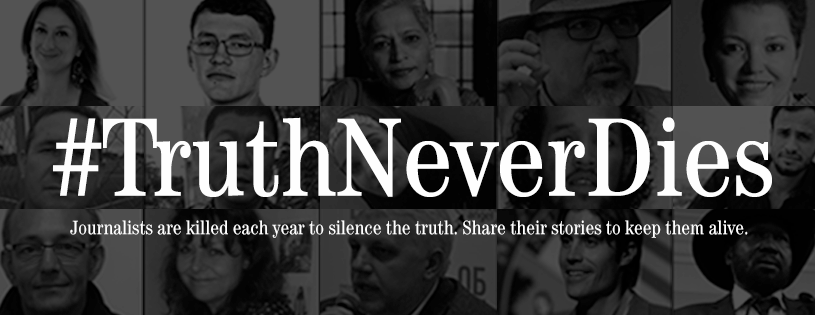
Truth dies in silence. Sadly, so do people.

https://www.kevinmd.com/blog/2020/04/truth-dies-in-silence-sadly-so-do-people.html

UNESCO launches “Truth Never Dies” campaign to tackle crimes ...

I have been writing columns for physicians for twenty years.  And year after year, I have had physicians say this: “I’m glad you said what you did. If I said it, I’d be fired.” There are variations on the theme, but they’re much the same.  Twenty years, and far more than 20 years, during which the alleged health care leaders in America have been routinely muzzled because they aren’t supposed to speak the truth.  Open discussions shut down because they might embarrass someone or upset an administrator. Because it might, heaven forbid, shine a light on a genuine problem.

Some years ago, as the mental health crisis was gathering steam across the emergency departments of the land, I was contacted by a news show in France.  The producers wanted to come to South Carolina and follow me on some shifts in my ED. They wanted to see how mental health was working out here. “We have socialized care, but mental health is also a huge problem in our country,” the producer said.

I dutifully, and appropriately, went to administration. “No, we can’t do that,” I was informed. I was given this explanation when everyone knew the mental health system was at the breaking point: “What if they uncover a problem?” Here was a chance for publicity, for potential grant money or to demonstrate that a political solution was in order.  How dare we let in fresh air? How dare we suggest that things were not perfect?

The same thing is happening in the midst of the pandemic.  Physicians, nurses, and other assorted health care professionals are being threatened for wearing masks.  Administrators say, “They make the patients nervous.” Also likely, administrators have realized they don’t have adequate equipment.  Facilities and systems with enormous budgets caught unprepared in a pandemic.

I see the stories of these professionals as I follow online forums.  Physicians, nurses, and others, threatened with firing because they dared to speak out on the issue of PPE (personal protective equipment).

Like police officers without ballistic vests, these physicians don’t want to go into the rooms of COVID-19 patients without the masks and respirators, gloves, gowns, and face shields that will keep them safe. The equipment that will allow them to return home to their loved ones and prevent them from infecting their families.  This isn’t a good look.  A hospital that refuses to acknowledge the concerns and safety of its professionals is a hospital that ultimately doesn’t deserve them.

The same veil of silence pervades dialogue on the treatment of coronavirus.  When I follow discussions, I see a lot of shaming. “There just isn’t enough evidence to try hydroxychloroquine, Zithromax, convalescent plasma, an untried vaccine, HIV drugs, etc.” Those who suggest we might try are considered reckless or ignorant.  As the battle rages and lives are lost, innovation and risk are viewed with disdain.  And our medical establishment is locked into the paradigm of double-blinded, placebo-controlled studies involving tens of thousands of people and lasting years. Here’s a view of the same from the U.K. Unfortunately, to suggest that we may need to react faster is only met with ridicule, and often tied to political views instead of expediency. Worse,  it ignores the deep, fundamental need to offer hope, any hope, to hundreds of millions of professionals and citizens who are living in fear.

There is a tragic irony here; a painful coincidence.  Physicians silenced. Let’s see.  Where did we see that sort of thing resulting in a worldwide pandemic?  Does China come to mind? The Chinese Communist Party threatened (and who knows what else) physicians who dared to speak out about coronavirus, even when they knew its danger.  Even when they knew how easily and widely it spread.

They continued to soft-peddle numbers about total cases and case fatality.  The party continued to allow travel to and from China long after the problem was known. They even suggested that Italians have a “hug a Chinese person” campaign to combat alleged racism; a charge delightfully accepted and repeated by gullible Western journalists in pursuit of a narrative.

Truth dies in silence.  Sadly, so do people.  And certainly when we tell dedicated health care professionals to keep their mouths shut when they have identified problems, offered solutions and simply asked for help.  Whether it’s a private business, a totalitarian government, or anything in between, we should insist that the truth be spoken; freely and without fear of punishment.

Because, for the foreseeable future, lives will depend on it.


Trump reportedly squandered 3 crucial weeks to mitigate the coronavirus outbreak after a CDC official’s blunt warnings spooked the stock market

https://www.businessinsider.com/trump-wasted-3-weeks-coronavirus-mitigation-time-february-march-nyt-2020-4

Dow closes with decline of 950 points as coronavirus continues to ...

  • President Donald Trump’s administration wasted three key weeks between February and March that could have been spent enacting mitigatory measures against COVID-19, The New York Times reported on Saturday.
  • By the end of February, top officials knew that time was running out to stem the virus spread, and wanted to present Trump with a plan to enact aggressive social distancing and stay-at-home measures.
  • But on February 26, a top CDC official issued stark warnings about the virus’ spread right before the stock market plummeted, which angered Trump for being, in his view, too alarmist. 
  • The Times reported that the entire episode killed off the efforts to persuade Trump to take aggressive, action to mitigate the virus’ spread. In the end, Trump didn’t issue stay-at-home guidance until March 16. 

President Donald Trump’s administration stalled three key weeks in February that could have been spent enacting mitigatory measures against COVID-19 after Trump was angered by a public health official issuing a dire warning about the virus, The New York Times reported on Saturday.

On Saturday,The Times published a lengthy investigation of all the instances Trump brushed aside warnings of the severity of the coronavirus crisis, failed to act, and was delayed by significant infighting and mixed messages from the White House over what action to take and when. 

The Times wrote: “These final days of February, perhaps more than any other moment during his tenure in the White House, illustrated Mr. Trump’s inability or unwillingness to absorb warnings coming at him.”

The Times conducted dozens of interviews with current and former officials and obtained 80 pages of emails from a number of public health experts both within and outside of the federal government who sounded the alarm about the severity of the crisis on an email chain they called “Red Dawn.”

One of the members of the email group, Health & Human Service disaster preparedness official Dr. Robert Kadlec, became particularly concerned about how rapidly the virus could spread when Dr. Eva Lee, a Georgia Tech researcher, shared a study with the group about a 20-year-old woman in China who spread the virus to five of her family members despite showing no symptoms.

“Eva is this true?! If so we have a huge [hole] on our screening and quarantine effort,” he replied on February 23. 

At that point, researchers and top officials in the federal government determined that since it was way too late to try to keep the virus out of the United States, the best course of action was to introduce mitigatory, non-pharmaceutical interventions (NPIs) like social distancing and prohibiting large gatherings.

As officials sounded the alarm that they didn’t have any time to waste before enacting aggressive measures to contain the virus, top public health officials including Dr. Robert Kadlec concluded that it was time to present Trump with a plan to curb the virus called “Four Steps to Mitigation.”

The plan, according to The Times, included canceling large gatherings, concerts, and sporting events, closing down schools, and both governments and private businesses alike ordering employees to work from home and stay at home as much as possible, in addition to quarantine and isolating the sick.

But their entire plan was derailed by a series of events that ended up delaying the White House’s response by several weeks, wasting precious time in the process.

Trump was on a state visit to India when Dr. Kadlec and other experts wanted to present him with the plan, so they decided to wait until he came back.

But less than a day later, Dr. Nancy Messonnier, the director of the National Center for Immunization and Respiratory Diseases at the CDC, publicly sounded the alarm about the severity of the coronavirus outbreak in a February 26 press conference, warning that the outbreak would soon become a pandemic.

“It’s not so much a question of if this will happen anymore but rather more a question of exactly when this will happen and how many people in this country will have severe illness,” Messonnier said, bluntly warning that community transmission of the virus would be inevitable.

The Times reported that Trump spent the plane ride stewing in anger both over Messonnier’s comments and the resulting plummet of the stock market they caused, calling Secretary of Health & Human Services Alex Azar “raging that Dr. Messonnier had scared people unnecessarily,” The Times said. 

The Times reported that the entire episode effectively killed off any efforts to persuade Trump to take aggressive, decisive action to mitigate the virus’ spread and led to Azar being sidelined, writing, ” With Mr. Pence and his staff in charge, the focus was clear: no more alarmist messages.” 

In the end, Dr. Kadlec’s team never made their presentation. Trump did not issue nationwide social distancing and stay-at-home guidelines until March 16, three weeks after Messonnier warned that the US had limited time to mitigate community transmission of the virus, and several weeks after top experts started calling for US officials to implement such measures.

In those nearly three weeks between February 26 and March 16, the number of confirmed COVID-19 cases rose from just 15 to 4,226, The Times said. As of April 12, there are over half a million confirmed cases in the United States with over 21,000 deaths.


Trump retweeted a threat to fire Fauci after he said the US’s slow response to COVID-19 has cost lives

https://www.businessinsider.com/trump-retweets-threat-fire-fauci-2020-4

Coronavirus: Trump retweets call to fire Dr Fauci who said US ...

  • On Sunday, President Trump retweeted a call to fire Dr. Anthony Fauci to his 76.8 million followers.
  • Earlier in the day, Fauci had told CNN that “no one is going to deny” that lives could’ve been saved if the US had implemented containment measures earlier in the novel coronavirus outbreak.
  • A week ago, at a White House briefing, Trump stopped Fauci from weighing in on using hydroxychloroquine, a malaria drug, for people with COVID-19, the illness caused by the coronavirus.
  • It’s unclear whether his retweet was more than a vague threat, but Trump has fired several government officials over the past few weeks.

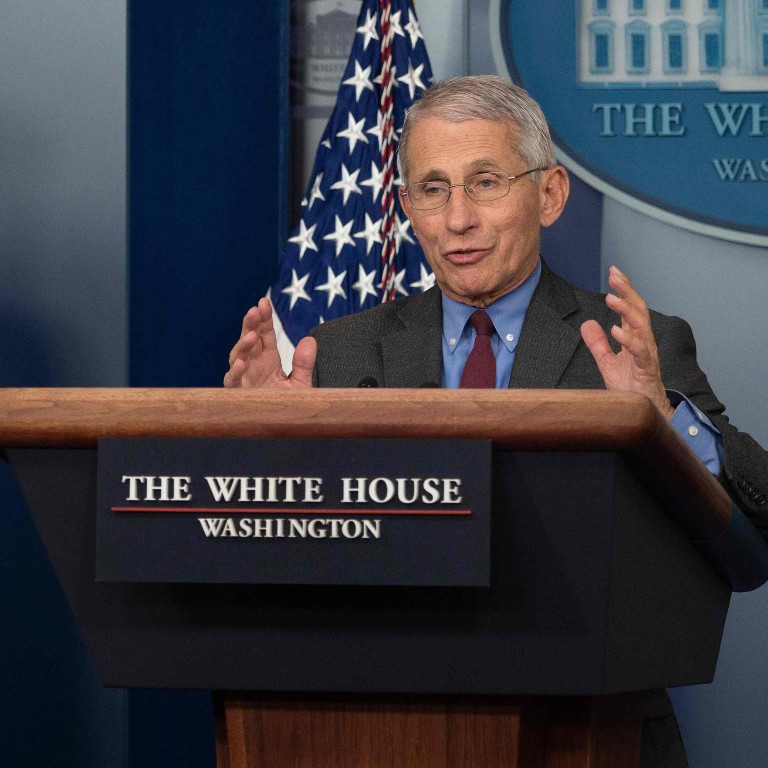
President Donald Trump on Sunday retweeted a call to fire Dr. Anthony Fauci, the US government’s top infectious-disease expert who has so far lasted six presidential administrations, to his 76.8 million followers.

The Trump administration has been in damage-control mode over the slow response to dealing with the coronavirus outbreak. Fauci, who has been the director of the National Institute of Allergy and Infectious Diseases since 1984, helping to tackle AIDS, Zika, and Ebola outbreaks, is one of the top experts on the White House’s coronavirus task force.

The tweet, written by DeAnna Lorraine, a Republican who ran for Congress in California, said: “Fauci is now saying that had Trump listened to the medical experts earlier he could’ve saved more lives. Fauci was telling people on February 29th that there was nothing to worry about and it posed no threat to the US public at large. Time to #FireFauci.”

It’s been about two months since the US’s first coronavirus case was reported. According to data from Johns Hopkins University, as of Sunday night more than 22,000 people had died from the virus in the US and more than 555,300 had been infected.

A week ago, during a White House briefing, Trump stopped Fauci from telling reporters what he thought about using hydroxychloroquine, a antimalaria drug, for people with COVID-19, the illness caused by the virus. Trump has been vocal about his support for the drug — though it is not approved for treating COVID-19 — repeatedly saying, “What do you have to lose?”

It’s unclear whether Trump’s retweet was more than a vague threat, but he has fired several government officials in the past few weeks.

Five days ago, he got rid of Glenn Fine, the acting inspector general at the Department of Defense, who had been tasked with overseeing the implementation of the $2 trillion coronavirus stimulus package. On April 3, he fired Michael Atkinson, the intelligence community inspector general who alerted Congress about the whistleblower complaint that accused Trump of soliciting election interference from Ukraine.

Fauci had spoken to CNN earlier on Sunday, and he was quoted in a New York Times report on Saturday that outlined recommendations he backed on February 21.

The Times reported that — in stark contrast to Lorraine’s tweet — Fauci, along with the Trump administration’s other top public-health experts, said on February 21 that the administration needed to announce aggressive social-distancing policies, even at the cost of disrupting normal life and the US economy.

On Sunday, Fauci said on CNN’s “State of the Union” that “no one is going to deny” that lives could have been saved if the US had implemented containment measures earlier in the novel coronavirus outbreak.

Fauci suggested that fewer people would have died if the Trump administration had announced isolation measures in February instead of in mid-March after warnings from public-health officials.

“As I’ve said many times, we look at it from a pure health standpoint,” he said. “We make a recommendation. Often, the recommendation is taken. Sometimes it’s not. But it is what it is. We are where we are right now.”


Navy chief resigns amid uproar over handling of aircraft carrier coronavirus crisis

https://thehill.com/policy/defense/491626-navy-chief-offers-to-resign-amid-uproar-over-handling-of-aircraft-carrier?rnd=1586292384?rnd=1586275342?userid=12325

Navy boss resigns amid uproar over firing of ship captain – WATE 6 ...

Acting Navy Secretary Thomas Modly resigned Tuesday after fanning the flames of a controversy over a coronavirus outbreak on board an aircraft carrier.

In a tweet, Defense Secretary Mark Esper said he accepted Modly’s resignation and that undersecretary of the Army James McPherson will take over as acting Navy secretary.

“This morning I accepted Secretary Modly’s resignation. He resigned of his own accord, putting the Navy and the sailors above self so that the USS Theodore Roosevelt, and the Navy as an institution, can move forward,” Esper said in a statement attached to the tweet.

The resignation comes a day after transcripts and audio of an inflammatory speech, in which Modly defended his decision to fire Capt. Brett Crozier as commander of the USS Theodore Roosevelt, leaked to the media.

Modly relieved Crozier of his command of the Roosevelt last week after a letter the captain wrote pleading for help with a coronavirus outbreak on the ship leaked in the media. Modly did not explicitly accuse Crozier of leaking the letter, but noted it appeared first in his hometown paper, the San Francisco Chronicle, and that he sent a copy to too many people to expect it not to leak.

In the speech aboard the Roosevelt, Modly said that if Crozier didn’t think the letter would leak, he was “too naive or too stupid to be a commanding officer of a ship like this.”

Alternatively, Modly said, if Crozier leaked the letter on purpose, that would be a “serious violation” of the Uniform Code of Military Justice.

He also called Crozier’s action a “betrayal” and warned sailors that there is “no situation” in which they should go to the media, alleging “the media has an agenda” that “depends on which side of the political aisle they sit.”

Modly at first said Monday afternoon he stands by “every word,” but by Monday night was apologizing.

“Let me be clear: I do not think Captain Brett Crozier is naive or stupid,” Modly said in a statement. “I apologize for any confusion this choice of words may have caused.”

At a White House press briefing, President Trump said he would not have asked Modly to resign.

“I had heard he did because he didn’t want to cause any disturbance for our country. He wouldn’t have had to resign. I would not have asked him. I don’t know him. I didn’t speak to him. But he did that I think just to end that problem. And I think in many ways that was a very unselfish thing to do.”

Trump said he was unsure what would happen to Crozier, leaving it up to Defense Secretary Mark Esper and the Naval chain of command. He called the letter a “mistake,” harping on its eventual leak to the media.

“The whole thing was very unfortunate. The captain should not have written a letter. He didn’t have to be Ernest Hemingway.”

The day before, as uproar over Modly’s speech and Crozier’s firing was growing, Trump had said he “may just get involved” with the situation.

Modly initially had Esper’s support in firing Crozier, but the fallout from his speech became too much to overcome as a growing chorus of lawmakers called for his removal from office, including House Armed Services Committee Chairman Adam Smith (D-Wash.) and Speaker Nancy Pelosi (D-Calif.).

“When I listened to the speech that acting Secretary Modly gave, it was almost like he was trying to do sort of a half-assed imitation of how Donald Trump would have given a speech,” Smith told reporters Tuesday in a response to a question from The Hill.

After the resignation, Smith said in statement that Modly “submitting his formal resignation to Secretary Esper was the right thing to do.”

Sen. Jack Reed (D-R.I.), the top Democrat on the Senate Armed Services, also said he agreed with Esper’s desicion to accept Modly’s resignation because Modly “mishandled the situation.”

“These actions were inappropriate for the leader of the U.S. Navy at any time, particularly in a crisis, and did a disservice to Captain Crozier, the sailors of the USS Theodore Roosevelt, and all Navy personnel,” Reed said in a statement. “The new leadership of the Navy must do better in leading and protecting sailors, Marines and their families in this unprecedented crisis.”

Senate Armed Services Committee Chairman Jim Inhofe (R-Okla.) said he supports Esper’s personnel decisions “especially as we deal with this pandemics,” but that “it’s disturbing to me that there’s been so much turmoil at the top of the Department of the Navy over the last year.”

In his statement on Tuesday, Esper said Modly’s “care for the sailors was genuine” and that he “wish[es] him all the best.”

Esper said he briefed Trump after his conversation with Modly and that the president supported his appointment of McPherson to replace Modly.

Esper said he also met with McPherson, Chief of Naval Operation Adm. Michael Gilday, Deputy Defense Secretary David Norquist and Joint Chiefs of Staff Chairman Gen. Mark Milley. He gave Gilday and McPherson guidance “on the way ahead.”

Esper also said he emphasized that his first priority in the coronavirus crisis is “protect our people, which means putting the health, safety and welfare of the USS Theodore Roosevelt’s crew first.”

“We must now put the needs of the Navy, including the crew of the USS Theodore Roosevelt, first, and we must all move forward together,” he said.

Crozier’s letter warned sailors could die if all but 10 percent of the 4,800-percent crew wasn’t evacuated from the ship.

“We are not at war. Sailors do not need to die,” Crozier wrote. “If we do not act now, we are failing to properly take care of our most trusted asset — our sailors.”

After he was fired, his crew gave him a hero’s sendoff, clapping and chanting his name as he walked off the ship.

As of Tuesday, the Navy reported 230 cases of coronavirus on the Roosevelt after 79 percent of the crew has been tested. The Navy said 1,999 sailors have been taken off the ship as it is docked in Guam, with 1,232 staying at hotels.

Over the weekend, Modly told The Washington Post he stepped in to fire Crozier in part because he wanted to get out in front of any action by the president. Modly’s predecessor, Richard Spencer, was ousted amid a dispute with Trump.

Spencer was fired amid the fallout from Trump’s decision to restore the rank of Navy Chief Petty Officer Eddie Gallagher, who was convicted in the military justice system of posing with the corpse of an ISIS fighter but acquitted of murder.

In addition to restoring Gallagher’s rank, Trump ordered the Navy to allow Gallagher to keep his status as a SEAL after news broke the Navy was reviewing his Trident pin.

Last month, Trump nominated U.S. Ambassador to Norway Kenneth Braithwaite to be Navy secretary after first saying he would immediately after Spencer’s departure in November.

But it’s unclear when the Senate will be able to hold a confirmation hearing for Braithwaite and approve his nomination as lawmakers remain largely out of Washington during the coronavirus pandemic.

“Once the Senate is back in session, I will make sure the Armed Services Committee considers the nomination of the next secretary of the Navy quickly, and I ask my fellow committee members to help me expedite this nomination as well,” Inhofe said in his statement. “Our Sailors, Marines and their families deserve to have stable, capable leadership at the helm during these challenging times.”


Walmart to discontinue sales of some ammunition, ban open carry in stores

https://thehill.com/business-a-lobbying/459749-walmart-to-discontinue-sales-of-some-ammunition-ban-open-carry-in-stores?userid=12325

Walmart to discontinue sales of some ammunition, ban open carry in stores

Walmart announced on Tuesday that it would formally end handgun sales, discontinue sales on certain types types of ammunition and ban customers from openly carrying firearms after last month’s mass shooting at an El Paso, Texas, store.

Doug McMillon, president and CEO of Walmart Inc., detailed the move in a letter to associates one month after a gunman with an assault-style rifle “launched a hate-filled attack in our store,” killing 22 people and injuring dozens more.

“We’ve also been listening to a lot of people inside and outside our company as we think about the role we can play in helping to make the country safer,” McMillon wrote. “It’s clear to us that the status quo is unacceptable.”

The company will discontinue sale of short-barrel rifle ammunition, such as .223 caliber and 5.56 caliber. McMillon, a gun owner who grew up hunting, wrote that while the ammunition is often used for hunting rifles, it can also be used in large capacity clips on military-style weapons.

Walmart will also sell through the remaining inventory of handgun ammunition, as well as discontinue handgun sales in Alaska — the last state where the company still sells handguns. 

The retail giant will continue to sell long-barrel deer rifles and shotguns, as well as most of the ammunition and accessories they require. 

“We believe these actions will reduce our market share of ammunition from around 20% to a range of approximately 6 to 9%,” McMillon wrote. “We believe it will likely drift toward the lower end of that range, over time, given the combination of these changes.”

McMillon noted that there have been “multiple incidents” of individuals wanting to “test our response” to the El Paso shooting by bringing weapons into stores, leading the company to change its open carry policy.

“These incidents are concerning and we would like to avoid them, so we are respectfully requesting that customers no longer openly carry firearms into our stores or Sam’s Clubs in states where ‘open carry’ is permitted — unless they are authorized law enforcement officers,” the statement said.

Dmitriy Andreychenko, 20, faces up to four years in prison and a $10,000 fine after he brought more than 100 rounds of ammunition to a Walmart in Springfield, Mo., as part of a “social experiment.”

Walmart, the largest firearm retailer in the country, stopped selling assault-style rifles in 2015 and in 2018 raised the age to purchase guns from 18 to 21.

McMillon wrote that Walmart believes “reauthorization of the Assault Weapons ban should be debated to determine its effectiveness” and called on lawmakers to strength background checks.

“As we’ve seen before, these horrific events occur and then the spotlight fades. We should not allow that to happen,” the CEO’s statement read. “Congress and the administration should act. Given our decades of experience selling firearms, we are also offering to serve as a resource in the national debate on responsible gun sales.”

The change in some ammunition sales comes after the company initially said that it has issued no directives to alter policy. 

As many as 40 employees walked out of the company’s e-commerce office in California to protest inaction in the retail giant’s gun sales.